This is the first article in a two-part series on the rise of China and its impact on world order, and India. Read the second part here.The Profession of Arms: A Guide for Young Army Officers
It takes courage, especially for a young officer, to check a man met on the road for not saluting properly or for slovenly appearance, but, every time he does, it adds to his stock of moral courage, and whatever the soldier may say, he has respect for the officer who does pull him up.
Read Document →The Dragon's Teeth: Assessing China's Military Modernization
PLA has focused on modernising its capabilities across all warfare domains to achieve these goals. This includes land, air, and maritime operations, nuclear, space, counter-space, electronic warfare and cyberspace operations, aiming to become a fully integrated joint force.
Read Document →Transforming the PLA: A Decade of reorganisation from SSF to ISF
PRC has engaged in a sustained and broad effort to transform the PLA from an infantry-heavy, low-technology, ground forces-centric military into a high-technology, networked force with an increasing emphasis on joint operations and naval and air power projection.
Read Document →Eyes without Borders: Exploring the World of Open Source Intelligence (OSINT) in the Digital Age
Open Source Intelligence (OSINT) is gaining prominence with the rise of social media, the digital society and the vast growth of publicly and commercially available information (PAI and CAI).
Read Document →
The PLA’s Developing Cyber Warfare Capabilities and India's Options
Informationised warfare blurs the lines between peacetime and wartime. A nation in the information age cannot wait for the hostilities to break out to collect intelligence, carryout influence operations, develop antisatellite systems or design computer software weapons.
Read Document →
Galwan and After
Why did China did this when he is under tremendous pressure in all fronts, is this China's salami slice tactics being progressed rigorously, what will be new Rules of Engagement, what will be escalatory control mechanism, who has taken this decision, will there be some pressure put by China in India's North-East through insurgency.
Read Document →
India’s Joint Doctrine for Cyberspace Operations: A Critical Review
Chief of Defence Staff (CDS) General Anil Chauhan and Secretary, Department of Military Affairs, formally released declassified versions of the Joint Doctrines for Cyberspace Operations during the Chiefs of Staff Committee meeting in New Delhi.
Read Document →
Know your Enemy General(now Field Marshal) Syed Aseem Munir
Gen SA Munir's position in the hierarchy of Pakistan was not very comfortable. The state of economy, insurgency in Pakhtoonistan and Balochistan, attack on the Jaffar Express, constant protests by supporters of Imran Khan's supporters inside and outside of parliament.
Read Document →
Decoding Operation SINDOOR: Key Aspects and Implications
Precision strikes were carried out on nine sites—four in Pakistan and five in PoK—linked to anti-India terrorist groups such as the LeT, JeM and the Hizbul Mujahideen. The targeted sites included Muridke (LeT headquarters) and Bahawalpur (JeM headquarters).
Read Document →
Chinese Cyber Exploitation in India's Power Grid - Is There a linkage to Mumbai Power Outage?
The New York Times (NYT), based on analysis by a U.S. based private intelligence firm Recorded Future, reported that a Chinese entity penetrated India’s power grid at multiple load dispatch points. Chinese malware intruded into the control systems that manage electric supply across India, along with a high-voltage transmission substation and a coal-fired power plant
Read Document →27 December 2018
China-US Contention Has Opened Up Space for Other Powers, Including India
This is the first article in a two-part series on the rise of China and its impact on world order, and India. Read the second part here.Arms Race Against India May Completely Disintegrate Pakistan Like USSR – Experts
Cold Start: India seeks to upset Pakistani nuclear dominance
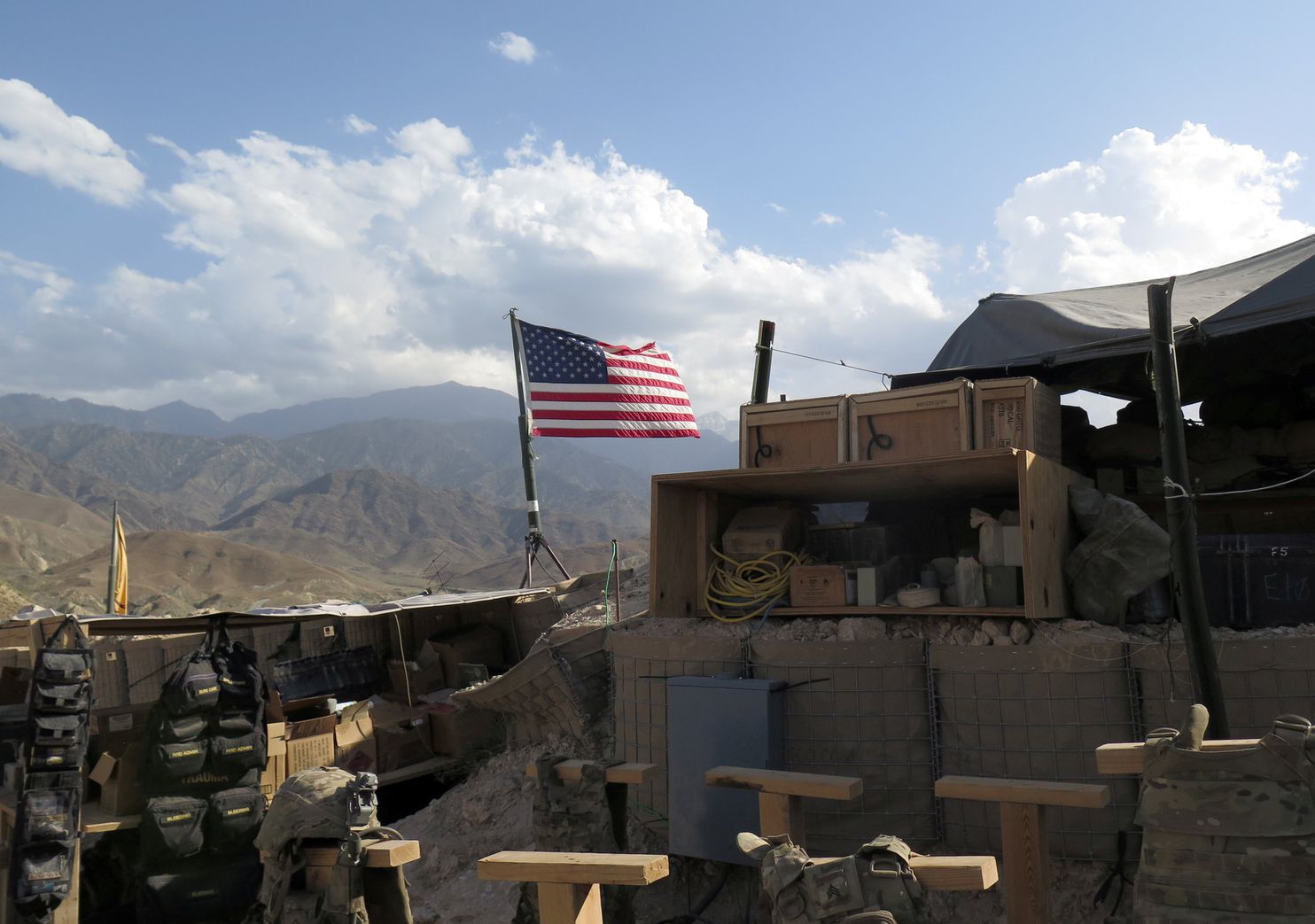
Smaller Military Presence In Afghanistan Will Likely Focus On Trump’s Favored Pentagon Mission: Counterterrorism
U.S. military and Afghan officials grappled Friday with President Trump’s orderto pull nearly half of all American troops from Afghanistan, a move that will probably focus the war on one of the few military efforts the president says he cares about: counterterrorism.CHINA-U.S. RELATIONS ARE IN A ‘DANGEROUS PERIOD’ AND ARE ‘LIKELY TO GET MORE DANGEROUS,’ HARVARD SCHOLAR WARNS
China’s Next Generation Military Hardware Nears Completion
The Stealth Superpower How China Hid Its Global Ambitions
Brave new world with Chinese characteristics
The Future of Terrorism by Walter Laqueur and Christopher Wall
Resurgent Al-Qaeda Planning New Series Of Spectacular Attacks Against Airliners And Airports, Including Drone Strikes And Suicide Passengers, Warns U.S. Security Minister; After Gatwick Airport Incident — Will Drones Become The New Improvised Explosive Devices (IEDs)?
Asia Bibi’s Case Reveals Islamists’ True Colors
America’s Middle East Purgatory The Case for Doing Less
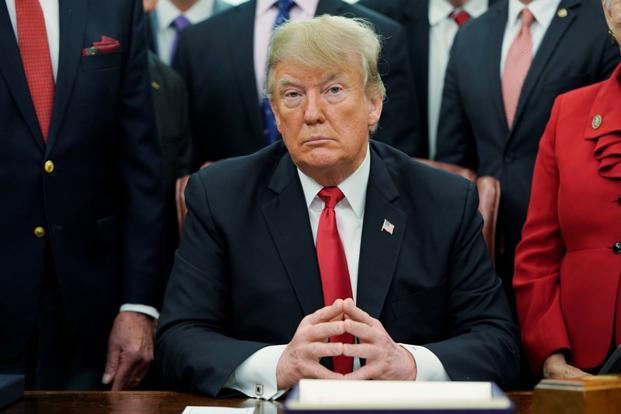
Opinion | For all his faults, it takes a Trump to trump the dragon
What would the US withdrawal from Syria mean for the region?
On December 19, Donald Trump made a move that took almost everybody, including members of his own administration, off guard - he ordered a full, rapid withdrawal of over 2,000 US troops from Syria.Infographic Of The Day: The Business Value Of The Blockchain
Russia-Venezuela Economic Ties
Trump, Angry Over Mattis’s Rebuke, Considers Removing Him 2 Months Early
War & Military StrategyTrump Administration Can Congress Stop the Forever War?
Mattis is out, and Blackwater is back: ‘We are coming’
The Year in Multilateralism: Three Trends and One Surprise Stand Out in 2018
What happened in the multilateral system in 2018? Looking back over the year, it is possible to identify three strategic trends and a last-minute political surprise that may resonate in the future.The Swiftly Closing Borders of Europe
GAP, FRANCE—In a wood-paneled courtroom in this small town in the French Alps, a local judge dealt a hefty setback last week to the European Union’s treasured principle of open borders, one that has underpinned the bloc. And to do it, she fell back on a law that dates back to one of the darkest periods in European history. How the European Union was stymied by phishing
Chinese government hackers using basic phishing methods were able to infiltrate the European Union’s communication network, possibly for years, according to a Dec. 19 report by Area 1, a cybersecurity firm that specializes in anti-phishing activity.A Strategy of Retreat in Syria, With Echoes of Obama
Robotic warfare: training exercise breaches the future of conflict
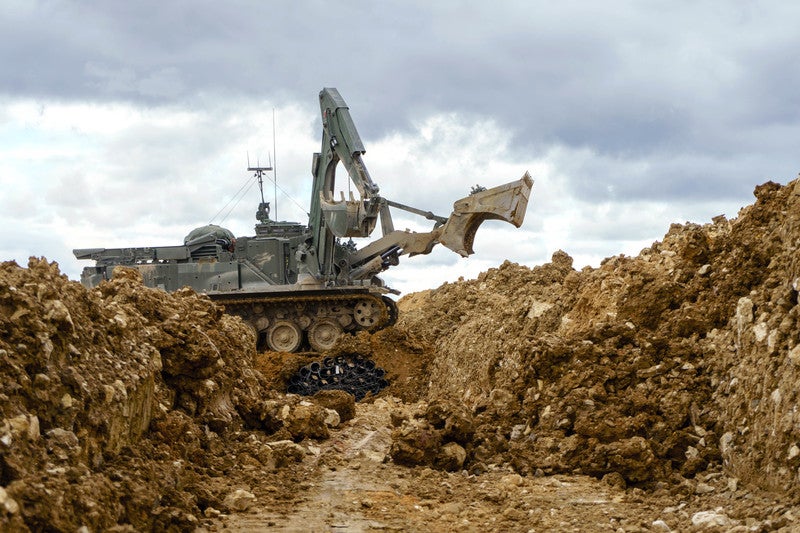
Robotics and artificial intelligence (AI) are nothing new for many of the world’s militaries. But their use is growing, as an exercise in Germany earlier this year showcased. In the first of its kind exercise, robots were used to breach in a joint drill by US and British forces. First Lieutenant Cody Rothschild told US defence publication Stars & Stripes: “We did a robotic breach today, which has never been done before. This is a great step forward for the Army, and for robotics.”Entire GCC Crumbles Like A Pack of Cards: 19 Banks Merge, Etihad Can't Pay Back Debt, Saudi Contractor Can't Pay Salaries, UAE/Saudi Halt 3 Projects of $243 Billion, $11 Billion Bail Out For Bahrain & Jordan
Thousands of businessmen across GCC have gone into turmoil ever since, property prices have collapsed and thousands are in jail or have run away or are involved in multiple litigation while Govt's are not making payments leading to freezing of thousands of business.HOW CHINA’S ELITE HACKERS STOLE THE WORLD’S MOST VALUABLE SECRETS
ARMY OF CODERS: TRAINING THE FORCE FOR THE MULTI-DOMAIN FIGHT
It is perhaps axiomatic, and thus seemingly unnecessary, to say that computers have transformed modern war. But they have in ways both large and small; they have, for example, become deeply integrated with the full range of Army operations—part of a broader convergence of domains and thus part of a pattern that has led to the development of the multi-domain battle concept. The problem, however, is that military technology training has failed to keep pace with rapidly growing capabilities. The result is that despite expanding digital footprints, most soldiers might as well be using typewriters, analog telephones, and chalkboards when it comes to the capabilities they bring to bear in pursuit of military objectives. Despite technology’s massive potential, waiting to be harnessed by members of the most advanced fighting force the world has ever seen, soldiers without basic computer programming skills cannot automate simple tasks, integrate data sources, or effectively leverage the unending flow of information. Since near-peer adversaries have access to the same computers and networked connectivity we do, if they train their soldiers to do these thing—automating tasks and integrating data sources in real time—they can overwhelm our operational tempo and gain a dominant strategic advantage. The key to preventing our rivals from outmaneuvering us digitally, and thereby enabling them to outmaneuver us on the battlefield, is empowering our soldiers to harness the power of the tools they already have. If we do not, we risk being on the wrong side of near-peer technology dominance.Beyond 386 Squadrons: AFWIC’s Four Futures For The Air Force
ARLINGTON: The Air Force’s new thinktank will study four different futures, only one of which is the official (and controversial) 386-squadron plan, Maj. Gen. Michael Fantini said. But first, said the director of the Air Force Warfighting Integration Capability, he needs to get enough people at AFWIC to do the work.The Quiet Integrity Of James Mattis
Since Jim Mattis grounds himself in the classics, it seems fitting to mark his resignation with a passage from Epictetus: “Authentic freedom places demands on us.” The quiet integrity with which he has done his job modeled a stoicism rare in our febrile political climate and sadly lacking elsewhere in the Trump administration. Mattis’s resignation letter may have been his most important act as the United States’ 26th secretary of defense.The General Who Preferred the Foxhole
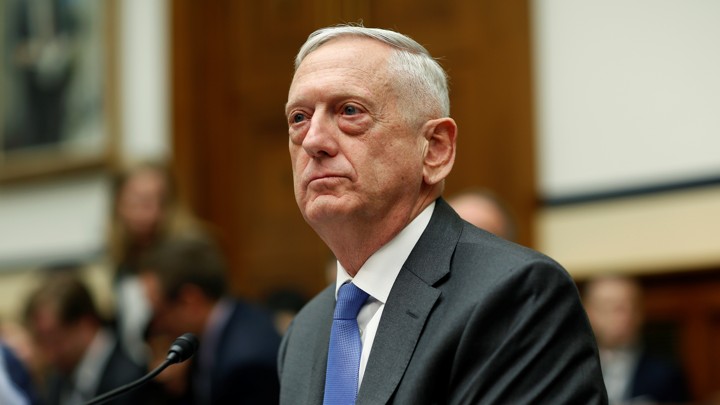
Jim Mattis, the secretary of defense, during a hearing of the Senate Appropriations Committee Subcommittee on the Department of Defense on Capitol Hill in Washington, DC., in May.