The U.S. State Department has cleared a possible sale of 24 Lockheed Martin-Sikorky MH-60R Seahawk Romeo multirole maritime helicopters to India for an estimated cost of $2.6 billion, the Defense Security Cooperation Agency (DSCA) announced in a statement on April 2.The Profession of Arms: A Guide for Young Army Officers
It takes courage, especially for a young officer, to check a man met on the road for not saluting properly or for slovenly appearance, but, every time he does, it adds to his stock of moral courage, and whatever the soldier may say, he has respect for the officer who does pull him up.
Read Document →The Dragon's Teeth: Assessing China's Military Modernization
PLA has focused on modernising its capabilities across all warfare domains to achieve these goals. This includes land, air, and maritime operations, nuclear, space, counter-space, electronic warfare and cyberspace operations, aiming to become a fully integrated joint force.
Read Document →Transforming the PLA: A Decade of reorganisation from SSF to ISF
PRC has engaged in a sustained and broad effort to transform the PLA from an infantry-heavy, low-technology, ground forces-centric military into a high-technology, networked force with an increasing emphasis on joint operations and naval and air power projection.
Read Document →Eyes without Borders: Exploring the World of Open Source Intelligence (OSINT) in the Digital Age
Open Source Intelligence (OSINT) is gaining prominence with the rise of social media, the digital society and the vast growth of publicly and commercially available information (PAI and CAI).
Read Document →
The PLA’s Developing Cyber Warfare Capabilities and India's Options
Informationised warfare blurs the lines between peacetime and wartime. A nation in the information age cannot wait for the hostilities to break out to collect intelligence, carryout influence operations, develop antisatellite systems or design computer software weapons.
Read Document →
Galwan and After
Why did China did this when he is under tremendous pressure in all fronts, is this China's salami slice tactics being progressed rigorously, what will be new Rules of Engagement, what will be escalatory control mechanism, who has taken this decision, will there be some pressure put by China in India's North-East through insurgency.
Read Document →
India’s Joint Doctrine for Cyberspace Operations: A Critical Review
Chief of Defence Staff (CDS) General Anil Chauhan and Secretary, Department of Military Affairs, formally released declassified versions of the Joint Doctrines for Cyberspace Operations during the Chiefs of Staff Committee meeting in New Delhi.
Read Document →
Know your Enemy General(now Field Marshal) Syed Aseem Munir
Gen SA Munir's position in the hierarchy of Pakistan was not very comfortable. The state of economy, insurgency in Pakhtoonistan and Balochistan, attack on the Jaffar Express, constant protests by supporters of Imran Khan's supporters inside and outside of parliament.
Read Document →
Decoding Operation SINDOOR: Key Aspects and Implications
Precision strikes were carried out on nine sites—four in Pakistan and five in PoK—linked to anti-India terrorist groups such as the LeT, JeM and the Hizbul Mujahideen. The targeted sites included Muridke (LeT headquarters) and Bahawalpur (JeM headquarters).
Read Document →
Chinese Cyber Exploitation in India's Power Grid - Is There a linkage to Mumbai Power Outage?
The New York Times (NYT), based on analysis by a U.S. based private intelligence firm Recorded Future, reported that a Chinese entity penetrated India’s power grid at multiple load dispatch points. Chinese malware intruded into the control systems that manage electric supply across India, along with a high-voltage transmission substation and a coal-fired power plant
Read Document →6 April 2019
US State Department Approves Sale of 24 MH-60R Helicopters to India
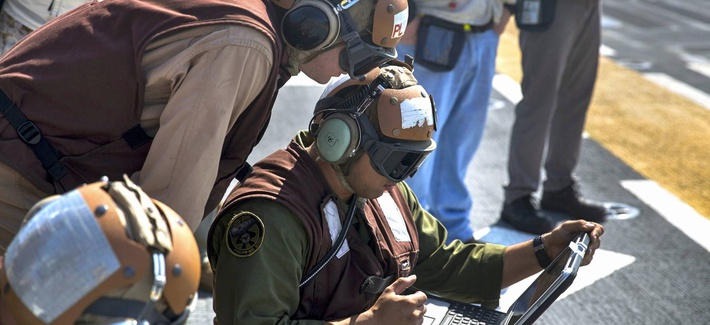
The U.S. State Department has cleared a possible sale of 24 Lockheed Martin-Sikorky MH-60R Seahawk Romeo multirole maritime helicopters to India for an estimated cost of $2.6 billion, the Defense Security Cooperation Agency (DSCA) announced in a statement on April 2.Pakistan admits use of F-16 jets against India, says Islamabad retains right to use anything
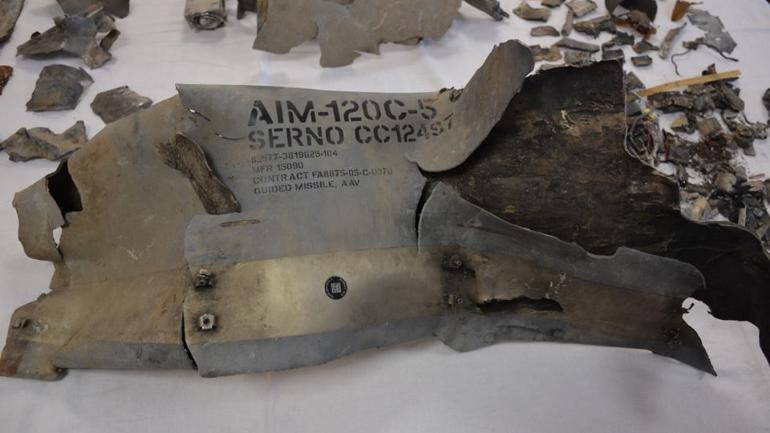
Pakistan on Monday admitted that the country's Air Force had used F-16 fighter jets against India in the aerial combat on February 27. Pakistan also said that Islamabad retains the right to use "anything and everything" in its self-defence. Pakistan had been denying the use of F 16 in the air raid. The shift in their stand came after an India Today expose.Pakistan’s Deep Frustrations on Afghanistan- Analysed:
Middle Eastern Protests Challenge Debilitating Gulf Counterrevolution – Analysis
Much of the Middle East’s recent turmoil stems from internecine Middle Eastern rivalries spilling onto third country battlefields and Saudi and United Arab Emirates-led efforts to roll back the achievements of the 2011 popular Arab revolts and pre-empt further uprisings.Bolton Builds Anti-China Campaign at the U.N.
John Bolton, the U.S. national security advisor, is leading a campaign to contain China’s growing influence in the United Nations and other international organizations, a move that reflects growing alarm that Beijing is taking advantage of the U.S. retreat from the world stage to build diplomatic alliances and promote its own global interests.Half of Cyber-Attacks Involve the Supply Chain
Why Europe Is Getting Tough on China
Xi Jinping Is Winning the National Security War
So said Susan Shirk, a Clinton-era deputy assistant secretary of state and now chair of the 21st Century China Center at the University of California San Diego. The prominent academic issued her attention-grabbing warning in Beijing on Saturday, at the Yenching Global Symposium at prestigious Peking University.How China Views Energy Today, Tomorrow And The Future – Analysis
Nothing will move the world negatively or positively more than China when it comes to energy. Though China’s economy is 12 percent smaller than previously believed according to the US based, Brookings Institution. Brooking’s research backed up longstanding suspicion that the government hasn’t been keeping accurate economic statistics that is then publicly reported data.The Improbable Rise of Huawei
A decade ago, in 2009, the Swedish phone giant Teliasonera set out to build one of the world’s first fourth-generation wireless networks in some of Scandinavia’s most important—and technologically savviest—cities. For Oslo, Norway, Teliasonera made an audacious and unexpected choice of who would build it: Huawei, a Chinese company with little presence outside China and some other developing markets.Turkey's Opposition Takes the Shine off Erdogan's Victory
Turkey’s government and political institutions are heavily controlled by Turkey’s powerful ruling party, the Justice and Development Party of President Recep Tayyip Erdogan. In March 31 local elections, the largest opposition party challenged some of that dominance in Turkey’s largest cities when it won mayoral races in Ankara, Izmir and Istanbul, according to preliminary data. The close races in Turkey’s biggest cities show that Turkish voters worried by the country’s unstable economic conditions are divided over whether the ruling party or the opposition can best help Turkey emerge from a nascent recession. To maintain its dominance over the next several years before the next elections, the ruling party will have to adjust its messaging and reassess its alliances.Terrorist Use of Cryptocurrencies – Technical and Organizational Barriers and Future Threats
The Battle for Democracy in Central and Eastern Europe
Is geoengineering worth the risk?
NATO Is Thriving in Spite of Trump
Germany, France to launch multilateralism alliance
Germany and France announced on Tuesday the creation of an "Alliance of Multilateralism" to promote global cooperation at a time of rising nationalism and isolationism.The New German Question
Preserving the Power of U.S. Economic Sanctions in a Multipolar World
Economic sanctions are not a panacea for national security and other foreign policy challenges, though American policymakers often treat them as such. Just in the past year, the Trump administration has imposed new sanctions against Iran, North Korea, Russia and Venezuela, many of them building on sanctions previously imposed by the Obama administration. The overall results are mixed, although in some of these cases, sanctions have contributed to changes in foreign behavior that the United States finds discomfiting or dangerous.Japan Stumbles as China’s Growth Engine Slows
A slump in exports raises questions about how effective Prime Minister Shinzo Abe’s economic policies would have been without Chinese help.BREAKING THE MOLD: HOW TO BUILD A 355-SHIP NAVY TODAY, PT. 2
US Strategy In Syria Is Dangerously Adrift – Analysis
(FPRI) — After years of aerial bombardment by coalition forces and intense ground battles fought by U.S.-backed Syrian Democratic Forces, the Islamic State in Iraq & Syria (ISIS) has been ousted from every inch of territory in Syria. Although analysts are right to caution that this does not mean the threat from ISIS has been eliminated altogether, the collapse of the physical ISIS caliphate nonetheless marks a significant military accomplishment and transition point for U.S. strategy in Syria. U.S. policymakers cannot afford to rest easy. Transforming this military victory into a durable and successful political outcome in Syria calls for a fundamental re-assessment of where U.S. strategy and been and where it needs to go. Unfortunately, America’s broader strategy for Syria has lacked clear attainable political objectives and has suffered from the absence of a longer-term vision for the future of Syria.War of Words Pushes Belarus-Russia Relations to the Brink
Europe and the New Imperialism
The United Kingdom Has Gone Mad
LONDON — Politico reported the other day that the French European affairs minister, Nathalie Loiseau, had named her cat “Brexit.” Loiseau told the Journal du Dimanche that she chose the name because “he wakes me up every morning meowing to death because he wants to go out, and then when I open the door he stays in the middle, undecided, and then gives me evil looks when I put him out.”NATO at 70: Where next?
As member nations gather to celebrate NATO's 70th anniversary this week, POLITICO asked experts to forecast what the military alliance will look like 10 years from now.It’s Time To Make Data Strategic For Our Navy
Our military is in a high-stakes race to harness the power of data, a revolution that may make previous leaps in military technology — think radar, nuclear power, or space — seem trifling in comparison. To fully seize these opportunities before our adversaries do, we need to look less at the technologies we covet and more in the mirror about our own data structures and culture.Future wars will be waged with robots. But so might future peace
On NATO’s Eastern Frontier, Let’s Not Lose a War Before It Starts
The alliance needs more forces in Poland — and the logistics and enabling capabilities that will allow them to operate effectively.Anatomy of a Taiwan Invasion: The Air Domain
The threat of a Taiwan contingency is the most persistent and likely military confrontation that the Chinese military (the People’s Liberation Army, or PLA) faces, and much of the PLA’s modernization over the last few decades has been designed for such a scenario. Various articles, commentaries, and even videos over the years have considered how a PLA invasion of Taiwan may unfold and the degree of success or failure that each side may enjoy.Here’s the Army’s plan for getting more mature cyber technologies
Cyber materiel development and experimentation will link up with actual Army-level exercises as the service looks to mature technologies quicker.