Last month, Nepal launched its first satellite, NepaliSat-1 into the orbit, joining other South Asian countries such as India, Pakistan, Bangladesh and Sri Lanka in owning a national satellite. Previously, Nepal has been relying on the South Asia Satellite, launched by India and offered to other South Asian nations for boosting domestic information and communications technology (ICT) connectivity. Nepal’s own satellite launch took a different turn, however, by not relying on India. Instead, Nepal gathered multilateral assistance from the United Nation’s BIRDS program, in collaboration with Japan’s Kyushu Institute of Technology for the launch.The Profession of Arms: A Guide for Young Army Officers
It takes courage, especially for a young officer, to check a man met on the road for not saluting properly or for slovenly appearance, but, every time he does, it adds to his stock of moral courage, and whatever the soldier may say, he has respect for the officer who does pull him up.
Read Document →The Dragon's Teeth: Assessing China's Military Modernization
PLA has focused on modernising its capabilities across all warfare domains to achieve these goals. This includes land, air, and maritime operations, nuclear, space, counter-space, electronic warfare and cyberspace operations, aiming to become a fully integrated joint force.
Read Document →Transforming the PLA: A Decade of reorganisation from SSF to ISF
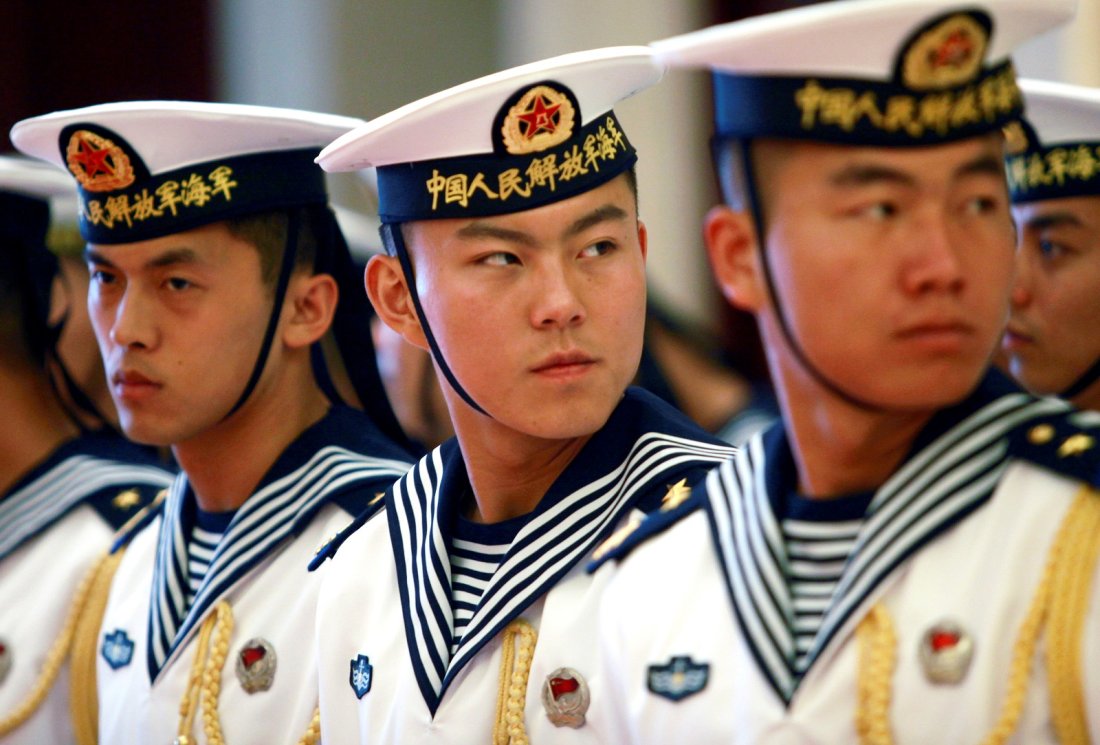
PRC has engaged in a sustained and broad effort to transform the PLA from an infantry-heavy, low-technology, ground forces-centric military into a high-technology, networked force with an increasing emphasis on joint operations and naval and air power projection.
Read Document →Eyes without Borders: Exploring the World of Open Source Intelligence (OSINT) in the Digital Age
Open Source Intelligence (OSINT) is gaining prominence with the rise of social media, the digital society and the vast growth of publicly and commercially available information (PAI and CAI).
Read Document →
The PLA’s Developing Cyber Warfare Capabilities and India's Options
Informationised warfare blurs the lines between peacetime and wartime. A nation in the information age cannot wait for the hostilities to break out to collect intelligence, carryout influence operations, develop antisatellite systems or design computer software weapons.
Read Document →
Galwan and After
Why did China did this when he is under tremendous pressure in all fronts, is this China's salami slice tactics being progressed rigorously, what will be new Rules of Engagement, what will be escalatory control mechanism, who has taken this decision, will there be some pressure put by China in India's North-East through insurgency.
Read Document →
India’s Joint Doctrine for Cyberspace Operations: A Critical Review
Chief of Defence Staff (CDS) General Anil Chauhan and Secretary, Department of Military Affairs, formally released declassified versions of the Joint Doctrines for Cyberspace Operations during the Chiefs of Staff Committee meeting in New Delhi.
Read Document →
Know your Enemy General(now Field Marshal) Syed Aseem Munir
Gen SA Munir's position in the hierarchy of Pakistan was not very comfortable. The state of economy, insurgency in Pakhtoonistan and Balochistan, attack on the Jaffar Express, constant protests by supporters of Imran Khan's supporters inside and outside of parliament.
Read Document →
Decoding Operation SINDOOR: Key Aspects and Implications
Precision strikes were carried out on nine sites—four in Pakistan and five in PoK—linked to anti-India terrorist groups such as the LeT, JeM and the Hizbul Mujahideen. The targeted sites included Muridke (LeT headquarters) and Bahawalpur (JeM headquarters).
Read Document →
Chinese Cyber Exploitation in India's Power Grid - Is There a linkage to Mumbai Power Outage?
The New York Times (NYT), based on analysis by a U.S. based private intelligence firm Recorded Future, reported that a Chinese entity penetrated India’s power grid at multiple load dispatch points. Chinese malware intruded into the control systems that manage electric supply across India, along with a high-voltage transmission substation and a coal-fired power plant
Read Document →14 May 2019
Digitizing Nepal from Within the Himalayas
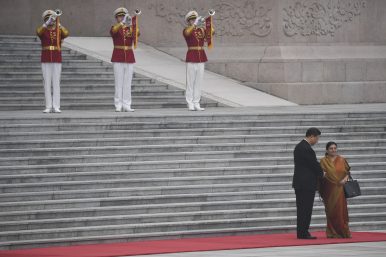
Last month, Nepal launched its first satellite, NepaliSat-1 into the orbit, joining other South Asian countries such as India, Pakistan, Bangladesh and Sri Lanka in owning a national satellite. Previously, Nepal has been relying on the South Asia Satellite, launched by India and offered to other South Asian nations for boosting domestic information and communications technology (ICT) connectivity. Nepal’s own satellite launch took a different turn, however, by not relying on India. Instead, Nepal gathered multilateral assistance from the United Nation’s BIRDS program, in collaboration with Japan’s Kyushu Institute of Technology for the launch.What to Make of India’s Absence from the Second Belt and Road Forum ?
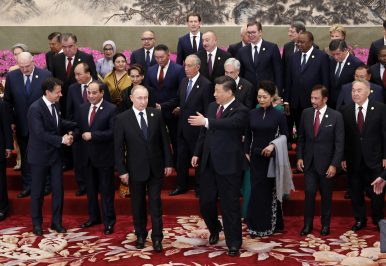
Unsurprisingly, Indian leaders were absent from the Second Belt and Road Forum (BRF) for International Cooperation hosted by China in Beijing on April 26 and 27. New Delhi has been a vocal opponent of its neighbor China’s Belt and Road Initiative (BRI), a multi-billion dollar overseas infrastructure investment initiative spearheaded by Chinese President Xi Jinping.Google’s Sundar Pichai: Privacy Should Not Be a Luxury Good
MOUNTAIN VIEW, Calif. — Google products are designed to be helpful. They take the friction out of daily life (for example, by showing you the fastest route home at the end of a long day) and give you back time to spend on things you actually want to do. We feel privileged that billions of people trust products like Search, Chrome, Maps and Android to help them every day.Dunford Suggests Longer Military Presence In Afghanistan
The United States will need to keep counterterrorism forces in Afghanistan until there is no insurgency left in the country, the top US general said on Wednesday, suggesting a far longer military presence even after more than 17 years of war.Move to withdraw Rs700bn tax exemptions, says official
Re-emergence of Islamic State’s Caliph Abu Bakr al-Baghdadi
On Saturday, April 27, 2019, Islamic State’s (IS) central media outlet, Al-Furqan, released an 18-minute propaganda video featuring its ‘underground’ leader and self-proclaimed ‘Caliph Ibrahim’, Abu Bakr al-Baghdadi.1 It was the first time in half-decade, that Al-Baghdadi made a public appearance in a video message. Last time it was in summer of 2014 (04 July), when the IS leader appeared at the podium from the shadows of Friday prayer during the month of Ramadan at Mosul’s Great Mosque of Al-Nuri. In his message to his follower he called upon the Ummah (Muslim communities) around the world to “obey” him as the Caliph of the newly declared Caliphate and pay allegiance to the group. 2Bangladesh: The Rohingya Issue: No Solution in Sight!:
Nepal Inching Toward China
In what appears to be a delicate balance between major powers, the Nepal Communist Party (NCP) led government of KP Sharma Oli is slowly but gradually taking steps to benefit economically from China.INSIDE CHINA'S MASSIVE SURVEILLANCE OPERATION
The Pentagon Reports: China’s Military Power
As Assistant Secretary of Defense for Indo-Pacific Security Affairs Randall G. Schriver emphasized in his rollout remarks on May 2, 2019, “our annual report to Congress, which we refer to as the China Military Power Report… is our authoritative statement on how we view developments in the Chinese military, as well as how that integrates with our overall strategy.” U.S.-China: A Tariff Threat Ups the Ante as Trade Talks Inch Toward the Finish
An escalating trade war between China and the United States, including exchanges of tariffs and threats of more, has contributed to a global economic cooling over the past year. As the two powers have worked toward a mutual understanding over the final form of a trade deal between them, they have engaged in a lengthy set of negotiations, which appear to be entering their final phase. But some sticky points of contention — and room for escalation — remain.Can NSA Stop China Copying Its Cyber Weapons?
WASHINGTON: Adversaries have been copying and stealing each others’ weaponsever since Ape A threw a rock at Ape B and Ape B got the bright idea to throw it back. But recent revelations from Symantec and The New York Times suggest this problem is much bigger with cyber weapons. Why? In order to attack an enemy’s computer, they have to copy their code onto it. It’s like bombing an enemy with munitions that scatter their own blueprints around the blast site.Revealed: new evidence of China's mission to raze the mosques of Xinjiang
Around this time of the year, the edge of the Taklamakan desert in far western China should be overflowing with people. For decades, every spring thousands of Uighur Muslims would converge on the Imam Asim shrine, a group of buildings and fences surrounding a small mud tomb believed to contain the remains of a holy warrior from the eighth century.Xi Jinping Wanted Global Dominance. He Overshot.
The endgame in the trade war between China and the United States seems near. President Trump, betting with real currency — American strength — apparently has the upper hand, and the concessions President Xi Jinping is likely to make won’t be mere tokens. When — if? — an agreement is finally announced, Mr. Trump will surely fire off bragging tweets, partly to shore up his credentials for a second term, amid personal and policy troubles. For Mr. Xi, almost any deal could mean a very serious loss of face.RiskSec 2019: Israel strike on Hamas hackers did not ‘cross the rubicon’
RiskSec 2019: Israel strike on Hamas hackers did not ‘cross the rubicon’
What Effects Will Tighter U.S. Sanctions on Iran’s Oil Have?
With significant risks now looming over global energy markets, the United States should be careful in evaluating any future oil sanctions, Amy Myers Jaffe writes in the following Q & A which first appeared on CFR.org. Oil prices ticked up a few percentage points after the announcement. Do you expect prices to remain higher, or is there enough supply in the market to cover a drop in Iranian exports?However the S-400 Standoff Ends, U.S.-Turkey Ties May Only Get Worse
The US, Iran and a New American Deployment
The United States has announced that it is deploying a carrier battle group and a bomber group to the Middle East. The reason given is that U.S. intelligence has detected an Iranian threat against U.S. and allied assets in the region. The United States has stated that it does not want war with Iran but is prepared to defend its interests in the region. It’s not clear what threat the U.S. detected, but since this force will take some time to reach the area, we can assume that the threat is not perceived to be imminent. And we will assume that the type of threat the U.S. believes is posed by Iran can be countered by the type and amount of air power deployed. But as with all such deployments, there are military, psychological and political components that must be understood.What Effects Will Tighter U.S. Sanctions on Iran’s Oil Have?
With significant risks now looming over global energy markets, the United States should be careful in evaluating any future oil sanctions, Amy Myers Jaffe writes in the following Q & A which first appeared on CFR.org. Liverpool and Tottenham Fail Better in the Champions League Semifinal
Before the second game of his team’s Champions League semifinal against Barcelona, Liverpool’s manager, Jรผrgen Klopp, summoned Samuel Beckett. In the first game of the two-game series, at Camp Nou, in Barcelona, a week earlier, Liverpool had played well, and lost 3–0. One of the goals Liverpool conceded—a rasping, freakishly curved free kick by the world’s best player, Lionel Messi—was regarded as among the finest ever scored in the competition. In the second game, at Anfield, Klopp’s team would not only have to stop an excellent Barcelona attack from adding to the three-goal lead but score at least three itself. And they would need to do so without their star center-forward, Mo Salah, who was ruled out of the game with a concussion. Liverpool’s task was, many believed, near impossible.The Dark Side of Sunlight How Transparency Helps Lobbyists and Hurts the Public
A New Brexit Countdown: What the U.K. Could Do Before Oct. 31
Last month's agreement between the European Union and the United Kingdom to move the official date of Brexit to Oct. 31 has somewhat reduced the sense of urgency connected to the United Kingdom's departure from the Continental bloc. But while delaying Brexit has bought British politicians some time, it has not eliminated the divisions within Prime Minister Theresa May's government, reduced the fragmentation in the House of Commons or eliminated long-term questions about the final shape of the Brexit deal. Indeed, the coming weeks and months will be plenty full of Brexit drama; there are several possibilities for how events will unfold, and we have outlined them below.Huawei: Fears In The West Are Misplaced And Could Backfire In The Long Run
Is technology good or bad for learning?
New authorities mean lots of new missions at Cyber Command
AI in packaging: Defining terms, assessing impact—Part 1
AI-enabled sensors, motors and controllers will mean self-adjusting automation on packaging lines. How data science intersects with machine engineering for smarter and more valuable packaging operations. Spend a little time investigating the impact of artificial intelligence (AI) on packaging equipment and processing lines and it quickly becomes apparent the improvements AI holds for higher efficiencies, better quality and improved safety are just emerging.How we get to the next big battery breakthrough
Nation state actors, affiliates behind increasing amount of data breaches
How an electronic warfare update could help the Navy
The Navy wants to harden its aircraft carriers, cruisers, destroyers and warships against an evermore hostile electronic warfare environment. And to do so, the service recently awarded Lockheed Martin an $184 million contract.
/arc-anglerfish-arc2-prod-mco.s3.amazonaws.com/public/OSEAMLEYNREJ3PBYKWVF3BXQPI.jpg)