The Profession of Arms: A Guide for Young Army Officers
It takes courage, especially for a young officer, to check a man met on the road for not saluting properly or for slovenly appearance, but, every time he does, it adds to his stock of moral courage, and whatever the soldier may say, he has respect for the officer who does pull him up.
Read Document →The Dragon's Teeth: Assessing China's Military Modernization
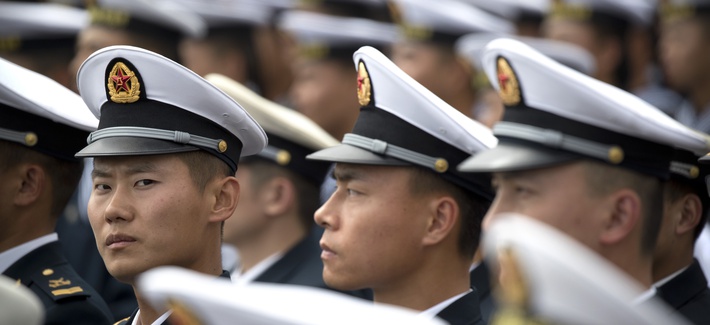
PLA has focused on modernising its capabilities across all warfare domains to achieve these goals. This includes land, air, and maritime operations, nuclear, space, counter-space, electronic warfare and cyberspace operations, aiming to become a fully integrated joint force.
Read Document →Transforming the PLA: A Decade of reorganisation from SSF to ISF
PRC has engaged in a sustained and broad effort to transform the PLA from an infantry-heavy, low-technology, ground forces-centric military into a high-technology, networked force with an increasing emphasis on joint operations and naval and air power projection.
Read Document →Eyes without Borders: Exploring the World of Open Source Intelligence (OSINT) in the Digital Age
Open Source Intelligence (OSINT) is gaining prominence with the rise of social media, the digital society and the vast growth of publicly and commercially available information (PAI and CAI).
Read Document →
The PLA’s Developing Cyber Warfare Capabilities and India's Options
Informationised warfare blurs the lines between peacetime and wartime. A nation in the information age cannot wait for the hostilities to break out to collect intelligence, carryout influence operations, develop antisatellite systems or design computer software weapons.
Read Document →
Galwan and After
Why did China did this when he is under tremendous pressure in all fronts, is this China's salami slice tactics being progressed rigorously, what will be new Rules of Engagement, what will be escalatory control mechanism, who has taken this decision, will there be some pressure put by China in India's North-East through insurgency.
Read Document →
India’s Joint Doctrine for Cyberspace Operations: A Critical Review
Chief of Defence Staff (CDS) General Anil Chauhan and Secretary, Department of Military Affairs, formally released declassified versions of the Joint Doctrines for Cyberspace Operations during the Chiefs of Staff Committee meeting in New Delhi.
Read Document →
Know your Enemy General(now Field Marshal) Syed Aseem Munir
Gen SA Munir's position in the hierarchy of Pakistan was not very comfortable. The state of economy, insurgency in Pakhtoonistan and Balochistan, attack on the Jaffar Express, constant protests by supporters of Imran Khan's supporters inside and outside of parliament.
Read Document →
Decoding Operation SINDOOR: Key Aspects and Implications
Precision strikes were carried out on nine sites—four in Pakistan and five in PoK—linked to anti-India terrorist groups such as the LeT, JeM and the Hizbul Mujahideen. The targeted sites included Muridke (LeT headquarters) and Bahawalpur (JeM headquarters).
Read Document →
Chinese Cyber Exploitation in India's Power Grid - Is There a linkage to Mumbai Power Outage?
The New York Times (NYT), based on analysis by a U.S. based private intelligence firm Recorded Future, reported that a Chinese entity penetrated India’s power grid at multiple load dispatch points. Chinese malware intruded into the control systems that manage electric supply across India, along with a high-voltage transmission substation and a coal-fired power plant
Read Document →24 May 2019
Troubles Aplenty: Foreign Policy Challenges for the Next Indian Government
Can Pakistan Protect CPEC?
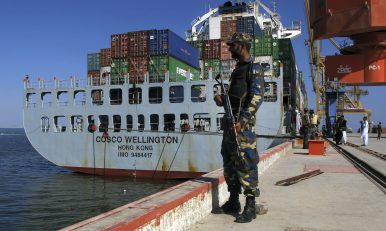
Undoubtedly, Gwadar – the port city in Balochistan on the Arabian Sea — is the backbone of the China-Pakistan Economic Corridor (CPEC), which is why it has been in the center of media attention ever since the announcement of the multi-billion dollar project. In this regard, Pakistan’s prosperity is also linked to the development of the Gwadar port project. On some occasions, Pakistani officials have gone as far as to assert that Gwadar has the potential of changing the fate of the whole region.Now or Never: America is on the Clock to Remove Troops from Afghanistan
How Baloch Separatists Are Trying to Derail China’s Investments in Pakistan
QUETTA, Pakistan—In the early hours of April 18, a group of militants in southwestern Pakistan blocked the coastal highway that connects the port of Gwadar, near the Iranian border, to Karachi farther east. The militants stopped six buses near a mountain pass and checked the identity cards of all the passengers. They singled out 14 members of Pakistan’s armed forces, and then executed them all.US-China Decoupling and Vulnerabilities in the American Defense Industrial Base
As the United States and China have begun to consciously decouple, the implications of breaking up the relationship that has driven global economic growth for the last 30 years are coming into view. The complex relationships between U.S. and Chinese firms, which manufacture goods in both countries for sale around the world, are under threat as tariff and regulatory walls make inter- and intra- firm trade more difficult. These developments have made FDI, and the establishment of long-standing alliances between firms, a sketchy prospect for U.S. companies.CHINESE INTELLIGENCE AGENCIES OPERATING IN SRI LANKA
No Longer a Trade Tiff: China Screams ‘People’s War’
The Global Times, the party’s nationalist tabloid, used that phrase on the May 13, but China’s leaders obviously approved of the rhetorical escalation. Both People’s Daily, the self-described “mouthpiece” of China’s ruling organization, and the official Xinhua News Agency carried the piece to wider audiences.After Executive Order, Trump Administration Puts More Pressure On Huawei
The Chinese telecom company can no longer buy U.S. tech without a waiver, Commerce Secretary Wilbur Ross announced Thursday.China's Growing Status In Innovation
Great Power Rivalry Is Also a War For Talent
China’s military is working harder to find and keep good people. The U.S. must step up its own efforts.Beyond the Tesla bubble: The future of electric cars is being scripted in China
A brief history of Nepal-China defense tie
As a part of his policy of expanding the scope of Nepal’s foreign policy, King Mahendra, particularly after the 1962 India-China war, started reaching out to western countries for military assistance. Western countries, mainly the US and the UK, responded positively to Mahendra’s request for military assistance, and in 1964, Nepal signed an agreement with the US, under which the Americans agreed to provide logistical support to the then Royal Nepal Army. Subsequently, the UK also started providing some military assistance to Nepal. India was already a major defense supplier to Nepal. Since 1950, Nepal and India have also been awarding the Army chiefs of each other the honorary rank of General in recognition of the harmonious relationship between the two armies.Trump's tech-economic war and self-serving definition of national security
Editor's note: Bobby Naderi is a journalist, current affairs commentator, documentary filmmaker and member of the Writers Guild of Great Britain. The article reflects the author's opinion, and not necessarily the views of CGTN.The Global Consequences of a Sino-American Cold War
IRGC chief: US will collapse with one strike just like the World Trade Center
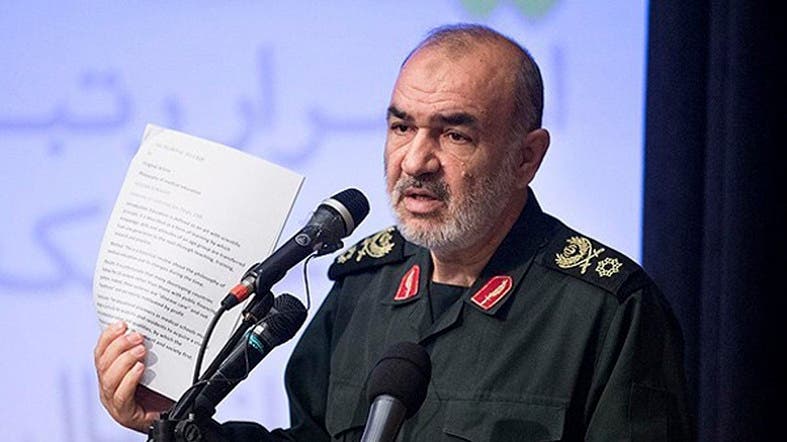
The head of Iran’s Revolutionary Guards said on Saturday that his country is in a full intelligence war with the United States and “enemies of the Islamic Republic” which includes cyber and military operations.UN Secretary-General Pays a Visit to the Blue Pacific
This week United Nations Secretary-General Antonio Guterres made a trip through the islands of the South Pacific, visiting Fiji, Vanuatu, and Tuvalu. His visit to the region was conducted with the specific aim of highlighting the existential threat that climate change is posing to these island states. Although this was his first trip to the South Pacific in his current role as Secretary-General, it was nevertheless a demonstration that the Pacific’s unique experience and perspective on these issues should be of greater importance in the world’s peak multilateral forum.THE RISE OF JAPANESE MILITARISM
Realism Is About Understanding Different Country's Interests and Red Lines
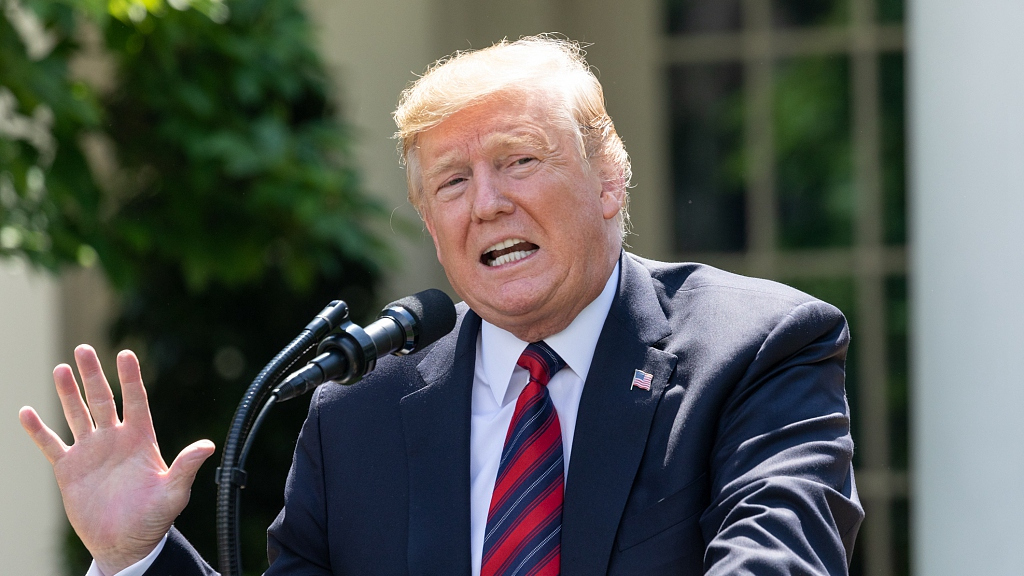
President Donald Trump’s foreign policy has taken quite a hit over the past several weeks, and the poor assessments from foreign policy analysts and journalists alike are beginning to leak onto the front-pages of America’s most popular newspapers. In a span of two days, the New York Times, the Washington Post, and USA Today all ran featured stories about the Trump administration’s struggle to cow three adversarial governments into submission: Iran, North Korea, and Venezuela.Exclusive: Google suspends some business with Huawei after Trump blacklist - source
5G Danger: 100s Of Respected Scientists Sound Alarm About Health Effects As 5G Networks Go Global
Even though many in the scientific community are loudly warning about the potential health effects that 5G technology could have on the general population, Verizon and AT&T are starting to put up their 5G networks in major cities all across the nation. Intelligence: The Techno Revolution
Cyber Command is decoding how to best (re)organize teams
A year after Department of Defense cyber teams reached the critical designation of full operational capability, U.S. Cyber Command has transitioned from building — both its headquarters and cyberwarrior teams — to sustaining and optimizing teams for mission success.News in a Digital Age
Costs Of New Military Space Organizations
Is the U.S. Planning for the Right War?
On Sept. 10, 2001, the George W. Bush administration had a view of American national security that, in 24 hours, was buried under the rubble of the World Trade Center. The day before 9/11, the administration viewed China as America’s next great adversary. For months, Bush had lambasted his predecessor’s efforts to form a strategic partnership with China, calling Beijing a “strategic competitor.” Condoleezza Rice, then Bush’s national security adviser, wrote a year earlier that, because China wanted to “alter Asia’s balance of power in its own favor,” it was not the “strategic partner” the Clinton administration once called it. Recall how Washington’s worst international crisis of 2001—pre-9/11—involved an American reconnaissance aircraft and a Chinese fighter jet accidentally colliding, the American crew making an emergency landing on China’s Hainan Island, and the Chinese detaining them for 11 days. Then, just days later, Bush approved a major arms sale to Taiwan and said the United States would do “whatever it took” to help the island defend itself. “China’s leaders are increasingly concerned that Washington and Beijing are headed for a confrontation as China emerges as an economic and military power in Asia,” the Washington Post reported two months later. “Officials and analysts described growing unease in Beijing that shifts in attitudes in both nations seem to be pointing toward a showdown.” Bush seemed to believe the military should be geared toward such a showdown and less involved in other, less conventional situations of war, as part of a “humble” foreign policy. “Maybe I’m missing something here,” Bush said during a presidential debate in 2000. “I mean, are we going to have some kind of nation-building corps from America? Absolutely not.” But then Islamist radicals murdered nearly 3,000 people on American soil, and everything changed.