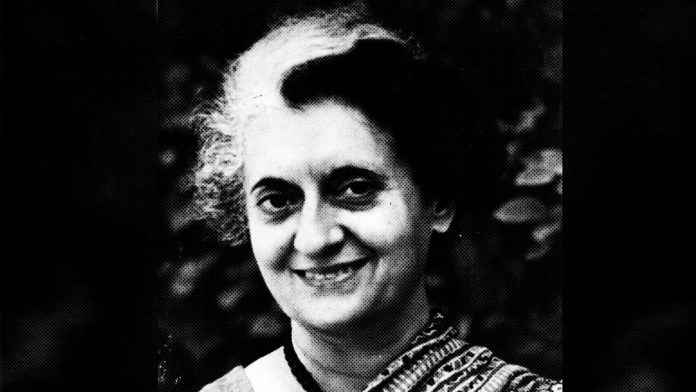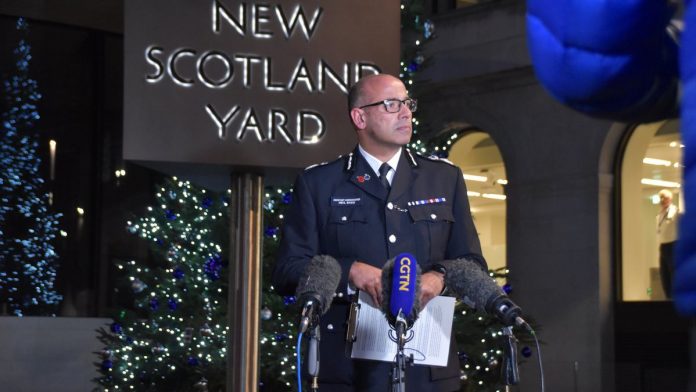
New Delhi: Anil Kanti “Neil” Basu, the top British counter-terror cop, who has risen to international limelight once again after the London Bridge incident in which he and his team nabbed and shot dead the British terror convict Usman Khan Friday, has ties to India.The Profession of Arms: A Guide for Young Army Officers
It takes courage, especially for a young officer, to check a man met on the road for not saluting properly or for slovenly appearance, but, every time he does, it adds to his stock of moral courage, and whatever the soldier may say, he has respect for the officer who does pull him up.
Read Document →The Dragon's Teeth: Assessing China's Military Modernization
PLA has focused on modernising its capabilities across all warfare domains to achieve these goals. This includes land, air, and maritime operations, nuclear, space, counter-space, electronic warfare and cyberspace operations, aiming to become a fully integrated joint force.
Read Document →Transforming the PLA: A Decade of reorganisation from SSF to ISF
PRC has engaged in a sustained and broad effort to transform the PLA from an infantry-heavy, low-technology, ground forces-centric military into a high-technology, networked force with an increasing emphasis on joint operations and naval and air power projection.
Read Document →Eyes without Borders: Exploring the World of Open Source Intelligence (OSINT) in the Digital Age
Open Source Intelligence (OSINT) is gaining prominence with the rise of social media, the digital society and the vast growth of publicly and commercially available information (PAI and CAI).
Read Document →
The PLA’s Developing Cyber Warfare Capabilities and India's Options
Informationised warfare blurs the lines between peacetime and wartime. A nation in the information age cannot wait for the hostilities to break out to collect intelligence, carryout influence operations, develop antisatellite systems or design computer software weapons.
Read Document →
Galwan and After
Why did China did this when he is under tremendous pressure in all fronts, is this China's salami slice tactics being progressed rigorously, what will be new Rules of Engagement, what will be escalatory control mechanism, who has taken this decision, will there be some pressure put by China in India's North-East through insurgency.
Read Document →
India’s Joint Doctrine for Cyberspace Operations: A Critical Review
Chief of Defence Staff (CDS) General Anil Chauhan and Secretary, Department of Military Affairs, formally released declassified versions of the Joint Doctrines for Cyberspace Operations during the Chiefs of Staff Committee meeting in New Delhi.
Read Document →
Know your Enemy General(now Field Marshal) Syed Aseem Munir
Gen SA Munir's position in the hierarchy of Pakistan was not very comfortable. The state of economy, insurgency in Pakhtoonistan and Balochistan, attack on the Jaffar Express, constant protests by supporters of Imran Khan's supporters inside and outside of parliament.
Read Document →
Decoding Operation SINDOOR: Key Aspects and Implications
Precision strikes were carried out on nine sites—four in Pakistan and five in PoK—linked to anti-India terrorist groups such as the LeT, JeM and the Hizbul Mujahideen. The targeted sites included Muridke (LeT headquarters) and Bahawalpur (JeM headquarters).
Read Document →
Chinese Cyber Exploitation in India's Power Grid - Is There a linkage to Mumbai Power Outage?
The New York Times (NYT), based on analysis by a U.S. based private intelligence firm Recorded Future, reported that a Chinese entity penetrated India’s power grid at multiple load dispatch points. Chinese malware intruded into the control systems that manage electric supply across India, along with a high-voltage transmission substation and a coal-fired power plant
Read Document →4 December 2019
Neil Basu, UK top cop who killed London Bridge attack suspect, was a victim of racism too
New Delhi: Anil Kanti “Neil” Basu, the top British counter-terror cop, who has risen to international limelight once again after the London Bridge incident in which he and his team nabbed and shot dead the British terror convict Usman Khan Friday, has ties to India.HTLS 2019: The China-Pak nexus is a threat. India is countering it well | Opinion
The government’s move has been timely, and comes just before the China-Pakistan nexus begins to more directly threaten Kashmir. India has now begun to mainstream Jammu and Kashmir with the rest of the country, further consolidating its sovereignty(Bloomberg)Two yrs before 1971 war, RAW’s RN Kao told Indira Gandhi to be ready for Pakistan partition
Despite a domestic national election at home, Delhi was fully cognizant of the dramatic internal crisis in Pakistan’s body politic. There is also evidence to suggest that some of the ingredients of an interventionist strategy might have already been in place before events in East Pakistan exploded. Internal communications reveal two competing images. One image was represented by R.N. Kao, Chief of R&AW and Indira Gandhi’s trusted confidante, who perceived the crisis in more ominous terms and advocated an advantageous realpolitik to exploit Pakistan’s internal fissures. A second image was represented by sections in the MEA, who perceived the crisis in more benign terms and advocated a non-interventionist posture. Interestingly, as early as 1969, Kao had been arguing that East Pakistan was poised for deeper turmoil and possible secession and that India ‘should be prepared for it’. And his perceptions got stronger as the crisis came closer. In an April 1969 intelligence cable, he had foreseen an impending crisis across the border:What Shapes India’s View on the Quad?
India, China to hold 70 celebratory events to mark 70th anniversary of diplomatic ties
Jagadish Chandra Bose: Extraordinary man of science
The China Cables: Disrupting Beijing's Xinjiang narrative
On this episode of The Listening Post: An unprecedented leak of Chinese documents reveals the extent of the camps in Xinjiang. Plus, the spyware that is hacking journalists around the world. The China Cables and the disruption of Beijing's Xinjiang narrativem. It is one of the biggest human rights stories on the planet: China - specifically the province of Xinjiang - and the estimated one million Uighurs and other Muslim ethnic minorities currently held in massive internment camps there.The China Challenge Continues to Mount
While aware that China suppresses freedom of expression within its borders and territories, we are rarely privy to how Beijing’s propaganda keeps its citizenry acquiescent. Adopting Orwell’s 1984’s Newspeak the Chinese Communist Party’s (CCP) state-run media projects an image of a superior society with even greater safety and freedoms than in the west.
Donald Trump's Greatest National Security Threat: A China-Russia Alliance
We are in an era when the risks of major-power conflict are growing. The most likely contenders are commonly seen to be China, the rising power, and the US, the formerly dominant power that’s now in relative decline. The other worrying contingency is conflict between Russia and US-led NATO.How Much Do the Houthis Threaten Red Sea Shipping?
Exposed: China’s Operating Manuals For Mass Internment And Arrest By Algorithm
A new leak of highly classified Chinese government documents has uncovered the operations manual for running the mass detention camps in Xinjiang and exposed the mechanics of the region’s Orwellian system of mass surveillance and “predictive policing.”How to respond to ‘intelligent’ PLA IN PERSPECTIVE
Netanyahu's Iran Strategy Is a Total Failure
Iran's Coming Military Revolution
Arab Spring 2.0? Making Sense of the Protests Sweeping the Region
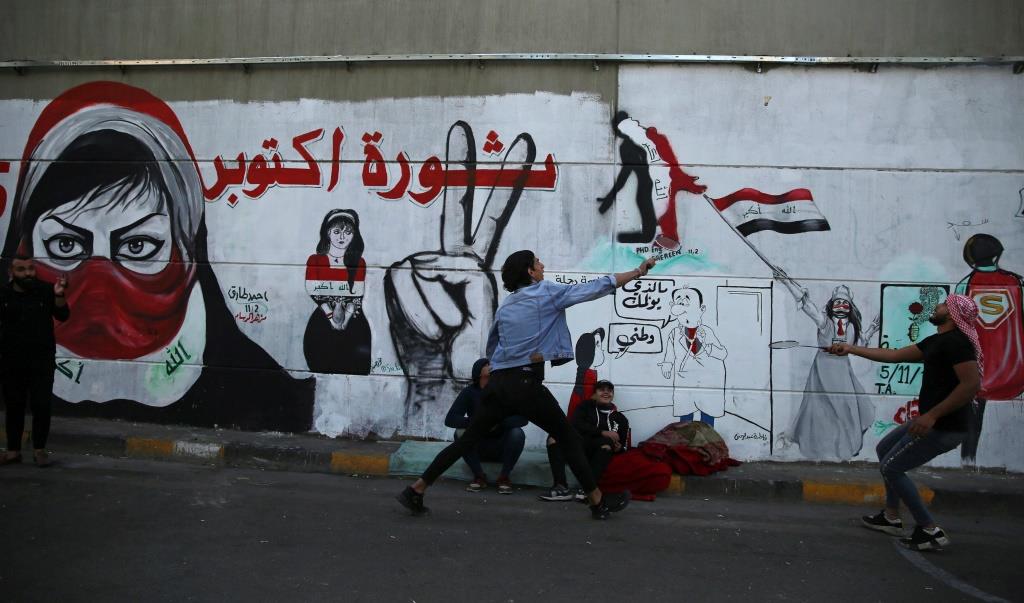
The ongoing protests across Iraq and Lebanon have invited references to a second Arab Spring, nearly nine years after a young Tunisian man set himself on fire and triggered a region-wide upheaval. The unrest comes on the heels of protests in Egypt and Jordan earlier this fall, a mass mobilization in Sudan this year, and a protest movement in Algeria that has endured since February. Recently, mass demonstrations have also broken out across Iran, suggesting the current wave may not remain confined to the Arab Middle East. Each of these episodes has been triggered by local, discrete events. But collectively, they reflect a broader struggle underway in the region on two fronts: within each country, between the public and the political leadership over the basic contours of the social contract underpinning these societies; and between various camps wishing to see a regional order that will reflect their preferences on such core issues as Iran’s presence across the Middle East, the integrity of territorial states, relations with the West, sectarianism, and democracy. It remains too soon to tell where the current unrest is headed, but as in 2011, both the regimes’ responses, and the degree to which the protesters manage to translate their demands into actionable policies, will likely prove decisive.With the exception of Jordan’s teachers’ strike in September, which concerned the relatively circumscribed matter of low salaries, the protests rocking the Middle East in recent months have set their sights far beyond a single issue or piece of legislation. These protests have an “anti-system” quality to them, demanding not simply the dismissal of a ruling elite but the wholesale dismantlement of the governing structures and economic systems that have nurtured that elite. Even in instances where the proximate trigger of the protests was a single policy move – for example, the decision of Algeria’s Bouteflika to run for re-election in February, or the dismissal of Iraq’s popular counter-terrorism chief in September, or a tax on WhatsApp calls in Lebanon in October, or the hike in gasoline prices in Iran – the initial provocation quickly receded in importance (and in some cases was reversed anyway) as the protests morphed into larger movements demanding systemic change.Why Donald Trump Should Fear Iran's Deadly Missile Arsenal
Iran's Coming Military Revolution
What South Korea, Japan, and Germany Think of American Troop Demands
New Oil Finds Could Mean a Tripling of Guyana’s GDP
This year, ExxonMobil announced its 11th and 12th oil finds in the small South American country of Guyana. The estimates of recoverable crude in the country now stand at roughly 5 billion barrels. On a per capita basis, this would put Guyana among the top 10 oil producers in the world. Whether the people of Guyana see much benefit from the windfall could have much to say about the fate of the oil industry, which is facing an uncertain future during an ongoing energy transition.Why Will Aung San Suu Kyi Personally Defend Myanmar Against Genocide Claims?
On November 20, Myanmar’s de facto head of state, State Counselor Aung San Suu Kyi, announced that she would lead the defense of her country at the International Court of Justice (ICJ) in The Hague, where Myanmar stands accused by The Gambia of violating the Genocide Convention 1948.Jeremy Corbyn Is Caught in Labour’s Immigration Wars
The free movement of people within the European Union is arguably one of the most progressive pieces of legislation of recent decades. In a continent that was ravaged by war and locked down by totalitarianism for much of the 20th century, people of all social classes are now—in theory at least—free to travel, live, and work where they please.Cow Aren't Killing the Planet: The Questionable Link Between Meat and Climate Change
As the scale and impacts of climate change become increasingly alarming, meat is a popular target for action. Advocates urge the public to eat less meat to save the environment. Some activists have called for taxing meat to reduce consumption of it.Note to Trump: Government Spending on Research Impacts the Economy and American Jobs
Who Are Turkey’s Proxy Fighters in Syria?
For DoD Transformation, a Holistic Approach Is Needed
Historians, Avoid The Mistakes We Economists Made!
Infographic Of The Day: Which Economies Are The Most Competitive?

New report finds costs of climate change impacts often underestimated
The Nomos of Cyberspace
The Incredibly True Story of Fake Headlines
Fake news is back in the news again (thanks to Mark Zuckerberg). But did it ever really leave? For some people, legitimate news from traditional media has become unreliable, no longer to be trusted. Is this at all fair?How the inventor of the web plans to make it safe and accessible for everyone
Today, half the world is online. And while that access brings tremendous benefits, it also fosters some of society's worst behaviour.