The Profession of Arms: A Guide for Young Army Officers
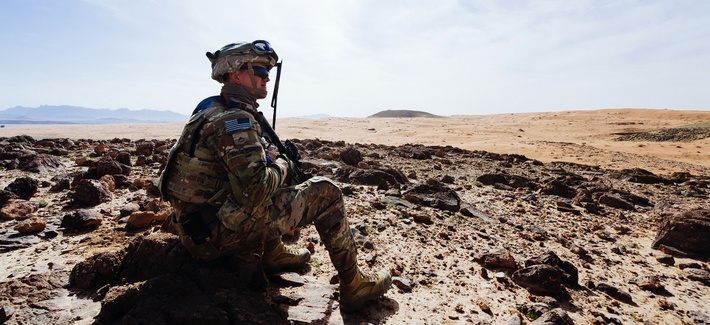
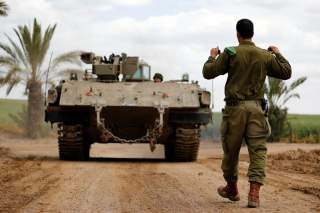
It takes courage, especially for a young officer, to check a man met on the road for not saluting properly or for slovenly appearance, but, every time he does, it adds to his stock of moral courage, and whatever the soldier may say, he has respect for the officer who does pull him up.
Read Document →The Dragon's Teeth: Assessing China's Military Modernization
PLA has focused on modernising its capabilities across all warfare domains to achieve these goals. This includes land, air, and maritime operations, nuclear, space, counter-space, electronic warfare and cyberspace operations, aiming to become a fully integrated joint force.
Read Document →Transforming the PLA: A Decade of reorganisation from SSF to ISF
PRC has engaged in a sustained and broad effort to transform the PLA from an infantry-heavy, low-technology, ground forces-centric military into a high-technology, networked force with an increasing emphasis on joint operations and naval and air power projection.
Read Document →Eyes without Borders: Exploring the World of Open Source Intelligence (OSINT) in the Digital Age
Open Source Intelligence (OSINT) is gaining prominence with the rise of social media, the digital society and the vast growth of publicly and commercially available information (PAI and CAI).
Read Document →
The PLA’s Developing Cyber Warfare Capabilities and India's Options
Informationised warfare blurs the lines between peacetime and wartime. A nation in the information age cannot wait for the hostilities to break out to collect intelligence, carryout influence operations, develop antisatellite systems or design computer software weapons.
Read Document →
Galwan and After
Why did China did this when he is under tremendous pressure in all fronts, is this China's salami slice tactics being progressed rigorously, what will be new Rules of Engagement, what will be escalatory control mechanism, who has taken this decision, will there be some pressure put by China in India's North-East through insurgency.
Read Document →
India’s Joint Doctrine for Cyberspace Operations: A Critical Review
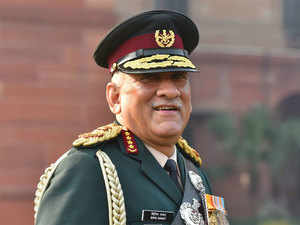
Chief of Defence Staff (CDS) General Anil Chauhan and Secretary, Department of Military Affairs, formally released declassified versions of the Joint Doctrines for Cyberspace Operations during the Chiefs of Staff Committee meeting in New Delhi.
Read Document →
Know your Enemy General(now Field Marshal) Syed Aseem Munir
Gen SA Munir's position in the hierarchy of Pakistan was not very comfortable. The state of economy, insurgency in Pakhtoonistan and Balochistan, attack on the Jaffar Express, constant protests by supporters of Imran Khan's supporters inside and outside of parliament.
Read Document →
Decoding Operation SINDOOR: Key Aspects and Implications
Precision strikes were carried out on nine sites—four in Pakistan and five in PoK—linked to anti-India terrorist groups such as the LeT, JeM and the Hizbul Mujahideen. The targeted sites included Muridke (LeT headquarters) and Bahawalpur (JeM headquarters).
Read Document →
Chinese Cyber Exploitation in India's Power Grid - Is There a linkage to Mumbai Power Outage?
The New York Times (NYT), based on analysis by a U.S. based private intelligence firm Recorded Future, reported that a Chinese entity penetrated India’s power grid at multiple load dispatch points. Chinese malware intruded into the control systems that manage electric supply across India, along with a high-voltage transmission substation and a coal-fired power plant
Read Document →11 February 2020
CDS makes renewed push for Defence University
India to Test Nirbhay Cruise Missile With Indigenous Propulsion System
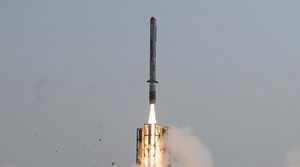
The Indian Ministry of Defense’s (MoD’s) Defense Research and Development Organization (DRDO) will test fire a nuclear-capable Nirbhay Long Range Land Attack Cruise Missile (LRLACM) fitted with an indigenous propulsion system in April, according to an Aeronautical Development Establishment (ADE) official who spoke to IHS Jane’s during the February 5 to 9 Defexpo 2020 exhibition in Lucknow, northern India.Coronavirus: what Xi fears most is Chinese turning on the Communist Party
HOW THE CORONAVIRUS HAS TESTED CHINA’S SYSTEM OF INFORMATION CONTROL
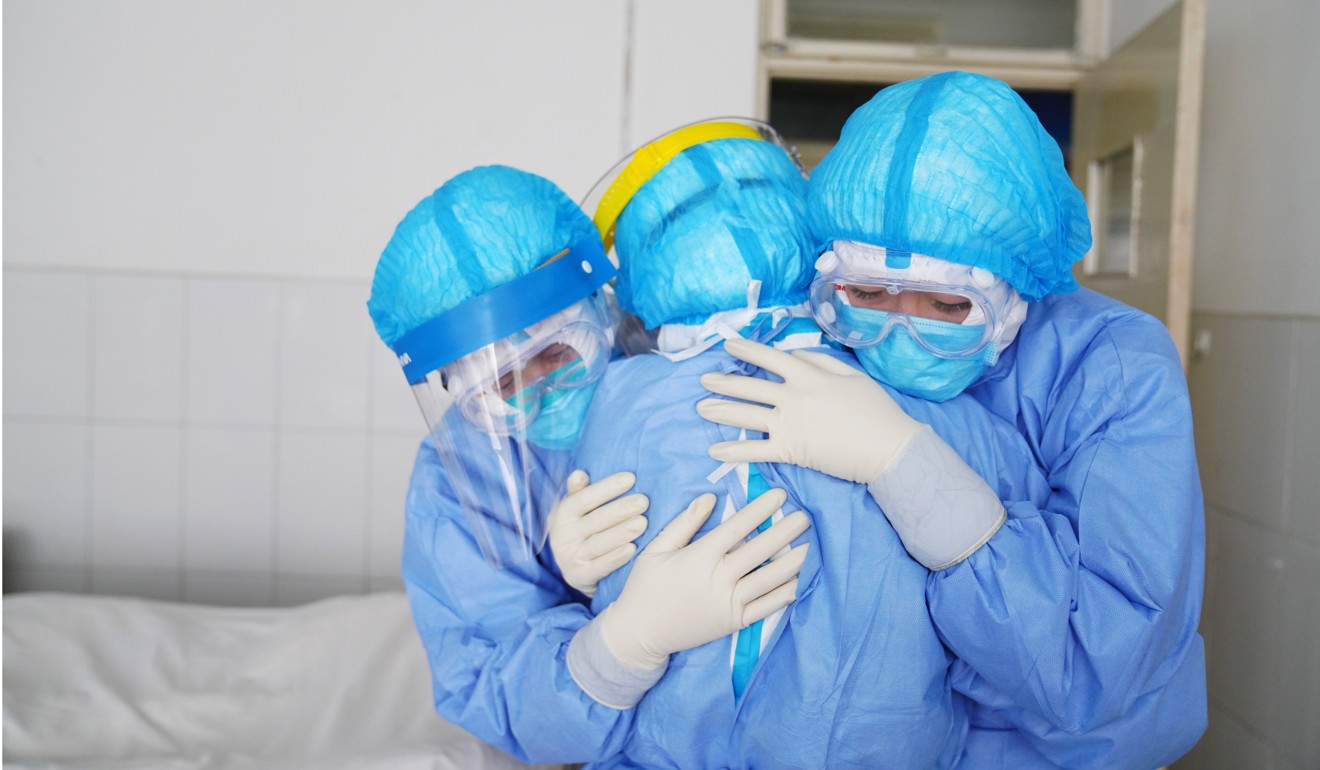
Around 5 p.m. on December 30th, Li Wenliang, an ophthalmologist at Wuhan Central Hospital, messaged his college-classmates group on WeChat. He told them that “seven confirmed cases of sars” were in quarantine at the hospital, then followed up with a correction: it was an unspecified coronavirus, which later became known as 2019-nCoV. Li wasn’t authorized to share the information, but he wanted to warn his former classmates—mostly fellow-physicians—so that they would know to protect themselves. He asked them not to share the news outside the group, but soon the chat had spread—via screenshot, with Li’s name attached—throughout and beyond Hubei Province, of which Wuhan is the capital. Li was irritated at first, but understanding.The Coronavirus Will Send Political and Economic Shockwaves Far Beyond China
Refocusing the China debate: American allies and the question of US-China “decoupling”
The Geo-Technological Triangle Between the US, China, and Taiwan
Misreading Clausewitz: The Enduring Relevance of On War
Democracy Is Good for Your Health—And Vice Versa
Next week, Iowans will caucus to choose a Democratic candidate for president. But an observer might be forgiven for thinking that the future of U.S. health care was the real choice on the ballot.The Fossil Fuelled Monster and the Climate Failures of States
Millions of school students, by striking to protest at government inaction on climate change, have brought popular rebellion back to the centre of international politics. The “Fridays for Future” strikes could turn out to be among the roots of deeper, wider, civil society movements to avert dangerous global warming. Whether or not the students see themselves as anti-capitalist, they are up against a web of relationships inherent to capitalism. Powerful older men such as US president Donald Trump and Russian president Vladimir Putin have not contained their anger at the school strikes – a tribute to their effectiveness. Far more important, though, is the strikes’ political character. Unlike many past protesters, the school strikers are not trying to convince governments with good arguments in letters or petitions. Their starting point is governments’ failure to act on climate change. As Greta Thunberg, who initiated the school strikes, said in her speech to the UN climate summit: “For more than 30 years, the science has been crystal clear. How dare you continue to look away and come here saying that you’re doing enough, when the politics and solutions needed are still nowhere in sight.”WHAT MATTERS MOST IN THE BATTLE BETWEEN TRUMP AND PELOSI
Getting practical about the future of workJanuary 2020 | Article
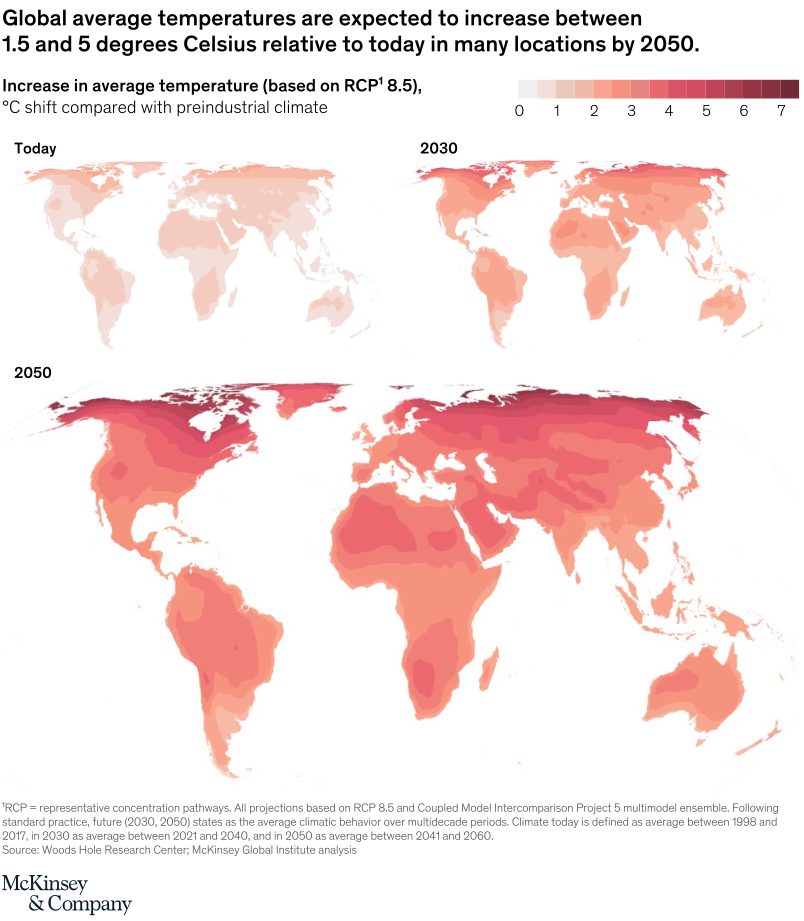
Climate risk and response: Physical hazards and socioeconomic impactsJanuary 2020 | Report
Why We Need A New Cold War Strategic Approach
The social contract in the 21st century
Fractious Party Politics Threatens to Upend a Succession Plan in Malaysia
The 2020 presidential candidates need to stop using Black Americans as symbols, and deliver substance
Are We Witnessing the End of Multilateralism?
The United Nations’ ability to carry out its mission has been severely constrained in recent years by its member states. And many of its agencies are now facing funding shortages that could severely curtail their work. In fact, multilateralism of all stripes is under strain, from the International Criminal Court to the World Trade Organization.Containment is the Correct Strategy for the Bipolar Middle East
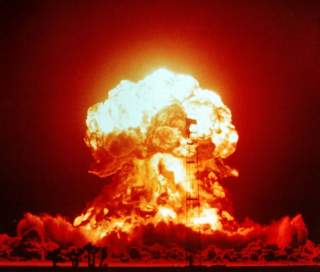
Hundreds Of Millions Would Die In A Nuclear War. Could It Happen?
Key point: While the threat of nuclear war between the United States and Soviet Union has ended, the United States now faces the prospect of a similar war with Russia or China.Adversarial artificial intelligence: winning the cyber security battle
A game plan for quantum computingFebruary 2020 | Article
5G could bring new speed to military operations
If the U.S. military introduced a fifth generation network in to its C4ISR systems, decision-making in high profile military operations would improve because critical information would arrive faster, according to a Jan. 31 Congressional Research Service report.