The Profession of Arms: A Guide for Young Army Officers
It takes courage, especially for a young officer, to check a man met on the road for not saluting properly or for slovenly appearance, but, every time he does, it adds to his stock of moral courage, and whatever the soldier may say, he has respect for the officer who does pull him up.
Read Document →The Dragon's Teeth: Assessing China's Military Modernization
PLA has focused on modernising its capabilities across all warfare domains to achieve these goals. This includes land, air, and maritime operations, nuclear, space, counter-space, electronic warfare and cyberspace operations, aiming to become a fully integrated joint force.
Read Document →Transforming the PLA: A Decade of reorganisation from SSF to ISF
PRC has engaged in a sustained and broad effort to transform the PLA from an infantry-heavy, low-technology, ground forces-centric military into a high-technology, networked force with an increasing emphasis on joint operations and naval and air power projection.
Read Document →Eyes without Borders: Exploring the World of Open Source Intelligence (OSINT) in the Digital Age
Open Source Intelligence (OSINT) is gaining prominence with the rise of social media, the digital society and the vast growth of publicly and commercially available information (PAI and CAI).
Read Document →
The PLA’s Developing Cyber Warfare Capabilities and India's Options
Informationised warfare blurs the lines between peacetime and wartime. A nation in the information age cannot wait for the hostilities to break out to collect intelligence, carryout influence operations, develop antisatellite systems or design computer software weapons.
Read Document →
Galwan and After
Why did China did this when he is under tremendous pressure in all fronts, is this China's salami slice tactics being progressed rigorously, what will be new Rules of Engagement, what will be escalatory control mechanism, who has taken this decision, will there be some pressure put by China in India's North-East through insurgency.
Read Document →
India’s Joint Doctrine for Cyberspace Operations: A Critical Review
Chief of Defence Staff (CDS) General Anil Chauhan and Secretary, Department of Military Affairs, formally released declassified versions of the Joint Doctrines for Cyberspace Operations during the Chiefs of Staff Committee meeting in New Delhi.
Read Document →
Know your Enemy General(now Field Marshal) Syed Aseem Munir
Gen SA Munir's position in the hierarchy of Pakistan was not very comfortable. The state of economy, insurgency in Pakhtoonistan and Balochistan, attack on the Jaffar Express, constant protests by supporters of Imran Khan's supporters inside and outside of parliament.
Read Document →
Decoding Operation SINDOOR: Key Aspects and Implications
Precision strikes were carried out on nine sites—four in Pakistan and five in PoK—linked to anti-India terrorist groups such as the LeT, JeM and the Hizbul Mujahideen. The targeted sites included Muridke (LeT headquarters) and Bahawalpur (JeM headquarters).
Read Document →
Chinese Cyber Exploitation in India's Power Grid - Is There a linkage to Mumbai Power Outage?
The New York Times (NYT), based on analysis by a U.S. based private intelligence firm Recorded Future, reported that a Chinese entity penetrated India’s power grid at multiple load dispatch points. Chinese malware intruded into the control systems that manage electric supply across India, along with a high-voltage transmission substation and a coal-fired power plant
Read Document →21 October 2022
Bombing to Lose Why Airpower Cannot Salvage Russia’s Doomed War in Ukraine

Afghanistan under the Taliban: Regional recalibrations, challenges, and ways forward
REFLECTIONS ON RUSSIA'S 2022 INVASION OF UKRAINE: COMBINED ARMS WARFARE, THE BATTALION TACTICAL GROUP AND WARS IN A FISHBOWL
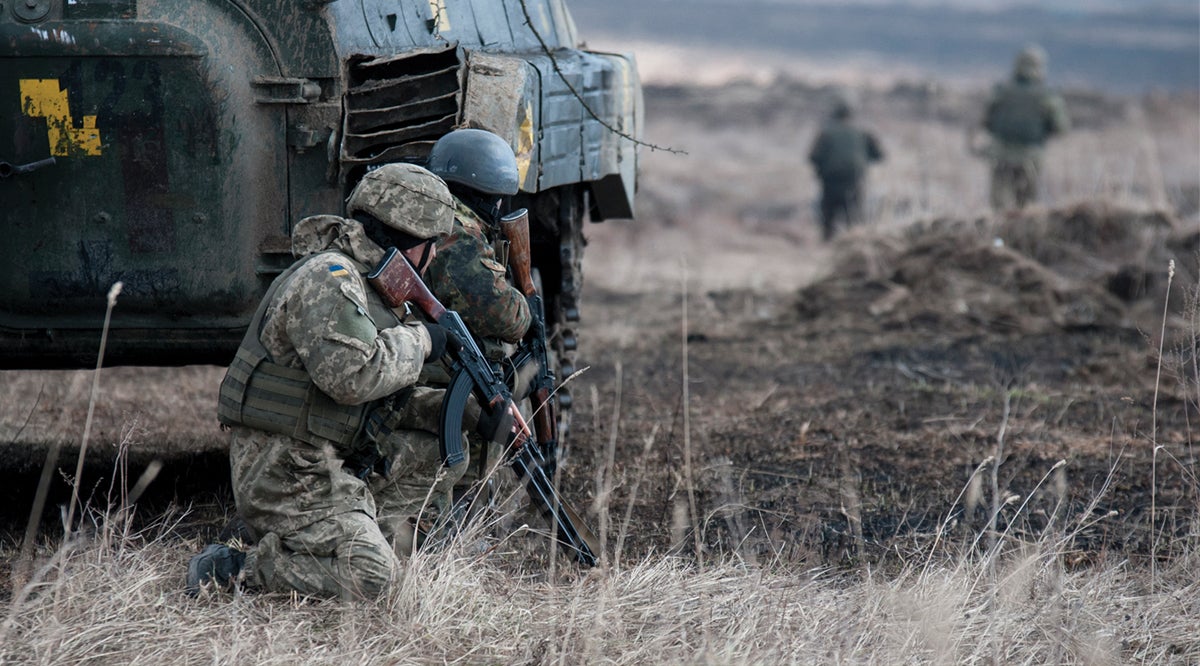
The Russo-Ukrainian War, which began in the spring of 2014, and had cooled by the spring of 2015, is hot once again. Russia’s re-invasion of Ukraine in February 2022 has officially brought inter-state conflict back to center stage and has placed state actors at the fore of contemporary armed conflict. Breaking with the obfuscated proxy approaches used during its 2014–2015 Crimean and Donbas campaigns, Russia’s most recent invasion has relied on conventional army forces operating in the open.Russia's Nuclear Signaling in Ukraine and China's Nuclear Policy
The 20th Party Congress is Underway: Will Xi’s Men Dominate the Next Politburo?
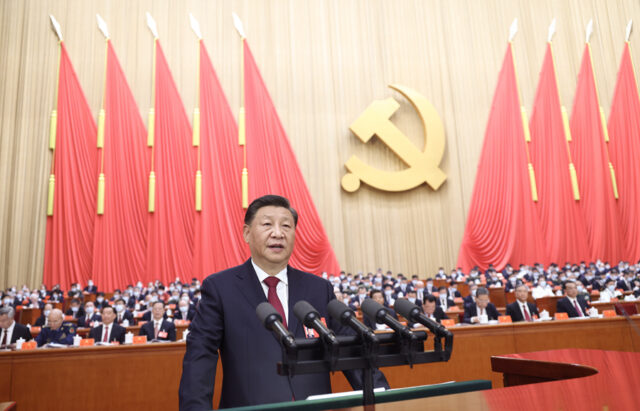
The Communist Party of China (CCP) convened its 20th Party Congress on Sunday (Xinhua, October 16). When the proceedings conclude, a new Politburo and Politburo Standing Committee (PBSC) will be revealed (China Brief, September 20). General Secretary Xi Jinping is expected to continue his third term as party chief and paramount leader and will also retain the key role of Central Military Commission (CMC) Chairman. Although the continuation of Xi’s tenure undermines former supreme leader Deng Xiaoping’s efforts to institutionalize the CCP’s top-leadership succession, the unwritten rule of “seven up, eight down” (ไธไธๅ
ซไธ, qi shang, ba xia) still heavily affects the selection process of the other twenty-four politburo members (China Times, October 19). Within the Politburo, those who have reached the age of 68 are required to retire from their positions and duties. With several PBSC and Politburo members headed for retirement, many are wondering who will take their place.The Zhejiang Model: Old-New Tools for Managing Contradictions and Creating Win-Win Outcomes in Center-Local Governance
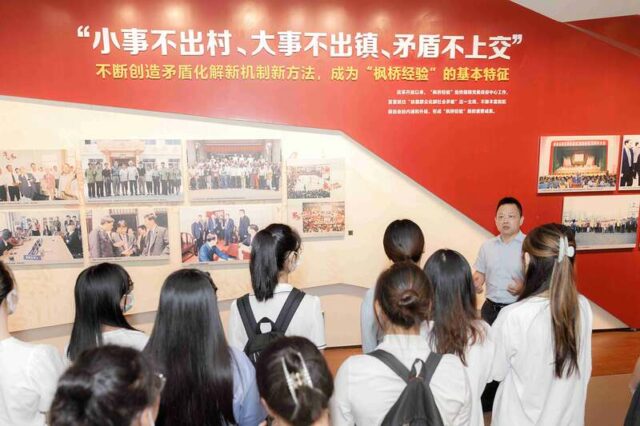
In the midst of an economic downturn, with the World Bank rather pessimistically predicting 2.8 percent year-on-year economic growth, the challenge of managing the growing tensions and contradictions within Chinese society remains at the top of Beijing’s agenda (South China Morning Post, September 27). In this context, this article examines the recently promoted model for managing contradictions, namely the “Fengqiao Experience” and the institutionalization-digitalization of social tension governance. In his work report to open the 20th Party Congress on October 16, General Secretary Xi Jinping discussed the optimal ways for resolving contradictions in society and cited the “Fengqiao Experience” (ๆซๆกฅ็ป้ช, Fengqiao jingyan) as the model solution (CCTV, October 17). Hence, the importance of the Maoist style experiences of Fenqiao, a small village in Zhejiang, have reached the top level. However, throughout this year, People’s Daily has promoted the “Fengqiao Experience” as the most important model to follow for the lower level bureaucrats.The Life and Death of United Front Promises From Revolution to (Re)-Unification Past, Present and Future
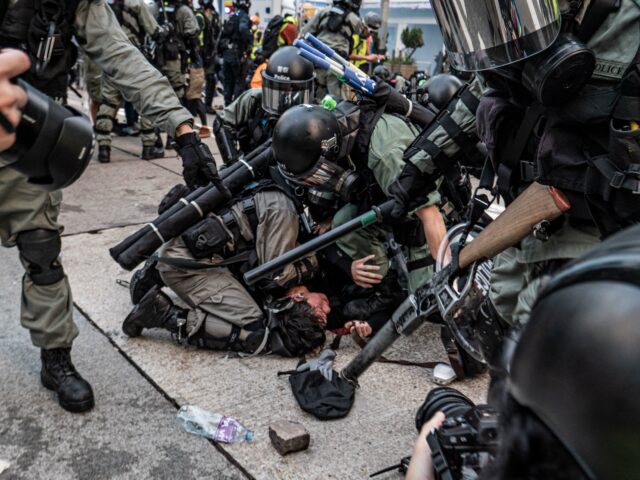
The Chinese Communist Party’s (CCP) dramatic show of military force in the Taiwan Straits between August 4-6, ostensibly in retaliation for the visit to Taipei by U.S. House Speaker Nancy Pelosi, the highest-ranking American visitor in decades, while impressive in many respects, was also a sign to the rest of the world of a key Chinese weakness (81.cn, August 6). Xi Jinping, as General Secretary of the CCP and state president, has few options left for gaining direct control over Taiwan other than by force. This is despite a decades-long offer under the banner of “One-Country, Two-Systems” (1C2S) and a “peaceful unification” deal proffered by Deng Xiaoping in the 1980s as part of United Front Work to bring Hong Kong, Macau and Taiwan under direct CCP control (PRC Ministry of Foreign Affairs [FMPRC]). Under this proposal, Taiwan would, in theory, be able to retain its systems of government and institutions and even military, if it recognized the Peoples Republic of China (PRC) as sovereign over it.The Ukraine Crisis and China-India Relations
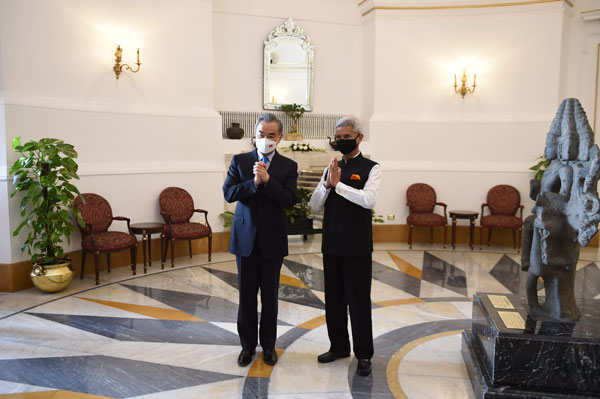
On March 25, State Councilor and Foreign Minister Wang Yi made a surprise visit to India after stopovers in Pakistan and Afghanistan (Ministry of Foreign Affairs of the People’s Republic of China [FMPRC], March 25). The visit was the first by a high-level Chinese official to India since December 2019 and the ongoing border standoff that broke out in May 2020 along the Line of Actual Control (LAC) in Eastern Ladakh. The sudden stopover, which was not announced in advance, generated speculation over Beijing’s intentions, particularly as it occurred in the immediate aftermath of Russia initiating its “special military operation” against Ukraine on February 24. This resulted in international condemnation and boycotts, and the imposition of economic sanctions by the U.S., the European Union, Japan and others on Russia. However, countries such as China and India, made an exception by choosing neutrality in condemning Russia. But did this shared position make any difference in improving China-India ties? Hitherto, relations have not substantively improved, notwithstanding the modest progress in the recent border talks. Following the 16th round of Corps Commander level talks on July 17, China and India stressed the “four-point consensus” they had reached on the resolution of the border issues (Xinhuanet, July 29). This “consensus” was further cited as the reason for the disengagement of troops from Patrolling Point-15 in Gogra-Hot Springs (Global Times, September 9). Notably, the disengagement followed a year-long impasse in the talks process and coincided with both countries’ participation in the Shanghai Cooperation Organization summit.Report to Congress on Hypersonic Weapons
How Silicon Valley Lost the Chips Race Money Alone Won’t Revive the U.S. Semiconductor Industry

Why Biden’s National Security Strategy Is Destined To Fail

Why So Much Talk About Nuclear Weapons?

Defense contractors eye long-term profits from Ukraine war
War and Regrets in Ukraine Washington may regret its role in the war in Ukraine.

How Germany Became Russia’s Chief Enabler
A Winter War In Ukraine Favors Russia And Will Be Bloody

Europe’s New Military Frontline

In Prague, Armenia and Azerbaijan Make a Critical Move Toward Peace

This Is How the World Ends

The Cyber Wild West
Xi Jinping’s Strategy Of Conflict

The Beginning of the End of the Islamic Republic Iranians Have Had Enough of Theocracy

Putin Says the Gloves Are Off — Believe Him

Reforms Will Keep India’s Russian-Built Arsenal Relevant ... For A While

What’s the Endgame for Afghanistan and Pakistan?

India-led Alliance Bats for Diverse Solar Energy Market