


BBC | Jonathan Beale, Firle Davies, Anastasiia Levchenko, Mariana Matveichuk
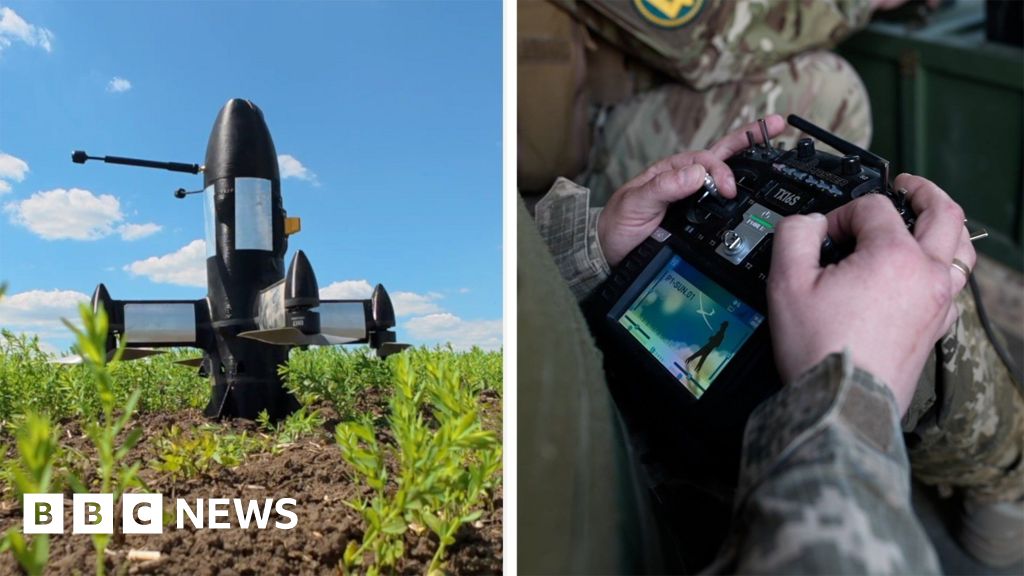 Ukraine has significantly enhanced its air defense capabilities against Russia's sustained aerial assaults, intercepting 94% of long-range drones and 73% of missiles in a recent 48-hour period, a marked improvement from 55% in May 2025. This layered system integrates Western-supplied Patriot missiles with innovative home-grown solutions, including mobile fire teams and cheap, mass-produced interceptor drones.
Central to this defense is the "Sky Map" software, which uses radars, thousands of sensors, video feeds, and artificial intelligence to detect threats and guide defenses, a system also adopted by the US for a Middle East base. Ukraine is now producing over 1,000 interceptor drones daily, such as the 3D-printed P1-SUN, which costs around $1,000 and can reach 300km/h with a 30km range, effectively destroying $50,000 Russian Shahed drones. Private companies, like Carmine Sky, are also integrated into the national air defense, operating remotely controlled machine guns in regions like Kharkiv, demonstrating faster scalability. Despite these advances, Ukraine still faces challenges, including a shortage of Patriot missiles for ballistic threats and difficulties countering small first-person-view (FPV) drones near the front lines, which remain a primary cause of casualties. Both sides are in an innovation battle, with Russia developing faster jet-powered and decoy drones to identify Ukrainian air defenses.
No comments:
Post a Comment