26 May 2026

Why Soft Power Deserves Some Credit

Eye on China  |  Anushka Saxena
Taiwan's Kuomintang (KMT) party caucus recently challenged Premier Cho Jung-tai over the operationalization of a labor migration agreement with India, signed in February 2024. This opposition, while partly political theater, highlights significant Taiwanese societal anxieties regarding immigration, particularly concerning the influx of Indian workers into "3K" jobs (dirty, dangerous, demanding). Public sentiment, evidenced by a petition with over 40,000 signatures, expresses concerns about social security, which the KMT leverages by citing Indian crime data to raise security issues. Despite Democratic Progressive Party (DPP) legislator Rosalia Wu's efforts to counter stereotypical arguments, Taiwan's limited immigration experience makes immediate acceptance difficult. For Delhi, the labor MoU alone is insufficient; a large-scale public diplomacy campaign targeting both Taiwanese citizens and policymakers is crucial to ensure Indian workers feel accommodated. While the KMT's opposition appears policy-specific rather than a broader hostility towards India, its "dialogue-over-deterrence" stance with China could indirectly reduce cooperation with India, impacting investments and labor mobility. India's ties with Taiwan have seen significant momentum under the DPP's New Southbound Policy, attracting major Taiwanese companies like Foxconn and PSMC. Delhi must monitor KMT's performance in Taiwan's upcoming 2026 mid-term elections, as a stronger KMT could present a more apathetic actor for India in 2028, potentially hindering institutional interlinkages built with the current DPP administration.

The Tehran-Delhi Loops: America’s War on Non-Dollar Oil Trade and the Multipolar Challenge

Niti Shastra  |  Navroop Singh, Himja Parekh
The early 2026 conflict in the Persian Gulf represents a determined American effort to dismantle parallel financial architectures that have allowed Iran, Russia, China, and India to trade oil and commodities outside the U.S. dollar system. This strategic intervention targets the "Tehran Loop," Iran's resilient shadow network for selling discounted crude to Asian buyers (especially China) via non-dollar payments, hawala, and crypto, with funds layered through Hong Kong and London. Simultaneously, the "Delhi Loop" facilitates India's purchase of discounted Russian oil through rupee-ruble trade via Special Rupee Vostro Accounts (SRVAs), with Russia investing surpluses in Indian government securities. The Trump administration responded with 25% tariffs on Indian imports tied to Russian oil purchases and sanctions on Chinese teapot refiners for Iranian oil. China countered by invoking its blocking statute against U.S. extraterritorial sanctions. Washington's overarching goal is to reassert petro-dollar dominance, compel Asian economies to diversify towards American energy, and disrupt emerging de-dollarization mechanisms like BRICS Pay, viewing these non-dollar loops as direct challenges to U.S. financial hegemony.

India’s Oil Chessboard: Safeguarding India’s Energy Security while defending the Delhi Loop

Niti Shastra  |  Navroop Singh, Himja Parekh
India has emerged as the pivotal battleground in global crude oil trade, with Russia, the United States, Saudi Arabia, and a newly independent United Arab Emirates fiercely competing for dominance. India's oil import dependence, at 88.6 percent and rising, positions it as the world's premier oil demand driver, projected to increase from 5.5 million barrels per day in 2023 to 6.6-6.7 million barrels per day by 2030. Following the February 2022 Ukraine invasion, Russia's share in India's crude imports skyrocketed from 2 percent to approximately 40 percent by mid-2025, reaching $52.73 billion in 2024 sales. This was largely facilitated by the non-dollar Rupee-Rouble "Delhi Loop" settlement mechanism, enabling payments in rupees via Special Rupee Vostro Accounts, bypassing Western sanctions. A February 2026 India-U.S. trade deal included India's pledge to purchase $500 billion worth of U.S. energy and other commodities over five years, aiming to scale U.S. crude and LNG volumes. Despite U.S. pressure, India maintained strategic autonomy, with Russian crude imports surging to 70 million barrels in March 2026 and 2.3 million barrels per day in May mid-2026 after the Iran war and Hormuz closure. The U.S. aims to make India a captive buyer, similar to Europe's reliance on American LNG. India must continue leveraging the Delhi Loop for energy security while diversifying suppliers.

Air-Conditioning Is in Short Supply as Asia Swelters

NYTIMES | Francesca Regalado, Muktita Suhartono, Saif Hasnat
South and Southeast Asia are experiencing an intense heat wave, with temperatures exceeding 100 degrees Fahrenheit, exacerbated by an energy crunch linked to the ongoing war in Iran. This crisis has led to widespread restrictions on air conditioning and electricity use across the region, impacting millions in countries like Bangladesh, the Philippines, Malaysia, Indonesia, Sri Lanka, and Thailand.

The Soda Ash Plant

BRIEF.PK 
Pakistan's most powerful unaccountable body has controversially transferred public resources, specifically water, from a water-scarce district to one of the nation's wealthiest conglomerates. This contentious decision directly benefits Lucky Core Industries, which operates a soda ash plant in Khewra, District Jhelum, a facility that has been operational since 1944.

PRC–Turkmenistan Gas Ties Hedge Hormuz Risk

JAMESTOWN.SUBSTACK | Matthew Johnson
The People’s Republic of China (PRC) is strategically intensifying its pursuit of overland energy security through Central Asia, primarily anchored by Turkmenistan, to reduce exposure to maritime chokepoints like the Strait of Hormuz amidst escalating Middle East conflicts.

Everything Everywhere All at Once: The Future of U.S. Strategy

Council on Foreign Relations  |  Richard Haass
U.S. foreign policy confronts a complex global environment, requiring simultaneous engagement with great power competition and transnational challenges. The U.S. must address the rise of China and Russia while also tackling climate change, pandemics, nuclear proliferation, and cyber threats, as these issues are interconnected and cannot be prioritized in isolation.

Iran rebuilding military industrial base faster than expected, already producing drones, according to US intel

EDITION | 
Iran has rapidly restarted drone production during a six-week ceasefire, indicating its military industrial base is reconstituting much faster than US intelligence initially estimated, challenging claims about the long-term degradation from US-Israeli strikes. This swift rebuilding, including missile sites, launchers, and key weapons production capacity, means Iran remains a significant regional threat, particularly if President Donald Trump resumes bombing campaigns.

On Iran, Trump Must Prioritize Hormuz over Nuclear Proliferation

NATIONALINTEREST | Brian G. Chow
The Trump administration should prioritize resolving the immediate Strait of Hormuz maritime crisis over Iran's nuclear program, advocating "sequential decoupling." This strategy involves first securing the strait's reopening to alleviate economic issues, then addressing nuclear disputes.

Saudi Arabia Is Building the Logistics Architecture the Iran War Exposed It Didn’t Have

FRAMETHEGLOBENEWS 
Saudi Arabia is actively developing a new logistics architecture, a strategic response to deficiencies exposed during the "Iran War." This initiative aims to bolster the Kingdom's infrastructure, which was deemed inadequate for wartime demands. Historically, the need for such projects was recognized in 1979, when King Khalid sanctioned the Petroline, the 1,200-kilometre East-West Crude Oil Pipeline, following the Iranian Revolution, which fundamentally reshaped the security of Gulf transit.

Daily Memo: US Support for Europe, Chinese Purchases of American Goods

GEOPOLITICALFUTURES |
The U.S. Pentagon reportedly plans to scale back its troop presence on the European Continent.

AI and the Future of Work: Preliminary Findings

SCSP | Senator Mike Rounds, Senator Mark Warner, Chris Malachowsky, Ylli Bajraktari
The United States stands at a critical juncture regarding artificial intelligence (AI), a general-purpose technology rapidly reshaping the American workforce with unprecedented speed and scope. This preliminary report from the Task Force on AI and the Future of Work assesses AI's profound implications, noting its potential for new discoveries alongside significant challenges to how knowledge, skills, and careers are developed.

Remarks by Under Secretary of War for Policy Elbridge Colby at the National War College (As Prepared)

WAR.GOV 
The United States military, under Secretary Hegseth's direction, is refocusing on its core function of fighting and winning wars, acknowledging a shift from terrorism to interstate strategic competition as the primary national security concern, as recognized by President Trump's 2018 National Defense Strategy. This new era, characterized by major power rivalry under the nuclear shadow, necessitates a military strategy that defends important, non-existential interests against nuclear-armed adversaries while maintaining costs and risks proportionate to American interests.

What Are U.S. Military Dollars Buying in Egypt?

FOREIGNPOLICY | Seth Binder
United States military aid to Egypt requires immediate and thorough congressional scrutiny to determine the precise returns on these significant financial investments. The core policy question centers on what U.S. military dollars are effectively purchasing in Egypt, highlighting a critical need for transparency and accountability within the bilateral defense relationship.
The US Is Quietly Torpedoing Its Relationship With Pacific Island Partners

THE DIPLOMAT | Daniel Mandell
The U.S. Government Accountability Office (GAO) recently reported that the Trump administration's failure to properly staff legally required positions for the Freely Associated States (FAS) — the Federated States of Micronesia, the Republic of the Marshall Islands, and the Republic of Palau — is undermining U.S.

Why has the tide turned against Russia in the Ukraine war?

The Week  |  Rafi Schwartz
Russian forces last month lost more territory to Ukraine than they captured, marking the first such occurrence in nearly two years and signaling a potential turning point in Moscow’s invasion. Russia is also losing soldiers faster than it can recruit and deploy them, indicating a shift in momentum towards Kyiv.

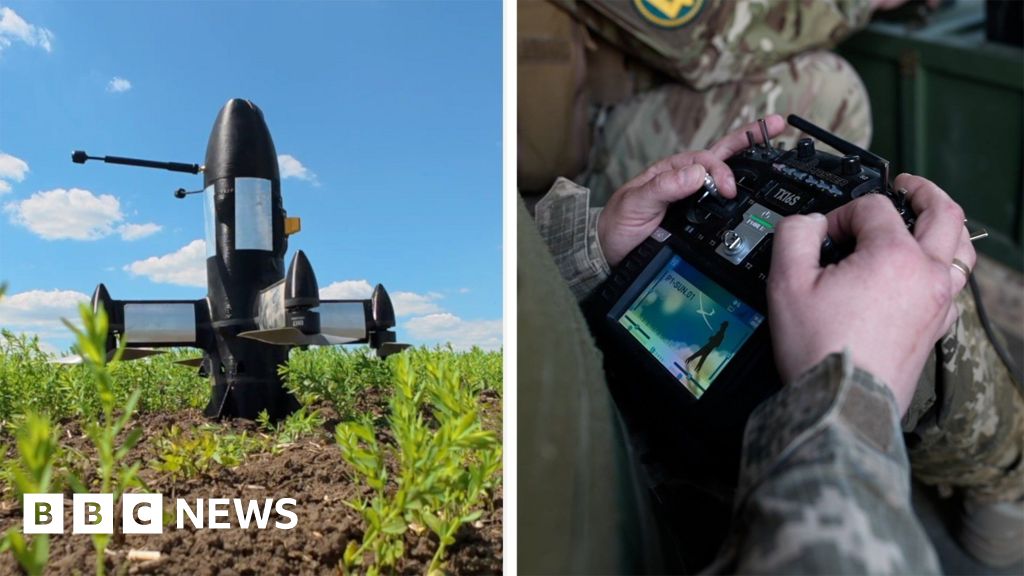
From AI to shotguns and cheap interceptors, Ukraine is trying to drone-proof its skies

BBC  |  Jonathan Beale, Firle Davies, Anastasiia Levchenko, Mariana Matveichuk
Ukraine's air defenses successfully intercepted 94% of 1,500 Russian drones and 73% of 56 missiles launched in a recent 48-hour period, preventing higher casualties despite 24 civilian deaths, including two sisters. This marks an improvement from 55% drone interception on 14 May 2025.

Inside Israel’s High-Tech Campaign to Kill or Capture Every Oct. 7 Attacker

WSJ | Dov Lieber
Israel has initiated a high-tech campaign aimed at identifying, killing, or capturing every militant responsible for the October 7, 2023 attack on southern Israel. This systematic effort leverages advanced surveillance capabilities to meticulously track down individuals who documented their actions during the assault, demonstrating Israel's significant intelligence acumen and its profound desire for retribution.

From AI to shotguns and cheap interceptors, Ukraine is trying to drone-proof its skies

BBC | Jonathan Beale, Firle Davies, Anastasiia Levchenko, Mariana Matveichuk
Ukraine has significantly enhanced its air defense capabilities against Russia's sustained aerial assaults, intercepting 94% of long-range drones and 73% of missiles in a recent 48-hour period, a marked improvement from 55% in May 2025. This layered system integrates Western-supplied Patriot missiles with innovative home-grown solutions, including mobile fire teams and cheap, mass-produced interceptor drones.

Ukraine Has a New War Strategy—and It’s Working

FOREIGNPOLICY | Paul Hockenos
The provided document, titled 'Ukraine Has a New War Strategy—and It’s Working', primarily consists of website boilerplate, navigation elements, and technical messages rather than substantive article content. It includes a cookie usage agreement, troubleshooting tips for a browser issue preventing proper loading, and various links for site navigation, newsletters, and account management.

The Adaptation Imperative: Innovation Is the Key to Containing the Worst Effects of Climate Change

FOREIGN AFFAIRS | Alice C. Hill
Governments worldwide are failing to reduce greenhouse gas emissions, causing the 2015 Paris agreement's goal of limiting global temperature rise to become increasingly unattainable.

A Powerful El Niรฑo Is Forming. If History Is a Guide, It Could Hit Hard.

NYTIMES 
A powerful El Niรฑo phenomenon is currently forming, prompting researchers to draw historic comparisons to significant past episodes. If historical patterns serve as a guide, this emerging El Niรฑo could hit hard, potentially altering the course of human events.

A Clean Shipping Crunch Is Looming Amid a Conventional Fuel Shortage

OILPRICE 
Norway's offshore shipping emissions targets, which are stricter than FuelEU Maritime, are poised to render much of the current fleet non-compliant by 2029. The escalation of conflict across the Middle East

Diverging AI Governance Structures in the Indo-Pacific

Nbr  |  Ryan Calo, Xinzi Lyu
Governments across the Indo-Pacific have adopted markedly diverging AI governance structures, despite generally seeking similar outcomes such as economic development and public-sector innovation, alongside addressing growing concerns regarding safety, accountability, and societal impact.

Special ops leader says Maduro mission set ‘new standard’

BREAKINGDEFENSE | Andrew White
The U.S. Special Operations Command (USSOCOM) commander, Admiral Frank M.