15 October 2020

Patents and Artificial Intelligence

Dewey Murdick

Patent data can provide insights into the most active countries, fields and organizations in artificial intelligence research. This data brief analyzes worldwide trends in AI patenting to offer metrics on inventive activity.

This data brief informs policymaker audiences who desire to understand how they might use patent data in planning for the quickly advancing impacts of Artificial Intelligence (AI). Such data can provide policymakers with insights into which areas of AI are rapidly developing, which countries are especially active in AI research, and which organizations are responsible for key AI inventions.

In this primer, we report analytic results on worldwide trends in AI patenting and suggest options for how these results might be interpreted and leveraged.

Key findings presented in this primer include:

There were 10 times as many AI patent applications published worldwide in 2019 as in 2013, most of which have yet to be examined.

Tracking AI Investment Initial Findings From the Private Markets

Zachary Arnold

The global AI industry is booming, with privately held firms pulling in nearly $40 billion in disclosed investment in 2019 alone. U.S. companies continue to attract the majority of that funding—64 percent of it in 2019—but that lead is not guaranteed. This report analyzes AI investment data from 2015 to 2019 to help better understand trends in the global AI landscape.Download Full Report

The private sector drives progress in artificial intelligence. National governments were once the prime movers behind strategic technologies, from networked systems to nuclear energy, and supported foundational work on AI techniques. But today, governments mostly rely on private companies to build their AI software, furnish their AI talent, and produce the AI advances that underpin economic and military competitiveness.

This shift brings risks and opportunities for the United States. America could reap massive security benefits from private sector AI innovation in the coming decades. Policymakers may be able to extend these benefits even further by developing policies that boost American AI companies’ economic prospects and guide them toward work supporting national security and public interests. Yet at the same time, other countries could harness their own companies to similar ends—or even exploit American private-sector strength by co-opting, subverting, or stealing from U.S. firms leading in AI innovation today.

CLTC Report: “Security Implications of 5G Networks”


A new report published by the Center for Long-Term Cybersecurity, “Security Implications of 5G Networks,” explores how the widespread adoption of fifth-generation (5G) cellular service will both bring potential improvements in security — and also expose new risks.

Authored by Jon Metzler, a lecturer at the Haas School of Business at UC Berkeley and founder of consulting firm Blue Field Strategies, the paper draws upon research and interviews conducted over a two-year period with support from a CLTC grant. The paper aims to help network operators — and their customers and partners — prepare for new risk vectors opened by 5G service, in terms of service models or network deployment models, at a critical moment in the development of 5G. “The long-lasting nature of network investments means that supplier selection decisions will have implications for decades,” Metzler writes.

Network operators around the world are rapidly expanding 5G service, and this new technology is expected to have significant advantages over prior generations, including increased speed, reduced latency (the time lag experienced by the user between a query and response), and the ability to “slice” wireless spectrum to support different applications. Yet 5G also has potential to introduce new security concerns by introducing greater diversity in suppliers, increased densification in network devices, and other factors.

The paper aims to help policymakers understand the economic and operational implications of 5G network deployment, including the switching costs of replacing suppliers and the site access needed to deploy robust, pervasive 5G networks; and to highlight security benefits of deploying both 5G RAN (which provides the wireless interface with customer devices and manages related radio resources) and core (which handles authentication, switching, interface with other networks, etc.)

The Analytic Edge: Leveraging Emerging Technologies to Transform Intelligence Analysis CSIS Briefs


How well and how rapidly the intelligence community (IC) integrates emerging technologies into all-source analysis will be vital to its ability to generate timely, relevant, and accurate strategic insights and to sustain policymakers’ decisionmaking advantage over capable rivals.

Artificial intelligence (AI) and associated technologies cannot replicate all the complexities of crafting strategic analysis but can automate, enhance, and enable key parts of the analytic process and be used to unlock new insights to inform analytic judgments.

AI can assist analysts in streamlining and sensemaking of exponentially growing intelligence data. With fewer tasks, better data, and machine-derived insights, analysts will have more strategic bandwidth to apply their expertise and deliver high-level analysis to policymakers.

To harness advanced technologies, IC analysts must overcome a host of challenges, barriers, and limitations—in the underlying data, algorithms, and ultimately the analysts themselves.

IC leaders and stakeholders—policymakers, Congress, the technology, and research sectors—must provide the analytic workforce the technology and training to thrive today while laying the digital groundwork, institutional priorities, and cultural norms for future success.

INTRODUCTION

Diving into the Intelligence Disciplines: Deep Vs. Dark Web

Katie Keller

Do you love going down the rabbit hole to find that next critical piece of information? Do you surf the deep and dark web waves? When you find a piece of string do you rip it, or pull it until you get to the source? Here, on this episode of ‘Diving into the Disciplines,’ we’ll take a look at the
intelligence professionals who scour the web for open source secrets – also known as open-source intelligence, or OSINT. 

Of all the intelligence disciplines, OSINT is probably the most widely used in both national security and the private sector for obvious reasons: it is easily retrieved and exists in the public domain. U.S. law defines OSINT as data produced from publicly available information that is collected, analyzed, and disseminated while addressing a specific intelligence requirement. 

OSINT has been prevalent for years, but has become even more important since the onset of COVID-19. With analysts working outside of the SCIF, sometimes OSINT is the only option. Just because it’s public, doesn’t mean it’s easy to find. The surface web – the kind of information gathered with a basic Google or search engine, is just one aspect of OSINT. 
DIVING DEEPER ON THE WEB

OSINT Analysts also retrieve information from the deep web and dark web. The deep web refers to non-indexed pages, while the dark web refers to non-indexed pages that are involved in illegal activity – mainly content that resides on darknets and overlay networks that require a certain software or configuration to view. 

Weaponizing Digital Trade

Robert K. Knake

“The United States should shift its diplomatic efforts from promoting a global, open internet to preserving an open internet that connects the digital economies of democratic countries,” argues Whitney Shepardson Senior Fellow Robert K. Knake in a new Council Special Report, Weaponizing Digital Trade: Creating a Digital Trade Zone to Promote Online Freedom and Cybersecurity.

“China, Russia, and other authoritarian regimes are working to limit what information flows in and out of their national borders while constantly surveilling internet users inside their networks,” he warns. “If the United States is unable to develop a competing vision, a decade from now the internet as we know it will no longer be recognizable.”

“More and more countries are being drawn into the Chinese model of state-controlled networks that limit privacy, build in the capacity for censorship, and provide the backbone for the surveillance state,” Knake explains. By forming a digital trade zone among democracies, “the United States and its allies can create a compelling alternative to the authoritarian web,” he writes.

The author makes a number of recommendations for the U.S. government to create a digital trade zone, including:

Artificial Intelligence and Countering Violent Extremism: A Primer

By GNET Team

Please read on for the Introduction.

According to popular belief, artificial intelligence (AI) will revolutionise everything, including national security. To what effect the internet facilitates radicalisation remains an unanswered question, but the latest terror attacks, in Halle in eastern Germany, Christchurch in New Zealand and at Poway synagogue in California, are just three recent examples of the online sphere playing a significant role in radicalisation today.

How can AI help to counter radicalisation online? Expertise on the matter is divided into different disciplines but can be found among researchers and experts from security and counterterrorism backgrounds, as well as policymakers and tech‑experts, who increasingly come together to investigate this domain. Currently, the existing landscape of information makes it difficult for decision‑makers to filter real information from the noise. This report wants to shed light on the latest developments in AI and put them in the context of counter‑radicalisation efforts in liberal democracies.

This publication contributes to the topic by highlighting some limits and possibilities of AI in counter‑radicalisation online. The second chapter briefly explains the key concepts and ideas behind AI. In a ‘Deep Dive’ at the end of the chapter, special attention is given to the quality of data and bias and manipulation in datasets. The third chapter discusses the potential provided by and limitations of AI‑based technological innovations for a ‘healthy’ online space, free from terrorist content, propaganda material and fake engagement. The assumption is that this healthy online environment contributes to the prevention of radicalisation. The chapter assesses a range of popular AI‑based concepts, ranging from Deepfakes to bot armies spreading fake news, and explains why search engines, recommendation systems and, in particular, natural language processing (NLP) have the potential to contribute to this objective in one way or another. The fourth chapter looks solely at a hypothetical ‘general AI’, the omniscient system that identifies individuals undergoing radicalisation and can consequently help law enforcement to prevent crime before it happens. This chapter also argues, however, that such AI technology will remain solely in the realm of science fiction for the foreseeable future. This leads to a discussion of the reasons behind such a position. Big data debates, especially regarding traditional security, cannot take place in liberal democracies without safeguarding and prioritising privacy. Another ‘Deep Dive’ in chapter four provides more information for the interested reader. The fifth chapter concludes the report.
Logic and Grammar: Clausewitz and the Language of War

Christopher Saunders

“The main lines along which military events progress, and to which they are restricted, are political lines that continue throughout the war into the subsequent peace. How could it be otherwise?...Is war not just another expression of their thoughts, another form of speech or writing? Its grammar, indeed, may be its own, but not its logic."[1] 

INTRODUCTION

In Book One of On War, Clausewitz introduces the concept of war as “merely the continuation of policy by other means.”[2] This most famous of Clausewitz’s dictums introduces a critical perspective of war as both a tool of grand strategy that is dominated by politics, but also as something that is inherently temporal.[3] War cannot readily be decoupled or isolated from the higher policy context that triggers it, runs through it, and continues after the guns fall silent. This perspective is developed in Book Eight under the assertion that “war is an instrument of policy,” and this provides the opening quote and focus of this article.[4] Book Eight explores the concept of war plans; here Clausewitz draws together the threads of war and policy to weave his observations on the relationship between policy (the logic) and the conduct (or grammar) of war.[5]
View fullsize

Carl von Clausewitz (Karl Wilhelm Wach/Wikimedia)

Clausewitz’s concepts of grammar and logic have stood the test of time. His dictum that war is indeed “the continuation of policy by other means” holds true today, and while the character of war has evolved, the higher logic and the influence of policy has remained a constant. This article will first address some key definitions, before exploring the concept of logic and grammar as introduced in On War and as they relate to his own experiences. These concepts will then be explored through the prisms of two contrasting case studies: industrialised warfare on the Western Front during the First World War, and the new logic of war in the face of the unprecedented existential threat of the Nuclear Age.

A short note on translations. In the 1976 Howard and Paret translation of On War, the German politik could be translated as both politics and policy.[6] In their translation however, Howard and Paret chose to use policy, while retaining the dual-meaning from the original German and reinforcing that “war is an instrument of policy.”[7] Strachan offers a concise explanation of the term’s dual-meaning in German:

14 October 2020

Trump wants the troops home from Afghanistan by Christmas

Michael E. O’Hanlon

Perhaps sensing electoral doom and looking for a Hail Mary, President Trump recently tweeted that U.S. troops in Afghanistan should be home by Christmas. This radical departure in U.S. plans came a day after his national security advisor, Robert O’Brien, had announced that American forces in Afghanistan would decline to some 2,500 by early 2021. That was already a big additional cut, as it would halve the previously decided number and represent a more than 97% reduction from the peak U.S. strength of the early Obama years.

Now we are supposedly aiming for zero before the end of this year. It is not yet clear if Trump’s tweet amounts to a hope, a plan, or an order — but as commander in chief, he might well have the power to insist on execution of such a decision unilaterally, even if Congress tried to override his decision.

Predictably, the first to congratulate Trump on his tweet were Taliban leaders, who were already interpreting the February 29 accord they signed earlier this year with Trump to require a complete U.S. departure by May 2021. If he is willing to move up the date by five months, and make sure that a President Biden could not revisit that idea, all the better, they likely reckoned. Never mind that the Taliban, according to the U.N., retain ties with al-Qaida elements like the Haqqani network that technically put them in noncompliance with the February 29 accord themselves. Never mind that violence in Afghanistan, initiated by the Taliban, remains undiminished, violating the spirit if not the letter of that same agreement.

China’s Belt and Road Initiative Is a Mess, Not a Master Plan

BY LEE JONES

Confrontation with China is reaching fever pitch in many Western countries. Clashes over trade, the South China Sea, COVID-19, and Huawei’s role in 5G development all signify a growing appetite for a new Cold War with Beijing. But while there are many good reasons to criticize China, there is also mounting danger that blanket Sinophobia generates distorted understandings of Chinese behavior, and knee-jerk policy reactions follow.

As Shahar Hameiri and I argue in a new report for British think tank Chatham House, this is certainly true when it comes to China’s Belt and Road Initiative (BRI). President Xi Jinping’s signature foreign policy, the BRI promotes infrastructure connectivity across Eurasia and east Africa. Pundits and policymakers typically view it as a grand strategy designed to challenge US hegemony, requiring a confrontational response.

Narratives of debt-trap diplomacy, originating in a New Delhi think tank, have been especially influential. Beijing is supposedly deliberately luring poor countries into unsustainable debts to finance infrastructure projects, enabling China to seize these assets when recipients experience debt distress, extending China’s strategic reach. As secretary of state, Rex Tillerson lambasted the BRI’s “predatory economics,” while Vice President Pence accuses Beijing of using debt-trap diplomacy in Sri Lanka to establish a “forward military base for China’s growing blue-water navy.”

China Wrestles with the Toxic Aftermath of Rare Earth Mining

BY MICHAEL STANDAERT

The mountains north of the village of Lingbeizhen in southern Jiangxi province no longer echo with the rumble of bulldozers and trucks. New bamboo groves climb the ravines. Tropical pines and navel orange trees grace terraces carved from the mountainsides, covering what was a hive of activity a few years back.

Higher up, where it is more difficult to replant and where erosion has taken its toll, nearly every knoll and mountaintop is scarred from mining activity. Black rubber hoses curl in the sun. PVC pipes, their ragged edges protruding from the red clay, mark where small crews of miners injected tons of ammonium sulfate, ammonium chloride, and other chemicals into the earth to separate valuable rare earth metals from the surrounding soil.

Beginning in the 1990s, rare earth mining took off in this region, located in Southeast China about 300 miles north of Hong Kong. As China began to produce more smartphones, wind turbines, electric vehicles, and other high-tech products requiring rare earth elements, the mining intensified. But the removal of these elements from the earth’s crust, using a mix of water and chemicals, caused extensive water and soil pollution.

Understanding China’s Digital Yuan


The People’s Bank of China (PBOC), China’s central bank, is expected to publicly launch a digital version of the yuan as soon as late 2020. The project is being fast-tracked, partly in response to Facebook’s Libra and the COVID-19 pandemic. The PBOC has rolled out pilot tests in at least four cities, reportedly with the participation of U.S. businesses. While various countries are conducting research and development on central bank digital currencies, China is significantly ahead and appears poised to be the first large economy to issue such a currency.

The digital yuan is 100% programmable and trackable, meaning the Chinese government can monitor capital flows in great detail and impose limitations or preconditions on the currency’s use.

The digital yuan poses meaningful threats to the diplomatic, informational, and economic interests of the United States and its allies. Among them, the digital yuan will help China internationalize its currency, promoting the yuan as a rival or alternative to the U.S. dollar; enable China to expand and export its surveillance capabilities by providing a window into and control over the economic activity of users within its borders or abroad; and allow China to circumvent sanctions, arms embargos, and money laundering regulations by providing an alternative to the existing dollar-based system of international payments, which is policed by Western financial institutions.

China’s Belt and Road Initiative Is a Mess, Not a Master Plan


BY LEE JONES

Confrontation with China is reaching fever pitch in many Western countries. Clashes over trade, the South China Sea, COVID-19, and Huawei’s role in 5G development all signify a growing appetite for a new Cold War with Beijing. But while there are many good reasons to criticize China, there is also mounting danger that blanket Sinophobia generates distorted understandings of Chinese behavior, and knee-jerk policy reactions follow.

As Shahar Hameiri and I argue in a new report for British think tank Chatham House, this is certainly true when it comes to China’s Belt and Road Initiative (BRI). President Xi Jinping’s signature foreign policy, the BRI promotes infrastructure connectivity across Eurasia and east Africa. Pundits and policymakers typically view it as a grand strategy designed to challenge US hegemony, requiring a confrontational response.

Narratives of debt-trap diplomacy, originating in a New Delhi think tank, have been especially influential. Beijing is supposedly deliberately luring poor countries into unsustainable debts to finance infrastructure projects, enabling China to seize these assets when recipients experience debt distress, extending China’s strategic reach. As secretary of state, Rex Tillerson lambasted the BRI’s “predatory economics,” while Vice President Pence accuses Beijing of using debt-trap diplomacy in Sri Lanka to establish a “forward military base for China’s growing blue-water navy.”

Don’t Let China Greenwash Its Belt and Road


Chinese leader Xi Jinping surprised the world in late September by announcing that China would become carbon neutral by 2060. But this promise will amount to little if Xi’s signature foreign policy vision, the Belt and Road Initiative (BRI), continues exporting China’s environmental challenges globally. China’s poor environmental record abroad presents a strategic opportunity for the United States, if only Washington would seize it.

It has been a rough ride for China’s Belt and Road, which recently turned seven. When Xi unveiled his signature foreign policy vision, he said it aimed to “make the economic ties closer, mutual cooperation deeper, and space of development broader.” Instead, it has made developing countries’ debt unstainable, mutual suspicion deeper, and the space of development more polluted.

Washington has tried to slow the BRI juggernaut by highlighting its dangers, but on environmental issues, it has ceded to Beijing what should be a strategic advantage. The United States has put forward its vision for a “Free and Open Indo-Pacific,” which waxes poetic about improving the “environment” for business, investment, and procurement. Mother Nature barely gets a nod. 

To Understand China’s Aggressive Foreign Policy, Look at Its Domestic Politics

by Christopher W. Bishop

Christopher W. Bishop is Council on Foreign Relations international affairs fellow in Canada at the University of Ottawa Centre for International Policy Studies and a fellow of the Canadian Global Affairs Institute. A U.S. foreign service officer, he is currently on leave from the Department of State. These are his personal views, and do not necessarily represent the views of the Department of State or the U.S. government.

In the past six months, Chinese foreign policy appears to have taken a dramatic and aggressive turn. China has lashed out at Australia for questioning its handling of the COVID-19 pandemic, bolstered its claims in the South China Sea, stepped up patrols around the Japanese-controlled Senkaku/Diaoyu Islands, clashed with India in the Himalayas, and sent warplanes across the median line in the Taiwan Strait. It has also doubled down on efforts to defend Huawei by charging Canadians Michael Kovrig and Michael Spavor with espionage after a Canadian court refused to stop extradition proceedings against CFO Meng Wanzhou, and warned the United Kingdom it would “bear the consequences” for excluding the telecom giant from its 5G network. Most striking of all, Beijing has cracked down on the once semi-autonomous region of Hong Kong, enacting a far-reaching National Security Law and arresting multiple pro-democracy activists.

Chinese officials have defended these moves as responses to external “provocations.” Others, however, have argued Beijing’s new hard-line foreign policy represents a more fundamental shift under President Xi Jinping—a radical departure from an older approach associated with the late Deng Xiaoping and the proverb “hide your strength, bide your time.”

Turkey in the Mirror of the United States

By Ece Temelkuran

In the 1960s, conservative Turkish politicians often promised to transform Turkey into a “small America.” That pledge was premised on a hopeful vision of the United States, a country that many Turks wanted to emulate. But a half century later, it is the United States that finds itself well on the way to becoming a bigger version of Turkey and not the other way around.

If they were not clear already, the darker strains of Donald Trump’s presidency have been revealed in recent months. He has turned the coronavirus pandemic—mishandled spectacularly by his administration—into another front in an unending culture war against his political rivals and the media. The uprising that erupted after the police killing of George Floyd, meanwhile, did not prompt the president to reflect on the inequities of American society or to try to soothe the raw emotions of the street. Instead, he portrayed

Yemen Should be a Factor in U.S. Yemen Policy


The Washington Post reported on 25 September that U.S. officials are considering a potentially consequential new step in Washington’s approach to Yemen: either designating the Huthis – the term used by most Yemenis to describe the rebel group that controls the capital Sanaa and much of north-western Yemen and calls itself Ansar Allah – as a foreign terrorist organisation or naming particular Huthi leaders as specially designated global terrorists. When Washington designates a group as a foreign terrorist organisation, it makes material support for that group a crime, freezes its assets and bars its members from entering the U.S. The consequences of an individual designation are similar but slightly less onerous. Although there are technical criteria for designation, which officials say the Huthis largely fulfil, the decision to name a group or individual is ultimately a political one – and extremely hard to reverse. In line with the Post’s reporting, U.S. officials and non-U.S. diplomats tell Crisis Group that the move is being framed in internal deliberations as an expansion of the Trump administration’s “maximum pressure” campaign against Tehran. Others say discussions of a designation were prompted by direct requests from Saudi Arabia and the United Arab Emirates, the two Gulf monarchies leading the coalition that has intervened against the Huthis, who seized control of Sanaa from the internationally recognised government in September 2014, triggering the current civil war. 

Support for a designation within the U.S. government is not unanimous. A number of officials across the executive branch are said to oppose the move, arguing that it could impede fragile diplomatic efforts in Yemen, push the Huthis further into Iran’s arms, worsen the humanitarian crisis and cause an escalation in the conflict. While it is hard to imagine that proponents of a designation have not considered the knock-on effects it would have on diplomacy or the course of Yemen’s war, they at least seem not to be bothered by those consequences. 
Yemen’s officials see a designation as a way of reiterating their stance that they are the sole legitimate authority. 

Turkey’s increasingly assertive foreign policy


President Erdogan has moved aggressively in recent years to demonstrate that Turkey sees itself as the pre-eminent political and military power in the Middle East and eastern Mediterranean. This policy shift reflects growing Turkish capabilities, but is also an attempt by Erdogan to preserve his domestic standing amid deteriorating economic conditions that have undermined the popularity of his political party, the AKP.

Turkish President Recep Tayyip Erdogan’s increasingly assertive policies in the eastern Mediterranean region are due to the convergence of several factors. These include both long-cherished aspirations, such as reducing Turkey’s dependence on energy imports and establishing Ankara as the pre-eminent power in the Middle East, and more recent changes, such as the centralisation of political power in Erdogan’s own hands and the fast growth of the Turkish defence industry. But the main factor driving him to act assertively is a desire to preserve his domestic political standing.

Despite the control Erdogan exercises over the flow of information to the public, through the government’s domination of the Turkish media and its suppression of domestic dissent, opinion polls suggest that his popularity is declining, not least as a result of the slowing Turkish economy. With little prospect of a sustained economic upturn, and faced with both a revitalised opposition and growing unease within his own Justice and Development Party (AKP), Erdogan is now trying to shift attention abroad and boost his support by appealing to Turkish nationalism. From this perspective, unless Erdogan can show that he is being actively courted by international actors, he may have more to gain from stoking confrontations than from seeking harmony. But there is a risk that he will overestimate Turkey’s capabilities, leaving it vulnerable to overstretch – particularly given its limited military resources in terms of special forces and manned aircraft – and to increased international isolation that could further weaken the economy.

The emergence of strategic capitalism: Geoeconomics, corporate statecraft and the repurposing of the global economy


The global economy is gradually drifting in the direction of strategic capitalism. In contrast to the free market capitalism prevailing in past decades, by resorting to geoeconomic measures, governments are imposing conditions on which goods, services and technologies can be transacted and which foreign economic partners are deemed trustworthy. Companies try to preserve their businesses as far as possible while at the same time recognize they have limited control over the unfolding geoeconomic shifts. The resulting market behaviour is a nuanced attitude that could be called corporate statecraft: companies are both constraining and stimulating state geoeconomic measures. The article describes this dynamic, in which the rise of China plays a central role, and argues that the dynamic between state geoeconomic measures and corporate statecraft will define how far the global economy will depart from the current market orientation and how much it will be subject to national strategic choices.

Syria and the Russian Armed Forces: An Evaluation of Moscow’s Military Strategy and Operational Performance


Introduction

The Russian Federation’s intervention in Syria has been a qualified success from the Kremlin’s perspective, and certainly from the Russian General Staff’s. The expeditionary operation has accomplished many of the initial objectives of the campaign and continues to serve the institutional interests of the Russian military. True, the war is not over, and Russia’s “victory” may yet prove a thorny crown to wear, as it has for countless other great powers who came to the Middle East in search of influence. However, Russia’s military operation merits examination, particularly because at the time of initiation, many had presumed the outcome would be a quagmire. Furthermore, the war in Syria has proven a crucible for evolution in Russian operational art, capability development, and strategy. It will influence an entire generation of military leadership.

A systemic examination of the intervention would seek to first establish what was known about the original Russian political goals, understanding that the ends sought may change over the course of a war, and the extent to which the military campaign was able to accomplish them. Did the Russian military strategy marry with the political ends, and were the ways and means visibly linked to supporting those objectives? This chapter seeks to understand how Moscow was able to achieve relative success in saving the Syrian regime, destroying the opposition, and aiding Assad in recapturing much of Syria’s population centers. This chapter also briefly reviews Russia’s road to war and its political objectives in Syria, then conducts an in-depth evaluation of Russia’s military performance in the Syrian War and the war’s impact on Russian military capabilities.

Continue reading the chapter here.

Robert Malley on the ‘Lack of Change Propelling Change’ in the Middle East


The Middle East is “a place that is both remarkably impervious to change…and at the same time always sort of on the verge of an explosion, where you always think that something quite catastrophic could happen,” says Robert Malley, president and CEO of International Crisis Group and a former special adviser on the region to former President Barack Obama.

This volatility grows out of the tension between popular demands for greater responsiveness and accountability from governments, especially since the 2011 uprisings, and the “sclerotic nature…of the Middle East system,” Malley explains. “On the one hand, it’s the stagnation that leads to desire for change. But the stagnation is because there have been inbuilt mechanisms to keep the status quo alive, and to keep it sustainable and to react whenever there is a challenge to it.”

Malley served in the Obama administration as both senior adviser for the campaign to defeat the Islamic State and as the White House coordinator for the Middle East, North Africa and the Gulf region. He was also a special assistant to President Bill Clinton for Arab-Israeli affairs and director for Near East and South Asian affairs at the National Security Council during the Clinton administration.

UK parliament committee says Huawei colludes with the Chinese state


LONDON (Reuters) - The British parliament’s defence committee said on Thursday that it had found clear evidence that telecoms giant Huawei had colluded with the Chinese state and said Britain may need to remove all Huawei equipment earlier than planned.

British Prime Minister Boris Johnson in July ordered Huawei equipment to be purged from the nascent 5G network by the end of 2027. U.S. President Donald Trump claimed credit for the British decision.

“The West must urgently unite to advance a counterweight to China’s tech dominance,” Tobias Ellwood, chairman of the defence committee, said. “We must not surrender our national security for the sake of short-term technological development.”

The committee did not go into detail about the exact nature of the ties but said it had seen clear evidence of Huawei collusion with “the Chinese Communist Party apparatus”.

Huawei said the report lacked credibility.

“It is built on opinion rather than fact. We’re sure people will see through these groundless accusations of collusion and remember instead what Huawei has delivered for Britain over the past 20 years,” a Huawei spokesman said.

Agriculture’s connected future: How technology can yield new growth

By Lutz Goedde, Joshua Katz, Alexandre Ménard, and Julien Revellat

One of the oldest industries must embrace a digital, connectivity-fueled transformation in order to overcome increasing demand and several disruptive forces.

The agriculture industry has radically transformed over the past 50 years. Advances in machinery have expanded the scale, speed, and productivity of farm equipment, leading to more efficient cultivation of more land. Seed, irrigation, and fertilizers also have vastly improved, helping farmers increase yields. Now, agriculture is in the early days of yet another revolution, at the heart of which lie data and connectivity. Artificial intelligence, analytics, connected sensors, and other emerging technologies could further increase yields, improve the efficiency of water and other inputs, and build sustainability and resilience across crop cultivation and animal husbandry.

Without a solid connectivity infrastructure, however, none of this is possible. If connectivity is implemented successfully in agriculture, the industry could tack on $500 billion in additional value to the global gross domestic product by 2030, according to our research. This would amount to a 7 to 9 percent improvement from its expected total and would alleviate much of the present pressure on farmers. It is one of just seven sectors that, fueled by advanced connectivity, will contribute $2 trillion to $3 trillion in additional value to global GDP over the next decade, according to research by the McKinsey Center for Advanced Connectivity and the McKinsey Global Institute (MGI) (see sidebar “The future of connectivity”).

Competing for order: Confronting the long crisis of multilateralism

Bruce Jones and Susana Malcorra

EXECUTIVE SUMMARY

In September 2020, against the backdrop of the ongoing COVID-19 crisis, the heads of state or government of 170 countries met—virtually—to commemorate the occasion of the 75th anniversary of the United Nations. In an outcome document that had been negotiated over the summer, they tasked the Secretary General with developing ideas to reinvigorate multilateral cooperation in twelve areas, ranging from public health to peace and security.

This is not the only process by which governments are seeking to develop ideas to tackle the ongoing crisis of the multilateral order. In various informal groupings, governments and civil society institutions have begun to look for answers to this essential question: can the multilateral order, on which so many have relied for so much, be revamped in the face of mounting geopolitical tension, divisions over globalization, and rapid technological change? It’s a question made both more necessary and more difficult by the outbreak of the largest international public health crisis in a century.

This paper—launched at an event cohosted by the Minister of Foreign Affairs, European Union and Cooperation of Spain, Arancha González, and the Minister of Foreign Affairs of Sweden, Ann Linde—is designed to help governments in the process of answering that question. It is intended to spark debate and spur a continuing discussion. Our hope in publishing it is to inform clear-eyed assessments by governments as they develop strategies for the rejuvenation of multilateralism; but we also hope to encourage a sense of ambition in that effort, commensurate with the scale of the challenge ahead of us.

Download the full report

The U.S. Still Has a Long Way to Go to Hold ISIS Accountable

Candace Rondeaux

The extradition to the United States this week of two of the Islamic State’s most notorious members on terrorism charges was a poignant reminder of the dark and lingering legacy of the so-called caliphate. As much as the case marks a major milestone in America’s 20-year-long “global war on terror,” it is also a sad testament to how much remains unresolved about the status of thousands of foreign fighters who traveled to Syria and Iraq to join the Islamic State and are now in detention in various countries, along with the women and children they brought with them. In its own strange way, this case underscores how hollowed out the idea of international justice has become.

Still, the pending prosecution in a U.S. federal court of Alexanda Kotey and El Shafee Elsheikh is a watershed victory for human rights advocates who have long argued that the American criminal justice system was up to the task of bringing terrorists to account. The two British men are among the four so-called Beatles, as their British ISIS cell was dubbed, implicated in the videotaped beheading of two American journalists in Syria in 2014, James Foley and Steven Sotloff, and the torture and murder of two American aid workers, Kayla Mueller and Peter Kassig. Their extradition from Iraq, where they were being held by the U.S. military, also gives a well-deserved boost to the long-suffering families of all four murdered American hostages. Even so, the road to their full trial is likely to be long and twisting. ...

Will Trump’s War on ‘Globalism’ Spell the End of Multilateralism?


The United Nations’ ability to carry out its mission has been severely constrained in recent years by its member states. And many of its agencies are now facing funding shortages that could severely curtail their work. In fact, multilateralism of all stripes is under strain, from the International Criminal Court to the World Trade Organization—to the World Health Organization.

The United Nations is perhaps the most prominent manifestation of an international order built on balancing sovereign equality with great-power politics in a bid to maintain international peace. But its capacity to do that—and to meet its other objectives, which include protecting human rights and delivering aid—have been severely constrained in recent years by its member states.

The real power in the U.N. lies with the five veto-wielding members of the Security Council—the United States, Russia, China, Great Britain and France. And they have used their positions to limit the institution’s involvement in major recent conflicts, including civil wars in Syria and Yemen. Beyond the Security Council, the U.N. has sprouted additional specialized agencies to address specific issues—health, women’s rights and refugees, among others—that have met with varied degrees of success. In some instances, they have been able to galvanize global action around urgent goals, like UNAIDS’ work curbing the international AIDS crisis. But many of those agencies are now also facing funding shortages that could severely curtail their work, not least the World Health Organization, which is leading the global coronavirus response. In an attempt to scapegoat the WHO for his own failed response to the pandemic, Trump is withdrawing the United States from the organization, a move that could cripple the WHO.

A National Security Reckoning

By Hillary Clinton

In a year marked by plague and protest, Americans are reckoning with long-overdue questions about racial justice, economic inequality, and disparities in health care. The current crisis should also prompt a reckoning about the United States’ national security priorities. The country is dangerously unprepared for a range of threats, not just future pandemics but also an escalating climate crisis and multidimensional challenges from China and Russia. Its industrial and technological strength has atrophied, its vital supply chains are vulnerable, its alliances are frayed, and its government is hollowed out. In the past, it sometimes has taken a dramatic shock—Pearl Harbor, Sputnik, 9/11—to wake up the United States to a new threat and prompt a major pivot. The COVID-19 crisis should be a big enough jolt to rouse the country from its sleep, so that it can summon its strength and meet the challenges ahead. 

Among the highest priorities must be to modernize the United States’ defense capabilities—in particular, moving away from costly legacy weapons systems built for a world that no longer exists. Another is to renew the domestic foundations of its national power—supporting American innovation and bolstering strategically important industries and supply chains. These twin projects are mutually reinforcing. Modernizing the military would free up billions of dollars that could be invested at home in advanced manufacturing and R & D. That would not only help the United States compete with its rivals and prepare for nontraditional threats such as climate change and future pandemics; it would also blunt some of the economic pain caused by budget cuts at the Pentagon. Integrating foreign and domestic policy in this way would make both more effective. And it would help the United States regain its footing in an uncertain world. 

SHORTSIGHTED

Trump, COVID-19, and the Future of International Order

BY HELEN V. MILNER, SUSAN PETERSON, RYAN POWERS, MICHAEL J. TIERNEY, ERIK VOETEN 

The COVID-19 pandemic, U.S. President Donald Trump’s diagnosis, and the upcoming U.S. election add uncertainty to an already troubled international system. Rising populism, a potential great-power conflict between the United States and China, climate change, large numbers of refugees fleeing violence and poverty, and increasing pressures on globalization are just some of the many challenges facing the world in 2021 and beyond.

Given that background, how do experts see international relations evolving over the next five years? To find out, the Teaching, Research, and International Policy project at the College of William & Mary, in collaboration with the Niehaus Center for Globalization and Governance at Princeton University, surveyed international relations scholars at U.S. and European universities this August.

The experts are generally pessimistic about global trends over the next five years, predicting declines in the number of democracies and opportunities for trade and investment, and dramatic increases in civil wars, human rights abuses, and collapsing state institutions.

At the same time, the gloominess of their predictions depends on how likely scholars think it is that Trump will be reelected as president in November. Experts who predict a Trump reelection also believe that war with China is more realistic, that the United States is considerably more likely to withdraw from the World Trade Organization (WTO), and that it will be much more difficult for immigrants to enter the United States.

Air University Press

 Air & Space Power Journal, Fall 2020, v. 34, no. 3

Information Warfare, Cyberspace Objectives, and the US Air Force 

Establishing a Space Profession within the US Space Force 

Off the Shelf: The Violent Nonstate Actor Drone Threat 

Air, Space, and Cyberspace: Reinvigorating Defense of US Critical Infrastructure 

Redistributing Airpower for the Spectrum of Warfare 

Minimum Force: Airborne Special Reconnaissance in War 

Table Stakes of the Advanced Battle Management System 


The Better Mind of Space

Russia’s armed forces: more capable by far, but for how long?


After a decade of modernisation and reform, Russia’s conventional military capabilities are at their highest since the country’s armed forces were formed in 1992. Can Moscow sustain the equipment-modernisation gains made as part of the 2020 State Armament Programme?

Russia’s armed forces entered the last decade trying to come to terms with a lacklustre performance in its short war with Georgia. Russia struggled with an ageing equipment inventory and remained over-reliant on conscription. It begins the 2020s with a recapitalised inventory, a successful military intervention in Syria and far greater numbers of professional personnel. The key aims of the modernisation and reform programme implemented over the past ten years have been broadly met.

The impact and implications of the Russian military’s modernisation and reform efforts are explored in the latest IISS Strategic Dossier Russia’s Military Modernisation: An Assessment. It recognises that while Russia’s armed forces today are far smaller than those of the Soviet era, conventional military capabilities are now at their highest since the Russian armed forces were formed in 1992. From 2010, sustained investment has supported an equipment-modernisation programme across all services, even if some military arms have benefited more than others. Structural reforms were also pursued as part of the New Look programme, launched towards the end of 2008, to improve performance. Taken together, these now provide Moscow with conventional armed forces at a far higher level of readiness than previously, which can be rapidly deployed. And as the Syrian and Ukrainian campaigns underscore, it is a capacity that the Russian government is willing to use when it considers its interests to be threatened.

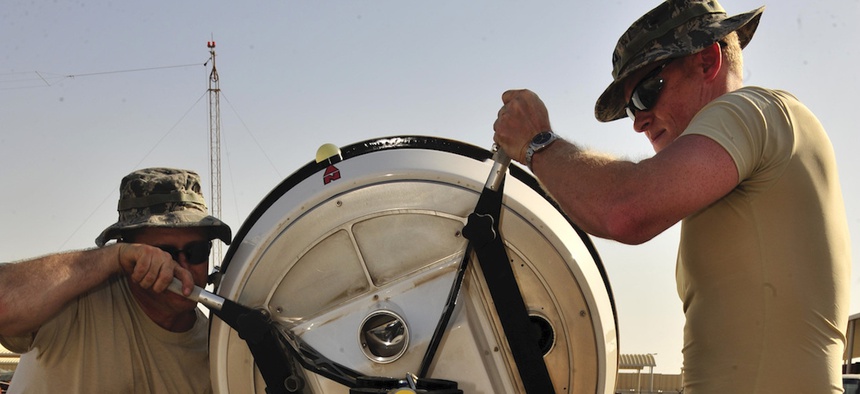
Space Force Eyes Orbiting 3D Printers, Satellite Tow Trucks

BY PATRICK TUCKER

The hardest thing about space is getting there. A 2016 estimate, using the SpaceX Dragon capsule on a Falcon 9 rocket, put the cost at $9,100 per pound. So the Pentagon is looking at ways to reduce the bill, including putting 3D printers into orbit to repair smaller satellites or even beef up their capabilities, the vice commander of the Space Force said in a recent interview.

“You know, perhaps going forward that’s something that a Space Force might want to exploit as a service procured from someone in the very near future,” Lt. Gen. Dave Thompson said Oct. 1. He cautioned that his comments were to be taken more as speculation about “what the future might look like.”

That future might be built by companies like Redwire, which in June acquired Made in Space, which put a 3D printer aboard the International Space Station in 2014.

You might think that 3D printing on a space station is as easy as it is on Earth. But don’t underestimate the role that gravity plays. “There’s an entire engineering within an engineering process that has to take place,” said Austin Jordan, a communications manager at Redwire. “There are a lot of environmental factors and a lot of gravity factors that make it completely different.” 

The “at-scale” tests could change defense networks, training, and logistics — and how Americans use the Internet.


After months of expectation, planning, and consulting with the services and with industry, the Pentagon is finally ready to start testing new concepts for 5G communications at five bases across the country. The contracts to the various companies taking part in the tests, which defense officials announced on Thursday, are worth a total of $600 million. By Pentagon standards, that sum isn’t enormous. But the experiments offer companies a chance to refine 5G offerings that will be key to their businesses in the future, and will reveal how industry and the military will manage and share spectrum. That has huge implications for the future of the telecommunications industry and the way consumers use the Internet. 

“These are really at-scale experiments. They aren’t just little demonstrations in a small area, like a science experiment,” Joseph Evans, the director for 5G in the Office of the Director of Research and Engineering, told reporters on Thursday. “These are at-scale deployments of 5G technology and an evaluation of DOD and industry dual-use” applications.

The test sites include:

Joint Base Lewis-McChord in Washington, focusing on augmented and virtual reality training.

Naval Base San Diego in California, focusing on smart warehousing.

Marine Corps Logistics Base in Albany, Georgia, focusing 5G smart warehousing but for vehicles.

How rivals Turkey, Israel and Pakistan ended up siding with Azerbaijan

Sabena Siddiqui

Having clashed once again over decades-old claims in Nagorno-Karabakh, Armenia and Azerbaijan are on the brink of war. 

The South Caucasus region had previously experienced flare-ups of violence in 2014 and 2016, with the last having been in July this year. 

Various countries are embroiled in the latest escalation, with Russia, Iran and India more inclined towards Armenia, while Turkey, Israel and Pakistan are siding with Azerbaijan

Announcing support for Baku as soon as hostilities broke out, Turkish President Recep Tayyip Erdogan vowed to continue the struggle until the end of the Karabakh occupation, declaring that "Turkey stands with and will continue to stand with friendly and brotherly Azerbaijan with all our means and all our heart."

Following Ankara's stance on the matter, Pakistan's foreign ministry also declared support for Azerbaijan. Notably, having taken Baku's side during and after the last war over Nagorno-Karabakh with Yerevan, Islamabad has never recognised the state of Armenia.

Meanwhile, Israel has positioned itself on the side of Azerbaijan, even though it maintains diplomatic relations with Armenia. With a long track record of lucrative arms sales to Baku, Tel Aviv has closer ties with Azerbaijan in comparison to Armenia, which buys its weapons from Russia and is seen as close to Iran.

 Various countries are embroiled in the latest escalation, with Russia, Iran and India more inclined towards Armenia, while Turkey, Israel and Pakistan are siding with Azerbaijan  

Interestingly, though Ankara and Islamabad have close relations, they have distant or no ties with Tel Aviv. Pakistan has not recognised Israel because of the Palestinian question and there are no diplomatic relations between the two countries.

13 October 2020

India, Japan finalize cyber security pact

Elizabeth Roche

NEW DELHI: Weeks after India and Japan concluded a logistics support pact, aimed at closer cooperation between their militaries, the two countries on Wednesday said they had finalized a cyber security deal as both agreed on the need for robust and resilient digital and cyber systems.

A joint statement after the 13 round of the India-Japan strategic dialogue in Tokyo on Wednesday also said the foreign ministers of the two countries – S Jaishankar of India and Motegi Toshimitsu of Japan – were of the view that a free, open and inclusive Indo-Pacific region “must be premised on diversified and resilient supply chains."

In this context, the two ministers “welcomed the Supply Chain Resilience Initiative between India, Japan, Australia and other like-minded countries." The initiative comes in the context of countries looking to diversify supply chains out of China after Beijing abruptly closed factories and units in the aftermath of the covid-19 pandemic erupting there, sending economic activity into a tailspin across the world. The move threw up the question of reliability of supply chains based in China with countries looking to broaden the sources for critical procurements. In September, the trade ministers of India, Australia, and Japan had agreed to launch an initiative on supply chain resilience.

Why the Quad Is the One Alliance Trump Cares About

BY RAVI AGRAWAL

Today: What to make of the Australia-India-Japan-U.S. Quad meetings in Tokyo, Pakistani police file sedition charges against Nawaz Sharif, Amnesty International closes shop in India, and the World Bank predicts South Asia’s “worst-ever” recession.

Why Pompeo Kept His Meeting With the Quad

Despite the turmoil at the White House after the U.S. president and several top aides tested positive for the coronavirus, Secretary of State Mike Pompeo made time this week to travel to Tokyo to meet his three counterparts from the so-called Quad, the rebranded security dialogue between Australia, India, Japan, and the United States.

At the start of the meeting on Tuesday, Pompeo called on the group to collaborate against what he called Beijing’s “exploitation, coercion, and corruption.” Indian External Affairs Minister S. Jaishankar was more diplomatic in underscoring the group’s differences with China, saying the Quad is composed of “vibrant and pluralistic democracies with shared values.”