Speculations sparked with the Japanese Prime Minster Shinzo Abe’s visit to China , which sought Chinese cooperation for third country development works – a volte-face to China, while tying a strong knot with India for strategic partnership to maintain peace in Indo-Pacific region during the visit of Indian Prime Minister Narendra Modi to Japan in tandem, given the fact that China is long –term political rival to both countries. Concerns were raised about the impact on India- Japan relations, which has a long way to fulfill their role in Indo-Pacific region.The Profession of Arms: A Guide for Young Army Officers
It takes courage, especially for a young officer, to check a man met on the road for not saluting properly or for slovenly appearance, but, every time he does, it adds to his stock of moral courage, and whatever the soldier may say, he has respect for the officer who does pull him up.
Read Document →The Dragon's Teeth: Assessing China's Military Modernization
PLA has focused on modernising its capabilities across all warfare domains to achieve these goals. This includes land, air, and maritime operations, nuclear, space, counter-space, electronic warfare and cyberspace operations, aiming to become a fully integrated joint force.
Read Document →Transforming the PLA: A Decade of reorganisation from SSF to ISF
PRC has engaged in a sustained and broad effort to transform the PLA from an infantry-heavy, low-technology, ground forces-centric military into a high-technology, networked force with an increasing emphasis on joint operations and naval and air power projection.
Read Document →Eyes without Borders: Exploring the World of Open Source Intelligence (OSINT) in the Digital Age
Open Source Intelligence (OSINT) is gaining prominence with the rise of social media, the digital society and the vast growth of publicly and commercially available information (PAI and CAI).
Read Document →
The PLA’s Developing Cyber Warfare Capabilities and India's Options
Informationised warfare blurs the lines between peacetime and wartime. A nation in the information age cannot wait for the hostilities to break out to collect intelligence, carryout influence operations, develop antisatellite systems or design computer software weapons.
Read Document →
Galwan and After
Why did China did this when he is under tremendous pressure in all fronts, is this China's salami slice tactics being progressed rigorously, what will be new Rules of Engagement, what will be escalatory control mechanism, who has taken this decision, will there be some pressure put by China in India's North-East through insurgency.
Read Document →
India’s Joint Doctrine for Cyberspace Operations: A Critical Review
Chief of Defence Staff (CDS) General Anil Chauhan and Secretary, Department of Military Affairs, formally released declassified versions of the Joint Doctrines for Cyberspace Operations during the Chiefs of Staff Committee meeting in New Delhi.
Read Document →
Know your Enemy General(now Field Marshal) Syed Aseem Munir
Gen SA Munir's position in the hierarchy of Pakistan was not very comfortable. The state of economy, insurgency in Pakhtoonistan and Balochistan, attack on the Jaffar Express, constant protests by supporters of Imran Khan's supporters inside and outside of parliament.
Read Document →
Decoding Operation SINDOOR: Key Aspects and Implications
Precision strikes were carried out on nine sites—four in Pakistan and five in PoK—linked to anti-India terrorist groups such as the LeT, JeM and the Hizbul Mujahideen. The targeted sites included Muridke (LeT headquarters) and Bahawalpur (JeM headquarters).
Read Document →
Chinese Cyber Exploitation in India's Power Grid - Is There a linkage to Mumbai Power Outage?
The New York Times (NYT), based on analysis by a U.S. based private intelligence firm Recorded Future, reported that a Chinese entity penetrated India’s power grid at multiple load dispatch points. Chinese malware intruded into the control systems that manage electric supply across India, along with a high-voltage transmission substation and a coal-fired power plant
Read Document →8 November 2018
Modi-Abe-Xi Jinping: A New Synergy Of Trilateral Relations In Asia In Wake Of Global Trade War – Analysis
Speculations sparked with the Japanese Prime Minster Shinzo Abe’s visit to China , which sought Chinese cooperation for third country development works – a volte-face to China, while tying a strong knot with India for strategic partnership to maintain peace in Indo-Pacific region during the visit of Indian Prime Minister Narendra Modi to Japan in tandem, given the fact that China is long –term political rival to both countries. Concerns were raised about the impact on India- Japan relations, which has a long way to fulfill their role in Indo-Pacific region.Can Saudi Package Resolve All Pakistan’s Woes? – OpEd
Reportedly, Saudi Arabia has finally agreed to offer Pakistan a US$6 billion support package to overcome its prevailing precarious current account deficit crisis. According to the details the Kingdom will transfer US$3 billion directly to Pakistan, while another one-year deferred payment facility of up to US$3 billion for oil import will be made available. This arrangement will be in place for three years, which will be reviewed thereafter.Can Russia Help Bring Peace to Afghanistan?
In 2001, Russia backed the U.S. intervention in Afghanistan, which led to the collapse of the Taliban regime and the creation of a new government. Since then, Russia has supported the new system and has made contributions to reconstruction efforts in the country, including training the Afghan security forces, supplying military equipment, supporting joint counternarcotics activities with the United States, and providing some level of development aid. The post-2001 phase of the conflict in Afghanistan has lingered for more than 17 years now, and the Taliban have re-emerged as a force that contest more than half of Afghan territory. With the war at a stalemate, Afghanistan, the United States, and regional powers are trying to seek a political solution. Russia, too, is trying to do its part by reaching out to the Taliban to help kickstart a peace process, however, there is confusion over Moscow’s overtures to the Taliban and the end goal of its efforts.HOW DO WE WIN INFORMATION WARFARE IN AFGHANISTAN?
Sri Lanka: The Political Crisis: View from Sri Lanka
Sri Lankan Tamils Betrayed? – OpEd
In a Sri Lanka Freedom Party (SLFP) electoral organizers meeting, President Sirisena proclaimed that he would not allow a federal state for the Tamils or merger of the North and East provinces. Reportedly, he had stated that “he would have to be killed” before this happens. The presidential statement brought a smile to my face because it had elements of humor. However, this is not a joke.Sri Lanka's Constitutional Crisis: Rajapaksa's Dark Past Shapes the Present
Sri Lanka is experiencing a profound crisis. President Maithripala Sirisena has appointed Mahinda Rajapaksa as prime minister. The coalition government is a thing of the past. Ranil Wickremesinghe remains the legitimate prime minister and it’s not clear what happens next.Rethinking U.S. Strategy in the Pacific Islands
ON THE HORNS OF A DILEMMA – ADDRESSING CHINESE SECURITY ENGAGEMENT IN THE HOA
Pushback: America’s New China Strategy
The U.S. government’s across-the-board hardening toward China emerged somewhat erratically over the past year but has shown remarkable momentum in recent months. This report offers a perspective from Washington for the use of those many observers in America and abroad seeking information and early analysis of the importance of the U.S. government shifts toward acute rivalry with China.Responding to Chinese Espionage
Abe in Beijing: The quiet accommodation in China-Japan relations
China Unbound: What An Emboldened China Means For The World
On Nov. 11, 1861, the Qing dynasty opened a new agency to deal with foreigners. A target for the West's "gunboat diplomacy," the last imperial Chinese government had been forced to recognize a wider world and, with little leverage, it entered into a series of unequal treaties that crippled its economy and left it only more vulnerable. Still, Chinese officials believed the crisis would pass. It was for this reason that this new body, a quasi-ministry of foreign affairs, was housed in a small, shabby building that had previously served as the Department of Iron Coins. There was no need to construct something grander or more impressive; after all, this new office would be only temporary, until these foreigners and the world they represented lost interest in China.Is China ready for intelligent automation?
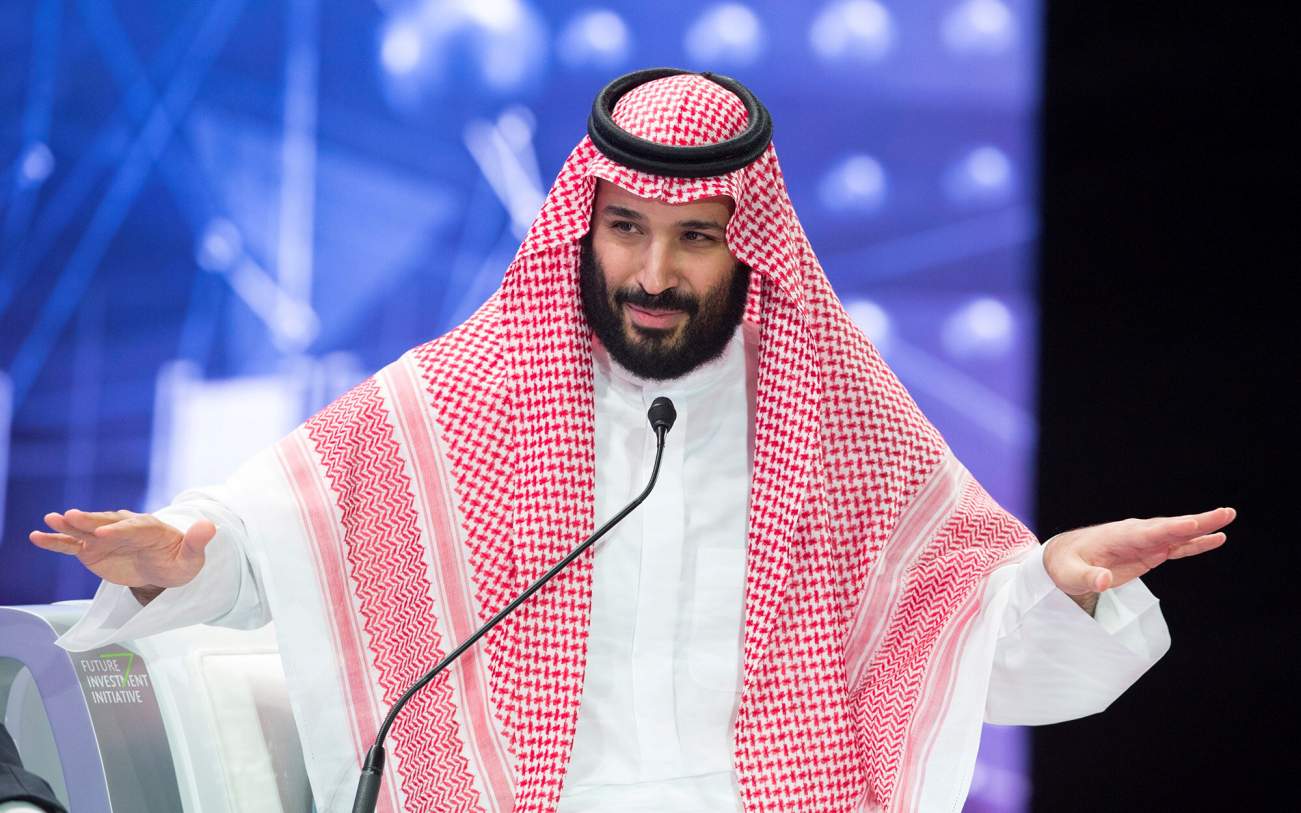
The Saudi Shakedown: Why Washington Can't Escape the Damage Done by Riyadh's Crown Prince
American values and interests are under threat in the Middle East. A murderous dictatorship has underwritten terrorism and continues to promote Islamic radicalism around the globe. The regime suppresses political dissent, persecutes non-Muslim faiths at home, and is pursuing military hegemony abroad. Despite a long and sometimes checkered relationship with the United States, this government threatens to undermine long-term Washington objectives.If Terrorists Launch a Major Cyberattack, We Won’t See It Coming
“The FBI assesses the cyberterrorism threat to the U.S. to be rapidly expanding,” said one law-enforcement official, testifying before Congress. “Terrorist groups will either develop or hire hackers, particularly for the purpose of complementing large physical attacks with cyber attacks.” That assessment was made nearly 15 years ago. In the meantime, a generation of tech-savvy jihadists has exploited the internet to attract recruits, share bomb-making expertise, and incite violence. Yet they haven’t managed to pull off the devastating cyberattacks that experts have long feared. With just days left before Americans go to the polls for midterm elections, it is worth considering: Why not?Israel’s Next Northern War: Operational and Legal Challenges
STRATEGIC INTELLIGENCE AND THE DECISION TO GO TO WAR
The United States’ track record in post–World War II major conflicts has been less than stellar. In his 2016 article, “Why Can’t America Win its Wars,” Peter Mansoor points out that America has only three outright victories in its last eight conflicts. Mansoor is not alone; many scholars have written about the recent failures of America to achieve decisive victory. Attribution of these failures is widespread: poor intelligence; an imbalance of ends, ways, and means; policy-strategy mismatches; improper use of instruments of national power; deficient host-nation commitment; and a lack of popular support, just to name a few.Unocoin co-founder recounts his arrest after India shut down his cryptocurrency ATM
Europe's Civilizationist Parties
Oil Market Implications of Iran Sanctions Snap-Back
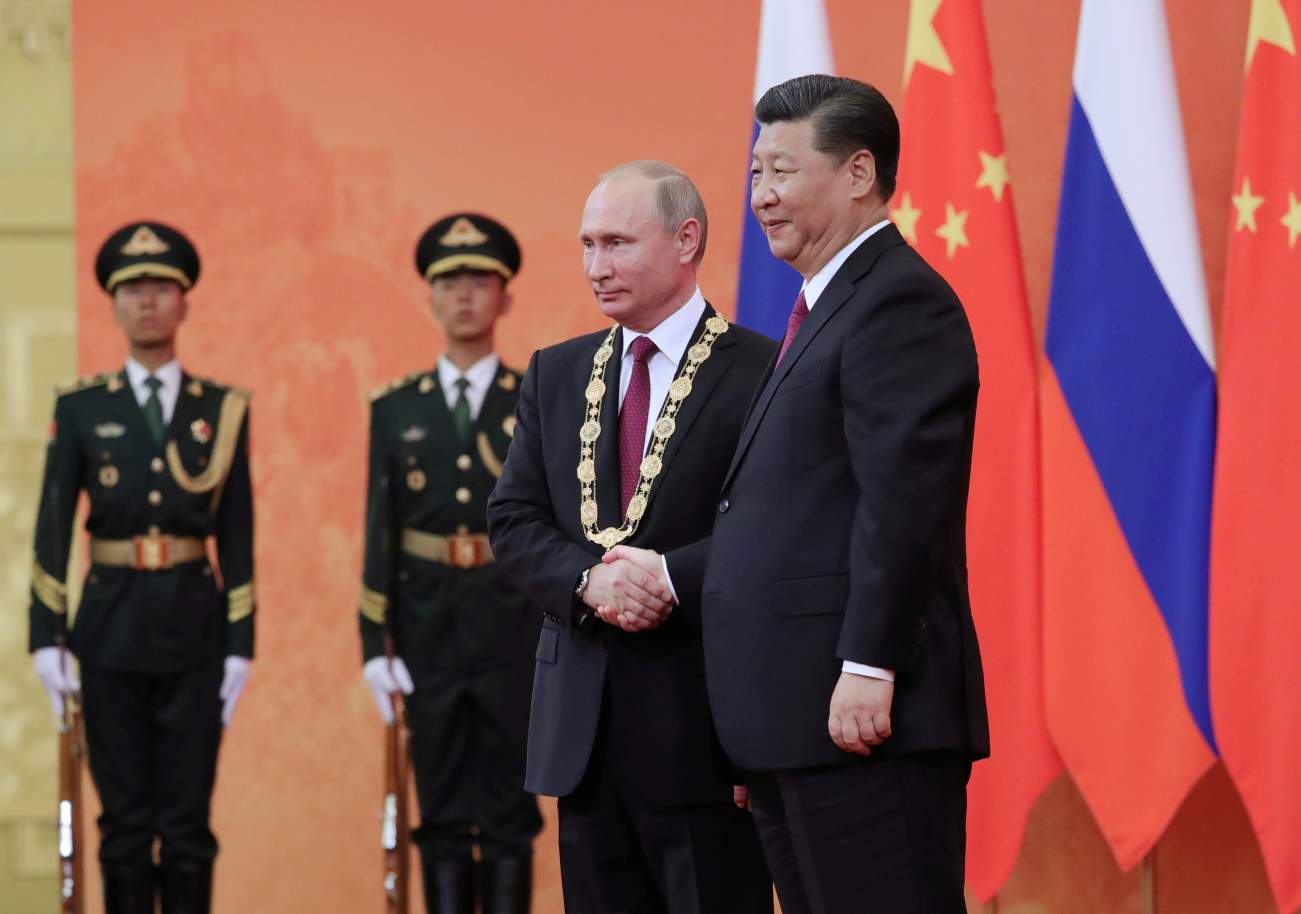
A Russian Pivot to Asia?
In recent years, Russia has been going through quite challenging times. Economic slowdown, a collapse in oil prices and Western sanctions which have deprived Moscow of cheap money and technologies—all of these have pushed the Kremlin’s strategists to concentrate on import substitution policy, the reorganization of import supply chains, decreasing dependency on oil exports and pushing for the country’s pivot towards Asia.European Countries to Test AIBorder Guards
Next time you go to Latvia you might be get hassled by a border guard who isn’t even human. The European Union is funding a new pilot project to deploy artificially intelligent border guards at travel checkpoints in three countries to determine whether passengers are telling the truth about their identities and activities. The system, dubbed iBorderCtrl, works like this: an avatar asks the traveler a series of simple questions like name, dates of travel, etc. The AI software looks for subtle symptoms of stress as the interviewee answers. If enough indicators are present, the system will refer the traveler to a human border guard for secondary screening.The Economic Crisis Is Over. Populism Is Forever.
Angela Merkel couldn’t have remained Germany’s chancellor forever. Even Helmut Kohl, who was chairman of the Christian Democratic Union and Germany’s longest-serving postwar chancellor, had to step down after 16 years. Kohl’s tenure ended in the usual way: In 1998, with unemployment and economic dissatisfaction rising, voters chose the left-of-center Gerhard Schrรถder over the right-of-center Kohl. But today, unemployment is at an almost historic low of 3.4 percent. Both youth unemployment and long-term unemployment, typical drivers of the anti-incumbent spirit, are low (though so is annual growth, at 2 percent).The Pentagon Has Prepared a Cyberattack Against Russia
The collision of these 3 geographies is creating a new world order
For the past seven decades, the world has been moulded by a strong, transatlantic relationship with the US and EU underwriting the terms of peace, stability and economic prosperity. The success of this order has created its own existential challenge. Its rising beneficiaries in Asia and elsewhere increasingly challenge the validity of these arrangements and the efficacy of rules that have managed global affairs. While the historian John Ikenberry described the liberal world order as a “hub and spoke” model of governance, with the West at its centre, it is now clear that the peripheries of the system are developing wheels and engines of their own.The Saruman Trap
Conservatives in distress turn to ancient texts. In the current circumstance, those of us of a Hebraic cast reach for the prophet Isaiah in his darker moods, or the even fiercer denunciations of Amos. Devout Christians despairing of a society in full malodorous rot look to The Rule of St. Benedict. Classicists might pick up a volume of Seneca, sighing wistfully as they contemplate the philosopher’s fate at the hands of his mad pupil, Emperor Nero, who, unlike President Donald Trump, at least played a musical instrument competently. A more twisted few will reach for Machiavelli. For those undergoing real tests of the soul, however, the place to go is J. R. R. Tolkien’s modern epic, The Lord of the Rings.Here is how the new White House and Pentagon cyber strategies change US operations
The flurry of cyber strategies from the White House and the Pentagon will require a new set of tools and tactics, government officials and experts said during the CyberCon conference hosted by Fifth Domain Nov. 1. After President Donald Trump and the Pentagon unveiled cyber strategies that promised greater offensive operations earlier this year, the government will increase its attribution of bad actors and need to have greater intelligence collection, the experts and government officials said. The White House cyber strategy’s biggest change is an emphasis on attributing bad actors in cyberspace, Dave Frederick, the chief of strategic counter cyber operations at the National Security Agency told reporters after the event.National cyber strategy takes action on long-known solutions
The White House introduced a new national cybersecurity strategy September 2018, the first governmentwide strategy published in about 15 years. And while there isn’t a lot in the strategy that wasn’t already known by most of government and industry, the strategy is innovative in that it plans for action where previously the focus had been on policy, according to Federal Chief Information Security Officer Grant Schneider.