Welcome to Foreign Policy’s weekly South Asia Brief. Sign up here to receive this weekly newsletter directly in your inbox.The Profession of Arms: A Guide for Young Army Officers
It takes courage, especially for a young officer, to check a man met on the road for not saluting properly or for slovenly appearance, but, every time he does, it adds to his stock of moral courage, and whatever the soldier may say, he has respect for the officer who does pull him up.
Read Document →The Dragon's Teeth: Assessing China's Military Modernization
PLA has focused on modernising its capabilities across all warfare domains to achieve these goals. This includes land, air, and maritime operations, nuclear, space, counter-space, electronic warfare and cyberspace operations, aiming to become a fully integrated joint force.
Read Document →Transforming the PLA: A Decade of reorganisation from SSF to ISF
PRC has engaged in a sustained and broad effort to transform the PLA from an infantry-heavy, low-technology, ground forces-centric military into a high-technology, networked force with an increasing emphasis on joint operations and naval and air power projection.
Read Document →Eyes without Borders: Exploring the World of Open Source Intelligence (OSINT) in the Digital Age
Open Source Intelligence (OSINT) is gaining prominence with the rise of social media, the digital society and the vast growth of publicly and commercially available information (PAI and CAI).
Read Document →
The PLA’s Developing Cyber Warfare Capabilities and India's Options
Informationised warfare blurs the lines between peacetime and wartime. A nation in the information age cannot wait for the hostilities to break out to collect intelligence, carryout influence operations, develop antisatellite systems or design computer software weapons.
Read Document →
Galwan and After
Why did China did this when he is under tremendous pressure in all fronts, is this China's salami slice tactics being progressed rigorously, what will be new Rules of Engagement, what will be escalatory control mechanism, who has taken this decision, will there be some pressure put by China in India's North-East through insurgency.
Read Document →
India’s Joint Doctrine for Cyberspace Operations: A Critical Review
Chief of Defence Staff (CDS) General Anil Chauhan and Secretary, Department of Military Affairs, formally released declassified versions of the Joint Doctrines for Cyberspace Operations during the Chiefs of Staff Committee meeting in New Delhi.
Read Document →
Know your Enemy General(now Field Marshal) Syed Aseem Munir
Gen SA Munir's position in the hierarchy of Pakistan was not very comfortable. The state of economy, insurgency in Pakhtoonistan and Balochistan, attack on the Jaffar Express, constant protests by supporters of Imran Khan's supporters inside and outside of parliament.
Read Document →
Decoding Operation SINDOOR: Key Aspects and Implications
Precision strikes were carried out on nine sites—four in Pakistan and five in PoK—linked to anti-India terrorist groups such as the LeT, JeM and the Hizbul Mujahideen. The targeted sites included Muridke (LeT headquarters) and Bahawalpur (JeM headquarters).
Read Document →
Chinese Cyber Exploitation in India's Power Grid - Is There a linkage to Mumbai Power Outage?
The New York Times (NYT), based on analysis by a U.S. based private intelligence firm Recorded Future, reported that a Chinese entity penetrated India’s power grid at multiple load dispatch points. Chinese malware intruded into the control systems that manage electric supply across India, along with a high-voltage transmission substation and a coal-fired power plant
Read Document →30 August 2019
Is India Facing an Economic Crisis?
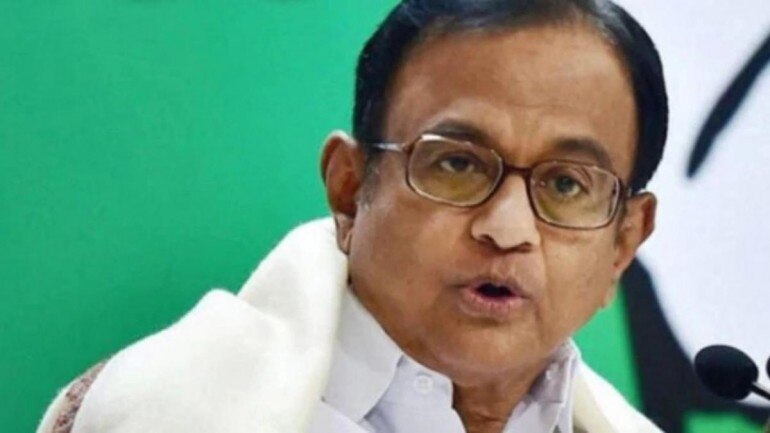
Welcome to Foreign Policy’s weekly South Asia Brief. Sign up here to receive this weekly newsletter directly in your inbox.INX Media case: ED cannot arrest Chidambaram till August 29, orders Supreme Court
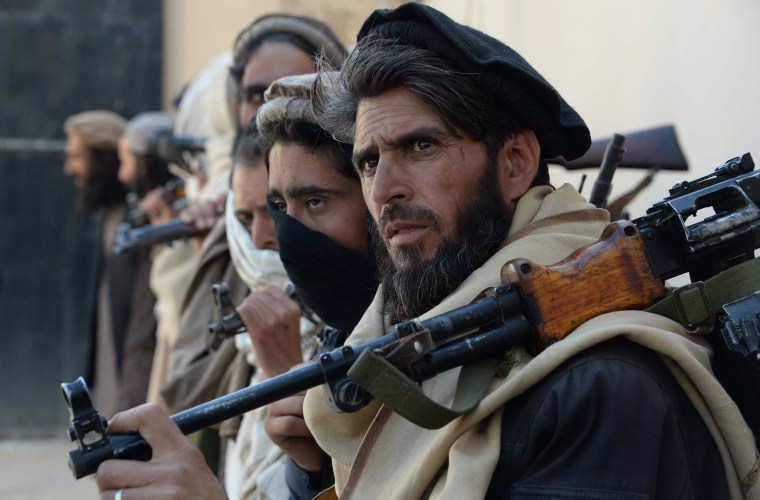
The Supreme Court Wednesday extended till Thursday the interim protection from arrest granted to former finance minister P Chidambaram in the INX Media money laundering case lodged by the Enforcement Directorate (ED).Taliban says near agreement on U.S. withdrawal from Afghanistan
Proposed U.S. deal with Taliban uses name of insurgency's former 'emirate'
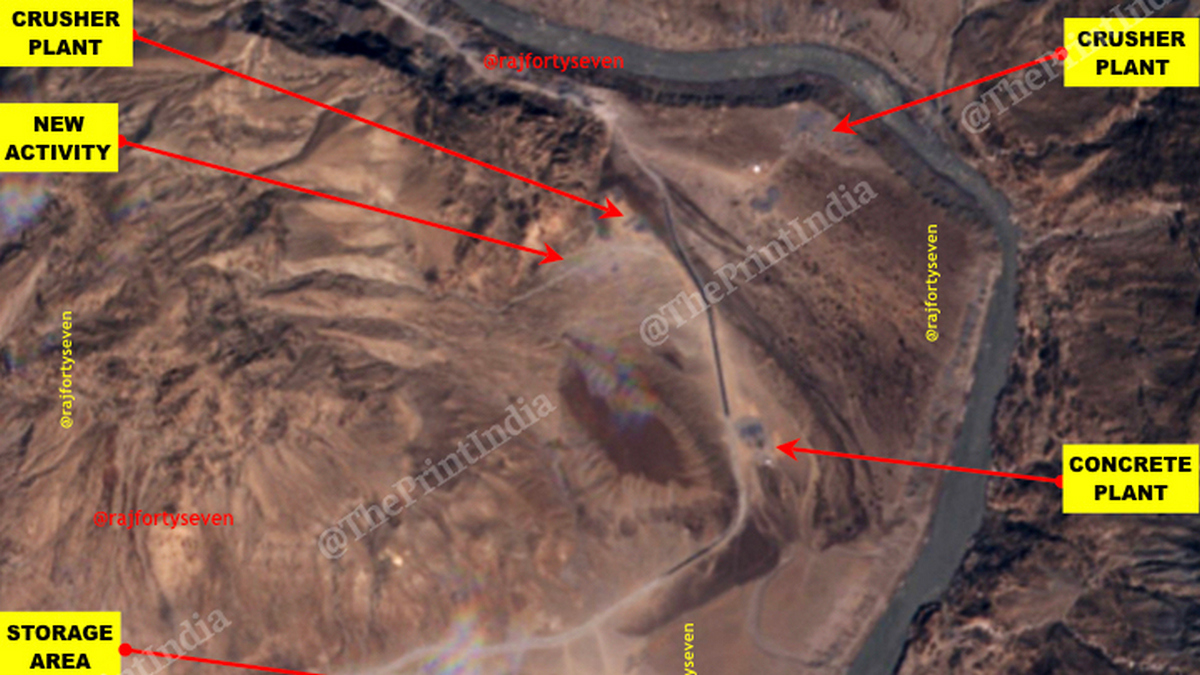
Pakistan & China are building an SEZ in PoK’s Gilgit-Baltistan, satellite images show

How to Partner With the Taliban
Malaysian Prime Minister Mahathir Mohamad and China's Premier Li Keqiang. File Photo: Tasnim News Agency
Trump Can Battle China or Expand the Economy. He Can’t Do Both.
China’s Long March to Technological Supremacy
Until recently, American perceptions of Chinese technology tended to be either hopeful or dismissive. On the hopeful side, the information revolution was taken as a sure drive of greater freedom. “Imagine if the Internet took hold in China,” George W. Bush said in a presidential debate in 1999. “Imagine how freedom would spread.” Some observers noted considerable theft and imitation of U.S. technology firms, but Chinese technology was generally thought to represent little or no competitive threat, with analysts explaining—as a 2014 Harvard Business Review headline put it—“why China can’t innovate.”The One Word That Could Foretell Catastrophe in Hong Kong
The US, China and Japan: Grand Strategy
Trump Looks to Open Another Front in the Trade War With China
With the White House strategy of escalating tariffs against China nearing the point of diminishing returns, it will explore other means to respond to Chinese intransigence in trade negotiations. His threats notwithstanding, the damage to the U.S. economy and companies will likely restrain President Donald Trump from invoking emergency powers to stop businesses from operating in China. Beijing's negotiating position is likely to continue hardening as the White House ups the ante, particularly if it tries to ban U.S. business activity or sanction Chinese entities.Turkey Can’t Host Syrian Refugees Forever
As the civil war in Syria and its spillover to neighboring Iraq displaced millions of people from their homes, Turkey took on a daring political experiment from 2011 onward that made it home to the world’s largest refugee population—about 4 million registered and more than a million off the books—in the space of a few years. The courage and generosity that countries like Turkey have shown cannot be overstated: They opened their doors to millions of people in need when the rest of the world barely lifted a finger. In Turkey alone, the response to the refugee crisis cost more than $35 billion, and most of it came out of the country’s own pocket. Will Trump Break the Yuan?
It’s time for everyone to admit that the trade war between the United States and China is not going anywhere anytime soon. With China due to celebrate the 70th anniversary of the proclamation of the People’s Republic on Oct. 1, nothing is going to give on the Chinese side for at least another month. Meanwhile, the United States has already slapped tariffs on just about everything except Christmas ornaments, baby diapers, and “live mushroom spawn,” whatever that is. And even those last few items are scheduled to be taxed starting Dec. 15, after U.S. stores are fully stocked for the holidays.Trump’s Weird Whoppers at the G-7 Summit
As the world’s seven largest economic powers met in glamorous Biarritz, the lungs of the planet, in the Amazon rain forest, were ablaze. “I’m an environmentalist,” President Trump insisted, at a press conference on Monday, claiming that he knows more about the subject than most people. Yet hours earlier he had skipped the session on climate change, biodiversity, and oceans; the white high-backed chair reserved for him had been conspicuously empty. The White House insisted that he had “scheduled meetings” with the leaders of Germany and India, even though both were plainly in view at the climate session. (Never mind, as well, that the Trump Administration has rolled back at least eighty-three environmental regulations in less than three years.)UN calls for 'maximum restraint' after alleged Israeli strike in Lebanon
Attacks blamed on Israel across three Middle East countries ratchet up tensions
BEIRUT — Attacks against Iranian-allied forces in three countries, all blamed on Israel, escalated tensions across the Middle East on Sunday, drawing threats of retaliation and intensifying fears that a bigger conflict could erupt.Friends With Caveats
Something is brewing between Israel and its Arab Gulf neighbors, at least if public diplomacy is any indication. When Israel’s foreign minister, Israel Katz, traveled to a conference in Washington last month, he publicly met, shook hands, and stood for a photo with his counterpart from Bahrain, Khalid bin Ahmed Al Khalifa. Earlier in July, Katz had flown to Abu Dhabi to take part in a UN conference, while Yossi Cohen, director of the Israeli intelligence agency Mossad, claimed that Israel had received approval to open a diplomatic mission in Oman. The Omani government, which took the unusual step of playing host to Israeli Prime Minister Benjamin Netanyahu last year, halfheartedly denied the announcement, but there is little doubt that some form of rapprochement is under way behind the scenes.As the Migration Crisis Evolves, the Wealthiest Countries Still Aren’t Doing Enough
Migration barely came up at the recent G-7 summit in France—a far cry from just two years ago, when Italy hosted the G-7 in Sicily, which has seen an influx of migrants and asylum-seekers given its proximity to North Africa. The most prominent mention of migration in Biarritz took place on the sidelines of the summit, when President Donald Trump’s adviser, Stephen Miller—the architect of the administration’s restrictionist immigration policies—defended Trump’s efforts to make migrating to the United States even more onerous than it already is. 'Persistent Engagement': The Phrase Driving A More Assertive U.S. Spy Agency
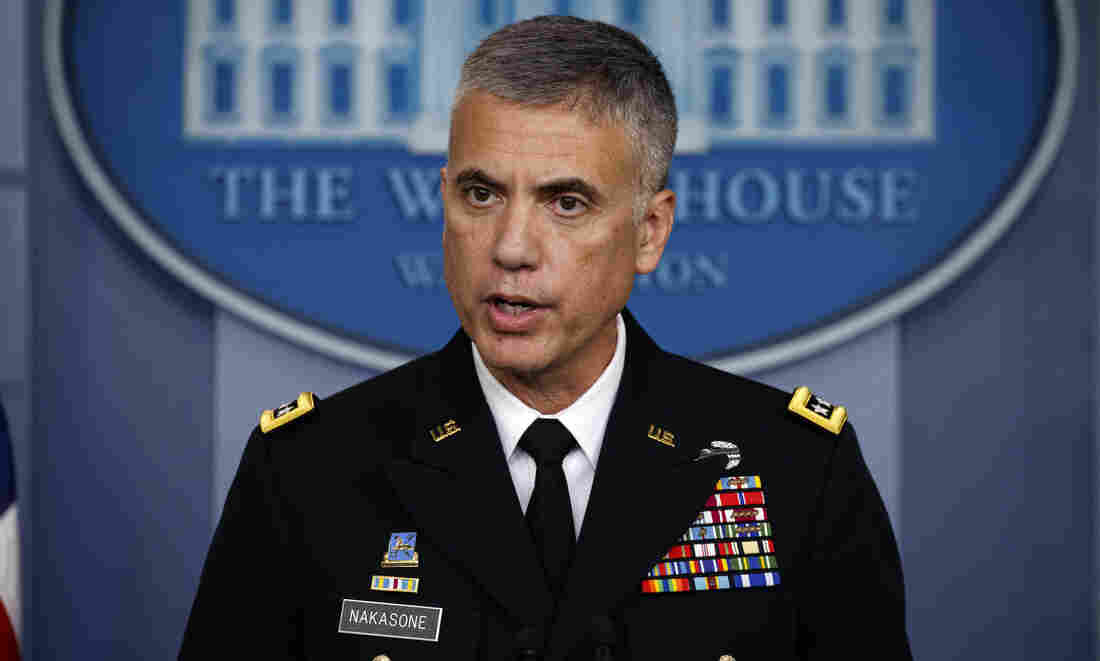
The director of the National Security Agency, Gen. Paul Nakasone, often speaks about "persistent engagement" as a way to keep up pressure on adversaries in cyberspace. Since he took over last year, the spy agency has been pursuing a more assertive approach.Evan Vucci/APAs the Migration Crisis Evolves, the Wealthiest Countries Still Aren’t Doing Enough
Migration barely came up at the recent G-7 summit in France—a far cry from just two years ago, when Italy hosted the G-7 in Sicily, which has seen an influx of migrants and asylum-seekers given its proximity to North Africa. The most prominent mention of migration in Biarritz took place on the sidelines of the summit, when President Donald Trump’s adviser, Stephen Miller—the architect of the administration’s restrictionist immigration policies—defended Trump’s efforts to make migrating to the United States even more onerous than it already is. Trump’s National Security Advisor to Visit Belarus
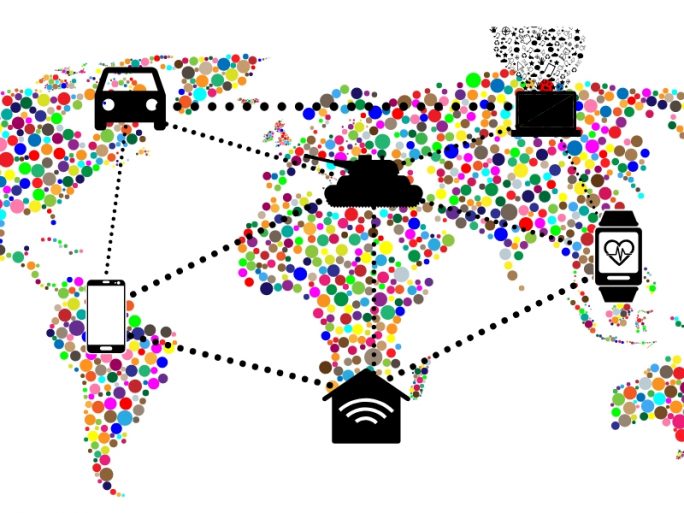
Cyber warfare, IoT hacks, and mass data gathering – the new security threats of a hyper-connected world
The View From Olympus: Mass Shooters and Fourth Generation War
Is Data Privacy Real? Don’t Bet on It
How Fintech Can Make Banking More Inclusive – and Empowering
Data as Currency: What Value Are You Getting?
On the offense: How federal cybersecurity is changing
Wearing The Network To War
TECHNET AUGUSTA: Wifi gunsights that tell your smart goggles where to aim. Artificial intelligence that tells distant artillery batteries whenever you spot a high-priority target. Backpack transmitters, remotely controlled by technicians miles away, that jam enemy communications while you focus on the fight. A jamming-resistant GPS that double-checks your location against a wearable inertial navigation system and pedometers in your boots. These are all technologies the Army is now developing or, in some cases, fielding in a few months.