25 April 2016

These Maps Show How Vast New Infrastructure Is Bringing the World Together

http://www.huffingtonpost.com/entry/global-infastructure-maps_b_9695840.html?section=india

04/18/2016 
Parag Khanna, Author, “Connectography: Mapping the Future of Global Civilization”
SINGAPORE — There’s no better way to score points for gravitas in today’s media than claiming that the world is falling apart. Just say on air that, “This is the most dangerous time since the peak of the Cold War,” and witness your star rise. But such talking heads are responding to yesterday’s news and extrapolating the worst scenarios, whereas the underlying trends seem in fact to point in a very different direction.
If you want to understand the world of tomorrow, why not just look at a good map? For my new book, Connectography, I researched every single significant cross-border infrastructure project linking countries together on every continent. I worked with the world’s leading cartography labs to literally map out what the future actually — physically — will look like. 
It turns out that what most defines the emerging world is not fragmentation of countries but integration within regions. The same world that appears to be falling apart is actually coming together in much more concrete ways than today’s political maps suggest. Major world regions are forging dense infrastructural connectivity and reorienting their relations around supply chains rather than borders. A peaceful world may emerge as a collection of such stable regions and continents.

Follow the lines of connectivity on these maps to see how the Humpty Dumpty world is putting itself back together again — much better than before.

#1. PAX EURASIA
China leads the world not just in domestic but also international infrastructure investment. America sells the tanks; China provides the bulldozers. Nowhere is this more visible than on China’s periphery (China has more neighbors than any other country in the world). Launched in 2015, the Asian Infrastructure and Investment Bank is the largest coordinated infrastructure spending program in human history. It is constructing a network of “Iron Silk Roads” stretching from Shanghai to Lisbon.
Despite the territorial tensions between China and Russia, India and other neighbors, all have bought into the AIIB mission (India is the second largest shareholder). World War III is predicted to break out among Asia’s rival great powers, but thanks to these new Silk Roads, Asians are focused more on connective pipelines and railways than divisive borders.


#2. PAX ASEANA
The same process is unfolding to China’s south in the Association of Southeast Asian Nations region. Post-colonial countries have spent generations since World War II engaged in bitter nationalist struggles and hostilities with their neighbors — not to mention suffering Cold War-related interventions such as the Vietnam War. But today, Southeast Asia has become the leading example of a new generation of leaders burying the hatchet and evolving towards a European style regional model. Chinese-financed railways are planned linking Kunming via Laos and Thailand through Malaysia to Singapore, while trade corridors will connect Myanmar to Vietnam.

Harvard Goes To The Himalayas – Monks With ‘Superhuman’ Abilities Show Scientists What We Can All Do

http://www.collective-evolution.com/2016/03/01/harvard-goes-to-the-himalayas-monks-with-superhuman-abilities-show-scientists-what-we-can-all-do/
March 1, 2016 by Arjun Walia

It’s fascinating to consider just how many ancient teachings tell us that humans have the capacity to gain extraordinary powers through various techniques. Some of these techniques, known as siddhis in the yoga tradition (from the Sanskrit, meaning “perfection”), include meditation, static dancing, drumming, praying, fasting, psychedelics, and more.
In Buddhism, for example, the existence of advanced powers is readily acknowledged; in fact, Buddha expected his disciples to be able to attain these abilities, but also to not become distracted by them.
A Professor of Buddhist and Tibetan Studies at the University of Michigan, Donald Lopez Jr., describes the many abilities ascribed to Buddha:
With this enlightenment, he was believed to possess all manner of supernormal powers, including full knowledge of each of his own past lives and those of other beings, the ability to know others’ thoughts, the ability to create doubles of himself, the ability to rise into the air and simultaneously shoot fire and water from his body. . . . Although he passed into nirvana at the age of eighty-one, he could have lived “for an aeon or until the end of the aeon” if only he had been asked to do so. (source)
Again, there are numerous historical anecdotes of people with, as the Institute of Noetic Sciences calls them, ‘extended human capacities.” Since this article is focused on Buddhist monks, here is another example from the lore as written by Swami Rama in Living with the Himalayan Masters:

A NETFLIX ASSESSMENT OF CHINA’S RISE AND AMERICA’S ADVANTAGE

APRIL 20, 2016
LinkedInIn a smartphone world it’s easy to see China rise, but have we forgotten our other senses? This exercise in think tank voyeurism has become a distracting mirage, from CSIS’s aerial photos of the Great Wall of Sand to the Lowy Institute’s Technicolor chart of China’s worldwide diplomatic reach. It’s all as eye-popping as Superman’s red cape:Look! China’s so high! It’s a carrier! It’s a plane! It’s Suuu-per Missile! And then RAND’s watchful eye scoops it all up, with a ringside boxing judge’s “scorecard” for all to view.
But maybe it’s our unblinking, screen-obsessed eyes that deceive us. Instead of focusing on the mano a mano with China, perhaps we should consider another Big Red Rise: Netflix. Because when we do, we’ll find the third offset is more than gadgets, and really about the intersection of our allies and technology, underpinned by deep defense diplomacy. That said, on with the show.

Netflix claims 70 million subscribers in 190 countries, on par with China’s 162 embassies and 87 consulates. The global television network features shows such as Marco Polo, which follows the eponymous Western traveler struggling to understand China. If America’s still keen on rebalancing to the Pacific, maybe there’s something to learn from a company that actuated a successful pivot of its own, from the physical DVD disc to online streaming. We might use one red monolith to understand another in a modified net assessment, which Andrew Marshall defined in 1972 as a “description of the comparative situation of ourselves and our rivals” to highlight our “areas of comparative advantage.” So let’s put on those red-tinted spectacles.
Netflix’s Daredevil is about a blind lawyer, Matt Murdock, who lost his sight at age nine in an accident, but was trained by a similarly sightless sensei named Stick into an expert martial artist. Daredevil sees without sight, having developed his other senses to the degree that they tell him much more about the world than a normally sighted person. When an opponent approaches, Daredevil hears heartbeats, gauges mood, calculates weaknesses, notices “tells” through sweat rates — he’s quick to understand threats with a penetrating, personal sonar. As a daytime lawyer, he possesses a strong analytical mind undistracted by vision and so easily differentiates the merely visible from the clearly important.

Missing wood for trees in China

http://www.dailypioneer.com/columnists/oped/missing-wood-for-trees-in-china.html
Thursday, 21 April 2016 | Pravin Sawhney |
Instead of splitting hairs over fine details of the Line of Actual Control or blocked UN sanctions against Pakistan-sponsored terrorists, India, in its discussions with the leadership in Beijing, should focus on understanding the large-scale military reforms underway in China
By raising futile concerns on his maiden visit to China, Defence Minister Manohar Parrikar has wasted the opportunity of not seeking insights into Chinese military reforms that directly impinge on India’s defence. China, on the other hand, handled the visit well by giving Parrikar a palliative in the form of a military hotline to return home with.
After his meetings with Chinese Vice Chairman of the Central Military Commission, General Fan Changlong, and Defence Minister General Chang Wanquan, Parrikar confirmed that he had raised four concerns with the Chinese leadership. These are the need to clarify the Line of Actual Control, the China-Pakistan Economic Corridor that passes through disputed Pakistan-occupied Kashmir, China’s blocking of UN sanctions against Masood Azhar, and the need to maintain peace in the Indian Ocean region. While listening to India’s concern, Chinese military leaders did not give a commitment to considering them.

The clarification of the LAC was first sought by Prime Minister Narendra Modi at the joint Press conference with Chinese President Xi Jinping during his September 2014 visit to India. The issue was once again raised by Modi while addressing students at the Tsinghua University in Beijing on May 15, 2015. The Chinese leadership had dismissed India’s desire for mutual agreement on the LAC for two reasons. One, after the Chinese announcement of December 2010 that it did not have a border with India in Ladakh (Jammu & Kashmir), the LAC there with India had become meaningless. To ask China to agree to the LAC in Ladakh on what China now considers disputed territory between India and Pakistan is unrealistic.
And two, the LAC, by definition a military line, can be moved by force by either side. This helps Chinese troops do brazen LAC transgressions and intrusions. On the other hand, transgressions on an agreed LAC a de facto border would be an act of aggression tantamount to declaration of war. Why will China lose the advantage of exercising military coercion by sauntering across the LAC at will?

The Inherent Fallacy of Believing We Can Beat the Islamic State Without U.S. Ground Troops

http://foreignpolicy.com/2016/04/20/the-u-s-cant-beat-the-islamic-state-without-ground-troops-and-no-one-will-admit-it/
No one — not Obama, Clinton, Trump, or Cruz — will dare to admit the obvious: We’re going to need to put boots on the ground in Iraq and Syria.
By Kori Schake, April 20, 2016
On Monday, U.S. President Barack Obama authorized the deployment of 217 more troops to Iraq, as part of the fight against the Islamic State. As Secretary of Defense Ash Carter explained: “This will put Americans closer to the action.” Washington will also send Apache helicopters to Iraqi forces and pay $415 million in salaries for Kurdish troops and other “military needs” in the runup to retaking Mosul.
If you think this counts as getting tough in the fight against radical jihadis who have unsettled the Middle East and brought violence to the heart of Europe, you’re deluding yourself. Obama’s strategy for fighting the Islamic State is half-measures, at best: contributing U.S. military force at the margins of efforts by those most directly affected with loss of territory. The president prides himself on a minimalist approach, doing just about as much for Iraqi forces or the Syrian rebels as they could do for themselves. It amounts to an argument that he is preventing the moral hazard of other countries relying on the United States for their security. But that approach treats as costless two very important elements in fighting the Islamic State: confidence and time.

One of the emptiest canards in warfare is “there is no military solution.” Unless you fight to complete extermination, war always involves convincing your adversary to stop fighting. That is, to cede their political goals rather than continue using military force to attain them. Usually, that requires doing some fighting. Of course, adversaries tend not to give up if they think they’re winning or could win — which is why soldiers like the Powell Doctrine of committing large forces in order to demonstrate your political will to win.
It’s also why Obama’s incremental commitment of small numbers of troops — 300 advisors here, a specialized targeting team there — is so ineffective. It conveys the limits of Washington’s willingness to fight. The Islamic State, Bashar al-Assad, Vladimir Putin, and Ayatollah Ali Khamenei all understand those limits and are acting accordingly. America’s allies get the message now, too, especially after the president wrote off Iraq and fought the war in Afghanistan halfheartedly. They will not step forward and commit the ground troops necessitated by Obama’s approach because they lack the confidence that Washington will see this difficult fight through.

The Hitchhiker’s Guide to the Islamic State

http://foreignpolicy.com/2016/04/20/the-hitchhikers-guide-to-the-islamic-state/?utm_source=Sailthru&utm_medium=email&utm_campaign=New%20Campaign&utm_term=Flashpoints
By Marwan Hisham,  April 20, 2016 

I met Abu Samou when he pulled over to the side of the road in his small Foton truck in Al-Bab, a lifeless city with mostly empty streets northeast of Aleppo controlled by the so-called Islamic State. I was heading for the Turkish border with the aim of settling in Turkey, but since the Islamic State bans everyone except traders from leaving its caliphate, I only had two options. I could try walking out of Islamic State territory via smuggling routes that pass through mine fields, or I could try to find a truck driver kind enough to help me. Hitchhiking seemed like the better bet.
I knew hitchhiking would involve crossing the dangerous front line between the “caliphate” and rebel-held territory. What I didn’t realize is that the journey would also include a harrowing, first-hand education in the workings of the contemporary Syrian economy.
I was advised to approach the men who drive oil across northern Syria, in the hope of finding someone who would be OK with my posing as an “assistant” at Islamic State checkpoints. So I set myself up at the Aleppo-bound side of the Hazwan traffic junction on the outskirts of Al-Bab, and after hiding my bag behind a rock, I waited.
The Worst Dictatorship You've Never Heard Of
Gambia is facing its biggest protest movement in years. It will either be a breakthrough or a bloodbath.
  “I’ll signal 20 trucks before I give up,” I told myself.
Twenty trucks passed by in an hour or so. None stopped for me. But I couldn’t bear the thought of returning home, so I resolved to test my luck a little while longer.
After three hours of waiting helplessly, Abu Samou pulled over. A middle-aged man with a red keffiyeh wrapped around his head and fingers stained with mazut, Abu Samou’s wide, cheerful face made him seem trustworthy and kind. He quickly agreed to take me to his hometown of Marea, a rebel-controlled area that is nonetheless surrounded by the Islamic State on three sides. From there, I could easily reach the border, which is only a short drive away.

After hopping into his truck, I learned Abu Samou is one of hundreds of oil traders who cross the muddy fields that link Islamic State territories to the rebel-held ones. He buys his diesel oil in Al-Bab, the town in the eastern countryside of Aleppo province, and sells it in Marea or Azaz.
Al-Bab is the Islamic State’s gateway to the outside world: Here, oil produced in Islamic State-controlled fields is transported to rebel-held towns, while goods, which come across the Turkish border, travel in the other direction, providing a lifeline for the population residing under the militant group’s rule.
Even while war rages between the many factions struggling for control in Syria, economic life continues between the country’s fractured territories. The Islamic State uses the sale of oil to finance its wars, while for the civilians and anti-Assad armed groups that inhabit the region, buying Islamic State-produced oil is the only way that they can get their hands on enough fuel to make their cities habitable. 

The Online Fight Against ISIS

U.S. sailors assigned to Navy Cyber Defense Operations Command monitor, analyze, detect, and respond to unauthorized cyber activity
Even as the United States and its allies carry out aerial bombardments in Iraq and Syria, their target, the Islamic State (ISIS), may be preparing to retaliate on another front. By taking the battle into cyberspace, ISIS would gain many of the advantages of asymmetric warfare — unless the US organizes itself to counter the group's efforts. 
The entry barriers to cyber warfare are remarkably low, even for non-state actors. Even if ISIS does not currently have the capability to carry out cyber-attacks, it is unlikely to find it difficult to recruit followers with the requisite expertise; in the past, other terrorist and insurgent organizations, including Al Qaeda, have done just that. There are bound to be cyber mercenaries, sympathizers, and freelancers available if the price is right

Experts have cautioned that ISIS could strike unprotected infrastructure or private residences. Hundreds of thousands of industrial and commercial control systems, including the rapidly growing Internet of Things, are leaving ever-wider swaths of everyday life vulnerable to disruption. And far more troubling is the warning by the Nuclear Threat Initiative, a nonprofit devoted to strengthening global security, that many civilian and military nuclear facilities are inadequately protected against cyber-attacks. 
Late last year, computer and network security researchers revealed, to little surprise or fanfare, that ISIS was active on the so-called dark web. These websites, which are invisible to search engines and accessible only through specialized software, are often havens for purveyors of child pornography, drugs, or other illicit products, including hacking services and malicious software. This development was the first sign that ISIS was actively seeking to develop a cyber capability that it could deploy even if it loses its footing on the ground. 
So far, terrorists have lagged behind their criminal counterparts in adopting virtual currencies like the peer-to-peer currency Bitcoin. But this could change if Western countries are successful in countering ISIS's current sources of funding, including oil smuggling and extortion. Indeed, ISIS has allegedly already solicited Bitcoin donations

** A Pivot to Nowhere: The Realities of Russia’s Asia Policy

http://carnegie.ru/commentary/?fa=63408&mkt_tok=eyJpIjoiTkdNNFlUZGtZV1ZrTlRSaiIsInQiOiIzMHBidXRrVUtxVjNMTVNpU2E2SjZhXC9rTUFDQTM0Q05zSFFwODlqdlo2QllMSTRaZ1dCcmEyK29Xd1V6UTNlNEg4TnB3VytkSERMSnV5TGVPcjY1VWhNZmRtTHJJdjNTaHJISmV1RVwvVUR3PSJ9
2.04.2016
Two years after the Kremlin’s rift with the West, Moscow’s hopes that a new business relationship with Asia would make up for Russia’s losses have not materialized. President Putin and other members of the elite did not commit themselves strongly to the idea of a “pivot to Asia.” Only certain parts of the private sector have benefited.
“There was a certain level of optimism regarding Chinese companies. It was thought they were coming to the Russian market to spend big money. But the Chinese turned out to be very rational and very good businesspeople, so they wouldn’t give money away for nothing,” declared Victor Vekselberg, one of Russia’s richest and most powerful men, talking in late March at a high-level business conference attended by President Vladimir Putin. 
Vekselberg’s words captured the mood of the Russian elite two years after Russia proudly announced a “pivot to Asia” in the midst of its struggle with the West over Ukraine. 

The phrase “pivot to Asia” became popular among the Russian elite in May 2014, following Putin’s triumphant visit to Shanghai right after the takeover of Crimea and the imposition of the first Western sanctions. Half of Russia’s ministers and many its wealthiest men came home from the trip with memoranda of understanding and friendship—if not actual agreements or contracts. 
The biggest advocate of Sino-Russian friendship was Gazprom CEO Alexey Miller, who brought back a $400 billion contract (oil was worth almost $110 per barrel at the time). By September 2014, Miller was saying at the Sochi investment forum that one can’t apply European standards to doing business in the Asian gas market and that “just in one day, our esteemed Chinese partners did business on the same level as Germany, our major gas consumer.”
The Gazprom chief is known to exaggerate, but his words reflected the general optimism in Moscow. Many were confident that the Chinese would flock to take advantage of Russia’s rift with the West by buying up assets, issuing loans, and sharing technology. There was a scramble to do business with China, or other parts of Asia. 

The Revival of the Russian Military

Op-Ed April 18, 2016 Foreign Affairs
Beginning in 2008, Putin ushered in military reforms and a massive increase in defense spending to upgrade Russia’s creaky military. Thanks to that project, Russia has recently evinced a newfound willingness to use force to get what it wants.
After the collapse of the Soviet Union, the Russian military rotted away. In one of the most dramatic campaigns of peacetime demilitarization in world history, from 1988 to 1994, Moscow’s armed forces shrank from five million to one million personnel. As the Kremlin’s defense expenditures plunged from around $246 billion in 1988 to $14 billion in 1994, according to the Stockholm International Peace Research Institute, the government withdrew some 700,000 servicemen from Afghanistan, Germany, Mongolia, and eastern Europe. So much had the prestige of the military profession evaporated during the 1990s that when the nuclear submarine Kursk sank in the Barents Sea in 2000, its captain was earning the equivalent of $200 per month.

From 1991 to 2008, during the presidency of Boris Yeltsin and the first presidential term of Vladimir Putin, Russia used its scaled-down military within the borders of the former Soviet Union, largely to contain, end, or freeze conflicts there. Over the course of the 1990s, Russian units intervened in ethnic conflicts in Georgia and Moldova and in the civil war in Tajikistan—all minor engagements. Even for the operation in Chechnya, where Yeltsin sent the Russian military in 1994 in an attempt to crush a separatist rebellion, the Russian General Staff was able to muster only 65,000 troops out of a force that had, in theory, a million men under arms.
Beyond the borders of the former Soviet Union, Russia acted meekly. It sought a partnership with the United States and at times cooperated with NATO, joining the peacekeeping operation led by that alliance in Bosnia and Herzegovina in 1996. To be sure, after realizing in the mid-1990s that NATO membership was off the table, Moscow protested vehemently against the alliance’s eastern expansion, its 1999 bombing campaign in Yugoslavia, and the 2003 U.S. invasion of Iraq, but Russia was too weak to block any of these moves. The Kremlin’s top priority for military development remained its nuclear deterrent, which it considered the ultimate guarantor of Russia’s security and sovereignty.

Reality Check A daily explanation of what matters and what doesn't in the world of geopolitics.

April 20, 2016
By Jacob L. Shapiro
Journey to Europe: The Ongoing Romanian Revolution
The people are still determining the lives they want to lead and the way the government should rule.
George has been to Romania many times before, but this is my first visit to Bucharest. Our first day here was full of meetings, but yesterday George was the kick-off speaker for the third annual Emerging Funding for the Real Economy conference. He spoke about many issues with which our readers are familiar: the instability of the Eastern Hemisphere, the relative security of the Western Hemisphere and the intersecting crises in Europe, the Middle East, Russia and China. But he also applied these issues directly to Romania’s deepest challenge: overcoming its communist past.
The conference was held at the AthΓ©nΓ©e Palace Hilton. The AthΓ©nΓ©e Palace is one of those iconic buildings that, because of the various people it has hosted throughout the past century, has become imbued with historical grandeur. The only other hotel I have been to in my life that has provoked the same feeling within me is the Grand HΓ΄tel des Bains in Venice, where the protagonist of Thomas Mann’s famous novella “Death in Venice” slowly unravels. But Mann’s work and the events that made the HΓ΄tel des Bains meaningful for me was fiction. The AthΓ©nΓ©e, on the other hand, belongs to history.

I cannot write about Romania without thinking of Robert D. Kaplan and his most recent book on Romania, “In Europe’s Shadow,” but more important, his 1993 masterpiece, “Balkan Ghosts.” I was assigned “Balkan Ghosts” in high school and I am fairly certain I was the only one of my classmates who read all of it. That book began my lifelong love affair with history and politics. It wasn’t because I understood “Balkan Ghosts” after reading it. On the contrary – precocious teenager though I was, I could not truly understand the profound suffering that was Nicolae CeauΘ™escu’s rule, let alone the complexities of the Balkans.
Romania is still feeling the effects of 42 years of communist rule. Even 27 years after CeauΘ™escu was executed and the state-planned economy was discredited, there is an impulse to look to the government for instruction while simultaneously lambasting the government for its inadequacies. George extended this point by explaining our view of the European Union and how Romania may not want to put all of its eggs in Brussels’ basket – that it’s just looking for another source of approval. George and every other speaker yesterday spoke about how one of the main challenges for the government is to get out of the entrepreneur’s way.

Avoiding the New Cold War With Russia

http://foreignpolicy.com/2016/04/20/avoiding-the-new-cold-war-with-russia/?utm_source=Sailthru&utm_medium=email&utm_campaign=New%20Campaign&utm_term=Flashpoints

With two risky flyovers of U.S. military assets in a week, tensions with Moscow are high. We need to tone things down, before flyovers become bombing runs.
By James Stavridis, April 20, 2016
In Ian Fleming’s iconic novel Goldfinger, the villain says about secret agent James Bond’s tendency to turn up and disrupt his plans again and again: “Once is happenstance. Twice is coincidence. The third time it’s enemy action.”
So what are we then to make of the two highly provocative Russian maneuvers that occurred over the past week, directed against a U.S. warship on the Baltic high seas and a U.S. aircraft in international airspace nearby?
Vladimir Putin is playing with fire in this kind of hyper-aggressive maneuvering, and there can be little doubt the direction is coming from him, personally, given the way Russia is run today and the high-stakes nature of flying attack profiles against U.S. military assets.

In the first incident, on April 12, a Russian Su-24 jet flew within just 50 feet of the USS Donald Cook at high speed after approaching at an extremely low altitude. The U.S. ship, an Arleigh Burke-class guided missile destroyer, held fire but would have been clearly within the rules of engagement to use defensive weapons on the Russian aircraft. Having commanded a similar ship some years ago, I can attest to the level of restraint shown by the captain; he was presented with possible hostile intent and must have at least considered shooting down the jet. The situation was mitigated by the lack of a visible weapon on the Su-24 and the absence of Russian fire control radar being actively used to “lock up” the U.S. warship.
The second incident occurred on April 17, involving a U.S. Boeing RC-135 operating in international airspace. In this instance, a Russian Su-27 did a barrel roll over the top of the slower and less maneuverable U.S. plane, at about 50 feet away. This is very dangerous (two of my carrier strike group’s F-14s managed to collide while doing this in 2004) and was more reminiscent of the kind of aerial buffoonery made famous by the film Top Gun. That kind of flying was stupid in 1986 (when we were doing it, as well as the Russians), and it is stupid now.

US takes Iran ties forward. Europe elated, Russia worried

http://atimes.com/2016/04/us-takes-iran-ties-forward-europe-elated-russia-worried/
The decision by the US Department of Energy to buy a strategic substance from Iran that America itself cannot produce makes a big geopolitical statement.
An Interior view of Arak heavy water production facility in Central Iran
The deal may be worth only $8.6 million but it involves the purchase of 32 tons of heavy water from the Atomic Energy Organization of Iran.
At present, Canada and India meet most of global demands of heavy water for non-nuclear use (estimated to be around 100 tons, US accounting for three fourths of it). The fact that US is choosing the newest kid on the block as its main supplier can only mean that it intentionally put on display a landmark decision that the world community will duly take note.
The Savannah River National Laboratory in Georgia, which used to produce heavy water until 1981 when the US shuttered down its production capacity, has tested the Iranian heavy water and found it is top-shelf. Hundreds of research teams in the US will be the beneficiaries of Iranian supplies, once the shipment arrives in the coming weeks.

Conceivably, US could be tiptoeing toward deeper collaboration with Iran’s Arak heavy water plant, which, under the nuclear agreement of last July, is being converted into an international science and technology center. The US Energy Secretary Ernest Moniz has urged his department “to begin thinking about other areas of collaboration”. Iran is now working with the United States and China to reconfigure the Arak reactor to largely eliminate plutonium production.
Interestingly, on a parallel track on Friday, US Secretary of State John Kerry and his Iranian counterpart Foreign Minister Mohammed Zarif also worked out an amicable method to prod foreign business deals with non-sanctioned Iranian firms, whereby Washington would approve the new rules under which Iran will be able to get the full benefit of the nuclear deal, including access to the frozen funds held by foreign banks.
Kerry said in New York at a joint media interaction with Zarif:
We (US) have no objection and we do not stand in the way of foreign banks engaging with Iranian banks and companies… State and the Treasury Department have been actively engaged with partner governments and the private sector in order to clarify those sanctions that have been lifted. And if banks or any company has any question about this, we’re happy to answer those questions. They shouldn’t just assume that activities that were not permitted before… are not permitted at this point in time. And so they shouldn’t also assume that activities still prohibited by the primary (US) embargo are also prohibited for foreign actors… So when in doubt – my message: when in doubt, ask.
United States is committed to doing our part as we believe it is in our interest to ensure that… the nuclear agreement… is in fact working for all participants… It is mutuality that was created in this, and it’s important that we make sure there is mutuality in its implementation.

VCJCS Mulls Newest Domain: Electromagnetic Spectrum

http://breakingdefense.com/2016/04/vcjcs-mulls-newest-domain-electromagnetic-spectrum/?utm_campaign=Breaking+Defense+Daily+Digest&utm_source=hs_email&utm_medium=email&utm_content=28819663&_hsenc=p2ANqtz-9ovoF0u83f53pSWjoa4C4WMogijyfITS5odUIEvi-OBZsDFsezMb8PJbC7cJ9RsqOckjASBakInrw_Pwj-FSEciC3qjA&_hsmi=28819663
By SYDNEY J. FREEDBERG JR.on April 22, 2016 
WASHINGTON: The Vice-Chairman of the Joint Chiefs of Staff is taking a “very serious” look at to making the electromagnetic spectrum a formal “domain” of military operations, a top aide to the Pentagon’s chief information officer told me this morning. The move would elevate the ethereal realm of radio waves and radar to the same level of importance as land, sea, air, space, and cyberspace, with ramifications rippling across the military’s budget, training, and organization.
We’ve written for years about the military’s anxiety that it has “lost the electromagnetic spectrum” to increasingly sophisticated adversaries like Russia and China, who can jam or spoof the networks and sensors on which US operations depend. We’ve also written about the effort to elevate the spectrum to a domain to ensure it gets top-level attention and resources, an effort in which the Pentagon CIO plays a leading role. Now it looks like that effort is gathering major momentum.
“Spectrum operations are so important that we ought to look at declaring the electromagnetic spectrum a domain,” said Maj. Gen. Sandra Finan, deputy CIO for C4 and information infrastructure, told an AFCEA conference this morning. “We are going to be operating offensively and defensively across that domain,” she continued. “So I think that’s one of the most important things that we can see in the future.”

Such a blunt endorsement of the domain idea stands in stark contrast to CIO Terry Halvorsen’s cautious statement on the subject five months ago. So I approached Maj. Gen. Finan after her public remarks to ask her how the effort has progressed.
“At the Vice-Chairman level, there is discussion on electromagnetic spectrum as a domain,” Finan told me. She confirmed that meant Gen. Paul Selva, Vice-Chairman of the Joint Chiefs, who — among many other roles — co-chairs a high-level Electronic Warfare Executive Committee (EW EXCOM) chartered by Deputy Secretary of Defense Bob Work.
“It is very heartily being debated right now. [It] is very serious,” Finan said. “It is being talked about. There are papers being written. So it’s not just a theory in somebody’s head, it is actually being debated, and I think we’re seeing some fairly positive movement on [making the spectrum] a domain.”
“The question will be how do we do it,” the general caveated. “There’s lots of complications.” The recognition of cyberspace as a domain is the big precedent, she said — and cyberspace overlaps with the electromagnetic spectrum in the form of wireless networks, she noted.

Rather Than Fearing 'Cyber 9/11,' Prepare for 'Cyber Katrina'

http://www.rand.org/blog/2016/03/rather-than-fearing-cyber-911-prepare-for-cyber-katrina.html
by Andrew Lauland
While the nation's attention is rightly focused on the threat of international terrorism and the horror that can be unleashed with conventional weapons, other less conventional but potentially devastating threats still loom.
One such threat is the risk of a cyber-based attack. There is almost universal agreement on the growing risk of a large-scale cyber attack on entities within the continental United States — including critical infrastructure operators, financial institutions and government itself — which could lead to significant economic and social disruption, including the loss of life.
However, rather than fearing a still-undefined “cyber 9/11,” the response to another tragic event in America's history may hold equally important lessons — and solutions — for confronting the cyber threat. 

In 2005, Hurricane Katrina struck the city of New Orleans and the greater Gulf Coast with devastating effect. However, neither the threat of a storm of Katrina's magnitude nor the systems and processes for responding to it were new. Katrina represented a major test of the nation's post-9/11 systems for a synchronized, effective, whole-of-nation response to a large-scale emergency, which rapidly overcame the ability of the impacted state and local governments to respond to it. 
Most New Orleanians would tell you that the nation failed this test. The Federal Emergency Management Agency was widely criticized and launched major reforms to ensure that a similar circumstance — in which resources were delayed and disorganized, lines of authority were tangled and unclear and impromptu, often self-deployed resources were the order of the day rather than a unified response — could never happen again. 
As a result, the United States today has an improving and well-tested system for providing mutual aid across state lines, across different levels of government and between the public and private sectors for such large-scale emergencies. 
Unfortunately, the boundaries of this system essentially end at cyberspace. In the event of a true, large-scale cyber event in the United States, although the nation would be required to do many of the same functions required by a response to an emergency in the physical world, there is a high likelihood the response would be at best “a pickup game,” and at worst, chaotic. 

A brief history of U.S. encryption policy

http://www.brookings.edu/blogs/techtank/posts/2016/04/19-brief-encryption-policy-history?utm_campaign=Brookings+Brief&utm_source=hs_email&utm_medium=email&utm_content=28766747&_hsenc=p2ANqtz-9UsTHEIBB_wUA4qu51tfM7TSGXCgX8OvowkTXQe7Hw4GHzVCQtCM_G3b4VrcJExMMkoUPBOaHBlGTCQRDynhGg8xJ2wQ&_hsmi=28766747
 

The FBI’s recent attempt to force Apple to unlock the iPhone of Syed Farook brought the battle over encryption directly to the pockets of many Americans. For perhaps the first time, encryption was a topic for dinner table discussion. Though widely believed to be a new battle, a brief survey of the history of encryption regulation shows that law enforcement, intelligence agencies, and technologists have been struggling over encryption backdoors since the early 1990s. 
Exporting encryption and the Clipper chip
The encryption battles of the early 1990s focused primarily on two issues: restrictions on the export of encryption technologies and the National Security Agency’s (NSA) attempts to introduce a chipset called the Clipper chip to network technology. The first was the result of Cold War era laws designed to control the diffusion of sensitive technologies, including encryption software. This became an issue in the early 1990s when encryption software became commonplace in web browsers. In 1996, President Clinton signed an executive order that loosened restrictions after technology companies claimed that the export controls on encrypted products hurt their sales.

The National Security Agency (NSA) announced the Clipper chip in 1993. The chip was a piece of hardware designed for phones which would provide encryption on communications while also producing an encryption key and making it available to the NSA. After backlash from civil liberty groups, findings of technical vulnerabilities in the chip, and low adoption rates despite incentives, the program ended in 1996.
Snowden and Bullrun
Between the failure of the Clipper chip and Congress’s decision to not address Internet encryption in the Digital Telephony Act, the status of encryption in the U.S. seemed settled. At the same time, encryption had become more widespread, and the NSA feared they would lose the ability to access those communications. As a result, the agency began a secret program called Bullrun to crack encryption standards.

The New York Times published an article in September 2013 based on documents received from Edward Snowden revealing details of this program. The NSA’s methods include the creation of backdoors by compromising the software used to generate the random numbers used in encryption algorithms and gaining access to encrypted communications through hacking. The New York Times article claims that by 2006, the NSA had gained access to the communications of “three foreign airlines, one travel reservation system, one foreign government’s nuclear department and another’s Internet service by cracking the virtual private networks that protected them.”
Going Dark and Apple v. FBI
In the wake of the Snowden revelations, Apple and Google announced strengthened encryption in their products. In response, FBI director James Comey and other law enforcement officials publicly criticized the technology giants. Comey also spoke at Brookings in October 2014 on the “going dark” issue. He told the Senate Judiciary Committee in July 2015 that end-to-end encryption prevents law enforcement from collecting electronic evidence required to keep America safe. Comey’s request for government access to encrypted communication echoed other government officials who began to call for mandated encryption backdoors for the government. Unlike in the Clipper chip debate, the “going dark” debate has emphasized the threat of terrorism. Fueling this new narrative is a greater sense of the need for a backdoor after recent terrorist attacks in Paris, San Bernardino, and Brussels. 

How US Special Forces Collect Intel to Target Terrorists

April 17, 2016
Outside the wire: How U.S. Special Operations troops secretly help foreign forces target terrorists
Souad Mekhennet and Missy Ryan
Washington Post,April 17, 2016
TUNIS — The armed men drove right into the nighttime ambush. The militants, led by a veteran jihadist blamed for a bloody attack on Westerners just 10 days earlier, were winding their way along a narrow desert road in central Tunisia.
When the elite Tunisian forces hidden in the surrounding hills opened fire, their tracers lit up the night sky, and some of the militants tried to flee. All nine suspects, including the senior militant, Khaled Chaib, were killed. An informant in the truck at the time of the ambush was wounded in the shoulder.
The March 2015 operation was a badly needed victory for Tunisia’s fragile democracy, whose leaders were struggling to deliver on the promise of the 2011 revolution. Prime Minister Habib Essid called the ambush by Tunisian National Guard forces the crowning success of a growing counterterrorism capability. One newspaper headline proclaimed: “The country has been saved from catastrophe.”
But what Tunisian leaders did not reveal was the pivotal role that U.S. Special Operations forces had taken in helping to design and stage the operation.
According to Tunisian and U.S. officials, American communications intercepts tracked down Chaib, an Algerian also known as Loqman Abu Sakhr, allowing the local troops to position themselves in the desert. An American team, made up of Special Operations commandos assisted by CIA personnel, helped the Tunisian forces craft and rehearse the ambush. And while the raid unfolded, an American surveillance aircraft circled overhead and a small team of U.S. advisers stood watch from a forward location. Speaking by telephone, Gen. David M. Rodriguez, the head of U.S. Africa Command, praised the counterterrorism efforts of Tunisian forces but declined to comment on the operation in Tunisia’s Gafsa region. The CIA also declined to comment.
The operation illustrates the central but little-known role that U.S. Special Operations troops can play in helping foreign forces plan and execute deadly missions against militant targets.
In recent years, U.S. forces have provided this kind of close operational support — a range of activities including what’s known in military parlance as “combat advising” or “accompany” and “enabling” assistance — in a growing list of countries beyond the active battlefields of Iraq and Afghanistan, including Uganda, Mauritania, Kenya, Colombia, the Philippines and Tunisia.
Those activities have taken on greater importance as the Obama administration has scaled back the direct combat role of U.S. troops overseas and instead sought to empower local forces to manage extremist threats.

If We Fight Joint, Shouldn't Our History Reflect That?

By David F. Winkler | Joint Force Quarterly 81 | March 29, 2016 
American forces are fighting joint as never before in conjunction with the armed forces of allied nations. Joint and combined operations in Afghanistan and Iraq and current operations over Iraq and Syria have demonstrated conclusively that the Goldwater-Nichols Department of Defense Reorganization Act of 1986 came at the right time and has subsequently produced impressive results.
Yet because its historical assets remain in a pre-1986 Service-centric paradigm, the Department of Defense (DOD) has denied itself valuable historical analyses of the many joint and combined operations that have occurred since the landmark legislation. We are failing to effectively “collect, chronicle, and connect.” These three words, once used by now-retired Admiral Edmund P. Giambastiani, Jr., to describe what the Navy expects from its history, could be extended to the joint and combined level.1
DOD faces tremendous challenges in the collection realm, given the increasing sophistication of digital command and control systems and data storage. While this article touches on that, it focuses its argument on the idea that realignment is needed to correct a void in its historical chronicling and connecting process.

To illustrate the problem, there are no unclassified DOD-produced historical monographs from the first Gulf War that cover the big picture. Instead, each Service published works documenting the missions and accomplishments of the forces they provided. The U.S. Army Center of Military History publications include The Whirlwind War: The United States Army and Operations Desert Shield and Desert Storm and Jayhawk! The VII Corps in the Persian Gulf War.2 The Air Force History Support Office publications include On Target: Organizing and Executing the Strategic Air Campaign Against Iraq.3 Representing the Naval Historical Center’s contribution to this genre is Shield and Sword: The United States Navy and the Persian Gulf War. The Marine Corps History Division has several monographs in print.4

Throwing Your Boots Over the Wire

April 19, 2016 
By: Steve Leonard
There comes a time when we all throw our boots over the wire. It’s a time of reflection on the past and a time of anticipation for what’s yet to come. It’s an opportunity to share lessons learned, to look back on the kernels of wisdom that come with years of service. It’s one last chance to offer a little mentoring for those who can’t yet see their career horizons. So, it was with some degree of anticipation that I hovered over a post on From the Green Notebook from Army Lieutenant Colonel Dominick “Dom” Edwards, entitled “31 Things Your Senior Rater Would Like You to Know That He Probably Won’t Tell you.” I’ve been there, he’s rapidly approaching that point, and many more of you will be there one day, too.
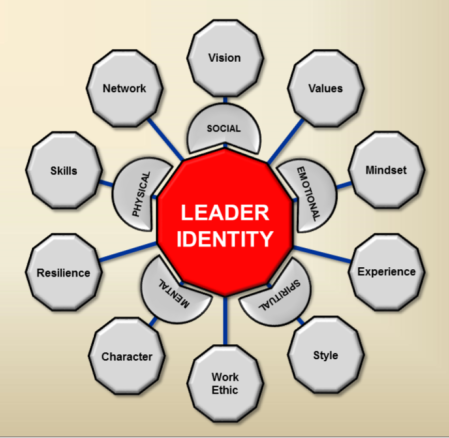
As I prepared to throw my own boots over the wire, much of my reflection paralleled that of Dom Edwards, almost a collection of pieces of advice I would have offered myself when I pinned on my gold bars 28 years earlier. My own emphasis focused in on your personal reputation as a leader, the brand you inherently promote, whether or not you realize it. Edwards captured many of the same thoughts, and admittedly zeroed in on some of his own personal idiosyncrasies. Ultimately, this is about mentoring. If you’re doing your job as a leader, then you ought to be sharing as much of that accrued knowledge and wisdom as humanly possible.
Edwards’ post, however, generated a fair amount of negative comments and sparked an unusually heated debate. My own reaction was mixed. While on one hand I appreciate the need for a leader to be literate, fair, and insightful, I was taken aback by suggestions that someone would be judging my choice of spouse or the social graces of my children, or that someone might think that bullion rank was somehow a necessity. Everyone has idiosyncrasies, and these are no doubt high on Edwards’ list. I have my own and am convinced that if I allowed them to bleed into the public discourse people would think I was “one off.” But that’s a conversation for another day.

What Edwards is really addressing is the concept of your personal leader brand. His post focuses on a few “unspoken” aspects of your brand that often need attention, but are not often discussed between senior rater and subordinate. But they should be. The problem with unspoken norms, as he describes them, is that they represent a significant portion of your brand as a leader. They cannot remain unspoken. You don’t have to be mentor to someone to share expectations with them, you just have to be a good leader. And those expectations have to be both spoken and reinforced.

24 April 2016

* 5 ‘big ideas’ to guide us in the Long War against Islamic extremism

https://www.washingtonpost.com/opinions/5-big-ideas-to-guide-us-in-the-long-war-against-islamic-extremism/2016/04/15/c145cdde-028a-11e6-9203-7b8670959b88_story.html
By David Petraeus April 15 

The formulation of sound national policy requires finding the right overarching concepts. Getting the “big ideas” right is particularly important when major developments appear to have invalidated the concepts upon which previous policy and strategy were based — which now appears to be the case in the wake of the Arab Spring. To illustrate this point, I have often noted that the surge that mattered most in Iraq was not the surge of forces. It was the surge of ideas, which guided the strategy that ultimately reduced violence in the country so substantially. 
The biggest of the big ideas that guided the Iraq surge included recognition that: 
●The decisive terrain was the human terrain — and that securing the people had to be our foremost task. Without progress on that, nothing else would be possible. 
●We could secure the people only by living with them, locating our forces in their neighborhoods, rather than consolidating on big bases, as we had been doing the year before the surge. 
●We could not kill or capture our way out of the sizable insurgency that plagued Iraq; rather, though killing and capturing were necessary, we needed to reconcile with as many of the insurgent rank and file as was possible. 
●We could not clear areas of insurgents and then leave them after handing control off to Iraqi security forces; rather, we had to clear and hold, transitioning to Iraqis only when we achieved a situation that they could sustain.
Now, nine tough years later, five big ideas seem to be crystallizing as the lessons we should be taking from developments over the past decade.
First, it is increasingly apparent that ungoverned spaces in a region stretching from West Africa through the Middle East and into Central Asia will be exploited by Islamic extremists who want to establish sanctuaries in which they can enforce their extremist version of Islam and from which they can conduct terrorist attacks. 
Second, it is also apparent that the attacks and other activities of such extremists will not be confined to the areas or regions in which they are located. Rather, as in the case of Syria, the actions of the extremist groups are likely to spew instability, extremism, violence and refugees far beyond their immediate surroundings, posing increasingly difficult challenges for our partners in the region, our European allies and even our homeland.
Third, it is also increasingly clear that, in responding to these challenges, U.S. leadership is imperative. If the United States does not lead, it is unlikely that another country will. Moreover, at this point, no group of other countries can collectively approach U.S. capabilities. This does not mean that the United States needs to undertake enormous efforts to counter extremist groups in each case. To the contrary, the United States should do only what is absolutely necessary, and we should do so with as many partners as possible. Churchill was right when he observed, “There is only one thing worse than fighting with allies, and that is fighting without them.” And, if one of those partners wants to walk point — such as France in Mali — we should support it, while recognizing that we still may have to contribute substantially. 

How Putin Changed the Balance of Power Among Russia's Elite (Op-Ed)


http://www.themoscowtimes.com/opinion/article/how-putin-changed-the-balance-of-power-among-russias-elite-op-ed/565755.html 
Apr. 15 2016 
Kirill Kallinikov / RIA NovostiViktor Zolotov has been appointed to the Security Council, signifying his high-rank within Russia’s siloviki. 
As is often the case in Russia, the creation of the National Guard was long anticipated, and therefore, caught everyone by surprise.
The sheer scale of the restructuring has affected practically every branch of the siloviki. The Interior Ministry will lose most of its muscle: 170,000 interior troops, 50,000 special forces and riot police, private security forces as well as control over private security forces and arms trafficking will all go to the National Guard.
In exchange, the Interior Ministry will receive 30,000 Federal Drug Control Service (FSKN) personnel — without generals — and approximately the same number of staff from the Federal Migration Service (FMS). Both services have essentially been disbanded and their directors marginalized. 

Both Viktor Ivanov — former FDCS head and chief personnel officer for President Vladimir Putin — and Konstantin Romodanovsky — former FMS head, Chekist and major player in the Interior Ministry — are out of the picture.
In their place, Viktor Zolotov, who has been guarding Putin since the mid-1990s, has taken center stage. He will head a force that stands somewhere between a super-sized government agency and a 400,000-strong intelligence service.
Observers are already explaining that Putin instituted this unprecedented reform as preparation for suppressing the mass protests that will inevitably break out as the socio-economic situation in the country continues to decline. 
This is partially true, and for that reason the authorities have been steadily adding to the ranks of various riot police and rapid deployment forces. 
But even more important is the way this reform has changed the balance of power among the Russian elite.
In fact, that balance has shifted significantly over the past two years, generally investing more power in the siloviki — particularly the FSB, army and Chechen leader Ramzan Kadyrov, who heads what is essentially a separate siloviki structure in its own right.

Now the all-powerful Russian president will have a potent tool at his disposal that answers to no one but himself. It is a personal army unregulated as yet by any law. But this move also levels the balance of power within the siloviki, in much the same way as when Putin transformed the FDCS into a sort of second FSB in the mid-2000s. That put the two intelligence services into competition, making it possible for Putin to rely on either one as the situation demanded, playing each against the other.
Oil prices have fallen, and along with them, the strength of the central government. It is as if Russia has returned to the 1990s. And the rise of Viktor Zolotov bears striking parallels to the rise more than 20 years ago of Alexander Korzhakov, chief bodyguard to former-President Boris Yeltsin. When Yeltsin's popularity hit rock bottom, Korzhakov advocated canceling presidential elections. However, he ultimately lost out to former Deputy Prime Minister Anatoly Chubais and his group of reformers who argued that the election process should proceed.
While there is little need to cancel presidential elections in 2018, Zolotov remains positioned to keep guard over Putin's revanchist interests.

ANARCHISM IN INDIA

http://raiot.in/anarchism-in-india/

OCTOBER 3, 2015 / JEAN DRÈZE

In the introduction to Democracy and Power, the Delhi Lectures of Noam Chomsky (Three Essays Collective), Jean Drèze examined the curious absence of Anarchism from Indian revolutionary traditions. Unlike the disdain shown both by Right and the Leninist left, Drèze attempts to extricate anarchist politics and ideas from the web of misinterpretations and create a space for anarchist ideas in the matrix of Indian resistance cultures. You can get Democracy and Power, the Delhi Lectures of Noam Chomsky with an introduction byJean Drèze, directly from Three Essays Collective
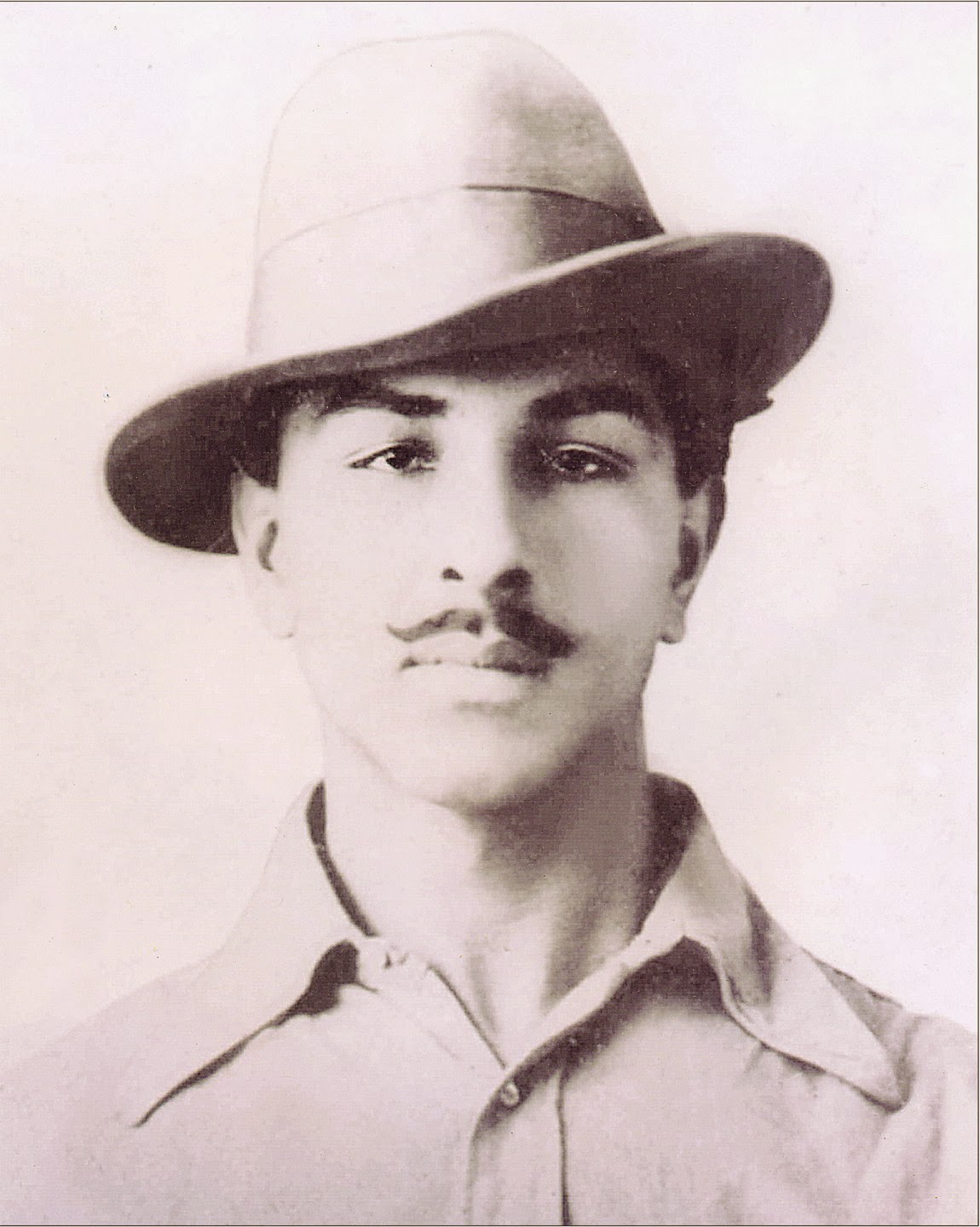
In India as elsewhere, anarchist thought is widely misunderstood. As Bhagat Singh, one of the few Indian revolutionaries who had explicit anarchist leanings, put it: “The people are scared of the word anarchism. The word anarchism has been abused so much that even in India revolutionaries have been called anarchist to make them unpopular.”
How and why the anarchist tradition came to be comprehensively sidelined in India is not entirely clear. The fact is that very few left leaders, writers or activists in India think of themselves as anarchists. And yet it seems to me that many of them have drawn inspiration from anarchist thought in one way or another, and that we would greatly benefit from a more explicit recognition of this anarchist influence – actual and potential.Bhagat Singh (27th September 1907 – 23 March 1931)

There are varieties of anarchist thought (some are pretty weird), just as there are varieties of socialist thought; my concern here is with what one might call cooperative anarchism or libertarian socialism. This is more or less the opposite of what anarchism is often claimed to mean by those whose aim, as Bhagat Singh put it, is to make revolutionaries unpopular. This aim is typically achieved by portraying anarchists as impulsive bomb-throwers who want to destroy the state through violent means.[1] Resistance to state authority and oppression is certainly one of the core principles of anarchism. It is also true that many anarchists believe in the possibility of a state-less society, and perhaps even in the need for a violent overthrow of the state. But anarchist thought certainly does not start from there. In fact, as Chomsky has argued, it is even possible for a committed anarchist to lend temporary support to some state institutions vis-Γ -vis other centres of power: “In today’s world, I think, the goals of a committed anarchist should be to defend some state institutions from the attack against them, while trying at the same time to pry them open to more meaningful public participation – and ultimately, to dismantle them in a much more free society, if the appropriate circumstances can be achieved.”[2]

India’s High Growth Rate Isn’t Translating to Job Creation

http://thewire.in/2016/04/18/indias-high-growth-rate-isnt-translating-to-job-creation-30081/

The number of jobs created in eight select industries in 2015 was 135,000. This was much worse than the 421,000 jobs created in 2014 and the 419,000 in 2013.
While the years after 2010 were favourable when it comes to job creation, from last year it hasn’t been. 
Here, when I use the shorthand “jobs” it means both jobs and livelihoods for self-employed people. In the farm sector, most “jobs” are livelihoods. In the non-farm sector too, outside of the organized sector, much of working opportunities come as self-employed livelihoods and not jobs as normally conceived. In the pre-industrial world, higher output and incomes were achieved by the natural growth of the work force, and was therefore limited. That was also the reason why populous regions had higher aggregate output – India, China, Egypt – and were the perennial target of raiders from poorer regions. The Industrial Revolution created a transformation in the productivity of labour aided by machines and education and the reallocation of labour from the farm to the non-farm sector. After the Second World War, former agrarian and colonial economies embarked on the path of industrialization with varying degrees of success.

Regions endowed by nature with abundance of minerals and rich agriculture prospered before the Industrial Revolution and afterwards; it helped propel economies like the US. However, material endowments did not always engender economic prosperity; and a lack of it did not foreclose the possibilities of economic growth. The tortured course of many African and Latin American countries rich in resources and poor in social organization was one side of the story. The rise of Japan and later South Korea as manufacturing giants with virtually no mineral wealth at home was the other end of it. Both India and China were slow to industrialize and to urbanize in the first few decades of the post-1950 era. In part the redistribution of farming land away from feudal landlords to the “tiller” or peasantry gave a window to rural populations to stay longer on the farm.

An unequal agreement, Modi govt’s comprador mentality is intriguing

Apr 18, 2016, 
http://www.tribuneindia.com/news/comment/an-unequal-agreement/223771.html
M. K. Bhadrakumar
US Defence Secretary Aston Carter''s visit has not resulted in a single major project actually taking off

The Narendra Modi government appears to have taken two steps forward and one step back with regard to the signing of the 'foundational agreements', which the United States has been pressing for since 2004. One of the three - Logistics Exchange Memorandum Agreement (LEMA) - has been "agreed in principle" during the visit by US Defence Secretary Aston Carter, but for some incomprehensible reason deferred by a "few weeks" or a "few months" for the actual signatures. Typically, the Modi government has not cared to consider public opinion - although this would be a landmark event, since the pact will give the US forces access to Indian military bases, which signifies a great leap forward in independent India's foreign and security policy doctrines. What necessitates this breath-taking leap of faith at the present juncture remains unclear. The previous UPA government had profound reservations about signing the foundational agreements, as they'd erode India's strategic autonomy and adversely affect its independent foreign policies. The LEMA remains an unequal pact insofar as India is not a global power, it does not have an interventionist agenda abroad and has no need to access US military bases for logistics, and, of course, none of the friendly countries with which India holds military exercises ever demanded such pacts as an underpinning of cooperation.

The perception will arise in the region and beyond that India has shed its traditional aversion to military alliances and non-aligned policies and proposes to bandwagon with the US. Such a perception does not do India good. Specifically, the perception that India is drifting into an alliance with the US will generate apprehensions in the Russian mind about defence cooperation with India. Russia has been and continues to be the principal source of cutting-edge military technology for the Indian armed forces. Despite the high-sounding rhetoric of the US-Indian Defence Technology and Trade Initiative and 'Make in India', the ground reality is that so far what has happened under these rubrics is, plainly put, zilch. Mr. Carter's visit did not result in a single major project actually taking off. On the other hand, the US has openly sought to get India on board its so-called 'rebalance' in Asia. With a view to countering China's rise, the US proposes to create an alliance system in Asia - an 'Asian NATO' - in which it envisages a pivotal role for India, alongside Japan and Australia. The US game plan is to co-opt India into an alliance system based on the 'interoperability' of the armed forces which of course will demand the use of similar weapon systems. Within the NATO system, what the US ensures is that the 'interoperability' requires extensive use of US-made weapons, which in turn cements Washington's trans-Atlantic leadership role in decision-making on all political and military issues. In the Indian context, a prime US motive will be to erode the Indo-Russian strategic partnership. The 'isolation' of Russia is a major global objective of the US. On the contrary, any atrophying of strategic ties with Russia is fraught with serious consequences for India's long-term interests as an emerging power in a multipolar world order. India has shared interests with Russia within the ambit of BRICS and the Shanghai Cooperation Organisation. Equally, any close identification with the US' rebalance strategy in Asia can create serious complications and distrust between India and China.