19 September 2015

Is the US Army Near a Breaking Point?

September 16, 2015

Joining a chorus of senior Pentagon officials and military officers, acting Undersecretary for Personnel and Readiness Brad Carson warned in an interview with Stars and Stripes that the U.S. Army – the world’s deadliest conventional fighting force – will be near breaking point if automatic sequestration, set to begin in October, takes place.

The U.S. Army could be cut down from 450,000 to 420,000 active duty soldiers should sequestration – automatic spending cuts across the board in order to reduce federal expenditure – continue with the result that the army would not be able to meet its current deployments.

“The Army’s near breaking point if you go that low, I think. Already we see the fact that people are demanding the Army do many missions — from West Africa and the Ebola crisis to now resurgent problems in Iraq, Syria. Russia of course posing a threat,” Carson said. “So the demand on the Army is not slackening at all, and at the same time, their numbers are falling.”

The Mixed Legacy of a South Korean Dictator

September 17, 2015

Former South Korean president and dictator Park Chung-hee’s legacy casts a long shadow over the country’s modern history. A former lieutenant in the Japanese Kwantung Army, Park witnessed firsthand the state-directed developmental program implemented in the puppet state of Manchukuo (modern day northeast China). This, as Hironori Sasada speculates, was instrumental in teaching Park how a developmental state might be constructed — in South Korea. Indeed, between 1962 and his death in 1979, Park would go on to do just that, along with other developmental dictators like Chiang Kai-shek and Lee Kuan Yew.

Park, as dictators go, was anything but benevolent. Developmental states, overbearing by nature, severely oppress — often ruthlessly — civil society. The Yushin System, implemented in 1972 and lasting until Chun Doo-hwan’s military coup, effectively granted Park full dictatorial powers through the dissolution of the National Assembly and the suspension of the Constitution. (Park had governed semi-democratically before then.) The slew of emergency decrees that followed permitted a severe crackdown on society: protesters, activists, and dissidents were often jailed and tortured; many died in captivity or during confrontations with riot police or the military.

What Is Hybrid Conflict?

September 11, 2015
https://lawfareblog.com/what-hybrid-conflict 

I spent a day and half this week at the Pentagon at a remarkable symposium on so-called "hybrid conflicts" organized by the office of the legal adviser to the Joint Chiefs of Staff. The conference took place under Chatham House rules, so I'm constrained in describing the proceedings in any detail, but as it will be of particular interest to Lawfare readers, I will do the best I can. (In addition, I recorded an episode of the Lawfare Podcast yesterday with the joint staff's legal adviser, Brigadier General Richard Gross on both the subject of hybrid conflict and the symposium. I will post that next week.)

The impetus for the conference, as General Gross explains in the podcast, is that the Pentagon's senior leadership has increasingly begun discussing conflicts in terms of this idea of "hybrid conflict"—which is to say conflicts that involve both elements of state-to-state conflict and non-state actors. Pentagon lawyers were looking for input into and discussion on how this idea maps onto existing legal structures. The laws of war, after all, don't have a "hybrid" category. There's international armed conflict (IAC) and non-international armed conflict (NIAC).

The trouble is that officers don't tend to think in those terms. As one participant in the conference quipped, he'd heard military non-lawyers use the term NIAC frequently, but only ever in asking a lawyer the question, "What is a NIAC?" Military planners think in the language of counter-insurgency, in the language of civil war, in the language of state-to-state conflict, and increasingly, they think in the language of this idea of hybrid conflict.

THE AIRPOWER PARTISANS GET IT WRONG AGAIN

SEPTEMBER 17, 2015

Vietnam and Kosovo don't make the case for airpower.

Airpower, according to Elliot Cohen, who directed the Gulf War Air Power Survey, “is an unusually seductive form of military strength, in part because, like modern courtship, it appears to offer gratification without commitment.” Yet the idea that air power is a panacea or superior to land operations is mistaken. Last month, in their essay at War on the Rocks, “Airpower May Not Win Wars, But It Sure Doesn’t Lose Them,” two senior Air Force pilots, Mike Pietrucha and Jeremy Renken, argued that the United States had departed from “the successful post-Vietnam template that relied on airpower to seek limited objectives.” Instead, they argued, the United States was mistakenly pursuing a “ground-centric approach” that “failed to achieve stated goals” in Afghanistan and Iraq.

There is plenty to take issue with regarding their use of historical evidence. In their effort to explain the utility of airpower and condemn inter-service rivalry, Pietrucha and Renken engage in a rewriting of history, notably in the case of the Vietnam War and NATO involvement in the former Yugoslavia. Their arguments, ironically, represent the worst aspects of inter-service rivalry at a time when what the United States needs is objective assessments of how it can best deploy national power to achieve national interests in regions ranging from the Asia-Pacific to the Middle East.

Leveraging the Internet of Things for a More Efficient and Effective Military

By Denise E. Zheng, William A. Carter 
SEP 16, 2015 

The Internet of Things (IoT) is transforming the way organizations communicate, collaborate, and coordinate everyday business and industrial processes. Adoption of IoT technologies has proven beneficial to organizations that manage large numbers of assets and coordinate complex and distributed processes. Decades ago, the U.S. Department of Defense (DoD) pioneered the sensor, computer networking, and communications technology that serve as the foundation of IoT, but today the U.S. military is struggling to equip its workforce with the basic functions provided by commercial smartphones. DoD continues to drive innovation in advanced sensors and control systems, but it is falling behind in deployment of IoT technologies that have the potential to deliver new capabilities and cost savings. Based on in-depth research and interviews with 29 government and industry executives and subject matter experts, this report suggests ways in which the U.S. military could better leverage IoT technologies to improve efficiency and effectiveness. 


18 September 2015

Return of Pandits to Kashmir

By Col Tej Kumar Tikoo
17 Sep , 2015
http://www.indiandefencereview.com/spotlights/return-of-pandits-to-kashmir/

Return of Kashmiri Pandits to the Valley is the biggest challenge to the very idea of India as a multi-ethnic, plural and secular democracy. Therefore, restoration of that position must remain India’s ultimate aim in Kashmir.

Displaced people have a right to return to their native places. According to UN Guiding Principles on Internal Displacement and the provisions of the Indian Constitution, it is the responsibility of the Government of India to create conducive conditions for Pandits to return safely and honourably to their habitual place of residence. UN Guideline 28 is quite categorical on this issue. It states, “Competent authorities have the primary duty and responsibility to establish conditions, as well as provide means, which allow internally displaced persons to return voluntarily to their homes or places of habitual residence.” This involves the following:

Guaranteeing their safety and security.

Protecting their ‘Fundamental Rights’ as enshrined in the Constitution of India and honouring the same as universally accepted.

Unhindered freedom of movement.

Protecting their inalienable right to livelihood with dignity and honour.

Impact of 1965 War on Pakistan

By RSN Singh
17 Sep , 2015

Pakistan Army realised the vulnerability of East Pakistan, with its 4100 Km border with India and defended by a weak division with only two effective brigades – even though it was never attacked by India. At hindsight, the Indian decision not to activate the eastern front paid dividends in the 1971 War. Had India opened a front in East Pakistan, anti-India sentiments would certainly have developed. This could have been exploited by the leaders in West Pakistan to perpetuate their rule in that part of the country.


The most significant outcome of the 1965 war was that Pakistan, in the years that followed became increasingly dependent on China for its defence needs and began to get closer to the Muslim nations.

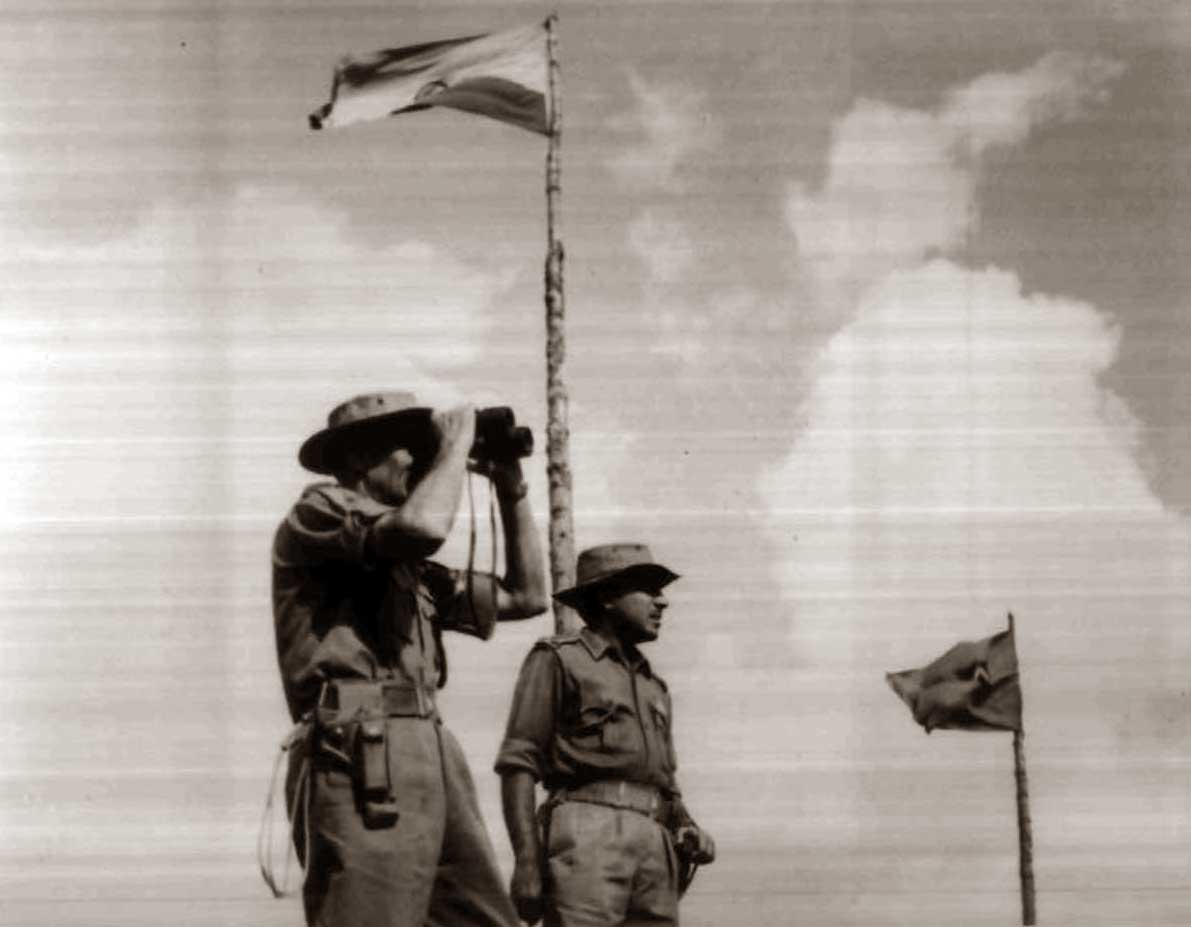
In August 1965, Pakistan’s 12 Infantry Division launched Operation Gibraltar in J&K and infiltrated between 5,000 and 7,000 ex-servicemen and volunteers led by regular army officers into Indian territory, which eventually triggered a full-scale war all along the India’s western front.

How Russia prevented a joint US-UK attack on India in 1971

By : Russia India Report
September 16, 2015

Exactly 40 years ago, India won a famous victory over Pakistan due to its brilliant soldiers, an unwavering political leadership, and strong diplomatic support from Moscow. Less well known is Russia’s power play that prevented a joint British-American attack on India. 

In 1971, India won a famous victory over Pakistan due to its brilliant soldiers, an unwavering political leadership, and strong diplomatic support from Moscow. Less well known is Russia’s power play tha

US President Richard Nixon is on the phone with Secretary of State Henry Kissinger, hours after Pakistan launched simultaneous attacks on six Indian airfields, a reckless act that prompted India to declare war.

Nixon: So West Pakistan giving trouble there.

Kissinger: If they lose half of their country without fighting they will be destroyed. They may also be destroyed this way but they will go down fighting.

Mullah Mansour Wins Leadership Dispute Over Who Is Head of the Afghan Taliban, Report

September 16, 2015

Afghan Taliban Says Leadership Dispute Resolved

PESHAWAR, Pakistan — The Afghan Taliban has said that a major dispute undermining the movement has been resolved, after relatives of the militant group’s late leader, Mullah Omar, pledged support for his appointed successor Mullah Mansour.

The relatives could not be contacted directly, but a close aide to Omar’s son confirmed that the agreement had been celebrated at a secret ceremony after Mansour accepted a list of eight demands.

“Mullah Mansour accepted all these demands,” the aide said, asking not to be named.

The conditions included restructuring the leadership council and ruling by consensus. The Taliban’s official spokesman, representing Mullah Mansour, confirmed that the changes would be implemented.

“Mullah Mansour and his associates promised them that only the Shura (leadership council) would have the power to make decisions, rather than individuals,” the spokesman said.

The Taliban announced the death of Mullah Omar in July, more than two years after his demise, derailing a fledging peace process with Kabul and raising the spectre of a split within the group that is fighting to topple the Afghan government and restore hardline Islamist rule.

Duck and Cover in Pakistan

BY JAVID AHMAD
SEPTEMBER 15, 2015

Pakistan’s rapid nuclearization is a worrisome development. U.S. aid must impose strong conditions to discourage nuclear expansion.

A new joint report released by the Carnegie Endowment for International Peace and the Stimson Center argues that Pakistan is rapidly expanding its nuclear arsenal and is far outpacing India, its longtime archrival, in the development of nuclear warheads. The report asserts that “Pakistan has the capability to produce perhaps 20 nuclear warheads annually, whereas India appears to be producing about five warheads annually.” Within five to ten years, the report claims, Pakistan could possess as much as 350 nuclear weapons. This is an alarming assessment of Pakistan’s dangerous nuclearization, however accurate, which enables the country to retain the world’s third-largest nuclear stockpile, after the United States and Russia, within a decade.

America’s Sri Lankan Dilemma

BY CALLUM MACRAE
SEPTEMBER 15, 2015

The United States and the U.N. must ensure that Sri Lanka's reconciliation process is fair and just, rather than leaving the Sri Lankan government to its own devices.

Mangala Samaraweera, Sri Lanka’s Foreign Minister, is a persuasive and very probably sincere man. On Monday, he delivered a keynote speech to the opening session of the UN Human Rights Council in Geneva in which he spoke of reconciliation, hope, and a peaceful future for all the people of Sri Lanka after their terrible quarter -century-long civil war which ended in 2009.

But there is a huge problem here. And that problem is a yawning gulf between the message coming out of the government of Sri Lanka when it is facing the rest of the world—and the message it gives when facing the Tamils in the former war zones of the North. Unless the members of the United Nations Human Rights Council (UNHRC)—and in particular the government of the United States—make an effort to understand that gulf, all the genuine movement towards truth and justice over the past couple of years may come to nothing.

Eighteen months ago, the UNHRC voted to establish an international investigation focused on the allegations of terrible war crimes and massacres committed at the end of the war in which tens of thousands of Tamil civilians died—most killed by government shelling, though the rebel Tamil Tigers too are accused of committing war crimes.

What Secret Projects Are China’s Top Military Scientists Working On Now?

Steven Aftergood
September 16, 2015

Classified Military R&D in China

China’s military research and development program is organized around 16 “national megaprojects” that are intended to advance and transform that country’s capabilities in core technology areas including electronics, aerospace, clean energy, and so on. Three of the 16 national projects are classified and have not been officially acknowledged.

But in a recently published US Army War College volume, China specialists Richard A. Bitzinger and Michael Raska identified “three prime candidates” for the classified Chinese programs: 1) a laser fusion program; 2) a navigational satellite system; and 3) a hypersonic vehicle technology project.

The Shenguang (Divine Light) laser is an experiment in inertial confinement fusion. The project reportedly aims to achieve ignition and plasma burning by 2020. “Shenguang has two strategic implications: it may accelerate China’s next-generation thermonuclear weapons development, and advance China’s directed-energy laser weapons programs,” wrote Bitzinger and Raska, who are based at the S. Rajaratnam School of International Studies in Singapore.

China's Fake Islands in the South China Sea: What Should America Do?

September 15, 2015

While China conducts innocent passage around real U.S. islands of Alaska, the U.S. is apparently unable to do so around China’s fake islands in the South China Sea. The transit by Chinese warships in innocent passage through the territorial sea of Attu Island in the Aleutian chain has added an additional wrinkle to U.S. policy in the South China Sea.

On May 12, the Wall Street Journal reported that Secretary of Defense Ash Carter had asked his staff to “look at options” for exercising the rights and freedom of navigation and overflight in the EEZ, to include flying maritime patrol aircraft over China’s new artificial islands in the region, and sending U.S. warships to within 12 nautical miles of them. Later that month, a P-8 surveillance aircraft with a CNN crew on board, was repeatedly warned to “go away quickly” from Fiery Cross Reef, even as it flew beyond 12 nm from the feature. Fiery Cross Reef is a Chinese-occupied outcropping that has been fortified by a massive 2.7 million square meter land reclamation into an artificial island with a 3,110-meter airstrip and harbor works capable of servicing large warships.

Beware! China's military games in Ladakh

September 16, 2015 

'Intrusions by PLA troops in the Ladakh sector are more in number than elsewhere and this region is now likely to remain an area of enhanced Chinese interest,' warns China expert Jayadeva Ranade.

The latest standoff between troops of China's People's Liberation Army and Indian paramilitary and military personnel in the mountainous, high-altitude area near Daulet Beg Oldi -- which decades ago was a trading post along the southern portion of the Old Silk Route -- invites attention to China's intentions in the region.

A flag meeting on September 15, 2015 between local commanders comprising a PLA senior colonel (equivalent to a brigadier) and a major general and brigadier from the Indian side has, however, temporarily defused the situation.

There are immediate military implications of China's actions. In addition to upgrading their capacity for surveillance of Indian troop movements and activities, the erection of a tower additionally gives a permanence to Chinese presence in the area.

The U.S.-China Military Scorecard: Forces, Geography, and the Evolving Balance of Power, 1996-2017 Andrew S. Erickson

September 14, 2015

Eric Heginbotham, Michael Nixon, Forrest E. Morgan, Jacob Heim, Jeff Hagen, Sheng Li, Jeffrey G. Engstrom, Martin C. Libicki, Paul DeLuca, David A. Shlapak, David R. Frelinger, Burgess Laird, Kyle Brady, and Lyle J. Morris, The U.S.-China Military Scorecard: Forces, Geography, and the Evolving Balance of Power, 1996-2017 (Santa Monica, CA: RAND,September 2015).

Over the past two decades, China’s People’s Liberation Army has transformed itself from a large but antiquated force into a capable, modern military. Its technology and operational proficiency still lag behind those of the United States, but it has rapidly narrowed the gap. Moreover, China enjoys the advantage of proximity in most plausible conflict scenarios, and geographical advantage would likely neutralize many U.S. military strengths. A sound understanding of regional military issues—including forces, geography, and the evolving balance of power—will be essential for establishing appropriate U.S. political and military policies in Asia. This RAND study analyzes the development of respective Chinese and U.S. Military capabilities in ten categories of military operations across two scenarios, one centered on Taiwan and one on the Spratly Islands. The analysis is presented in ten scorecards that assess military capabilities as they have evolved over four snapshot years: 1996, 2003, 2010, and 2017. The results show that China is not close to catching up to the United States in terms of aggregate capabilities, but also that it does not need to catch up to challenge the United States on its

China vs. America: Passing the Baton

Written by Frank Li

Once again, the U.S. men's team was disqualified in the 4x100 meter relay at a major international championship (i.e. 2015 IAAF World Championships Track & Field)! Once again, the reason for failure was the same as numerous times before: botched baton passing (Ashton Eaton's Record Moment for U.S. Is Tempered by Error in 4x100 Relay)!

In contrast, the Chinese team finished second (behind the unbeatable team from Jamaica anchored by the legendary Usain Bolt), the best finish in this event for China, ever!

I watched the race in disbelief, followed with several thoughts ...

1. The U. S. Team

Tarkhan Batirashvili, Top ISIS Military Commander in Syria Was Trained by U.S.

Mitchell Prothero
September 16, 2015

U.S. training helped mold top Islamic State military commander 

KILLIS, Turkey: The 15 Chechens looking to cross the border from Turkey to Syria didn’t strike Abdullah as particularly important or unusual.

It was early summer in 2012, and as a smuggler based in the Turkish border town of Killis, Abdullah, who’d fled his home village in Syria because of fighting on the outskirts of Aleppo, was used to secretive groups of foreigners – journalists, aid workers and many recently aspiring jihadists – hiring him to cross Turkish military lines at the border while avoiding what was then still a significant Syrian government presence in northern Syrian.

Abu Omar al Shishani, born Tarkhan Batirashvili in Georgia’s Pankisi Valley, is seen in an image captured from an Islamic State video posted on the Internet. The Pankisi Valley is home to perhaps as many as 150 Islamic State fighters. Screenshot from ISIS Video

“In 2012, everyone was coming to Syria and we had too much work leading all kinds of people across the border,” he explained over lunch in Killis, a Turkish town just a few miles from the rebel-held Syrian city of Azzaz. “A lot were Muslims who had come to support the revolution against Bashar Assad from every country. So many from Europe, Russia, Germany, France… .”

We’re Losing the War Against ISIS in Iraq

September 15, 2015

My last post examined Islamic State as a global terrorist entity—a complex and constantly evolving threat. This two-part post focuses more tightly on the unfolding war against ISIS in Iraq. Here things are much clearer: we’re losing.

Anyone reading this already knows much of the history, but to recap: ISIS exploited Iraqi government ineptitude and sectarian division after US forces left in 2011, and used the sanctuary created by the Syrian civil war to grow from an urban guerrilla group—small cells, civilian clothes and vehicles, light weapons, operating mainly by night with asymmetric (i.e. terrorist) hit-and-run tactics—into something more like a conventional light armored cavalry.

By late 2013, when ISIS fighters mounted a major push against the Iraqi cities of Tikrit and Fallujah, their tactical style had settled into a pattern. A main force, often comprising dozens of trucks and troop-carrying technicals, would move in compact formation on highways and secondary roads. Ahead of it, and to the flanks, a swarm of gun trucks—technicals with anti-armor weapons, heavy machine guns, radios and a few dismounts—ranged widely across the landscape, scouting routes, securing chokepoints, and looking for targets of opportunity or soft spots. When they spotted one, they would either “bounce” and overwhelm it with their own resources, or pull the main column onto it using radio and cellphone messages. Teams of two to three technicals, each carrying six or eight fighters ready to dismount, would swarm onto a target, coordinating their fire to overwhelm it. This is classic maneuver warfare—in the business, it’s known as “recon pull”—and it looked a lot like Soviet-style mission tactics, which was unsurprising given the number of Ba’athist officers now on the ISIS payroll.

THIS DEAL OR WAR? MISADVENTURES IN DETERRING IRAN

SEPTEMBER 15, 2015

Without a credible conventional deterrent, the United States cannot stop Iran from running toward the bomb and wreaking havoc.

President Obama’s defense of the Iran nuclear deal rests on a simple premise: It’s either this deal or war. According to the administration, not only is there no better deal to be had, but the inevitable consequence of rejecting the deal will be an eventual military conflict with Iran.

Our government’s acceptance of the deal is now a foregone conclusion, but it is still worth noting that “this deal or war” is a false choice three times over. Regardless of whether one felt the deal on offer was the best choice, there were plainly alternatives to it other than war. Nor was the notion that President Obama might engage in military conflict with Iran a credible one. Despite the possibility that the deal would not materialize prior to its announcement on July 14 or that it might later face legislative defeat, no preparation for the possibility of conflict was apparent. The administration was quick to dismiss the effectiveness of the “military option” even as it insisted that it remained on the table.

Wahhabism, Saudi Arabia, and Their Gift to Yale

14/09/2015

The first thing you need to know about Saudi Arabia is that it is not a country but a financial and religious empire with a million poisonous tentacles stretching across both the West and the Muslim world. Its wealth is built upon the dirty oil under its sands, its legitimacy crafted upon an even dirtier political deal with a totalitarian religious cult known as Wahhabism.

The Saudi Royal Family treats the country as its private property. When the House of Saud conquered the territory known as Arabia, they named the country after themselves, hence the Saudi before the Arabia. It is more of a corporation than anything else, except The Family controls Islam's holiest cities and profits handsomely off them.

Saudi Arabia should have made more news last week than it did. For starters, it was the anniversary of 9/11, and Saudi Arabia played at least an indirect role in Al Qaeda's attacks on Washington and New York. More on that in a minute. But a Saudi billionaire also donated $10 million to Yale University and Yale Law School to establish a Center of Islamic Law and Civilization. The official announcement marked this as a great triumph. The establishment of such a center would have indeed been a victory worth celebrating had the money not originated from such a dubious source.

The Pentagon Just Spent $41 Million to Train “Four or Five” Syrian Fighters

BY PAUL MCLEARY
SEPTEMBER 16, 2015

Only about “four or five” U.S.-trained Syrian rebels remain on the battlefield to take on the Islamic State after the Defense Department spent over $41 million to train and equip a small group of about 60 earlier this year, a senior military official said Wednesday.

After months of training by U.S. Special Forces at bases in Turkey, the so-called New Syrian Army fighters were sent back into Syria in July, said Gen. Lloyd Austin, head of the U.S. Central Command. Within days, they had been almost completely wiped out after being attacked by al Qaeda-linked Nusra Front forces, who captured, killed, or scattered most of the U.S.-backed forces.

The $500 million train and equip program was sold to Congress in late 2014 and aimed to produce about 5,400 Syrian fighters by the end of this year. On Wednesday, Austin and Undersecretary of Defense for Policy Christine Wormuth both conceded those numbers will not be met.

Under repeated questioning about the current size of the program, Wormuth said there are “between 100 and 120” additional fighters being trained in Turkey.

Business Conglomerate Controlled by Iranian Supreme Leader Ayatollah Ali Khamenei Big Winner From Iranian Nuclear Deal

September 16, 2015

INSIGHT-Conglomerate controlled by Iran’s supreme leader a winner from nuclear deal

The historic nuclear deal reached between Iran and major world powers has yet to be implemented, but one clear winner has emerged: Iran’s highest authority, Supreme Leader Ayatollah Ali Khamenei.

Khamenei has yet to publicly back the accord, which lifts some sanctions on Iran in return for limits on its nuclear program. But he does stand to benefit, thanks to his close control of one of the most powerful and secretive organizations in Iran – “Setad Ejraiye Farmane Hazrate Emam,” or Setad.

The deal, which is likely to go into effect after clearing a major Congressional hurdle last week, lifts U.S. secondary sanctions on Setad and about 40 firms it owns or has a stake in, according to a Reuters tally based on annexes to the deal.

The delisting of Setad – which has little connection to Iran’s nuclear program but is close to Iran’s ruling elite – feeds into U.S. Republicans’ criticism that the deal will empower Iran’s hardliners and help fund its regional ambitions.

America's F-35 Stealth Fighter vs. Russia's Su-35: Who Wins?

September 15, 2015

While the Lockheed Martin F-35 Joint Strike Fighter is slated to become the mainstay of the Pentagon’s tactical fighter fleet, not everyone nation on Earth can afford to fly an expensive fifth-generation fighter.

Even Russia and China are not likely to attempt to develop an all fifth-generation fighter fleet—instead, for the foreseeable future, the derivatives of the Sukhoi Su-27 Flanker air superiority fighter will make up the bulk of their tactical air arsenals. The most potent Flanker derivative is the Su-35, which is a much-improved version with vastly improved avionics, engines and airframe. In the years ahead, this latest Flanker-E is likely to proliferate around the world.

To counter the proliferation of Flanker variants, the U.S. Air Force, Marines and to a far lesser extent, the U.S. Navy will have to rely on versions of the F-35 even though it was never intended to be an air superiority fighter. It was and continues to be a strike aircraft with a robust air-to-air self defense capability even though the Pentagon has pushed it to a be a jack-of-all-trades.

20 Technologies That Will Keep the U.S. Air Force Flying High

September 16, 2015

A common refrain in the halls of the Pentagon as the defense drawdown continues in its fifth year is that the Defense Department has run out of money, and now it’s time to think. Recently, the services have done just that—with the latest being the U.S. Air Force’s release of a future operating concept.

Set in 2035, Air Force pilots are flying afterburning “D” model Joint Strike Fighters alongside drone bombers and a fleet of stealthy unmanned aerial refuelers. In this conflict of the future, manned cargo planes lead packs of cargo drones and new hybrid airships for low-cost shipping to low-threat areas.

Space control—or at least denial of enemy space dominance—is achieved through maneuvering satellites like the secretive X-37B, decoy spacecraft, and the rapid launch of microsatellites from fighter or other aircraft to preserve communications or set up a new, localized network. Uninhabited “missile trucks” have replaced the A-10 and F-35 in the close-air support mission based on attack variant of the forthcoming T-X trainer.

While there is much more to the Air Force’s new operating concept than sexy technologies, the focus of the vision is to change how they are employed by cross-domain trained, highly-competent and technical airmen.

Europe's Migrant Crisis: Ideals vs. Realities

September 16, 2015

For the first time in twenty years, Europe's borders are closing again. First Austria, then Denmark and now Germany have implemented partial border suspensions of the Schengen principle of free movement. As the Syrian refugee crisis evolves into the European migrant crisis, more closures may be on the way. Europe is disintegrating under the moral pressure of hundreds of thousands of people needing and demanding help.

Horrified by the human suffering and loss of life on Europe's southern and eastern borders, I proffered a realist analysis of the emerging crisis in an August 24 article for The National Interest. In the article, I labeled the European response to the crisis as "sheer madness." Anticipating subsequent events, I concluded that:

Continuing accommodation will yield an exponential growth in migrant numbers (and deaths), a spiraling crisis that will ultimately break the Schengen agreement. The European Union faces a clear choice: open borders without or open borders within. The old liberal dream of both at once cannot survive the harsh reality of our unequal world.

Russia's Syria Surprise (And What America Should Do about It)

September 15, 2015

Russia’s ongoing military buildup in Syria poses a serious challenge to American policy in the region. What response will best advance American interests in Syria and, more broadly, in the Middle East? That depends in large part on what Russia hopes to achieve.

So far, most Western commentators have argued that geopolitical considerations are driving Russian policy. At a minimum, Moscow wants to bolster a beleaguered Syrian president, its one sure ally in the region; more boldly, it hopes to gain some geopolitical advantage out of the deepening chaos throughout the region, exacerbated by doubts among leading Arab states about America’s commitment to their security and its strategic acumen. There is some truth to that judgment, although Moscow likely sees its actions as more defensive than ambitious. Its efforts to sell arms to Arab States, especially major American partners such as Egypt and Saudi Arabia, speak of regional aspirations. But Moscow is now focused on deteriorating conditions in Syria, which it no longer believes will survive in its current borders. As the map of Syria and the surrounding region is redrawn, Moscow is ramping up its presence to ensure that its interests are taken into account in any geopolitical reckoning.

FOUR OF THE BIGGEST CHALLENGES FACING THE NEXT PRESIDENT

SEPTEMBER 16, 2015

Many esteemed observers of world affairs argue that the world is becoming more dangerous. Some go further, contending it is even more perilous than it was during the Cold War. While this refrain is likely to grow louder as next year’s presidential election draws nearer, the threat of a nuclear or conventional war between great powers is thankfully much lower today than it was during the Cold War. Indeed, few of America’s foreign policy problems pose existential threats to the country’s security. Over time, though, they will chip away at regional structures, further undermine confidence in the resilience of world order, and challenge U.S. national interests. Success in addressing them will not always arrive in clear, dramatic fashion. More often than not, it will emerge from the accumulation of small, hard-won victories.

Here are four of the toughest challenges that await President Obama’s successor.

Containing the Conflict Between Russia and Ukraine

WHAT SHOULD WE DO IF THE BOMBER CAN’T GET THROUGH?

SEPTEMBER 16, 2015

Fueled by large and sustained economic growth, China’s military modernization program has created an impressive force. Widely reported advances indicate an existing regional power and an aspiring global one. China’s recent military advances in naval, aerial, ground, space, and cyberspace domains reveal a capable and credible force that gives it strong advantages in Asia, even if it is not yet equivalent to American forces in head-to-head competition.

American strategists are wringing their hands about challenges in the Western Pacific and the South China Sea. These experts lament China’s aggressive military buildup, its geographic sleights of hand, and its increasingly deadlyanti-access/area-denial (A2/AD) web. Can our bombers or aircraft carriers get through today’s state-of-the-art defensive layers and strike their targets? The current answer does not seem as satisfying as it once was, though it hasn’t stopped a continued American fixation on investing in symmetric ways to counter the threat. This strategic myopia puts at risk America’s ability to successfully respond to threats and to deter adversaries.

Cyberthreat Posed by China and Iran Confounds White House

SEPT. 15, 2015 

WASHINGTON — A question from a member of the Pentagon’s new cyberwarfare unit the other day prompted President Obama to voice his frustration about America’s seeming inability to deter a growing wave of computer attacks, and to vow to confront the increasingly aggressive adversaries who are perpetrating them.

“Offense is moving a lot faster than defense,” Mr. Obama told troops on Friday at Fort Meade, Md., home of the National Security Agency and the United States Cyber Command. “The Russians are good. The Chinese are good. The Iranians are good.” The problem, he said, was that despite improvements in tracking down the sources of attacks, “we can’t necessarily trace it directly to that state,” making it hard to strike back.

Then he issued a warning: “There comes a point at which we consider this a core national security threat.” If China and other nations cannot figure out the boundaries of what is acceptable, “we can choose to make this an area of competition, which I guarantee you we’ll win if we have to.”

India, Russia to Form Cybersecurity Group?

September 15, 2015 

An official statement from the ministry of home affairs says that India and Russia will form an 'expert group' on cybersecurity to jointly fight the threat of terrorism from the Islamic extremists such as Islamic State of Iraq and al-Sham(ISIS).

However, Indian security experts say this statement may be hype and prove impractical, unless a serious working model is established in tackling cyber terrorism. If such a group is indeed formed, security leaders suggest an agenda for it.

The discussion follows the meeting between home minister Rajnath Singh and his visiting Russian counterpart Vladimir Kolokotsev last week to discuss cybersecurity issues and ways to join hands to counter cyber terrorism.

"I don't see any synergy between the two countries about sharing cybersecurity skills," says Chennai-based Amar Prasad Reddy, Additional Director General, National Cyber Safety and Security Standards, and founder member of Recruitment Analysis Council. "Russians will first focus on protecting their environment, as they are very poor in information security skills.

Europe's Broken Borders


On August 26, 2015, 71 Syrian refugees were found dead in the back of an abandoned truck on the Austrian highway. News of the deaths of another 200 migrants in the Mediterranean Sea broke at the same time. Every day, it seems, reports flood in about migrants risking their lives in unsafe boats, in packed vans and trucks, and on the open road as they try to reach safe haven in Europe.

Frontex, the agency in charge of guarding the EU border, estimates that about 340,000 migrants have tried to sneak into Europe in 2015 so far, almost three times as many as in 2014. Along with the surge in numbers, the demographics of the travelers have also changed. These days, the bulk of them are Syrians fleeing violence at home, Afghans escaping their own ongoing civil war, Roma from Kosovo looking to avoid discrimination, and Eritreans fleeing a dictatorship comparable to the one in North Korea. Whereas in 2014, the bulk of refugees came to Europe through Italy from Libya and Tunisia, now more people arrive in Greece after crossing Turkey and the eastern Mediterranean Sea. Macedonia and Hungary have also seen a surge in traffic. Although the reason for this shift remains uncertain, it seems likely that reports of frequent drownings on the long journey from northern Africa to Italy, and the increasingly volatile situation in Libya, have convinced many refugees to try their luck over land.

5 THINGS THE MEDIA HIDES ABOUT THE REFUGEE CRISIS

by PAUL JOSEPH WATSON 
SEPTEMBER 15, 2015


The entire narrative that major western media outlets have crafted around the migrant crisis is a complete fraud.

Here are five things the media won’t report about the refugee crisis.

Migrants and the Road to Character

BY JAMES STAVRIDIS
SEPTEMBER 12, 2015

10,000 is not enough. Why the United States must do more to take in Syria’s refugees.

In his brilliant new book, The Road to Character, the New York Times’s sharp-eyed commentator David Brooks talks about how each of us individually ought to be thinking less about our “resume virtues” (accomplishments, high-level positions, economic achievement) and far more about our “eulogy virtues” — what truly matters at our core: courage, honesty, virtue, and integrity. He is entirely correct. So let’s apply that to our nation as a whole.

Like people, nations face moments when they must place the highest value on their values, not on their resume. The migration crisis emanating from the Levant is such a moment.

Today the world — not just Europe — confronts a massive refugee crisis as the broken and tragic nation of Syria becomes truly untenable as a place to carve out even the most basic level of life. Waves of refugees trudge north and west, seeking a respite from a civil war that has killed a quarter of a million people and displaced close to 10 million. The horrific Islamic State with its human slavery, open policies of child rape, executions by torture, and use of chemical weapons has rendered what was once Syria a scene out of Cormac McCarthy’s dystopian novel The Road.