Turmoil is never far away in South Asia, between disputed borders, acute resource shortages, and threats ranging from extremist violence to earthquakes. But in 2019, two crises stood out: an intensifying war in Afghanistan and deep tensions between India and Pakistan. And as serious as both were in 2019, expect them to get even worse in the coming year.The Profession of Arms: A Guide for Young Army Officers
It takes courage, especially for a young officer, to check a man met on the road for not saluting properly or for slovenly appearance, but, every time he does, it adds to his stock of moral courage, and whatever the soldier may say, he has respect for the officer who does pull him up.
Read Document →The Dragon's Teeth: Assessing China's Military Modernization
PLA has focused on modernising its capabilities across all warfare domains to achieve these goals. This includes land, air, and maritime operations, nuclear, space, counter-space, electronic warfare and cyberspace operations, aiming to become a fully integrated joint force.
Read Document →Transforming the PLA: A Decade of reorganisation from SSF to ISF
PRC has engaged in a sustained and broad effort to transform the PLA from an infantry-heavy, low-technology, ground forces-centric military into a high-technology, networked force with an increasing emphasis on joint operations and naval and air power projection.
Read Document →Eyes without Borders: Exploring the World of Open Source Intelligence (OSINT) in the Digital Age
Open Source Intelligence (OSINT) is gaining prominence with the rise of social media, the digital society and the vast growth of publicly and commercially available information (PAI and CAI).
Read Document →
The PLA’s Developing Cyber Warfare Capabilities and India's Options
Informationised warfare blurs the lines between peacetime and wartime. A nation in the information age cannot wait for the hostilities to break out to collect intelligence, carryout influence operations, develop antisatellite systems or design computer software weapons.
Read Document →
Galwan and After
Why did China did this when he is under tremendous pressure in all fronts, is this China's salami slice tactics being progressed rigorously, what will be new Rules of Engagement, what will be escalatory control mechanism, who has taken this decision, will there be some pressure put by China in India's North-East through insurgency.
Read Document →
India’s Joint Doctrine for Cyberspace Operations: A Critical Review
Chief of Defence Staff (CDS) General Anil Chauhan and Secretary, Department of Military Affairs, formally released declassified versions of the Joint Doctrines for Cyberspace Operations during the Chiefs of Staff Committee meeting in New Delhi.
Read Document →
Know your Enemy General(now Field Marshal) Syed Aseem Munir
Gen SA Munir's position in the hierarchy of Pakistan was not very comfortable. The state of economy, insurgency in Pakhtoonistan and Balochistan, attack on the Jaffar Express, constant protests by supporters of Imran Khan's supporters inside and outside of parliament.
Read Document →
Decoding Operation SINDOOR: Key Aspects and Implications
Precision strikes were carried out on nine sites—four in Pakistan and five in PoK—linked to anti-India terrorist groups such as the LeT, JeM and the Hizbul Mujahideen. The targeted sites included Muridke (LeT headquarters) and Bahawalpur (JeM headquarters).
Read Document →
Chinese Cyber Exploitation in India's Power Grid - Is There a linkage to Mumbai Power Outage?
The New York Times (NYT), based on analysis by a U.S. based private intelligence firm Recorded Future, reported that a Chinese entity penetrated India’s power grid at multiple load dispatch points. Chinese malware intruded into the control systems that manage electric supply across India, along with a high-voltage transmission substation and a coal-fired power plant
Read Document →2 January 2020
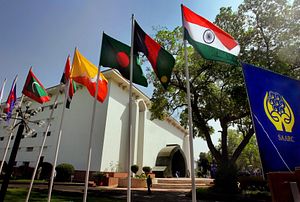
India and Pakistan Are Edging Closer to War in 2020
Turmoil is never far away in South Asia, between disputed borders, acute resource shortages, and threats ranging from extremist violence to earthquakes. But in 2019, two crises stood out: an intensifying war in Afghanistan and deep tensions between India and Pakistan. And as serious as both were in 2019, expect them to get even worse in the coming year.Assessment of the U.S. Presence in Afghanistan
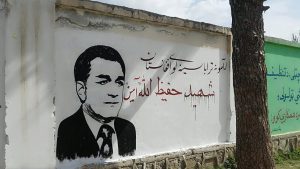
40 Years After His Death, Hafizullah Amin Casts a Long Shadow in Afghanistan
Asia's flashpoints: What could go wrong in 2020
The Nikkei Asian Review has looked into its crystal ball to predict possible sources of military friction, political tension and economic trouble across the region in 2020. Some scenarios focus on specific countries, while others span borders. Several involve an increasingly dominant China.Five Key Developments in South Asia in the 2010s—and What They Mean for the 2020s
What New Weapons Systems Will the Indo-Pacific See in 2020?
A Turning Point for Development Aid
China’s Damaging Policy Disruptions
Inside China’s Push to Turn Muslim Minorities Into an Army of Workers
Over the last few years, the mass incarceration of more than a million Uighurs and Kazakhs by the Chinese government has led to international outrage. These labor programs are part of that larger story. Let’s take a closer look at the compound we showed you at the beginning. It’s in Xinjiang, in the northern city of Kuitun, where the population is mostly China’s Han ethnic majority. But the workers in the compound are Uighurs, and other minorities transferred there from their homes in Hotan and Kashgar, hundreds of miles away. At the Kuitun complex there are multiple dormitories. We see that right around the time the transfer started in 2017, a security checkpoint and another building, a cafeteria, were built at the site.
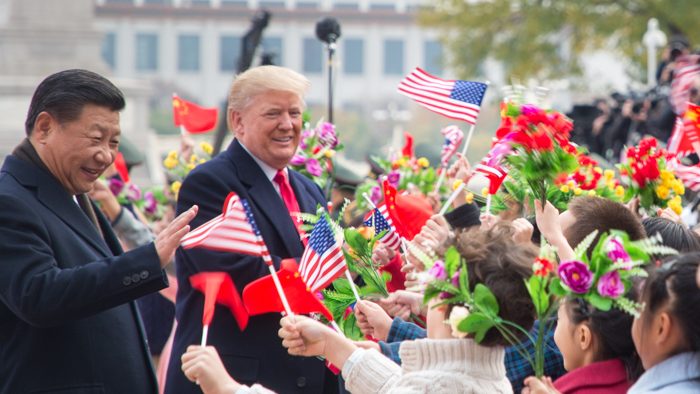
Opinion – Trump’s Effective China Strategy
One of the most common lines of thinking iterated by American politicians and academics in the last thirty years regarding the U.S. foreign policy towards China is this idea that, as long as the United States keeps helping China modernize and prosper economically, China will eventually come to face the constraints of its own political system and have no choice but to liberalize. In March 2000, a couple of months before China’s official entry into the World Trade Organization (WTO), then American President Bill Clinton delivered a speech on his rationale in incorporating China into the global trade system. He said, “[W]e can work to pull China in the right direction, or we can turn our backs and almost certainly push it in the wrong direction…The WTO agreement will move China in the right direction. It will advance the goals America has worked for in China for the past three decades…Membership in the WTO, of course, will not create a free society in China overnight or guarantee that China will play by global rules. But over time, I believe it will move China faster and further in the right direction, and certainly will do that more than rejection would. [my emphasis]” Throughout his speech, Bill Clinton repeatedly stated that accepting China into the WTO was a step to pull China in the “right direction”, and that such a move would force China to “open up” not only economically, but also, eventually, politically i.e. becoming a “free society”. A good political orator as he is, Clinton’s speech at that time seems to have convinced most of the world about the positive impact of opening the Chinese markets for global competition.Harvest year for military equipment
Europe’s Reluctance to Take Back ISIS Supporters Could Lead to a New Crisis
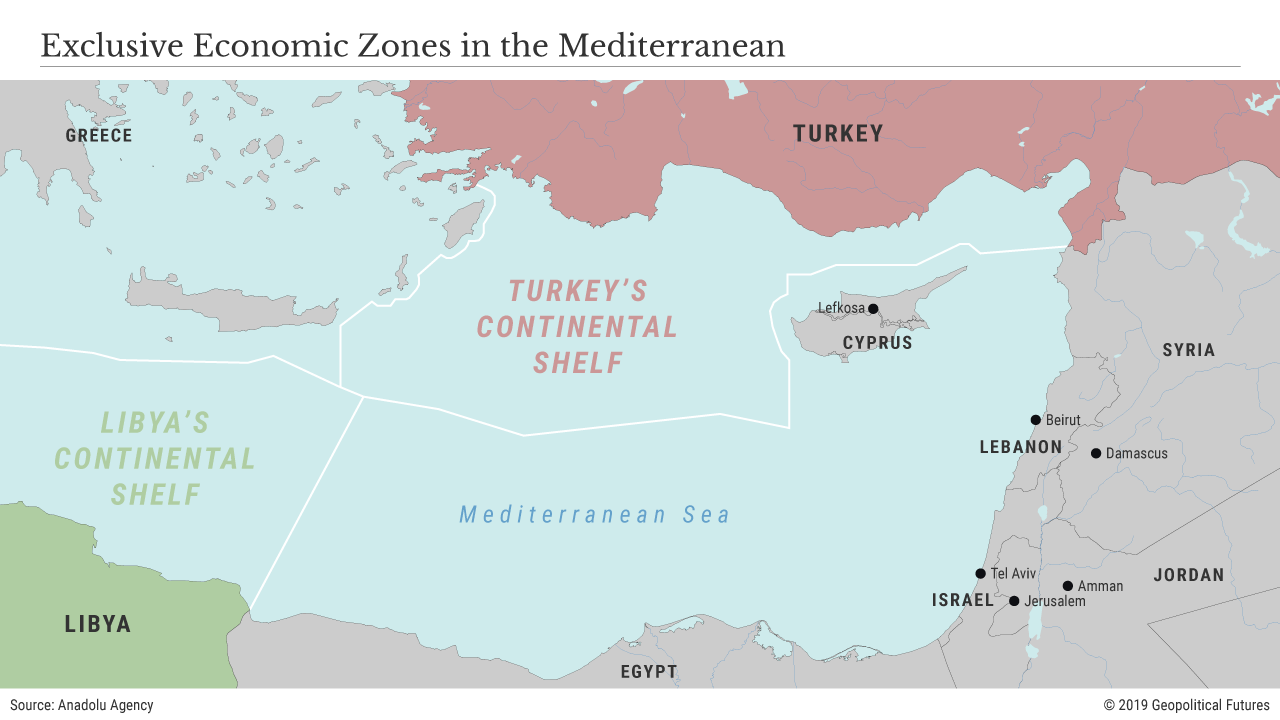
Turkey Makes Its Move
In “The Next 100 Years,” I described Turkey as an emerging regional power that would over time extend its sphere of influence to resemble the range of the Ottoman Empire. Over the past decade, in spite of pressure from various directions, it has refrained from taking risks to assert itself. This changed significantly in recent weeks, signaling what is, in my opinion, the inevitable emergence of Turkish power.Iraq president offers to quit after rejecting PM nominee
BAGHDAD (AP) — Iraq’s president refused on Thursday to designate a prime minister candidate nominated by the Iran-backed parliamentary bloc and offered to resign, plunging the country into further political uncertainty amid nearly three months of unprecedented mass protests.Center for Terrorism and Security Studies
Europe’s New Green Identity
Trump Wants a ‘Big Deal’ on Arms Control, Even If It Sinks the New START Treaty
What Really Happened to Malaysia’s Missing Airplane
at 12:42 a.m. on the quiet, moonlit night of March 8, 2014, a Boeing 777-200ER operated by Malaysia Airlines took off from Kuala Lumpur and turned toward Beijing, climbing to its assigned cruising altitude of 35,000 feet. The designator for Malaysia Airlines is MH. The flight number was 370. Fariq Hamid, the first officer, was flying the airplane. He was 27 years old. This was a training flight for him, the last one; he would soon be fully certified. His trainer was the pilot in command, a man named Zaharie Ahmad Shah, who at 53 was one of the most senior captains at Malaysia Airlines. In Malaysian style, he was known by his first name, Zaharie. He was married and had three adult children. He lived in a gated development. He owned two houses. In his first house he had installed an elaborate Microsoft flight simulator. He flew it frequently, and often posted to online forums about his hobby. In the cockpit, Fariq would have been deferential to him, but Zaharie was not known for being overbearing.Competing in the Gray Zone Russian Tactics and Western Responses
What Would a Pluralist US Asia Policy Look Like?
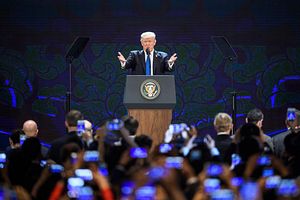
US President Donald Trump speaks on the final day of the APEC CEO Summit, part of the broader Asia-Pacific Economic Cooperation (APEC) leaders’ summit, in the central Vietnamese city of Danang on Friday Nov. 10, 2017.The Three Global Crises the World Faces in 2020
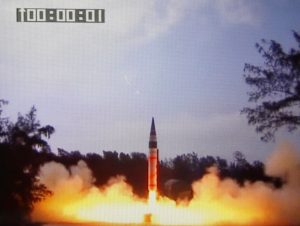
Russia Deploys Hypersonic Weapon, Potentially Renewing Arms Race
Weekly Economic Release Summary: Trade War
A Low, Dishonest Decade
DHS wants more input on how to share vulnerabilities
Thinking in Space: The Role of Geography in National Security Decision-Making
Worried About 5G’s Health Effects? Don’t Be
Even as carriers around the world race to build 5G networks, some government officials are reaching for the throttle, citing fears that the new generation of wireless technology could pose health risks.What happens if the Air Force’s command center for all its tankers and cargo planes gets hacked?
2019 Was An Important Year In Submarine Developments

This is how the US military is protecting the Strait of Hormuz.
A Griffin missile is launched from the patrol coastal ship USS Hurricane (PC 3) during a test of the MK-60 Griffin guided-missile system. The exercise demonstrated a proven capability for the ships to defend themselves against small boat threats and ensure maritime security through key chokepoints in the U.S. Central Command area of responsibility. (Spc. Benjamin Castro/Army)


/arc-anglerfish-arc2-prod-mco.s3.amazonaws.com/public/ZYIVGEBIPNHEBNHZV6WLVVRJ5A.jpg)