18 October 2014

Double Trouble: American Strategic Options Regarding ISIS

October 15, 2014

On September 10, President Barak Obama announced that he had ordered the United States military to conduct airstrikes against the Islamic State (known as ISIS and ISIL). He said, “Our objective is clear: We will degrade, and ultimately destroy, ISIL through a comprehensive and sustained counterterrorism strategy… That means I will not hesitate to take action against ISIL in Syria, as well as Iraq.” Many well-known former US officials, both Democrat and Republican, were quick to share their opinions regarding how the President’s plan might be adjusted to ensure success. The recommendations offered by a number of these senior officials, however, exposes a troubling lack of understanding of critical on-the-ground fundamentals and an almost disregard for a decade’s worth of physical evidence. If this advice were to be acted upon in the future, the current bad situation could deteriorate into disaster.

One week after the speech, former Republican Secretary of Defense Robert Gates voiced his disapproval of the President’s vow that the mission would not result in American “boots on the ground.” The reality, he said on CBS This Morning, is that “they're not gonna be able to be successful against ISIS strictly from the air, or strictly depending on the Iraqi forces, or the Peshmerga, or the Sunni tribes acting on their own… So there will be boots on the ground if there's to be any hope of success in the strategy.” Former Democratic President Bill Clinton, meanwhile, shared a very different opinion about the use of ground troops.

On September 23 he told a CNN audience he believed the mission would require “an extended involvement with air power and with providing intelligence and other institutional support to the people who are fighting ISIS… I actually think in this case the…strategy has a chance to succeed… We don't need to be there on the ground and I don't think it means a land war in Iraq." There was one important point on which both men agreed: both maintained the mission could succeed if President Obama would only follow their advice. Current conditions in the region and an analysis of numerous wars and battles over the past two decades, however, suggest that both are wrong.

Consider a few critical facts regarding the situation with ISIS before US airstrikes began. Many of the members of the self-proclaimed Islamic State have a decade or more experience in fighting insurgent and guerilla warfare. As most know, Abu Bakr al-Baghdadi, the leader of ISIS, has fought against the US in Iraq since 2003. al-Baghdadi and his men are well acquainted with the capabilities and limitations of American air power, and critically, how to survive it by burrowing deeper into civilian areas.

Further, and of greater significance to the current situation, since 9/11 there has been no location in the world where modern air power – even when complemented with hundreds of thousands of ground troops – has militarily defeated a committed insurgent enemy. The list is long and painful: Iraq, Afghanistan, Pakistan, Yemen, Somalia, Syria, Libya, the Gaza Strip, Lebanon, and others.

Many in recent months have argued that the 2007 surge in Iraq “set the conditions” for success in Iraq, but the Obama Administration’s inability to keep 10,000 US troops there after 2011 was, as former Army General Jack Keane recently said, “an absolute strategic failure.” Such claims, however, do not stand up to examination. An analysis of the 2007 Iraq surge and scrutiny of the current situation in Afghanistan explains why this claim is dubious at best.

In combination with the tactical cooperation of Sunni tribes, the 2007 Iraq surge succeeded in reducing the violence by the near-destruction of al-Qaeda in Iraq (AQI). But as has been well chronicled in recent weeks, AQI wasn’t destroyed. It merely limped off to reform itself, learned from its mistakes, and renamed itself Islamic State of Iraq (ISI). In 2013 ISI moved across the border into Syria to fight in the civil war, changed its name to Islamic State of Iraq and Syria (ISIS) and by February of this year launched an offensive, eventually capturing large swaths of Syria and Iraq.

JORDAN: THE CANARY IN THE COAL MINE

October 15, 2014 

After the United States initiated an airstrike campaign against the Islamic State of Iraq and the Levant (ISIL), Jordan announcedthat it was one of five Arab states participating in the effort. Jordan weathered the Arab Spring by holding elections and initiating some political reforms, and has stayed a step ahead of the Islamic insurgency through its strong intelligence service and robust counterterrorism measures. While concern is spreading that ISIL might conduct a retaliatory attack inside of Jordan — akin to the bombing of several hotels in Amman in 2005 — the more significant threat ISIL could pose to the kingdom is instigating a push for regime change in the long term by capitalizing on existing social and political tensions.

Having recently returned from a nine-month stint living in the northern tribal town of Irbid — a short 15 miles from Dara’a, the birthplace of Syria’s civil war — I can report the political climate outside of Amman is rife with friction. Smaller villages in northern Jordan are left to deal with the burgeoning refugee crisis, which has caused the prices of local staples, housing, and fuel to skyrocket. Many of the financially strapped governorates are not able to provide full services, leaving trash to accumulate on the sidewalks and Syrian children to beg on the streets.

The Jordanian economy is structurally weak due to its dependence on external donations in the form of economic support funds and humanitarian assistance from the United States, various United Nations programs, and other international partners. To adjust, the central government in Amman has adopted an “each governorate for itself” policy, meaning that each of Jordan’s 12 governorates has the burden of generating much of its own revenue. Even though Jordan benefits from some foreign direct investment, a large majority of private investments and external funding enter through Amman, but do not necessarily leave Amman.

An additional source of friction is the relationship between Palestinians and East Bank Jordanians. Following Operation Protective Edge, Israel’s summer war in the Gaza Strip, the Israeli-Palestinian conflict continues to be a top priority on King Abdullah’s national security agenda. Although Jordan maintains a strong relationship with Israel – even going so far as to sign a new natural gasdeal with the Israeli government – many Jordanians do not support the relationship. Earlier this year, a Jordanian man was killed by Israeli border troops at the Allenby Bridge crossing, the only entry point for Palestinians entering the West Bank. In response, members of parliament petitioned for the expulsion of Israel’s ambassador, followed by summer protests outside the Israeli embassy in Amman. Jordanians of Palestinian origin now comprise half of the total population and that number will only continue to increase, posing a demographic challenge to a status quo that has already made Palestinian-Jordanians de facto second-class citizens.

Palestinians in Jordan are marginalized politically, socially, and economically. They are excluded from most military posts, a legacy of the short civil war between King Hussein and the Palestinian Liberation Organization in 1970, and the disengagement from the West Bank in the 1980s. Additionally, many Palestinians still live in refugee camps – essentially institutionalized slums in Jordan’s largest cities, including Amman. Many Palestinians maintain their refugee status to protect any claim they might have to a future settlement with Israel, but in doing so, forfeit full acquisition of Jordanian citizenship. Instability created by ISIL inside Jordan will give the Palestinian population an opportunity to demand domestic political reforms or apply internal pressure to change the character of Jordan’s relationship with Israel. If instability leads to a change in Jordan’s political character, Jordan may no longer be a buffer between Israel and the Arab world. Additionally, in the absence of genuine political reforms, Palestinian-Jordanians might opt for more violent expressions of protest, potentially retracing Black September’s footprints. Although this may sound alarmist, such a development is not outside the realm of possibility in the long term, especially if forces promoting instability in Jordan, most notably ISIL, succeed.

Iraq Is Still Worth Saving

October 15, 2014 

"Iraq is still a country, and it is still worth saving, but it may not have much time left."

In his new book, Iraq After America: Strongmen, Sectarians, Resistance, Joel Rayburn has accomplished something remarkable. A book written before the invasion of northwestern Iraq this year by ISIL, and before the departure of Nouri al-Maliki from the prime-minister position, seems nonetheless entirely up to date—and Rayburn himself seems clairvoyant. Everything we have seen in Iraq these last several months follows logically, and now it appears almost inevitably, from his analysis.

I had hoped otherwise. Rayburn is a longstanding friend and colleague whom I got to know well during the days of the surge in 2007. He was extremely well groomed in Iraqi matters then; in the ensuing seven years, his mastery of the subject has only deepened. One lesson of this case, apart from what Rayburn teaches about Iraq, is that the U.S. military still does something right when it creates intelligence and politics expertise of this type among some of its best officers, and we need to preserve that capacity, even as the armed forces downsize.

But back to the issue at hand. For most of the last five years or so, when I listened to Colonel Rayburn describe Iraq’s severe problems, I tended to hope that he was wrong, that Iraqis would find a way, that a people and a political class that had been through such torment and suffering for years and years would not throw away such a chance to build a new and stable nation. My hopes, alas, were misplaced, and Rayburn was right.

His book does not dwell on America’s high-level political decisions—to fight the Iraq war in the first place, to do so with poor preparation for a proper stabilization effort in the early years, to surge forces and change strategy in 2007, to withdraw in 2011. Being a uniformed military officer, Rayburn clearly does not believe it his place to revisit such decisions. And that is a good thing. Enough other people have done so in their books on Iraq. Moreover, those decisions were so momentous that it is difficult for any author who addresses them to wind up saying much that is memorable about any other aspect of the subject.

Rayburn, by contrast, focuses on internal Iraqi politics since 2011. He defines three main classes of actors—Shia supremacists, Sunni chauvinists and Kurdish maximalists—who have, unfortunately, done so much in recent times to tear the country apart and leave it vulnerable to the ISIL onslaught of this past spring and summer. Nouri al-Maliki is of course a major villain, but he is hardly the only one—and the Shia groups he represents are hardly the only guilty parties in what has befallen Mesopotamia since the hopeful days of roughly 2007 through 2009.

This message of criticism for many of Iraq’s modern actors will surprise few, at least in its broad terms, though the detail on who did what and when is very useful (without being tedious or excessive either). But what is most important about the book is the detail about each of these major sectarian groups that includes not only numerous broad-reaching indictments of many powerful figures, but a number of hopeful stories and themes as well. For all of Iraq’s sectarianism, there are still many leaders—and much of the Iraqi public—that want to hold the country together and seize this historic opportunity.

The Good, the Bad and the Messy: The Legacy of the First Gulf War

October 16, 2014 

"The Coalition victory was so lopsided that no state has risked conventional war with the United States and its allies since. This has become part of the problem." 

The United States and its coalition partners evicted Iraq from Kuwait over twenty-three years ago. Temporally, the Gulf War is closer to the fall of Saigon than it is to us today. Given the struggles of the past fourteen years, it’s difficult to remember how important the Gulf War seemed in 1991, as the Soviet Union neared its collapse.

The war suggested a bright future. The United Nations, riding the overwhelming power of American arms, could finally meet its true potential as a collective security and peacemaking organization. The thawing of the Cold War opened up political possibilities, while theremarkable effectiveness of American precision-guided munitions meant that warfare no longer demanded the destruction of civilian life and property.

In short, the Gulf War seemed to suggest that international institutions, underwritten by revolutionary advances in American military power, could finally solve real military security problems. The political and technological foundations for a transformation in the functioning of global politics were in place.

The intervening twenty-three years have given us time to reconsider this conclusion.

Winning the Conventional Fight

The ability of the United States to completely destroy a more or less modern Iraqi military establishment remains a remarkable achievement. Only a few doubted at the time that the United States Army, supported by airpower and by a huge international coalition, could prevail over the Iraqis. The extent of the victory, and its relative bloodlessness on the American side, surprised almost everyone.

This is especially true given that the influence of airpower was overstated. To be sure, Coalition air attacks badly attrited Iraqi main forces, damaged Iraqi logistics and broke the morale of many front-line Iraqi conscript units. However, Iraqi armored units nevertheless maneuvered under fire, moving into blocking positions and carrying out counterattacks. Even in these conditions, U.S. and British armored forces shattered their Iraqi opponents with only trivial casualties.

The Coalition victory was so lopsided that no state has risked conventional war with the United States and its allies since. This has become part of the problem. American opponents have increasingly focused on waging struggles at the margins of political and military conventionality. This has included terrorism, insurgent-style conflicts fought among the people and military-political struggles that remain just below the threshold for conventional military response. American military power, fueled by outstanding execution and modern technology, can still do remarkable things, but others have adapted.

Syria: The Danger of Fighting Both Sides At Once

October 16, 2014 

A big investment for limited, uncertain gains.

“The greatest contradiction of Mr. Obama’s military intervention in Syria,” charged senators John McCain and Lindsey Graham last week, “is that it appears unconnected to his political goal: a transition from Assad to an inclusive, sustainable political order.” The pair argue that attaining this goal will require more than the current air campaign against the Islamic State—the president will need “to militarily degrade the Assad regime, upgrade the moderate opposition, change the momentum of the conflict and create conditions for a political solution.”

To achieve the president’s goals, in other words, America must forge order from the red-hot, molten chaos of the Levant. Good luck. It would require an enormous effort on Washington’s part, yet the prospects for success are slender. What’s worse, apart from further roiling the region, it would likely also imperil broader strategic interests, provoking Russia and Iran for no real reason.

The root of Obama’s Syria muddle can be traced to an error he made more than three years ago, one which he continues to refuse to undo or even acknowledge. “The time has come for President Assad to step aside,” declared Obama on August 18, 2011. He then did nothing. America’s allies didn’t, however: the region’s turn against Assad accelerated. The rebels had less incentive to negotiate—and so, of course, did Assad. The president’s continued insistence that Assad exit has been an obstacle to talks, and accomplishes nothing.

What about McCain and Graham’s preferred path of directly overthrowing Assad? If Obama were to take their advice—and were able to marshal the political, economic and military resources needed to carry it out—would the world be safer and more stable?

Please.

Within Syria, the task of ending the current anarchy would only be rendered even more difficult. The regime’s natural strongholds, such as the Alawite-dominated Latakia Governorate in the northwest, have shown little interest in being governed by the Sunni majority. The increasingly sectarian character of the rebels gives non-Sunnis little reason to stop viewing Bashar as a lesser evil. Reducing regime power in its home areas would thus create a vacuum that only an outside force could fill.

U.S. Signals That It Is Ditching the Free Syrian Army In Favor of Its Own Force

Hannah Allam
McClatchy News
October 16, 2014

It’s official: U.S. will build new Syrian rebel force to battle Islamic State

WASHINGTON — John Allen, the retired Marine general in charge of coordinating the U.S.-led coalition’s response to the Islamic State, confirmed Wednesday what Syrian rebel commanders have complained about for months – that the United States is ditching the old Free Syrian Army and building its own local ground force to use primarily in the fight against the Islamist extremists.

“At this point, there is not formal coordination with the FSA,” Allen told reporters at the State Department.

That was perhaps the bluntest answer yet to the question of how existing Syrian rebel forces might fit into the U.S. strategy to fight the Islamic State. Allen said the United States’ intent is to start from scratch in creating a home-grown, moderate counterweight to the Islamic State.

For most of the three years of the Syrian conflict, the U.S. ground game hinged on rebel militias that are loosely affiliated under the banner of the Free Syrian Army, or FSA. Their problems were no secret: a lack of cohesion, uneven fighting skills and frequent battlefield coordination with the al Qaida loyalists of the Nusra Front.

This time, Allen said, the United States and its allies will work to strengthen the political opposition and make sure it’s tied to “a credible field force” that will have undergone an intense vetting process.

“It’s not going to happen immediately,” Allen said. “We’re working to establish the training sites now, and we’ll ultimately go through a vetting process and beginning to bring the trainers and the fighters in to begin to build that force out.”

The Syrian arena is important, Allen said, but to the U.S., “the emergency in Iraq right now is foremost in our thinking.” There will be a simultaneous training-and-equipping campaign for Iraq, where the U.S.-trained military collapsed during the Islamic State’s summer offensive.

Allen said the new training program is “for those elements of the Iraqi national security forces that will have to be refurbished and then put back into the field,” with the ultimate goal of reclaiming Iraqi territories seized by the Islamic State.

Allen sounded confident that the United States and its allies could juggle two massive training efforts even as the Islamic State has shown itself to be resilient under weeks of coalition airstrikes.

“We have the capacity to do both, and there is significant coalition interest in participating in both,” Allen said of the twin force-building efforts in Iraq and Syria.

But, as he stressed repeatedly in his remarks, “it’s going to take a while.”

Ahmad Tomeh, who was just re-elected prime minister of the Syrian opposition’s interim government, told McClatchy that Allen met six leaders of the political opposition during his trip to Istanbul last week, but had no talks with any of the ground commanders, including the vetted, trained commanders the U.S. has been supporting. They asked for increased help, Tomeh said, but got no commitment.

Kurds Providing Targeting Data for U.S. Airstrikes Against ISIS Forces Around Syrian Town of Kobani

U.S. Steps Up Strikes on Embattled Syrian Town, Aided by Data From Kurds

Eric Schmitt and Kareem Fahim

New York Times, October 16, 2014

WASHINGTON — The United States has sharply increased the number of airstrikes against Islamic State militants in the besieged Syrian city of Kobani — aided by information provided by Kurdish fighters, American officials said Wednesday.

A Pentagon spokesman said that the airstrikes had killed “several hundred” Islamic State fighters. Kurdish officials said the intensified attacks had allowed them to regain territory and push the militants back on several fronts, after fears rose last week that the city would be overrun.

Yet in a sign of the perils of the intensified bombing campaign, five Kurdish fighters were killed late Tuesday — possibly because they had advanced too close to one of the airstrikes.

A spokesman for the United States Central Command, Maj. Curtis J. Kellogg, said American officials had “no evidence indicating Kurdish fighters were killed in a coalition airstrike last night. Regardless, we take such reports seriously and will look into them further.”

The United States military has carried out 37 airstrikes in Kobani since Monday, according to the Pentagon. The attacks — several visible from across the border in Turkey on Wednesday as they slammed into sections in the north and west of the city — blasted what officials described as several Islamic State positions and 16 buildings that had been occupied by the militants.


Explosions rock Syrian town of Kobani

The U.S.-led coalition launches fresh air strikes on Islamic State in and around Kobani. Rough Cut (no reporter narration)Publish Date October 15, 2014. Photo by Reuters.

In Washington, Defense Department officials attributed the increase in airstrikes in and around Kobani to a surge of Islamic State fighters who presented more targets for coalition warplanes; bad weather in Iraq that diverted combat planes in Kobani; and a secret new system in which Syrian Kurdish fighters feed target information to allied war planners.

Moral Hazard in the Gaza Strip

October 15, 2014 

The passage in the British House of Commons of a resolution favoring recognition of a Palestinian state, coming on the heels of the Swedish government's announcement of its intention to extend such recognition, is the latest indicator of European disgust with Israeli policies. Recognizing a Palestinian state is, of course, an empty gesture as long as no such state exists on the ground, and the ground that would constitute such a state is under another state's occupation. But recognition is a peaceful and respectable way to express dismay. The Conservative MP who chairs the House of Commons foreign affairs committee probably was speaking for many both inside and outside Parliament when he said that he had “stood by Israel through thick and thin” but that “over the past 20 years...Israel has been slowly drifting away from world public opinion,” and that “such is my anger over Israel's behavior in recent months that I will not oppose the motion. I have to say to the government of Israel that if they are losing people like me, they will be losing a lot of people.”

As the comments of the MP suggest, the behavior that is the object of the dismay and anger has both long-term and short-term components. The long-term part is the continued Israel occupation of conquered territory, with the accompanying subjugation of Palestinians and denial to them of political rights. In the shorter term is the destruction that the Israeli military wreaked on the Gaza Strip earlier this year, in an operation that began when the Netanyahu government attempted to use force to disrupt a unity pact between the main Palestinian political factions. This week United Nations Secretary General Ban Ki-moon toured the devastation in Gaza, remarking that “no amount of Security Council sessions, reports, or briefings could have prepared me for what I witnessed today.”

Another, even more recent, component of the Israeli-inflicted destruction in Gaza may also have influenced the mood of the Swedes, the MPs at Westminster, and indeed taxpayers in any Western country. At an international conference in Cairo participating countries pledged a total of $5.4 billion in aid, half for reconstruction in the Gaza Strip and the other half as budget support for the Palestinian Authority. Besides the sheer irksomeness of any of the rest of us in the world community having to pay to repair that damage, think about what this situation implies for Israeli incentives. The Israelis mow the lawn in Gaza as often as they like, and they don't even have to pay for the clean-up. They may even profit from it because any building supplies that Israel allows to enter the Strip generally come from Israeli sources. (Investment tip: it's time to be bullish on cement manufacturers in Israel.)

This is an example of what economists call moral hazard: of someone having no incentive to curtail risky (or in this case, outright destructive) behavior because someone else is covering the losses. This in turn is one reason to be pessimistic that the whole tragic cycle of periodic Israeli lawn-mowing will end any time soon. The Israelis' economic flank is covered by donor conferences, just as their political flank is covered by U.S. vetoes at the Security Council.

How Russia Sees the Ukraine Crisis

http://nationalinterest.org/feature/how-russia-sees-the-ukraine-crisis-11461?page=show


Can a compromise be found?

October 13, 2014

Though Ukraine’s not-quite cease-fire is far preferable to the summer’s heavier fighting, it is far from clear that it will lead to a sustainable settlement between Kiev and eastern Ukrainian separatists, Moscow and Kiev, or the United States and Russia. A recent presentation at the Center for the National Interest by Andranik Migranyan, a well-informed analyst and writer who runs the Kremlin-connected Institute for Democracy and cooperation in New York, provides useful insight into Moscow’s view of what would be required to get there—and illustrates the wide gap between prevailing Western and Russian outlooks and expectations. His assessment—based on a recent trip to Russia during which he discussed the crisis with a number of senior officials—offers little basis for optimism. (See his 15-minute presentation, plus about an hour of discussion, on the Center’s YouTube page here.)

Migranyan’s perspective on Ukraine and on U.S.-Russia relations, like most mainstream Russian perspectives and indeed Russian official statements, is unpleasant for many Americans and Europeans to hear. (In Migranyan’s case, his views were apparently so unpleasant for one European diplomat present during his remarks that the diplomat decided to complain loudly and walk out.) Unfortunately, the fact that something is unpleasant—or worse—does not make it unimportant.

Ukraine is a case in point. Russia has annexed Crimea and has encouraged and supported armed rebellion in eastern Ukraine, both of which go well beyond unpleasant. Thankfully, the fighting in Ukraine has subsided for the time being, though it could return to pre-cease fire levels very quickly if Moscow and the separatists choose that path.

Why did all of this happen? Migranyan explained the origins of the Ukraine crisis in terms radically different from those commonly accepted in the United States and much of Europe. For example, he insisted, the crisis was not “Russia’s initiative,” arguing instead that Moscow was forced to respond to U.S. conduct. Specifically, he asserted that Russia would not have had the idea to “grab Crimea” and would have felt safe and secure, had the George W. Bush administration not pursued NATO membership for Ukraine and Georgia, which “started this process.” In fact, Migranyan noted, Crimea’s ethnically Russian majority—and its elected leaders and parliament—have called repeatedly for annexation by Russia since Russia and Ukraine became independent countries. He correctly added that Moscow previously ignored these requests many times, in his view because Russia’s leaders saw Ukraine as a “friendly, non-bloc country,” and argued that Russia chose to take over Crimea earlier this year only after Viktor Yanukovych’s ouster.

ROLE OF BENCHMARKS IN GLOBAL CRUDE OIL MARKET – ANALYSIS

An oil refinery in Mina-Al-Ahmadi, Kuwait. Wikipedia Commons. 

By EIA

The Brent-WTI spread, the difference between the front month futures price of North Sea Brent crude oil and that of West Texas Intermediate (WTI) crude oil, narrowed to $2.00 per barrel (bbl) as of October 15, after reaching a 2014 high of $14.95/bbl in January (Figure 1). The spread declined in the first quarter of the year primarily as a result of changes to crude oil infrastructure in North America which caused WTI prices to rise. The spread averaged $6.53/bbl from March through September.

The more recent narrowing of the spread since September is largely the result of declining Brent prices caused by a combination of lower demand and increased supply. Economic growth in Asia and Europe has been lower than expected. Sustained increases in Libyan crude oil production plus higher U.S. crude production that has backed out U.S. imports are raising crude supply in the global market.

Changes in the Brent-WTI spread not only reflect the relative strength or weakness in the markets for Brent and WTI, but the spread also affects the prices of many other types of crude oil that use these two crudes as reference points, or benchmarks, for establishing market prices.

A benchmark crude is a specific crude oil that is widely and actively bought and sold, and to which other types of crude oil can be compared to determine a price by an agreed-upon differential. The agreed-upon differential takes into account a number of factors, including quality characteristics such as API gravity or sulfur content, transportation costs from production areas to refineries, and regional and global supply and demand conditions, including refinery utilization. Use of the benchmark makes it easier for buyers and sellers to price the variety of crudes that are produced around the world.

The most widely used benchmarks are associated with crude oil that has stable and ample production; a transparent, liquid market located in a geopolitically and financially stable region to encourage price discovery; adequate storage to encourage market development; and/or delivery points at locations that allow arbitrage opportunities in world markets so that prices reflect global supply and demand.

Brent and WTI are two of the major crude oil benchmarks in the world. Dubai/Oman is a third.

Brent, which is the most widely used global crude oil benchmark, includes four separate light, sweet crude streams that are produced in the North Sea: Brent and Forties (produced offshore the United Kingdom) as well as Ekofisk and Oseberg (produced offshore Norway). In 2013, Brent crude oil loadings averaged 0.86 million barrels per day (bbl/d), representing about 1% of total world crude oil production of 76 million bbl/d. Brent is used to price light, sweet crude oil that is produced and traded not only in Europe, the Mediterranean, and Africa, but also in Australia and some countries in Asia.

HOW WALL STREET IS KILLING BIG OIL – ANALYSIS

By Deepak Gopinath

Investors force big private energy companies into liquidation; energy dominance shifts to emerging markets.

Lee Raymond, the famously pugnacious oilman who led ExxonMobil between 1999 and 2005, liked to tell Wall Street analysts that covering the company would be boring. “You’ll just have to live with outstanding, consistent financial and operating performance,” he once boasted. For generations, Exxon and its Big Oil brethren, including Chevron, ConocoPhilipps, BP, Royal Dutch Shell and Total, dominated the global energy landscape, raking in enormous profits and delivering fat dividends to shareholders. Big Oil has long been an investor darling.

Those days are over. Once reliable market beaters, Big Oil shares are lagging: Over the last five years, when the S&P 500 rose more than 80 percent, shares of Exxon and Shell rose just over 30 percent. The underperformance reflects oil majors’ inability to maintain steady cash flows and increase production in a world where much of the easy oil has already been found and project costs are rapidly escalating. Last year, Exxon, Chevron and Shell failed to increase oil and gas production despite having spent US$500 billion over the previous five years, $120 billion in 2013 alone. Under pressure from investors, the world’s largest oil companies are now forced to cut capital expenditure and sell assets to boost cash flows.

Big Oil is, in short, heading towards liquidation. And this process has set in motion a tectonic shift in the global energy balance of power away from western international oil companies, or IOCs, and towards state-owned national oil companies, NOCs, in emerging markets. Not only do the NOCs – companies like Saudi Aramco; Russia’s Gazprom and Rosneft; China’s CNOOC, CNPC and Sinopec; India’s ONGC; Venezuela’s PDVSA; and Brazil’s Petrobras – control approximately 90 percent of the world’s known petroleum reserves, they are also immune to the market pressures constraining Big Oil.

Ironically, the rise of emerging-market NOCs and the decline of Big Oil come in the middle of the US-led fossil fuel renaissance. Thanks to higher prices that have made it cost-effective to deploy horizontal drilling technologies to unlock shale oil and gas deposits, the US is set to overtake Saudi Arabia this year as the world’s largest producer of petroleum liquids. The sudden turnaround in America’s energy-supply picture prompted President Barack Obama to shift from calling for a reduction in the country’s reliance on petroleum to boasting about higher US oil production and supporting industry efforts to further increase output.

However, the euphoria surrounding new US status as a big-time energy player masks the real existential crisis facing Big Oil. With the vast majority of petroleum reserves controlled by NOCs, the majors are forced to explore in risky, inhospitable, politically unstable and remote regions such as the Arctic or deep under the ocean floor. That means high costs and an uncertain payoff. Exxon, for example, has invested US$40 billion in the Russian Arctic and elsewhere so far this year in a bid to increase output. Exxon’s joint venture with Rosneft in the Kara Sea reportedly discovered what could be a large crude deposit, but was forced to stop drilling due to US sanctions on Russia.

Oil production by the majors has been falling steadily despite a sharp rise in spending. Output peaked at 16.1million barrels per day, mbpd, in 2006 before declining to 14 mbpd in 2012, while capital expenditure increased from US$109 billon to US$262 billion over the same period. Overall, the productivity of capital expenditure by the majors has fallen by a factor of five since 2000 and is declining at 5 percent annually. At the same time costs outpace revenues by 2 to 3 percent per year, while profitability is down 10 to 20 percent.

The majors are on the horns of a dilemma. They urgently need to augment their reserves to avoid becoming a business with no future, simply running down inventory until there’s nothing left to sell. They must simultaneously keep generating strong cash flows to placate shareholders. But reserve replacement means spending more money on exploration and development of new prospects, which leaves precious little cash left over for shareholders. The majors cannot do both.

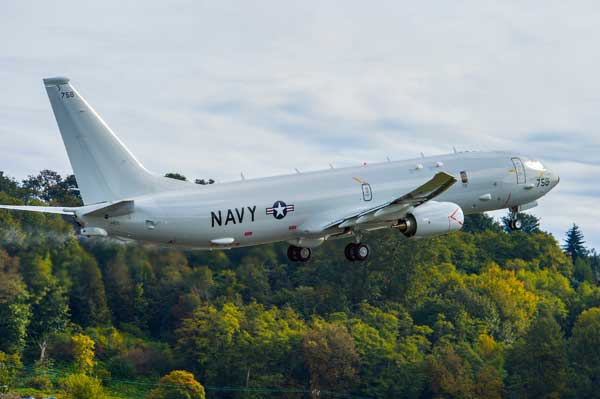
Boeing Delivers 18th P-8A Poseidon to the US Navy

17 Oct , 2014


P-8A Poseidon

Boeing delivered the 18th P-8A Poseidon aircraft to the U.S. Navy ahead of schedule October 14, where it joined other Poseidon aircraft being used to train Navy crews.

The P-8A departed Boeing Field in Seattle for Naval Air Station Jacksonville, Fla., and was Boeing’s fifth delivery this year.

“We’re proud to continue to deliver aircraft on cost and on schedule,” said Rick Heerdt, Boeing Mobility, Surveillance & Engagement vice president and program manager. “The Navy’s need for the P-8A resonates even more following Patrol Squadron 5’s recent operational deployment.”

Earlier this summer, the VP-5 ‘Mad Foxes’ replaced the VP-16 War Eagles squadron that completed 600 sorties and 3,500 flight hours while on deployment operating out of Kadena Air Base, Japan. The Mad Foxes are currently conducting operational missions internationally.

Based on the Boeing Next-Generation 737-800 commercial airplane, the P-8A provides the Navy anti-submarine warfare, anti-surface warfare, and intelligence, surveillance and reconnaissance capabilities.

The Navy plans to purchase the versatile multi-mission aircraft to replace its P-3 Orion fleet. Boeing is currently under contract for 53 P-8As.

National Insecurity Can Obama's foreign policy be saved?

BY DAVID ROTHKOPF

"YOU'RE STILL  A SUPERPOWER," 

a top diplomat from one of America's most dependable Middle Eastern allies said to me in July of this year, "but you no longer know how to act like one." 

He was reflecting on America's position in the world almost halfway into President Barack Obama's second term. Fresh in his mind was the extraordinary string of errors (schizophrenic Egypt policy, bipolar Syria policy), missteps (zero Libya post-intervention strategy, alienation of allies in the Middle East and elsewhere), scandals (spying on Americans, spying on friends), halfway measures (pinprick sanctions against Russia, lecture series to Central Americans on the border crisis), unfulfilled promises (Cairo speech, pivot to Asia), and outright policy failures (the double-down then get-out approach in Afghanistan, the shortsighted Iraq exit strategy). 

The diplomat with whom I was speaking is a thoughtful man. He knew well that not all of these problems are the result of the blunders of a single really bad year or the fault of any one president. The reality is that any president's foreign policy record depends heavily on luck, external factors, cyclical trends, and legacy issues. And, to be sure, Obama inherited many of his greatest challenges, some of the biggest beyond his control. 

Obama's presidency is largely a product of a moment in history that likely will be seen someday as an aberration -- the decade after 9/11, during which a stunned, angry, and disoriented America was sent spinning into a kind of national PTSD. Call it an age of fear, one in which the country and its leaders were forced to grapple with a sense of vulnerability to which they were unaccustomed. The response of George W. Bush's administration -- entering into the long, costly wars in Iraq and Afghanistan, remaking U.S. national security policy around the terrorism threat -- led to a backlash that ushered Obama into office with a perceived mandate to undo what his predecessor had done and avoid making similar mistakes. 

The problem is that in seeking to sidestep the pitfalls that plagued Bush, Obama has inadvertently created his own. Yet unlike Bush, whose flaw-riddled first-term foreign policy was followed by important and not fully appreciated second-term course corrections, Obama seems steadfast in his resistance both to learning from his past errors and to managing his team so that future errors are prevented. It is hard to think of a recent president who has grown so little in office. 

As a result, for all its native confidence and fundamental optimism, the United States remains shaken and unsteady more than a decade after the 9/11 attacks. Many of its problems have only grown dangerously worse: Its relative influence has declined; the terrorism threat has evolved and spread; and U.S. alliances are superannuated, ineffective shadows of their former selves. Compounding this is such gross dysfunction in Washington that, on most issues, the president is presumed to be blocked by Congress even before he has had the opportunity to make a move. 

OBAMA'S PRESIDENCY IS LARGELY A PRODUCT OF A MOMENT IN HISTORY THAT LIKELY WILL BE SEEN SOMEDAY AS AN ABERRATION -- THE DECADE AFTER 9/11, DURING WHICH A STUNNED, ANGRY, AND DISORIENTED AMERICA WAS SENT SPINNING INTO A KIND OF NATIONAL PTSD. 

If the nation is to recover fully, Obama must not only identify and attempt to reverse what has gone wrong, but he also must try to understand how he can achieve new gains by the end of his second term. That is to say that huge challenges remain unaddressed and rising to them requires a hard look at himself -- his responses, his messages, his management, and his team. 

He must start by devoting special attention to the instances that knocked his foreign policy off the rails. And one stands out, even in the minds of some of the president's most prominent loyalists. 

ON AUG. 20, 2012,Obama met with reporters to discuss the crisis in Syria. When pressed to respond to the growing chaos and human toll there, the president replied as he had since the onset of Syria's war: He blended tough rhetoric with assiduous avoidance of risky American commitment to helping any of the parties to the conflict. But in an uNSCripted moment, he suggested that he would take action against the Syrian regime if it used chemical weapons, saying, "We have been very clear to the Assad regime, but also to other players on the ground, that a red line for us is we start seeing a whole bunch of chemical weapons moving around or being utilized. That would change my calculus." 

Despite intelligence reports of multiple violations of that red line, the White House managed to ignore or sidestep the issue -- that is, until exactly one year later, when, on Aug. 21, 2013, a major chemical-weapons attack claimed the lives of an estimated 1,429 people in Ghouta, a Damascus suburb. 
OCT. 16, 2014

SINGAPORE — Outside China, there is a consistent theme in Asia. It is concern that declining American power, credibility and commitment will leave the way open for Beijing to exercise dominance over the region. President Obama’s “pivot to Asia” has been dismissed as hot air. American objectives announced without consequence betray a weak presidency; Asians have drawn their conclusions.

A new Chinese assertiveness in the South China Sea and elsewhere is palpable. By contrast, the United States seems less focused on the region since former Secretary of State Hillary Clinton left office. That, at least, is the perception here in Singapore, one of the world’s global cities and a small island-state whose extraordinary economic success is dependent on stability in Asia. That is inconceivable without America as counterbalance to China. But the feeling here, if anything, is that the Obama administration has pivoted away.

Singapore, like much of Asia, is intrigued by the new all-change leadership of Narendra Modi in India. It is doubly intrigued because it sees in Modi the Lee Kuan Yew of India, a man with a near Singaporean commitment to modernity, efficiency and open trade. It is triply intrigued because it seeks a balance of power in Asia and the only possible long-term regional counterbalance to China is India.

That scenario is, however, a distant one. In all aspects but its freedom, a not inconsequential matter, India lags China by a great distance. As Asia waits for the fruits of the magical Modi makeover, the presence of the United States as a Pacific power retains all its importance. India is inwardly focused. Its global reach is the last concern of the average Indian. A perception of American retreat from its ordering global role has led the smaller nations of Asia to feel more vulnerable to China’s systematic push outward in search of resources and control.

Singapore’s success has depended on its ability to leapfrog geography, but it could only do that because the geography was not hostile. It could depend on the fact that the foreign territorial waters at its door remained open. Japan has been restrained from going nuclear by the assurance of America’s treaty commitment to its defense. From north to south Asia, such assumptions appear a little shakier.

Razeen Sally, a visiting associate professor at the Lee Kuan Yew School of Public Policy, wrote this year in Singapore’s Straits Times that: “A global city is where truly global services cluster. Business — in finance, the professions, transport and communications — is done in several languages and currencies, and across several time zones and jurisdictions. Such creations face a unique set of challenges in the early 21st century. Today, there appear to be only five global cities. London and New York are at the top, followed by Hong Kong and Singapore, Asia’s two service hubs. Dubai, the Middle East hub, is the newest and smallest kid on the block. Shanghai has global-city aspirations, but it is held back by China’s economic restrictions — the vestiges of an ex-command economy — and its Leninist political system. Tokyo remains too Japan-centric, a far cry from a global city.”

No global city can prosper in an environment where stability appears less certain and freedom in danger of curtailment. That is one reason why America’s commitment to Asia matters as China rises — and doubts about America stir unease.

It is not just that the Obama administration’s commitment to concluding the Trans-Pacific Partnership, an ambitious free-trade agreement that would include Singapore, Vietnam and Japan among others, has appeared underwhelming. It is not merely that the United States, by some distance, is no longer the main trading partner of the Association of Southeast Asian Nations, known as Asean. It is not simply that Chinese maritime bullying in an attempt to assert its right to natural resources in the South China Sea has proceeded unabated.

Top general: U.S. needs to rethink how much it cuts the Army

October 13 

Soldiers of the U.S. Army’s 3rd Brigade Combat Team, 25th Infantry Division, participate in the live-fire exercise “Bronco Rumble” in May 2013. The Army has unveiled a new operating concept known as Unified Land Operations, designed to fight battles on multiple fronts. (Sgt. Brian Erickson/ U.S. Army) 

Cuts currently planned to the U.S. Army may pose problems as it takes a leading role in security crises emerging around the world, including the fight against the Islamic State militant group and the Ebola outbreak in West Africa, said the service’s top officer. 

Gen. Raymond T. Odierno, chief of staff of the Army, said he is “starting to worry about our end strength,” a reference to the number of soldiers in the service. The Pentagon said in February that it would cut the Army to between 440,000 and 450,000 troops, its smallest size since before World War II. But “the world is changing in front of us” since those statements were made, Odierno said. 

“We have to have a national security debate, because there is too much going on around the world,” he said. 

His comments — made at the annual conference of the Association of the United States Army in Washington — come as the Army takes a leading role in both the U.S. response to the crises in Iraq and West Africa. Two-star Army generals will lead the response to both missions, with soldiers making up a bulk of both forces. 

Odierno also spoke following the recent release of a new Army operating concept that will alter how the service prepares for the future. Titled “Win in a Complex World,” it calls for the Army to take a leading role in managing joint operations involving other branches of the armed forces, with adaptable combinations of conventional and Special Operations troops. 

The Army has made a number of tough decisions as the Pentagon copes with a budget crunch after more than a decade of combat operations in Afghanistan and Iraq. That has included a controversial restructuring of Army aviation that removes all Apache attack helicopters from Army National Guard units, but leaves those units with multi-use Black Hawk helicopters. The plan has infuriated some state governors and members of Congress, who want to keep the Apaches in their states. 

Odierno noted Monday that, under the aviation plan, the active-duty Army would also cut the number of its combat aviation brigades from 13 to 10. Hundreds of the Black Hawks in those units would be sent to the Reserve, saving the Army money at a crucial time, Army officials say. 

Dan Lamothe covers national security for The Washington Post and anchors its military blog, Checkpoint.

New US Army Concept Highlights Innovation, Multi-Agency Strategy

By JOE GOULD
Oct. 12, 2014  


The US Army's new operating concept will include an annual future-looking war game called the Army Warfighter Assessment at Fort Bliss, Texas. Here, soldiers from 2nd Brigade, 1st Armored Division, dismount from a Stryker during the similar Network Integration Evaluation. (Lt. Col. Deanna Bague / US Army)

WASHINGTON — At this year’s Association of the US Army annual expo here, Army leaders are expected to tout a new operating concept that puts greater focus on smaller units expected to adapt and innovate to combat faceless enemies in a formless battlefield.

Army leaders say the document, “Win in a Complex World,” emphasizes smart, adaptive leadership and an interagency approach that may not always use force.

“We need an Army that is, that can be, adaptive, innovative, exploits the initiative, and can solve problems in many different ways,” Army Chief of Staff Gen. Ray Odierno told Defense News. “So, it is not just solving a problem through the use of military force, it is solving a problem by integrating the interagency, multinational capabilities to come up with options that allow us to answer problems in many different ways. And I think that is the future of warfare.”

The Army will deploy smaller formations that have to be tailorable, scalable and more expeditionary, with networked vehicles. When it comes to modernization requirements, Odierno said, form will follow function as operational concepts drive technological development.

Under the catch-all “Force 2025 Maneuvers,” the Army will hold a variety of experiments and exercises to steer the service doctrinally, including a new annual war game called the Army Warfighter Assessment (AWA).

Envisioned as a way to test new concepts and technologies, the AWA would be spearheaded by Brigade Modernization Command (BMC). It would take place using a brigade-size unit at Fort Bliss, Texas, not coincidentally the home of the Network Integration Evaluation (NIE) exercise, which tests technology, mostly communication and computer network items, under realistic combat conditions.

The plan is, in 2017, to replace that year’s second NIE with an AWA, according to Rickey Smith, director of Army Capabilities Integration Center-Forward, which oversees BMC. More than the NIE’s network testing, the AWA would integrate joint and multinational forces to test new technology and — unique for the Army — concepts in the “human dimension,” chiefly optimizing soldier and team performance.

Operating Beginning a Discussion on the Army Operating Concept

The new Army Operating Concept (AOC) posted earlier this week received a lot of feedback on social media and in the halls of military installations – which ultimately led to this series, titled “#Operating: A Personal Reflection on the Army Operating Concept,” on The Bridge. This post will kick things off by taking a holistic look at the document; later posts will focus on personal reactions to the document – what it says, what it fails to say, or even particular elements from it that resonate.

To begin, the framing of this future-oriented document is solidly rooted in the past…something we should all expect given that the overseer of its publication is the noted Warrior-Historian, LTG H.R. McMaster. A military document that not only references in the endnotes historical analysis and theory found in texts like those by Thucydides, Clausewitz, and even past military doctrine, but also conceptually intertwines their wisdom throughout, is likely to be more valuable than a document typified by “buzzword bingo.” While professional vernacular is a tool to accurately and quickly convey terms among members of the profession, it can also be used to gloss over or even replace deep thought and vital understanding, even among the “initiated.” So, while the AOC certainly reduces its use of typical military language from previous versions, it does still contain its fair share of jargon.

For the uninitiated, the AOC is supposed to “describe how the Army…employs forces and capabilities…to accomplish campaign objectives and protect U.S. national interests” (Page 8). It takes a little digging to find that in this document. To make things a little easier (at least for me), I’m going to break out some key elements and translate its contents into my language, hopefully increasing the accessibility of the concepts.

First, what problem is the AOC trying to solve?

“3–1. Military problem: To meet the demands of the future strategic environment in 2025 and beyond, how does the Army conduct joint operations promptly, in sufficient scale, and for ample duration to prevent conflict, shape security environments, and win wars?” (Page 14)

Translation: How does the Army “prevent, shape, and win” 1) promptly enough for political leaders and to address the military issue at hand; 2) at a sufficient scale to achieve military and political objectives; and 3) for an ample duration to create an enduring, positive effect.

For me, the question remains if the Army (or any military Service) can do all three of these items in a resource-robust environment, let alone a fiscally-constrained one? For instance, I think the Army (and all the Services) provided the capability to be prompt and enduring in the last few conflicts…but for many reasons (political and military), scale was another issue.

Now, what is the solution to this military problem (what the AOC terms the “Central Idea”):

“3–2. Central idea: The Army, as part of joint, interorganizational, and multinational teams, protects the homeland and engages regionally to prevent conflict, shape security environments, and create multiple options for responding to and resolving crises. When called upon, globally responsive combined arms teams maneuver from multiple locations and domains to present multiple dilemmas to the enemy, limit enemy options, avoid enemy strengths, and attack enemy weaknesses. Forces tailored rapidly to the mission will exercise mission command and integrate joint, interorganizational, and multinational capabilities. Army forces adapt continuously to seize, retain, and exploit the initiative. Army forces defeat enemy organizations, control terrain, secure populations, consolidate gains, and preserve joint force freedom of movement and action in the land, air, maritime, space, and cyberspace domains” (Page 15).