9 December 2014

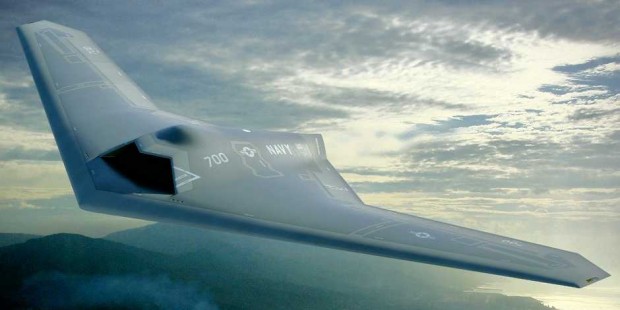
Army Testing Improved Electronic Jamming Technology

DECEMBER 2, 2014


The Army is testing a series of new electronic warfare technologies designed to address a wider range of threat signals in the electromagnetic spectrum, service officials said.

Electronic warfare can be used for a wide range of combat functions to include jamming or thwarting an electronic signal used to detonate an IED, identifying enemy communications or electronic signals, and attacking or disabling enemy electromagnetic signals.

The new EW technologies are being engineered to detect, respond to and operate in a wider range of frequencies to provide commanders with more offensive and defensive options. They are being designed as upgradable hardware and software that can accommodate new threat information as emerging signals are learned, Army officials said.

“The nature of the electromagnetic spectrum is such that it is increasingly contested and increasingly congested. You must be able to attack in the spectrum and defend in the spectrum and also ensure that you manage the spectrum. In order to do all of these things, you must gain and maintain an advantage in the electromagnetic spectrum,” said Col. Jim Ekvall, electronic warfare division chief.

The new EW systems will be configured to go on unmanned aircraft, helicopters and vehicles, among other platforms, Ekvall added.

Israeli Nukes Meets Atomic Irony in the Middle East

December 6, 2014

The stated rationale for the United States casting on Tuesday one of the very lonely votes it sometimes casts at the United Nations General Assembly, on matters on which almost the entire world sees things differently, warrants some reflection. The resolution in question this time endorsed the creation of a nuclear weapons-free zone in the Middle East and called on Israel to join the Nuclear Nonproliferation Treaty, to renounce any possession of nuclear weapons, and to put its nuclear facilities under the safeguards of the International Atomic Energy Agency. A nuclear weapons-free Middle East and universal adherence to the nonproliferation treaty are supposedly U.S. policy objectives, and have been for many years. So why did the United States oppose the resolution? According to the U.S. representative's statement in earlier debate, the resolution "fails to meet the fundamental tests of fairness and balance. It confines itself to expressions of concern about the activities of a single country."

You know something doesn't wash when the contrary views are as overwhelmingly held as on this matter. The resolution passed on a vote of 161-5. Joining Israel and the United States as “no” votes were Canada (maybe the Harper government was thinking of the Keystone XL pipeline issue being in the balance?) and the Pacific powers of Micronesia and Palau. The latter two habitually cast their UN votes to stay in the good graces of the United States; they have been among the few abstainers on the even more lopsided votes in the General Assembly each year calling for an end to the U.S. embargo of Cuba.

An obvious problem with the United States complaining about a resolution on a topic such as this being an expression of concern about the activities of only a single country is that the United States has been in front in pushing for United Nations resolutions about the nuclear activities of a single country, only just not about the particular country involved this time. The inconsistency is glaring. Iran has been the single-country focus of several U.S.-backed resolutions on nuclear matters—resolutions in the Security Council that have been the basis for international sanctions against Iran.

The Trouble With Cheap Oil

DECEMBER 5, 2014

Just before the turn of the millennium, I met a man who had recently invested a fortune in wind power. He said he wanted to do all that he could to slow the course of climate change. He was also convinced that, as the world began to run out of oil, alternative sources of energy would offer a unique entrepreneurial opportunity. “Oil prices will fluctuate for a while,” he told me. “But, eventually, they can only move in one direction. Up. Oil is a finite resource and, as supplies dwindle, the costs will have to rise. That will make alternatives like wind power much more attractive.”

That sounded sensible, and, for the many people who have long argued that our addiction to oil and gas is destroying the planet, so did the much discussed concept of “peak oil’’—the theoretical moment when half the world’s oil reserves had been consumed and fossil fuels began to become scarce. The date of peak oil is hard to pin down, but most suggest we passed that point a decade ago. In a Times column titled “The Finite World,’’ Paul Krugman said that the magic moment had arrived in 2010.

High oil prices would force governments, corporations, and consumers to find another way to power the world. It was a nice dream, but it’s over now. We are awash in cheap oil. Propelled largely by a boom in domestic production, due to hydraulic fracturing, or “fracking,’’ and horizontal drilling, oil prices fell below $70 a barrel on Thursday—from a high in June of $112.12. Prices have fallen nearly every day for the past two months, and some economists predict that we will soon see oil selling for less than fifty dollars a barrel.

That’s good news for consumers; it means that they will have more disposable income. More gas means more travel and more spending, which our sluggish economy clearly needs. But the costs may be enormous. In 2008, a barrel of oil cost $147, more than twice today’s price.

DoD To Silicon Valley, VCs: How ‘Bout Some Help!

December 03, 2014 


PENTAGON: For decades the tech gurus of Silicon Valley have pretty much left Pentagon business alone, letting the military stumble along and try to buy their wares within five years of their coming out.

Take the story of former Vice Chairman of the Joint Chiefs, Gen. James “Hoss” Cartwright, hungry for an iPad that could handle classified information. Couldn’t be done, Cartwright was told. So he ordered DARPA to do it. Then it did get done, but that gives you some idea of just how hard it can be for agile tech companies to do business with the military. Or for the military to buy something new that it really wants — such as the breakthrough technologies envisioned by the newly announced “offset strategy.”

Now, confronted with an historic shift in science and technology spending from the military to commercial companies and the rapid global proliferation of precision weapons and other technologies, the Pentagon has issued a Request for Information asking anyone with a really good idea to click on a dedicated website and let them know about it.

While Lockheed, Boeing, BAE, Raytheon, Northrop and friends will certainly be listened to should they have ideas to share, this effort is really aimed at individuals and companies who traditionally don’t do business with the Pentagon. “I think that’s a very clear message,” said Stephen Welby, the deputy assistant defense secretary leading the effort, when I pressed him if the RFI’s target was companies like Google, Cisco and other tech generators.

The ideas sent in will be screened by five groups of five of the Pentagon’s best and brightest, said Welby, each specializing in a particular top-priority area: undersea technology; air dominance and strike technology; air and missile defense technology; other technology-driven concepts.

Inside Facebook's Plan To Wire The World

Chandauli is a tiny town in rural India about a four-hour drive southwest of New Delhi. India’s a big country, and there are several Chandaulis. This is the one that’s not on Google Maps.

It’s a dusty town, and the roads are narrow and unpaved. A third of the people here live below the poverty line, and the homes are mostly concrete blockhouses. Afternoons are hot and silent. There are goats. It is not ordinarily the focus of global media attention, but it is today, because today the 14th wealthiest man in the world, Mark Zuckerberg, has come to Chandauli.

Ostensibly, Zuckerberg is here to look at a new computer center and to have other people, like me, look at him looking at it. But he’s also here in search of something less easily definable.

I’ve interviewed Zuckerberg before—I wrote about him in 2010, when he was TIME’s Person of the Year—and as far as I can tell, he is not a man much given to quiet reflection. But this year he reached a point in his life when even someone as un-introspective as he is might reasonably pause and reflect. Facebook, the company of which he is chairman, CEO and co-founder, turned 10 this year. Zuckerberg himself turned 30. (If you’re wondering, he didn’t have a party. For his 30th birthday, on May 14, Zuckerberg flew back east to watch his younger sister defend her Ph.D. in classics at Princeton.) For years, Facebook has been the quintessential Silicon Valley startup, helmed by the global icon of brash, youthful success. But Facebook isn’t a startup anymore, and Zuckerberg is no longer especially youthful. He’s just brash and successful.

What’s Next for CAS?

BY MARC A. SCHANZ 
DECEMBER 2014

A great deal of unease and uncertainty exists about the future of the A-10, but the Air Force is preparing today to meet tomorrow’s threats.

The Air Force's 2015 budget proposal to retire the A-10 Warthog—famed for its fearsome 30 mm gun and rugged survivability—elicited a firestorm of protest from A-10 fans and some ground troop supporters—many of whom seem unwilling to accept any other USAF platform for delivering close air support.

Air Force leaders, pilots, and even officials from the ground services admit, though, that the CAS mission is far more expansive than the future of one aircraft and it must adapt to changes in threats, technology, and future combat scenarios. Using experience gained in Iraq and Afghanistan across the fleet, USAF's combat air forces are now experimenting with new approaches to CAS and related tasks—some also performed by the A-10—using assets such as remotely piloted aircraft and bombers.

In more than a decade of combat, mostly in support of ground troops, the Air Force has shown it has tremendous versatility in how it delivers CAS, according to Maj. Gen. James J. Jones, then the Air Force's assistant deputy chief of staff for operations, plans, and requirements. Talking with reporters in March, Jones—who retired in June—said that by and large "those capabilities are already" in the force structure and that many functions now often assigned to the A-10 will be picked up by other platforms, such as the F-16.

The Air Force asserts it has no choice about the A-10, due to budget demands. To pay the bills, USAF must retire 283 A-10s over the next five years in order to invest in multimission aircraft crucial not only to the close air support mission but to others such as air superiority, global strike, and intelligence, surveillance, and reconnaissance.

Sen. Kelly Ayotte (R-N.H.), Sen. John McCain (R-Ariz.), and others have condemned the Air Force proposal. In a joint May statement, Ayotte, McCain, and others called the plan "shortsighted and dangerous" and said that premature divestiture would put ground troops in "serious additional danger in future conflicts."

Air Force Chief of Staff Gen. Mark A. Welsh III has taken the brunt of the criticism, often directly. An A-10 driver during the latter days of the Cold War, he's pushed back, arguing that CAS is a mission bigger than just the A-10. About 80 percent of all CAS sorties in Afghanistan since 2001 were flown by other aircraft, Welsh explained.

That figure shouldn't be a surprise, Welsh said. At an April Senate hearing on USAF's force posture, he said F-16 pilots have trained in full CAS tactics alongside the Army since the late 1970s and have gained vast experience conducting such missions in both Iraq and Afghanistan. The F-16 alone, he noted, has flown more CAS sorties than the A-10 over the last eight years. Meanwhile, to achieve the same savings as retiring the A-10 would mean cutting 350 F-16s.

An Emotional Mission

Air Support for ITBP: MHA squandering tax-payers money

08 Dec , 2014


It was reported in the Times of India that – “Dedicate air support for ITBP gets govt nod”. The Government’s decision to acquire helicopters for the ITBP (Indo Tibetan Border Police) is questionable on a number of counts. The reasons given for this acquisition are specious, scruffy and not substantive. To state that the Indian Air Force (IAF) helicopters are not always available for “maintenance of ITBP outposts and for rescue of the sick or injured from the inhospitable heights of Himalayas where it is posted through the year”, is derogatory and undermines the credibility of the IAF. The IAF should rebut and strongly repudiate this grossly false accusation.

To state that the Indian Air Force (IAF) helicopters are not always available for ITBP…, is derogatory and undermines the credibility of the IAF.

It is important to understand that the planning for working out the maintenance effort to be provided by the IAF is undertaken well before the commencement of a financial year. Demands from all agencies are sought and considered. The requirement for fixed wing (both air dropped and air landed) and helicopter effort is then earmarked depending on the serviceable helicopter fleet available. All demanding agencies are thereafter informed well in advance of the distribution of this effort. A monthly schedule is prepared and is adhered to. Any shortage in despatch of loads due to weather or any other reason is made up in the next month by diverting additional effort. The planned schedule may be disrupted due to unforeseen situations like natural calamities of cloud bursts, floods or earthquake when the helicopter effort is to be diverted elsewhere. In such an eventuality all the agencies that were demanding are equally affected including the Army. All forward outposts also hold a reserve stock for adverse weather and an additional maintenance reserve.

Central Armed Police Forces: The Need for Re-evaluation

08 Dec , 2014


With the recent tragic death of 14 CRPF personnel in an ambush in Chhattisgarh, trust the media to go off on a wild goose chase, once again. For a supposedly well informed fraternity, I cannot but help wonder as to why they take the most important of subjects and then promptly go off on a complete tangent. This ambush raises some very disturbing questions not only about the status of operations against the Maoists but also about the CRPF leadership and training.

…instead of focusing on these substantive issues the media has chosen to focus on the fact that the blood stained uniforms of those martyred were discovered in a rubbish bin…

However, instead of focusing on these substantive issues the media has chosen to focus on the fact that the blood stained uniforms of those martyred were discovered in a rubbish bin which was supposedly “insensitive and disrespectful” to the kin. Really,may be I have a contrarian view, but I think we are disrespecting them by not discussing why and how such a tragedy has been allowed to occur again and holding people in the hierarchy accountable for their sins of omission and commission.

In dealing with the kin, the delivering of the tragic news in an appropriate manner, solemn conduct of the last rites and ensuring speedy documentation and providing all assistance to the family in dealing with their bereavement are the issues of critical importance and need to be focused on.

Off course, the martyrs’ personal effects must be properly accounted for and handed over to the kin but to worry about what happens to the torn and blood stained uniforms that they were wearing at the time of their tragic death is completely perverse and obnoxious. In fact those items should be appropriately disposed off and not sent back to the kin as it can only add to their anguish and heartbreak.

It is a well- known fact that irregular warfare, of which counter insurgency operations are a part, are extremely hazardous and tedious to conduct because it is difficult to distinguish friend and foe and the duration of the campaign can be measured in years, if not decades. There are numerous examples where even the best led troops of the highest quality have committed errors of judgment and suffered the consequences. However when such errors occur with monotonous regularity they cannot just be attributed to incompetent junior leadership, poor training and lack of combat experience or motivation. The reasons are bound to be much more complex and systemic.

The fact that the CRPF is considered a Central Armed Police Force (CAPF) and not a Para-Military Force (PMF) like the Assam Rifles, despite its existing orientation towards counter insurgency operations rather than just police operations…

In the present case, from media reports, it appears that the company headquarters of a column was ambushed resulting in fourteen dead, including the company commander and his second-in-command, and scores wounded. This, while conducting area domination operations similar to the one conducted in the same district in March 2014 in which sixteen personnel lost their lives and the earlier operation at Dantewada in 2010 where a company worth of troops were killed. Moreover, reportedly four thousand troops were involved in this operation and after the first engagement promptly broke contact with the Maoists and withdrew to their camp in the area. One could be forgiven for wondering as to who is dominating whom?

The fact that the CRPF is considered a Central Armed Police Force (CAPF) and not a Para-Military Force (PMF) like the Assam Rifles, despite its existing orientation towards counter insurgency operations rather than just police operations to maintain law and order, has allowed the IPS to occupy all DIG and above ranks of the force on deputation. This is archaic and obtuse as the senior leadership is completely disconnected from the rank and file and even worse, has little or no practical experience of counter insurgency operations and what they involve. This obviously implies that the rank and file have little respect or faith in the leadership with its consequent impact on morale and motivation.

In stark contrast the army ensures that, by and large, all commanders in formations involved in counter insurgency operations have the requisite experience from earlier tenures. Interestingly, the CRPF also follows a system in which each of their battalions has an earmarked permanent location, while their operational deployment in company penny packets may be elsewhere. Thereby the Commandant and Second in Command have only an administrative role and unit integrity and ethos is completely absent, both critical issues in counter insurgency operations.

It is time that the Modi Government carried out a comprehensive assessment of our internal security structures and put in place measures to enhance their efficacy.

It may come as a surprise but the CAPF together have over 400 battalions, equivalent of about 46 Infantry Divisons,and have a weapon and equipment profile very similar to that of the Army’s infantry battalions. In contrast the army has about half the number of infantry battalions. However, what is of real concern is that despite their organizational capabilities it the army that still continues to be at the fore-front of the counter insurgency campaign and it is the army that had to neutralize the four militants who were able to cross the fence in the Arnia Sector in Jammu while the BSF just abrogated its responsibility.

It is time that the Modi Government carried out a comprehensive assessment of our internal security structures and put in place measures to enhance their efficacy. In light of the existing situation, the feasibility of the earlier proposal by the army for permitting lateral movement of its personnel into the CAPF needs to be re-examined.

SPECIAL OPERATIONS FOR THE 21ST CENTURY: STARTING OVER

By Lt. Col. James Jay Carafano, U.S. Army retired
December 2014


The Obama administration has an affinity for the employment of special operations forces. Increased emphasis on this particular sliver of military power is almost without precedence in the modern era, and it is not good. The penchant to view special operations forces as an “easy button,” a ready substitute for conventional military forces, is utterly wrongheaded. Further, the current structure of special operations forces is an evolutionary dead end, and it is ill-suited to meet the strategic demands for American military power in the 21st century.

Our political and military leaders ought to go back to the origins of special warfare and learn what needs to be done to keep the “special” in special operations. The military needs a more expansive, holistic approach to designing and employing special operations forces in the future. Moreover, U.S. defense planners must stop thinking that austerity budgets are compatible with sustaining the kinds of special operations forces the U.S. will need in the future.

A Demonstrated Need

Bad news—the U.S. entered World War II without any special operations forces worthy of the name. Good news—the U.S. was unburdened by a bureaucratic, ossified, one-size-fits-all approach to meeting the myriad and diverse demands of a global conflict.

After the attack on Pearl Harbor, the armed forces plunged into one of the most dynamic and exciting periods of military innovation in American history. During the course of the conflict, the U.S. dabbled in virtually every aspect of what today are described as special operations or covert warfare: psychological operations, civil affairs, advisory and training missions, and every facet of direct action and long-range reconnaissance imaginable. The diverse requirements for force structure also emerged.Credit: U.S. Army/Sgt. 1st Class Brehl Garza

NATO: Back to basics in Eastern Europe

06 Dec 2014

Luke Coffey is a research fellow specialising in transatlantic and Eurasian security at a Washington DC based think-tank. He previously served as a special adviser to the British defence secretary and was a commissioned officer in the United States Army.


This year, NATO has scrambled fighter jets more than 400 times to intercept Russian planes, writes Coffey [Reuters]

Russia's recent actions in Ukraine have made many countries in the North Atlantic Treaty Organization (NATO) nervous - especially those in Eastern Europe with significant Russian minorities living inside their borders. Although it might seem inconceivable to many of those living in Washington DC, London, Paris, or Berlin, there are those in Eastern Europe that have legitimate concerns about Russia's designs on the region.

One of NATO's core values is that an attack on one is an attack against all. This commitment to collective security is explicit in Article 5 of the 1949 North Atlantic Treaty - the Alliance's founding document. If this commitment to collective security is ever in doubt, the Alliance would lose all credibility. This is why NATO must take concrete steps, beyond endless and verbose rhetoric, to demonstrate that Article 5 applies unconditionally to NATO members in Eastern Europe.

Inside Story: NATO alliance: Moment of truth?

Lately, Russia has been upping the ante in Eastern Europe by testing NATO's ability and resolve to react to aggression. This year, NATO has scrambled fighter jets more than 400 times to intercept Russian planes which fly close to - and on multiple occasions have illegally entered - NATO airspace.

The Perversion of Military Ideas: How Innovative Thinking is Inadvertently Destroyed

December 1, 2014

The Perversion of Military Ideas: How Innovative Thinking is Inadvertently Destroyed

Abstract: Have you ever read a military concept or doctrine publication, or an academic or professional paper about warfare or military operations, and wondered how it came to include such an ill-conceived idea? Odds are that the idea you read is a perversion of an earlier, better idea that in its original incarnation was actually quite innovative and insightful. This article explains the process by which such innovative and insightful military ideas are inadvertently oversimplified and/or distorted into intellectually questionable caricatures of their former selves.

A saying attributed to Confucius is that ‘the beginning of wisdom is calling things by their right names’.[1]Assuming for a minute that this is a truism, then contemporary Western militaries aren’t particularly wise. The latest buzzword to make the ‘bingo’ list is ‘ambiguous warfare’, coined to describe Russian actions in Ukraine, which involved an ‘unconventional attack, using asymmetric tactics’ (two more buzzwords to tick off on the bingo card).[2] Forgive me if I’m oversimplifying things, but doesn’t the word ‘warfare’ itself imply that a situation might be ambiguous? Also, aren’t tactics variable, and is it not good practice to continually adapt them to maximise the odds of achieving the strategic aims that one has gone to war for in the first place? In other words, Russian tactics and strategy in Ukraine need to be understood and organisations like NATO need to figure out how to respond to them. But this doesn’t warrant the invention of yet another new buzzword.

Of course I’m not the first to complain about the proliferation of buzzwords at the cost of genuine understanding; in fact what might be dubbed ‘the buzzword problem’ has grown to the extent that complaining about it has become something of a cliché. Even such world-renowned strategists as Colin Grey have observed that ‘Americans in the 2000s went to war and by and large have remained conceptually wounded’.[3] But the wittiest summary of the buzzword problem has to be that of Justin Kelly and Ben Fitzgerald, who penned a short paper entitled ‘when a cup of coffee becomes a soy decaf mint mocha chip frappuccino’.[4] Bingo!

Why The Phrase ‘It Is What It Is’ Damages The Military Mindset


The problem with “It is what it is” is that it abdicates responsibility, shuts down creative problem solving, and concedes defeat

Editor’s Note: This article has been modified from its original version, which was published on “The Military Leader,” a blog by Andrew Steadman.

It’s Baghdad, 2007. I’m a company commander deploying to a contentious area during the height of the Surge. As my unit starts to shadow the unit we’re replacing, and I spend time with my counterpart and his battalion’s staff, I begin to hear a new phrase pop up, “It is what it is.”

I wouldn’t have thought much of it, but I heard that response from numerous members of the unit, and applied to all types of discussion topics. My buddies and boss picked up on it, too. I heard “It is what it is” so much that I began to think it was an approved mentality of the unit, a sanctioned mindset.

Well, my observation was validated the moment I heard the unit’s battalion commander speak. He led a handover brief with us that covered the major events and efforts of his unit’s tour, and I heard “It is what it is” more times than I can count. “The Iraqi Army unit you’re partnering with can’t show up to an operation on time, but it is what it is. … We’ve got a really small post here, so parking will be tight. It is what it is. … We took a lot of casualties in this area, so you should be prepared for that. It is what it is.”

8 December 2014

Silk roads that China seeks

08 Dec 2014
Andrew Sheng

Students of RMB internationalisation tend to forget that the globalisation of Chinese currency happened much earlier with copper coins, which were first standardised and minted in the Qin Dynasty (260 to 210 BC). My old Chinese art historian teacher used to tell me that Chinese coins and ceramic shards were the first durable global debris, easily found around the rubble sites from Sri Lankan temples to Egyptian pyramids. 

Because China was short of silver and gold, common coins were minted mostly in copper. Silver in China was used as an official storage of value as early as 1000 AD, when it was recorded that ingots weighing a tael each became official payment for taxes, but it was rarely minted as coin. Having invented paper, China was also the first to experiment with fiat or printed money. The Song Dynasty (960-1270 AD) encouraged exports in order to finance their losing war against the Huns, which the succeeding Yuan Dynasty (1271-1368 AD) also encouraged. Unfortunately, printing more paper money led to inflation.

Both dynasties encouraged trade with the West through two key channels, the land Silk Road across Central Asia to Egypt and Rome and the Maritime Silk Road via the Malacca Straits and India. Chinese exports of silk, porcelain, crafts and spices were traded for gold, silver and copper coins, as Europe had few products at that time that China wanted. This imbalance in trade, plus the need to defend against the Huns and the Ottomans, forced Europe to embark on its industrialisation path.

It was the fall of Constantinople (today's Istanbul) to the Ottoman Empire in 1453 that cut off the land trade. This blockage spurred the Spanish to go westwards to reach China, discovering America instead in 1492. Similarly, the Portuguese sailor Vasco da Gama raced to reach China via the African Cape of Good Hope in 1492. By 1453, the Ming Empire had passed its peak in outward exploration, having abandoned the Zhenghe voyages twenty years earlier. 

In the line of fire - The Indian army is fast losing its morale

Brijesh D. Jayal
December 8

Whilst all eyes have been on how the new government steers the legislative agenda during its first full parliamentary session, it is what the new defence minister has said in answers to members' questions within the first few days of the session that should have come as a bolt from the blue to the lawmakers.

Reportedly, the Indian Air Force has lost 32 aircraft in the last three years along with 13 persons (presumably all pilots) in accidents this year alone. The navy has suffered 24 major and minor mishaps between January 2011 and November 2014, including the sinking of submarine INS Sindhurakshak last year and a torpedo recovery vessel just recently. Together, these have resulted in the loss of lives of 22 officers and sailors, with four still missing.

The bad news, unfortunately, is not limited to these operational losses alone. It extends to the sensitive and vital domain of morale, reflected in the number of suicides. For the period commencing 2011, the army has lost 362 soldiers, the IAF 76 airmen and the navy 11 sailors, all to suicides. In addition, during this period, there have been 10 cases of fratricide within the army. Further statistics also point to an alarming shortage of officers in the fighting ranks of the armed forces - of lieutenant colonel and below - with the army short of 7,764, the navy 1,499 and the air force 357 officers.

The muted reaction to these revelations from amongst our lawmakers, the political pundits or indeed the loud electronic media is symptomatic of a deeper malaise. It is difficult to fathom whether this neglect stems from the gravity of this state of affairs not being fully absorbed or our antipathy in general to matters pertaining to the armed forces and national security. Either way, the inevitable conclusion is that India does not need external enemies to defeat its armed forces; collectively, our institutions are doing that work for them pretty well.

The GM bogey

Written by Yoginder K Alagh
December 8, 2014 

The decision to disallow experimentation in genetically modified (GM) crops by various states is questionable. However, it reportedly got a fillip from the T.S.R. Subramanian Committee report to review environment-related laws. Subramanian apparently contended that European countries also don’t allow field trials of GM crops. The report is, indeed, a useful document. It makes a plea, for example, for a new set of policies for compensatory afforestation. It does not, however, discuss the issue of GM crops, or the research on them. So if Subramanian did say something on the issue, it should be seen as a side comment rather than the committee’s view.

It is true that the US and China are bullish on GM crops. Europe was strictly against them. But the Lisbon Protocol was a step towards a more nuanced formulation. India has been in the middle. Its legislation on producers’ rights and environmental clearance by the empowered committee on a case-by-case basis is unique. These legislative formulations of the mid-1990s were based on expert committees, including one led by M.S. Swaminathan. But in a fast-developing field, frequent reviews are needed. Even the European position now is different from what it was then. But until further review, the existing legislation stands.

GM cotton was the target of various Gandhian and obscurantist lobbies in the 1990s. The movement against Navbharat Seeds is a good example. Sanat Mehta argued, and I supported him, that the cost of this would be high for farmers in western India and Andhra Pradesh. We created a system in which millions of farmers were criminals and the most preferred seeds were sold illegally. Navbharat seeds were sold at Rs 450 per kg; the Monsanto variety at a premium price of Rs 1,250. Legal systems that were created as safety controls were used to look into productivity, cost and other commercial issues. But isn’t the market supposed to conduct economic tests?

I am Sanskrit

Written by Pratap Bhanu Mehta
Posted: December 8

I am Sanskrit: the language of the gods. But like gods, I am now more an object over which “ignorant armies clash by night”. I carry a heavy load. I am burdened with every sin. For some, I am everything that was wrong with India. I am exclusion, obscurantism, esotericism and dead knowledge. I am burdened, by others, with the weight of redemption. I am the source of all unity and insight, all knowledge and eternal light. But for both sides, I am more an icon than an object of understanding: for one, an icon for blanket indictment, for another, an icon for obscure yearnings.

They fight over my origins. Some say I was the language of invaders, imperiously subordinating everything around it. Others cite me as the example of a whole civilisation that spread across Asia, without the force of arms. They fight over my death. Some autopsies pronounced me dead by the 18th century. They say I died of internal corrosion: a slow insidious loss of faith in the knowledge systems I represented. It was an easy fate for a language that refused to be the language of the masses. Some say I was the victim of political murder: the great empires killed me, dismantling the structures that sustained me. But in all fairness, this has to be said: I somehow felt safer under the patronage of the Mughals, or even the British, than I do at the hands of my benevolent defenders in democratic India. Some refuse to pronounce me dead. I have been put on life support. Whether this will revive me or prolong my agony, I don’t know.

Some think I am still living, though I have assumed more ghostly forms. They argue that the vernaculars did not displace me. Rather, the inner life of most vernaculars builds on my legacy. Even when they transcend me, they cannot escape my imprint. Even in opposition, I am an aesthetic reference. I don’t live as a language. I live as philology. But anyone who understands these matters will understand that philology should not be underestimated. I don’t live as philosophy. I live as liturgy. And this liturgy, even if not fully understood, defines the faith of millions. The abstract idea of India fears me. But I still remain the hidden meaning of every nook and corner of the geography of India. Not just ancient, but even India’s medieval and modern past is not fully accessible without me. I remain the substratum beneath all controversies over the past. I am the ghost that refuses to go away.

US drone strike kills Pak Qaida leader

Dec 8, 2014

Umer Farooq, 38, was killed in the strike that took place in the Khar Tangi area of Datta Khel district in the region, where the Pakistani military has been battling Taliban and al-Qaida-linked militants since June.

ISLAMABAD: A top al-Qaida leader was among five militants killed on Sunday in a US drone attack in Pakistan's troubled North Waziristan region, a day after the chief of the terror group's global operations was also killed in a Pakistani military operation. 

Umer Farooq, 38, was killed in the strike that took place in the Khar Tangi area of Datta Khel district in the region, where the Pakistani military has been battling Taliban and al-Qaida-linked militants since June. A security official said Farooq was among five people killed when two missiles fired from the drone hit a compound. The compound was completely destroyed in the attack. 

Also known Umer Ustad and Ustad Farooq, he was working as al-Qaida chief for Afghanistan and Pakistan. Umer was close to Osama bin Laden and Ayman al-Zawahiri, the former and current heads of al-Qaida, and was a key figure in running the group's operations and finances in Pakistan and in Afghanistan, where he also helped direct attacks against Nato troops, the Taliban said. 

His killing came a day after Pakistani forces killed top al-Qaida operative Adnan Shukrijuma in raid at a house in South Waziristan. The chief of al-Qaida's global operations, Shukrijuma was wanted by the US over a 2009 plot to attack the New York subway system. 

Shukrijuma was among the five men indicted in the US over the plot to bomb New York's subway system under orders from al-Qaida leaders in Pakistan. The New York indictment links him to the Manhattan plot and a similar never-executed scheme to attack British subways, according to media reports. 

North Waziristan has long been used as shelter by the Taliban and al-Qaida-linked militants and has frequently been targeted by US drones. The Pakistani military launched a major offensive in North Waziristan in June and say they have killed more than 1,000 militants so far. 

For almost a decade, US strikes in Pakistan's tribal belt have been unpopular with the public. Pakistani officials have condemned the drone strikes, saying they violate sovereignty. But many Pakistanis suspect government secretly colludes to help identify targets.

Toxic Pool Creeping Over India Kills Thousands of Kids Day by Day

By Rakteem Katakey and Rajesh Kumar Singh 
Dec 5, 2014 


A woman complaining of muscle pains consistent with metal contamination waits in a hospital in the Sonbhadra district... Read More


A factory in Anapara in the Sonbhadra district of Uttar Pradesh, India.


Soni, 12, whose feet and hands sometimes feel as though they’re on fire, has begun to exhibit signs of what Centre... Read More

Why India Is Key to a Climate Deal

By Stephen Junor
December 06, 2014


In the wake of the recent U.S.-China agreement, all eyes in the run-up to COP21 now turn to India. 

When China and the U.S. announced bilateral initiatives to reduce their carbon emissions over the next couple of decades, many commentators immediately turned towards India, questioning whether it would follow China’s lead and announce carbon cuts of its own. Being the world’s third largest emitter of CO2 inevitably draws a lot of attention and with the two highest emitters announcing a deal, India now finds itself under scrutiny, putting the responsibility for a climate deal on its shoulders.

India and China have in the past coordinated their positions prior to climate change conferences, representing an important power bloc. Now that China has announced plans to reduce emissions this could change – diverging paths mean that India may find itself isolated during climate meetings and viewed as the roadblock to achieving a climate deal at COP21 (21st Conference of the Parties of the United Nations Framework Convention on Climate Change) in Paris next year. It is not just China: The developing countries that India and China claim to represent could quickly dismiss any notion of Indian representation if it does not commit to serious and worthwhile emissions reductions. In the eyes of the small nation states and other developing nations, China and India with their high emissions largely transcend the developed/developing dichotomy that often dominates these meetings. The very real effects of increasing temperatures and sea level rise are more of a concern to these small countries than the realpolitik of climate change negotiations.

Here’s what’s really scary about China overtaking America as the world’s biggest

Gwynn Guilford@sinoceros
December 4, 2014

The twilight of America has sneaked up on us, proclaims MarketWatch. “For the first time since Ulysses S. Grant was president, America is not the leading economic power on the planet,” MarketWatch darkly rasps. In case you haven’t guessed which country’s taking the lead

A screenshot from the Drudge Report, one of the biggest American news aggregators.
This is indeed a scary reminder of a shifting world order. But probably not for the reasons implied. The real worry isn’t that China’s landed the top ranking, but how it’s done that—and the long, painful, Japan-style stagnation that likely awaits it as a result.

But first, some context. At some point China’s economy will definitely surpass that of the US–and it’s baffling why this spells doom to America. China has more than four times as many people as the US does. It should be bigger.

But that hasn’t happened yet. We’ve cracked this chestnut before: basically, the IMF just recalculated its projection of China’s 2014 GDP using an updated revision to purchasing-power parity adjustments, which is supposed to more accurately reflect buying power. Since living costs are cheaper in China than they are in the US, the adjustments inflate China’s GDP.


Saving Grameen Bank, Sustaining the Bangladesh Paradox

By Niaz Asadullah and Zaki Wahhaj
December 06, 2014

Employees of Grameen Bank form a human chain in front of their central office after a court upheld an order removing Nobel laurate Muhammad Yunus as head of the microlending bank he founded, in Dhaka March 8, 2011.

Increasing state control over Grameen Bank will hardly serve the interests of Bangladesh. 

Bangladesh today is a global poster child within the Muslim world for women’s development. When it comes to gender equality, it ranks above all South Asian countries and Muslim-majority nations in Asia. The Bangladesh gender paradox – superior status of women despite a patriarchal social structure and strong influence of religion – owes to another paradox: Health conditions and economic participation of women have improved over the last twenty years despite limited public investment in social sectors.

At a time when women’s development has been lacking in much of Africa and South Asia, millions of Bangladeshi women are going to work every day as factory workers, primary school teachers, and healthcare providers. This has happened not because of any large scale public investment project. When the boom in women’s participation in export oriented factories started in the mid 1990s, most girls in Bangladesh were barely completing primary school.

Rather, the foundation for women’s development was laid by non-state actors. Bangladesh’s microfinance pioneer Professor Muhammad Yunus saw women as the key agent of social change nearly four decades ago when gender development was yet to be recognized in the country’s development agenda. In later years, NGOs like Grameen Bank and BRAC not only championed development schemes that targeted women, they also employed hundreds of thousands of women at the community levels to deliver health, family planning and education services.

Chinese Communist Party Expels Former Security Chief

Bill Gertz
December 6, 2014 

China’s Communist Party has expelled Zhou Yongkang, a former member of the collective dictatorship that rules the country and once Beijing’s most senior security official. 

The expulsion of Zhou, announced by the official Xinhua news agency in a two-paragraph dispatch Friday, was carried out after a decision made at a meeting of the Communist Party’s Politburo. 

Additionally, Zhou’s corruption case will now be handled by “judicial organs,” a sign the Communist leadership plans to imprison him. 

As reported by the Washington Free Beacon last month, Zhou’s corruption case has produced a rift within the closed Chinese Communist leadership ranks. 

Investigations of widespread corruption in China for decades were off limits to officials like Zhou, until 2012 one of seven members of the Politburo Standing Committee headed by Party Secretary Xi Jinping. The committee is the collective dictatorship that makes most key policy decisions. Its members wield enormous political and economic power. 

The expulsion of Zhou had been expected but took months longer than normal for high-level corruption probes, fueling speculation that Chinese leaders were not united in how to deal with the former security chief who was the ultimate authority over both China’s security police and intelligence services. 

The action against Zhou could create a backlash from what U.S. intelligence agencies recently identified as signs of a power struggle among senior Chinese leaders. 

China analysts have said that such high-level differences would be a key indicator of a possible major shift or even the overthrow of Communist Party rule in the world’s most populous state. 

Xi launched the current anti-corruption campaign in January 2013 in what some government analysts have said is more likely related to an effort to consolidate power than to clean up the communist system. 

Chinese Government Takes Eight Muslims And Executes All Of Them For Killing Chinese People


The Chinese government recently executed eight Uighur Muslims for terrorism, and planning a major terrorist attack. We read from a Chinese report:

Eight terrorists have been executed with the approval of the Supreme People’s Court in Xinjiang, according to the publicity department of Xinjiang Uygur Autonomous Region on Saturday.

Their crimes involved five cases including the terrorist attack in the Tian’anmen Square in Beijing, the gun-seizing and police-assaulting case in Aksu, the illegal manufacturing of explosives and intentional killing case in Kashgar, and the establishment of terrorist organization, murder of government officials and incineration of checkpoint in Hotan.

Huseyin Guxur, Yusup Wherniyas and Yusup Ehmet had been sentenced to death and deprived of political rights for life by court for organizing and leading terrorist organization and jeopardizing public security with dangerous means. They masterminded the terrorist attack in the Tian’anmen Square of Beijing which killed 3 and injured 39 on Oct. 28 in 2013.

Rozi Eziz, also sentenced to death by court, was convicted of gun seizing and intentional killing of police officers. He committed the crime on June 28, 2013 in Wushi County of Aksu.

Abdusalam Elim had organized a terrorist gang with himself as the ring head since May 2011. The court found that Abdusalam Elim and others listened and watched religious extremist audio-visual materials and conducted illegal religious activities. They raised funds for members to conduct physical training and manufacturing, storage and transportation of explosives devices. He was sentenced to death and deprived of political right for life by court on charges of organizing and leading terrorist organization as well as illegal manufacturing, transportation and storage of explosives.

Chinese Telecommunications Giant Huawei Can’t Do Business in U.S. Because of Alleged Links t Chinese Intelligence

Mitchell Hiltzik
December 6, 2014

In mid-November, the giant Chinese telecommunications firm Huawei invited networking executives from some of the more than 170 countries where it does business for a two-day Global Mobile Broadband Forum. The potential buyers wandered among display tables bathed in a ghostly blue light as corporate associates talked up the products. They represented about 400 companies. None was American.

That illustrates the challenge facing this technology company with a global reach but no detectable footprint in the U.S.: How can it shed its image as a cat’s-paw of the Chinese government and break into the largest telecommunications market in the world?

Huawei (pronounced “Hwa-way”) says it does just fine without the U.S. market. Last year it reported a profit of $3.5 billion on sales of about $39.5 billion. While most sales are to mobile carriers, in the consumer sector Huawei has been jostling with fellow Chinese firms Xiaomi and Lenovo for third place in global smartphone sales, behind world leaders Samsung and Apple.

But it might do even better if it could access U.S. customers: Its U.S. revenues came to $876 million last year, only about 2.2% of the total.

"You’re playing in 70% of the market if you can’t compete in the U.S.," Joe Kelly, the company’s head of international media affairs, told a group of U.S. journalists visiting during the mobile forum. The journalists were visiting China under the auspices of the All-China Journalists Assn. and the Honolulu-based East West Center, which receives funding from the U.S. government.

What’s holding Huawei back is the conviction in Washington that the company has undisclosed connections with the Chinese government, and suspicions that Huawei equipment could surreptitiously harbor software to facilitate cyberwarfare, including espionage or network disruption. Huawei denies both assertions.

It describes itself as an entirely private and independent firm, founded in 1987 in Shenzhen by Ren Zhengfei, a former military engineer. Most of the company’s shares are held by Chinese employees (foreigners are generally barred from holding shares in Chinese companies).

Violence and Repression in Chechnya

12.04.2014

The Romans became infamous for their “make a desert and call lit peace” approach to counterinsurgency. But even the Romans knew they had to offer subject populations “bread and circuses” to win them over to Roman rule rather than just brute-force oppression. That is a lesson that Vladimir Putin still doesn’t seem to have learned, judging from the latest terrorist attack in Chechnya, which came even as he was giving his predictably delusional and self-congratulatory state-of-the nation speech in Moscow. (The highlight or lowlight was his claim that Crimea has the same significance for Russian nationalists “as the Temple on the Mount in Jerusalem for those people who worship Islam or Judaism,” thus making it clear that for him Russian nationalism is a religion.)

At least 19 people were killed in the Grozny attack. What’s really interesting is that this is not an isolated occurrence. As the New York Times notes, citing the Caucasian Knot website, “290 people had been killed and 144 wounded in fighting scattered through the Caucasus this year through the end of November.”

There is, in short, a real war going on in Chechnya and its environs–a war driven in part by jihadist ideology, to be sure, but also by Russian repression, which is what turned so many Chechen nationalists in their desperation to embrace radical Islam in the first place. Like many other local conflicts, this one has bled into the larger struggle of the jihadists against all manner of enemies. The Caucasus Emirate, as the local jihadist group is known, has sworn allegiance to ISIS and many Muslims from the Russian Caucasus have gone to Syria to join ISIS operations there.

This means that some intelligence sharing and law enforcement cooperation with Putin’s reprehensible regime is probably a necessity, but we must not lose sight of the extent to which his own brutal rule has aggravated the problem of terrorism. Insurgencies must be fought with force but in most instances they can only be ended by reaching some kind of reconciliation with the local people, as the British and the IRA did in the Good Friday Accords and as the FARC and the Colombian government are now striving to do. It is impossible, alas, to imagine that Putin, who revels in his macho cult, could ever take such far-sighted steps for peace.

ISIS Fighters Reportedly Capture Part of Air Base in Eastern Syria

December 6, 2014

BEIRUT — Islamic State group fighters stormed parts of a sprawling army air base Saturday in eastern Syria after days of clashes that killed dozens on both sides, activists said, while state media reported that the offensive was repelled.

The base, outside the city of Deir el-Zour, has been used by the government in the past months to launch air raids on areas held by the Islamic State group bordering Iraq.

The Islamic State group is trying to capture the air base and a nearby barracks known as Brigade 137 to eliminate the main pocket of resistance in the area and provide a major morale and propaganda boost after a string of setbacks in recent weeks.

The Britain-based Syrian Observatory for Human Rights said the latest attack began Saturday with a suicide car bomb at the main entrance of the Deir el-Zour air base. Later Saturday, the push stopped after fighters came under heavy shelling from army positions, it added.

The group said that some Islamic State fighters had breathing problems in the area after government forces used chlorine gas against them.

Syrian state TV quoted an unnamed military official as saying that troops repelled attempts by “terrorists” on several areas near the city of Deir el-Zour and killed “tens of them and destroyed their vehicles and weapons.”

The Islamic State group began a major offensive on the air base, one of the last government-held areas in the province of Deir el-Zour, on Thursday.

The Observatory said that since Thursday, 119 fighters on both sides have been killed, including 51 troops and pro-government militiamen. It said some 68 Islamic State group fighters have been killed, of which 33 were Syrians and two were French citizens.