http://www.rediff.com/news/interview/with-pakistan-where-is-the-question-of-trust/20160105.htm
January 05, 2016
'In international relations, you don't trust anybody. Bottomline. I wouldn't trust even my mother in international relations because what happens is when interests change, when situations change and then alliances and friendships change.'
'I have no problems with prime ministers interacting with each other, that is not a bad thing. My problem is that if we think engaging with the Pakistanis is going to solve our security problems, then I am afraid that is not going to happen.'
'If you continue engaging with them, we can actually end up encouraging the Pakistanis giving them a sense of impunity, who will then think that they can continue with their acts (of terror) even as you talk to them.'
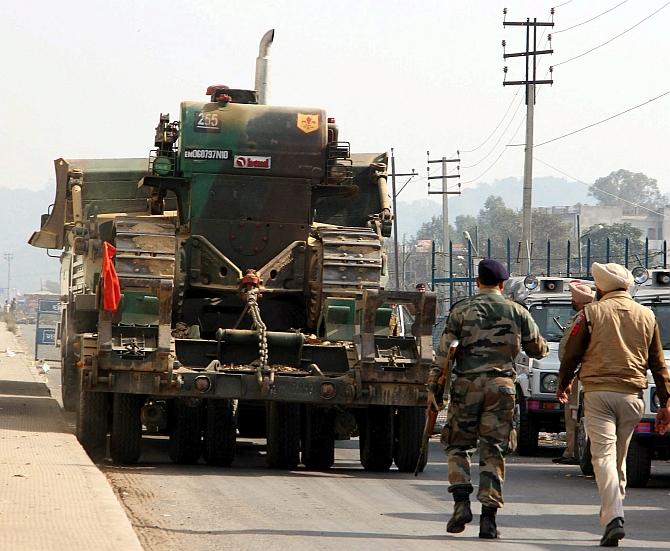
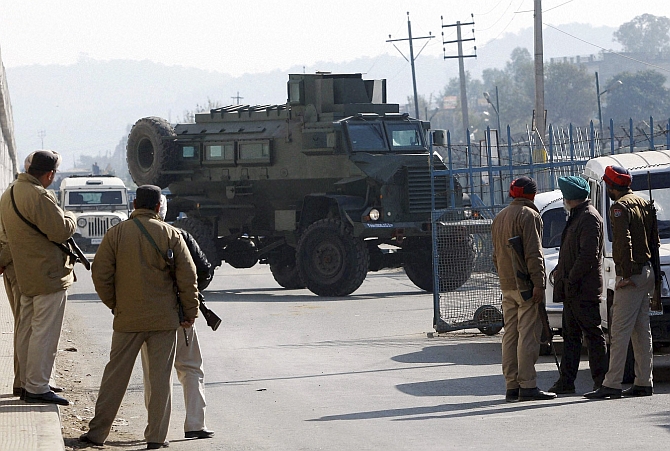
Sushant Sareen, Consultant, Pakistan Project, at the Institute for Defence Studies and Analyses, tells Prasanna D Zore/Rediff.com how terror attacks like the one at the Pathankot air base puts Indian governments in a fix when it comes to engaging Pakistan in peace talks.
Were you expecting a terror attack after Prime Minister Modi's visit Lahore?
I suppose this fits into a pattern. This has been happening since (then prime minister Atal Bihari) Vajpayee went to Lahore in 1999.
Whenever you start the talks process or some atmospherics that comes ahead of a peace process, if you can call it that, there is always some kind of spectacular attack.
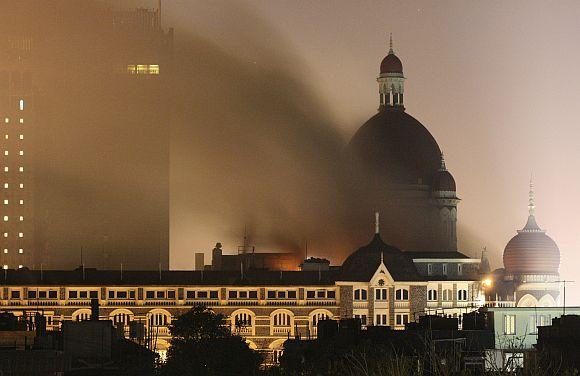
It happened in 1999; it happened in 2001, within a couple of months of Agra we had the attacks on the Srinagar assembly and then Parliament; it happened in 2006, the Mumbai train blasts, which we seem to have forgotten because ordinary people died; we seem to have remembered 2008 (the 26/11 terror attacks) because some rich people died.
A couple of days before Nawaz Sharif landed here (for Modi's swearing-in) you had an attack on the Indian consulate in Herat (Afghanistan) which we seem to have forgotten.
We had Ufa and then we had Gurdaspur; we had Lahore and then we have had Pathankot...
In that sense, there seems to be some kind of pattern when over time there seems to be some kind of movement (on the peace front).
January 05, 2016
'In international relations, you don't trust anybody. Bottomline. I wouldn't trust even my mother in international relations because what happens is when interests change, when situations change and then alliances and friendships change.'
'I have no problems with prime ministers interacting with each other, that is not a bad thing. My problem is that if we think engaging with the Pakistanis is going to solve our security problems, then I am afraid that is not going to happen.'
'If you continue engaging with them, we can actually end up encouraging the Pakistanis giving them a sense of impunity, who will then think that they can continue with their acts (of terror) even as you talk to them.'
Sushant Sareen, Consultant, Pakistan Project, at the Institute for Defence Studies and Analyses, tells Prasanna D Zore/Rediff.com how terror attacks like the one at the Pathankot air base puts Indian governments in a fix when it comes to engaging Pakistan in peace talks.
Were you expecting a terror attack after Prime Minister Modi's visit Lahore?
I suppose this fits into a pattern. This has been happening since (then prime minister Atal Bihari) Vajpayee went to Lahore in 1999.
Whenever you start the talks process or some atmospherics that comes ahead of a peace process, if you can call it that, there is always some kind of spectacular attack.
It happened in 1999; it happened in 2001, within a couple of months of Agra we had the attacks on the Srinagar assembly and then Parliament; it happened in 2006, the Mumbai train blasts, which we seem to have forgotten because ordinary people died; we seem to have remembered 2008 (the 26/11 terror attacks) because some rich people died.
A couple of days before Nawaz Sharif landed here (for Modi's swearing-in) you had an attack on the Indian consulate in Herat (Afghanistan) which we seem to have forgotten.
We had Ufa and then we had Gurdaspur; we had Lahore and then we have had Pathankot...
In that sense, there seems to be some kind of pattern when over time there seems to be some kind of movement (on the peace front).







 apart from the pack. That’s what makes Douglas Macgregor’s book a great read.