8 January 2016

Kelkar PPP Report: Saving Government From Itself

http://swarajyamag.com/economy/kelkar-ppp-report-saving-government-from-itself/
Sanjeev Ahluwalia is Advisor, Observer Research Foundation. He specializes in economic governance and institutional development. 
6 Jan, 2016
The Kelkar Committee on PPPs, headed by former Finance Secretary, Vijay Kelkar submitted its report to the Finance Minister in November. The report was made public only last week though. What does it say are the problems with PPPs in India, and what solutions does it offer?
So what is a Public Private Partnership (PPP) model? And why have industry insiders declared it as broken even though India has 1200 such projects in operation (the largest number internationally for any economy) with a total investment of over Rs 7 lakh crores (US $ 100 billion)? And does it matter?
PPP defined

We really do not have a definitive peg to hang the definition of PPP on. This is where the report of the Vijay Kelkar Committee on Revisiting and Revitalising PPP Model made public last week does salutary service. It presents a simple definition:
“A PPP is a large project in which the government, or a subordinate authority of the government, has not more than a minority share; which provides a public good or service; which is operated for a defined time period – usually medium term – by a private firm, under a “concession”, which defines contractual, mutually binding obligations and provides to the concessionaire a market-determined revenue stream to ensure commercially viability.”

By proposing a definition, the report makes four important distinctions from what the practice is today. 
First, it is high time India had a PPP policy duly presented to Parliament so that an appropriate regulatory regime could be specifically designed, possibly under a new legislation. The report is mindful of the current political economy, which has created an impasse in Parliament. This is why it recommends against an immediate resort to legislation to solve implementation problems, as has been the trend in recent times, albeit ineffectually.

Second, a PPP is designed to combine the relative comparative advantages of public and private ownership. This design advantage is completely subverted when government uses a notional PPP route to set up a special purpose vehicle with a state owned enterprise (SOE), even if the latter is incorporated under the Companies Act. The report implicitly acknowledges, what is internationally accepted, that SOEs are just not as efficient or nimble as a private firm. Nor would they be able to pull-in the additionality of managerial experience and private investment, which is one of the main objectives of a PPP.

Third, not all instances of public-private joint investment are PPPs. A firm producing steel and set up with an assured buy-back arrangement from government would not be a PPP because steel is a private, and not a public, good. This is how Tata Steel’s Jamshedpur plant was set up way back in 1907. But what of units proposed to be set up for defence equipment, under the “make in India” route, on a similar basis? This remains unclear and hence the need for a policy.

Lastly, by specifying the need for a “market-determined” revenue stream and commercial viability, the report deftly strikes a three-in-one blow for transparency, competition and efficiency. All three are hallmarks of a successful PPP. Related body blows are struck against crony capitalism and gold-plating through the emphasis on long term, high quality service as a monitored output linked to the revenue stream, rather than just one-time payment for construction of an asset. 
What needs to be fixed?
Afghanistan's Successes and Failures of 2015


http://nationalinterest.org/feature/afghanistans-successes-failures-2015-14801?page=show
After a year of bad news, Afghans are searching for reasons to remain hopeful.
Aziz Amin Ahmadzai, January 5, 2016 

Last year was full of ups and downs for Afghans and their government. The rise and expansion of ISIS, the growing insecurity in northern Afghanistan, the fall of Kunduz into the hands of the Taliban and the exodus of Afghans into Europe were each, in their own way, a failure. On the other hand, the kick-off of the TAPI pipeline project, the country’s accession to the WTO, the start of development work on Salma Dam and the progress toward building regional consensus were all notable successes for the National Unity Government.
It is often said that the greatest failures are life’s greatest lessons. What lessons, then, can Afghanistan learn from 2015 for the year ahead?

The Taliban’s Fragmentation
After news of the death of Taliban leader Mullah Omar was leaked by Afghan intelligence, the Taliban divided into two groups, one led by Mullah Akhtar Mansour and the other by Mullah Mohammad Rassoul. They fought each other in the Zabul and Helmand provinces to gain control over the leadership ranks. Neither really succeeded, and the Taliban remains fragmented. So far, the Afghan government has failed to make use of this internal division in the Taliban to gain the upper hand. Of course, whether it was possible to do so is debatable because of security gaps and internal fragmentation in the National Unity Government itself. Moreover, the rise of Daesh is in part a product of that fragmentation.
The Fall of Kunduz

The fall of Kunduz and the Taliban's brief control thereof was significant for two reasons. First, it demonstrated that while the Taliban is fragmented it is nonetheless far stronger than before, and thus has the ability to challenge the writ of the government and exploit gaps in the security institutions. The special commission appointed by President Ashraf Ghani found a lack of security coordination to be the main cause of the province’s fall. Second, the fall of Kunduz highlighted not only significant gaps in the government’s security institutions, but also how those gaps are exacerbated by the internal problems and disagreements that plague the National Unity Government (NUG).

Afghan War Returns to Blood and Shadows

http://www.thedailybeast.com/articles/2016/01/05/afghan-war-returns-to-blood-and-shadows.html
“I would not concede [the Afghan security forces] are losing ground across the country,” Cook said.
—with additional reporting by Kimberly Dozier
01.05.161
The death of a U.S. service member and injuries to two more Tuesday are shrouded in mystery—with the Pentagon refusing to explain their mission in an increasingly secretive conflict.
On Tuesday, one U.S. service member was killed and another two were injured while fighting in the city of Marja, in Afghanistan’s restive Helmand province. But the Pentagon could not say why those troops were there, or what their mission was. It’s all part of an increasingly dangerous Afghan war that’s being fought more and more in the shadows.

Two HH60 Pave Hawk helicopters sought to rescue the injured troops. According to Pentagon spokesman Peter Cook, one was turned away, while the other landed. Initial reports from the Pentagon said it did not leave the site because it was under mortar fire; Cook then said helicopter hit a wall, damaging its rotary.
Either way, the helicopter could not take off and the U.S. troops were engaged in an hours-long firefight, whose resolution is still unclear. At press time, the battle, which began 12 hours earlier, had not ended, defense officials acknowledged. Fox News reported late Tuesday that more than a dozen troops were surrounded by a “sea” of Taliban and awaiting an AC-130 gunship to provide air cover.

At a Pentagon briefing Tuesday, Cook said he could not say why those U.S. troops were fighting in Marja, whether their mission was a counterterrorism or combat one, why one helicopter was waved off but another was allowed to land, how many Afghan soldiers were injured along with their American counterparts, or even if the injured had been evacuated from the active battlefield.
In part, the secrecy stems from the kind of American forces now battling in Marja. In Helmand province, as in other parts of Afghanistan, special operations forces have stepped in where the Obama administration has withdrawn more-traditional troops.

The New Military Force in Charge of China’s Nuclear Weapons

http://thediplomat.com/2016/01/the-new-military-force-in-charge-of-chinas-nuclear-weapons/
A DF-15B short-range ballistic missile
Goodbye Second Artillery Force; hello PLA Rocket Force.
By Shannon Tiezzi, January 05, 2016
On December 31, China inaugurated three new military forces: a general command for the army, the People’s Liberation Army (PLA) Strategic Support Force, and the PLA Rocket Force. The latter, which replaces the Second Artillery Force, will be in charge of China’s nuclear arsenal.

General Wei Fenghe was named the new force’s first commander. Wei has a long history with the Second Artillery Force; he served as its chief of staff from 2006-2012 and then as commander-in-chief from 2012 until the service was reconfigured as the Rocket Force.
The creation of the Rocket Force is part of a larger move to restructure China’s military with a streamlined command under the direct control of the Central Military Commission. The new force is considered the fourth branch in China’s military, on equal footing with the PLA Army, Navy, and Air Force, according to Global Times. Unlike the Second Artillery Corps, the Rocket Force will command all three legs of China’s nuclear triad, rather than just controlling land-based nuclear missiles. The Rocket Force will also be in charge of conventional missiles. Global Times reported that the force has already held its first drills, practicing mobile combat operations and missile launches.

In the inauguration ceremony on Thursday, President Xi Jinping (who is also chairman of the Central Military Commission) called the PLA Rocket Force the “core force of strategic deterrence, a strategic buttress to the country’s position as a major power, and an important building block in upholding national security.” He tasked the new force with enhancing China’s nuclear deterrence and counter-strike capabilities, and thus maintaining a strategic balance. He also urged the Rocket Force to improve China’s ability to conduct medium- and long-range precision strikes.

10 Ongoing Wars Or Potential Conflicts to Watch in 2016

China’s Wanda Group is poised to become the world’s largest sports company.
By David Volodzko, January 05, 2016
Arguably the most influential people in the world of sports are FIFA President Issa Hayatou, Olympic Committee President Thomas Bach, International Cricket Council CEO Dave Richardson and NFL Commissioner Roger Goodell. These men oversee the four most widely watched sporting events on the planet.

Other contenders are ESPN Executive Chairman George Bodenheimer, Nike CEO Mark Parker, and, as of quite recently, Wanda Group owner Wang Jianlin. Wanda is currently China’s largest real estate developer and the world’s largest cinema operator, and according to a report last week by The Australian Financial Report, it will soon be the world’s largest sports company as well.
Wanda has already purchased the Ironman Triathlon for $650 million and plans to bring the event back to China. Before triathletes rejoice, they should bear in mind that the reason the Ironman has been discontinued in China for the past five years is because China failed to meet the brand’s quality standards. Hopefully its return signals more than a change in the owner’s nationality.

Beijing’s Asia Pivot in 2016

http://www.cfr.org/china/beijings-asia-pivot-2016/p37409

Authors: Joshua Kurlantzick, Senior Fellow for Southeast Asia, Council on Foreign Relations Sheila A. Smith, Senior Fellow for Japan Studies, Council on Foreign Relations Alexander Gabuev, Senior Associate and Chair, Russia in the Asia-Pacific Program, Carnegie Moscow Center Brahma Chellaney, Professor of strategic studies, Centre for Policy Research James Reilly, Senior Lecturer in Northeast Asian Politics, Department of Government and International Relations, University of Sydney Scott A. Snyder, Senior Fellow for Korea Studies and Director of the Program on U.S.-Korea Policy, Council on Foreign Relations Merriden Varrall, Director, East Asia Program, Lowy Institute
Interviewer(s): Eleanor Albert, Online Writer/Editor January 5, 2016
In its own “pivot” of sorts, China looks set to pursue broader ties in the Asia-Pacific region in 2016, advancing initiatives such as the Asian Infrastructure Investment Bank and ramping up maritime and land trade corridors. Seven experts assess the challenges and opportunities in China’s relations with Southeast Asia, Japan, Central Asia, South Asia, the Korean Peninsula, and Australia in the next year.

China’s relations with Southeast Asian nations, which had warmed significantly in the mid-2000s, have since settled somewhere between cool and downright icy. While 2015 saw a thawing of relations, coastal Southeast Asian nations, like Vietnam and the Philippines, continued upgrading their navies and coast guards, building relations with the United States to hedge against Chinese power, and searching for novel strategies to constrain China’s ambitions. At the same time, some mainland Southeast Asian nations, such as Laos and Thailand, not directly affected by regional maritime disputes, seemed increasingly comfortable with China’s ascendance into a major Southeast Asian power.

In 2016, China will almost surely continue its assertive diplomacy and military actions in Southeast Asia, and despite the slight cooling of tensions, these policies could easily give way to a China-Vietnam or China-Philippines standoff in the South China Sea. Chinese leaders have publicly argued that state petroleum companies have the right to continue exploring in the South China Sea—an assertion that, eventually, Beijing will likely back up by moving rigs into the disputed waters, as it did in 2014. In the past year, China has threatened Vietnamese, Australian, and U.S. vessels that traveled near territory where China has reportedly built up and militarized small atolls. This approach will likely continue, especially in Beijing’s dealings with Hanoi, which China perceives as the most significant Southeast Asian threat to China’s South China Sea claims.

Turkey’s war on the Kurds


http://www.thehindu.com/opinion/op-ed/turkeys-war-on-the-kurds/article8065303.ece?homepage=true
January 5, 2016, Vijay Prashad

Loss of faith in the country’s commitment to its minorities and to multi-party democracy has led influential people to reconsider autonomy of the Kurdish areas.

A war of words has broken out between the Turkish President, Recep Tayyip Erdogan, and the leader of the left-wing People’s Democratic Party (HDP), Selahattin Demirtas. Mr. Demirtas, who is Kurdish, leads a party that unites the Kurdish nationalist forces and Turkey’s left-wing groups. Until recently, he and the HDP have called for more rights for the Kurdish population within Turkey rather than for the creation of a Kurdish state out of Turkey. The Kurds in Turkey are spread out across the country, with Istanbul having the largest concentration (one million Kurds). Nonetheless, the majority of the Kurdish population lives in the country’s south-east, which has been the epicentre of demands for self-determination. In late December, Mr. Demirtas backed a resolution passed by the Kurdish Democratic Society Congress (DTK), which reiterated an old demand for the creation of Kurdish “autonomous regions” and “self-governance bodies”.

Mr. Demirtas, who has a calm and careful political demeanour, has come to this position from great desperation. Out of the gaze of the international media, Turkey’s government has been prosecuting a violent war against the Kurdish people. From last summer, Turkey began a policy of military curfews and severe crackdowns on the Kurdish towns and cities of south-eastern Turkey. Turkish tanks have been shelling Cizre, near the Syrian border, and military operations in Diyarbakir and Silopi escalate each day. The region, say local journalists, resembles a war zone. Mr. Erdogan has called this violence a “fight against separatist terror organisations”. Diyarbakir mayor Gultan Kisanak said, “Tanks and heavy weaponry, which are only used in conventional warfare, are being used by the Turkish armed forces, in areas where hundreds of thousands of civilians live.” Ms. Kisanak, a former political prisoner and a very popular politician, bravely stood up as an MP against the murder of 34 Kurdish civilians by the Turkish air force in the 2011 Roboski Massacre. She does not mince words, nor does she exaggerate.

The Caliph's Revenge

http://www.isn.ethz.ch/Digital-Library/Articles/Detail/?lng=en&id=193818
5 January 2016
While the secular revolutions of the 20th century built up the Middle East’s institutions and economies, they also gravely wounded moderate religious sensibilities. It’s no surprise then, argues Paul Salem, that the region is now in the grip of a ferocious and unhinged religious backlash.
By Paul Salem for Middle East Institute (MEI)
This article was originally published by the Middle East Institute on 9 September 2015.

Almost a century after Mustafa Kemal Ataturk abolished the caliphate in Istanbul and six decades after Gamal Abdel Nasser and the Ba‘th Party led a secular nationalist revolution in Egypt and the Arab world, the Middle East is rife with radical religious counter-revolution, and a caustic caliphate sits astride the Syrian-Iraqi interior. The secular nationalist revolutions, while they made great advances in state building and development, gravely wounded religious sensibilities and at the same time removed or weakened the very authorities that could moderate or lead religion in a more responsible manner. As a result, the region is witnessing a religious backlash that is both ferocious and unhinged. How has a religious tradition, which for a millennium was a global refuge for pluralism, tolerance, and moderation, been subverted to propel intolerance, brutality, and beheadings, and what can be done at this late stage to restore—or create—a more moderate religious authority?

In a recent book called The Paradox of Liberation: Secular Revolutions and Religious Counterrevolutions, the American political philosopher Michael Walzer examines the cases of Algeria, India, and Israel. In all three countries, secular revolutionaries believed that history was a linear process unfolding in favor of secularism, science, reason, and nationalism, and that religion was part of a superstitious and fading past. But in all three countries, radical religious movements arose, reviving in a more virulent manner the religious identities, values, and imperatives of the challenged past.

Redrawing the map is the best way to fight Islamic State


Ii January 4, 2016
Tom Switzer
Could the creation of independent states for Kurds and Sunnis be the answer to the turmoil in Syria and Iraq?

Iraqi troops face booby trap peril in Ramadi
Iraqi forces attempt to find and destroy Islamic State explosive traps and pockets of resistance, after recapturing the city of Ramadi from the insurgents.
Statecraft is simple, as long as the appearance of success matters more than results. Such a world view appeared to be the price of victory at the United Nations in December. No, I'm not harping on about the Paris global gabfest that reached a (non-binding, non-enforceable and non-verifiable) pact to reduce emissions. I'm referring to the unanimous Security Council resolution to end Syria's five-year civil war, which has claimed 250,000 lives.
The contradictions in the UN peace plan are overwhelming. Both Russia and the US are looking for a way to cease the escalation of the conflict between the Alawite/Shiite-aligned regime and the Sunni rebels, without giving up their radically different positions.

Iraq and Syria are artificial states and ethnically divided societies created out of the ruins of the OttoMan Empire.
Washington – backed by its Sunni allies Turkey and Saudi Arabia – would like to see the end of Syrian dictator Bashar al-Assad, who has slaughtered his own (Sunni) people and starved recalcitrant (Sunni) cities and regions into submission. Moscow – supported by Iran and its Shiite proxies in Iraq and Lebanon – insists the Assad regime is necessary to defeat Islamic State, the Sunni terrorist group now occupying large stretches of Syria and Iraq.
Complicating matters further, the opposition with which the UN wants Damascus to reach a negotiated political settlement is far from united. Islamic State is one of an almost uncountable melange of anti-Assad rebel groups with competing ambitions and interests. Welcome to the mess-in-potamia!

The 7 Most Interesting Climate Findings of the Year

http://www.climatecentral.org/news/7-most-interesting-climate-findings-2015-19835?utm_content=bufferbac19&utm_medium=social&utm_source=twitter.com&utm_campaign=buffer
Published: December 30th, 2015
By Brian Kahn
At Climate Central, we love climate research (but really, who doesn’t?). We cover it relentlessly and a lot of findings have come through our inboxes this year. All those studies are crucial to shaping both what we know about the world we currently live in as well as what we’re in store for in the future depending on how we respond to climate change.
But there are a baker’s half dozen studies that really piqued our interest this year, from the Atlantic circulation slowdown to the disappearance of the global warming slowdown. While the seven were all fascinating and critical, some also created controversies that are still ongoing.

The finding: We could be entering an era of warming unseen in at least 1,000 years.
Why it made the list: The rate of global warming has increased with each passing decade. A couple of studies published this year show that the rate will not only continue to rise, but soon be one the earth hasn’t seen since the Vikings found their way to Greenland (and possibly longer than that). Warming will be fastest in the northern hemisphere, which just so happens to be where most humans live.
Changing drought patterns across the U.S. at the start of each decade through 2095.
Credit: NASA
The finding: The Southwest and Central Plains face an “unprecedented” megadrought.
Why it made the list: The Southwest and Central Plains are already pretty dry places. Now imagine a drought that “makes the Dust Bowl look like a picnic.” That’s what the region has in store in the coming decades, according to climate projections published earlier this year. Since the 1930s Dust Bowl, population and agriculture have both boomed in the region. That means more people and more assets could face a drought worse than anything the region has seen in a long time.
The finding: Atlantic circulation is weakening, which could be bad news for weather and sea levels.
Why it made the list: Climate change is causing Greenland’s ice to melt, sending a rush of cold freshwater into the sea. That’s acting as roadblock on a key ocean conveyor belt that shuffles warm water from the tropics northward. The slowdown in circulation has been tied to a 5-inch spike in sea levels on the East Coast and harsh winters in Europe. Movie aficionados might also remember a similar scenario occurring in “The Day After Tomorrow” and spinning up a series of super storms that freeze out the East Coast. That outcome is a little far-fetched but the impacts of an Atlantic shutdown are still nothing to scoff at.

A revised analysis shows a slight recent uptick in the global average temperature.
Credit: NOAA National Centers for Environmental Information

Why the Saudi Arabia-Iran Conflict Won’t Fuel Higher Oil Prices

W://knowledge.wharton.upenn.edu/article/pack-shaffer-saudi-arabia-iran-dispute/?utm_source=kw_newsletter&utm_medium=email&utm_campaign=2016-01-06,Jan06, 2016


Wharton's Howard Pack and Georgetown's Brenda Shaffer discuss the Saudi Arabia-Iran conflict
The New Year has begun with alarm bells ringing across the globe over the potential economic impact of the ongoing conflict between Saudi Arabia and Iran that has now expanded to include other countries in the region. In the foreseeable future, the conflict is unlikely to impact oil prices much with supply outstripping demand, according to experts at Wharton and Georgetown University. Indeed, oil prices hit an 11-year low on Wednesday.

Investment flows into Arab states are also a non-issue with minimal FDI going into Arab states over the years, except into natural resources facilities, the experts said.
The immediate trigger for Saudi Arabia breaking ties with Iran was last weekend’s attack by a Shiite Iranian mob on the Saudi embassy in Tehran. That was in response to Sunni-dominant Saudi Arabia on Saturday executing Sheikh Nimr al-Nimr, a prominent Shia cleric and activist, along with 46 others. Saudi Arabia also did not relish it when U.S. Secretary of State John Kerry on Thursday praised Iran for taking a “significant step” in shipping low-enriched uranium to Russia as part of fulfilling conditions to allow six world powers including the U.S., the U.K. and Germany to lift sanctions against it.

Geopolitical events tend to have a direct impact on oil prices in a tight market when demand and supply run close to each other, said Brenda Shaffer, a professor at Georgetown University’s Center for Eurasian, Russian and East European Studies (CERES). “When we have a liquid market, like we have now, where there is a huge gap between supply and demand, then geopolitical events, unless they affect the physical supply of oil, don’t tend to have more than a hiccup on oil prices,” she explained. Shaffer is also a senior fellow at the Global Energy Center at the Atlantic Council, a Washington, D.C.-based organization focused on promoting global security.

What is the difference between Sunnis and Shias


http://www.thehindu.com/news/international/what-is-the-difference-between-sunnis-and-shias/article8065425.ece?homepage=true
January 5, 2016

Saudi Arabia’s execution of Shia cleric Sheikh Nimr al-Nimr could escalate tensions in the Muslim world even further. Here is a primer on the basic differences between Sunni and Shia Islam.
What caused the split?

A schism emerged after the death of the Prophet Muhammad in 632. He died without appointing a successor to lead the Muslim community, and disputes arose over who should shepherd the new and rapidly growing faith.
Some believed that a new leader should be chosen by consensus; others thought that only the prophet’s descendants should become caliph. The title passed to a trusted aide, Abu Bakr, though some thought it should have gone to Ali, the Prophet’s cousin and son-in-law. Ali eventually did become caliph after Abu Bakr’s two successors were assassinated.

After Ali also was assassinated, with a poison-laced sword at the mosque in Kufa, in what is now Iraq, his sons Hasan and then Hussein claimed the title. But Hussein and many of his relatives were massacred in Karbala, Iraq, in 680.
His martyrdom became a central tenet to those who believed that Ali should have succeeded the Prophet. (It is mourned every year during the month of Muharram). The followers became known as Shias, a contraction of the phrase Shiat Ali, or followers of Ali. The Sunnis, however, regard the first three caliphs before Ali as rightly guided and themselves as the true adherents to the Sunnah, or the Prophet’s tradition. Sunni rulers embarked on sweeping conquests that extended the caliphate into North Africa and Europe. The last caliphate ended with the fall of the Ottoman Empire after World War-I.

How do their beliefs differ?
The Sunni and Shia sects encompass a wide spectrum of doctrine, opinion and schools of thought. The branches are in agreement on many aspects of Islam, but there are considerable disagreements within each. Both branches include worshippers who run the gamut from secular to fundamentalist.

Shias consider Ali and the leaders who came after him as Imams. Most believe in a line of 12 Imams, the last of whom, a boy, is believed to have vanished in the ninth century in Iraq after his father was murdered. Shias known as Twelvers anticipate his return as the Mahdi, or Messiah.

Sunnis emphasise God’s power in the material world, sometimes including the public and political realm, while Shias value martyrdom and sacrifice.

A Troubling Start to 2016 and the World’s Energy Security

https://resilient.com/a-troubling-start-to-2016-and-the-worlds-energy-security/
Posted on January 4, 2016 at 2:52 pm by Thomas P.M. Barnett /
CRUDE OIL PRICES ARE PRESENTLY TESTING HISTORIC LOWS, WITH "NEW" IRANIAN OIL SET TO HIT THE MARKET IN 2016. In general, that's good news for a global economy that's greatly benefited from lower energy prices thanks to the North American-led fracking revolution in tight oil and shale gas production. That production growth has allowed the US to continue to cut its crude oil imports, thus allowing major Persian Gulf exporters to further concentrate on meeting South and East Asia's ever growing demand.

It's no mere coincidence that America's willingness to play "global policeman" in the Persian Gulf has declined commensurately with its growing energy self-sufficiency. Yes, war-weariness was the proximate cause for Washington's strategic disengagement from the region under President Obama, who packaged that move as a necessary "strategic pivot" from Southwest Asia to East Asia so as to counter China's growing military "muscle flexing." But that was why Obama was elected - twice. As we've seen with the Paris terror strikes of weeks back, a Western great power (France) can easily find itself sucked back into the Middle East's many battlefields, so Americans should not delude themselves into thinking that such renewed pacifism is permanent. The right constellation of terror strikes in the US could easily push the next president (Clinton? Trump? Rubio?) into more vigorous action, no matter how much the Pentagon prefers to plan its high-tech future wars against more conventional opponents (Russia, China). I mean, sometimes America's foreign policy happens to the world, and sometimes the world happens to America's foreign policy.

Ultimately, however, it will more likely be America's rising energy self-sufficiency that dissuades Washington from reassuming a lead balancing/stabilizing military role in the Persian Gulf - that, and the rise of the Millennial Generation as a force in American politics (hint, they don't see China as an enemy and greatly prefer multilateralism over unilateralism).

Developments In West Asia And Central Asia: Future Outlook And Possibilities – OpEd

http://www.eurasiareview.com/05012016-developments-in-west-asia-and-central-asia-future-outlook-and-possibilities-oped/
Central Asia. Map by Cacahuate, Wikipedia Commons.
By Iran Review January 5, 2016
By Fatemeh Safavi*
Many stories have been told during recent days about the rise of Islamic State (Daesh) in the northern neighbors of Iran, including in Central Asian republics — as if Daesh, and its supporters, have started an extensive plan to spread insecurity along the northern borders of the Islamic Republic ,as well as in security environment of Russia. Russia’s military involvement in Syria crisis during recent months has also securitized the situation in Caucasus and Central Asia.

The current conditions in West Asia and the general focus on countries like Syria and Iraq have prevented due attention from being paid to the situation in a region, whose cultural, religious and political conditions should be studied in the light of the impact that extremist groups in the Islamic world can potentially have on this region. Familiarity with theoretical foundations as well as fighting methods and policies of Islamic movements, as one of the important actors in the political arena of Central Asia and Caucasus regions, which are both considered as part of the Islamic world, is among noteworthy issues.

Major questions that are currently raised by experts include: Have developments in Syria and Iraq had any security impact on Central Asia and Caucasus and how possible impacts of these developments can be analyzed? And will Russia’s military intervention in Syria prompt Takfiri forces to take the war theater to Central Asia and Caucasus and other spheres of Russia’s traditional influence?

Recent Military Review Articles of Interest


by SWJ Editors, SWJ Blog Post | January 3, 2016

The Future of Warfare Against Islamic Jihadism: Engaging and Defeating Nonstate, Nonuniformed, Unlawful Enemy Combatants by Lt. Col. Allen B. West, U.S. Army, Retired
A former congressman and retired Army officer opines on the danger to the United States posed by Islamic jihadism and offers ways for U.S. leadership to face that threat.

Criminal Networks in Venezuela: Their Impact on Hemispheric Security by Prof. Leopoldo E. Colmenares G.
A noted Venezuelan educator and author demonstrates how the Chavista political process allowed the formation of a partnership between the Venezuelan government and illicit transnational organizations.

Action Research: A Systematic Approach to the Social Component of the Human Dimension William Hardy by Joseph Rodman
Two social science research analysts for the U.S. Army’s Human Dimension Task Force discuss the importance of U.S. soldiers developing personal relationships with their multinational partners and members of the local communities, deeming those relationships critical to mission success.

Lessons from Yusufiyah: From Black Hearts to Moral Education by Maj. Saythala Lay Phonexayphova, U.S. Army
The Army is attempting to learn from the 2006 massacre at Yusufiyah so that similar tragedies can be prevented. A West Point philosophy instructor offers key lessons about how the Army can teach its soldiers the moral obligations they have to other human beings, and the choices for which soldiers must be accountable.

Military Operations in Megacities: A Linguistic Perspective by Jeff R. Watson, PhD
The author discusses the dynamic linguistic characteristics of megacities and how an appreciation of this linguistic landscape can help military leaders plan future military operations and better understand the megacity environment.

* 10 Ongoing Wars Or Potential Conflicts to Watch in 2016

January 4, 2016
Jean-Marie Guéhenno, Foreign Policy, January 3, 2016
Pulling together a list of the wars most in need of international attention and support in 2016 is challenging for all the wrong reasons. For 20 years after the end of the Cold War, deadly conflict was in decline. Fewer wars were killing fewer people the world over. Five years ago, however, that positive trend went into reverse, and each year since has seen more conflict, more victims, and more people displaced. 2016 is unlikely to bring an improvement from the woes of 2015: It is war — not peace — that has momentum.
That said, there are conflicts whose urgency and importance rise above. This year’s list of 10 is weighted toward wars with the worst humanitarian consequences: Syria and Iraq, South Sudan, Afghanistan, Yemen, and the Lake Chad basin. It includes those in influential and functioning states, like Turkey, as well as those that have collapsed, like Libya. It features conflicts that are already bad but are poised to get much worse without intelligent intervention, such as Burundi, as well as tensions, such as those in the South China Sea, that are simmering but have yet to boil over. The list also considers the hopeful example presented by Colombia, where considerable progress is being made toward ending a 51-year insurgency.
 
Half of the conflicts on this year’s list involve extremist groups whose goals and ideologies are difficult to accommodate through negotiated settlement, complicating efforts to plot a path to peace. Looking ahead to 2016, it’s time to dispense with the notion that fighting against violent extremism suffices as a plan for world order — or even the basis of a solution for a single country like Syria. To be sure, stopping the abominations of the Islamic State and other jihadis is vital, but it also exposes policy dilemmas: The fear of what follows the demise of authoritarians (Iraq and Libya being prime exhibits) creates a strong incentive to back repressive regimes, but order based solely on state coercion is not sustainable. The dramatic increase in the reach and influence of jihadis over the past few years is a symptom of deeper trends in the Middle East: mounting sectarianism, a crisis of legitimacy of existing states, and escalating geopolitical competition, particularly between Saudi Arabia and Iran. When the enemy comes from within a given region, military action directed from abroad is more likely to aggravate than assuage.

** Man, Computer, and Special Warfare


http://smallwarsjournal.com/jrnl/art/man-computer-and-special-warfare
by Patrick Duggan, Journal Article | January 4, 2016

“The confounded telegraph has ruined everything.”[1]

       1855 Crimea--General Sir James Simpson

Man-machine teaming is inexorable and Special Warfare[2] needs a blueprint to transform along with it. With every passing day, our hyper-connected landscape spawns a new class of threats more technologically evolved than the last. These ‘hybrid-threats’ confound establishment-thinking seemingly more preoccupied with conflict typology, than the innovation of new organizational concepts to counter them. Success in warfare is not derived by labeling its assembled parts, it is achieved by correctly assembling emerging technology and new capabilities into trusted fields of practice. U.S. military culture must increasingly confront technology’s permutation of conflict, as great powers have contended since the ‘dawn of machines’ during the Crimean War. This paper serves as one step in a larger man-machine journey, and advances a conceptual framework to align technology, tools, and tactics for a new contemporary cyber-enabled Special Warfare practice. If successfully developed, this framework provides a mission-specific blueprint for the convergence of computers and man, and amplifies Special Warfare’s capabilities to counter future hybrid-threats and deny them growing technological advantage.

Hybrid-Hype
Hybrid-warfare has been complicated with umbrella labels ranging everything under the sun. It has been defined as a “combination of conventional, irregular, and asymmetric means, including the persistent manipulation of political and ideological conflict, and can include the combination of special operations and conventional military forces; intelligence agents; political provocateurs; media representatives; economic intimidation; cyber-attacks; and proxies and surrogates, para-militaries, terrorist, and criminal elements.”[3] The examination of hybrid-warfare has fueled spirited debate and spurred numerous papers over its characteristics, purpose, and parts; and no doubt, will continue for some time.

However, the truth is, hybrid-warfare is nothing new. It has, and always will be, a hodgepodge of previously labeled conflicts fused together by technology in unexpected ways. Hybrid-warfare is an asymmetric grab-bag of tricks that converges old and new technology and tactics to open new ‘attack surfaces’ against an adversary. Simply put, “the evolving character of conflict that we currently face is best characterized by convergence.”[4] Hybrid-warfare’s phenomena has only seemed to surge as a result of the tightening interaction between humans, the physical world, and cyberspace, whose connections produce a new class of threats increasingly adept in merging man and machine in a ‘cybered’ world. Powered by the steady proliferation, sophistication, and affordability of technology, hybrid-warfare is a useful means to inflict disproportionate harm against an opponent, relative to the size, resources, or geography of an adversary. Today, every country, non-state actor, or super-empowered individual can increasingly harness hybrid-warfare as a means to pursue their goals.

5 Big National Security Questions for 2016

http://www.defenseone.com/ideas/2016/01/5-big-national-security-questions-2016/124841/?oref=defenseone_today_nl
January 4, 2016 By James Lindsay Council on Foreign Relations

On Tuesday, CFR.org posted an interview I did previewing the year ahead. My take in a nutshell: 2016 is shaping up to be a tumultuous year. The list of problems is long: a resurgence in terrorism, chaos in the Middle East, tensions in Asia, and sluggish global economic growth. All of this will be happening amidst what promises to be a raucous American presidential campaign that will likely generate more heat than light on the foreign policy challenges facing the United States.
James M. Lindsay is senior vice president, director of studies, and Maurice R. Greenberg chair at the Council on Foreign Relations (CFR) where he oversees the work of the more than six dozen fellows in the David Rockefeller Studies Program. He is a leading authority on the American foreign ... So as we enter 2016, here are five big foreign policy questions I am pondering:

Are we on the verge of a global economic slowdown, and if so, what will be its consequences? China’s double-digit economic growth created boom times around the world as countries rushed to feed the Chinese economic juggernaut. But now Beijing says its growth rates have dipped below 7 percent, and they are perhaps substantially lower than that. Oil prices have plummeted, putting a big pinch on oil producers around the world. The U.S. Federal Reserve is trying to raise interest rates without stalling the weak U.S. economic recovery. With no major economy looking ready to reignite boom times, the global economic picture could get worse—potentially much worse. The political and geopolitical fallout could be immense. Will Beijing act more belligerently abroad to offset tough times at home? What about Russia? Will efforts by commodity producing nations to curtail government spending trigger political crises? Will increased economic hardship accelerate the already substantial movement of migrants from poorer countries to richer ones?

Will Europe turn the corner in 2016 or continue to fray? It’s been a rough several years for what Americans like to call the “Old World.” A crushing recession. Austerity plans that inflicted deep pain but produced a feeble recovery. Multiple debt crises that raised deep questions about the viability of the eurozone. A populist (and at times xenophobic) backlash against Brussels and the idea of an “ever closer union.” And, a refugee and migrant crisis that revealed bitter divisions both between countries and within them. Solutions to these problems look to be in short supply. If Europe doesn’t get its mojo back in 2016, will we be talking in 2017 about the unraveling of the European Union, one of the great accomplishments of the post-World War II era?

Dunford: Command, Control Must 'Keep Pace' in 21st Century

http://www.defense.gov/News-Article-View/Article/639844/dunford-command-control-must-keep-pace-in-21st-century
By Jim GaramoneDoD News, Defense Media Activity
U.S. Marine Corps Gen. Joseph F. Dunford Jr., left, chairman of the Joint Chiefs of Staff, meets with U.S. Army Gen. David M. Rodriguez, commander, U.S. Africa Command, at Africom headquarters in Stuttgart, Germany, Jan. 4, 2016. DoD photo by Navy Petty Officer 2nd Class Dominique A. Pineiro
STUTTGART, Germany, January 4, 2016 — The chairman of the Joint Chiefs of Staff said during an interview today that he is taking a broader look at the unified command plan and will focus on enhancing the speed, flexibility and agility of the joint force.
“The nature of war doesn’t change, but the character of war does, and our command and control construct needs to keep pace to the character of war,” Marine Corps Gen. Joseph F. Dunford said.

The core of the current plan essentially grew out of the Goldwater-Nichols Act of 1986, and changes have been made over the years. U.S. Africa Command, for example, was set up in 2007 and U.S. Joint Forces Command was disestablished in 2011.
But, Dunford said, he is not looking for a quick and easy shuffling of commands. “The broader issue for me is what is the right organizational construct to deal with the challenges we’re going to have in the 21st century,” the chairmansaid.

Transregional, Multifunctional
He said his assumptions about the future of warfare are that most conflicts will quickly become transregional -- expanding beyond one or two countries -- and become multi-domain, to include land, sea, air, space, and cyberspace. He also posited that conflicts will be multifunctional – meaning ballistic missile defense, conventional capabilities and so on.
The DoD must look at the full range of what can happen, Dunford said. “We need to make sure in the context of transregional, multidomain, multifunctional conflicts that we have the right command-and-control construct in place to integrate joint capabilities and support rapid decision-making by national command authorities,” the chairman said. “That’s the strategic discussion we’re having about command and control.”

New Year Message to Agamemnon (Don’t Shoot the Messenger)


by Sergio Miller, Journal Article | January 4, 2016 - 8:09am
Introduction

The Iliad opens with the Greek allies in high dudgeon. The Achaeans have fallen out with the Argives. Apollo has punished Agamemnon with ‘a fatal plague’ and many of his fighters have fallen in battle ‘carrion feast for the dogs and birds’.[i] Achilles is in ‘a rage’ with Agamemnon. ‘The corpse-fires burned, night and day, no end in sight’. The war, it seems, was lost.
Achilles contemplates an exit strategy – ‘so home we sail’ – then changes his mind and decides to consult his assessments cell, or the Bronze Age equivalent, a seer. This is Calchas, who ‘knew all things that are, all things that are past, and all that are to come’.
Calchas is no fool. He agrees to explain the Greeks’ misfortunes (provide the strategic assessment), but on one condition:

‘…I will tell all,
But strike a pact with me, swear you will defend me
With all your heart, with words and strength of hand.
For there is a man I will enrage…A mighty king…
Consider it closely, Achilles. Will you save me?’

The story of Calchas reminds us that the phrase ‘don’t shoot the messenger’ is ancient indeed. The mighty king, Agamemnon, of course, only half accepts Calchas’ wise counsel, which is a cautionary tale in itself.

NATO’s recent wars have not been short of Calchases. Assessment and intelligence production has been prodigious. An offstage chorus of astute critics has been vocal. Yet at times it has seemed that the Agamemnons have only half attended the counsel, or discounted it, or bypassed it, and the West remains mired in a ‘long campaign’ with no end in sight.

7 January 2016

After Pathankot, India Needs A Formal Tit-For-Tat Policy To Take On Jihadi Pakistan

http://swarajyamag.com/politics/after-pathankot-india-needs-a-formal-tit-for-tat-policy-to-take-on-jihadi-pakistan/
Anish, The writer works for a leading professional services firm 
6 Jan, 2016 
How should the Government of India formulate its Pakistan policy with regards to the Pathankot attack? 
I started writing this piece nearly a week ago, in the afterglow of Prime Minister Narendra Modi’s surprise Christmas day trip to Lahore, to meet with his Pakistani counterpart, Nawaz Sharif. The introductory part of what I had written said the following: 

In as much as I am a supporter of PM Modi’s initiative, and despite being an eternal optimist, as surely as night follows day and the sun rises in the east, our friends from LeT, JuD, IS, IM, JeM, or some such “non-state” children of Pakistan are going to pay us a return visit soon! 
What was not known was which Tanzeem would be selected, where the attack would occur, and how soon it would be executed. The attack on the airbase in Pathankot by terrorists from Maulana Masood Azhar’s Jaish-e-Mohammad (JeM) has settled these issues. I now unfortunately complete this piece in the aftermath of this attack. 
Of course, I am not claiming any particular insight or intelligence in having come to this conclusion earlier, as this was widely expected both in the “analysts” community, as well as in the government of India. Where most analysts struggle is to answer questions on what should be India’s long-term strategy as far as Pakistan is concerned, given that both extreme positions (all-out war and quiet acquiescence) are unacceptable. 

For nearly 18 months, the Modi government has faced criticism from the Opposition that it did not have a consistent “Pakistan” strategy (as if governments before the present one did). In response, Modi staked significant political capital, and even his personal safety, and made the trip to Lahore. This initiative had been positively received across the world, in Pakistan (except by Hafiz Saeed), and even in India (except by the Congress party). 

I have written extensively on this issue in the past (read here, here and here). This is an updated and contextualised take on this topic. 
I have broken this piece into three parts, i) Understanding Pakistan; ii) What not to do; and iii) What to do. 
Understanding Pakistan 

Understanding the state of Pakistan is critical to developing a strategy to contain it. Unfortunately, we have not invested time, money and effort over the last 68 years, to understand this troublesome neighbour, and hence almost appear like naïve fools when dealing with it. I quote below from an earlier article of mine: 
When one talks about tackling a normal state anywhere in the world, one essentially talks about how one needs to engage with, reward, or punish the government of that country, as it is the government which normally takes actions on behalf of a country or people (irrespective of whether it is a democracy or not). Pakistan is an abnormal agglomeration of disparate interest groups, masquerading as a state. Understanding its various hydra-headed components is important, as the approach needs to be nuanced to tackle each head separately, for it to have any chance of success. 

Winston Churchill has once famously said, “Consistency is the luxury of mules”! 

Guts and Glory: All that went wrong with the Pathankot Operation

http://www.indiandefencereview.com/news/guts-and-glory-all-that-went-wrong-with-the-panthankot-operation/
By Brig Deepak Sinha
Issue Net Edition | Date : 06 Jan , 2016
As the operations at the Pathankot Airbase wind down, it is but natural that they will now come under intense and thorough scrutiny, given the manner in which it played out and the disproportionate level of casualties incurred and time taken in neutralizing six terrorists. Both, the investigations by the National Investigating Agency (NIA) and the Air Force Court of Inquiry will not have the professional expertise to go into the actual conduct of the counter-terror operations and we are thus . 

Read more at:

Why Some Allege Pathankot 'Worst-Planned Op In 3 Decades'

http://www.ndtv.com/india-news/why-some-allege-pathankot-worst-planned-op-in-3-decades-1262528?pfrom=home-lateststories
Written by Vishnu Som | Updated: January 06, 2016 

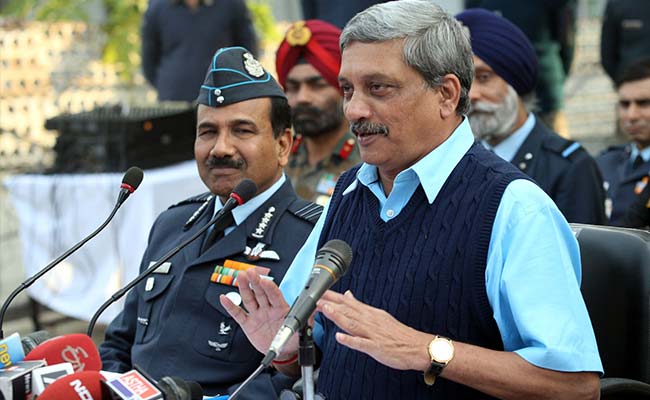
Defence Minister Manohar Parrikar addressing press at Pathankot Air Base.
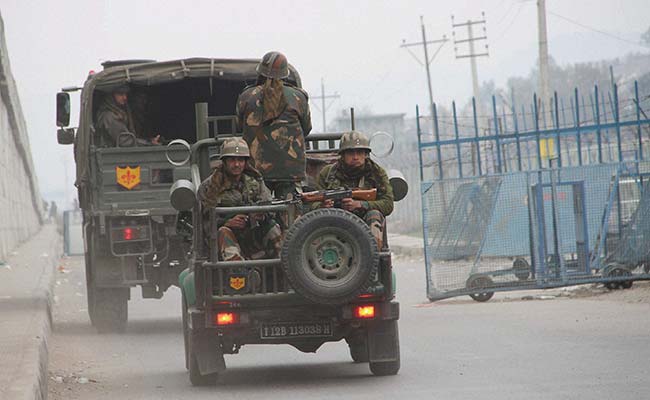
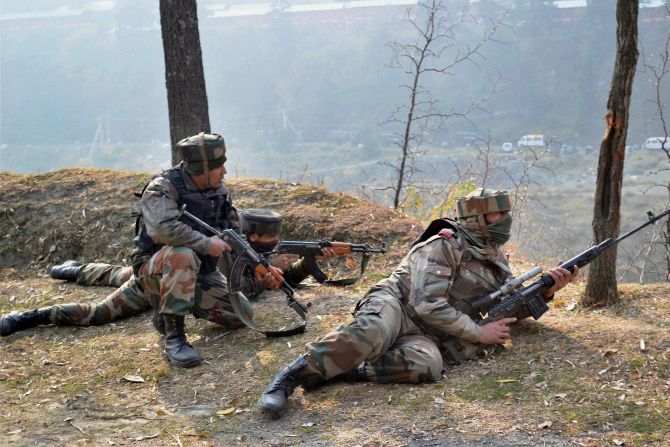
NEW DELHI: With the operations at the attacked Pathankot Air Force base nearly complete, details are emerging of a Command and Control fiasco that unfolded -as six terrorists were battled, there was a damaging tussle for operational control between the Army, Air Force and the National Security Guard or NSG.
A senior army officer closely involved in monitoring the operations told me, "This is the worst planned operation in more than three decades."

At least two top army leaders who have spoken to me but cannot be named for obvious reasons believe the overall command of the operation should always have wrested with the Army since there has never been a case where command of an active operation has been transferred from the Army to the National Security Guard, an elite police force under the Home Ministry. In this case, the NSG was given the lead role after two columns (60 men) of the Army had already been deployed in Pathankot in anticipation of an impending attack on the airbase. General VP Malik, the former Army Chief says, "Command of an operation is transferred to the Army once they are called for an anti-terrorism operation and, in this case, defence of an airfield operation."

I have also been told by reliable sources that there was a full-fledged disagreement between an Army Brigadier commanding operations till then, and the Inspector General (Operations) of the National Security Guard, who flew in on the orders of the Home Ministry. The situation became more confusing when the Air Officer Commanding, Western Air Command, was asked to fly to Pathankot to take key decisions in the conduct of the ongoing encounter prompting another disagreement, this time between the Air Force and the National Security Guard. The lack of cooperation and coordination between the different agencies was blistering.
Ultimately, the Army Brigadier stood down since he was junior to the NSG's IG (Operations), who has the rank of Major General. The National Security Guard ultimately retained overall control of the remainder of the operation though the Air Officer Commanding, an Air Marshal, remained on the airbase.

Our inward looking policy has cost us dearly

http://www.rediff.com/news/column/our-inward-looking-policy-has-cost-us-dearly/20160104.htm
January 04, 2016 
'What India has failed to acknowledge is that sub-conventional war is the name of the game and irregular forces have emerged with greater strategic value over conventional and even nuclear forces, and reliance purely on conventional force and diplomacy is grossly inadequate,' says Special Forces veteran Lieutenant General Prakash Katoch (retd).

Having suffered Pakistan's proxy war for the past several decades, it was unlikely that the Pakistani military would not respond with alacrity to the display of Modi-Nawaz bonhomie at Lahore recently.
We should heed Ayesha Siddiqa on the military's stranglehold on Pakistan both for the enormous money it makes through corporate-private business ($20.7 billion in 2007) and the power it wields in every segment including defining the foreign and defence policies of Pakistan.

After the Taliban strike at the Army School Peshawar on December 16, 2014, Siddiqa maintained that India remains enemy number one. In order to retain the power and money, the Pakistan army must remain in confrontation with India and Afghanistan.
The Pakistan military is getting more and more radicalised, some even calling themselves 'Allah's Army' in private conversation rather than the Pakistani army. Steeped in teachings of Zia-ul Haq and Pervez Musharraf, there is little chance of change -- remember Musharraf saying, 'Even if the Kashmir issue is resolved, jihad against India will continue.'

That is why you find little progress in punishing the 26/11 perpetrators, Zaki-ur Rehman getting royal treatment, Hafiz Saeed acting chief advisor to the ISI and observed in areas across the LoC, and Sartaj Aziz making public statement that 'Pakistan should not engage in war with those terrorists whose target is not attacking Pakistan.'
Moreover, the recruiting base for both the military and terrorist organisations are common and many sections of the Pakistani administration are aligned with terrorist organisations, many politicians also having won elections with terrorist support.

Pathankot: Policy mismeasures Why was the NSG deployed in a cantonment with army resources?

http://epaper.dnaindia.com/story.aspx?id=85998&boxid=20459&ed_date=2016-01-06&ed_page=8&ed_code=820009
Ajai Sahni
The visible sequence appeared quite damning. The terrorist operation in Pathankot was preceded by an attack against a serving superintendent of the Punjab Police, whose car was hijacked nearly 20 hours before the assault on the IAF base; an alert had been sounded; the terrorists still managed to penetrate the IAF base and inflict seven casualties beyond the protected periphery, and managed to keep their operation alive (apparently) for a full three days.
A cacophony of claims and counter-claims commenced immediately after the media got wind of the attack, and conflicting theories — based on plants by ‘highly placed sources’ — began flying about regarding the identity and affiliation of perpetrators. The theme of a ‘botched’ response by security and intelligence agencies was quickly picked up. The general impression of ‘another 26/11’ was quickly disseminated by frenzied anchors on India’s proliferating news channels.

Tactical assessments of an ongoing operation are fraught with the possibilities of gross errors. A detailed evaluation of each stage of response to the Pathankot attack, commencing with initial intelligence that came in on January 1 and the car hijack incident of the early hours of the same day, must await a much more exhaustive and textured understanding of the minute-to-minute developments that occurred. Certainly, some deficits are likely to be found, but the idea of a debacle is not credible even at the present levels of publicly available information. The reality is, there was no surprise when the IAF Base at Pathankot was attacked; indeed, the NSG had already been flown in from Delhi and had been deployed by the late afternoon of January 1, more than 11 hours before the terrorist attack commenced. Whether the NSG deployment was even necessary in a cantonment town with massive availability of local military force, including specialised units, is a question that requires some attention. There has, over the years, been an unfortunate tendency in New Delhi to project NSG as a necessary component of response to any major terrorist incident, to the neglect and marginalization of locally available forces, and this is unfortunate. Locally available first responders should be given priority in all such engagements — as was the case in the July 2015 Dinanagar incident in Gurdaspur. Only when local responders are routinely mobilised for such counter-terrorist operations can one expect a build-up of confidence and capability to make all of India secure. While this may not be a consideration in the present case, the reality is that the NSG cannot everywhere be in time.

By the time the terrorists attacked — at about 3.30 am on January 2 — IAF Garud Commandos, an Army contingent and the NSG had already taken positions inside the Base, while Punjab Police units had been deployed around the periphery. For those who understand the processes of assessment and decision making involved, it should be surprising that all this was already in place by late afternoon on January 1.
At the end of the operation, a group of six well armed and apparently very well trained suicide terrorists were able to inflict just seven fatalities in a well planned attack that was evidently intended to cause mass damage to the strategic assets of the Indian Air Force located at Pathankot. In this objective, the terrorists failed comprehensively.