2 August 2016

Interview with Daniel Pipes: 'The Battle against Islamism Has Not Yet Started'

July 25, 2016

Global Review: Mr. Pipes, what do you think of Samuel Huntington's book Clash of Civilizations? Are religions the defining moments of culture, despite the Enlightenment and globalization? Where was Huntington right and where wrong?

Daniel Pipes: Huntington made some very major mistakes which have become increasingly evident in the two decades since he aired his thesis. For example, he thought U.S. tensions with Japan in the 1990s resulted from civilizational differences; a decade later, those tensions disappeared, replaced by far more severe problems with Europe, even though the United States and Europe form part of the same civilization. The real divisions, as always, remain political, not civilizational.

GR: Many people say that Islam is not a religion but a reactionary, totalitarian and repressive ideology comparable to fascism and communism; and that Islam cannot be reformed. Other people say that Islamism had nothing to do with religion and Islam. What do you say about relations between Islam and Islamism?

DP: Both these statements are silly. Of course, Islam is one of the major religions of the world; what is there to argue about? Islamism, a modern movement, however, shares much with fascism and communism. Islamism is a form of Islam. Denying this would be akin to saying that the Jesuits are not Christian.

GR: Some experts compare Islam with Confucianism and Hinduism. They note that in the 1950s, Confucian societies were thought unable to develop economically and socially, and that Confucianism was seen as an obstacle to progress; same with Hinduism in India.

The third wave of Jihad begins. We will soon see its power.


Summary: Jeremy Harding at the LRB looks at the next big step by jihadists, and the amazing oddity of the West’s response.

Introduction

Modern jihad has gone through several phases, each stronger and more virulent than the predecessor. First came Afghanistan’s Mujahideen, who burned out in internecine conflict (defeated by the Tailiban). Al Qaeda came next, destroyed in the years after 9/11. Then came ISIS, now being destroyed after its premature shift to phase three insurgent operations (per Mao’s schema: holding territory and waging conventional warfare). Now jihad takes a new step, resuming phase two operations (terrorism) — but expanding their operations into Europe.

We can only guess at what form this will take, and what jihadists learned from their previous failures. Here Jeremy Harding explains this stage in jihad’s evolution, and the great oddity of the West’s response. Red emphasis added.
By Jeremy Harding. Excerpt from London Review of Books. 15 July 2016.
Posted with the author’s generous permission.

Gilles Kepel, a specialist on ‘Islam and the Arab world’, wrote last year in Terreur dans l’Hexagone – a study of French jihadism – that the Charlie Hebdo killings were ‘a sort of cultural 9/11’. The jihadism that we’re now confronted with, he argued, is a third wave phenomenon, superseding the mujahidin in Afghanistan (the first) and emerging in the long twilight of al-Qaida (the second).

Backgrounder on the Upcoming Battle for Mosul in Iraq

July 31, 2016

Retaking Iraq’s IS-held Mosul likely to prove tricky, costly

BAGHDAD (AP) – It promises to be the biggest and perhaps last major battle against the Islamic State group in Iraq.

Iraq’s government is setting its sight on Mosul, Iraq’s second largest city that has been under IS control since June 2014, as its next major target in the fight against IS. The assault is likely months away, but fierce fighting has already been raging as Iraqi forces try to clear the militants from villages and towns south of the city.

The goal is to protect the Qayara air base, which was recaptured from the militants on July 9 and is to be a main hub for the final move on Mosul. Some 560 American military personnel, mainly engineers and logistics, security and communications experts, are due to deploy at the base to upgrade its facilities to prepare for the Mosul attacks, according to U.S. Defense Secretary Ash Carter.

But that can’t happen yet because Qayara base has come under frequent rocket fire from IS fighters in the area. Around two-thirds of the surrounding towns and villages are controlled by IS fighters. Iraqi forces need to clear a 20-kilometer (12-mile) radius around the base and to retake the key nearby towns of Qayara and Shirqat, several Iraqi military officials told The Associated Press.

Iraqi forces already have driven the Islamic State group out of the cities of Ramadi, Fallujah, Tikrit and Beiji west and north of the Iraqi capital, rolling back the jihadis’ dramatic blitz in the summer of 2014 that captured nearly a third of the country and linked with their territory in neighboring Syria.

Asia-Europe Meeting: Getting Two Regions Together Will Take More Than Just Talks

By Monish Gulati
31 Jul , 2016

Mongolia hosted the 11th Asia-Europe Meeting Summit of Heads of State and Government (ASEM11) in Ulaanbaatar on 15-16 July 2016. The presidents of Bulgaria, Croatia, Cyprus, the Czech Republic, Latvia, Myanmar, South Korea, and Switzerland were among the 10 heads of state in attendance. Delegates from over 51 countries, as well as the EU and ASEAN, travelled to the Mongolian capital for the Summit. The 10th ASEM Summit (ASEM10) had been held on 16-17 October 2014 in Milan, Italy. 

Mongolia – which celebrated Naadam, its annual summer festival from July 10 to 13 – had organised nine side events leading up to the main show, including the 8th Asia-Europe Foundation (ASEF) Editors Roundtable, the ASEM Consultative Meeting on Food Security, and the 15th Asia-Europe Business Forum.

Asia-Europe Meeting (ASEM) 

The ASEM is an informal process of dialogue and cooperation bringing together the 28 European Union (EU) member states, 2 other European countries, the EU secretariat, 21 Asian countries and the ASEAN secretariat. The ASEF is the only permanently established institution of ASEM. The ASEM11 also marked the 20th Anniversary of the Asia-Europe Meeting dialogue process which was inaugurated on 1-2 March 1996 in Bangkok, Thailand.

The basis for creating ASEM was the simple realisation that ‘Asia matters – for Europe. And Europe matters – for Asia.’ ASEM’s current 53 partners (more than double from the original 26 in 1996) represent nearly 60% of the world’s GDP and more than 60% of the world’s population. Business is at the heart of the EU-Asia relationship, which has been constrained by trade disputes.

ASEM Dialogue

Which Europe Now


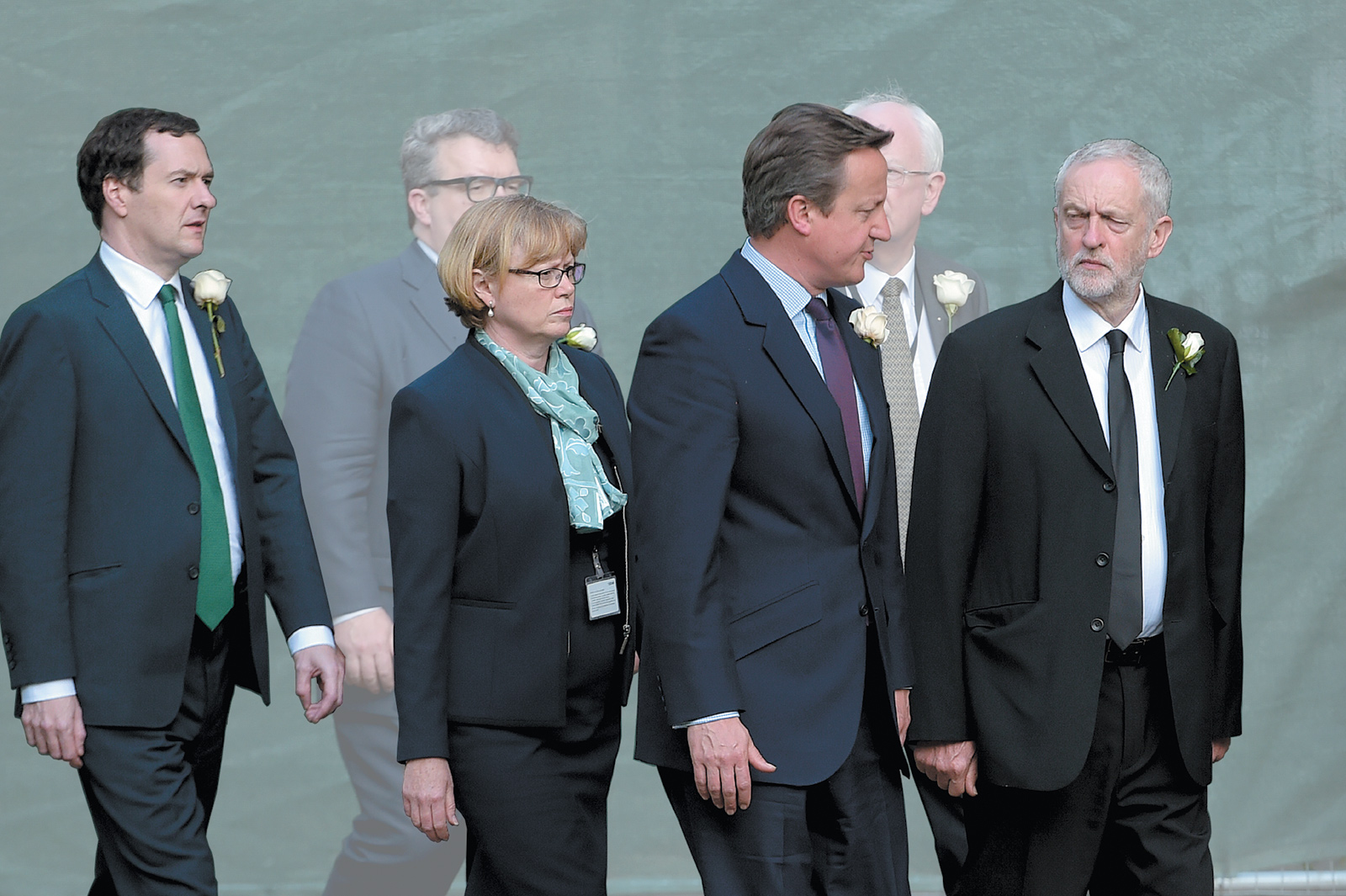
UK Chancellor of the Exchequer George Osborne, House of Lords shadow leader Angela Evans Smith, Prime Minister David Cameron, and Labour leader Jeremy Corbyn at a memorial service for Labour MP Jo Cox, St. Margaret’s Church, Westminster Abbey, London, June 2016

Political drama on television is finished. No fictional version could match the vicious infighting in both main political parties in Britain that followed the vote on June 23 by the British people to leave the European Union. 

What the vote revealed—and the winning margin was larger than in three of the past four US presidential elections—is a growing and dangerous divide between the political class, often a metropolitan elite, and a large number of people who feel left out of the economic prosperity centered on London and disenfranchised by “political correctness.” Among the latter, insecurity has been growing for years, the result in part of the impact of globalization on real wages and of high levels of immigration.1 It is a problem afflicting many industrialized countries. 

Yet the political class, still in a state of shock and disbelief, shows few signs of recognizing the cause of its undoing. The campaign was not a reasoned discussion of the case for the two options but a propaganda war, the likes of which I cannot recall before in Britain, with both sides calling each other, and with some justification, liars.2And both sides continue to believe passionately that the other was the worse sinner. 

HOW QUITTING SMOKING CHANGE YOUR BODY

Russia’s Futuristic Military Plagued by Old Problems

July 29, 2016

As Russia’s military operations continue unabated in Syria, despite an earlier order to commence withdrawing deployed forces, the conflict has certainly succeeded in changing how the Russian Armed Forces are perceived both at home and abroad. Indeed, the intervention in Syria, marking Moscow’s first experience of expeditionary warfare beyond the former Soviet space since its withdrawal from Afghanistan in 1989, permitted the top brass to test and showcase some of the advances in modern military hardware and weapons systems. This has been by no means a cheap exercise in the use of hard power. And yet, Russia’s operation in Syria has promulgated a one-sided view of the transformation of its Armed Forces: that of Moscow making significant progress toward developing 21st century warfare capabilities. However, this oversimplified assertion is challenged by ongoing problems linked to military manpower (Voyennya Mysl, No. 1, 2016). 

President Vladimir Putin has revamped the assertion that Russia retains “one million” men under arms, despite evidence of undermanning in the Armed Forces. In December 2015, the Ministry of Defense confirmed that it is on schedule to achieve its aim to recruit sufficient numbers of contract personnel (kontraktniki) based on annual targets and boasted that it passed the milestone of possessing more contract personnel than conscripts. The defense ministry’s official figure for the number of kontraktniki serving in the Armed Forces was 352,000, noting that the target for 2016 was set at recruiting an additional 31,000 and proclaiming that its units were 92 percent manned (RIA Novosti, December 24, 2015). 

NATO Aspirant Georgia Still Defenseless After All These Years

July 29, 2016

It was a summit of modest expectations and modest results for the North Atlantic Treaty Organization (NATO) in Warsaw on July 8–9. These results are of an interim nature: building-blocks for further decisions at upcoming ministerial meetings, not waiting until the next summit. The Warsaw results do not, as yet, correlate with the growth in Russia’s capacity to threaten, intimidate, or subvert the Alliance generally and its eastern—now “frontline”—member countries in particular. 

NATO’s political pronouncements and official documents recognize that Georgia has contributed to Allied operations far more than any of the countries that were invited to join the North Atlantic Alliance during the last ten years—and more indeed than most of the “old” NATO member countries. NATO’s recent summit in Warsaw again acknowledged Georgia’s contributions (see EDM, July 27). 

Georgia spends more than 2 percent of its gross domestic product on defense, year after year—a NATO benchmark that only five NATO member countries (out of 28) actually meet. This effort places an additional burden on Georgia’s impoverished population. And much of this spending supports Georgia’s participation in NATO operations outside Georgia’s own territory (see above). Georgian public support for the goal of joining NATO stands at 68 percent, according to the most recent opinion survey (NDI press release, April 11, 2016)—a level of support that has persisted through the years, and actually exceeds the pro-NATO sentiment in many NATO member countries. Georgia has successfully protected itself and the neighboring countries from terrorist activities; it guarantees the security of international oil and gas pipelines that cross Georgia’s territory; and it has made its territory unconditionally available in the last 15 years for expeditionary operations led by the United States. 

Moscow ‘Bypassing’ Armenia to Reach Azerbaijan, Iran and India

July 19, 2016 

Perhaps the most important geopolitical development of mid-July 2016 was not the continuing conflict in the South China Sea, the failed coup in Turkey, or terrorist violence in France—all of which attracted considerable international attention—but rather the quiet signing, in Moscow, of an agreement by Russian, Iranian, Azerbaijani and Indian officials to open a north-south rail line in the Caucasus. That accord will not only link those three countries, but ultimately tie together rail systems from India, by ship to Iran (see EDM, December 4, 2015), and on to Europe, via Azerbaijan and Russia. This will have profound consequences for the states and territories along its route. However, the country most immediately and negatively affected by this new rail system will be Armenia, which is not a party to these arrangements (Rusarminfo.ru, July 11). 

The Russia-Iran-Azerbaijan-India railroad accord represents Moscow’s ongoing efforts to reach an agreement with Baku. These Russian efforts include closer consultations on a range of foreign policy issues as well as an agreement to train Azerbaijani military officers in Russian military academies after a break of two decades. Furthermore, there are indications that the Russian government is now prepared to push harder for a two-step solution to the Karabakh conflict (see EDM, May 2, July 7) by pressing Armenia to withdraw its forces from five (of the seven) regions of Azerbaijan other than Karabakh and then later to negotiate about some future autonomous status for the separatist Karabakh territory after that happens (Haykakan Zhamanak, July 14). That is something most Armenian political leaders and the Armenian public more generally oppose, but now their country may not be able to block such a resolution of this “frozen” conflict. 

Russia in Decline


The Project 

The French historian Alain Besancon observed long ago that understanding the USSR required us “to remain mentally in a universe whose coordinates bears no relationship to our own.” The same holds true for post-Soviet Russia. If we do not appreciate the mentality that animates and informs the actions of the Russian state, and the distinctive peculiarities of the state itself, we must forever be surprised or confounded by its behavior. Taking the Russian state for what it is, then, rather than what one would like it to be, is the precondition for appreciating the risks it may pose to itself, American, Western, and even global security in the years and decades ahead. 

For a decade or more, Russia has sought to be viewed and treated as an ambitious power on the rise. The ambitions of Moscow’s ruling circles have been of course real enough—but the perception of Russia itself on the rise is, or has been, largely an illusion. It has now become increasingly clear that the underpinnings of Russian power are unraveling, and the Kremlin’s aggressive, increasingly risk-tolerant international posture and domestic performance are actually hastening the moment of truth when Russia is revealed as a power in serious decline. 

This project sets out to investigate alternative futures for Russia posed not by its ascent, but rather by a Russia in decline. Paradoxical as it may sound, a weakening, decaying or even failing Russian state will still possess the capability (and may very well also possess the desire) to threaten Western interests and global stability profoundly. 

Now Available -- Eurasian Disunion: Russia's Vulnerable Flanks

Publication: Volume: 0 Issue: 0
July 28, 2016

Russia’s attack on Ukraine and the dismemberment of its territory is not an isolated operation. It constitutes one component of a broader strategic agenda to rebuild a Moscow-centered bloc designed to compete with the West. The acceleration of President Vladimir Putin’s neo-imperial project has challenged the security of several regions that border the Russian Federation, focused attention on the geopolitical aspects of Kremlin ambitions, and sharpened the debate on the future role of NATO, the EU, and the US in the Wider Europe. 

This book is intended to generate a more informed policy debate on the dangers stemming from the restoration of a Russian-centered “pole of power” or “sphere of influence” in Eurasia. It focuses on five vulnerable flanks bordering the Russian Federation – the Baltic and Nordic zones, East Central Europe, South East Europe, South Caucasus, and Central Asia. It examines several pivotal questions including: the strategic objectives of Moscow’s expansionist ambitions; Kremlin tactics and capabilities; the impact of Russia’s assertiveness on the national security of neighbors; the responses of vulnerable states to Russia’s geopolitical ambitions; the impact of prolonged regional turmoil on the stability of the Russian Federation and the survival of the Putinist regime; and the repercussions of heightened regional tensions for US, NATO, and EU policy toward Russia and toward unstable regions bordering the Russian Federation. 

U.S. Gives RAVEN Surveillance Drones to the Ukraine

Daniel Wasserbly
July 29, 2016

US delivers Raven UAVs to Ukraine

The United States delivered 24 AeroVironment RQ-11B Raven unmanned aircraft systems to Ukraine on 27 July, the US Embassy in Kiev said.

The package included 72 hand-launched Raven intelligence, surveillance, and reconnaissance (ISR) aircraft and associated equipment, which was transported to Boryspil International Airport.

“Several dozen Ukrainian soldiers have already completed training on Raven unmanned aircraft system in Huntsville, Alabama,” the embassy said. “[The] Raven system is part of the European Reassurance Initiative [ERI] package and on-going security assistance efforts in Ukraine.”

The White House in fiscal year 2016 (FY16) received USD789 million for the ERI and in FY17 requested USD3.4 billion, a four-fold increase to fund such projects as well as add another US Army armour brigade presence in the region.

After removing force structure and armour units from a peaceful Europe, President Barack Obama over the last few years has sought to sooth fears in Eastern Europe that tensions with Russia could escalate to conflict, as happened in Ukraine.

There have been frequent calls from Kiev as well as some in the US Congress to send more potent offensive weaponry to Ukraine, but the Obama administration has mainly favoured communication and ISR assets (for example, AN/TPQ-49 Lightweight Counter-Mortar Radars began arriving in 2014).

DNC Hack by the Russians Shows Cyberespionage Is the New Battlefield in the Global Spying Wars

James Rosen
July 28, 2016

The DNC email hack is just the newest skirmish in a growing cyberwar

The accusations and counter-charges flying between Russia and the United States over a massive leak of Democratic Party emails recall stranger-than-fiction episodes from the Cold War, but now the high-stakes espionage game is taking place in cyberspace and features digital malware instead of dead drops.

The release by WikiLeaks of 19,252 internal emails from the Democratic National Committee sparked an FBI investigation and prompted the resignation of Rep. Debbie Wasserman Schultz from her party’s chairmanship due to alleged bias shown in the emails toward Hillary Clinton over Sen. Bernie Sanders.

Under fire over the contents of some leaked emails, DNC Chairwoman, Debbie Wasserman Schultz, D-Fla., greeted the Florida delegation at a breakfast, on July 25, 2016, in Philadelphia, Pa., during the first day of the Democratic National Convention. Matt Slocum AP 

Senior campaign aides to Clinton, under political fire for her mishandling of emails while she was secretary of state, quickly blamed the release on two Russian cyberspook groups nicknamed Fancy Bear and Cozy Bear that are believed to have close ties to Moscow’s intelligence agencies and military services.

The alleged motivation of Fancy Bear and Cozy bear? The Kremlin is said to favor Republican nominee Donald Trump, who has spoken admiringly of Russian President Vladimir Putin and just last week criticized NATO, the trans-Atlantic alliance formed after World War II to counter Soviet expansion. Putin, for his part, had called Trump “a very bright and talented man.”

The evidence of Putin support for Trump is at the moment merely circumstantial – the Russian president has criticized Clinton previously for what he said was her interference in Russia’s 2011 disputed election results, and some members of Trump’s campaign staff have worked with Russia before.

President's Cyber Response Directive Gets Mixed Reviews

July 27, 2016

Security experts disagree about whether a new presidential policy directive on how to coordinate response to a large-scale cyber incident is well-designed. 

While some say its far too complex to work, others say it reflects current practices. 

Richard Stiennon, chief strategy officer at Blancco Technology Group, a provider of mobile device diagnostics, sees the directive as being "overly complicated" with "too many moving parts. It calls on many new and relatively unvetted components of the federal government to work together in a quick and efficient manner." 

But Phil Reitinger, chief executive of the Global Cyber Alliance, doesn't see the complexity getting in the way of executing the directive. "I don't think it's a huge lift for implementation; I suspect this is the way the government already works," says Reitinger, a former DHS deputy undersecretary for cybersecurity and onetime chief information security officer at Sony. "I think it's more a likely description of the way things now generally work and ought to work as opposed to a notional thing to work toward." 
Assign Roles to Agencies 

The new directive, announced July 26, gives specific roles to the FBI, Department of Homeland Security and the Office of the Director of National Intelligence to coordinate three lines of effort: threat response, asset response and intelligence support activities. 

U.S. Wrestles With How to Fight Back Against Cyberattacks

By DAVID E. SANGER
JULY 30, 2016

President Obama during a visit to a government cybersecurity center in Arlington, Va., in 2015.CreditStephen Crowley/The New York Times

ASPEN, Colo. — It has been an open secret throughout the Obama presidency that world powers have escalated their use of cyberpower. But the recent revelations of hacking into Democratic campaign computer systems in an apparent attempt to manipulate the 2016 election is forcing the White House to confront a new question: whether, and if so how, to retaliate.

So far, the administration has stopped short of publicly accusing the Russian government of President Vladimir V. Putin of engineering the theft of research and emails from the Democratic National Committee and hacking into other campaign computer systems. However, private investigators have identified the suspects, and American intelligence agencies have told the White House that they have “high confidence” that the Russian government was responsible.

Less certain is who is behind the selective leaks of the material, and whether they have a clear political objective. Suspecting such meddling is different from proving it with a certainty sufficient for any American president to order a response.

Even if officials gather the proof, they may not be able to make their evidence public without tipping off Russia, or its proxies in cyberspace, about how deeply the National Security Agency has penetrated that country’s networks. And designing a response that will send a clear message, without prompting escalation or undermining efforts to work with Russia in places like Syria, where Russia is simultaneously an adversary and a partner, is even harder.

Defence Research and Development (R&D) in Israel: An Overview

Author: Vishakh K. Valiathan 
July 27, 2016

As history has shown us time and again, technological advances have had a huge impact on the conduct of warfare. This can be traced back from the adoption of saddle and stirrup for the cavalry, to the invention of gunpowder, to the present day automatic machine guns and development of nuclear weapons. Realpolitik demands that in order to survive in an anarchical world, a state needs to build up its military and economic power.

Technological prowess therefore is crucial in giving the country that slight edge over its adversaries. This has been the reason that countries and companies have relentlessly pursued development (R&D) of newer technology and invested time and money into research and development in the security sector. Innovation is important for sustainable development and it brings in new processes, services and systems that show the essential investment in any area. Israel’s investment into R&D has catalysed the growth of its civilian and defence industries which have in turn complemented its emergence as a technologically modern and prosperous nation. It can be noted that countries view spending on Defence Research and Development (R&D) as an investment for the future and a guarantor of their security.

Israeli Spending on Defence

From the time the state of Israel was created in 1948, it has experienced various security challenges. The geo-political situation in Israel’s neighbourhood has been hostile to say the least. The country from its experiences acknowledged that its continued existence could be secured only through a strong military, economy and pursuit of technological prowess. Israel’s small geographical and demographic footprint – as compared to other countries in the region – also resulted in Israeli political leadership giving importance to technical education and achieving technological superiority. Israel, in the present era, is known for its R&D in defence equipment and products. Some of the companies of Israel are the best in developing hi-tech innovative products for the defence sector complementing the civilian sector.

Pavel K. Baev -- Military Force: A Driver Aggravating Russia’s Decline

By: Pavel K. Baev
June 27, 2016

Publication: Russia In Decline Volume: 1 Issue: 1

Looking into the remaining years of the 2010s, it is only too obvious that decline is set to be the dominant trend in Russia, and it is easy to predict that the trajectory will be neither smooth nor agreeable for this diminishing power and its neighbors. This decline was certainly not initiated by the sharp drop in oil prices in the middle of the decade—nor can it be arrested by the potential recovery of this volatile commodity to a more sensible plateau of $40–50 per barrel. It can be argued that Russia’s “resurgence,” which appeared so robust in the 2000s, contained and nurtured many causes of the forthcoming decline, which is a complex phenomenon combining a range of factors from demography to infrastructure to corruption. A key element in the erosion of Russia’s trajectory toward gaining strength was the authoritarian mutation of its political system, which had already begun in the course of Vladimir Putin’s first presidency and reached the stage of complete degradation with his return to the Kremlin in 2012. One institution that stands out from the general picture of corrupt decay is the Armed Forces. This analysis will look into the very particular combination of modernization and dislocation of the Russian military machine: specifically, how political abuse of the military is aimed at compensating for the lack of other components of state power—which then leads to an acceleration of the general decline of the country. 

The Contorted Combination of Military Reform and Rearmament 

The week-long war against Georgia in August 2008 convinced the Russian leadership that a direct application of military force was a highly effective instrument of policy—and that its force at that time was too feeble. This proven need to upgrade led to the launch of military reform in autumn 2008, which turned out to be the only meaningful undertaking in the much-trumpeted project of “modernization” advanced by President Dmitry Medvedev to establish his leadership. The reasons for his failure are too many to be evaluated here, but what is relevant is the determined execution of reorganizations and cuts in the Armed Forces. In hindsight, it is clear that the lack of any coherent design for reforms associated with Defense Minister Anatoly Serdyukov was seriously detrimental: some changes were pushed too fast and too far, while some crucial parts were left completely unreformed. 

You Have To Close Your Eyes To See The Military's Powerful New Weapon

Sarah DiGiulio Sleep Reporter, The Huffington Post 
30/07/2016

Retired Navy Adm. James Stavridis says military commanders must think of sleep as a weapon that they can deploy. 

On a March evening in 2002, the USS Oscar Austin began a nighttime transit through the Skagerrak, a busy shipping lane connecting Norway, Denmark and Sweden, when disaster nearly struck.

Retired U.S. Navy Capt. John Cordle was on the bridge navigating the ship. “It was a very narrow, confusing transit at night,” Cordle told The Huffington Post. Three Navy ships were following.


It had been a long day. Cordle had pulled an all-nighter, working various shifts. That’s when he nearly caused a drowsy driving catastrophe that could have caused several naval vessels to collide.

“I just sort of fell asleep standing up,” he admitted.

Retired Adm. James G. Stavridis says these situations are unacceptable ― and all too common.

“Sleep is a key part of the requirements for resilience and good decision-making,” Stavridis said in an interview.

“As people become more and more exhausted from a lack of sleep, they are prone to making the most costly mistakes imaginable,” he wrote in a Huffington Post blog post. “When a military officer makes a bad decision in combat, terrible consequences often unfold. People die, and they are often innocent civilians who die as a result of collateral damage from an attack of some kind, or they are the men and women working for the exhausted military officer whose judgment is impaired.”

1 August 2016

All at the South China Sea

August 1, 2016

APIn this 2014 file photo, Philippine crewmen gesture towards a Chinese Coast Guard ship as they block them from entering Second Thomas Shoal in the South China Sea.

As Southeast Asian nations continue to be split on the tribunal award, Beijing has demonstrated its will to power and determination to defend its interests in the teeth of opposition.

China sees the U.S. hand ubiquitous in the July 12 award by the Permanent Court of Arbitration on the Scarborough Shoal dispute in the South China Sea— first in instigating the litigation by the Philippines, then in fanning the flames of discontent among the countries of the Association of South East Asian Nations (ASEAN), and finally in securing its one-sided outcome. Chinese experts further allege that the five-member tribunal was tainted — selected by the President of the Court, Shunji Yanai, allegedly a right-wing, pro-Abe, and anti-Chinese national of Japan. China’s responses to the ruling might be the precursor to a new edition of a cold war.

The Court ruled that China’s claims over the waters enclosed by the ‘Nine-Dash Line’ had no legal basis under the United Nations Convention on the Law of the Sea (UNCLOS), that China had no claim to historic rights to resources there, and that it had aggravated the dispute by building an artificial island on Mischief Reef, besides violating the Philippines’s sovereign rights within its Exclusive Economic Zone (EEZ), including its fisheries and petroleum exploitation. Entitlement to islands and the EEZ, the Court further held, must be based on natural conditions, and not as the result of artificial augmentation by building and reclaiming land.

Media Military Relations In India: Perpetual Tug Of War – OpEd

JULY 29, 2016

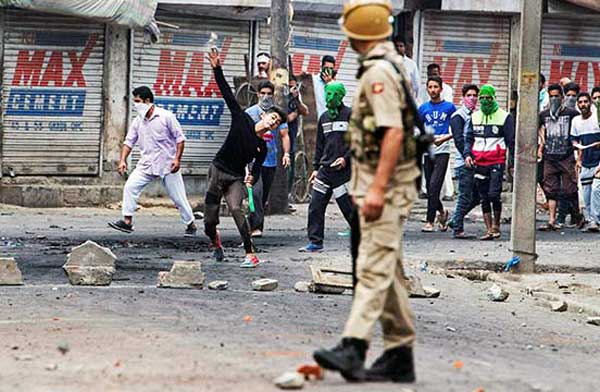
The arcane and abstruse world of the Military and Media landscape in India is under political and public scanner yet again following reports of reckless handling of the Kashmir violence that erupted after the killing of a Hizb-ul-Mujahidden youth leader, Burhan Wani. In an open letter to the dead militant, Major Gaurav Arya of the Indian Armed Forces heavily attacked the dubious intentions of the youth leader, stating any action by the army was totally called for. A young boy associated with the militant outfit was hunted down by the forces. This is a routine course of action and therefore there is no scope for the forces having gone haywire in their quest to establish peace and security in the valley putting an end to all apprehensions about the ever-increasing monstrous role of the Army in the Valley.

The controversial Armed Forces Special Powers Act ( AFSPA) and the Public Safety Act ( PSA) have created a new form of resentment against the forces in the eyes of the common people of the valley. These acts are under scanner for being draconian in nature. However, given the backdrop of the perpetual war like situation in Kashmir, it becomes necessary to analyse the currents and undercurrents in the changing dynamics of the media military relations in India especially in the context of peace keeping and conflict resolution in Kashmir.

India’s Digital Revolution Poised To Propel Services – Analysis

By Nandan Nilekani* 
JULY 30, 2016
The India Stack – connecting bank accounts, unique ID numbers and mobile phones – will deliver massive productivity in services.

Conventional wisdom for the future of India is that we must grow like China, Japan and South Korea. That we must build large companies creating thousands of jobs and exporting goods. I believe that domestic consumption, not exports, will drive India’s growth. The economy will be services-led and not manufacturing-led. Small businesses will lead rather than large corporations.

Serendipitously, this condition has arisen at a time when the globalization trend is reversing. Jeffrey Immelt, CEO of General Electric recently noted, “Globalization is being attacked as never before.” He talks about how the whole era of globalization of the last 40 years is under threat. Protectionism is growing around the world. Brexit is the latest proof of the challenge. Countries no longer want to participate in global formations. Trade deals are slowing down. The WTO has not cut a deal in many years and the Trans-Pacific Partnership and Transatlantic Trade and Investment Partnership are stuck in all kinds of wrangling. Fundamentally, globalization is slowing.

Value of global trade has come down in the last six to seven quarters. Data as tracked by The Economistshows global trade is falling. The Baltic Dry Index indicates a dramatic drop in freight prices, a proxy suggesting globalization is slowing down. India’s exports standing at $22.17 billion in June have slowed for the 18th consecutive month.

In the meanwhile, a key component of delivering services, the mobile phone, is becoming the universal electronic product in everybody’s hands. India is selling 25 million smart phones per quarter and the anticipation is 700 million smart phones in hand by 2020. Internet penetration is growing. With 332 million internet users, India is now the second largest internet market ahead of the US.

India Needs to Fast-Track Securing Andaman & Nicobar Islands against China’s Covetous Designs

By Dr Subhash Kapila
30 Jul , 2016

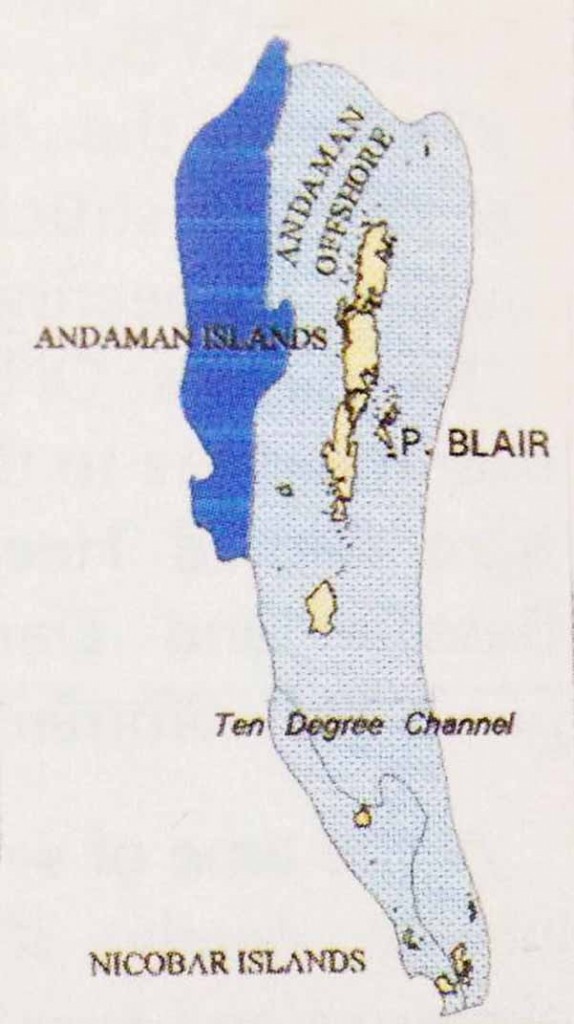
China has cast its covetous designs on India’s Andaman & Nicobar Islands evidenced by recent Chinese statements both in New Delhi and in China. Imperatives exist of fast-track securing of these strategic Islands.

Media reports indicate that on April 19 2016 the Officiating Chinese Ambassador in New Delhi on conclusion of a presentation for Indian strategic and policy analysts on South China Sea at the Chinese Embassy made two significant remarks. Firstly, he asserted that if India were to support China on the South China Sea issue, then China may consider accommodating India on the McMahon Line issue. Secondly, and more significantly, the Officiating Chinese Ambassador remarked that “Someone in future may dispute the ownership of Andaman & Nicobar Islands”.

In no mean coincidence, the same media report states that in May 2016 during a visit to China by some Indian think-tanks delegation, a similar assertion was made by the Chinese host that “In future, the Andaman & Nicobar Islands could be disputed by someone”.

The above leads to the question as to who is this “someone” that China is referring to on two different occasions within the space of one month. Is China playing mind-games or should India take these assertions more seriously. Going by historical examples of past Chinese patterns of coveting Indian Territory in the pre-1962 period, India should not be dismissive of the present Chinese assertions. Also, it needs to be recorded that in the past some Chinese maps had shown these Islands as Chinese possessions, as per some media reports. Reports also exist of Chinese submarines and naval ships prowling around these Islands just outside the territorial limits.

Is Kashmir a Disputed Territory?

By Maj Gen Harsha Kakar
30 Jul , 2016

Post the elimination of Burhan Wani, the Indian security forces have been working overtime to bring the situation in the valley under control. Throughout the crises, Pakistan continued to stoke fires by comments from its top leadership including its army chief. The observance of a black day on 19th Jul only added fuel to the fire. Statements from Nawaz Sharif asking for plebiscite and waiting for Kashmir to become a part of Pakistan, showed desperation on their side. The threats and support emanating from banned militant leaders of LeT and HM drove a wedge deeper into the relations. Indian response has been as per predicted lines, calling on Pakistan to desist from interference, as also accusing Pakistan of sponsoring terrorism and committing genocide on its own populace.

In Parliament as a part of the debate on Kashmir, the Home Minister directly accused Pakistan of fermenting the problem. It has always been known, not in India alone, but across the globe, that it is Pakistan which is behind the terrorism and violence which presently prevails in the valley and Afghanistan. Pakistan’s support to the Hurriyat and terrorist groups operating in Kashmir is well documented.

The major question existing today is whether Kashmir is legally part of an Indo-Pak dispute and if so which part, J and K or POK and Gilgit-Baltistan. Four wars have been fought, but to no avail. In each case Pakistan has only lost and forced to concede. The border continues to be termed as an LOC and remains active with firing from both sides. Presently neither country has the military capability of taking back its claimed areas.

Pakistan in Indian Diplomatic Cross Hairs

By Dr Subhash Kapila 
29 Jul , 2016

In July 2016, Pakistan suddenly finds itself in India’s diplomatic cross hairs due to its political over-reach on Kashmir by Pakistan’s apex levels attempting to maximise Pakistan-generated unrest in Kashmir Valley. 

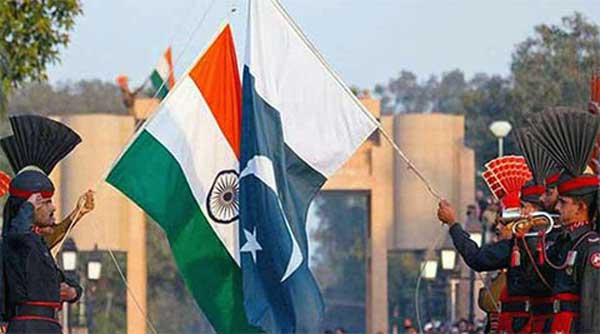
India has put Pakistan on notice by what amounts to a calibrated downgrade of diplomatic relations with Pakistan. Yesterday, India’s decision to ask Indian diplomats to withdraw their children from schools in Islamabad and send them back to India or abroad obviously indicates that India may be contemplating stronger diplomatic responses Pakistan’s continued vitriolism on Kashmir Valley unrest.

Pakistan currently has politically and militarily over-reached itself on Kashmir Valley unrest orchestrated by it. It even led Pakistani PM Nawaz Sharif to grandiosely assert that Kashmir would soon be part of Pakistan. While this assertion may be under Pakistan Army Chief’s pressures or domestic politics compulsions, the fact remains that the Pakistani establishment has miscalculated India’s responses on this issue.

Pakistan’s miscalculations may have been prompted by the timid responses of the previous Government which for ten long years followed a ‘Pakistan Appeasement’ policy.

Pakistan seems to have been further emboldened that India under PM Narendra Modi in its first two years virtually toed the same line vainly hoping that Pakistan under PM Nawaz Sharif may change course in its policies towards India.

Perception Politics: The BJP Seems To Be Losing The War


July 29, 2016

While no one can blame the Bharatiya Janata Party (BJP) for every communal or anti-Dalit incident, as the party with the most to lose from negative perceptions, the BJP has no one to blame but itself for consistently losing the perceptions war.

It will be a minor miracle if the BJP emerges politically undamaged by the rising tide of Dalit resentment and resistance to discrimination and oppression. It is not as if the oppression is a post-May 2014 phenomenon or even that the BJP is substantially responsible for recent incidents of anti-Dalit violence. Many caste-based regional parties have been as guilty as the BJP on this score. Even Dalits who converted to Islam and Christianity have complained of discrimination.

But the fact that Dalit oppression is not a BJP-specific malaise is no guarantee that it will not be blamed for it. In terms of perception, it will always be Suspect No.1 in any incident involving Dalit violence for the simple reason that, as a Hindu party, it will be presumed to have caste biases embedded in its DNA. The same presumption will hold in any case of communal violence too.

The party has not helped itself by appearing like a deer caught in the headlights, frozen into inaction every time a cow activist attacks a Dalit or a Muslim. Or when a Rohit Vemula commits suicide. When perception politics works against the BJP, doing nothing or saying “the law will take its own course” is not an option. It has to both say and do something meaningful to distance itself from wrongdoing. But this is not happening, much to the delight of its political opponents.

End the myth-making on Kashmir

29 July 2016

Lord Mountbatten’s confidential aide memoire dated February 25, 1948 offers definitive answers on the legal, moral and constitutional sanctity of Kashmir's accession to India, which still remains shrouded in controversy for many

It is too early to say whether Prime Minister Narendra Modi’s West Asia and North Africa outreach is fructifying as an encirclement strategy against Pakistan, but the Right-wing head of Government has pro-actively attempted on something that no one else has done in recent memory. To counter Pakistan’s military-industrial complex and its interventionist heft in the Kashmir valley, Modi and the Indian deep state have realised that the gridiron that supports Pakistan has to be dismantled. So, from the Saudis to the United Arab Emirates to Qatar to Kuwait and even Iran, Modi has actively engaged with these nations to wean them away from Pakistan.

Saudi Arabia is now India’s pre-eminent oil supplier, replacing Iran. It is also India’s fourth largest trading partner, but equally India is using Iran to build a $150 million springboard in Chabahar port. The Saudis and the Islamic Republic of Iran are the region’s two most influential countries, but polar opposites in the strife-torn region. India is wary of the rapid spread of puritanical and extremist Wahhabi Islam from Saudi Arabia described as “an extraordinarily serious ideological threat, a totalitarian movement masquerading as a religion.”

Malaysian diplomat Dennis Ignatius sums up the new danger, “A version which breeds contempt, hatred, intolerance and suspicion of other faiths, other cultures and systems of Government. It is a worldview that’s premised upon an existential struggle between Islam and the rest of the world where there’s no room for compromise or accommodation.” This narrow interpretation is driving political Islam and influencing youths to take up arms. Pakistan’s brutalised psyche, still tormented by the ghosts of the 1971 vivisection of east Pakistan, continues to pursue its toxic ideological doctrine of asymmetrical warfare in Kashmir.

Pakistan Air Force: Options And Challenges – OpEd

BY SAIMA ALI 
JULY 30, 2016

In today’s world, air supremacy plays a vital role in achieving Military Objectives. The Pakistan Military has always been mindful of its meager resources and preferred quality over quantity.

The Pakistan Air Force is considered one of the best in the world due to its qualitative selection and professional excellence. The maintenance of this equilibrium depends on the continuous upgrading of its fleet.

The Pakistan Air Force currently operates a fighter force comprising F-16s, Dassault Mirage IIIs and 5s, Chengdu F-7s, and JF-17s. F-16s, with their tactical nuclear delivery capabilities, play a particularly important role for Pakistan in bolstering its conventional abilities against India. The Indian lobby is trying to isolate Pakistan within Washington’s power corridors, which may jeopardize the sale of more F16 to Pakistan. If so, Pakistan should seek to purchase Sukhoi Su-35 fighter jets that are far more advanced than the F-16s. The Russian-made jets could be a great asset for Pakistan Air Force.

The general comparison between the Russia’s Su-35 Fighter and America’s F-16 Fighting Falcon shows that with properly trained pilots and support from ground controllers or AWACs, the Su-35 is an extremely formidable threat to Western Aircraft.

Pakistan in Indian Diplomtic Cross Hairs

By Dr Subhash Kapila
27 July 2016

In July 2016, Pakistan suddenly finds itself in India’s diplomatic crosshairs due to its political over-reach on Kashmir by Pakistan’s apex levels attempting to maximise Pakistan-generated unrest in Kashmir Valley.

India has put Pakistan on notice by what amounts to a calibrated downgrade of diplomatic relations with Pakistan. Yesterday, India’s decision to ask Indian diplomats to withdraw their children from schools in Islamabad and send them back to India or abroad obviously indicates that India may be contemplating stronger diplomatic responses Pakistan’s continued vitriolism on Kashmir Valley unrest.

Pakistan currently has politically and militarily over-reached itself on Kashmir Valley unrest orchestrated by it. It even led Pakistani PM Nawaz Sharif to grandiosely assert that Kashmir would soon be part of Pakistan. While this assertion may be under Pakistan Army Chief’s pressures or domestic politics compulsions, the fact remains that the Pakistani establishment has miscalculated India’s responses on this issue

Pakistan’s miscalculations may have been prompted by the timid responses of the previous Government which for ten long years followed a ‘Pakistan Appeasement’ policy.

Pakistan seems to have been further emboldened that India under PM Narendra Modi in its first two years virtually toed the same line vainly hoping that Pakistan under PM Nawaz Sharif may change course in its policies towards India.

The Persecution of Afghanistan's Hazaras Has Less to Do with Religion Than You Think

July 28, 2016 

Ethnicity remains Afghanistan's deepest fault line.

On Saturday, thousands of ethnic Hazaras rallied in Kabul to press for an electricity transmission line to be routed through their heartland (Hazarajat) in central Afghanistan. Months of tensions had led up to the protest—the second since May. The protestors were met by two suicide bombers, purportedly from the local affiliate of the so-called Islamic State (ISIS), known as the “Khurasan Province” (IS-Khurasan). At least eighty people were killed in the dual blasts.

Given Afghanistan’s unique sociohistorical context, the attack claimed by IS-Khurasan elevates the danger not of sectarian conflict, but of ethnic conflict and the collapse of the power sharing agreement in Kabul.

The Syrian War Comes Home?

IS-Khurasan stated that it attacked the Hazaras because of their involvement in the war in Syria. Most, but not all Hazaras are Shia Muslims, and they constitute a vast majority of the Shias from Afghanistan and Pakistan recruited by Iran to fight on behalf of the al-Asad regime in Syria. Their involvement in Syria is billed as part of the defense of the holy sites revered in particular by Shia Muslims. In reality, however, what began with a few hundred Shias from Afghanistan and Pakistan defending holy sites has mushroomed into a division-size force fighting as part of the Liwa Fatemiyoun. Hundreds of these Shia fighters have been given sniper training by Hezbollah. Recruited by the Islamic Revolutionary Guards Corps (IRGC), the Hazara Shias have been used by Iran to make up for heavy losses on the battlefield. While IS poses a compelling threat to holy sites revered especially by Shias, the involvement of Hazara Shias in Syria’s sectarian war puts their own community back home in greater danger.