3 August 2016

'Headley can teach us a lot about terrorism'

August 01, 2016 

'India simply wasn't prepared for the fact that a natural-born American could be organising a major terror plot in their country. And they didn't look for people like him.'
'Headley is one of the most complex and interesting terrorists of the last many years.'

Danish investigative journalist Kaare Sørensen has covered international affairs, Islamic terrorism, surveillance, intelligence agencies and subsequently the foiled Copenhagen/Aarhus 2009-2010 attack.

The journalist journeyed to Pakistan, Yemen, Iran and Egypt, spent more than 1,000 hours over a little less than four years working on his book, The Mind of A Terrorist: David Headley, the Mumbai Massacre, and His European Revenge, which traces the crimes and life of the diabolic Pakistani-American terrorist David Headley.

In the concluding part of his interview to Rediff.com's Vaihayasi Pande Daniel, Sørensen explains why David Headley is one of his dangerous kind. 


IMAGE: The Chhatrapati Shivaji Terminus in Mumbai, November 26, 2008. Photograph: Reuters

Beyond Cartographic Assertion: A Roadmap on Pakistan Occupied Kashmir

August 01, 2016

Most of India’s geopolitical vexations stem from a contested northern periphery, entailing disputes born either in the aftermath of independence or inherited from British rule. Principal among these is the region of Pakistan occupied Kashmir (PoK), part of the erstwhile princely state of Jammu and Kashmir (J&K). Soon after independence, a huge portion of J&K’s territory was bifurcated from the rest of the princely state as a result of the Pakistan-aided assault conducted in these regions during 1947-48. Pakistan-occupied Kashmir (PoK) refers to those parts of the erstwhile princely state of Jammu and Kashmir (J&K) that continue to be under Pakistan’s control. It comprises the so-called ‘Azad’ Jammu and Kashmir (‘AJK’), and Gilgit Baltistan, which latter was referred to as the Northern Areas by the government of Pakistan until 2009. India stakes a claim on these territories by virtue of the Instrument of Accession signed by Maharaja Hari Singh on 26 October 1947. 


In consonance with India’s official position on J&K, the Survey of India map, considered the official and by far the most authentic source of determining India’s geographical extent, shows PoK (as it existed during British rule) as part of the Indian state of J&K and thus as an integral part of India. Apart from PoK, the Survey of India map also shows as Indian territory the Trans-Karakoram Tract (previously part of PoK) and Aksai Chin, both of which are currently under China’s control. 
The Geospatial Information Regulation Bill 2016 

Elections in PoK and Protests in Kashmir Valley: The Linkage


July 28, 2016

Burhan Wani’s death on July 8 occurred just before the elections in Pakistan-occupied Kashmir (PoK). Expectedly, election rhetoric from all concerned political parties, including the ruling Pakistan Muslim League ­Nawaz (PML­N), and the opposition, Pakistan Peoples Party (PPP), Pakistan Tehreek-e-Insaf (PTI), and others, contained passionate eulogies for the ‘martyr’ Burhan Wani, and re­runs of the usual Pakistani litany of Indian atrocities and human rights violations in Jammu & Kashmir. Prime Minister Nawaz Sharif chaired a cabinet meeting on July 15 in which he declared Pakistan’s unstinting support for the Kashmiris’ “just struggle for self-determination.”1 Interestingly, he announced Islamabad’s intention to observe July 19 as a “Black Day”, which was swiftly postponed to July 21, to coincide with elections in PoK. In a campaign speech in Islamabad, he asserted that Pakistan was and will continue to be a stakeholder in Kashmir, which could not be considered India’s internal matter. Nawaz Sharif was echoed by the Pakistani establishment. Foreign Secretary Aizaz Ahmad Chaudhary requested the Islamabad-based Ambassadors of the member countries of the Organisation of Islamic Countries (OIC) Contact Group on Jammu and Kashmir, which comprises Azerbaijan, Saudi Arabia, Turkey and Niger, to raise their voice against “the blatant human rights violations” of Kashmiri Muslims in the Valley.2 Foreign Affairs Advisor Sartaz Aziz stated on July 25, in reply to Foreign Minister Sushma Swaraj’s statement that Burhan Wani was considered to be a terrorist by India, thus: “Let us not forget, that not long ago the British labelled Indian freedom fighters as traitors and terrorists because at that time India was considered an integral part of the British Empire.”3 While the intention to rile India, especially in international fora, is always an objective with Pakistan, the political mileage that Nawaz Sharif and the PML­N has extracted from this situation in the past two weeks needs to be evaluated and factored. 

South China Sea: It's Not Just About the Rocks, It's Also About the Fish

August 1, 2016

The South China Sea remains politically roiled. It has been almost a month since the UN Tribunal’s announcement. Chinese rhetoric attacks both court and verdict, military demonstrations continue and ASEAN’s foreign ministersissued a decidedly equivocal statement following their meeting. Secretary of State John Kerry’s request for a reference to the decision of the UN’s Permanent Court of Arbitration failed. China’s diplomatic efforts to moot the verdict, and by extension moot the UN Convention on the Law of the Sea (UNCLOS), achieved an early success. This dispute now enters a new—and not especially encouraging—phase.

China’s nationalist ambitions mandate the recovery of lost territory, specifically including islands, rocks and low-tide elevations deemed—by China—to be Chinese from ancient times. The July 12 judgment by the UN Tribunal was a stunning rebuke to this goal.

All nations on the East and South China Sea littoral and the United States are directly affected. But the stakes of the affected nations vary widely, as do capabilities and vulnerabilities. Standing alone there is little hope that the nations of the region can come to an acceptable, viable and enduring solution. The gaps among various national interests, stakes and capabilities must somehow be bridged.

Can China Really Ignore International Law?

August 1, 2016

In a recent essay, eminent political scientist Graham Allison downplays international criticism of China’s blatant rejection of an unfavorable legal verdict at The Hague. By pointing out the unlawful behavior of status quo powers, his article gives the misleading impression that China’s noncompliance to the international court’s decision is essentially normal.

“[N]one of the five permanent members of the UN Security Council have ever accepted any international court’s ruling when (in their view) it infringed their sovereignty or national security interests,” Allison argues. “Thus, when China rejects the Court’s decision in this case, it will be doing just what the other great powers have repeatedly done for decades.”

Allison also fell short of mentioning some key facts as far as great powers’ compliance with international arbitration is concerned. For instance, it was not the Permanent Court of Arbitration (PCA) that decided on the Philippines’ complaint against China,but an Arbitral Tribunal constituted under Article 287, Annex VII of the United Nations Convention on the Law of the Sea (UNCLOS). The PCA only serves as a registry.

Such seemingly minute legal facts inform the nature and implications of the Philippines’ landmark lawfare against China. Crucially, Allison didn’t mention that there have been encouraging instances whereby major powers rejected arbitration, and subsequently an unfavorable verdict, but still ended up complying with it anyway. After all, even for great powers, which aspire to leadership and seek respect and predictability in the international system, ignoring international arbitration carries immense costs.

More Than Meets the Eye

Former FBI Agent Admits Working for China

BENJAMIN WEISER and MEGAN JULA
August 1, 2016

The federal authorities on Monday secured a guilty plea from a longtime employee of theFederal Bureau of Investigation accused of lying about his relationship with a Chinese technology company and various Chinese associates, including some people with ties to the Chinese government.
The government charged that the F.B.I. employee, Kun Shan Chun, had “expressed a willingness to facilitate the passage of sensitive United States government information” to his Chinese associates, including some with connections to the Chinese government.

Federal prosecutors in Manhattan said that Mr. Chun had also made a series of false statements to the bureau regarding his contact with these Chinese nationals and a firm based in China, Zhuhai Kolion Technology Company, “as part of a longstanding and concerted effort to conceal these relationships.”
Mr. Chun, who is known as Joey and who works in the F.B.I.’s New York office, pleaded guilty on Monday before a federal magistrate judge in Manhattan to one count of acting in the United States as an agent of China. The count carries a maximum term of 10 years.

Mr. Chun, 46, had been charged with four counts, according to the complaint, including making false statements in a written questionnaire submitted to the F.B.I. in connection with his security clearance.

Chinese hackers take down Vietnam airport systems

August 1, 2016

A group of hackers linked to China have allegedly compromised systems at major Vietnamese airports. 

Chinese hackers have reportedly compromised announcement systems at major airports in Vietnam.
Such attacks, albeit unusual, can cause chaos at important transport hubs across the world and potentially prompt delays, flight cancellations, and even heightened security alerts, considering how many terrorism-related attacks are now occurring worldwide.

According to local media Tuoi Tre News, on Friday, flight information screens at both Noi Bai International Airport in Hanoi and Tan Son Nhat International Airport in Ho Chi Minh City were compromised, resulting in the display of profanity and offensive messages in English against Vietnam and the Philippines. Glitches and errors were also noticed at other airports.

The Deputy Minister of Transport Nguyen Nhat confirmed the attack, claiming that law enforcement managed to block the cyberattackers from causing further damage.

However, many airlines operating out of 21 airports in the country were forced to shut down check-in counters and switch to manual methods to keep flights on schedule.

"All Internet systems have been switched off so we had to do everything by hand," one Tan Son Nhat airport airline attendant told the publication.

Erdogan’s Purge of the Trkish Military

By: Jennifer Cafarella with Elizabeth Sercombe and Charles Vallee
August 1, 2016

Partial Assessment of Turkey’s Post-Coup Attempt Military Purge

Turkish President Recep Tayyip Erdogan’s ongoing military purge is not merely a response to a coup, but an aggressive restructure, rebranding, and reorientation of the Turkish military. Erdogan began to purge the Turkish Armed Forces (TSK) after elements of it launched an unsuccessful coup attempt on July 15, 2016. Turkish security forces detained nearly 10,000 service members including 143general officers and admirals in the first week, totaling over 1/3 of the officer corps. Erdogan justified his crackdown on a counterterrorism basis, claiming to remove members of exiled cleric Fetullah Gulen’s movement, which Turkish authorities have designatedas the “Fetullah Terrorist Organization (FETO).” He has also dismissed, and in some cases arrested, tens of thousands of judges, civil society members, and academics, and he closed down dozens of newspapers. The extent of Erdogan’s purge and his use of a counterterrorism justification demonstrate his intent to use the coup attempt as an excuse to transform the Turkish military into a source of personal power and eliminate sources of dissent in Turkey.

The current military purge is part of an ongoing campaign by Erdogan to eliminate threats to his Islamist regime. The Turkish military historically has a secular culture and views itself as a protector of the post-Ataturk democratic society. Erdogan thus views the military as a threat to his vision of an Islamist autocracy and has taken steps to eliminate it since 2007. He dismissed 400 Turkish officers including 37 generals and admirals in response to alleged coup conspiracies between 2007 and 2010, prompting the resignation of the Chief of the General Staff and the Commanders of the Turkish Navy, Land Force, and Air Force. About half of the Brigadier Generals and Rear Admirals removed this month were promoted to their rank after the initial purges. Erdogan’s aggressive measures after the recent failed coup attempt indicates that he likely seeks to finish his long-time campaign through this final purge.

U.S. Airstrikes Hit ISIS Targets in Libya

August 1, 2016

US launches airstrikes targeting IS in Libya

WASHINGTON (AP) — The United States launched multiple airstrikes against Islamic State militants in Libya on Monday, opening a new, more persistent front against the group at the request of the United Nations-backed government, Libyan and U.S. officials said.

Fayez Serraj, the head of Libya’s U.N.-brokered presidency council, said in a televised statement that American warplanes attacked the IS bastion of Sirte on the Mediterranean in northern Libya. No U.S. ground forces will be deployed, he said.

The precision strikes, which targeted an Islamic State tank and vehicles, come amid growing concerns about the group’s increased threat to Europe and its ability to inspire attacks across the region, even though its numbers have been shrinking because of attacks from local forces and allied international troops.

“The presidency council, as the general army commander, has made a request for direct U.S. support to carry out specific airstrikes,” Serraj said. “The first strikes started today in positions in Sirte, causing major casualties.”

The strikes mark the start of a more intense American role in the fight against IS in Libya, as the U.S. steps in to assist the fragile, U.N.-backed government. They were the first strikes by the U.S. on the group in Libya since February.

TURKEY AND THE WEST ARE HEADING FOR A BREAKUP

AUGUST 1, 2016

Turkey’s tortured relationship with the West seems to be reaching a crisis point. The botched coup attempt of July 15and the reaction in the aftermath have exposed a widening emotional chasm between Ankara and its Western allies. A conviction is strengthening among many in Turkey that the United States was behind the violent attempt to overthrow the Turkish government. Unfolding events are feeding poisonous conspiracy theories, however fantastical, which Turks of all ideological persuasions find seductive. The thwarted coup has triggered some virulent anti-Americanism – always latent in Turkey but now increasingly on the surface.

For many in Turkey – and not just supporters of President Recep Tayyip Erdogan — the response to the putsch by Western government officials has felt tepid. They complain that few of their Western allies have paid solidarity visits in the aftermath of the bloody military uprising, despite the fact that in a night of carnage 250 people were killed, parliament was bombed from the air, and cities across the country were terrorized by low flying jets. In a response now as reliable as the salivation of Pavlov’s Dog, E.U. foreign ministers have issued little more than stern warnings to Turkey about rights violations. Urging Ankara not to abandon the principles of democracy and the rule of law, the content of these messages may have been right, but their timing within hours of the coup attempt has jarred with the local mood.

After years of President Erdogan’s anti-democratic crackdown and relentless slamming of the West, the lack of empathy among Europeans and Americans is understandable. But it also misses the point. Many Turks sense a failure in the West to recognize how much worse things could have been if the military had taken over. This perceived blind spot diminishes allies’ leverage on Turkey, and plays into the hands of the dark conspiracy theories circulating about the West’s role in what happened on July 15.

Nobody Knows Who'll Be in Charge after Oman's 'Founding Father'

July 31, 2016 

The sultan has no brothers, no wife, no sons and no clear successor.

In the 1860s, while the United States was fighting a savage civil war, the Omani empire was reaching its zenith. At one point, Oman’s reach stretched from southern Persia, across the Persian Gulf and the Horn of Africa, to what is today much of Somalia, the Kenyan coast and south to Zanzibar. Muscat, controlled by the Portuguese in the seventeenth and early eighteenth centuries, had become a pivotal Indian Ocean capital.

Muscat’s writ runs far more shallowly today, but the sparsely populated country still punches above its weight in international affairs. Under the thirty-six-year leadership of Qaboos bin Said Al Said, Oman has become a quiet diplomatic power throughout the region, lowering sectarian tensions and brokering discreet contacts among the United States and other regional actors. Omani diplomats, equally at ease in Washington and Tehran, were crucial to bringing together U.S. and Iranian negotiators as early as 2009, paving the way for the early first steps of the landmark nuclear energy deal between Iran’s Islamic Republic and the P5+1 governments inked earlier last year. Presumably with Iran’s encouragement, Oman also last year hosted peace talks between Saudi Arabia and the Houthi rebels who now control much of Yemen.

A Soft-Power Star on the Edge of Arabia

How Russia Is Courting the Gulf

August 1, 2016

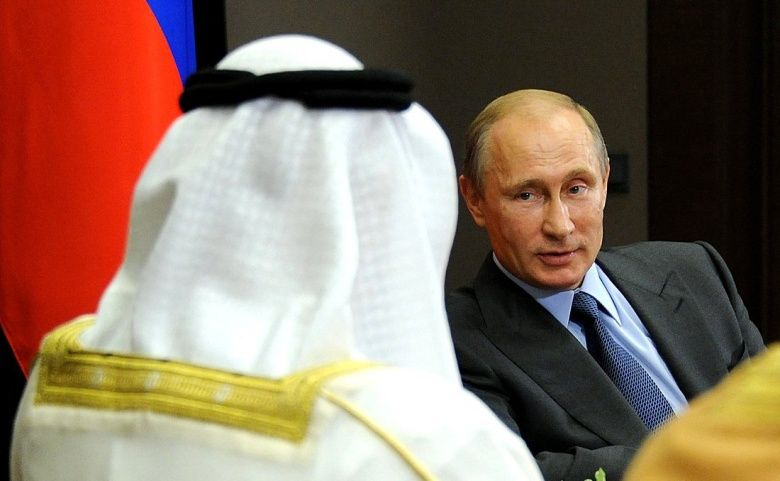
Since the outbreak of the Syrian Civil War in 2011, relations between Russia and the Gulf Cooperation Council have deteriorated sharply due to disagreements between both actors over the future of Syrian president Bashar al-Assad. Russia has strongly supported Assad, claiming that his Baathist regime is a bulwark against Islamic extremism. By contrast, the Saudi-led GCC has actively supported Assad’s ouster, as his demise would reduce Iran’s regional influence. This discord, combined with a Russian-Saudi oil-price war, has caused many Middle East experts to argue that Russia-GCC relations are at a historic nadir.

A closer examination of geopolitical dynamics in the Middle East reveals that growing perceptions of a crisis in Russia-GCC relations are misplaced. In fact, a credible case can be made that Russia’s geopolitical influence and soft power in the Persian Gulf has increased since the start of President Vladimir Putin’s third term in 2012. Through stronger investment linkages and diplomatic overtures, Russia has attempted to carve out a more prominent geopolitical role in the Persian Gulf. Russia is unlikely to threaten Saudi Arabia’s hegemony over the GCC bloc. But stronger relations between Moscow and Saudi Arabia’s closest allies have caused some GCC countries to be more receptive to Russia’s calls for a political solution in Syria. Saudi Arabia’s fear of being isolated from the Arab world’s consensus could cause Riyadh to eventually soften its belligerent anti-Assad approach and diplomatically reengage with Russia. This scenario differs dramatically from the Russian-Saudi collision course predicted by many regional analysts.

Notwithstanding their disagreements over Syria, Russia has strengthened economic ties with Qatar, the UAE, Oman and Kuwait to balance against Saudi Arabia’s hegemony in the Persian Gulf. These economic linkages have been successful in resolving long-standing disputes that have impeded cooperation between Russia and the Gulf states for decades.

Russia Deploys Its Latest SIGINT Spyplane to Syria

David Cenciotti
August 1, 2016

Russia’s most advanced spyplane has deployed to Syria again

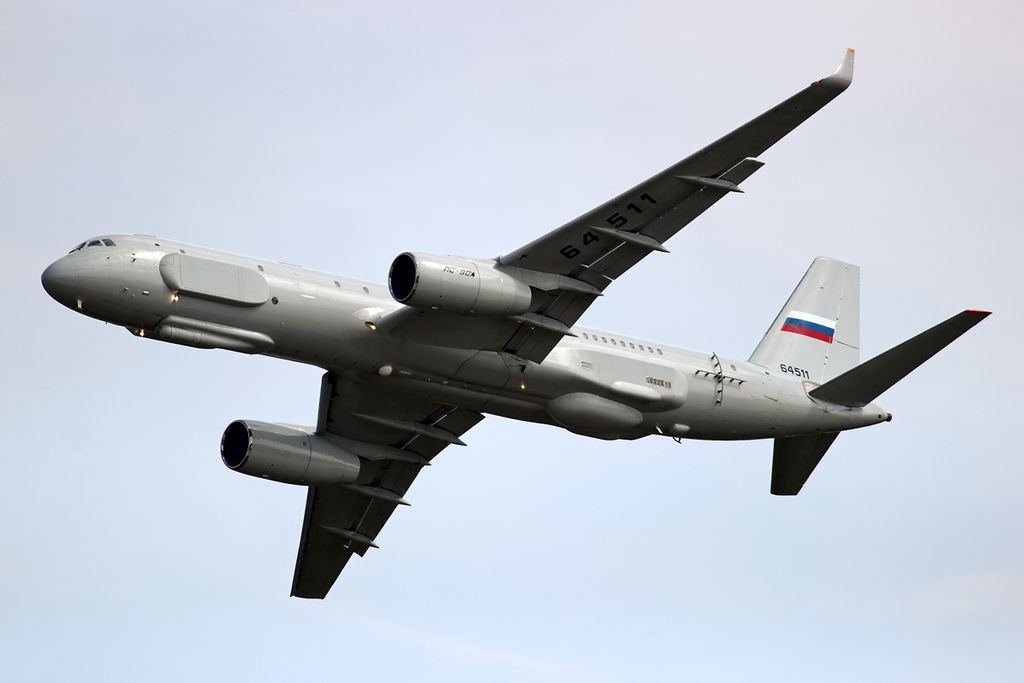
The Tu-214R is the most modern Russian ISR (Intelligence Surveillance Reconnaissance) aircraft.


Equipped with sensors to perform ELINT (Electronic Intelligence) and SIGINT (Signal Intelligence) missions as well as with all-weather radar systems and electro-optical sensors that produce photo-like imagery of a large parts of the ground the special mission aircraft, the aircraft can fly multiple intelligence gathering missions: it can intercept and analyse signals emitted by targeted systems (radars, aircraft, radios, combat vehicles, mobile phones etc) while collecting imagery that can be used to identify and pinpoint the enemy forces, even if these are camouflaged or hidden.

Built by KAPO (Kazan Aircraft Production Association) and flown from the company’s airfield in Kazan, the Tu-214R registered RA-64514, serial number 42305014, the second of the two examples of this kind of aircraft built under contract with Russia’s Ministry of Defense (the other being serialled RA-64511), deployed to Latakia airbase in Syria, between Feb. 15 and 29, 2016.

Profile of the Russian Hacking Machine

Andrei Soldatov
August 1, 2016

Cyber Showdown: How Russian Hacking Works

When Russian Foreign Minister Sergey Lavrov was asked about Russia’s potential involvement in the recent hack of Democratic National Committee emails, he appeared genuinely surprised, just stopping short of giving a four-letter word in response. Indeed, the most amazing thing in this rapidly escalating showdown between Russia and the United States is that Lavrov was probably not acting. Apparently, he had not been consulted.

Since the annexation of Crimea, something strange has happened in the Russian government’s handling of sensitive issues, both inside and outside of the country. Many Western diplomats noted that the Russian Foreign Ministry is no longer in charge of defining policy for Ukraine or Syria. Inside of the country, meanwhile, Russian President Vladimir Putin has replaced politicians in key government offices with his own bodyguards. Regional governors are so stupefied by the purges the Kremlin started last September (there are already three governors under arrest) that they refrain from doing anything in the regions they are supposed to be in charge of.

U.S. Democratic presidential candidate Hillary Clinton looks at a computer screen during a campaign stop at Atomic Object company in Grand Rapids, Michigan, U.S. March 7, 2016.Only Putin and his entourage can make decisions, and there always seems to be someone in the group with a ready solution when Putin faces another pressing issue. The more sensitive the matter for the Kremlin, the more drastic the ideas tend to be. The U.S. elections are the most sensitive of all. Democratic candidate Hillary Clinton is seen as a tough and uncompromising adversary. The common assumption is that with Clinton in the White House, sanctions on Russia will remain in place. The Kremlin also believes that Clinton, as secretary of state, supported the protests in Moscow in 2011–12. For Putin, this is reason enough to go on the offensive.

DARK DAYS: TRUMP, CHRISTIANITY, AND A LOW DISHONEST DECADE

August 1, 2016 
Many decades inspire in our popular American memory a certain nostalgia and romanticism. Think of the “roaring ‘20s,” the national purpose and sacrifice of the 1940s, the unity and prosperity of the 1950s, the social revolutions and artistic creativity of the 1960s, or the national renewal of the 1980s.

In contrast, the 1930s is not a decade that inspires much nostalgia. Globally, it was a decade of protectionism and isolationism, authoritarianism and demagoguery, racism and religious bigotry, utopian ideologies and totalitarian genocides, grandiose promises and cruel realities. It saw Europe torn asunder by militarist dictators using threats of violence and eventually unprovoked force to pursue territorial aggrandizement and plunge the continent into war, all while the United States was bitterly divided and demoralized at home, uncertain in its posture abroad. Intellectuals and many policymakers then adopted “crisis” as their watchword, and not without good reason. The 1930s witnessed much more than just mere policy failures and political differences. The very values and institutions of democracy, capitalism, and a peaceful and stable international order themselves faced a crisis of public trust and legitimacy.

Eighty years later, what do we have to do with this dismal decade? More than we might think. It is the era that best explains what Donald Trump represents. Though he was not even alive at the time, Trump embodies the worst ideological commitments and impulses of the 1930s. Various efforts by pundits, scholars, and politicians to compare Trump to a particular leader — whetherBenito Mussolini, Silvio Berlusconi, Adolf Hitler, Joseph Stalin, Joseph McCarthy, Charles Lindbergh, Father Charles Coughlin, or George Wallace — all ultimately fall short. For analogies with individuals, the dissimilarities eclipse the similarities. Instead of being seen as a latter-day incarnation of any one prior historical figure, Trump is best understood as embodying the ethos of an era.

US army War College

 by Dr. M. Chris Mason 
Strategic Insights 


You can access our ongoing podcast series "SSI Live" with our own Dr. John R. Deni. President Barack Obama announced his decision to slow the drawdown of U.S. forces in Afghanistan, leaving 8,400 troops there until the end of his term. Media accounts characterized this as a vote of confidence in Afghanistan's Government, but also an acknowledgement that U.S. efforts to build an Afghan force capable of securing the entire country have fallen short. Will the slower drawdown strengthen U.S. efforts at nation-building in Afghanistan? Is nation-building even possible there or elsewhere? Dr. Deni invited his SSI colleague, Dr. Chris Mason, to discuss Mason's newest publication, a Parametersarticle entitled "Nation-Building is an Oxymoron," as well as last week's announcement on the slowed drawdown. Find this and all other podcasts here and be sure to subscribe. 

Hard Copy Online Ordering 

If you would like to order a hard copy of any publication, for those limited publications where hard copies are available, see the information located on the right-hand side of the publication's page. You may download a digital copy of the selected work free of charge. Free download links for three different digital formats are available on the specific publication's page as well. 

For out of stock publications and our new digital only publications, refer to the new GPO on-demand site. For a small fee, receive many prior publications.Click here to visit.

2016 - 2017 KSIL (Draft) 

A Purge Is a Purge Is a Purge

By Jacob L. Shapiro 
Aug. 1, 2016 

A daily explanation of what matters and what doesn't in the world of geopolitics. 

Four major global powers are in the midst of different types of purges. 

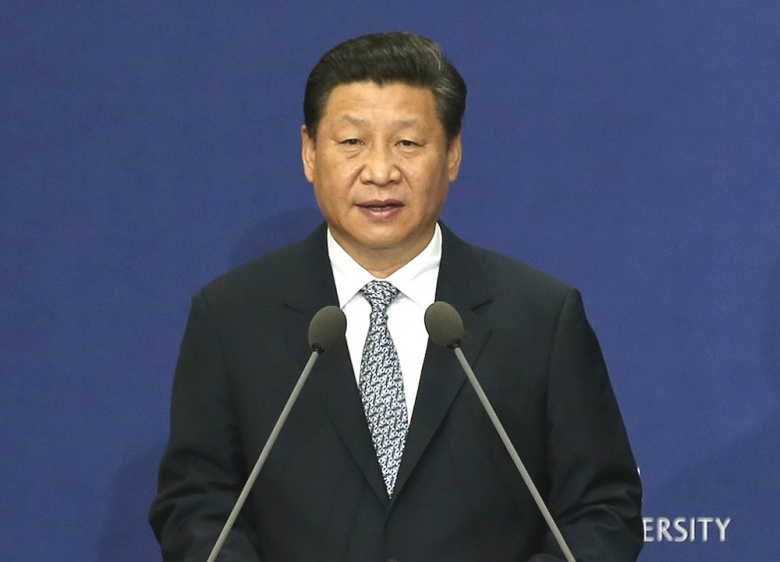
Coups may be going out of style, but purges are in vogue. Some of the world’s most powerful countries are in the midst of purges that reach deep into their political, military and security structures. Chinese President Xi Jinping calls it an anti-corruption campaign, and it has targeted everything from regional governments to vice chairman of the Central Military Commission. In Russia, President Vladimir Putin has reorganized his various security and intelligence services, is cracking down on corruption and cleaning house in some parts of the military. In Turkey, whether you want to call it a counter-coup or President Recep Tayyip ErdoÄŸan taking advantage of the situation to eliminate what he refers to as the “parallel state,” the crackdown is wide ranging. In the U.S., we simply call it “elections.”


A purge can be a sign of strength, a sign of weakness or both. Some purges help to clear the road toward consolidating power. Other purges can so cripple a country’s institutional powers that the short-term benefits give way to disorder and chaos.

Russia-US Rapproachment- A Strategic Imperative:

By Dr Subhash Kapila
01-Aug-2016

Russia and United States estranged relationship impinges on global security and stability with China as a ‘revisionist power’ being the major beneficiary of this estrangement and with vested interests in sustaining this trust-deficit.

Strategic rapprochement between Russia and the United States can fully materialise only when both these global bipolar powers shun playing the ‘China Card’ against each other. Russia and the United States must recognise that any Chinese diplomacy or policy initiatives aimed at currying favours from either Russia or the United States are only ‘temporising moves’ awaiting the full materialisation of its military power by 2020 at the earliest. That could be the earliest that China can throw a military gauntlet against the United States.

Russia needs to recognise the strategic reality that the Russia-China relationship is not a cemented relationship based on enduring strategic convergences. United States too needs to recognise that China as a revisionist power chiefly aims to engineer initially the United States exit from the Western Pacific which is already in evidence. China’s end-game is to prompt the United States abandonment of the Asia Pacific so that Asia is left at the mercy of Chinese dictates. In sum, by such strategies China aims to create a new bi-polar global power structure and thereby emerge as United States ‘strategic equal.’

U.S. Assistance to the Middle East Is Drying Up When the Region Needs It Most

Stephen McInerney
July 18, 2016 

U.S. Assistance to the Middle East Is Drying Up When the Region Needs It Most

At the beginning of the Arab uprisings that swept the Middle East and North Africa in 2011, President Obama declared that the United States would stand with those fighting for human rights and democracy. The rhetoric from him and senior officials raised hopes in the Arab world that important and overdue changes to U.S. policy were imminent.

Since then, transformations have occurred. After a brief period of optimism that widespread democracy would take hold, authoritarian regimes have reasserted themselves with draconian laws targeting civil society. The already limited space for civil organizations, especially pro-democracy groups, is shrinking across the region—most dramatically in Egypt, but also in Jordan, Libya, and Morocco.

During this critical time, Obama’s promise of support couldn’t be more vital. And yet, against the backdrop of declining democracy and increasing repression, U.S. support has been inconsistent, half-hearted, and not backed up by meaningful pressure on the authoritarian allies of the United States. On occasion, the administration has taken stands through private messages or public statements condemning specific crackdowns against civil society. But it has largely failed to follow its words with action.

Do COTS pose a threat? Rand says yes


July 12, 2016 

There is no doubt technology has aided intelligence collection and military operations in the post-9/11 years. However, many of these commercial and open-source technologies and capabilities can be used to potentially stymie military or intelligence operations, according to a Rand Corporation report.

These technologies, the report notes, “are persistent and are dual-use, which means that they can benefit society or harm it. Although they are intended for commercial purposes, such as learning about shoppers’ preferences and finding new markets, they can easily be used by police and security services to identify and track criminals, terrorists, insurgents and spies.”

Technologies including mobile communication devices, commercial GPS and commercial unmanned aircraft have the potential to “disrupt military intelligence operations and to jeopardize the plans, actions, and security of the war fighter. In turn, the intelligence officer, the war fighter, and others who often live and work on the margins and in the gaps of society can use many of these same technologies to skirt government control, as well as to enhance the effectiveness of their operations,” the report states. These technologies are utilized best in urban environments with the primary purpose of tracking individuals and patterns of behavior.

Cover: A Rapidly Changing Urban Environment Read Online A Rapidly Changing Urban Environment How Commercial Technologies Can Affect Military Intelligence Operations


A Rapidly Changing Urban Environment
How Commercial Technologies Can Affect Military Intelligence Operations

Related Topics: 


DOWNLOAD FREE ELECTRONIC DOCUMENT


0.4 MB 

Technical Details » 

Commonplace commercial technologies can be combined and used in unique ways to reshape an urban environment and disrupt how we live and work, in the United States and abroad. The technologies are not new but are becoming ubiquitous and are being used in new ways. The technologies highlight a democratizing trend that gives more people the freedom and power to use any number of new, commercially available technologies to innovate and to challenge existing government rules and community practices. This democratizing trend, however, comes at a cost to privacy, security, and secrecy and is changing the way people interact socially and politically. It is changing the way we conduct business, diplomacy, intelligence operations, and war, the future of which is likely to be increasingly urban in nature.

Research conducted by

How to avoid ransomware attacks: 10 tips

July 27, 2016

As ransomware increasingly targets healthcare organizations, schools and government agencies, security experts offer advice to help IT leaders prepare and protect. 

Nigerian princes are no longer the only menaces lurking in an employee's inbox. For healthcare organizations, schools, government agencies and many businesses, ransomware attacks—an especially sinister type of malware delivered through spear phishing emails that locks up valuable data assets and demands a ransom to release them—are a rapidly-growing security threat.

"We're currently seeing a massive explosion in innovation in the types of ransomware and the ways it's getting into organizations," says Rick McElroy, security strategist for cyber security company Carbon Black Enterprise Response. "It's a big business, and the return on investment to attackers is there—it's going to get worse."

While ransomware has existed for years, 2015 saw a spike in activity. The FBI received 2,453 complaints, with losses of over $1.6 million, up from 1,402 complaints the year before, according to annual reports from the bureau's Internet Crime Complaint Center. And the numbers are only growing in 2016, the FBIreports.

New US cybersecurity plan makes it easier for businesses to get help after an attack

July 27, 2016
Source Link

US President Barack Obama recently published a policy directive for cyber incident coordination, which outlines how the government should respond to cybersecurity attacks. 

US President Barack Obama issued a policy directive on Tuesday detailing how the federal government should respond to incidents of cybersecurity. The directive, also known as PPD-41, pushed for shared responsibly and unity regarding attacks, and added some clarity for the channels through which private sector organizations report incidents to government agencies.

In the directive's introduction, Obama called cyber incidents "a fact of contemporary life," but noted that they were "occurring with increasing frequency, impacting public and private infrastructure located in the United States and abroad." This new directive aims to better position responses to cyber incidents happening in the government or the private sector.

Early on, the directive seeks to differentiate between a "cyber incident" and a "significant cyber incident." A cyber incident, it seems, simply refers to a run-of-the-mill security breach or attack, while a significant cyber incident is one that it "likely to result in demonstrable harm to the national security interests, foreign relations, or economy of the United States or to the public confidence, civil liberties, or public health and safety of the American people."

"How the Federal Government defines an incident will determine its response and the response expected by other parties involved in the cyber incident," said security expert and TechRepublic columnist Michael P. Kassner. "That kind of clarification might go a long way to remove confusion as well as any after-the-fact blame game."

The cyberwar begins: US believed to 'hack back' at Russia following Democratic Party email leaks

August 1, 2016 

While tensions between the world's superpowers in relation to hacking and cyber-espionage continues to escalate, the suspected state-sponsored hack at the Democratic National Committee (DNC) by alleged Kremlin-linked groups threatens to turn the term 'cyberwar' from rhetoric into reality. 

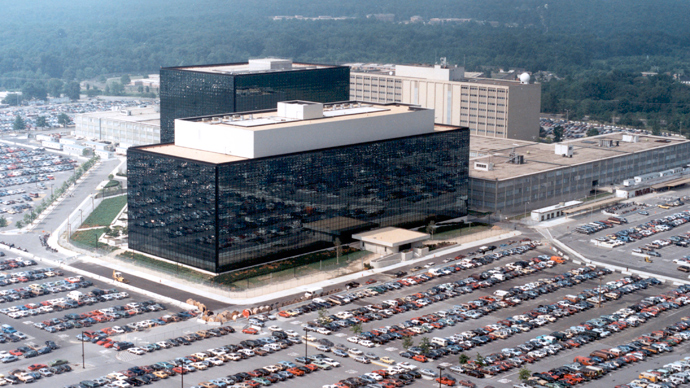
Amid mounting evidence that at least two hacking groups – dubbed Cosy Bear and Fancy Bear – were able to infiltrate computer networks used by the US Democratic Party, the National Security Agency (NSA) has openly reaffirmed it has the capability – and legal authority – to "hack back" against chosen foreign targets, including government-linked adversaries. 

"In terms of the foreign intelligence mission, one of the things we have to do is try to understand who did a breach, who is responsible for a breach," Robert Joyce, chief of the NSA's secretive 'Tailored Access Operations' told NBC News in an interview. 

"We will use the NSA's authorities to pursue foreign intelligence to try to get back into that collection, to understand who did it and get the attribution. That's hard work, but that's one of the responsibilities we have." 

While Joyce declined to discuss the DNC breach specifically, which the FBI is now investigating, he did note the NSA has the "technical capabilities and legal authorities" which allows the agency to 'hack back' against suspected groups for intelligence gathering purposes. At least three intelligence sources told ABC News such NSA activities are already likely to have started. 

How hackers attacked Ukraine's power grid: Implications for Industrial IoT security

March 4, 2016

The December 2015 cyberattacks on Ukranian power utilities were rare in that actual damage was inflicted. But there's ample evidence of widespread infiltration into organisations' operational systems. 

The former Soviet republic of Ukraine has been a trouble-spot since early 2014, which saw the 'Euromaidan' revolution in support of closer EU integration, the Russian annexation of Crimea and the start of the ongoing pro-Russian separatist insurgency.

To add to their woes, large sections of the Ukrainian population suffered power cuts over Christmas 2015 following a series of cyberattacks on three local energy companies. Although widely suspected to be from Russia, the identity of the hackers remains unclear as attribution in these matters is complex. However, the primary attack vector -- a well-known trojan calledBlackEnergy -- has been definitively established.

The details of how the Ukranian utility companies' operational systems were compromised makes for an instructive case study illustrating the multifaceted nature of today's cyberattacks, and the vulnerability of organisations in the Industrial Internet of Things (IIoT).
How the Ukraine attacks played out

Arundhati Roy on ‘Bill and Melinda Gates’s pillow talk’


‘But seriously – what is one couple doing with that much money’?

My phone rang at three in the morning. It was John Cusack asking me if I would go with him to Moscow to meet Edward Snowden. I’d met John several times; I’d walked the streets of Chicago with him, a hulking fellow hunched into his black hoodie, trying not to be recognised.

I’d seen and loved several of the iconic films he has written and acted in and I knew that he’d come out early on Snowden’s side with “The Snowden Principle,” an essay he wrote only days after the story broke and the US government was calling for Snowden’s head. We had had conversations that usually lasted several hours, but I embraced Cusack as a true comrade only after I opened his freezer and found nothing but an old brass bus horn and a pair of small antlers.

I told him that I would love to meet Edward Snowden in Moscow.

The other person who would be travelling with us was Daniel Ellsberg – the Snowden of the ’60s – the whistleblower who made public the Pentagon Papers during the war in Vietnam. I had met Dan briefly, more than ten years ago, when he gave me his book, Secrets: A Memoir of Vietnam and the Pentagon Papers.