As ISIS continues to lose territory in Iraq and Syria, leaders in the region and the West will need to develop a new counterterrorism strategy to adapt to the group’s decentralization. Europe, meanwhile, has seen a surge of ISIS-claimed terrorist attacks on its own soil. In the context of these new challenges, experts on counterterrorism gathered at the 2017 U.S.-Islamic World Forum to discuss what governments, civil society, and the private sector can do.
10 October 2017
ISIS Fighters, Having Pledged to Fight or Die, Surrender en Masse
By CAMILLA SCHICK, ROD NORDLAND and JOHN BECK
DIBIS, Iraq — The prisoners were taken to a waiting room in groups of four, and were told to stand facing the concrete wall, their noses almost touching it, their hands bound behind their backs.
Toward a NATO of the Gulf? The Challenges of Collective Defense Within the GCC
 Although collective security in the Gulf is the topic of numerous policy publications, most of the available literature focuses on the political environment without considering the operational requirements of this scenario. This monograph offers an evaluation of Gulf defense cooperation programs in order to stir the discussion on the future of the Gulf Cooperation Council (GCC) as the “NATO of the Gulf.”
You Have To Hear What Keeps The Head Of U.S. Strategic Command Up At Night
 Out of all the presentations and panels at this year's Air Force Association convention, one speaker in particular had a most important, brave, and sobering message. A message that goes against the "company man" attitude we seem to find in many of the military's top brass, and one that deals with something we here at The War Zone have been talking about for a long, long time. Instead of worrying about Kim Jong Un's missiles or Putin's huge nuclear arsenal, what keeps the head of Strategic Command, General John Hyten, up at night is the cold hard fact that America's defense industrial complex has lost the ability to "go fast."
Russian Hackers Stole NSA Data on U.S. Cyber Defense
by Gordon Lubold and Shane Harris
Hackers working for the Russian government stole details of how the U.S. penetrates foreign computer networks and defends against cyberattacks after a National Security Agency contractor removed the highly classified material and put it on his home computer, according to multiple people with knowledge of the matter.
The hackers appear to have targeted the contractor after identifying the files through the contractor’s use of a popular antivirus software made by Russia-based Kaspersky Lab, these people said.
The Myth of Accidental War
By James H Nolt
As the rhetoric and warlike maneuvers of the U.S. and North Korea accelerate, the media are increasingly considering the prospect of “accidental” war between the U.S. and North Korea. But if war does start, it will not be accidental. It depends on deliberate choices by both sides about whether to escalate violence or pull back and reassess. Those choices are made by politicians, who are often swayed by domestic political pressures. economy when considering war origins. Clausewitz hoped that valid reasons of state security would guide decisions for war. He did not claim that they typically do.
Fighting Russia’s “Factory of Lies”, the Internet Research Agency
David Filipov
She rode into a pitch-black truck stop on a scooter, stepped out of the pouring rain into a gas station cafe on the outskirts of St. Petersburg and recounted her quest to bring down Russia’s infamous “troll farm.”
Lyudmila Savchuk is one of a disparate handful of Russian journalists, activists and legal experts who have tried to shed light on the shadowy operation that has become a focal point of U.S. investigations into Kremlin meddling in the 2016 presidential election.
Is Amazon Or Alibaba Winning The ECommerce Wars
 While Amazon is much more innovative, Alibaba has huge growth potential on their home turf.
Hello, mobile operators? This is your age of disruption calling
Difficult times for operators call for questioning old orthodoxies to win.
For the better part of a decade, telecom companies have suffered through declining revenues, cash flow, and return on investment just as tech companies like Google, Facebook, Amazon, and others have mushroomed by building their businesses on the operators’ own infrastructure. While these tech visionaries have enjoyed well over $1 trillion in combined market-cap growth by innovating and thinking differently and adeptly, telecom companies have tried to compete by implementing the same old survival tactics: cutting costs, reducing the workforce, and timidly entering into new business adjacencies. The trouble is that playbook no longer applies.
Cyber Spending Expected to Increase
By Jon Harper
 The Defense Department recently elevated U.S. Cyber Command to a full-fledged, unified combatant command, as threats in the digital domain continue to grow. However, the long-term budgetary implications of the move remain unclear, said a leading analyst.
Mediation Perspectives: The Myanmar Peace Process 2011-2015 Through National Glasses
By Rachel Gasser
 Mediation Perspectives is a periodic blog entry that’s provided by the CSS’ Mediation Support Team and occasional guest authors. Each entry is designed to highlight the utility of mediation approaches in dealing with violent political conflicts. To keep up to date with the Mediation Support Team, you can sign up to their newsletter here.
America's Autopilot Wars
By Andrew Bacevich
Consider, if you will, these two indisputable facts. First, the United States is today more or less permanently engaged in hostilities in not one faraway place, but at least seven. Second, the vast majority of the American people could not care less.
Nor can it be said that we don’t care because we don’t know. True, government authorities withhold certain aspects of ongoing military operations or release only details that they find convenient. Yet information describing what U.S. forces are doing (and where) is readily available, even if buried in recent months by barrages of presidential tweets. Here, for anyone interested, are press releases issued by United States Central Command for just one recent week:
The Key Powers´ Construction of the Mediterranean
 How should the EU balance its own policies and interests in the Mediterranean against those of other major and regional powers? To find out, this publication examines the role and influence of eight leading stakeholders in the Mediterranean, including the US, Russia, China, Iran, Saudi Arabia, Qatar, Turkey and Israel. More specifically, the text´s authors look at how these actors 1) perceive the Mediterranean; 2) interact with the EU, states, non-state actors and international organizations with regard to the region; and 3) pursue their national interests in the region.
A reminder that we pay for our wars in money and blood
Larry Kummer


What if the Crossing had Failed?
BY MARTIN VAN CREVELD
 My name is Ben Levy. Lieutenant Colonel Shimon Ben Levy, of the historical branch of the Israeli General Staff. My boss, acting in the name of chief of staff General Rafael Eitan (”Raful,” as he is popularly known), has ordered me to do an interesting study: namely to inquire, as best I can, what might have happened if the 1973 Israeli crossing of the Suez Canal—arguably the most important move in the entire war—had failed. Why he wants the study I have no idea.
9 October 2017
Lull at Doklam: Time for a Holistic Strategic Review
By Maj Gen GG Dwivedi
The recent standoff at Doklam had raised genuine concerns about the situation escalating, given that the opposing troops stood ‘eye ball to eye ball’ for over 10 weeks. While the crisis has been defused for the time being, the probability of a future flare up cannot be ruled out. Post the disengagement, Chinese troops have fortified their positions in the Doklam Plateau with the declared intent of resuming the road construction activity at an appropriate time. The military build-up, which had been undertaken by the two sides in the wake of the crisis, remains in place. The current period of lull is, therefore, a tactical pause. In all prudence, Doklam should be taken as a nudge to initiate a holistic strategic review.
From Drug Trafficking to Cultivation: A Global “Unchallenged” Nexus
By Anant Mishra
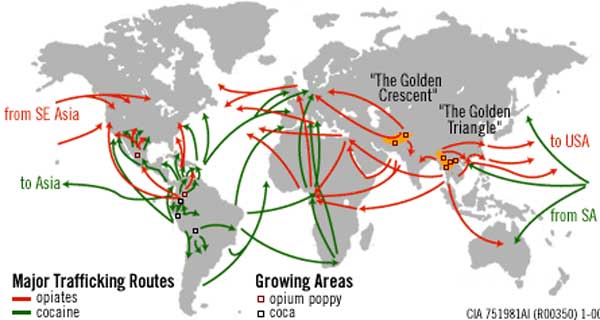 In the light of growing “intense” nexus between transnational organized crime factions, sex traffickers, gun runners and money launderers, today, drug trafficking has become one of the most “complex yet diverse” issue in the world with an ability to seriously cripple socio-politico-economic architecture of a country while seriously damaging its legislative institutions.
Two King Cobras Named Ravi Dhir
By Dr Krishna S Dhir, PhD
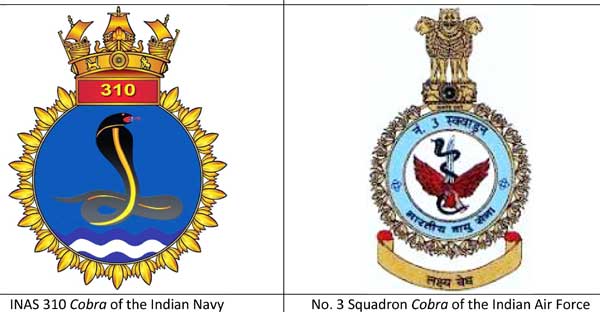 In the Indian Armed Forces there are two Cobra Squadrons, both engaged in reconnaissance, albeit in different Services, and, amazingly, both had a Ravi Dhir for their Commanding Officers … yes, two different individuals with the same name! One Cobra Squadron is with the Indian Navy and the other with the Indian Air Force. On 21st of March in 1961, INAS (Indian Naval Air Squadron) 310 was created in Hyeres, France, with 12 newly acquired Breguet 1050 Alizé aircrafts, which were later augmented by two more in 1968. The Squadron was named Cobra.
Birth of the Indian Air Force (IAF)
By Air Vice Marshal AK Tiwary
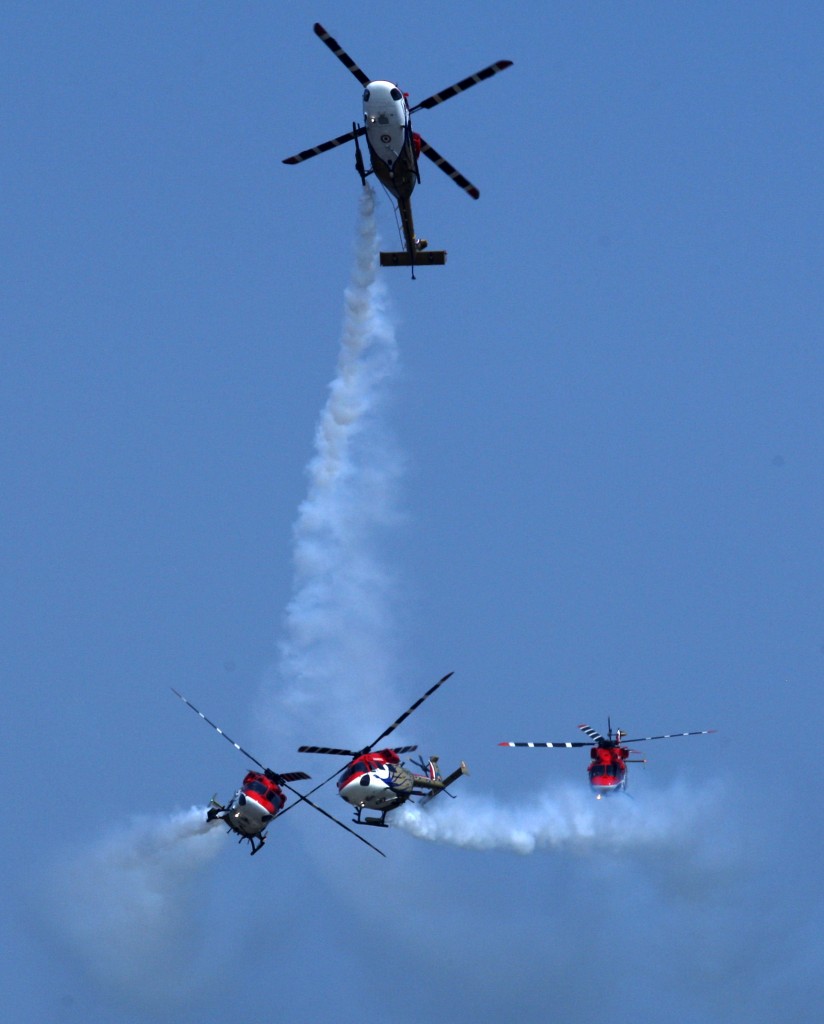 “Preparation for war is an expansive, burdensome business, yet there is one important part of it that costs little – STUDY.”
— Field Marshal Slim
The IAF was created on paper on 8th Oct, 1932 by the Indian Air Force Act of 1932 and on that fateful day six Indian officers were granted the King’s Commission. The IAF actually took to Wings on 01 Apr, 1933 when it was equipped with four Wapiti aircraft.
Fighter Squadron Strength IAF’s Top Priority - Air Chief Marshal BS Dhanoa
By Lt Gen (Dr) JS Bajwa
 Augmenting our fighter squadron strength is our top priority. To achieve this, the IAF is looking at new inductions and mid-life upgrades. If all the inductions take place as planned, the IAF is expected to achieve its authorised strength of fighter squadrons – Air Chief Marshal BS Dhanoa
Indian Defence Review (IDR) had the unique privilege to interview the Chief of Air Staff Air Chief Marshal Birender Singh Dhanoa, prior to the Air Force Day on 8th October 2017. Details of the candid response of the Chief of Air Staff to the IDR’s pointed questions are given below:-
Afghanistan: U.S. Offers Pakistan yet Another 'Last Chance'
By Hussain Nadim
Following US President Donald Trump's address on Afghanistan policy in August, US Defense Secretary Jim Mattis said in a Senate Armed Service Committee hearing that the US is willing to work with Pakistan 'one more time' in Afghanistan. In another hearing, General Joseph Dunford, Chairman of the Joint Chiefs of Staff, alleged that Pakistan's Inter-Services Intelligence (ISI) maintains links with terrorist groups.
For Pakistan, neither calls for 'one last chance' nor allegations of ISI links with terrorist groups are anything new. As such, the same old US policy repackaged by a new administration is likely to get the same old response from Pakistan.
The Chinese Communist Party: Candid and Transparent?
By David Gitter
 As the upcoming Chinese Communist Party (CCP) 19th Party Congress brings new changes to China’s elite politics and national development, foreign observers will be searching for authoritative Chinese publications to follow new trends. Just as state media outlets sponsored special webpages to report on the 17th and 18th Party Congress, we can expect the same for the 19th.
The Chinese Dream in Peril: Xi Jinping and the Korean Crisis
By Anthony Miller
 With tensions escalating rapidly again on the Korean peninsula, the attention of the world invariably has returned to the question of whether or not the solution to the crisis lies in Beijing. After months of continuing missile tests by North Korea despite sanctions and global condemnation, Kim Jong-un’s regime claims to have tested a hydrogen bomb and once again launched an intercontinental ballistic missile over Japan. North Korea’s march toward wielding a nuclear arsenal against its neighbors and far off enemies, like the United States, is nearing completion. For Xi Jinping and the Chinese Communist Party (CCP), North Korea’s obstinate drive toward becoming a nuclear force has dealt Beijing a critical challenge at a moment when the party would prefer to focus on other matters seen as as essential to its rise as a regional and world power.
An expert's assessment on US options over North Korea
 As the doomsday rhetoric intensifies between two untested and inexperienced leaders in Pyongyang and Washington, the risk of actual combat is rising.
At the United Nations, U.S. President Donald Trump shocked most of the U.N. General Assembly by threatening to "totally destroy" North Korea to end the "suicide mission" of its "Rocket Man" leader. North Korea has threatened to create a "sea of fire" in both South Korea and the U.S. On Sept. 23, U.S. B-1 bombers flew close to North Korea's east coast on what the Pentagon said was a mission to demonstrate the military options available to Trump. The U.S. president warned that Kim Jong Un and his foreign minister, Ri Yong Ho, "won't be around much longer" if they continue their rhetoric.
Russian Robots: Fear Jammers, Not Terminators
By SYDNEY J. FREEDBERG JR.
Despite a few grandiose claims and snazzy videos of robots shooting guns, Russia remains behind “the Chinese, Iranians, and the Turks” in developing armed unmanned systems, let alone the United States, CNA expert Samuel Bendett said this morning. The bad news, Bendett said, is that Russia’s notoriously bureaucratic military-industrial complex is finally getting its act together on robotics, with massive new investment and significant innovation. Worst of all, the one area where Russia isahead is the invisible high ground the US Army ceded 20 years ago: electronic warfare.
Against North Korea, Deterrence of a Different Kind
By Omar Lamrani
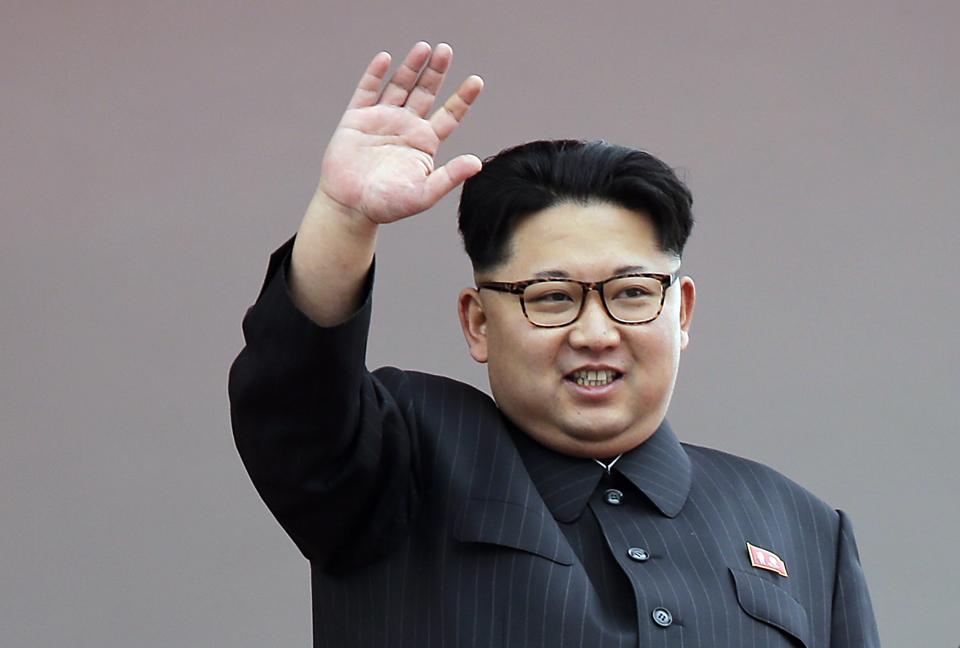 Since the turn of the millennium, war between nuclear powers has never loomed so near. As North Korea sprints toward the finish line in its race to build a credible nuclear deterrent, the window of opportunity to stop it is shrinking. With time running out, the United States may yet launch a preventive strike against Pyongyang's nuclear and missile programs, convinced that military intervention is the only way to halt its smaller adversary in its tracks.
The Las Vegas Attack Will Inspire Copycats from STRATFOR
by Scott Stewart
"The Las Vegas Attack Will Inspire Copycats" is republished with permission of Stratfor.
 As the closing act of the three-day, open-air Route 91 Harvest Music Festival took the stage the evening of Oct. 1 on the Las Vegas Strip, a 64-year-old man used a sledgehammer to smash out two windows in his suite at the adjacent Mandalay Bay hotel. His perch on the 32nd floor gave him a clear field of fire on the 22,000 or so concertgoers below. He took aim with one in the arsenal of guns in his room and opened fire. The shooter's intent was clear - he wanted to create as much carnage as possible. The crowd below remained oblivious to the threat 100 meters (328 feet) above and 400 meters away until bullets began raining down.
Understanding the Threat Posed by Hypersonic Weapons
By Robert Farley
 A new RAND study has detailed the threat posed by the development and diffusion of hypersonic weapons, and has proposed a solution: multilateral arms control. The report, authored by Richard Speier, George Nacouzi, Carrie A. Lee, and Richard M. Moore, sets out the technical challenges and implications provided by hypersonics, and from these develops strategic implications regarding the most appropriate international response.
MASQUERADING HACKERS ARE FORCING A RETHINK OF HOW ATTACKS ARE TRACED
Kim Zetter
THE GROWING PROPENSITY of government hackers to reuse code and computers from rival nations is undermining the integrity of hacking investigations and calling into question how online attacks are attributed, according to researchers from Kaspersky Lab.
In a paper set for release today at the Virus Bulletin digital security conference in Madrid, the researchers highlight cases in which they’ve seen hackers acting on behalf of nation-states stealing tools and hijacking infrastructure previously used by hackers of other nation-states. Investigators need to watch out for signs of this or risk tracing attacks to the wrong perpetrators, the researchers said.
What Will US-Philippines Military Exercises Look Like in 2018?
By Prashanth Parameswaran
October 07, 2017
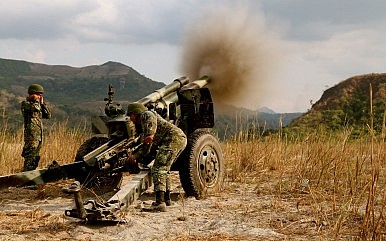 Last week, the chief of staff of the Armed Forces of the Philippines (AFP) disclosed to reporters in Manila that the United States and the Philippines had decided to boost the level of exercises and engagement between them for 2018 following a recent meeting between the two sides.
Subscribe to:
Posts (Atom)