6 February 2018

Russia's Military Cooperation Goals in Central Asia

https://thediplomat.com/2018/02/russias-military-cooperation-goals-in-central-asia/

What military threats keep Russia and its Central Asian partners up at night?
By Dmitry Stefanovich, January 31, 2018

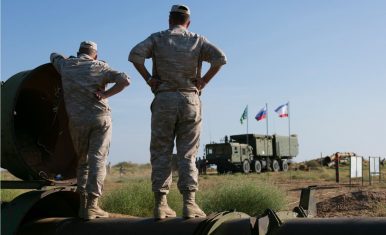
The year 2017 marked several important milestones for Russian-led “not-so-allied” alliances: the Collective Security Treaty (on the basis of which an organization of the same name, the CSTO, was created) turned 25, while the Commonwealth of Independent States Joint Air Defense System (CIS JADS) received an “adaptation roadmap” to tackle Air-Space Defense tasks. Several high-profile multilateral military exercises took place, and their analysis may help understand the grand strategy of Russia and other participants in these groupings.

Guardians of CIS Air and Space

Basic Guidelines for the CIS Joint Air Defense System (JADS) Adaptation to the Air-Space Defense (ASD) tasks were signed at the meeting of the CIS Heads of State Council in Sochi in October 2017. The process is due to be completed by 2025.Enjoying this article? Click here to subscribe for full access. Just $5 a month.

Currently, Armenia, Belarus, Kazakhstan, Kyrgyzstan, Russia, Tajikistan, and Uzbekistan (as well as Turkmenistan as an observer) provide the Air Defense System of the CIS Member States (CIS Air Defense Forces) with 19 aviation units, 38 anti-aircraft missile units, 16 signals units, nine air defense brigades, and three electronic warfare (EW) units.
The main directions of JADS adaptation presumably include developing the regulatory framework, improving the organizational structure and management system, further integrating the forces and assets, and creating several subsystems, i.e. reconnaissance and early warning, countering aerospace attacks, command and control, and maintenance.


Addressing The State Of The World

03 February 2018
from STRATFOR, -- this post authored by Reva Goujon

U.S. President Donald Trump is preparing to deliver his first State of the Union address. The speech, scheduled for Jan. 30, will carry all the usual pomp and ceremony: the flurry of autographs and handshakes as the president enters the U.S. House chamber; the vice president and speaker of the house's awkwardly intense gazes on the president as he gives the address; the contrived anecdotes about special guests in the audience designed to underscore the president's populist image; the opposition party's coordinated acts of protest by refusing to stand and applaud. Political theater aside, however, the president will be addressing his country - and, by extension, the world - in a year in which anxiety over the future of trade and the prospect of great power conflict tempers tepid optimism toward global growth. As an accompaniment to this year's State of the Union address, I'll take a stab at summarizing the State of the World.

We find ourselves in an age in which technology is advancing at a relentless pace, and many nations - under mounting economic and social strain - are resorting to desperate measures to try to keep up.
The United States is trying to find its footing in the emerging world order. Given the country's outsize influence on the global stage, the transition has been understandably raucous. Yet while the current administration regularly leers at multilateral institutions in prioritizing its interests above those of other nations, the United States is not about to tear down the global trading order or leave long-standing allies in the lurch. Checks and balances will continue to moderate the more sensational impulses of the White House as it tries to crack down on so-called economic predators and demand more of its partners.
Bracing for Uncertainty

An Assessment of Violent Extremist Use of Social Media Technologies

https://www.realcleardefense.com/articles/2018/02/05/an_assessment_of_violent_extremist_use_of_social_media_technologies_113015.html?utm_source=RC+Defense+Morning+Recon&utm_campaign=34652d2709-EMAIL_CAMPAIGN_2018_02_04&utm_medium=email&utm_term=0_694f73a8dc-34652d2709-81834289

By Scot A. Terban, February 05, 2018

Summary: The leveraging of social media technologies by violent extremists like Al-Qaeda (AQ) and Daesh have created a road map for others to do the same. Without a combined effort by social media companies and intelligence and law enforcement organizations, violent extremists and others will continue to operate nearly unchecked on social media platforms and inspire others to acts of violence.

Text: Following the 9/11 attacks the U.S. invaded Afghanistan and AQ, the violent extremist organization who launched these attacks, lost ground. With the loss of ground came an increase in online activity. In the time before the worldwide embrace of social media, jihadi’s like Irhabi007 (Younis Tsouli) led AQ hacking operations by breaking into vulnerable web pages and defacing them with AQ propaganda as well as establishing dead drop sites for materials others could use. This method was pioneered by Irhabi007, who was later hunted down by other hackers and finally arrested in 2005[1]. Five years after Tsouli’s arrest, Al-Qaeda in the Arabian Peninsula (AQAP) established Inspire Magazine as a way to communicate with its existing followers and “inspire” new ones[2]. Unfortunately for AQAP, creating and distributing an online magazine became a challenge.

Today, social media platforms such as Twitter, Facebook, VKontakte, and YouTube are now the primary modus for jihadi extremists to spread the call to jihad as well as sow fear into those they target. Social media is perfect for connecting people because of the popularity of the platforms and the ease of use, creation of accounts, and ability to send messages that could have a large audience. In the case of Daesh, they use Twitter and YouTube as their primary means of messaging not only for fear but also command and control as well as recruitment. Daesh sees the benefits of using social media, and their use has paved the way for others. Even after Twitter and YouTube began to catch on and act against the Daesh accounts, it is still easy still for Daesh to create new accounts and keep the messages flowing with a new user name followed by a digit.

Pay Attention to Probing, Persistent Attacks Against Critical Infrastructure

FEBRUARY 4, 2018 | SUZANNE KELLY

During times when the country expresses passionate opinions over the politics of the day, I wonder what U.S. adversaries focus on.
One thing always in the back of my mind, as a former intelligence correspondent and now publisher of a national-security focused website, is the U.S. power grid.
U.S. critical infrastructure systems have been under persistent attack for years. They are the components of our infrastructure that are vital to the way we live: the power grid, the financial system, transportation, medical, industrial manufacturing and election systems. A range of adversaries, most often led by nation-states, never takes time to stop for U.S. political debate. And there is a lot of evidence that their capabilities are increasing.

A series of attacks on American banks and energy companies in the Persian Gulf from 2011 to 2013 slowed the websites of companies like Bank of America, JP Morgan, Sun Trust Banks and Capital One.
In 2013, hackers used a cellular modem to gain access to a New York dam. They probed the system, but didn’t do anything, which led some experts to believe it may have been a test run.
And of course, there was the 2016 hack targeting the computer systems of the Democratic National Committee and attacks that probed some voting equipment. A unanimous IC finding attributed the attacks to Russia.

Dark Clouds Form Around the Defense Department’s Data Strategy

By Mytheos Holt, 
February 2nd, 2018

The U.S. government has a troubling history with adopting new technology. While programs like DARPA have laid the groundwork for much of the private sector’s development in the past, most of the government seems to treat technological progress the way a six-year-old treats trips to the dentist: as someone to be avoided as much as humanly possible, and gotten out of the way in a cursory manner when it becomes necessary. Incumbency also reigns beyond the point of reliability: for example, as of 2013, some government departments were still running their servers on 2003 Windows software.
This kind of inefficiency is not always so darkly funny, however. It can have massive implications for national security. Whatever one thinks of the furor over Russian hacking, the issue probably would not have the legs it does if the federal government had a reputation for peerless efficiency and impregnability in the cybersphere. Unfortunately, the opposite impression widely exists.

Moreover, until recently, Pentagon Acquisition Chief Ellen Lord, was poised to make it worse. Specifically, Lord had plans to hand overstorage of the Defense Department’s virtually entire cyber resources over to a single company. In other words, Lord was preparing to store all the Department of Defense’s “cloud” data on a single company’s servers.
This approach should give anyone with interest in our government’s technological security night sweats. Yes, using cloud computing to store data is an advance for the U.S. government and one that would likely have become only more urgent with time. But to just drop all the most significant national security data on one cloud? What?

No, the US Won’t Respond to A Cyber Attack with Nukes


BY PATRICK TUCKER, FEBRUARY 2, 2018

Defense leaders won’t completely rule out the possibility. But it’s a very, very, very remote possibility.
The idea that the U.S. is building new low-yield nuclear weapons to respond to a cyber attack is “not true,” military leaders told reporters in the runup to the Friday release of the new Nuclear Posture Review.
“The people who say we lowered the threshold for the use of nuclear weapons are saying, ‘but we want these low-yield nuclear weapons so that we can answer a cyber attack because we’re so bad at cyber security.’ That’s just fundamentally not true,” Gen. Paul Selva, vice chairman of the Joints Chiefs of Staff, said Tuesday at a meeting with reporters.
It’s an idea that military leaders have been pushing back against since the New York Times ran a Jan. 16 story headlined, “Pentagon Suggests Countering Devastating Cyberattacks With Nuclear Arms.”
When would the U.S. launch a nuclear attack in response to a non-nuclear event? The Defense Department says the threshold hasn’t changed since the Obama administration’s own nuclear posture review in 2010, but a draft of the new review that leaked online caused a bit of drama in its attempts to dispel “ambiguity.”

5 February 2018

Debate: India Is Not ‘Self-Destructing’, It’s Being Destroyed Systematically

BY SAJAI JOSE

A startlingly pessimistic vision of India’s looming environmental and economic collapse – aired by a senior business leader – deserves our urgent attention. 

Recently, writing against the backdrop of the unprecedented spike in Delhi’s air pollution, Raghu Raman, the president of Reliance Industries’ risk, security & new ventures division and former CEO of India’s National Intelligence Grid (NATGRID), put forward a starkly apocalyptic vision of the country’s

China’s Understanding of Global Order Shouldn’t Be Ours

BY AARON FRIEDBERG

Niall Ferguson is a prolific public intellectual who has made a career out of shattering shibboleths. At various points he has defended the achievements of the British Empire, argued that the United Kingdom’s entry into the First World War was “the biggest error in modern history,” and made the case at length that Henry Kissinger is a misunderstood idealist.

China needs more nuclear warheads to deter US threat, military says

Minnie Chan

China must expand its nuclear stockpile so it can better deter and hit back at an enemy strike as geopolitical uncertainties mount and the US appears bent on a nuclear build-up, according to the Chinese military’s mouthpiece.

In the PLA Daily on Tuesday, a commentary said China had enough nuclear weapons to prevent “bullying” by other nuclear powers

How China’s military is girding for battle, and what it means for neighbours

Kristin Huang

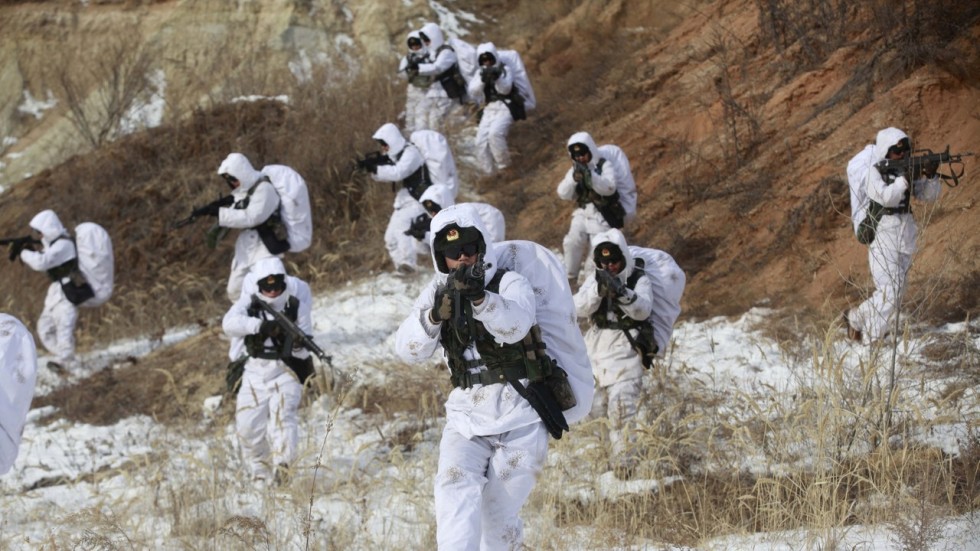
The three young men were not playing a computer game, but soldiers with a special People’s Liberation Army (PLA) brigade undergoing combat training as China’s military ramps up the quantity and quality of its exercises.
Li hid in a river to evade a surveillance drone, while Liu hit 24 targets after fixing his broken rifle in a matter of minutes, the army mouthpiece PLA Daily said in a January 11 report on the training, designed to boost the soldiers’ fighting skills and spirit.

China’s New Role in the Baltic States

Una Aleksandra Bērziņa-Čerenkova

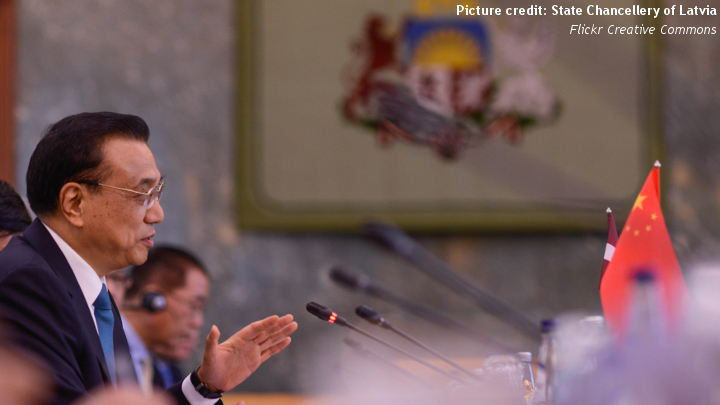
Since its inception in 2012, China’s “16+1” cooperation platform—an initiative aimed at intensifying Beijing’s economic and cultural ties with 16 countries in Central and Eastern Europe—has attracted great speculation about China’s motives and questions about the format’s concrete deliverables. Controversy over Beijing’s proposals to finance critical infrastructure, increase foreign direct investment (FDI), and boost trade has arisen both from within the 16 participating countries and from EU neighbors. In this atmosphere of political ambivalence,

Understanding Turkey’s Afrin Operation

Bulent Aliriza

Q1: Why is Turkey attacking Afrin?

A1: On January 20, Turkey launched a major military operation beyond its southern border code-named “Olive Branch” directed at the Syrian Kurdish canton of Afrin. The move followed months of increasingly harsh statements by President Recep Tayyip Erdogan about the emergence of a belt immediately beyond the Turkish-Syrian border controlled by the Democratic Union Party (PYD) and its armed wing, the People’s Protection Units (YPG), viewed by Turkey as the Syrian Kurdish affiliate of the Kurdistan Workers’ Party (PKK). On January 13, Erdogan had announced that there would be action “within a week…if the terrorists in Afrin do not surrender,” and four days later the Turkish National Security Council

The Ally from Hell: How Pakistan cultivated American dependency while subverting American policy in Afghanistan

Mark Mazzetti

Two months after the 2008 U.S. presidential election, Vice President–elect Joe Biden sat with Afghanistan’s president, Hamid Karzai, in the Arg Palace, an 83-acre compound in Kabul that had become a gilded cage for the mercurial and isolated leader. The discussion was already tense as Karzai urged Washington to help root out Taliban sanctuaries in Pakistan, implying that more pressure needed to be exerted on Pakistani leaders. Biden’s answer stunned Karzai into silence. Biden let Karzai know how Barack Obama’s incoming administration saw its priorities. “Mr. President,” Biden said, “Pakistan is fiftytimes more important than Afghanistan for the United States.”

China and Russia can now kill American satellites

Source Link
 By Harold Hutchison

The United States has long relied on satellites to help the grunts on the ground win fights. Whether it’s enabling reliable communications, guiding weapons, or even telling troops just where in the world they are (though Carmen Sandiego’s precise location still eludes us), satellites play an essential role.

It’s a huge advantage, to put it mildly. Space is the ultimate high ground in warfare today,

Chabahar Port lures Afghan traffic away from Karachi

By F.M. SHAKIL

Afghanistan has shifted 80% of its cargo traffic from Pakistan’s Karachi seaport to Iran’s Bandar Abbas and Chabahar ports. The move comes two months after Chabahar, barely 100 kilometers from Pakistan’s Gwadar port, was inaugurated. The shift, prompted in part by a new trade tariff imposed by Islamabad, is expected to greatly reduce Pakistan’s role in the transit of Afghan goods.

The Return of Political Warfare

by Seth G. Jones

The Trump administration’s National Security Strategy and National Defense Strategy outline a U.S. shift from counterterrorism to inter-state competition with China, Russia, Iran, and North Korea. However, U.S. policymakers need to be prepared for much of this competition to occur at the unconventional level, since the costs of conventional and nuclear war would likely be catastrophic.

Bangladesh's New Generation of Militants

By Siddharthya Roy

When compared to his peers in the terrorism community, Akayed Ullah was most certainly a loser. The wannabe jihadist attempted to blow himself up at the New York City port authority bus terminal by strapping a pipe bomb to his body. But the bomb — made with firecracker powder and lit with a Christmas candle — was so low intensity that, far from creating widespread terror, he didn’t even end up killing himself. In the weeks that have followed since, the 27-year-old Bangladeshi migrant has received more ridicule than fear or praise.

Bitcoin and Other Cryptocurrencies Plunged $100 Billion in One Day. Here's What Happened

By BRAD TUTTLE

The cryptocurrency market, long described as a bubble that’s bound to pop, is crashing hard this week. Several cryptocurrencies decreased by more than 25% over the past 24 hours, and $100 billion in value simply disappeared in a single day.

Bitcoin, the leading cryptocurrency, is down more than 60% off its all-time high hit less than two months ago. The value of each unit of Bitcoin dropped as low as $7,700 on Friday, compared to $10,000 on Wednesday and around $20,000 at its peak in December.

What He Did on His Summer Break: Exposed a Global Security Flaw


By ISABELLA KWAI

Nathan Ruser, an Australian college student, discovered that a fitness app had revealed the locations of military bases around the world. “Whoever thought that operational security could be wrecked by a Fitbit?” he said. CreditJan Mark

SYDNEY, Australia — When Nathan Ruser, an Australian university student, posted on Twitter over the weekend that a fitness app had revealed the locations of military sites in Syria and elsewhere, he did not expect much response.

America’s Digital Infrastructure Is Crumbling, Too

Bloomberg · 
by James Stavridis and Dave Weinstein 

Last weekend I passed through the glittering main terminal of the Hamad International Airport in Doha, Qatar. It is highly efficient, utterly beautiful and ultramodern. I cannot think of a single U.S. airport that compares favorably to it in any dimension. China today is building high-speed rail networks, new modernized ports, and seemingly endless stretches of smooth highways at a prodigious rate. We used to think of a “missile gap” threatening the U.S. during the Cold War. Today we are increasingly facing an infrastructure gap — and it is expanding daily.
And as we begin yet another tumultuous year of politics and policy in America, the White House, statehouses, and elected officials on both sides of the aisle are already putting infrastructure at the top of the political agenda. In Tuesday’s State of the Union message, President Donald Trump called on Congress to allocate at least $1.5 trillion for “the infrastructure investment we need.”

Much of the conversation relates to people’s most tangible perception of infrastructure: roads, rails and bridges. The media rightly give us increasingly frequent images of derailed train cars, collapsed trestles, cracked stanchions and crumbling bridges.
But in the 21st century, infrastructure is more than concrete and metal. Equally important is the digital infrastructure that underlies America’s economy and governments. In an era when goods, services and ideas are increasingly transported via the internet, the strands of fiber, routers, servers and seemingly endless lines of code that compose our digital highways and hubs are quickly becoming the backbone of U.S. infrastructure — and it too is crumbling.

RUSSIA BOASTS OF USING 215 NEW WEAPONS SYSTEMS IN SYRIA CIVIL WAR SERVED AS KREMLIN TESTING GROUND

Dave Majumdar

Russian Pres. Vladimir Putin praised the performance of the Russian military and its hardware during the Kremlin’s campaign in Syria, but stressed that Moscow has to fix problems that were brought to light during those operations.

“The rout of the well-equipped terrorist groups in Syria demonstrated the power of our Army and Navy, and the course of the operation demonstrated the tradition of reliability and effectiveness of Russian weapons,” Putin said in a speech.

Europe’s defining choice on Poland


Pawel Zerka 

Europe’s decision on whether or not to declare Poland in breach with European rule of law standards comes down to a choice between principles and pragmatism. 

The triggering of Article 7.1 by European Commission in December 2017 has forced Poland to seek a new relationship with Europe. Jaroslaw Kaczynski, the leader of Law and Justice (PiS), must have concluded that something needed to be done in order

Trump's Troubling Nuclear Plan

By Adam Mount

Like President Donald Trump, the Pentagon’s new nuclear policy document sees a dark and threatening world. It argues that potential U.S. adversaries such as China, North Korea, and Russia are rapidly improving their nuclear capabilities and gaining an edge over the United States. But rather than laying out a plan to halt this slide into a more dangerous world and working to decrease reliance on nuclear weapons, the Nuclear Posture Review (NPR) hastens its rise by accepting the reasoning of U.S. adversaries and affirmatively embracing nuclear competition. 

Technology for the Many: A Public Policy Platform for a Better, Fairer Future


A world infused with new technologies demands courageous, imaginative policy solutions that will both harness technology’s tremendous potential for good and mitigate the displacement effects of rapid change. This is one of the greatest policy challenges of our generation, and one of the biggest gaps in the prospectus across the political spectrum. 

A world infused with new technologies demands courageous, imaginative policy solutions

THE 2018 STATE OF THE DIGITAL UNION: THE SEVEN DEADLY SINS OF CYBER SECURITY WE MUST FACE

PETER W. SINGER

When President Barack Obama made his first State of Union address, there were a series of key challenges for cyber security policy. There was increasing problems of state-linked intellectual property (IP) theft that, in the wake of such incidents like the hacking of the F-35 fighter jet program, were becoming both an economic and national security issue, clouding Sino-American relations. There were growing worries about such ills as transnational criminal networks harming trust in the growing e-commerce marketplace, as well as botnets threatening to clog the “pipes” of cyberspace. Cyber warfare was starting to emerge as a

FUZZY THINKING ABOUT DRONES

JON ASKONAS AND COLBY HOWARD

Are drones reliable? Would you bet your life on them? In a recent article, Jacquelyn Schneider and Julia Macdonald argued that “the troops don’t trust drones” to protect them in combat with close air support. To understand how the people who actually coordinate airstrikes feel, they interviewed and surveyed Joint Terminals Air Controllers (JTACs) and Joint Fires Observers (JFOs) about their thoughts on working with manned and unmanned aircraft. They find some measure of hesitation about and distrust towards working with unmanned aircraft. In their conclusion, they argue that

America is losing the cyber war: Here's how to turn the tide

By Michael Chung 

When I served as a commissioned officer in the Navy and in Operations Enduring and Iraqi Freedom, we fought battles on three fronts: air, sea and land. Our country is now faced with a fourth battlefront -- one that has already made its way into the private lives of many American citizens: cyber warfare.

This battle has significant potential to be the most elusive, challenging and dangerous. There are no front lines, no established territories, and an enemy that is invisible to us. The weapons are computer keyboards and lines of code. The collateral damage is ultimately sensitive data and personal information.

Understanding the “IN” in COIN

Source Link
by Dean Shumate

We cannot solve our problems with the same thinking we used when we created them.

-- Albert Einstein

After the Vietnam War, it has been apparent that the Department of Defense (DOD) wanted to ignore any counterinsurgency (COIN) lessons learned. It was as if the DOD wanted to downgrade the importance of COIN. Operation Desert Storm created an albatross for policymakers, military leaders, and the public view on how “all” wars could be waged. The

The Limits of a Limited Strike


In 1962, facing Soviet missiles in Cuba, President John F. Kennedy considered limited strike options. Here he confers with Defense Department leaders during the Cuban Missile Crisis. From left to right, Assistant Secretary of Defense for International Security Affairs Paul H. Nitze, President Kennedy, Chairman of the Joint Chiefs of Staff Maxwell D. Taylor, and Secretary of Defense Robert S. McNamara.

A Solution Looking for a Problem

By Amos C. Fox

Warfare exists in the realm of both art and science – as a phenomenon in which sensing and intuition (in other words, art) play a complementary role to education and training (science). Just as a painter must have more than one color on his pallet, the practitioner of warfare must understand more than one form of warfare to be effective on the battlefield. However, the emphasis on maneuver warfare in current U.S. Army doctrine, at the expense of other forms of warfare, limits Armor and Cavalry leaders’ ability to be true artists in warfare by not fully educating and training them on the realities of warfare, thus negatively influencing their ability to sense and apply intuition in battle. Doctrine’s focus on maneuver warfare lies at the heart of this conundrum.