Robert D. Kaplan
Introduction
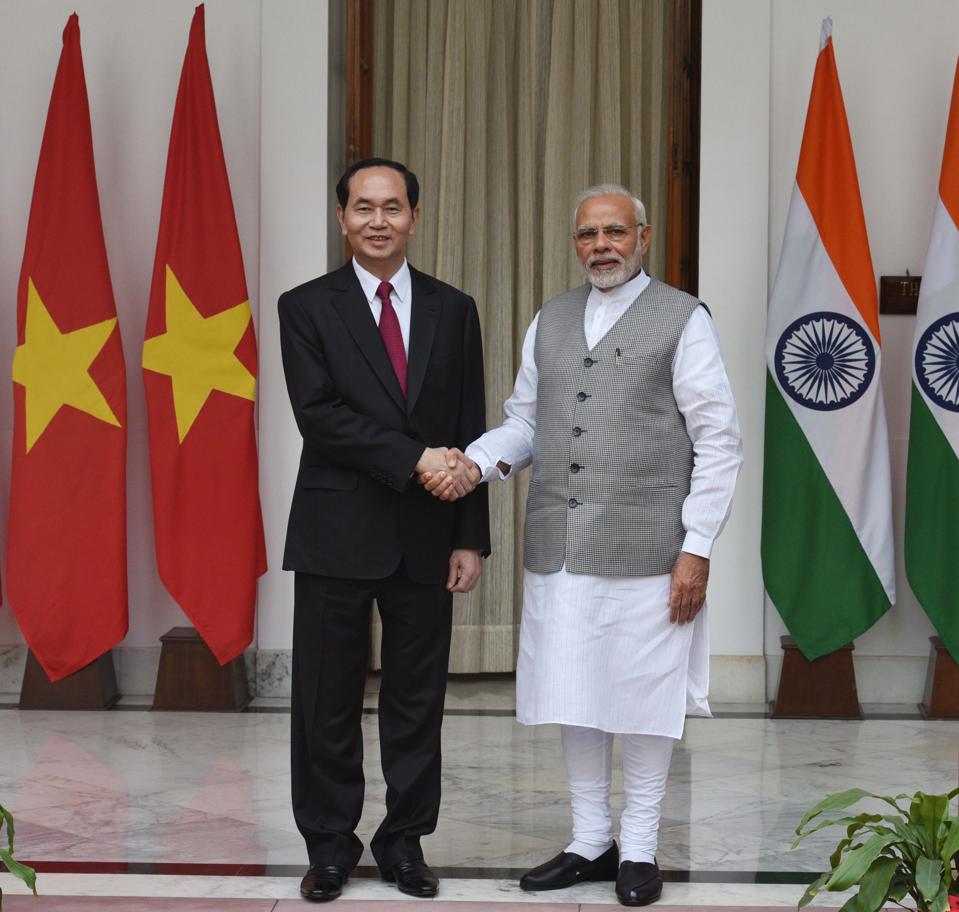
India won’t be encircled by China. And it won’t let China make the South China Sea its own sea. That’s a dual message India has been sending these days, as its economy leaped ahead of China’s to become the world’s fastest large economy—and as investors grow wary over the rising geopolitical risks in the Asia-Pacific region. To deliver the first message, New Delhi has been hosting multi-nation naval exercises in the Indo-Pacific region, like the one in Malabar in the Bay of Bengal last year with Japan and Australia. And it is hostinganother this month that will include 23 nations. To deliver on its second message, India has joined forces with Vietnam to provide support for freedom of navigation, a position held by the United States and its Asian allies, and rejected by China.
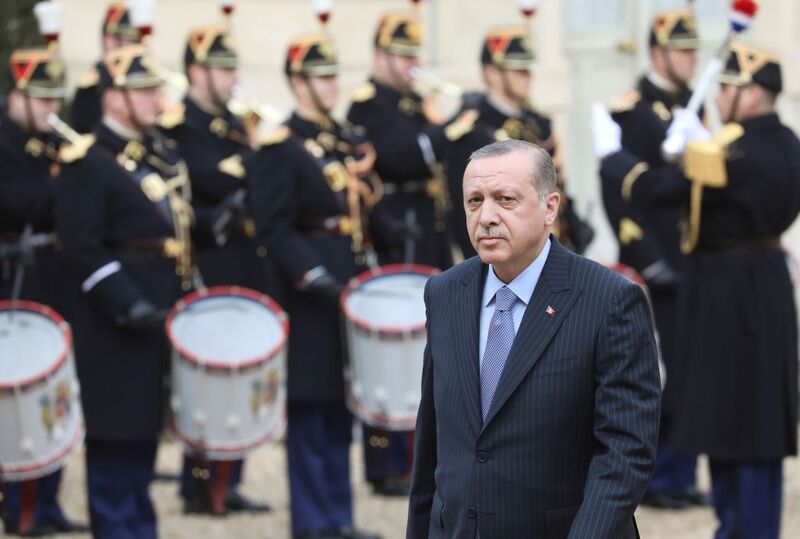
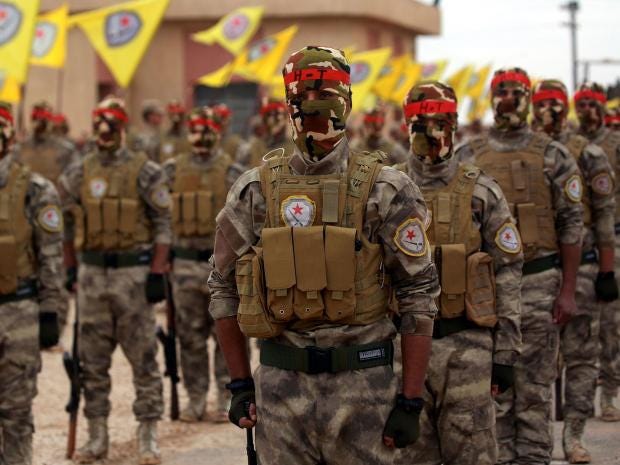
There isn't much that Turkey's president can do these days to further debase his reputation in the West. Recep Tayyip Erdogan has crushed peaceful protests at home and abroad, closed newspapers, threatened American soldiers, and collectively scapegoated Kurds. But over the weekend, Erdogan managed to go even lower. At a rally at Kahramanmaras, the Turkish leader brought a trembling 6-year-old girl on stage dressed in military garb and told her she would be honored if she died as a martyr. He sounded like a terrorist. We expect this kind of child abuse from the fanatics in Hamas or Hezbollah. Erdogan though is the leader of an important NATO ally.
Afghan civilians are becoming casualties of war in alarming numbers. More than 28,000 civilians have been killed and more than 50,000 injured since 2009, according to the United Nations Assistance Mission in Afghanistan (UNAMA). This number does not include thousands of others who died between 2001 and 2008. 2017 saw 3,438 dead and 7,015 injured — 65 percent of the casualties were attributed to the anti-government elements, namely the Taliban and Islamic State. Twenty-five percent of these casualties have been attributed to the pro-government elements (including 16 percent attributed to the Afghan National Security Forces, or ANSF, and 2 percent to international military forces). Eleven percent of these casualties were attributed to crossfire, and 1 percent to border shelling from Pakistan, while the rest cannot be attributed to any warring parties.
KABUL, Afghanistan — When President Ashraf Ghani stood up last week to try to lure the Taliban to peace talks, promising them amnesty and political inclusion, he could point to a recent example: the deal that brought the militant group Hezb-i-Islami and its deeply divisive leader, Gulbuddin Hekmatyar, in from the battlefield. Through decades of Afghan turmoil, Mr. Hekmatyar has managed to keep himself near the action, and has broken alliances several times to do it. He has been a C.I.A.-favored fighter of the Soviets, a warlord who mauled Kabul, a prime minister, an admirer of Al Qaeda, an ally and enemy of the Taliban, and an unabashed proponent of suicide bombings against American forces.
China is emerging as a massive creditor to its economic allies taking up projects to upgrade roads, harbors and airports, making it an increasingly important financial influence on the world stage. China is financing as much as $8 trillion in deals as part of its “Belt and Road Initiative” in 68 countries winding through Asia, Africa and Europe. New data from the Center for Global Development, an international think tank, estimate the program has left eight countries financially vulnerable: Djibouti, Kyrgyzstan, Laos, the Maldives, Mongolia, Montenegro, Pakistan and Tajikistan.
If the elections produce a hung Parliament, it will likely reduce the chances of a new government introducing disruptive measures that could worry markets, but it will also delay the introduction of much-needed reforms to boost economic growth. Rome will pressure the European Union to give Italy more room to cut taxes and increase spending, but moderate parties are more likely than their anti-establishment rivals to seek a compromise with Brussels. The next Italian government will have to deal with high debt levels, slow economic growth, widespread social discontent with the political system and declining influence on EU affairs.
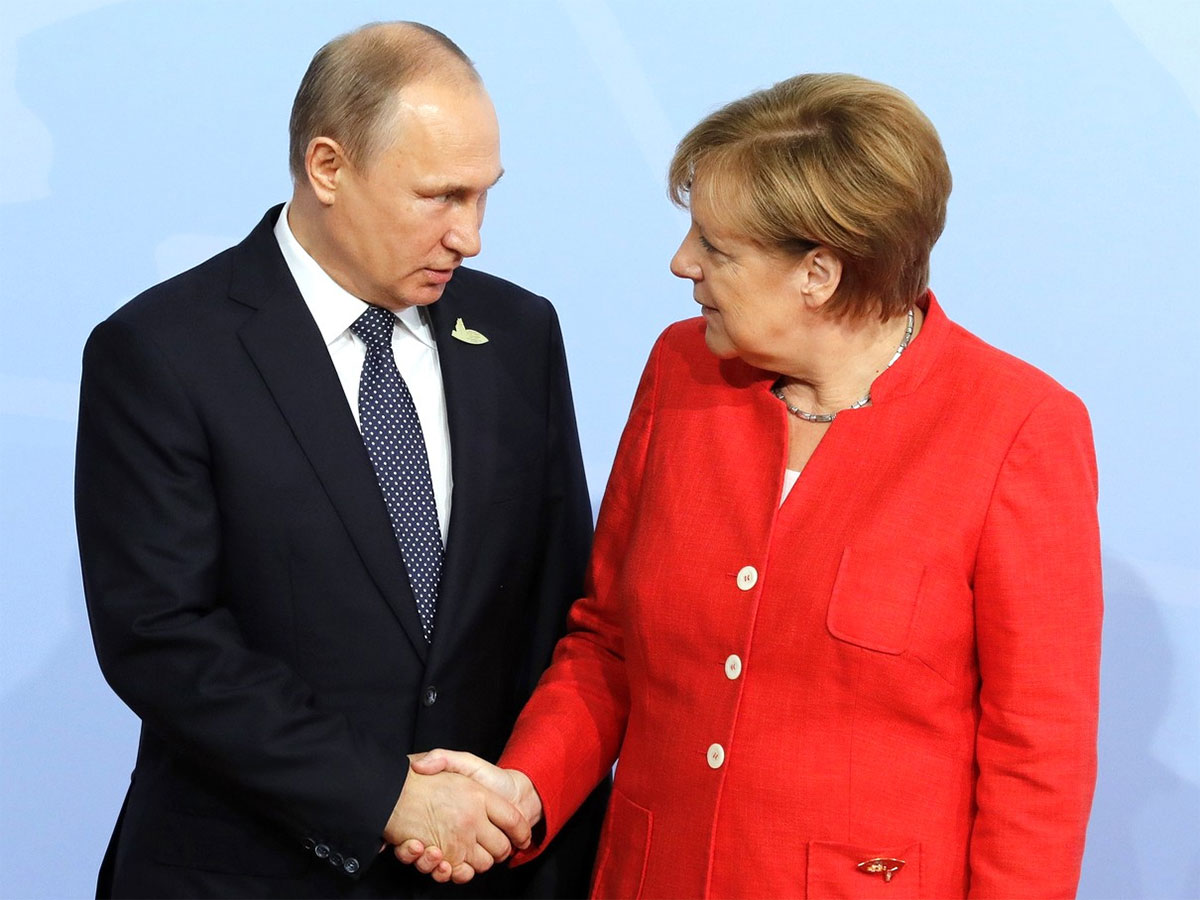
Putin’s call came after humanitarian monitors said they suspected forces supporting Syrian President Bashar al-Assad had launched a chlorine attack on the battered city near Damascus. Russia, however, claimed terrorist groups in Eastern Ghouta such as Hayat Tahrir al-Sham had been plotting to use chemical weapons themselves and blaming Assad supporters, according to Russia's state-run Tass news agency.
John Lough contends that prior to Moscow’s annexation of Crimea in 2014, Germany failed to read Russia correctly. Indeed, he suggests that successive German governments remained in denial about developments in Russia, leading them to support a system in Moscow that was hostile to German interests. So how did this happen? To provide answers, Lough examines the complex mixture of attitudes and impulses that have informed German thinking about Russia since the end of the Cold War. Further, he addresses what Germany must now do to tackle the threat Moscow poses.
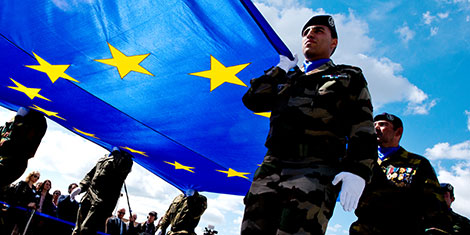
Europe is facing multiple security challenges. Russia aims to undermine the European security order and has shown its willingness to violate other countries’ sovereignty and increase its nuclear power. The Middle East and North Africa are on fire, homegrown terrorism threatens the streets of Europe, and cyber and information warfare are on the rise. Europe is currently ill-equipped to manage this spectrum of threats, and it can no longer rely wholeheartedly on US security guarantees.
In this article, Jonathan Moyer et al highlight insights drawn from the Formal Bilateral Influence Capacity (FBIC) Index, which measures the bilateral influence of states from 1963 to the present. Key findings include 1) similar to trends in the global distribution of power, global influence is dispersing; 2) US’ global influence is declining and is considerably smaller than its share of the world’s coercive capabilities; 3) China’s has vastly expanded its influence, while Russia has seen a considerable decline; 4) European states significantly punch above their weight relative to their economies, and more.
Once one has a hammer, one tends to see a nail everywhere — the use of lethal force by organs of the state against its own citizens needs utmost vigilance. Over the last two decades, the size of India’s Central Armed Police Forces (CAPFs) has almost doubled. At the same time, expenditures on these forces have increased by almost an order of magnitude. These increases are occurring at a time when virtually all major ministries and departments of the central government have witnessed a decline in their personnel. The implications of this growth in the militarised approach to policing have not received the attention they deserve.
Will Trump back down from his urge to start a trade war? Nobody knows; the thing is, he’s been an ignorant trade hawk for decades, he’s feeling beleaguered on many fronts, and word is that his doctor has told him to eat fewer burgers. So there’s surely a lot of pent-up rage that he’s all too likely to take out on the world trading system, especially when he tweets stuff like this: The United States has an $800 Billion Dollar Yearly Trade Deficit because of our “very stupid” trade deals and policies. Our jobs and wealth are being given to other countries that have taken advantage of us for years. They laugh at what fools our leaders have been. No more!
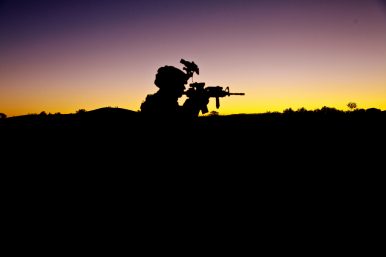
“How do we, in the military, encourage our war fighters to be flexible thinkers?” I get asked this a lot — from Quantico to West Point to the Army Futures Forum last December. No matter what military gathering I attend, I keep getting a version of this question. Our new century requires new levels of creativity to survive, and the armed forces are no exception. In a world where America’s enemies seem to be adapting, evolving and innovating new ways to hurt us, sometimes on a day-to-day basis, those in uniform can’t afford the kind of rigid, linear, textbook mindset that got their predecessors through the Cold War.