By SYDNEY J. FREEDBERG JR.
Lockheed technicians test their Silent Crow cyber/electronic warfare pod.
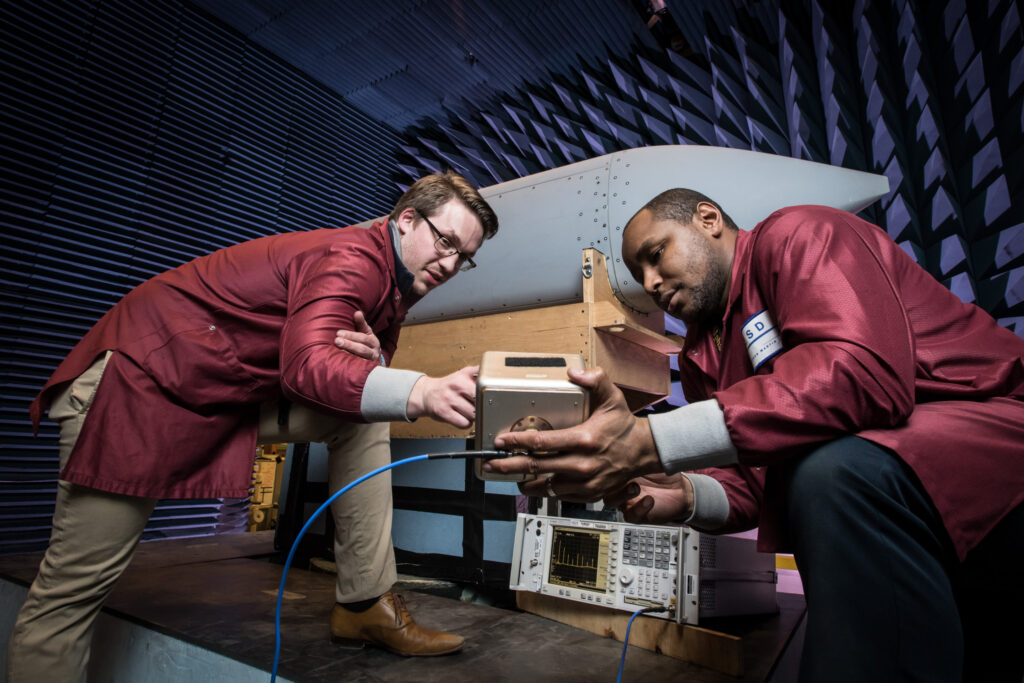 WASHINGTON: After successful flight tests of Lockheed Martin’s Silent Crow prototype last year, the Army took a big step to rebuilding its electronic warfare capabilities, awarding the company $74.85 million to develop, build, and test operational EW pods.
That award actually happened in January, but Lockheed only announced it this morning, probably because security on this highly sensitive technology is so tight that routine review of public statements can take months. I’ve been asking for an interview on Silent Crow for over a year, ever since Lockheed announced its initial $18 million Army award for prototype demonstrations in January 2019 — an additional $6 million for a second prototype followed in August — and it took until yesterday to wrangle an interview with one of the company’s experts.
Largely developed at Lockheed’s own expense, the Silent Crow pod is now the leading contender for the flying flagship of the Army’s rebuilt electronic warfare force. Army EW was largely disbanded after the Cold War, except for short-range jammers to shut down remote-controlled roadside bombs. Now it’s being urgently rebuilt to counter Russia and China, whose high-tech forces – unlike Afghan guerrillas – rely heavily on radio and radar systems, whose transmissions US forces must be able to detect, analyze and disrupt.




 Map of the Middle Corridor (in blue) (Source: mfa.gov.tr)