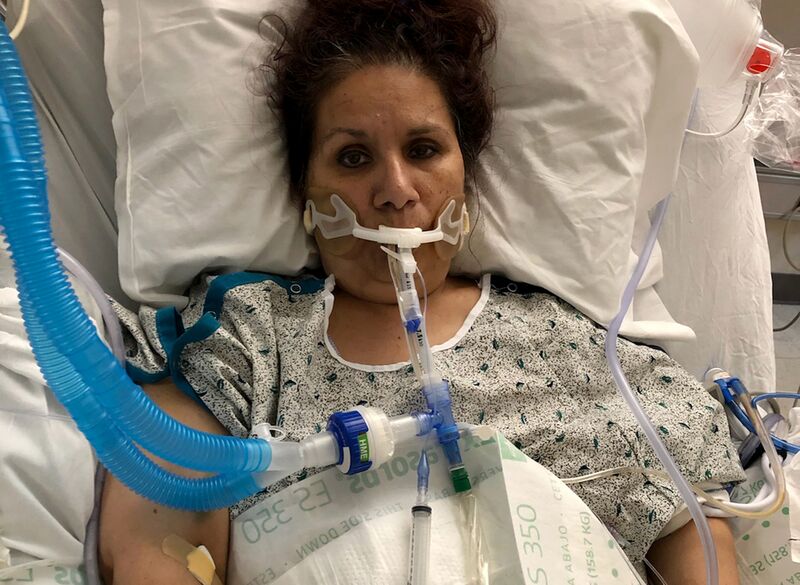
Her fever hit 105 degrees. In her delirium, Diana Aguilar was sure the strangers hovering over her, in their masks and gowns, were angels before they morphed into menacing aliens. As a doctor prepared to slide a ventilator tube down her throat, all she remembers thinking was: “I cannot breathe. I have no air. I give up, I give up.”
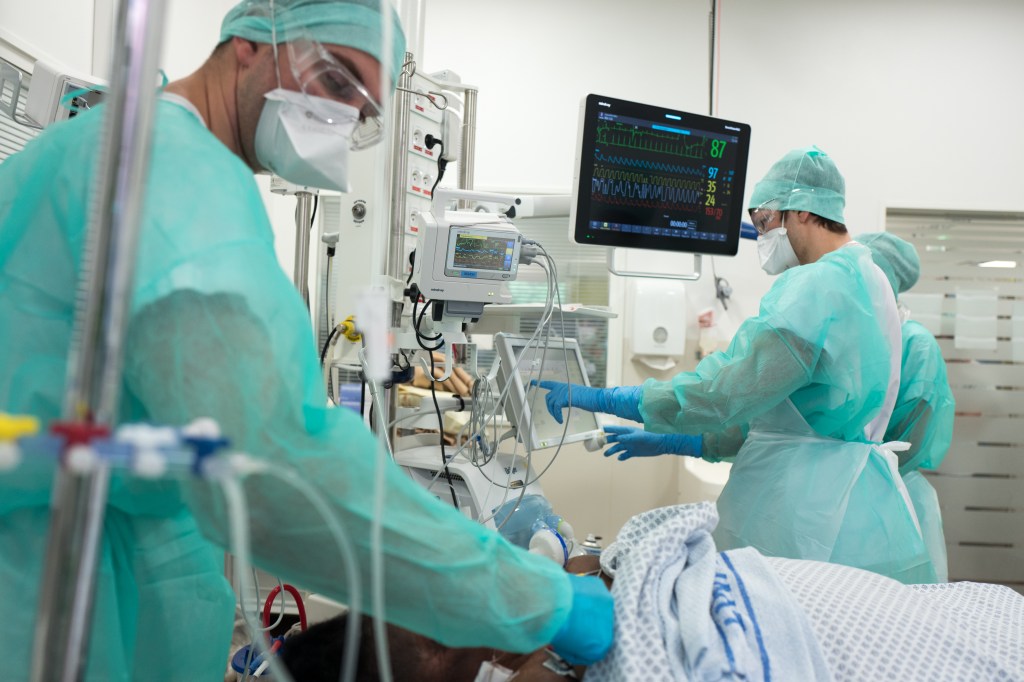
Aguilar, in the throes of Covid-19, was starting her 10-day descent into ventilator limbo. The mechanical device to which her tube was attached is coveted for its ability to push life-saving oxygen deep into damaged lungs. Yet it also is feared and reviled for the damage it inflicts — and for the slim odds of survival it affords. Aguilar wasn’t aware of any of that, yet she sensed this could be the end. She whispered her goodbyes to her husband, son and daughter, none of whom were anywhere nearby, and then she prayed to God in her native Spanish.
“You’re going to be fine,” a voice reassured her. “Start counting now; one, two…”
The voice belonged to an anesthesiologist, the last she heard before drifting off. Diana was diagnosed with Covid-19 on March 18, the day she arrived in the emergency room at Robert Wood Johnson University Hospital Somerset in Somerville, New Jersey. The virus had already been ravaging her body for weeks, infecting the tiny cells in her lungs that deliver oxygen to her blood.