Jeremy Binnie
December 5, 2014
Photos prompt speculation about Libyan militia’s air defences

This low-resolution image showing two S-125 (SA-3 ‘Goa’) transporter-loader vehicles being moved by a semi-trailer truck was posted on Khalifah Haftar’s Facebook page on 2 December. Source: Khalifah Haftar
Photographs showing surface-to-air missiles (SAMs) being transported in Libya suggest the powerful militia from the coastal city of Misratah is attempting to improve its air defences in response to an expansion in Libyan Air Force operations to the west of the country.
A photograph of two transporter/loader vehicles for the S-125 (SA-3 ‘Goa’) SAM system with missiles was published on 2 December on the Facebook page representing Khalifah Haftar, the former general leading a coalition of militias and military units, including the remnants of the air force, against the rival Libya Dawn alliance, which includes the Misratah militia.
The Facebook page said the missiles were being transported from the city of Sabha to Misratah, 600 km to the north.
Satellite imagery shows there was a S-125 battery just north of Sabah, but some of its support vehicles appear to have been destroyed during the NATO-led intervention in 2011. The battery’s three launchers and SNR-125 ‘Low Blow’ target-engagement radar appear to have survived the war, but had been removed by July 2013.
While photographs on the former general’s Facebook page showed the S-125 transporter/loaders and possibly some additional missiles in containers, they did not show the ‘Low Blow’ or other associated components needed to launch the missiles.
Photographs from other sources have also shown the same S-125 transporter-loader vehicles carrying missiles.
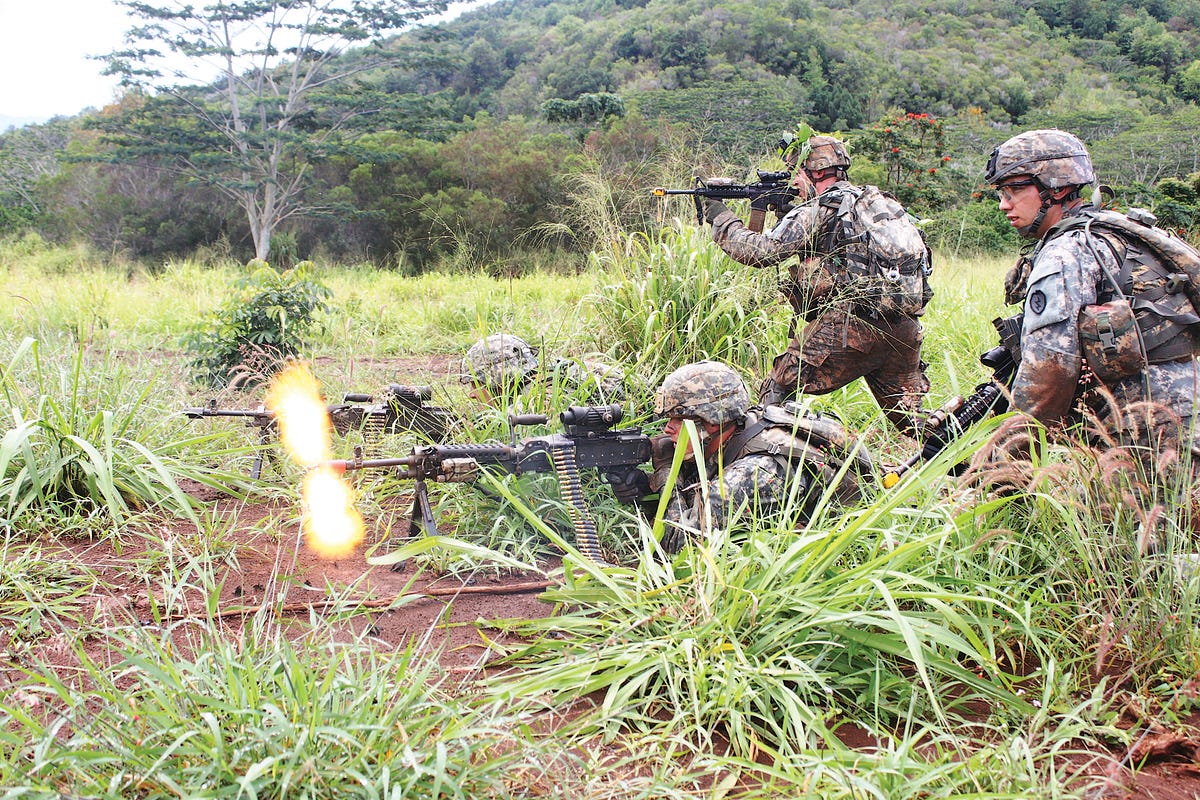 Spc. Derrick Penninger (center, foreground), infantryman, Troop C, 3rd Sqdn., 4th Cav. Regt., 3rd BCT, 25th ID,, fires a burst from his M240B machine gun as his squad engages an enemy bunker during Operation Raider Pillage, April 24 | Photo by 1st Lt. Garrett Nash, 3rd Brigade Combat Team Public Affairs, 25th Infantry Division.




 A mural of former South African President Nelson Mandela is placed on the wall of a building during his first dead anniversary in Cape Town, South Africa. (Source: AP photo)
 Chechen regional leader Ramzan Kadyrov. A gun battle broke out early Thursday in the capital of Russia’s North Caucasus republic of Chechnya, puncturing the patina of stability ensured by years of heavy-handed rule by a Kremlin-appointed leader.


