Rose Gottemoeller
Under Secretary for Arms Control and International Security
Thank you so much for the introduction, Ryan and Jennifer. Thanks also to the Utah Council for Citizen Diplomacy and Heal Utah for hosting this event and a special thanks to Senator Jake Garn for being here tonight. I am so pleased to be here. It is a perfect time to be visiting the beautiful state of Utah. I spent yesterday in Saint George and today I have been to Ogden. Tomorrow I will make it down to Provo. It’s like a one-woman whistle-stop tour for nuclear policy.
I am very pleased to see so many people here tonight – it is heartening to see the interest that I have seen in this issue throughout the state.
While we are gathered here today in Salt Lake, the world is facing serious challenges: the threats to Ukraine’s sovereignty and Russia’s flagrant disregard for international law, the continuing conflicts in the Middle East, a dangerous Ebola outbreak in West Africa that has now travelled to our shores. It is not surprising that most people are not focused on nuclear weapons or nuclear deterrence.
When the Cold War ended, the looming threat of nuclear war seemed to drift away for the average American. When was the last time you even heard of someone doing a duck-and-cover drill or building a bomb shelter in their backyard? Unfortunately, there are still thousands and thousands of nuclear weapons in the world. The threat from these weapons is real and in fact, it may have increased due to the threat from nuclear weapons in the hands of terrorists.
Let me say more about that.
It was 31 years ago that President Ronald Reagan pronounced clearly and with conviction that “there can be only one policy for preserving our precious civilization in this modern age. A nuclear war can never be won and must never be fought.”
President Reagan's belief became the basis for pursuing serious nuclear arms reductions on a bilateral basis between the United States and the Soviet Union and later with Russia.
But how do President Reagan’s policies apply in today’s world, since the long standing principle of nuclear deterrence - the idea that a country would not initiate a nuclear war for fear of nuclear retaliation - does not apply to terrorists.
This idea — the idea that we cannot assume that we can forever hold accidents, madness and miscalculation at bay — was certainly a factor that drove Henry Kissinger, Sam Nunn, Bill Perry and George Shultz to endorse the goal of seeking a world free of nuclear weapons. They saw that the world had changed. They saw that terrorists would not be deterred by a concept like mutually-assured destruction. These four giants of the U.S. national security establishment warned that the very weapons that had provided stability during the Cold War could become liabilities in our current environment.
The goal was not new — many leaders and presidents, including President Reagan, had endorsed a world without nuclear weapons. The difference was that Kissinger, Nunn, Perry and Shultz, not only endorsed the goal, they outlined an Action Plan to help reach the goal. “Without the bold vision,” the four said in 2007, “the actions will not be perceived as fair or urgent. Without the actions, the vision will not be perceived as realistic or possible.”
President Obama laid out his own long-term vision for the peace and security of a world without nuclear weapons through practical, responsible steps in his speech in Prague five years ago. In the years that have followed, the United States has been working to limit and reduce the nuclear threat, while at the same time maintaining a safe, secure and effective nuclear arsenal for as long as nuclear weapons exist.
One part of this effort was to negotiate a new strategic arms treaty with Russia – the New Strategic Arms Reduction Treaty, or New START. I led these negotiations for the United States and we and the Russians reached agreement on the Treaty in early 2010. In December of that year, the U.S. Senate gave its advice and consent for ratification.
New START is important because the United States and Russia possess more than 90 percent of the world’s nuclear weapons. When the New START Treaty is fully implemented, it will result in the lowest number of deployed nuclear warheads since the 1950s.

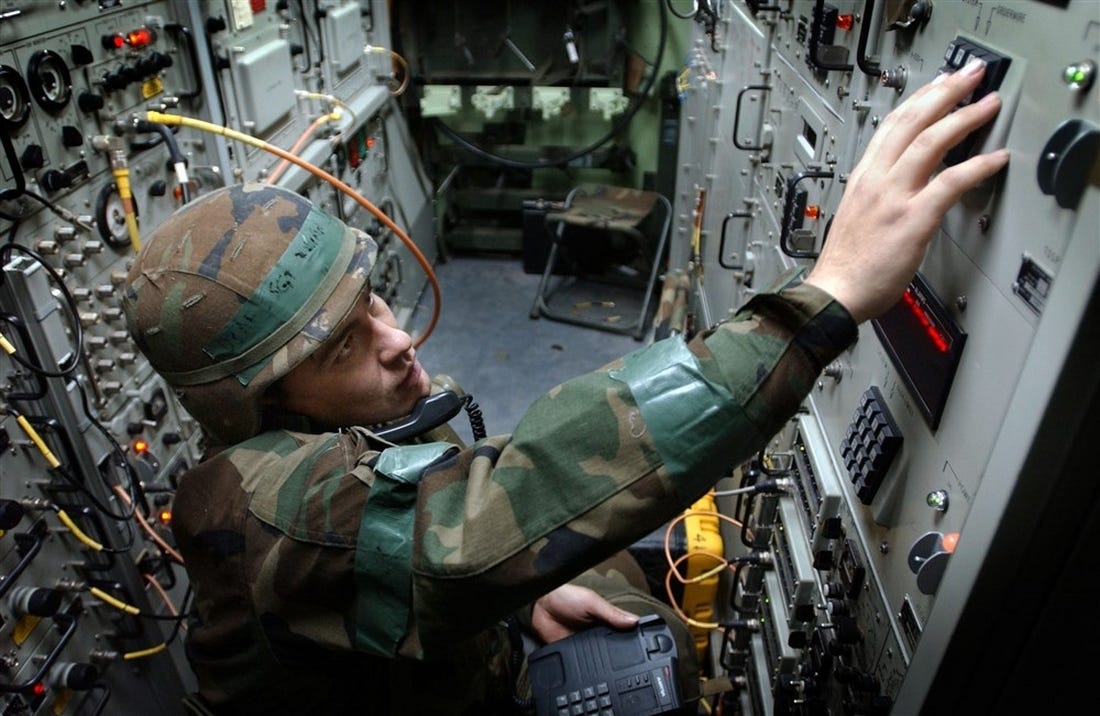 Above—a U.S. Air Force communications specialist at Ramstein. At top—an Air Force Reaper drone. Air Force photos

 Elizabeth Weise

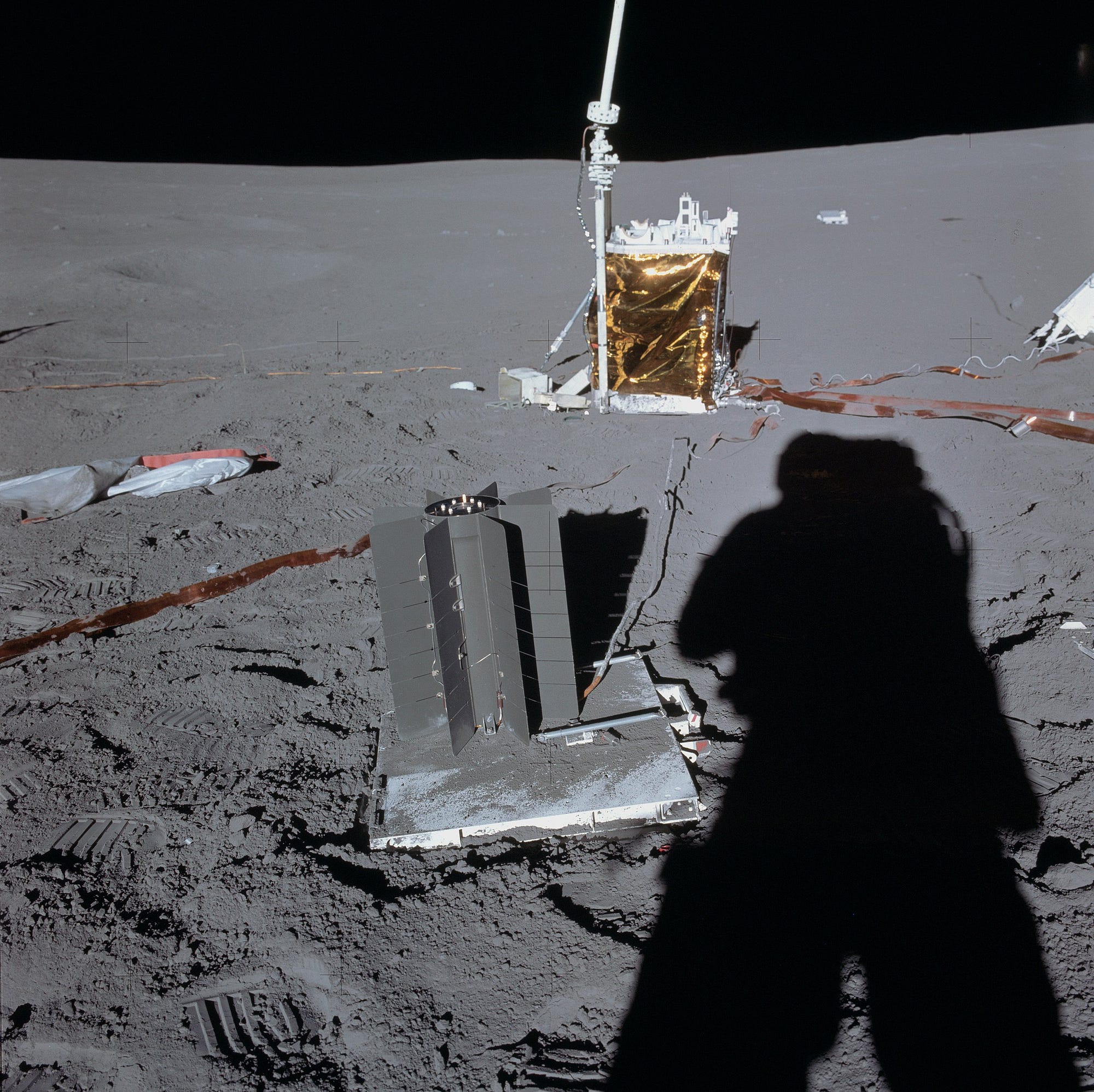 Above—the radioisotope thermoelectric generator from the Apollo 14 mission. NASA photo. At top—a radio check in Afghanistan in March 2014. Army photo