29 January 2015

The Dud of banning JuD – Zebra can’t change stripes

27 Jan , 2015

Abdul Basit, Pakistan’s High Commissioner was recently centre stage on one of our national TV channel. The competition for TRPs being never ending it didn’t really matter that Basit sabotaged the foreign secretary level talks by inviting Hurriyat hardliners for a ‘Biryani with Basit’ dinner-cum-discussion on how to destabilize India and keep J&K on the boil. Knowing Gilani and Co’s character of begging more, Basit would have arranged more bones and gravy, hence, institutionalizing more moolah through hawala and support from ISI-JuD-LeT-HuM would have formed part of the agenda. Feedback of Yasin Malik’s parleys with Hafiz Saeed and others in Pakistan and future course of action too would have been discussed. Strategies would have been chalked out how to keep certain section of the polity on the payroll for making pro-Pakistan statements and how to snare others to do so, making more inroads in media, engineering Track II discussions with select pro-Pak members and the like.

…why Pakistan keeps harping on plebiscite when the 1948 UN Resolution on Kashmir had categorically stated Pakistan must withdraw its security forces from Pakistan Occupied Kashmir (POK) before any plebiscite could be undertaken.

Surprisingly, none asked Abdul Basit why he was acting Begani Shadi Mein Abdullah Deewana; by harping on Kashmir when the illegal occupation of Pakistan is the only issue that needs to be discussion. No one asked him why Pakistan keeps harping on plebiscite when the 1948 UN Resolution on Kashmir had categorically stated Pakistan must withdraw its security forces from Pakistan Occupied Kashmir (POK) before any plebiscite could be undertaken. Pakistan deliberately killed the issue of plebiscite by not only not withdrawing her security forces but did the opposite; beefed up her security forces in POK, changed the demography of POK by moving large population to POK from other areas, and engineered massacre and exodus of Kashmiri Pundits from the Kashmir Valley as part of its proxy war.

Mr President, Perception is Everything

BY MAYANK SINGH
JANUARY 25, 2015 

Obama must realize that the Mumbai attacks were the tipping point in India’s battle against terrorism.

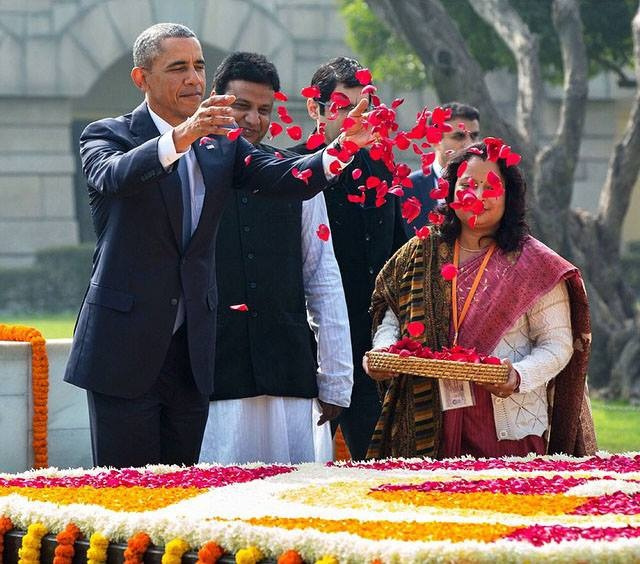
US President Barack Obama’s visit to India to attend the Republic Day celebrations is a sign of stronger ties between the two nations. Obama and Indian Prime Minister Narendra Modi have broken new grounds after the latter entered office in 2014. They have rapidly moved from former Prime Minister Atal Bihari Vajpayee’s assertion of India and the United States being “natural allies” to Modi’s description of the two countries as “natural global partners.” The positive chemistry between the two leaders is epitomized by the fact that Obama is the first US president to attend the Republic Day celebrations.

US-India relations saw a downturn after the heydays of the India-US Civil Nuclear Energy Agreement of 2005. The deal was a personal achievement for then-Prime Minister Manmohan Singh, who virtually staked the survival of his government while signing the agreement. But relations between the US and India became comatose as Singh’s government entered a self-preservation phase during its second term.

Ties between both nations reached an abyss in 2013, when Indian diplomat Devyani Khobragade was detained in the US for alleged perjury. Soon after, Indo-US relations turned frosty following a public outcry over Khobragade’s humiliation.

Hey, America: Give the Balance of Power a Chance

January 27, 2015

President Obama and his team scored an early success in the president's visit to India that didn't really require any effort on their part. The first 45 minutes of the president's meeting with Prime Minister Narendra Modi was devoted to discussing China, with the U.S. side pleased to find Modi sharing their own concerns about implications of China's rise for the strategic situation in the region. Not only were the U.S. and Indian assessments about China congruent; Modi took the initiative in suggesting revival of an informal security network that included the United States, India, Australia, and Japan.

Modi's posture on this subject was much different from what has characterized India's overall strategic posture for most of its history since independence. Throughout the Cold War a major element of Indian diplomacy was what bore the label of neutralism, and later was more often called nonalignment. Neutralism did not sit well at all with U.S. policymakers, some of whom—most notably Secretary of State John Foster Dulles—sharply criticized it. In 1956 Dulles stated, “These neutral governments do not seem to realize that the Communist intentions are so diabolical and so hostile to their freedom and independence.” He said that neutralist countries “would eventually succumb unless they could develop a crusading spirit against the evil forces of Communism.” Dulles especially angered the Indians by referring to their variety of neutralism as “immoral”.

Dulles may have been more unrestrained than most in the language he applied to this topic, but he was reflecting a strong and recurring American outlook that has been applied as well to other situations in international politics. That outlook is one of seeing the world divided fairly clearly between good guys and bad guys, of becoming impatient with those who do not see it the same way, and of using U.S. initiative to get the laggards to take their proper place in the good-vs.-bad lineup. That outlook manifested itself years after the Cold War when President George W. Bush told everyone else in the world that they were either with us or with the terrorists.

China's Military Parade: A Warning to Japan and the US

January 28, 2015

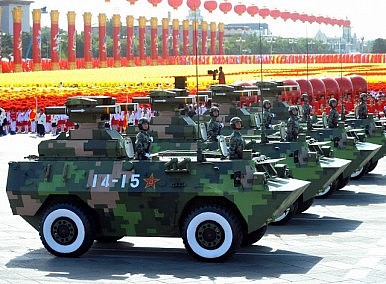
This year marks the 70th anniversary of the end of World War II. Countries around the world will commemorate the event with their own celebrations – including a May ceremony in Russia that is expected to be attended by Chinese President Xi Jinping and even North Korean leader Kim Jong-un. This week, China announced its own plans to commemorate the end of the war with a “grand military parade.”

China typically holds a major military parade on every tenth anniversary of the founding of the People’s Republic. The last parade came in 2009 under then-President Hu Jintao and incorporated 52 Chinese-made weapons systems, including cruise missiles, drones, and (flying overhead) fighter jets. The 70th anniversary of the end of World War II provides Xi a handy excuse to hold his own military parade without waiting another four years for the 70th anniversary of the PRC to roll around.

Back in 2009, an official from the National Day Military Parade Joint Command attempted to reassure observers that the public display of China’s military might was not meant to intimidate anyone. “A country’s military ability is not a threat to anyone; what is important is its military policy,” he insisted. Foreign Ministry spokesperson Hua Chunying echoed this stance when asked about the 2015 military parade in Tuesday’s press conference. “By hosting commemorative events with other counties, China is to awaken each and every virtuous man’s desire for and commitment to peace, to refresh people’s memory of the history and love for peace, and to showcase China’s staunch position of upholding the victory of WWII and the post-war international order, and safeguarding world peace,” Hua said.

Michel Houellebecq's Soumission is the Soundtrack of Our Time

January 27, 2015

Irony is the quintessential Western cultural achievement. If the West does not appreciate the importance of that defining character trait, it won't stand a chance.

It is not Michel Houellebecq's fault that his new novel Soumission ("Submission") was published in France on the same day that fanatic Islamist killers wiped out the editorial board of a satirical newspaper.

But the gruesome fate of Charlie Hebdo - and the heated (and often overheated) debate about Islamic fundamentalism and the terror it has bred in Europe and elsewhere-has become inextricably linked with Houellebecq's dystopian story of a near-future France in which the election of a Muslim president triggers the transformation of society away from its Western ideals.

In Europe, with its widespread sense of malaise over economic decline, unguided immigration, doubts about national identity, and war in the continent's periphery, the book has become the soundtrack of our time.

Why is this important for Strategic Europe? Because the novel, which is already a phenomenal success in France and Germany, picks up on the prevailing sentiment in Europe, which is the exact opposite of the goal of this blog. While we at Carnegie Europe have been trying to make the case for a Europe that embraces an outward-looking, more unified, more responsible approach to the world, Houellebecq depicts a Europe that has lost its life force.

His novel, like some of his earlier works, is essentially a fantasy of self-elimination. It is not about muscle, it is about atony. If Houellebecq, a man with remarkably fine antennae, is only 10 percent right about what he sees as the prevailing currents in Europe, Strategic Europe's aim will not just be a tall order. It will be impossible.

You can’t dance around the topic of radical Islam

January 25, 2015

I’ve never been a fan of global conferences to solve problems, but when I read that the Obama administration is organising a Summit on Countering Violent Extremism for February 18, in response to the Paris killings, I had a visceral reaction: Is there a box on my tax returns that I can check so my tax dollars won’t go to pay for this?

When you don’t call things by their real name, you always get in trouble. And this administration, so fearful of being accused of Islamophobia, is refusing to make any link to radical Islam from the recent explosions of violence against civilians (most of them Muslims) by Boko Haram in Nigeria, by the Taliban in Pakistan, by al-Qaeda in Paris and by jihadists in Yemen and Iraq.

Last week the conservative columnist Rich Lowry wrote an essay in Politico Magazine that contained quotes from White House spokesman Josh Earnest that I could not believe. But I checked the transcript: 100 per cent correct. I can’t say it better than Lowry did: “The administration has lapsed into unselfconscious ridiculousness. Asked why the administration won’t say (after the Paris attacks) we are at war with radical Islam, Earnest on Tuesday explained the administration’s first concern is ‘accuracy’. ‘We want to describe exactly what happened. These are individuals who carried out an act of terrorism, and they later tried to justify that act of terrorism by invoking the religion of Islam and their own deviant view of it’. “This makes it sound as if the Charlie Hebdo terrorists set out to commit a random act of violent extremism and only subsequently, when they realised that they needed some justification, did they reach for Islam.

“The day before, Earnest had conceded that there are lists of recent ‘examples of individuals who have cited Islam as they’ve carried out acts of violence’. Cited Islam? According to the Earnest theory… purposeless violent extremists rummage through the scriptures of great faiths, looking for some verses to cite to support their mayhem and often happen to settle on the holy texts of Islam.”

Why ISIS Keeps Expanding

Lina Khatib
January 21, 2015 

Perhaps no self-designation by an armed group has been more apt in the current context of the Syrian conflict than the Islamic State’s slogan, “lasting and expanding”. More than four months after the start of an international airstrikes campaign against the organization, ISIS continues to greatly enlarge the area under its control. It is reported that since September 2014, when the international coalition airstrikes against ISIS began, its Syrian territories have doubled in size. There are several reasons for this enlargement, which is going beyond the geographical areas of Syria and Iraq to become a global expansion.

A basic reason is that, in limiting itself to airstrikes, the anti-ISIS international coalition is not implementing a military strategy with diversified components such as ground engagement. The importance of the latter has become clear following the losses incurred by the Islamic State in areas in which its fighters have faced resistance from the peshmerga. The Kobani battles show that ISIS struggles when confronted with boots on the ground. Those boots need not be Western; they can be Middle Eastern. However, the West has been slow in providing adequate military support to the Syrian opposition, which would have allowed it to stand up to the ISIS expansion more effectively. Only recently has the United States announced that it is deploying 400 troops to train the Free Syrian Army. This is a positive step but comes a little too late in the game. 

The coalition’s strikes have also indirectly helped the ISIS expansion through focusing on Iraq rather than Syria. When ISIS feels stretched following an attempt to expand into a given territory, it always resorts to retreating from this territory in order to re-group in core areas, re-strategize, and expand again in directions other than the land originally targeted. An example of this took place last year, when ISIS attempted to take over Idlib in the west but failed largely because of the governorate’s separation from Raqqa—the Islamic State’s headquarters—by Aleppo. After retreating to Raqqa, ISIS turned eastwards and has since been attempting to take over the governorate of Deir ez-Zor. As the coalition’s campaign is centered on ISIS in Iraq, the organization has withdrawn from some Iraqi areas to focus its energies on Syria, where it faces fewer challenges.

Red Alert: Rocket Fire Could Signal New Offensive on Mariupol

JANUARY 24, 2015

Reports of heavy rocket artillery firing on the eastern parts of the city of Mariupol, Ukraine, as well as a statement made by a separatist leader, indicate the potential preparation of an offensive on the city. While this would be a significant escalation and an indicator of Russian intent to push further into Ukraine, potentially forming a much-rumored land connection to the northern border of Crimea, there are also several indicators required for such an offensive that are currently still missing.

The heavy rocket artillery firing has been widely reported, and the death toll has risen to 27. Mariupol has been shelled in the past, notably in early September, but as the cease-fire took effect, separatist forces generally conducted attacks only outside of the city. It is not clear whether this is simply an intensification of relatively static fighting along the front between Russian and pro-Russian forces on the one side, and Ukrainians, or the beginning of a Russian-led offensive to widen the pocket, or the opening move in a broader strategic offensive to link up with Crimea, 200 miles to the west of the pocket.

Red Alert Update: At the Heart of the Mariupol Crisis

JANUARY 25, 2015

As the situation on the ground quiets down in the wake of the Jan. 24 barrage by Russian-allied forces near the Ukrainian city of Mariupol, Stratfor is continuing the watch initiated by our Red Alert. We believe, at the very least, that Russia is keeping its option to mount an offensive open, and at most, is preparing to launch an offensive to secure its hold on the Crimean Peninsula.

The artillery barrage in Mariupol has died down, and according to the Ukrainian military's local commander, there have been no attacks today. Some diplomacy is spinning up, and mutual charges of responsibility are being exchanged. The pro-Russian faction is blaming the Ukrainian military for the attack, and the Ukrainians are charging that the Russian military initiated the barrage, not Ukrainian pro-Russian factions. The fog of war is being supplemented by deliberate disinformation on all sides. The issue is whether this was an isolated incident or part of an extended strategy. If it is, it is not a Ukrainian strategy. Following recent defeats, Ukraine is not in a position to go on the offensive in this region, despite a noticeable build up and mobilization of Ukrainian forces in recent weeks. The Russians, however, have been moving regular forces, including some first-rate units, into Donbas. More important than the charges and counter-charges is this fact: At this moment, the rebels are being strongly reinforced by Russian forces, and those forces have an operational advantage but a strategic problem.

5 Myths about America's Nuclear Weapons Debunked

Robert Gard,Philip Coyle,Greg Terryn,John Isaacs
January 28, 2015 

"As the mission of our nuclear weapons changes, so should the size and shape of the arsenal. Until then, we will continue to receive unsettling reports of scandals and inefficiencies within our nuclear enterprise."

The Bulletin of Atomic Scientists announced last week that it has decided to move its famed “Doomsday Clock” three minutes closer to midnight or, in effect, closer to the “end of humanity.” While this year, the Bulletin focused on the threat from climate change, a spokesperson added that “a nuclear arms race resulting from modernization of huge arsenals pose extraordinary and undeniable threats to the continued existence of humanity.”

Indeed, nuclear weapons still play a limited, yet very expensive, role in our national security. The Congressional Budget Office announced last week that the United States will spend about $350 billion over the next decade to upgrade and maintain its arsenal. But at the same time, there are also misconceptions about the purpose, status and effectiveness of our arsenal. Let’s disarm some of those myths:

1. Nuclear weapons are the highest priority U.S. military forces:

Out-going Secretary Hagel perpetuated this myth during his press conferenceannouncing the results of the reviews: “Our nuclear deterrent plays a critical role in ensuring U.S. national security, and it's DOD's highest priority mission. No other capability we have is more important.” While nuclear deterrence has been a vestige of U.S defense policy since World War II, it clearly does not represent today’s highest priority for the DOD in terms of attention, planning or funding.

Think Harder

JANUARY 27, 2015

Every year, American parents turn to U.S. News & World Report’s annual college rankings, a frequently consulted (and just as frequently derided) index indicating year after year the surprising fact that Princeton, Harvard, and Yale are, once again, the best places to send your kids to school.

What if you’re not an anxious parent looking to get your kids out of the house, but an anxious government official looking for policy advice? Where’s the best place to turn? This year, you might reference something called the “2014 Global Go To Think Tank Index Report,” just released by the University of Pennsylvania’s Think Tanks and Civil Societies Program.

Billed as “the most comprehensive ranking of the world’s top think tanks,” the report ranks 150 think tanks across several categories, including region and area of research. Of course, there’s also a “Top Think Tanks Worldwide” section, which allows the Princetons and Harvards of the think tank world (Brookings, Chatham House, and the Carnegie Endowment) to get their due.

According to James McGann, a University of Pennsylvania professor who heads the survey, he and his colleagues acquired the data by contacting thousands of journalists, policymakers, and, yes, think tanks and inviting them to nominate candidates for inclusion in the list. In a second round, participants ranked those that made the cut from “best” to “worst.” Smaller expert panels then reviewed and massaged the list according to their understanding of each think tank’s quality. Neither the identities of these expert panels nor the specific criteria for their selection are publically revealed. Though the report’s authors provide a list of 28 criteria that participants are “encouraged” to apply to their decisions, the actual ranking is subjective, the process known only to the experts themselves.

Top American Diplomat Decries ‘Lies’ of Russian Media

JANUARY 27, 2015

America’s top diplomat for Europe denounced Russian state-media coverage of the Ukraine crisis on Tuesday and belittled the Kremlin’s propaganda efforts in the United States as fallacious and ineffective.

“All you have to do is look at RT’s tiny, tiny audience in the United States to understand what happens when you broadcast untruths in a media space that is full of dynamic, truthful opinion,” said Victoria Nuland, the assistant secretary of state for European and Eurasian affairs, referring to the Kremlin-backed global media company. “State-owned Russian media spews lies about who’s responsible for the violence [in Ukraine].”

Speaking at a Brookings Institution event in Washington, D.C., where advertisements promoting RT programming appear on numerous bus stops and public placards, Nuland rejected a journalist’s proposal to ban RT from broadcasting in the United States, saying, “We believe in freedom of speech, freedom of media in this country.“

“The question we ask Russians is, why are you so afraid of diversity of opinion in your own space?” Nuland added.

A spokesperson for the Russian Embassy in Washington did not respond to a request for comment.

In recent days, Russian media has gamely relayed the Kremlin line that the Ukrainian army is a “foreign legion” that represents NATO’s interests and that Kiev is responsible for a devastating rocket strike that killed 30 civilians in Mariupol — accusations Western nations categorically deny.

The European Union, Nationalism and the Crisis of Europe

JANUARY 20, 2015

Last week, I wrote about the crisis of Islamic radicalism and the problem of European nationalism. This week's events give me the opportunity to address the question of European nationalism again, this time from the standpoint of the European Union and the European Central Bank, using a term that only an economist could invent: "quantitative easing."

European media has been flooded for the past week with leaks about the European Central Bank's forthcoming plan to stimulate the faltering European economy by implementing quantitative easing. First carried by Der Spiegel and then picked up by other media, the story has not been denied by anyone at the bank nor any senior European official. We can therefore call this an official leak, because it lets everyone know what is coming before an official announcement is made later in the week.

The plan is an attempt to spur economic activity in Europe by increasing the amount of money available. It calls for governments to increase their borrowing for various projects designed to increase growth and decrease unemployment. Rather than selling the bonds on the open market, a move that would trigger a rise in interest rates, the bonds are sold to the central banks of eurozone member states, which have the ability to print new money. The money is then sent to the treasury. With more money flowing through the system, recessions driven by a lack of capital are relieved. This is why the measure is called quantitative easing.

The New Drivers of Europe's Geopolitics

JANUARY 27, 2015 

For the past two weeks, I have focused on the growing fragmentation of Europe. Two weeks ago, the murders in Paris prompted me to write about the fault line between Europe and the Islamic world. Last week, I wrote about the nationalism that is rising in individual European countries after the European Central Bank was forced to allow national banks to participate in quantitative easing so European nations wouldn't be forced to bear the debt of other nations. I am focusing on fragmentation partly because it is happening before our eyes, partly because Stratfor has been forecasting this for a long time and partly because my new book on the fragmentation of Europe — Flashpoints: The Emerging Crisis in Europe — is being released today.

This is the week to speak of the political and social fragmentation within European nations and its impact on Europe as a whole. The coalition of the Radical Left party, known as Syriza, has scored a major victory in Greece. Now the party is forming a ruling coalition and overwhelming the traditional mainstream parties. It is drawing along other left-wing and right-wing parties that are united only in their resistance to the EU's insistence that austerity is the solution to the ongoing economic crisis that began in 2008.
Two Versions of the Same Tale

The story is well known. The financial crisis of 2008, which began as a mortgage default issue in the United States, created a sovereign debt crisis in Europe. Some European countries were unable to make payment on bonds, and this threatened the European banking system. There had to be some sort of state intervention, but there was a fundamental disagreement about what problem had to be solved. Broadly speaking, there were two narratives.

The French Colonialist’s Comeuppance

JANUARY 21, 2015

By pushing its immigrants to the fringes of French society, the country cultivated a breeding ground for humiliation, exclusion, and retribution. 
 
For I am all the subjects that you have, Which first was mine own king; and here you sty me

In this hard rock, whiles you do keep from me

The rest of the island.

You taught me language; and my profit on’t

Is, I know how to curse. The red plague rid you

For learning me your language!

—Caliban in The Tempest, Act 1, Scene 2

France and, by extension, Europe have put themselves between a rock and a hard place. In the French case, this situation has persisted for decades, even more than a century. While religious extremism may be the proximate motivation for the vicious slaughter at Charlie Hebdo and the kosher market in Paris, the legacy of colonialism and the humiliation of ex-colonial subjects are at the heart of the matter.

In April 1961, as a young student in France, I found myself driving with four other Americans through Bordeaux, returning from a week in Spain. As we came to the edge of the city, we were stopped at a military roadblock. We were asked to step out of the car while heavily armed soldiers searched the trunk, the insides, and underneath. As we drove out of Bordeaux half an hour later, we went through the drill a second time.

Stay Scary, America

JANUARY 25, 2015

When it comes to the U.S. response to extremists abroad, it is far better for America to be feared, and to be loved. 

In Robert De Niro’s 1993 mafia epic, A Bronx Tale, Chazz Palminteri’s mob boss character Sonny takes a local kid under his wing and teaches him the ways of the streets. When his protégé asks the age-old question of whether it’s better to be feared of loved, Sonny gives him a rousing response:

It’s nice to be both, but it’s very difficult. But if I had my choice, I would rather be feared. Fear lasts longer than love. Friendships that are bought with money mean nothing…. It’s fear that keeps them loyal to me. But the trick is to not be hated. That’s why I treat my men good, but not too good. I give them too much, then they don’t need me. I give them just enough where they need me, but they don’t hate me.

His message is a crucial one for a wise guy on the rise, but it also has a storied place in the realm of international affairs, dating back to the late 1400s and Niccolò Machiavelli’s The Prince.

In the eyes of many, the presidency of George W. Bush brought this sentiment to the forefront of post-9/11 U.S. foreign policy, a shift that President Barack Obama has tried, with some success, to roll back. From the disavowal of enhanced interrogation techniques to restoring relations with Cuba and vastly reducing the number of U.S. troops in Iraq and Afghanistan, he has undeniably softened the overall face of American power. These changes didn’t occur by accident, of course; it’s not America’s style to admit it, but after a few years of rather harsh criticism abroad, at least part of the American electorate — the part that elected Obama — wanted to be liked again.

Far-east-between-russia-china-and-america


Rensselaer (Rens) W. Lee III is a Senior Fellow of the Foreign Policy Research Institute and president of Global Advisory Services, a McLean, Virginia-based consulting firm. Dr. Lee has performed overseas contract assignments for the State Department, the Department of Energy, the World Bank, the White House Office of National Drug Control Policy and other agencies, which have encompassed Russia, Eastern Europe, Central Asia, the Caribbean, and much of South America.

During 2002––03, he worked as a research analyst at the Congressional Research Service of the Library of Congress, where he produced major reports on terrorist finance, nuclear smuggling and Afghanistan’s opium-heroin trade. In 2009, he was a Title VIII-supported short-term scholar at the Kennan Institute of Advanced Russian Studies.

Dr. Lee received his Ph.D. from Stanford University and is fluent in Russian, Chinese, Spanish and French. He expresses thanks to Professor Artyom Lukin of the Far Eastern Federal University in Vladivostok for his comments on this article. Rens Lee

Overview

Moscow’s relations with its eastern territories, especially the nine provinces of the Russian Far East (RFE), have significant security implications for Russia and for the Asia-Pacific community generally.[1] With 36 percent of the national territory and 25,000 km of sea coast, and richly endowed with natural resources, the RFE is a valuable and strategically desirable piece of real estate. Yet, holding just 4.4 percent of Russia’s population and contributing a mere 5.6 percent to the country’s GDP, it remains a weak and underdeveloped backwater. The RFE’s geographical situation is precarious: remote from and poorly connected to Russia’s European core and uncomfortably close to dynamic and ambitious outside powers, most notably China. In broader geopolitical terms, Moscow’s authority continues to rest mainly on its political-military presence in the RFE-its industrial and financial footprint in that part of the world to date is essentially insignificant. The non-security components of power, however, have great modern day significance, and ultimately will determine whether Moscow can successfully retain real sovereignty over the RFE, or whether the interplay of outside forces will increasingly dominate the region’s economic and political future.

Technical Developments Changing Coin Strategies And Tactics

Pravash Kumar Mishra

Increasingly the counter-insurgency operations are throwing up new tactical and strategic challenges for the commanders and the political leadership as they seek to de-centralise tactical decisions to ground commanders and provide the forces technology rich, stand-off weaponry.

At present due to various technical developments in COIN, particularly in weapons, ammunitions, field uniform, air cover, surveillance/technical/ communication equipments, anti-ballistic, anti-mine and anti-blast all terrain vehicles, the strategies and tactics in counter insurgency operations in Kashmir, Manipur, Meghalaya, Assam and all Maoist affected states require a change.

The impact of such developments also depends upon the new tactics adopted by various militant groups (own and foreign mercenaries) operating in India including the Maoists. The Maoist insurgency had spread to 20 of the 28 states. As of now, 182 districts are disturbed by Maoists, 83 partially and 35 badly. The whole of J&K and the entire north-east keep Army and paramilitary forces occupied in countering various Indian and foreign militant groups. At present, the uses of helicopters are mostly for casualty evacuation, troop mobility and other logistics roles. Air Force, BSF, civil helicopters and UAVs are now deployed in support of all COIN.

The tactics now adopted in a COIN is, maximum de-centralisation of control, leaving the command to field commanders to take decisions. Maoist insurgency is a pan-Indian problem. As a strategy, CRPF along with BSF, RPF, CISF, ITBP, NSG, state IRB/commando forces and SSB are deployed to contain insurgency. The strategy of insurgents varies from state to state excluding Maoists’, which is common in all the affected states. The new training tactics adopted by the COIN troops include hostage crisis, rescuing citizens abducted by Maoists, providing proximate security to VIPs on visit to infested areas, resolving suicide attacks, counter terrorist operations, casualty evacuation by air and quick reaction in providing logistics and reliable communication to the spot. Additional 15 Nishant Unmanned Aerial Vehicles and about 50 OFB Kolkata made counter-land mine vehicles had been provided to field areas to protect troops from hidden mines.

Australia Building an Offensive Cyberwar Capability

Christopher Joye
January 27, 2015

The frequency and severity of global cyber-attacks is rising rapidly and extending into outright cyber-war between states. And Australia is no innocent bystander, developing its own cyber-weapons, which we can reveal for the first time have been deployed in counter-terrorist operations overseas.

This new universe of unprecedented digital threats means law enforcement and security authorities require 21st-century tools to combat criminals, anarchists and despots that would do us harm. That is why the proposed mandatory “metadata” retention laws, which seek to preserve the investigative playing field police and intelligence agencies had before the advent of the Internet, are so important.

On June 27 North Korea’s Ambassador to the United Nations, Ja Song-nam, sent a letter to UN Secretary-General Ban Ki-moon, warning that if the US allowed Sony Pictures Entertainment to release a comedy, called The Interview, on a CIA plot to assassinate North Korean dictator Kim Jong-un, it would be tantamount to “undisguised sponsoring of terrorism as well as an act of war”.

"The US should take immediate and appropriate actions to ban the production and distribution of the aforementioned film; otherwise, it will be fully responsible for encouraging and sponsoring terrorism," the letter said.

After infiltrating Sony’s computer network for months and stealing over 100 terabytes of confidential data (including the next James Bond movie’s script), on November 24 a North Korean hacking collective called the “Guardians of Peace” (aka “GOP”) leaked three unreleased Sony films, sensitive salary details and embarrassing email correspondence between top executives and their actors.

Australia deploys its own cyber weapons in global counter-terrorism ops: sources

Christopher Joye
January 27, 2015

The frequency and severity of global cyber attacks is rising rapidly and extending into outright cyber war between states. And Australia is no innocent bystander, developing its own cyber weapons, and deploying them in counter-terrorist operations overseas.

As the US and North Korea accuse each other of attacking IT systems and internet infrastructure in their respective soil following the Sony Entertainment hack, the Australian Financial Review reports Australia is an active player in this new universe of unprecedented digital threats.

Multiple intelligence sources have told The Fin that for more than a decade Australia has been building an offensive "computer network attack" (CNA) capability inside the Australian Signals Directorate (ASD), which openly advertises for hackers who are "passionate about breaking and securing computer systems" with "knowledge of offensive and defensive techniques to protect Australia's interests".

Sources say ASD has launched cyber attacks on terrorists in the Middle East that were conspiring against Australia. ASD's small team of CNA specialists, a fraction of the numbers working in its "computer network exploitation" area (which steals foreign intelligence), develop their own malware and borrow payloads from the larger CNA resources residing inside America's NSA and Britain's GCHQ.

Australia has also allegedly harnessed its offensive cyber skills to hit back against a non-democratic state that was pilfering our public and private secrets, intelligence sources say. This involved implanting malware on foreign servers that erased data and disabled the cooling systems such that they were ultimately "fried".

Did the White House Use Drone Killing Technology?

January 26, 2015


At about 3 a.m. on Monday morning, a small quadcopter drone, or unmanned aerial vehicle, crashed on the White House lawn. White House officials said that the drone, by itself, was unarmed and didn’t represent a threat. Authorities quickly located the owner, a government employee, who has managed (so far at least) to convince the Secret Service that he made an innocent mistake flying his drone outside of the White House in the wee hours of the morning.

The White House won’t comment on whether or not they took any special steps to bring down the small UAV. But the White House may have employed the same anti-drone technology that the military is trying to perfect to protect ships and planes from future drone swarms. There are plenty of ways to knock a drone out of the sky, everything from surface to air missiles to hunter-killer robots to, yes, lasers. But for a cheap off-the-shelf drones operating off a simple radio or Wi-Fi signal, the best method is simple jamming.

For the military, signal jamming is an increasingly important component of electromagnetic warfare, or EW. It’s an area of growing concern as the electromagnetic spectrum, an area where the United States once enjoyed sole dominance, is becoming increasingly crowded.

Cybersecurity Now Key Requirement For All Weapons: DoD Cyber Chief

January 27, 2015

WASHINGTON: Cybersecurity — it’s not just for networks anymore. What’s come to be known as the Internet of Things means targets cane be almost anywhere.

“If there is a computer in something, it can be cyber-attacked, and we need to be able to harden it and defend it,” the Pentagon’s Deputy Chief Information Officer for Cybersecurity,Richard Hale, told me on Monday. “Whether the computer is on a desk or in a medical device or in the engine of a jet airplane, that computer has to be designed to be as resistant to attack as possible, it has to be configured securely every second, [and] it’s got to be able to be updated as quickly as possible.”

There’s a lot of cybersecurity angst over the impending Internet of Things, in which anything from refrigerators to self-driving Google Cars are connected to the web. If everything’s connected, the theory goes, everything is vulnerable. But, as Hale made clear, bad guys needn’t wait on the Internet of Things. We should start worrying now, because a device doesn’t have to be intentionally connected to the Internet to beinadvertently left open to cyber attack

The Iranian nuclear facility at Natanz wasn’t connected to the outside world, for example, but the Stuxnet virus appears to have gottento it via a thumb drive. Treason or simple carelessness could reach a US military system the same way. The malware could also hitch a ride aboard thecomputerized diagnostic tools that maintainers periodically plug into every tank, missile launcher, and jet fighter. A sophisticated adversary might even insert a virus without physical contact bytransmitting it into a radio receiver or radar antenna.

Cyber security Challenges

By K D Nayak & Amit Sharma

Cyber warfare being considered as a legitimate mode of attrition between nations, a new spectrum of operations have opened up with the full panoply of instruments

President Barack Obama, in his presidential address spoke that “Our digital infrastructure will be treated as a strategic national asset”. The underlined essence of president Obama’s statement clearly points to the fact that world leaders are considering the importance and consequently the threats to information infrastructure to a level where they are termed as a country’s strategic asset. Over last 20 years, there has been a colossal change in the way in which threats have evolved in cyberspace, to an extent that strategists around the world are recognising cyberspace as the fifth domain of warfare. This rapid evolution of threats, from non-state actors and at the behest or in some cases directly by state actors, has resulted in a global cyber pandemonium and chaos. The scenario is further aggravated by the global incoherence of domestic and international cyber laws in relation to law enforcement model; attribution issues; international disharmony on cyber issues; and most importantly non-availability of a global treaty, especially for issues relating to law of war model.

With nations around the world, preparing to defend against the threats and, to capitalize the opportunities provided by this relatively new realm of warfare; it is imperative to protect our sovereign cyberspace especially the critical information infrastructure. The situation is exacerbated with the active inclusion of state actor in cyberspace and the development of advanced cyber weapons which have graduated from non-disruptive cyber espionage weapons i.e. utilizing zero day exploits, to highly lethal disruptive weapons targeting SCADA and DCS systems like the STUXNET. The erudition of these cyber weapons especially in relation to stealth parameters clearly delineate them from the classical malwares, viruses etc. This scenario was further exacerbated by Snowden’s revelation of strategic US cyber espionage programme call the PRISM. PRISM clearly drew the line and marked the herald of a new era of threats in cyberspace focused primarily on the state use of cyber space as a weapon of war.

ADVICE FOR FRANCE IN ITS “WAR ON TERROR”

Thomas Lynch, Cindy Storer, Mark Stout, Stephen Tankel and Clint Watts
January 27, 2015

“France is at war against terrorism, jihadism, and radical Islamism.” So said French Prime Minister Manuel Valls in the aftermath of the Paris attacks that some observers have called France’s 9/11. We asked five subject matter experts, including an analyst and former FBI agent, one of the CIA’s original al Qaeda hands, an intelligence historian and former intelligence analyst, a former senior adviser to the highest levels of the U.S. military, and a renowned scholar of jihadist movements, how they would advise France—among America’s oldest allies—as they embark on their own “war on terror.”

Cindy Storer

Don’t throw the baby out with the bathwater.

As the French add manpower to the security and intelligence services and enact new legislation to support counterterrorism, they should be careful not to fall into the trap of thinking that all those who worked against terrorism before 7 January somehow failed in their duty. The speed with which authorities identified perpetrators and associates, as well as changes that could be made to improve counterterror efforts, indicate to me that someone in the French intelligence and police services has been aware of and concerned about the threat for quite some time. Give them what they need and listen to what they say, don’t sideline them to cover up someone else’s now questionable decisions.

The Myth of the Terrorist Safe Haven

JANUARY 26, 2015 

A pernicious and persistent theory that America’s enemies flourish in foreign sanctuaries -- and that only military means can rout them -- has led us abroad in search of monsters to destroy. 

In the U.S. military planning process, the need to develop, test, and finish operational plans in a timely manner requires — in the absence of clarifying information — making assumptions.

What’s an “assumption,” then? Well, the military defines it as: “A supposition on the current situation or a presupposition on the future course of events, either or both assumed to be true in the absence of positive proof, necessary to enable the commander in the process of planning to complete an estimate of the situation and make a decision.” This refers to temporary gaps in knowledge that intelligence analysts will (hopefully) fill in and validate before the operation commences, such as overhead imagery maps of road and bridge networks or updated enemy force-structure estimates. Planners and commanders recognize the risks of relying on untested assumptions, but they nevertheless do so to provide sequenced guidance for forces in the field in an expeditious manner.

How should a democracy fight terrorism?

Anthony Bubalo
27 January 2015 

If you live in an authoritarian state the answer to the question 'How do you fight terrorism?' is relatively straightforward. I say 'relatively' because it is by no means a simple question even for dictators. In recent decades even authoritarian governments have had to weigh up the most effective method of fight terrorism and it hasn't always just involved applying as much repressive force as possible.

But for a democracy, or more specifically a liberal democracy, fighting terrorism is not straightforward because it is not just a matter of efficacy; it is also a matter of rights and values. In defending itself against terrorism, a liberal democracy is not just protecting the physical security of its citizens, it is also defending the integrity of the political system in which these citizens participate.

So while an authoritarian government must simply find the most efficacious way to fight terrorism, a liberal democracy must find methods that are effective but which do not undermine the rights and values that distinguish the political system, most notably the rule of law and the various freedoms (of expression, of assembly, of the press etc) that make up our civil liberties.

I think we have entered a period, which may well last as a long as a decade, in which Australia will face a far more serious terrorist threat than it faced in the aftermath of 9/11. It is a threat we will face as much at home as we will abroad, as the events at the Lindt Café last December underline.

The Reform the Military Is Already Undertaking: Chickenhawk, No. 19

JAN 27 2015

Slide from the documentary 'Bridging the Gap' ( Stomoway Productions )The theme in this installment is a number of worthwhile (in my view), powerful links and posts on the general question of self-criticism within the military, and joint civilian and military efforts to direct real attention to the chickenhawk pathology.
1) "Stick Your Neck Out," by two junior naval officers, LT Roger Misso and LTJG Chris O'Keefe, on the US Naval Institute site. They are arguing for creative ferment among the young officer class:

We need junior officers willing to stick their necks out and write. Our service and our country are dealing with serious challenges, many of which may have non-traditional solutions. This generation of junior officers will be judged for our courage to stand up and work to solve those problems. The nation can no longer afford our silence. 2) Stay in and fight. Also from a junior naval officer, in response to episode No. 18 in the chickenhawk saga, in which young Captain X and Captain Y explained why they had decided to resign:

Nothing will ever change if these officers leave the service. These are exactly the kind of people who should stay IN the service! The young men and women who can clearly identify that there is a problem, and an impediment to the solution. Yet, rather than risking it by continuing to push for the solution, or teach others how to push for a solution and later achieve critical mass, they leave the service.

Five Rules for Defense Spending

January 26, 2015 

In 1796 Thomas Jefferson said there were two types of American political parties, “One which fears the people most, the other fears the government.” In domestic politics the contemporary American political divide is equally wide and Americans should not expect their elected leaders to change course one iota.

National defense is different. There is a sense across the country that it’s time to craft a new national military strategy focused on protecting Americans, American territory, and core American commercial interests. Americans realize their Republic is so exceptional that it’s social, political and economic systems are not exportable to hostile and dysfunctional societies. Missions designed to rescue failed states with American military power are unpopular.

The question for the 115th Congress is how to chart this new course in national defense? There is no quick answer, but Congress’s 2008 experience with American automakers suggests a possible solution.

When the chief executive officers (CEOs) of America’s Big Three Automakers flew to Washington in November 2008 to plead for public money to bail out their companies, members of Congress knew something about good business practices. They had no trouble exposing the essential truth: the automakers’ difficulties could be traced to a single, catastrophic failure. They had not adapted. For decades, American automakers promised one hyper-efficient vehicle after another—the electric car, the “super car,” the hydrogen car—only to deliver bigger gas guzzlers. Former Connecticut Senator Christopher Dodd accurately summed up their problem: “They are seeking treatment for wounds that, I believe, to a large extent were self-inflicted.”