23 May 2015

The Real Problem with America's Military

Dakota Wood
May 22, 2015
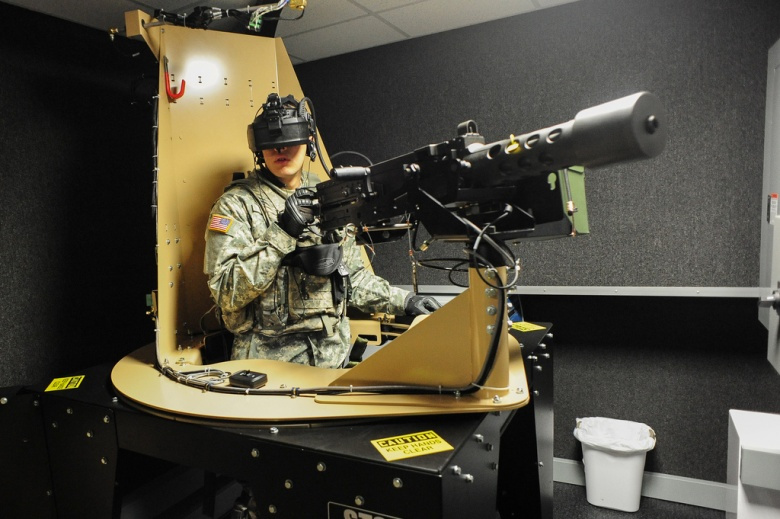
Fear the promise of transformative, leap-ahead, game-changing, and revolutionary technological solutions.

Over the last several years, there has been a noticeable uptick in terribly confused thinking about military matters that extends to understanding the nature of conflict, the role of military forces, and general thinking about military affairs.

Sometimes the confusion emerges in the form of an identity crisis. The U.S. Army seems to have experienced this (and here and here) as it unhitched from protracted operations in Iraq and Afghanistan. While the Navy and Air Force embarked on Air-Sea Battle (later modified) and the Marines doubled-down on their role as the nation’s “crisis-response force,” the U.S. Army has struggled to explain its continued value.
The Glaring (Ir)Relevance of Ramadi

A. Trevor Thrall, Erik Goepner
May 22, 2015

Ramadi does not spell victory for ISIS anymore than Iraq’s retaking of Tikrit from the insurgents spelled defeat for ISIS.

What does the fall of Ramadi mean? Even as the Obama administration acknowledged that Ramadi was a setback, spokesman Josh Earnest shrugged it off, declaring that the administration won’t “light our hair on fire” every time there is a setback in Iraq. Meanwhile, hawkish critics of U.S. policy have jumped on the defeat to justify their call for a more robust response. The Pentagon first said Ramadi would be a significant loss, but then argued that it wasn’t. Senator John McCain, on the other hand, labeled the defeat an “abysmal failure.”

Rhetorical positioning aside, the fall of Ramadi is essentially irrelevant to the final outcome in Iraq. Though a city of moderate strategic value considering its proximity to Fallujah and Baghdad, Ramadi does not spell victory for ISIS anymore than Iraq’s retaking of Tikrit from the insurgents spelled defeat for ISIS (despite suggestions to the contrary from the Obama administration). The battle for Iraq will depend on the ability of the Iraqi government to mobilize enough effective fighting power to stop the ISIS expansion. Unfortunately for Iraq, despite over a decade of U.S. investment in training and equipment, Iraq’s military appears incapable of mustering consistent fighting effectiveness to deal a decisive blow to ISIS on the battlefield. The only sure way Iraq can hope to defeat ISIS is by encouraging greater external intervention in the form of airstrikes, weapons, and most importantly of all—ground troops.

Defence Preparedness Back on Track

22 May , 2015

A successful foreign policy is predicated to a large measure on a country’s defence posturing. A robust defence posturing in turn is not possible without motivated men complemented by requisite arms and equipment. In the last decade or so, India’s defence preparedness suffered not only on account of lack of material wherewithal but subversion of the military leadership from external and internal vested interests.

Deliberately the three services were made to starve of most critical equipment imperative in conduct of operations during war.

In all the three dimensions, i.e. land, air and sea, India was made to suffer because of sabotage of defence preparedness. Deliberately the three services were made to starve of most critical equipment imperative in conduct of operations during war. The army cannot fight without artillery support, but it was constantly denied 155mm guns. The navy’s submarine fleet dwindled to pathetic levels of 40 percent of the minimum requirement. The fighter squadrons of the air force were allowed to be depleted to nearly 60 percent of the mandatory need.

14 Years After 9/11, The Press Is Finally Becoming More Aggressive In Its Coverage of Secrets and the War on Terrorism

Margaret Sullivan
May 21, 2015

Since 9/11, the United States’ “war on terror” has become the overarching news story of our time.

As the nation’s dominant news organization, The Times deserves, and gets, intensive scrutiny for how it has handled that story. The grades, clearly, are mixed. Its role in the run-up to the Iraq War has been rightly and harshly criticized. Its early reporting on surveillance, though delayed, was groundbreaking. Its national-security reporting has been excellent in many ways and, at times, is justifiably slammed for allowing too much cover for government officials who want to get their message out.

Nearly 14 years after 9/11, a reckoning finally is taking place. The Times’s executive editor, Dean Baquet, has said repeatedly in recent months that he thinks it’s time to toughen up and raise the bar.

Here’s what he told me recently, in the context of a column I wrote about covering drone strikes and the death of civilians:

“We’ve learned the perils of not monitoring and policing warfare” as rigorously as possible, and of too readily agreeing to government requests to withhold information.

Junior Leaders…Success Depends on a Proactive Mindset


Recently, a West Point Cadet asked me what I, as a Troop Commander, expected from a Platoon Leader. I provided four traits that I believe define successful lieutenants: unquestionable integrity, an aggressively proactive attitude, a willingness to engage in open and candid communication, and a commitment to self-study.

I want to highlight the second trait, maintaining a proactive mindset, which in my mind separates mediocre and outstanding junior leaders. Being proactive, especially in the face of potential obstacles and failure, is a key determinant of one’s level of success.

Lieutenants share four common situations that can lead to failure: 
You don’t know how to accomplish a given task. 
You know how to accomplish a given task, but (you think that) you can’t. 
You know how to accomplish a given task, but choose not to. 
You know how to accomplish a given task, but make mistakes or errors that cause you to fail. 

For each cause of failure, there is a proactive response that leads to success. Let’s explore each of the reasons for failure and corresponding reactive and proactive responses.

SOCOM Leaders: We Need More Non-Traditional Technology Partners

By Jon Harper 

TAMPA, Fla. – U.S. Special Operations Command needs to find new partners among industry and academia to meet the challenges ahead, SOCOM leaders said May 19.

Gen. Joseph Votel, the commander of SOCOM, warned that his forces’ technological superiority is increasingly being challenged by state and non-state actors.

“We believe there are opportunities to continue to expand our partnerships with non-traditional and traditional DOD suppliers and innovation leaders. Ultimately the ability to introduce new capabilities to SOF at a rate that outpaces our adversaries will rely heavily on our collective efforts to attract this wide diversity of partners and technologies,” he told attendees at a National Defense Industrial Association conference in Tampa.

The Art of Avoiding War

ROBERT D. KAPLAN
JUNE 2015 ISSUE

Why it’s so hard to defeat an enemy that won’t fight you, and what this means for U.S. strategy on everything from the Islamic State to China

The Scythians were nomadic horsemen who dominated a vast realm of the Pontic steppe north of the Black Sea, in present-day Ukraine and southern Russia, from the seventh century to the third century b.c. Unlike other ancient peoples who left not a trace, the Scythians continued to haunt and terrify long after they were gone. Herodotus recorded that they “ravaged the whole of Asia. They not only took tribute from each people, but also made raids and pillaged everything these peoples had.” Napoleon, on witnessing the Russians’ willingness to burn down their own capital rather than hand it over to his army, reputedly said: “They are Scythians!”

McChrystal on the Rolling Stone scandal: ‘You’re going to find out who your friends are’

By Dan Lamothe May 19 

Gen. Stanley McChrystal on shaking up the military | On Leadership(1:48)

The retired Army general says we should break down barriers between the military and business world. (Lillian Cunningham, Jayne Orenstein, Jhaan Elker, Kyle Barss and Julio Negron/The Washington Post) 

Fives years ago, Army Gen. Stanley A. McChrystal was rocked by a scandal: He and several members of his staff made cringe-worthy remarks published in an infamous profile in Rolling Stone magazine. The most politically incorrect of them — ripping Vice President Biden — were made by an aide, but the situation nonetheless resulted in him tendering his resignation as the top commander of the Afghanistan war. 

McChrystal has settled into retirement since, launching a consulting group and becoming an author. His latest book, “Team of Teams,” lays out a path he says can be helpful in the business world and other environments, but the general isn’t shy about answering questions about the shocking end to his career. 

LAND POWER AND A THIRD OFFSET THROUGH A WIDE-ANGLE LENS

Michael J. Mazarr
May 21, 2015

Over the last year, leaders of the U.S. defense establishment have offered a helpful new concept to guide defense strategy—the so-called “third offset,” intended to counteract a perception of waning U.S. power projection capabilities. It builds on what proponents have defined as two earlier “offset” strategies(Eisenhower’s New Look and the investment in precision strike technology in the 1970s and 1980s) that helped the United States counteract rivals’ strengths. Yet the challenge facing U.S. strategy is not limited to constraints on power projection. The right way to view the offset concept is as part of a comprehensive vision for competitive advantage—one in which land power, often minimized in offset analyses, can play a central role.

A New Plan to Manage Asia’s Submarine Race?

By Prashanth Parameswaran
May 21, 2015

This week, Singapore co-hosts the Asia Pacific Submarine Conference (APSC) with the United States. Founded in 2001, the APSC has established itself as a major forum dealing with submarine rescue, and this year reportedly saw the highest attendance with 23 navies and organizations.

At the conference, Chief of the Republic of Singapore Navy (RSN) Rear-Admiral Lai Chung Han delivered a speech, seen by The Diplomat, outlining how Asia should take multilateral submarine rescue cooperation “to the next bound.” More specifically, given the busyness and shallowness of some of the Asian waters as well as the rapid rise of submarines expected in the region over the next few years, Lai suggested that Asian nations should enhance submarine operational safety and proactively minimize the risk of incidents by developing a regional framework.

THE VIEW FROM OLYMPUS: LESSONS LEARNED?


WILLIAM S. LIND
MAY 18, 2015 

I recently received a copy of a brilliant after-action report, written by a Marine company commander and based on the lessons his company learned in Afghanistan. I will not name him here, because in the U.S. military no intellectual attainment goes unpunished. But he is clearly a serious student of military theory, especially Col. John Boyd’s work, his understanding of which goes far beyond the usual OODA Loop. His report tells of something; rare and of great value, namely how he successfully translated theory into actions and results.

He wrote his report as part of the Marine Corps Lessons Learned Program. But the name of that program raises an interesting question: have we actually learned any lessons from our defeats in Iraq and Afghanistan?

The answer is clearly yes at the level of procedures and techniques. The U.S. armed forces have large bureaucracies and ranks of overpaid contractors endlessly churning new procedures and techniques. The best almost always come not top-down but bottom-up, as discoveries made by sergeants and lieutenants in direct contact with the enemy. Sometimes those are embraced by the larger service, but in general they prefer those which come top-down, both for budgetary and cultural reasons.

22 May 2015

The politics of naming - Calling a region South Asia will not lessen India's importance

Swapan Dasgupta
May 22 , 2015

It was an innocent question by a gentleman from Norwich that finally set the cat among the pigeons. The setting was delightfully innocuous: a panel discussion at the formal opening of the South Asia Institute of the School of Oriental and African Studies, London. The discussion had been preceded by a Tagore song by a young lecturer, a few speeches on SOAS and the new institute by its director and his colleagues and a soulful Punjabi song lamenting the tragedy of Partition (which immediately prompted a retort by Pakistan's United Nations permanent representative that her country was proud of its nationhood).

The question was short and snappy. The Narendra Modi government has increased India's international profile and enhanced its global standing. How, asked the Norwich man, is this being viewed in the neighbouring countries?

For the previous 20 minutes, the discussion had centred on a common South Asian identity that transcended borders and conflict zones and how initiatives, such as the one in SOAS, was contributing to it. Now, the fissures began to show. The Pakistani diplomat lamented that the hand of friendship extended by the Pakistan prime minister, Nawaz Sharif, hadn't been met by Modi's warm embrace. "A big country," she suggested "must have a big heart." Pakistan, she indicated, was excited by the emerging Asian century which, to her, was being led by China and the Southeast Asian nations. And yes, India and Pakistan would find a place in that brave new world.

Security in West Asia: A new era

Talmiz Ahmad
May 22, 2015

Four years ago, powerful winds of change battered the autocracies of the Arab world, knocking from their pedestals the rulers of Tunisia and Egypt and threatening to transform the island-kingdom of Bahrain into a constitutional monarchy. Saudi Arabia, sensing an existential threat, abandoned its traditional quiescent, moderate and accommodative stance in foreign affairs and shaped a robust and militant anti-Iran approach, mobilising support on the plea that Shia aggrandisement threatened Sunni interests.

Saudi demonisation of Iran went awry when the US, in late 2013, decided to actively engage with Iran on the nuclear issue, and over the next 18 months made remarkable progress in the negotiations that the P5+1 powers had with the Islamic republic. Saudi Arabia and some other Gulf Cooperation Council countries distanced themselves from the US, conveying deep dissatisfaction at this “betrayal”. The principal concern of the GCC was that the US’ engagement with Iran would go beyond nuclear matters and involve a “grand bargain” in which Iran would obtain a pre-eminent position in regional affairs. These concerns peaked with the announcement of the “framework agreement” with Iran at Lausanne, on April 2, 2015. On this day, US President Barack Obama invited the leaders of the GCC for a summit meeting in Washington and Camp David on May 14-15.

Rich land, poor people: We need a comprehensive national strategy to resolve insurgencies

May 22, 2015,  
The recent spike in violence by insurgents in the Bastar and north-eastern regions is a cause of grave concern. It is historically proven that discontented people resort to violence against the governing system. Even today, while the world has over a hundred unconventional, asymmetric and revolutionary internal armed conflicts, each one of them is distinctly unique. A large number of such conflicts are predominant in the underdeveloped and developing regions of the world on account of poor governance and socio-economic fault lines.

Commencing with the Naga insurgency in the mid 50s, India has witnessed a number of bloody insurgencies spread over a number of states. Apart from Mizoram and Punjab, we have not been able to resolve a single one. This is certainly worrisome.
Moreover, India already faces challenges on two strategic fronts due to unresolved boundary disputes with Pakistan and China. In such a scenario, internal security threats emanating from insurgencies, terrorism and conflicts due to religious and regional intolerance could pose a third active front if not addressed urgently. Our response to these armed conflicts has fundamentally been a blend of security and developmental initiatives, along with track two diplomacy. Success though, has come only in limited measure.

Such conflicts take a heavy toll on human security and the country’s growth story. Given India’s comprehensive national power, it is impossible for any insurgency to really succeed. Therefore, the moot question is, “How long will it take us to resolve our insurgencies?”
Given the track record of successive governments in power, we have really not addressed these conflicts with seriousness. The Naxalite movement for instance, has continued to sustain itself as a bloody revolution over the past five decades.

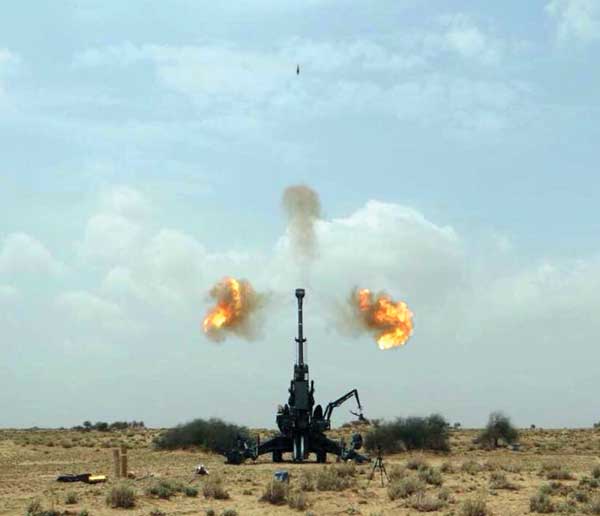
Dhanush 155mm Artillery Gun: A “Make in India” Marvel

21 May , 2015

Dhanush as an artillery system has proved to be one of the best amongst its class. A 45 Calibre towed gun system capable of targeting at long ranges incorporating autonomous laying features and having one of the most sophisticated suites of electronic and computing systems in the world.

A leading Indian daily “The Times of India” quoted the defence minister, Mr Manohar Parrikar when he addressed the parliamentary consultative committee on defence on April 21, that the 155mm/45-calibre Dhanush howitzers had “successfully met all technical parameters” during the winter and summer trials at Sikkim and Pokhran. He also stated that Dhanush incorporates “many improved features” over the Army’s existing artillery guns.

This revelation has created a buzz amongst the arms manufacturers and rightly so since Dhanush as an artillery system has proved to be one of the best amongst its class. A 45 Calibre towed gun system capable of targeting at long ranges incorporating autonomous laying features and having one of the most sophisticated suites of electronic and computing systems in the world.

The unreasonable fear of a coup


When Jawaharlal Nehru died there was an intelligence red alert of the possibility of a military coup. An artillery brigade had been moved from Ambala to Delhi for annual field firing at the Tughlakabad range, and this coincided with the death of Nehru. 

Though a military coup or a successful military invasion may result in a soldier capturing political power, there is a difference between the two. The former is directed against a government to which one owes loyalty and the latter against a government to which one does not. History abounds with examples of both. In the modern age military coups have been taking place while in the earlier days the other was more common.

Early examples of military coups are those of Julius Caesar, Oliver Cromwell and Napoleon Bonaparte. In modern times, several military coups have taken place, particularly in countries liberated from colonial rule in Asia and Africa. Modern India has a shining military coup-free record. There have been only two instances, both very long ago. The great Mauryan Empire founded by Chandragupta Maurya, comprising present-day India, Pakistan and Afghanistan, had shrunk considerably in 185 BC. The latter Greeks under Demetrius had come to the border, threatening invasion. Brihadratha, the last Mauryan ruler, was an imbecile. His commander-in-chief, Pushyamitra Sunga, assassinated him and became the ruler. The other instance was that of Hyder Ali, a successful military leader, removing the Wadiyar ruler of Mysore. Hyder Ali’s son Tipu Sultan succeeded him on his death.

What our textbooks don't tell us: Why the Rajputs failed miserably in battle for centuries


They were defeated by Ghazni, Ghuri, Khilji, Babur, Akbar, the Marathas and the British.

The home minister, Rajnath Singh, wishes our school textbooks told us more about the Rajput king Rana Pratap, and less about the Mughal emperor Akbar. I, on the other hand, wish they explained why Rajputs fared so miserably on the battlefield.

A thousand years ago, Rajput kings ruled much of North India. Then they lost to Ghazni, lost to Ghuri, lost to Khilji, lost to Babur, lost to Akbar, lost to the Marathas, and keeled over before the British. The Marathas and Brits hardly count since the Rajputs were a spent force by the time Akbar was done with them. Having been confined to an arid part of the subcontinent by the early Sultans, they were reduced to vassals by the Mughals.

Decade of war, billions in U.S. aid fail to defeat Taliban


May 19, 2015 

KABUL — More than a decade of war and billions in U.S. funds to build up an Afghan military force have failed to defeat a Taliban insurgency that remains a threat across the country, according to interviews with U.S., NATO and Afghan military leaders.

Following the end of the U.S. military's combat mission last year, the Islamic radical insurgents have overrun dozens of checkpoints throughout the country and threatened entire districts. The army has rushed forces to take back terrain, but it doesn't have enough troops to defend every place under assault.

"The enemy is fighting in almost every province," said Gen. Sher Mohammad Karimi, the Afghan army chief of staff.

Karimi said the Taliban is unable to mass enough forces to take over key cities or threaten the central government here. "In some places they win for an hour and lose in the next hour," he said.

Barring a political settlement between the warring camps, Karimi's assessment points to unending fighting with neither side gaining the upper hand — so long as the United States and its allies continue to spend billions a year to prop up the Afghan forces.

Why do allies sometimes pretend to believe one another’s lies? The U.S.-Pakistani Relationship

Elizabeth Cobbs Hoffman
May 20, 2015

Why the U.S. chooses to believe Pakistan, despite doubts

Why do allies sometimes pretend to believe one another’s lies? There are good reasons and bad, as new evidence about the U.S. relationship with Pakistan demonstrates.

Throughout its “war on terrorism,” the United States has had to rely on Pakistan. Though Washington may occasionally have believed its trust was abused, the Pentagon’s need for overflight rights or landing bases, crucial for U.S. troops in Afghanistan and throughout the Middle East, trumped diplomatic niceties.

The American people may wonder if this trumped self-respect as well. Seasoned investigative reporter Seymour Hersh recently wrote about Pakistan’s possibly problematic role in the U.S. capture of Osama bin Laden for the London Review of Books. Hersh, who broke both the My Lai massacre story during the Vietnam War and the Abu Ghraib torture story during the war in Iraq, alleges that Islamabad kept bin Laden under lock and key in Abbottabad for six years — even as U.S. intelligence urgently tried to track him down. Combing treacherous mountains and ravines for the world’s most wanted man, Washington may have risked and lost lives unnecessarily.

Industry 4.0 and Energy 4.0 for Southeast Asia

By Yanfei Li
May 21, 2015

With a smart approach to energy and industry, the region has the opportunity to leapfrog ahead.

As the leading industrialized economies move to intelligent manufacturing – or industry 4.0 – it will be interesting to see whether the developing economies of Southeast Asia can take the opportunity to leapfrog ahead with economic development. Industry 4.0 goes hand-in-hand with smart production and energy use. The latter may be referred to as Energy 4.0, with the pre-oil era, the oil era, and the new and renewable energy era, as Energy 1.0, 2.0, and 3.0, respectively. This article proposes a vision to invite further discussions in the region’s policy-making and think-tank communities. The point is that Industry 4.0 and Energy 4.0 should be promoted and developed in juxtaposition with conventional industrialization and conventional energy infrastructure systems in the region.

India’s Missed Iran Opportunity

By Kabir Taneja
May 21, 2015

The Iranian port of Chabahar remains an elusive dream of Indian strategic policy.

On a recent trip to Tehran, India’s Minister for Road Transport, Highways and Shipping, Nitin Gadkari inked a memorandum of understanding (MoU) with his Iranian counterpart for the development of Chabahar port. The port, situated in southeastern Iran, is seen by India as a gateway to both Afghanistan and Central Asiaand a possible counter-balance to Gwadar port in Pakistan, which is now operated entirely by China.

“With the signing of this MoU, Indian and Iranian commercial entities would now be in a position to commence negotiations towards finalization of a commercial contract under which Indian firms will lease two existing berths at the Port and operationalize them as container and multi-purpose cargo terminals,” read a statement released by the Indian Ministry of External Affairs.

More Chinese Citizens Injured in Spillover From Myanmar Conflict

May 21, 2015

Once again, Chinese citizens are caught in the crossfire of Myanmar’s ethnic tensions.

On May 14, several Chinese citizens were injured during a Myanmar government shelling operation against armed ethnic rebels. Radio Free Asia, citing local sources, reports that eight people in the township of Nansan were injured in the blasts. Witness reported five separate explosions in a half-hour period on the evening of May 14. One resident told RFA the incident wasn’t an isolated occurrence: “There have been bombs exploding a lot in recent days, and a lot of people are terrified.” Residents also reported gunfire from the fighting hitting buildings in their town.

The May 14 incident came just over two months after Myanmar government jets accidentally bombed the Chinese side of the border, killing five Chinese citizens and injuring eight. In response, China stepped up air patrols of the border region and a top military officialwarned that the “Chinese military will take resolute measures to protect the safety of Chinese people and their assets.”

SHANGRI-LA WON’T BE A FAIRYLAND FOR BEIJING


As summer arrives in Washington, the temperature is rising and storm clouds are on the horizon. Beijing’s island building in the South China Sea has been the subject of mounting international attention, provoking sharp objections from China’s neighbors and the United States. This tension is likely to come to a head at next week’s Shangri-La Dialogue, an annual security forum that is attended by many of the region’s top defense leaders. Once summer is under way, there are ten maritime security-related developments to watch closely. Eight of these developments are likely to exacerbate tensions between Beijing and Washington. Just two have the potential to defuse them.

Chinese Military Declares the Internet an Ideological ‘Battleground’

May 21, 2015

China’s military newspaper, the People’s Liberation Army Daily, warned on Wednesday that China must “resolutely protect ideological and political security on the invisible battleground of cyberspace.” The call to arms against “Western hostile forces” on the Internet comes amidst a broader push for tighter Internet controls, including experiments with offensive cyber capabilities against websites that have been banned in China.

The piece begins by repeating a claim China has made often: that Internet or cyber sovereignty is a manifestation of national sovereignty. Over the past year, China has called attention to this concept in media articles and official speeches, seeking to win international recognition of its conceptualization of how the internet should be governed. The PLA Daily piece makes it clear that China’s “cyber territory” must be defended as vigorously as physical territory. The article warned that if China doesn’t occupy and defend its “cyber territory,” then nameless “hostile forces” will use it as a “bridgehead” to attack China.

America's 'China Consensus' Implodes

May 21, 2015

With China challenging the U.S.-led regional framework in Asia, Americans are being forced to reconsider long-standing assumptions.

In recent weeks a tsunami of papers, reports and articles have surfaced calling for a rethinking of U.S. policy toward China. They veer in all policy directions from reconciling differences and forming an Asia-Pacific community, to containment and confrontation. But they all reflect a troubling epiphany that has seized attention from policy-watchers: core assumptions that have guided a bipartisan China policy for eight presidencies, from Nixon to Obama are unraveling. One prominent China scholar has even boldly pronounced that we are witnessing is “the beginning of the end of the Chinese Communist Party.”

Though the Nixon opening was a strategic counter to the USSR, as China reformed and modernized its economy post-1979, U.S. policy has assumed that as a Chinese middle class grew, political reform, if not democratization would follow. This has been the case across Asia over the past three decades—in the Philippines, South Korea, Taiwan, Mongolia, Thailand and Indonesia. It may eventually occur—China is, by several orders of magnitude larger than other Asian democratized states with a 3,000-year-old culture—but in its own way and on its own timeline. For now, the Communist Party has tightened political control.

China's Emerging Vision for World Order

May 21, 2015

China’s mulling of the risks and benefits of global leadership reveals its judgment that it cannot allow its chief competitor to protect its interests.

During World War I, Britain and France suffered such appalling casualties that the ability to prosecute the fight against the Axis powers seemed at risk. Desperate for the manpower to stay in the war, the Allies asked China, among other countries, for help. Although consumed by its own debilitating woes, a China frustrated by years of foreign occupation saw an opportunity to liberate the Shandong Peninsula in eastern China from German colonizers. In 1917, China declared war on Germany and offered its one formidable asset—human labor—to serve the Allied cause. More than 175,000 Chinese laborers (among them a young Deng Xiaoping) served in the Chinese Labor Corps throughout the Western front and other theaters. The laborers loaded ships, dug trenches, repaired bridges, manufactured munitions and did many other back-breaking jobs. More than 10,000 men died in service, and once the war ended, the laborers were unceremoniously packed up and sent home.

How McMahon Drew His Line, and Why China Wants It Changed


Prime Minister, Narendra Modi was virtually silent on the vexed border issue during his just concluded visit to China, belying the expectations of many in Arunachal Pradesh. While there were 24 bilateral agreements signed, a majority of them business related, both the countries for the moment seem to think the border issue can wait. Hence, in the eastern sector, India will continue to consider the McMahon Line as its undisputed boundary, and China will continue to treat the line as illegal. Arunachal domiciles intending to travel to China will also have to continue be content with stapled visas. 

Revealed: The Islamic State's Two Most Powerful Weapons

May 20, 2015 

The ominous shadow of the notorious Islamic State of Iraq and Syria (ISIS) looms over Southeast Asia and Australia, judging from the scores of recent arrests throughout the region.

In order to neutralize ISIS, it is important to understand what we are confronting. Synthesizing various analyses of the entity appears to provide the following composite picture: ISIS seeks to create a geographically demarcated Islamic political entity that is potentially expansionist. The leadership of the organization is hierarchical and comprises a curious mix of hardline Islamic fundamentalists combined with genuine strategic and operational nous provided by disaffected and radicalized former Baathists of Saddam Hussein’s decimated military.

The core fundamentalist theology of ISIS emphasizes a deity that is punitive, keen on preserving religious purity above else. Consequently outsiders—Muslims who disagree with them; Shia, Christians and other minority groups and their religious symbols—can be disposed of as they are regarded as filth to be cleansed, not parties to a negotiable dispute.

Is Iraq's Military Hopelessly Incompetent?

May 21, 2015 

What ISIL’s capture of Ramadi tells us about the Iraqi Security Forces.

In the see-saw, roller-coaster battle for the future of Iraq, the recapture of Tikrit from the Islamic State of Iraq and the Levant (ISIL) on April 2 was the Iraqi Government’s most dramatic accomplishment throughout the coalition’s nine-month campaign against the extremist organization. Tikrit, universally known as former Iraqi dictator Saddam Hussein’s hometown, was a city under the control and administration of ISIL ever since the group made its initial push across northern Iraq in June and July 2014. But it also happens to be a city that lies along the main route to Mosul, ISIL’s major stronghold in Iraq and the country’s second biggest city after Baghdad. Retaking Mosul and expelling ISIL militants from the city would have been exceedingly difficult without first capturing Tikrit, an area roughly three hours south of Mosul. The Iraqi security forces, with vital assistance from U.S.-led air strikes and support from Shia militia units under the Popular Mobilization Units/Forces (PMUs), managed to liberate Tikrit after about a month.

The Islamic State

Authors: Zachary Laub, Online Writer/Editor, and Jonathan Masters, Deputy Editor

Introduction 
The self-proclaimed Islamic State is a militant movement that has conquered territory in western Iraq and eastern Syria, where it has made a bid to establish a state in territories that encompass some six and a half million residents. Though spawned by al-Qaeda’s Iraq franchise, it split with Osama bin Laden’s organization and evolved to not just employ terrorist and insurgent tactics, but the more conventional ones of an organized militia.

In June 2014, after seizing territories in Iraq’s Sunni heartland, including the cities of Mosul and Tikrit, the Islamic State proclaimed itself a caliphate, claiming exclusive political and theological authority over the world’s Muslims. Its state-building project, however, has been characterized more by extreme violence than institution building. Beheadings of Western hostages and other provocative acts, circulated by well-produced videos and social media, spurred calls in the United States and Europe for military intervention, while mass violence against local civilians, justified by references to theProphet Mohammed’s early followers, has been a tool for cementing territorial control. Widely publicized battlefield successes have attracted thousands of foreign recruits, a particular concern of Western intelligence.