Central Intelligence Agency map of the entire Kashmir region.
 The Indian Ocean is the world's third largest body of water and has become a growing area of competition between China and India. The two regional powers’ moves to exert influence in the ocean include deep-water port development in littoral states and military patrols. Though experts say the probability of military conflict between China and India remains low, escalated activities (such as port development and military exercises) and rhetoric could endanger stability in a critical region for global trade flows. But the diverse nontraditional security challenges in the Indian Ocean Region (IOR) also offer areas of potential collaboration for China and India, as well as other regional actors.
 German Chancellor Angela Merkel visited China on October 29 and 30, marking her eighth visit to the country since she assumed office in 2005. Ostensibly, her trip was aimed at deepening the economic ties between China and Germany, but security and strategic issues – from the Syria crisis to the South China Sea – also featured on the agenda.
 It’s turned out to be an eventful week for the South China Sea. On October 26, the USS Lassen conducted a freedom of navigation operation (FONOP) within 12 nautical miles of an artificial land feature that China has reclaimed and been building on since the beginning of this year. China strongly condemned the U.S. action as having “threatened China’s sovereignty and security interests, jeopardized the safety of personnel and facilities on the reefs, and damaged regional peace and stability.” But the United States firmly maintains that what its Navy ships did was a routine freedom of navigation operation, which it is entitled to conduct in accordance with the international law.
 It was a visit he had been dreading for almost six months, since he began working on a tool to help Chinese Internet users get around the vast censorship apparatus known as the Great Firewall.
 We have been living the Islamic State forwards, surprised at every turn, but we can perhaps begin to understand it backwards. Although ISIS took most of the world by surprise when it swept into the Iraqi city of Mosul in June 2014, the group and its forebears had been proclaiming their goals for a decade. Like many consequential events, this one didn’t sneak up on policymakers; they simply didn’t see what was taking shape in front of them. ISIS told us exactly what it was going to do, and then did it. This was a secret conspiracy hiding in plain sight
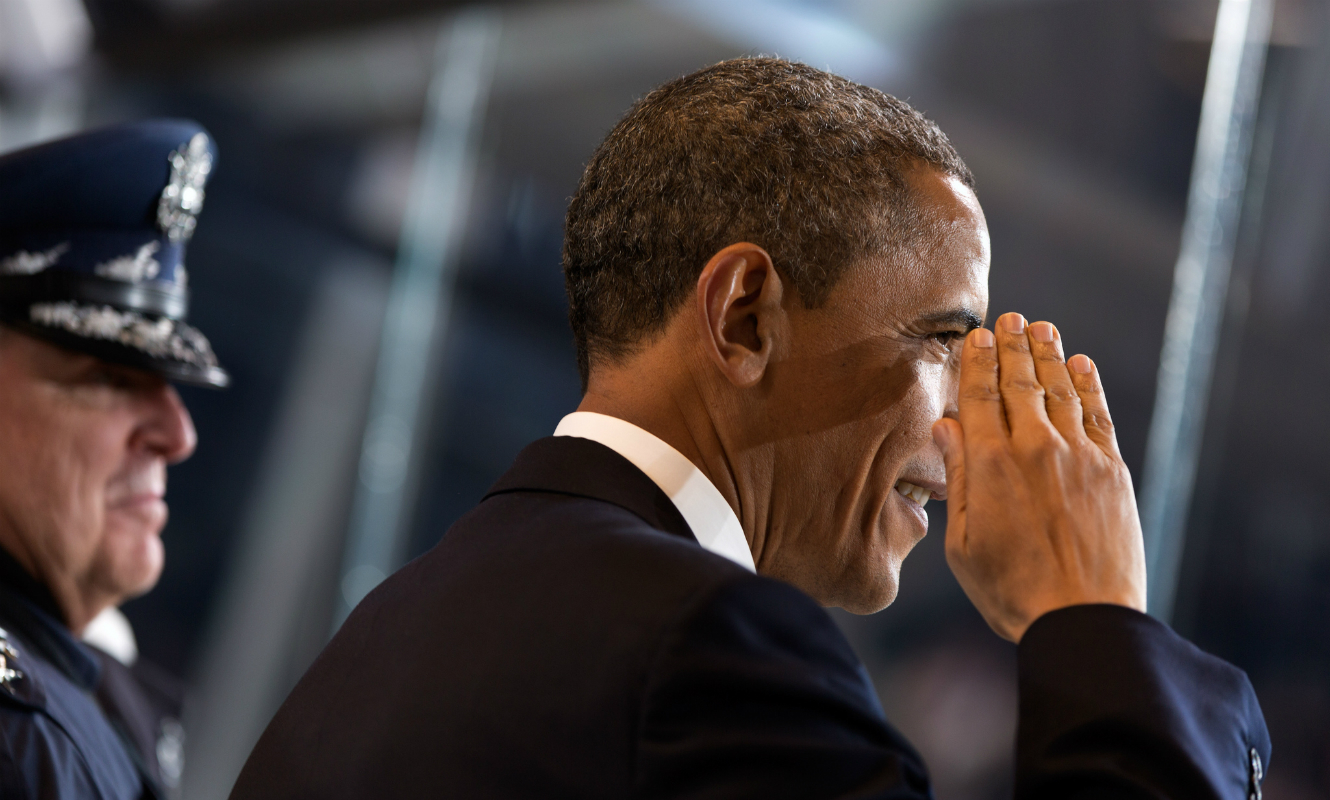 The Obama administration has received much attention for its policy of rebalancing to the Asia-Pacific region. The rebalance has been described as President Obama’s signature foreign policy initiative. Launched in 2009, it has received much attention from academics, practitioners, think tanks, and the media. In reality, the rebalance to the Asia-Pacific has been more evolutionary than revolutionary; a U.S. shift in focus and grand strategy began well before President Obama’s inauguration in January 2009.
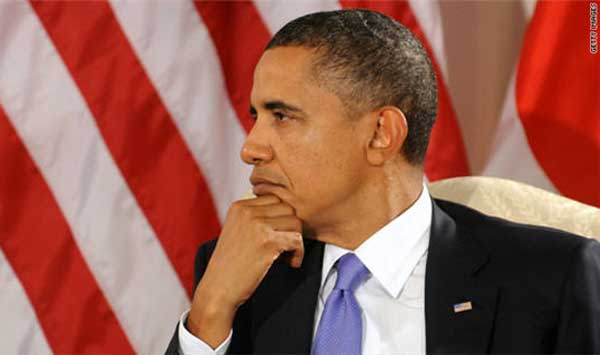 For the first time since 2007 United States has no aircraft carrier in the Persian Gulf. While maintenance was put forward as a reason for withdrawal of USS Theodore Roosevelt, the decision came in the wake of Russian naval deployment on 09 October.
 The U.S. Freedom of Navigation (FON) Program has recently drawn significant attention in the United States and the international community. During this period of focused attention, some observers have questioned the legality of U.S. FONOPs. This author has previously outlined the legality and legitimacy of the U.S. FON Program, including FONOPs conducted as part of that program. Other observers have also questioned the appropriateness and wisdom of U.S. FONOPs, particularly in the South China Sea. A prime example would be a recent critique by Dr. Sam Bateman of Australia, in which he alleged that U.S. FONOPs in the South China Sea “don’t make sense.” This followed a similar piece that he published in June 2015. Although Dr. Bateman asks some valid questions about the ongoing South China Sea situation, he makes incorrect assumptions on several points about U.S. FONOPs and misses the mark on several others. Below is an attempt to set the record straight on the matter, based upon this author’s prior experience with the U.S. FON Program at the operational, theater, and policy levels of the U.S. military.
  Lost in the debate surrounding the Collins-class replacement was serious consideration on leasingVirginia-class boats from the U.S. According to a former Bush administration official, conversations were held but failed to progress due in part because Canberra was not entirely confident the U.S. government would agree. No less a strategist than Hugh White, in a recent op-ed, urged Australia’s new defense minister to “…ask very searching questions about what submarines we are trying to buy… (and she should) satisfy herself that the submarines’ operational roles have been properly thought through, and fit with Australia’s strategic needs over coming decades.”
 Despite handwringing by political progressives about the PAP’s landslide victory in the 2015 general election, social change is inevitable – and it may even originate within Singapore’s proudest policy arena: the economy. If the knowledge economy of the past and present is about starched shirts, lab suits, and pocket protectors, the creative economy of the future is about tight jeans, helix piercings, and MacBook Airs. These fashion references may be dated, but the point remains: Singapore’s competitiveness will soon be in the hands of a new style of worker. The PAP has shown remarkable adaptability in restructuring Singapore’s economy to capture global opportunities. To stay ahead of its regional peers and retain talent, Singapore should continue its willingness to eschew ideology in favor of pragmatism. One opportunity is gay rights.
 Vladimir Putin ordered U.S. troops into combat in Syria on Friday. That’s not what White House Press Secretary Josh Earnest said when explaining the decision to send as many as 50 special operations forces into a training, assistance, and advisory role in that country, but that’s the reality. If the Russian president hadn’t made his move into Syria, the United States would not have felt compelled to finally, belatedly, shore up support for anti-Islamic State and anti-Assad allies in that embattled, long-suffering country.
 Pension plans for state and local government employees have faded from national news since the Great Recession. But that does not mean that rising pension costs have abated or the danger to public finance has passed. In many ways, things have grown worse. Fewer governments are making the full pension contributions, while they rely on riskier investments to make up the difference. That is a volatile combination for state and local government finances.
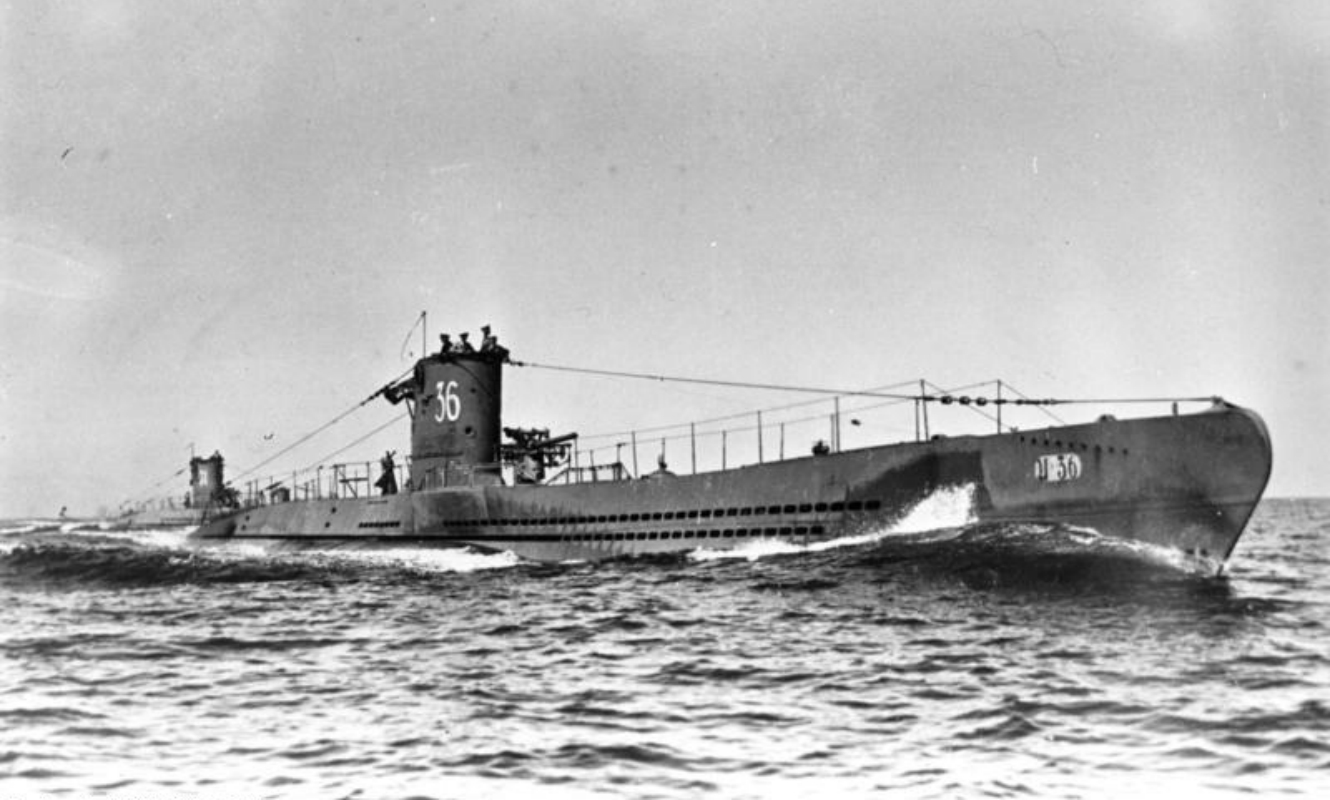 A story in the New York Times this week that the Russian Navy seemed to be menacing the trans-Atlantic telecommunications cables that are so vital to the United States and, indeed, the world attracted significant attention and engendered a good deal of alarm. This seems a very modern problem. However, in 1917, the United States and the British faced a similar problem, as a document in the National Archives shows.
 Although the plane tickets and hotels required to bring these experts together are expensive, there is little, or no, serious dialogue between them – in spite of the remarkable amount of know-how that they have to share. Sadly, in most cases, they will leave the expensive events organized by government, or industry, the same way that they came: as mutual strangers. The gatherings over expensive meals will lead to no commitment for future cooperation, or even awareness of the wisdom and knowledge belonging to the others at the event.
 A new sort of war is looming: it is undeclared and undefined, its battlefield both universal and invisible. No one can be sure how such a war would start, how it might be fought, and how it would end. If naval power defined international relations in the 19th century and air power shaped combat between nations in the 20th, then cyber power will be the defining feature of the 21st-century battle.
 Who's crazier than John McAfee? Could be the Commander-In-Chief candidates who are running election campaigns - sans any mention, let alone a position statement - on cybersecurity. Let's not forget that our President has supreme command over our armed forces which includes our cyber military.
 In an age of ubiquitous networking, popular culture and the media have become increasingly fascinated with the idea of cyberwar. As the west pours billions into the latest fancy war gadgetry – from the armed drones that increasingly fight our wars in Afghanistan, Iraq and Syria, to the next generation F-35 fighters that are meant to dominate enemy airspace through multimillion pound suites of on board computer wizardry – the spectre of militarised hacker groups with fingers on the off switch looms ever larger in the public consciousness. Having the biggest, best-networked stick is at the core of western military doctrine – but that doesn’t matter if your arm fizzles and stops working when you go to swing it.
 Meditation is the ability to self regulate internal mental distractions. Mediation is a means to enhance brain function and cognition in healthy and impaired individuals.
 The 690-ton Awaji is the lead vessel of a new class of mine countermeasure vessels slated to replace three wooden-hulled 1,000-ton Yaeyama-class minesweepers that have been in service since March 1993.
 President Obama is announcing Friday that the U.S. will deploy a small number of special operations forces to Syria to advise rebel forces fighting against ISIS. The number of troops involved is expected to be in the range of 20 to 30, but the move, which was foreshadowed in comments by Secretary of Defense Ash Carter earlier this week, is a major political shift from the president, who had vowed at the outsetthat the U.S. operation against ISIS would “not involve American combat troops fighting on foreign soil.”