10 September 2016

The rise and fall of Altaf Hussain


The rise and fall of Altaf Hussain

"No one dared showany disrespect to the party or its leader.” At one of the MQM’s party offices which was demolished by authorities in Karachi, Pakistan.

The MQM without Altaf Bhai offers hope, but also brings forth the fear of blood feuds for the citizens.

There was a time, not long ago, when the Muttahida Qaumi Movement (MQM) controlled Karachi completely, run and dominated by its leader Altaf Hussain in self-imposed exile in London. After being formed in 1986, the MQM used to say that in Karachi not even a leaf would bristle without Bhai’s permission. He was called a Pir Sahib for many years, Quaid-e-Tehrik (leader of the movement), Rahber (guide), and always Altaf Bhai. A strike call in Karachi would paralyse the city as Altaf Bhai would address his muhajir disciples over the phone or video links, carried live by every TV channel that wanted to be spared the wrath of the party militants for not showing Bhai’s address. If ever there was a party which once resembled those called ‘fascist’, it was the MQM. No one dared show any disrespect to the party or its leader.

A party of hope

It was not just the fear of reprisal and untold consequences which made the MQM, until the 2013 elections, the third largest parliamentary party in Pakistan since elections on a party basis began in 1988, but also widespread electoral support. This they managed as representatives of the petit-bourgeoisie and sections of a linguistic or ethnic middle class. The Urdu-speaking migrant electorate of the Sindh province — that eventually appropriated the political category ‘muhajir’ rather than just the Urdu meaning of the word ‘migrant’ — almost all of whom are urban, had seen great hope in the party which emerged as a major political player. The migrants (or refugees) who came from parts of India, but especially those who spoke Urdu, many from in and around U.P., and settled in Sindh and in the federal capital, Karachi, had belonged to what were considered to be more educated, skilled, and in line with the official structures of power that emerged in the newly created state of Pakistan.

These Men are Our Warriors

by Major General Bob Scales, U.S. Army, Retired
September 5, 2016

After 14 years of war the ground services, the Army and Marine Corps remain starved of new, cutting-edge, lifesaving matรฉriel, while the Department of Defense and its big defense company allies continue to spend generously on profitable big-ticket programs like planes, ships, missiles, and computers.

Soldiers’ and Marines’ “stuff” today is more Popular Mechanics than Star Wars . . . . [The latter would have been better] in Afghanistan had the nation spent a bit more to give [our forces] an overwhelming, in fact dominant, technological edge over the enemy.

After suffering almost 7,000 dead Soldiers and Marines, the nation still cannot offer an advantage to those who do most of the dying. Our Soldiers and Marines should have gone into Iraq and Afghanistan ready for an unfair fight—that is, unfair in their own favor—at the squad level . . . More Soldiers and Marines might have been saved had . . . body armor been provided before they started on the march to Baghdad in 2003. Too many Soldiers and Marines died from primitive roadside bombs, “improvised explosive devices,” or IEDs, during the early days in Iraq and Afghanistan. The Pentagon weapons-buying bureaucracy was too slow in supplying the troops with explosive-resistant vehicles to protect against IEDs.

Army and Marine Corps infantry squads were outgunned in Vietnam by the North Vietnamese Army’s superior AK-47 assault rifles. One would think that maybe, 50 years later, infantry Soldiers and Marines would be able to fire a bullet costing about 30 cents that did not disintegrate in the air. A $200 aiming device developed for hunters would provide the precision needed to hit a distant enemy target with the same relative precision as that of the rifles used by the Taliban. The Army has yet to buy it.

For more than two-thirds of a century, this country has preferred to crush its enemies by exploiting its superiority in the air and on the seas. Unfortunately, these efforts to win with firepower over manpower have failed to consider the fact that the enemy has a vote. From Mao Zedong to Ho Chi Minh to Osama bin Laden, all our enemies have recognized that our vulnerable strategic center of gravity is dead Americans. It is no surprise that the tactic common to them all has been to kill Americans, not as a means to an end but as an end in itself. Every enemy has ceded us those domains where we are dominant—the air and the sea. They challenge us instead where we are weak: small units, on ground unfamiliar to us but familiar to them.

It’s in China’s Interest to Realise Indian Concern

By Claude Arpi
09 Sep , 2016

One Belt One Road is a great initiative, but it’s not an easy one. What looks like a masterstroke on paper, will turn into a nightmare for both China and Pakistan if India is not brought on board

When Prime Minister Narendra Modi met Chinese President Xi Jinping at the G20 Summit in Hangzhou in China, he is believed to have raised the topics of terrorism originating in Pakistan as well as the mega China Pakistan Economic Corridor (CPEC) project. Modi told Xi that New Delhi and Beijing must be sensitive to each other’s ‘strategic concerns’, which include terrorism from Pakistan, the CPEC crossing through Pakistan-occupied-Kashmir (PoK) and India’s membership in the Nuclear Suppliers Group.

Though Foreign Ministry spokesperson Vikas Swarup did not confirm if Modi raised the NSG issue: “I am not going into specifics, but if you read between the lines, you can pretty well understand that when we talk of strategic interests and aspirations,” he said that the Indian Prime Minister advocated that “to ensure durable bilateral ties, and steady development, it is of paramount importance that we respect each other’s aspirations, concerns and strategic interests.”

When in 2013, President Xi first spoke of a project “envisioning a trade and infrastructure network that would connect Asia with Europe and Africa along the ancient land and sea routes,” very few realised that the One Belt One Road (OBOR) ‘initiative’ had many similarities with the 19th century’s great game. At that time, the OBOR’s declared objective was to increase connectivity between Europe, Asia and Africa. However, a simple look at a map shows that practically, India is left out of the scheme while the creation of several economic corridors mainly benefited China.
Steve Levine wrote in Quartz magazine that the infrastructure that the British built everywhere during the 19th century “enabled their power like bones and veins in a body. …Great nations have done this since Rome paved 55,000 miles (89,000 km) of roads and aqueducts in Europe. In the 19th and 20th centuries, Russia and the US established their own imprint, skewering and taming nearby territories… Now it’s the turn of the Chinese.”

Hillary and the Case of the Chinese Defector

Bill Gertz 
September 6, 2016 

Clinton Turned Away High-Level Chinese Defector to Assist Beijing Leaders 

Former secretary of state Hillary Clinton turned away a high-ranking Chinese defector who sought political asylum after the communist police chief sought refuge in a U.S. consulate in southwestern China four years ago. 

Critics say Clinton’s handling of the defection of Wang Lijun, a close aide to a regional Communist Party leader, was a blunder and lost opportunity for U.S. intelligence to gain secrets about the leaders of America’s emerging Asian adversary. 

Instead of sheltering Wang and granting him political asylum, Clinton agreed to turn him over to Chinese authorities in Beijing, and claimed he was not qualified for American sanctuary because of his past role as a police chief accused of corruption. 

However, the defector’s case highlights Clinton’s policy of seeking to preserve U.S. ties with China’s communist leadership instead of pursuing much-needed intelligence gathering on China at a time when Beijing is emerging as an increasingly threatening power. 

Clinton defended the betrayal of Wang in her 2014 memoir, Hard Choices. The former secretary and current Democratic presidential nominee revealed in the book that the U.S. government agreed to keep secret all details of Wang’s sensational defection attempt in order to help Beijing’s Communist rulers avoid public embarrassment over a major internal power struggle and high-level corruption scandal months ahead of then-Chinese leader Hu Jintao’s transfer of power to current supreme leader Xi Jinping. 

The Secrets of China’s Strategic Support Force

By Ying Yu Lin
August 31, 2016

With the creation of the SSF, China’s reorganized military hopes to foster integrated joint operations capabilities. 

China’s long-rumored military reforms became real in November 2015 when Chinese President Xi Jinping made important remarks at a meeting of the Central Military Commission (CMC) on military reforms. Xi, who also serves as CMC chairman, provided a basic outline of the military reforms, including the replacement of military regions with battle zones as well as other major structural adjustments. The key point was the establishment of a new military structure with a chain of command that gives orders top-down, from the CMC to battle zones and subordinate units, as well as a new corresponding military administrative structure. In other words, the CMC is to take direct command, while the five battle zones are to be responsible for operations, and each service is to focus its efforts on building combat strength. These adjustments started taking shape in January 2016 and the five battle zones (in place of the existing seven military regions) were set up the next month, marking the most significant change to China’s People’s Liberation Army (PLA) in decades.

The newly established Rocket Force and Strategic Support Force (SSF), two new services of the PLA, were some of the major changes to the military’s structure. The transformation of the Second Artillery Corps (SAC) into the Rocket Force was not a surprise, as the SAC had already been an independent military branch under the direct control of the CMC. With the mission to “deter against hostile forces in all territories with both conventional and nuclear warheads,” the PLA Rocket Force, like its predecessor, the SAC, is responsible for the stockpile of surface-to-surface strategic and tactical ballistic missiles, which are China’s “lethal weapons” in its nuclear deterrence strategy.

For long-term observers of the PLA’s development, that the SAC was restructured as the Rocket Force was not surprising. The establishment of the SSF, however, was a different story; to many specialists, the SSF represented a major break in tradition. In addition, after China announced its establishment, media reports on the SSF have been scarce. The new service is veiled in mystery. 

3 Years on, Where Does China’s Silk Road Stand?

August 31, 2016
http://thediplomat.com/2016/09/3-years-on-where-does-chinas-silk-road-stand/

A look at the successes and complications of Xi’s signature project. 

Three years ago, during a visit to Kazakhstan, Chinese President Xi Jinping unveiled what has come to be his signature foreign policy initiative: the Silk Road Economic Belt. Speaking on September 7, 2013 at Nazarbayev University in Astana, Xi urged China and Kazakhstan to “work together to build the Silk Road Economic Belt.” In the speech, Xi described a vague vision for renewing the ancient Silk Road in order to “forge closer economic ties, deepen cooperation, and expand development space in the Eurasian region.”

Since then, the policy has been both fleshed out and elevated. So much so that some reference to the Silk Road Economic Belt and its overseas counterpart, the Maritime Silk Road, makes its way into statements at every meeting between a Chinese official and his or her Asian or European counterparts. According to remarks from Xi Jinping at a symposium on the Belt and Road held in Beijing on August 17 of this year, over 100 countries and international organizations have agreed to participate. Of those, 34 have signed formal inter-governmental cooperation agreements with China.

Those agreements have come with a raft of Chinese money. Chinese media report investments of nearly $15 billion by Chinese companies in 49 countries along the Belt and Road route in 2015. Much more is on the horizon in the form of planned projects. Read the full story here, in The Diplomat magazine

Or, read the full story with the app

Japan's Military Has Some Serious Problems (As China's Military Gets Stronger)

September 7, 2016 

In late August, the Japan Ground Self Defense Force (GSDF) held its annual ‘Fuji Firepower Demonstration’ at a training area near Mt. Fuji.

During this event, the GSDF shoots off tons of ordnance and ammunition and puts its troops ‘into action’ with helicopters, tanks, and other hardware.

The impressively orchestrated performance draws tens of thousands of Japanese spectators – most apparently unaware they are observing what is, in effect, high-priced ‘kabuki’ that masks serious national defense shortfalls.

This year’s event simulated an ‘island re-taking’ scenario, an operation hard to replicate at a landlocked training area. The GSDF always puts on a good show and the troops are professionals. But one might leave with the wrong impression; specifically, that the Japan Self Defense Force (JSDF) is a finely tuned force capable of defending Japan.

Instead, the event is a reminder that the JSDF is less than the sum of its parts, and it highlights a number of GSDF and JSDF shortcomings. The Japanese Government (GOJ) needs to remedy these shortcomings, lest it find itself militarily impotent in the face of its powerful and belligerent Chinese neighbor.

In other words, GOJ must fix these problems or face probable strategic military defeat – perhaps without a shot being fired.

Key shortcomings follow:

China’s Oil Paralysis An Opportunity For India To Enhance Energy Security

September 07, 2016

China’s state-owned oil companies have drastically reduced investment in foreign oil fields in the last two years.

This paralysis should mean that one major potential global buyer of oil fields is out of the race, and India can maximise its chances in the oil business.

China’s state-owned oil companies, which were extremely active between 2002 and 2013 acquiring foreign oil fields, have gone really quiet over the past three years, with oil prices crashing and oil fields available at much lower prices than before. The reason for this is a mix of internal politics and weakening financials, the latter driven by the acquisition binge of the past decade.

Their paralysis means that one major potential global buyer of oil fields is out of the race, which should mean lower asset prices for other buyers, such as India, and Indian companies ought to make the most of this window of opportunity, of a market with few buyers at a time when assets are cheap.

This impasse that Chinese firms are going through also shows the downside of a system where the dominant political party is closely intertwined with all sectors of the economy: most senior officials of state-owned companies are also members of the Chinese Communist Party.

From 2002-2010, China’s state-owned oil companies – led by Sinopec, CNOOC and PetroChina – spent $83.2 billion, acquiring oil and gas fields across the world. The next three years (2011-2013), Chinese firms were in overdrive, spending an additional $72.5 billion on oil fields. The year 2013 saw three of the biggest deals ever by Chinese firms (Refer Table 1).

10 new wars that could be unleashed as a result of the one against ISIS

By Liz Sly 
September 7 2016

Turkish soldiers drive back to Turkey from the Syrian-Turkish border town of Jarabulus on Sept. 2. (Bulent Kilic/AFP/Getty Images) 

The borders of the Islamic State's "caliphate" are shrinking fast. The group’s strongholds in Iraq and Syria are collapsing one by one. The U.S.-led war has reached a point where questions are being raised about what comes next. 

So far, the answer seems likely to be: more war. 

That’s partly because the U.S. strategy for defeating the Islamic State relies on a variety of regional allies and local armed groups who are often bitterly at odds. Though all of them regard the Islamic State as an enemy, most of them regard one another as enemies, too. As they conquer territory from the militants, they are staking out claims to the captured lands in ways that risk bringing them into conflict with others who are also seizing territory. New wars are brewing, for control of the post-Islamic State order. 

Here is a list of 10 of them, in no particular order. There are doubtless more. Some have already started. Others may never happen. But any one of them could increase the Islamic State’s chances of survival, perpetuating the conditions that enabled the group to thrive — and perhaps entangling the United States in the region for many years to come. 

WAR NO. 1: U.S.-backed Syrian Kurdish forces and Turkish-backed Arab forces 

Sept. 11 Legacy: One Endless War Against Many Radical Enemies

September 6, 2016

U.S. Army soldiers take up a position during a patrol in Baghdad in 2007. The U.S. has been waging war nonstop for 15 years since the Sept. 11 attacks. Despite the protracted conflicts and disappointing results, U.S. involvement in multiple wars appears set to continue for years to come.

In the quarter-century from the end of the Vietnam War in the 1970s until Sept. 11, 2001, the United States rarely went to war, and when it did, the conflicts were so brief they were measured in days. The Gulf War in 1991 lasted 43 days. Airstrikes in the former Yugoslavia in 1995 went on for 22 days, followed by another round in 1999, that time for 78 days.

But since the Sept. 11 attacks, the United States has been fighting every single day for 15 straight years, the longest unbroken period in American history. The U.S. has carried out airstrikes, sent in ground forces, or both, in seven countries stretching from Pakistan in the east to Libya in the west. None of these conflicts has been resolved, and all signs point to years of strife ahead.

Sept. 11 has reshaped the U.S. in countless ways, but perhaps the most profound has been the transformation from a country where peacetime was the norm into one seemingly locked into a permanent state of war. Yet strangely, the country doesn't feel much like it's at war.

"Like the war on drugs or the war on poverty, the war for the greater Middle East has become a permanent fixture in American life and is accepted as such," writes Andrew Bacevich, a retired Army colonel and professor at Boston University.

Former US Commanders Take Increasingly Dim View of War on ISIS

September 1, 2016


It’s a most peculiar war: rarely has the U.S. been killing so many while risking so few. The U.S. is beating ISIS handily, judging by Vietnam’s body-count metric. The total number of ISIS battlefield deaths claimed by U.S. officials has jumped, from 6,000 in January 2015 to 45,000 last month—a bloodbath for an enemy force estimated to number about 30,000. Three U.S. troops have died. That’s an eye-watering U.S.-to-ISIS “kill ratio” of 15,000-to-1. “We’ve got good momentum going,” General Joseph Votel, chief of U.S. Central Command, who is overseeing the war, said Tuesday. “We are really into the heart of the caliphate.”

But some of his predecessors disagree. James Mattis, a retired Marine general who commanded Central Command from 2010 to 2013, says the war on ISIS is “unguided by a sustained policy or sound strategy [and is] replete with half-measures.” Anthony Zinni, a retired Marine four-star who held the same post from 1997 to 2000, says he doesn’t think he could do so today. “I don’t want to be part of a strategy that in my heart of hearts I know is going to fail,” he says. “It’s a bad strategy, it’s the wrong strategy, and maybe I would tell the President that he would be better served to find somebody who believes in it, whoever that idiot may be.”

Day after day, American warplanes, sometimes joined by allies, have been attacking individual ISIS targets, down to backhoes and foxholes. ISIS has lost 40% of its Iraqi territory, the Pentagon says, and 5% in Syria. It doesn’t seem to have lost any of the terrain it has staked out on the internet. That’s slow progress by a 27-state military alliance against a two-year-old rump state…

The next frontier for digital technologies in oil and gas

By Harsh Choudhry, Azam Mohammad, Khoon Tee Tan, and Richard Ward

Harnessing new technologies could boost efficiency—a mandate that’s especially important for oil and gas players globally. 

Over the past several years, the global oil and gas industry has had to navigate very choppy waters; after a prolonged run of high and growing rig counts, mega-capital-expenditure projects, and plentiful capital to support investment, oil prices slid precipitously in 2014 and 2015. Within a matter of months, oil companies that had invested heavily based on rosy forecasts were slowing or even halting operations

A recent price rebound has increased optimism slightly, and efforts are under way to contain costs by reducing head count, postponing projects, and cutting spending. Still, in the face of uncertain long-term forecasts, it is time to explore more drastic strategies to boost efficiency. 

In response to recent technological advancements, oil executives should consider digital technologies with the potential to transform operations and create additional profits from existing capacity. Our research finds that the effective use of digital technologies in the oil and gas sector could reduce capital expenditures by up to 20 percent; it could cut operating costs in upstream by 3 to 5 percent and by about half that in downstream. 

Oil and gas companies were pioneers of the first digital age in the 1980s and 1990s. Long before phrases such as big data, advanced analytics, and the Internet of Things became popular, oil executives were making use of 3-D seismic, linear program modeling of refineries, and advanced process control for operations. The use of such technologies unleashed new hydrocarbon resources and delivered operational efficiencies across the value chain. 

Ukraine Seeks an Unmanned Edge on the Battlefield

September 06, 2016

As the conflict in eastern Ukraine between government forces and pro-Russian rebels enters its second year, Kiev is trying to gain technical leverage by investing in advanced battlefield technologies.

In August, the Ukrainian defense industrial conglomerate Ukroboronprom showcased two unmanned platforms -- the Gorlitsa unmanned aerial vehicle and the Phantom unmanned wheeled platform. The high-profile unveiling was attended by the Secretary of the National Security and Defense Council of Ukraine, Alexander Turchinov, Ukrainian Defense Minister Stepan Poltorak, and Commander of the National Guard of Ukraine Yuriy Aller, along with the directors of more than 100 industrial members of Ukroboronprom.

The domestically produced Gorlitsa is expected to have a range of 1,000 kilometers (621 miles) and to carry various munitions. Meanwhile, the United States is assisting Ukrainian capabilities with the delivery of 24 short-range Raven mini-UAVs as part of an aid package -- the Raven is widely used by American and other forces across the world.

While unmanned aerial systems are broadening their spread across the world's conflict zones, land-based unmanned vehicles are covering new terrain on the battlefield. According to respected military blog BMPD, the unmanned multipurpose tactical vehicle Phantom was presented as a remote-controlled 6x6 vehicle. The prototype features a turret equipped with a 12.7-mm machine gun and is supposedly equipped with a day-and-night sighting system that allows for firing at any time to a distance of more than 1 kilometer. Phantom is equipped with a hybrid engine -- pairing a gasoline generator and electric motors -- as well as a power reserve of up to 20 kilometers. The vehicle is controlled over a secure radio range of up to 2.5 kilometers or via an optical fiber cable with a length of 5 kilometers. The prototype is designed for transporting ammunition and evacuating the wounded from the battlefield, and to perform a variety of combat missions. Earlier this year, Russia also unveiled an unmanned ground vehicle prototypedesigned for battle -- the tracked, tank-like Uran-9 platform is expected to be fielded with the Russian military and even exported abroad.

Infrastructure as a Tool of Foreign Policy

PARAG KHANNA
SEPTEMBER 7, 2016

The Asian Infrastructure Investment Bank (AIIB) is China's answer to the multi-trillion dollar infrastructure spending gap in Asia. However, many see the bank as an extension of Chinese geopolitical influence. As leaders from Group of 20 (G20), representing 85 percent of global GDP, met in Hangzhou China last weekend, The Cipher Brief sat down with Parag Khanna, author of “Connectography: Mapping the Future of Global Civilization,” to discuss the merits of the AIIB and how American policymakers should deal with the bank.

TCB: In your book, Connectography, you talk about how it is incorrect to view international trade and economics in the framework of national competition. Is that still true in the case of something like the Asian Infrastructure Investment Bank (AIIB), which is often seen to be in direct competition with Western institutions?

PK: The AIIB is infrastructure as a tool of grand strategy, it’s infrastructure as a tool of foreign policy, it’s infrastructure as a tool of empire-building and hegemony, and within that there are competitive dynamics. But, first and foremost, it’s a Chinese project that is multilateralized, in the same way that the North Atlantic Treaty Organization (NATO) is an American project that is multilateralized. This is why I refer to the AIIB as the “new NATO of the East” in Connectography.

However, the AIIB doesn’t just compete with western institutions, it also overlaps because its membership overlaps with western organizations. You could never have imagined members of the Warsaw Pact also being members of NATO - that would make no sense. But today, you have American allies like South Korea, Australia, Canada and all of Europe joining the AIIB, which makes Washington’s head explode. But that reaction misses the fact that we no longer live in a set of rigid blocs because infrastructure is connecting all of these regions. Even though we think of individual countries and alliances as competing, in reality they are also collaborating.

Ukraine’s Perpetual War for Perpetual Peace

September 7, 2016 

Kiev thinks it’s ready to face an endless list of enemies. But it can’t.

By tradition, the Ukrainian political season begins the week after independence day—August 24. This year’s celebration was especially poignant, as it marked the twenty-fifth anniversary of Ukraine’s declaration of independence.

What was the public’s mood on the eve of this silver anniversary? A survey conducted this August by SOCIS, one of Ukraine’s best known sociopolitical research and marketing companies, provides a rather striking answer.

The survey, which was conducted in Odessa, Ukraine’s third-largest city, suggests that over half of Odessans describe their city as “tense,” while nearly ten percent say it is “explosive.” But even more interesting is that Odessans view the situation in Ukraine overall as much worse, with over ninety percent describing it as either “tense” or “explosive”!


Lest readers think that Odessa is an anomaly, I should point out that these results do not differ substantively from surveys conducted in February or June2016, which show a steady decline in public trust in government since the 2014 Maidan uprising.

OPM hack: Congressional report spells out missed chances to stop cyber breach

September 7, 2016 

WASHINGTON — It was time to purge the hacker from the U.S. government's computers. After secretly monitoring the hacker's online movements for months, officials worried he was getting too close to critical information and devised a plan, dubbed "the Big Bang," to expel him.

Trouble was, with all their attention focused in that case, they missed the other hacker entirely.

A new congressional report provides previously undisclosed details and a behind-the-scenes chronology of one of the worst-ever cyberattacks on the United States, laying out missed opportunities before the break-in at the Office of Personnel Management exposed security clearances, background checks and fingerprint records. That attack — widely blamed on China's government — compromised personal information of more than 21 million current, former and prospective federal employees, led to the resignation of the OPM director and drew outrage over changing explanations about the hack's seriousness.

The report by the House Committee on Oversight and Government Reform faulted the personnel agency for failing to secure sensitive data despite warnings for years that it was vulnerable to hackers. It concluded that the hacking revealed last year could have been prevented if OPM had put in place basic, required security controls and recognized from an earlier break-in that it was actually dealing with a sophisticated, persistent enemy.

"We have literally tens of millions of Americans whose data was stolen by a nefarious overseas actor, but it was entirely preventable," Rep. Jason Chaffetz, a Utah Republican and committee chairman, said in an interview.

"With some basic hygiene, some good tools, an awareness and some talent, they really could have prevented this," he added.

The Global Threat That Went Undiscussed at the G20 Summit

By Dennis Blair Read bio 
September 7, 2016 

Our fight against cyber crime must grow beyond passive defense and unenforceable indictments — but it won't if leaders don't even talk about it. 

As China’s President Xi Jinping welcomed world leaders to this week’s G20 Summit in Hangzhou, he and his nation celebrated hosting this prestigious event for the first time and welcoming leaders from the top developed countries of the world. The G20 Summit, set up during the global financial crisis of 2008, attempts to strengthen international economic cooperation among all nations. This year’s G20 agenda focused on global economics, free trade, innovation, structural reforms and international anti-corruption — traditional topics that led leaders to stake expected positions and make bland commitments for cooperation.

What was not officially discussed but should have been front and center throughout the summit was the increasingly dangerous threats against every nation in the civilized world posed by cyber crime and cyber warfare. The issue with potentially the most damage to the globe was barely discussed, aside from an unscheduled meeting between Presidents Barack Obama and Vladimir Putin, of Russia, where cyber capacities were briefly mentioned.

Every day brings news of a new cyber attack against America by a hostile country or organization. Last month’s reports about the Shadow Brokers hack against the NSA continues an unfortunate pattern of cyber attacks against our homeland including: 

Chinese government hackers stealing intellectual property from American companies. Xi declared last year that it would stop, and there have been several rounds of official talks between the United States and China, but Director of National Intelligence James Clapper has not yet given China a clean bill of cyber health. 

5115 2 57 U.S. plans to hit ISIL before militants grab human shields

September 6, 2016 

U.S. plans to hit ISIL before militants grab human shields 

AL UDEID AIR BASE, Qatar — U.S. military commanders are drawing up plans to block Islamic State militants from using human shields to escape Mosul and other cities, as U.S.-backed ground forces prepare to expel them from their remaining strongholds in Iraq and Syria.

“I think we need to be prepared for them to try to find ways to get out,” Air Force Lt. Gen. Jeffrey L. Harrigian, commander in the Middle East, said in an interview at the air campaign's headquarters here. “That will be part of the planning that we're looking through right now.”

U.S. commanders have been frustrated by tactics the militants have used to avoid annihilation — fleeing just as their defenses are about to collapse, a central part of the militants' game plan.

Last month, hundreds of fighters escaped Manbij in northern Syria by placing civilians in a convoy of 500 vehicles. Hundreds of militants were killed in battle but several hundred others escaped with weapons and may have gone elsewhere to defend Islamic State territory. The Pentagon said it didn’t fire on the convoy for fear of hitting civilians.

Military planners said they will design surveillance and other intelligence to determine when militants will quit fighting and attempt to escape. That might allow U.S. aircraft to strike militants before they can grab civilians.

Military Review - September-October 2016

September 3, 2016

North Korean Collapse or Korean Reunification: The Importance of Preparation over Prediction by Bryan Port. “Preparing for the collapse of North Korea or its reunification with South Korea is more important than predicting the manner or timing of those events. How the United States responds to such occurrences will have a tremendous impact on its future position in the region and elsewhere.”

Strategic Acquisition for Effective Innovation by Lt. Col. Rafael Rodriguez, U.S. Army Maj. William Shoemate, U.S. Army Maj. Justin Barnes, and U.S. Army Karen Burke. “ A team from the Chief of Staff of the Army Strategic Studies Group recommends ways to make the Army’s cumbersome acquisition process more conducive to effective innovation.”

How America Will Be Attacked: Irregular Warfare, the Islamic State, Russia, and China by Dr. Sebastian Gorka. “A noted counterinsurgency scholar provides a primer on the roots of unconventional war theories behind the current Islamic insurgency being conducted by the Islamic State, Russia’s current approach to warfare, and the progress of Chinese unrestricted warfare.”

The Chemical, Biological, Radiological, and Nuclear Terrorism Threat from the Islamic State by Carole N. House. “The demonstrated ruthlessness and extensive resources of the Islamic State warrant an examination of the viability and probability of a chemical, biological, radiological, or nuclear attack by that non-state actor.”

By Any Means or None


Thomas Nagel 

When I am hit with news of yet another terrorist attack, I often wonder what these people hope to achieve. In a depressingly timely book, Richard English tries to answer that question for a number of important cases, in order to address the broader question of his title. First, he has to specify what would count as ‘working’, and then he has to look at the historical facts to determine what the groups he studies have actually achieved. He devotes a chapter each to al-Qaida, the Provisional IRA, Hamas and the Basque separatist group ETA, and in a final chapter runs quickly through a score of other examples. While he emphasises that terrorism is also practised by states, his subject here is terrorism by non-state actors – specifically, non-state organisations that have pursued a campaign of terrorism over a significant period of time.

His aim is to interpret these campaigns so far as possible as the work of rational agents employing violent means to pursue definite political ends: the motives of lone-wolf terrorists are liable to be inchoate. All four of English’s main examples have been very explicit about what they want and how they hope to get it, and he observes that they have all failed in their main aims, as have almost all other terrorist campaigns, with a few important exceptions. But he also looks closely at the full range of their effects, to determine whether they have ‘worked’ in some more qualified sense.

He disinguishes three further senses, short of strategic victory, in which terrorism might be said to work: partial strategic victory, tactical success and the inherent rewards of struggle as such – and there are further subdivisions within these categories. (It seems to me that the last item doesn’t really belong on this list. If, as English reports, the members of the IRA and other groups have enjoyed the inherent rewards of comradeship, excitement and an ennobling sense of purpose, that is at best a beneficial side-effect of their terrorist activity, not a way in which it succeeds or ‘works’.)

Sleepwalking into a big war

by Michael T Klare

The major powers are planning for war and claim that’s the best way to defend against war. Will this mutual hawkishness lead to armed conflict?

Soldiers rehearsing for this year’s 9 May Victory Day parade in Moscow 

As the US presidential race approaches its climax and European officials ponder the implications of the UK’s Brexit vote, public discussion of security affairs is largely confined to strategies for combating international terrorism. Both Hillary Clinton and Donald Trump are trying to persuade voters of their superior qualifications to lead this battle, while European leaders scramble to bolster their countries’ defences against homegrown extremists. But though talk of terrorism fills the news media and the political space, it is secondary in the conversations of generals, admirals and defence ministers: it’s not low-level conflict that commands their attention but rather what they call ‘big wars’ — large-scale, high-level conflict with great-power adversaries like Russia and China. Such major conflicts, long considered most unlikely, are now deemed ‘plausible’ by western military strategists, who claim that urgent steps are needed to deter and, if necessary, prevail in such engagements.

This development, overlooked by the media, has serious consequences, starting with heightened tension between Russia and the West, each eyeing the other in the expectation of a confrontation. More worrying is the fact that many politicians believe that war is not only possible, but may break out at any moment — a view that historically has tended to precipitate military responses where diplomatic solutions might have been possible.

Coming Soon: A European Union Army?

September 7, 2016 

While the American news media were preoccupied with Donald Trump’s latest tweet or Hillary’s Clinton’s latest explanation for a scandal that barely passed the straight face test, a more important development took place in Europe that received scant attention. The prime ministers of both Hungary and the Czech Republic urged the European Union to build its own army. That is a very significant shift in attitude. Until now, the European countries had been content to channel security matters through NATO and to focus the EU’s attention on economic issues.

The insistence on NATO’s primacy also reflected Washington’s wishes, since it guaranteed U.S. control of transatlantic security decisions. That control came at a high cost, however, since it enabled the European allies to free ride on Washington’s security exertions.

U.S. leaders have repeatedly discouraged independent security initiatives on the part of the European nations. There was a tremendous opportunity to change policy and off load security burdens with the end of the Cold War. Perhaps the clearest opportunity was when Yugoslavia began to disintegrate in the early 1990s. When the initial European diplomatic and peacekeeping efforts faltered and, predictably, the allies then sought U.S. “leadership,” the Clinton administration’s response should have been a firm rejection.

U.S. officials should have told their European counterparts that the turmoil in the Balkans was a regional matter that had little impact on the United States. And just as we would have no right to expect them to take a leading role in resolving a similar parochial bout of disorder in Central America or the Caribbean, they had no right to expect U.S. military involvement in the Balkans. Such a stance would have pressured the Europeans to address security issues in their region as competent adults instead of hapless dependents.

9 September 2016

*** Indo-Pak War of 1965

By Bharat Verma
08 Sep , 2016

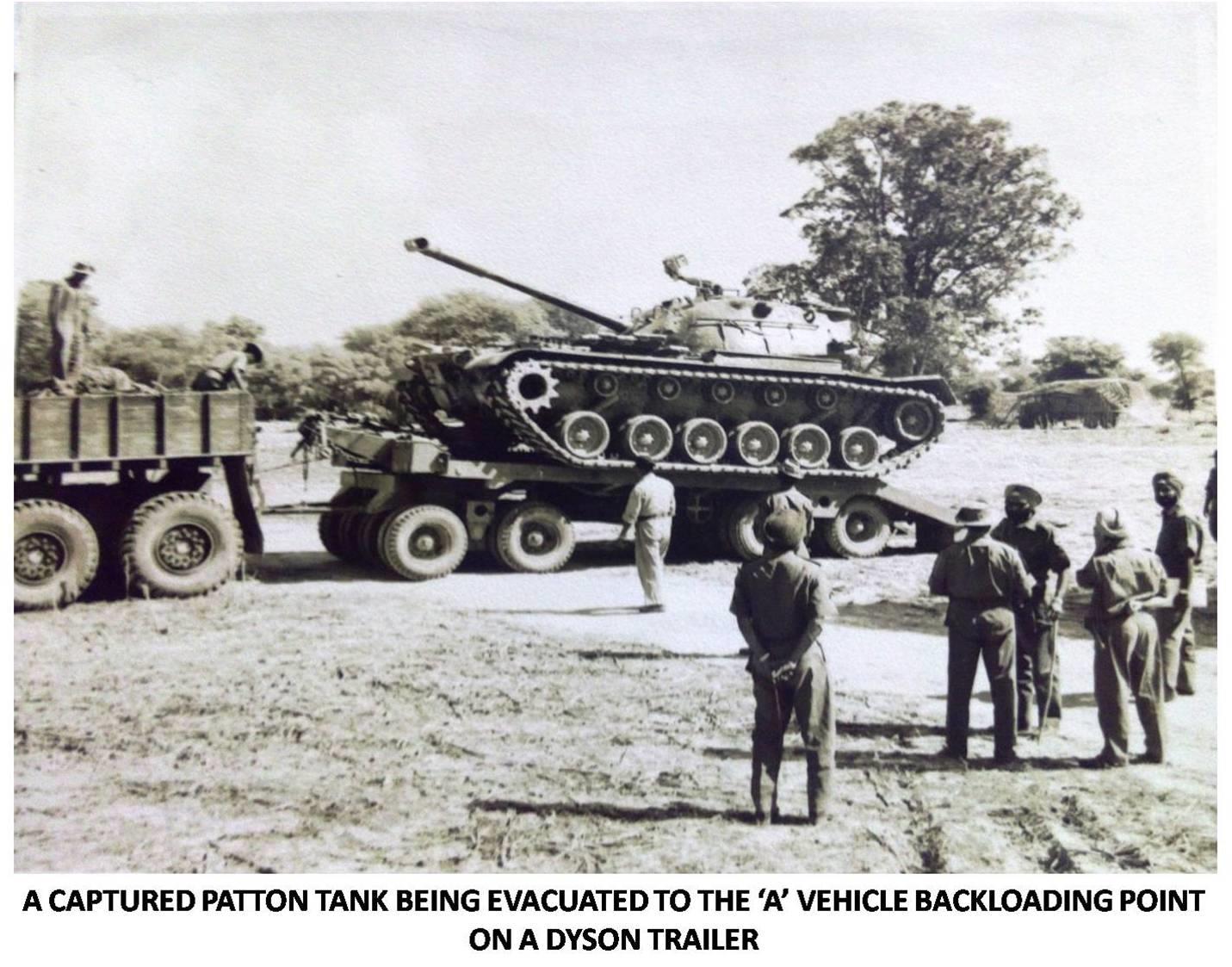
Nehru’s death in 1964 had created political uncertainty in the country and an impression in Pakistan that India was no longer politically or militarily strong. In Pakistan, Field Marshal Ayub Khan was well entrenched in power and liberal American arms aid and assistance had provided him with the latest aircrafts and battle tanks.

By 1965, the Pakistan Army had been trained and poised itself to go on an offensive in Kashmir. It appeared that Pakistan’s aim was to keep the war confined to J&K, but the leadership lacked the courage to attack openly. A secret plan of armed infiltration was therefore adopted. The invasion was carried out in three stages as under:- 

A limited offensive was launched in the Kutch region in May 1965 to test the political waters and to draw India’s forces away from Punjab –the main battle front.

Armed infiltration in J&K was launched with a view to seize power and declare independence of J&K. The idea was to tell the world that it was a local uprising. A revolutionary council was formed to appeal for military assistance from various countries including Pakistan.

In Jammu, a major offensive was to be launched to capture Chhamb and Akhnur Bridge, soon after the uprising in Srinagar had taken place. 

The main miscalculation on Pakistan’s part was to believe that the Kashmiris would help the infiltrators and rise against the established government in J&K. The other miscalculation was to presume that India will not counterattack in Punjab due to her political and military weakness. 

Battle in the Rann of Kutch 

** PATHOS, WHERE ART THOU? INTELLIGENCE ANALYSIS AND ETHICAL PERSUASION

Benjamin Franklin
SEPTEMBER 7, 2016

“If you would persuade, speak of interest, not reason.”

While teaching a class on intelligence and analysis last year, I asked my graduate students why the media’s shocking picture of the drowned Syrian boy seemed to have such an incredible effect on policy, whereas all of the other information had not. Their answer was immediate and insightful — “pathos,” or emotional appeal. When I asked them whether or not there are many examples of pathos incorporated into the finished intelligence reports they analyzed for class, the answer was a definitive “no, but we should carefully consider ways to use more.”

Centuries ago, Aristotle divided the means of persuasion, or appeals, into three categories — ethos, pathos, and logos. While he personally preferred the power of logos (logical appeal), the other two appeals surged to the forefront in everyday argumentative discourse.

The media and advertisers realized that the most important type of persuasive appeal to popular culture was through an abundant use of pathos, sometimes sprinkled with a dose of ethos (ethical or character appeal). The incorporation of colorful adjectives, vivid visuals, and the addition of senior “experts” that offer an opinion are examples of the use of pathos and ethos in these forums. Each appeal is exploited in articles and commercials to gain readership and retain interest in an information crowded world.

** Pakistan Conquered

By Lt Gen Prakash Katoch
08 Sep , 2016

Speaking on the occasion of Defence Day of Pakistan on September 6, army chief Raheel Sharif stated, “I want to make it clear to all enemies of Pakistan that Pakistan has always been strong and today it is invincible…… Be the challenge military or diplomatic; on the borders or within the cities, we know our friends and foes all too well.” He said the greatest example of a relationship based on mutual respect and principle of equality in the region is the Pak-China friendship, adding, “CPEC is the paramount evidence of this relationship… I would like to assure that we shall not allow any external force to obstruct it and any such attempt will be dealt with iron hands.”

Raheel’s assertion “we know our friends and foes all too well” sounds hollow because the Nawaz duo (Nawaz and Raheel) have sold the country to China…

The Pakistani media went hyper quoting Raheel Sharif in saying Pakistan is “unconquerable”.

But the unsuspecting Pakistani public is unaware that this emphasis on invincibility and unconquerable is to hide the fact that Pakistan stands conquered already. Raheel’s assertion “we know our friends and foes all too well” sounds hollow because the Sherif duo (Nawaz and Raheel) have sold the country to China with whom Pakistan claims its friendship is “higher than the mountains and deeper than the ocean”.

Pakistan has been duped thoroughly by China; conquering Pakistan without firing a shot in line with teachings of Sun Tzu. A cost benefit analysis of the $46 billion Kashgar-Gwadar 3000 kms CPEC reveals that only $11 billion are coming from Chinese government for construction of roads and rail links. Pakistan will have to repay 80% of this investment to China, so in actual term this Chinese investment will only be 20%. At the moment the terms of repayment are not publicized but if China is charging interest and in case of default repayment, China is capable of extracting all $11 billion repayment back from Pakistan, if not more. The worst part is that bulk of the construction force and labourers are coming from China despite Pakistan footing 80% or more of costs.

Bringing India-Nepal Ties Back on Track

By Rajesh Singh
Date : 08 Sep , 2016

India heaved a sigh of relief after Pushpa Kamal Dahal ‘Prachanda’ assumed charge as Nepal’s Prime Minister earlier this month. New Delhi had got tired of and frustrated with the predecessor KP Sharma Oli regime, which appeared determined to undo the new warmth that had crept into the India-Nepal bilateral after Narendra Modi became Prime Minister in May 2014. Modi was quick to congratulate Prachanda and invite him to India.

Note the contrast: When Prachanda had become Prime Minister for the first time in mid-2008, India had viewed the development with some alarm. After all, the Maoist leader didn’t exactly have a track record of being India-friendly. New Delhi’s worst fears were soon realised. Ironically, India had played a crucial role in clearing the way for Prachanda’s elevation, by persuading the monarchy to walk into the sunset; nudging the dominant Nepali Congress to do business with the Maoist leader; and convincing the Prachanda-led Maoists to give up arms and join the political mainstream. New Delhi had not reckoned, though, with the prospect of Prachanda forming a Government.

This change in attitude from 2008 to 2016 speaks volumes about how and where India-Nepal relations have progressed. There are indicators that the new Prime Minister will make his first official visit to India — as per a long-standing convention. It could be in September or October. New Delhi will view this positively, given that Prachanda had chosen China over India for his first official visit when he became Prime Minister in 2008.

The first few steps that the new Nepalese Prime Minister takes will set the tenor for the development of the relationship between New Delhi and Kathmandu. Prachanda has demonstrated some indication of change in style. He has admitted, “Last time I was inexperienced in the ways of competitive democracy. We (the Maoists) still had a mind-set from the insurgency years.”

Swarajya-Indic Academy Webinar: Dr Aroup Chatterjee’s ‘Chargesheet’ Against Mother Teresa


September 06, 2016

The highlights from the Swarajya-Indic Academy webinar with Dr Aroup Chatterjee about his book, Mother Teresa: The Untold Story.

Swarajya and Indic Academy hosted a webinar with Dr Aroup Chatterjee, author ofMother Teresa: The Untold Story on Sunday, 4 September 2016.

Dr Chatterjee spoke about the false notions underlying Mother Teresa’s canonisation by the Vatican and the truth behind her “miracles”. Here are the highlights:

On canonising Mother Teresa

Dr Chatterjee says that this canonisation itself was a lopsided affair. He argues that if these miracles attributed to her were, say, attributed to a Hindu or Muslim, or if any Hindu or Muslim had called abortion the biggest evil, the liberals everywhere and especially the West would have revolted fiercely and created a ruckus. However, since Teresa was a nun, this did not happen, and most of the world celebrated these “miracles”.

Mother Teresa’s relationship with the media

Dr Chatterjee says that the notion that Teresa was “media-shy” is not true, as she had, for instance, spent a whole day in an interview with Hello magazine. He says he had himself written to Teresa asking for an interview in 1994 but never got any response. Dr Chatterjee adds that his criticism of hers started while she was alive and that it was not wrong to criticise someone’s legacy, especially when they were treated like an icon.

He also points out that most of the world outside of India wanted to know the other side of the story. He also says that we should hang our heads in shame at the way in which Indians behaved about this whole saga as it is merely a victory for superstition and witchcraft.

Rise of Teresa’s stardom