Source Link
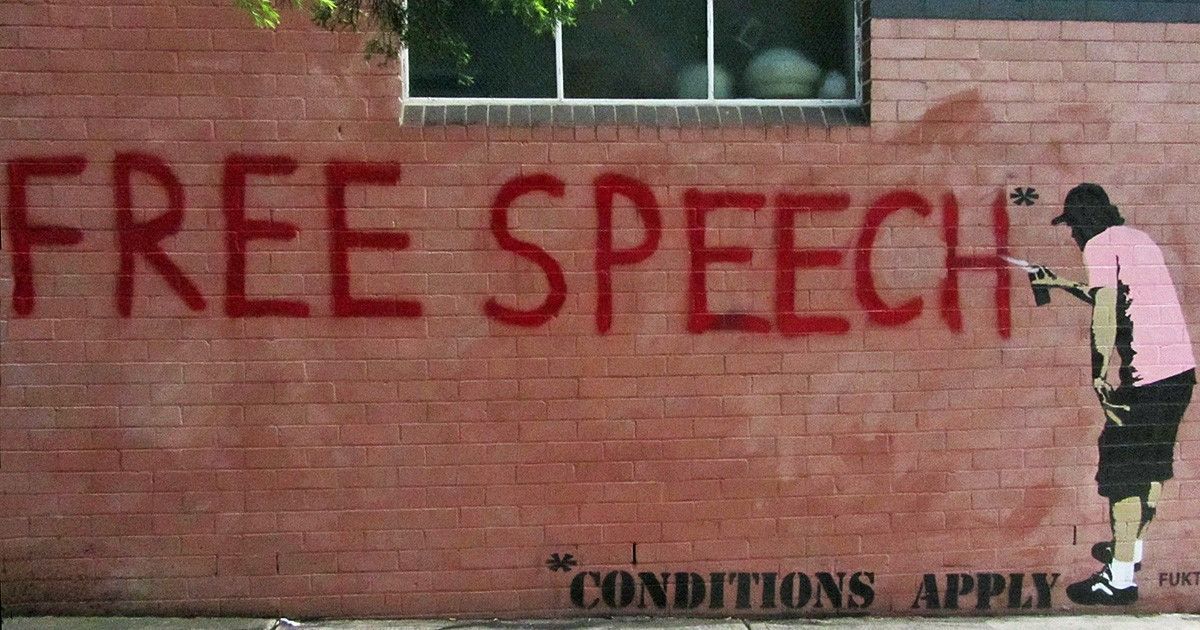
“If liberty is to mean anything at all, it means the right to tell people what they do not want to hear.”
Some years ago, I characterised our country as a “50-50 democracy”. India is largely democratic in some respects, such as free and fair elections and the free movement of people, but only partly democratic in other respects, such as the near-collapse of the criminal justice system, and the inability to eliminate large-scale political corruption.
One area in which the democratic deficit is substantial relates to freedom of expression. There are limits to what writers and artists and film-makers can and cannot do in this country. These limits to free speech have been analysed and deplored by scholars and activists, albeit mostly through a legal lens (as in Gautam Bhatia’s recent study, Offend, Shock, or Disturb). This essay, while beginning with the law, goes on to explore the wider sociological dimensions of the problem. It is not just imperfect laws, but the complex interplay of social forces, ideological biases, and political choices that inhibits freedom of expression in India.
So far as I know, the first thinker to make a persuasive case for the moral and political importance of free speech was Baruch Spinoza, writing in his Theological-Political Treatise, published in the year 1670. Here Spinoza said: “No one can transfer to another person his natural right, or ability, to think freely and make his own judgments about any matter whatsoever, and cannot be compelled to do so. That is why a government which seeks to control minds is considered oppressive…’ And he further observed: “A government which denies each person freedom to speak and to communicate what they think will be a very violent government, whereas a state where everyone is conceded this freedom will be moderate”.
This is persuasive, and still extremely relevant. But we must ask: Are there justifiable or reasonable limits to free speech? Or should people be allowed to say whatever they want? What about hate speech? What about admirers of Hitler in Germany? What about admirers of Nathuram Godse in India?
As it happens, Spinoza had considered these questions too. In his book of 1670 from which I have already quoted, he said that while a state must grant its citizens freedom of expression, “it is very dangerous for a State to concede free speech without any restriction. For this reason we must ask how this far this freedom can and ought to be granted to each person so as to be consistent with the stability of the State.” Spinoza thus recognised limits to the free expression of one’s views. For example, if a speech, book, painting or film might provoke or lead to large scale violence, bloodshed and anarchy, thereby threatening the survival or integrity of the State, perhaps it should not be allowed to circulate freely.