17 October 2017

Russia's Hand Is Visible Everywhere in the Middle East

By Nikolas Gvosdev

Four years ago, my colleagues Tom Nichols and John Schindler warned that U.S. fecklessness in the Middle East was creating conditions where Russia would be able to emerge as the key player in regional security. In responding to critics of their original article, they penned a follow-up days later that laid out the Russian strategy: to present Moscow as a “viable alternative partner” for the states of the region. At the time, they were roundly criticized for their apparent pessimistic assessment that a collapsing “regional power” would be able to diminish the influence of the world’s sole remaining superpower in the Middle East or even that Moscow would have anything it could offer to compete with Washington’s largesse.

The Chinese Dream in Peril: Xi Jinping and the Korean Crisis


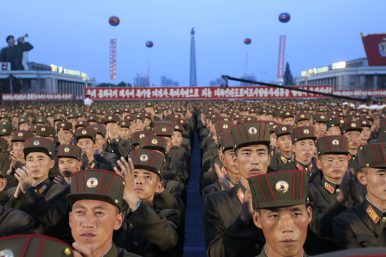
With tensions escalating rapidly again on the Korean peninsula, the attention of the world invariably has returned to the question of whether or not the solution to the crisis lies in Beijing. After months of continuing missile tests by North Korea despite sanctions and global condemnation, Kim Jong-un’s regime claims to have tested a hydrogen bomb and once again launched an intercontinental ballistic missile over Japan. North Korea’s march toward wielding a nuclear arsenal against its neighbors and far off enemies.

The Middle Eastern Roots of Nuclear Alarmism Over North Korea

By Rebecca Friedman Lissner
Source Link

Nuclear alarmism is reaching a fever pitch in Washington. President Donald Trump has responded to North Korea’s push toward a nuclear-capable ICBM with paroxysms of bluster: He warned that North Korean threats to the United States would “be met with fire and fury like the world has never seen,” proclaimed Kim Jong Un a “Rocket Man” (and now “Little Rocket Man”) on a “suicide mission,” and averred the North Korean regime “won’t be around for much longer.” Other members of the administration have echoed the president’s rhetoric: National Security Advisor H.R. McMaster suggested that Kim is undeterrable. U.S. Ambassador to the United Nations Nikki Haley trumpeted “plenty of military options.” The White House has engaged in open discussion of preventive war.

THE STORM GATHERS AND AMERICA IS UNREADY

DAKOTA L. WOOD

His first volume, The Gathering Storm, recounted many instances of failure among the leading figures of the 1930s to appreciate the growing danger of Hitler’s rise to power. Churchill’s history highlighted how the good intentions and virtuous character of Britain, France, and the United States hindered them from taking actions that could very well have prevented a war that claimed the lives of some 60 million people. He marveled at

Military Stalemate: How North Korea Could Win a War With the US

By Franz-Stefan Gady

North Korea’s defeat in a war with South Korea and the United States is inevitable. At least that’s the consensus among most military experts. The war would be “nasty, brutish, and short” and could cost the lives of up to 20,000 per day even before the use of nuclear weapons. Yet the outcome would never be in doubt: the defeat of the Democratic People’s Republic of North Korea (DPRK). This conclusion is drawn based on analyzing the relative military capabilities of North Korea, primarily seen as a function of its military hardware and munitions stockpile, versus the Republic of Korea (ROK) and the United States.

Minuteman III Replacement: Key to Nuclear Deterrence


In order to deter nuclear aggression against its homeland and vital interests, the U.S. must demonstrate that its strategic arsenal is capable of surviving an attack and then retaliating with devastating force against the aggressor. In other words, the losses an attacker would suffer must demonstrably exceed any potential gains. Thus, the paradox of nuclear strategy is that when weapons are postured effectively, they will never be used. We buy and maintain nuclear weapons in the hope they will remain in their submarines and silos forever.

Infographic Of The Day: The Future Of Artificial Intelligence, According To Pop Culture


It's a science fiction writer's dream: if AI becomes smart enough to create more advanced versions of itself, pretty much every outcome is on the table. Machines could empower humanity to become enlightened and virtuous. On the less optimistic side? Machines could instead ruthlessly enslave all of humankind to tickle their own warped sense of satisfaction.


Strategy, Civil–Military Relations, and the Political Nature of War: #Reviewing Scales on War


For a much shorter version of what follows, one need look no further than a recent tweet by Tom Ricks and response by Jill Sargent Russell. “If light infantry is so vulnerable on the battlefield,” Ricks wondered, “why is [it] that we are unable to decisively defeat adversaries who only have that?” Russell, quoting Ricks, replied, “Because war is political, not tactical.”[1]

Britain’s Defence Planners Face Hard Questions

By James Goldrick

In the last few days, the British press and social media have been rife with reports that the Royal Marines are to be reduced by 1000 from their present establishment of 6500. In addition, the amphibious fleet may be similarly reduced with the decommissioning of the landing platform dock (LPD) that is the core of the British ready capability and the possible disposal of both that ship and a sister unit held in reserve. This scheme is one option being considered as part of a ‘mini defence review’ underway in the UK.

Machine Intelligence: We Need a National Strategy


On Thursday, July 20, China’s State Council released the New Generation of Artificial Intelligence Development Plan. Numbering nearly 40 pages, the plan lays out China’s aspirations in impressive detail. It introduces massive investment that aims to position China at the forefront of technological achievement by cultivating the governmental, economic, and academic ecosystems to drive breakthroughs in machine intelligence. To achieve these goals, the council aims to harness the data produced by the Internet-connected devices of more than a billion Chinese citizens, a vast web of “intelligent things.”

Is The NSA At A Tipping Point? Should Its Entire Network Enterprise Be Scrapped? One Has To Assume Putin’s Spies & Beijing’s Collector’s Have Taken Full Advantage Of NSA’s Breaches & Miscues


As you are probably aware by now, there has been yet another breach of NSA’s security, as another contractor supporting the agency’s mission to primarily steal communications secrets of foreign targets — apparently unwittingly revealed our highly sensitive sources, methods, tools, techniques and procedures. One wonders if there is anything left worth stealing from NSA’s classified network. And,one would have to assume at this point that all these leaks has enabled Russia to embed some well-placed implants in NSA’s network enterprise. One has to assume that Putin’s spies took advantage of these miscues. And, the employment of the contracting community by NSA has, for whatever reason, become its Achilles heel.

Integration in Warfare

By Nathan Finney
Source Link

With the announcement of the new iPhone X—at a price only a princess royal could afford—I recalled a metaphor that some peers and I tried to employ to describe the importance of integration to future warfare. With the recognition by most defence thinkers and senior military leaders that potential future adversaries have created and employed capabilities that will negate U.S. and ally advantages, different approaches to contemporary warfare will be required. Enter ‘multi-domain battle’, a concept designed to address the diminishing ability of commanders to wage a joint fight effectively on the future battlefield.

Britain’s Defence Planners Face Hard Questions

By James Goldrick

In the last few days, the British press and social media have been rife with reports that the Royal Marines are to be reduced by 1000 from their present establishment of 6500. In addition, the amphibious fleet may be similarly reduced with the decommissioning of the landing platform dock (LPD) that is the core of the British ready capability and the possible disposal of both that ship and a sister unit held in reserve. This scheme is one option being considered as part of a ‘mini defence review’ underway in the UK.

WEAR PINK UNDERWEAR LIKE CHURCHILL, AND NINE OTHER PRINCIPLES OF DEFENSE ENTREPRENEURSHIP

ML Cavanaugh

Yes, you read that right. The West’s roaring lion, the British Bulldog, he of “blood, toil, tears, and sweat”—Sir Winston Leonard Spencer-Churchill—“customarily wore underwear made of pale pink silk.” We’ll come back to that later.

I was recently asked to speak at a Defense Entrepreneurs Forum panel at the US Air Force Academy, which got me to thinking about what that actually means. Some hold the term, “defense entrepreneur,” in contempt: Why isn’t this just innovation? Why do we have to go and create a new word for the same thing?

10 Ways to Start a Conversation About Leadership

Vince Lombardi wisely quipped, “The man on top of the mountain didn’t fall there.” Success does not happen by accident…and neither does becoming a leader. The road to meaningful influence is marked by deliberate steps to acquire knowledge, gain experience, and engage in ways that specifically relate to leadership. Followers can do this on their own, but leaders have a tacit responsibility to grow other leaders and must find ways to further the leadership development of those around them.

16 October 2017

Deepening India-Israel Ties: Changing Landscape of the Indian Defence Sector

By Ketan Salhotra

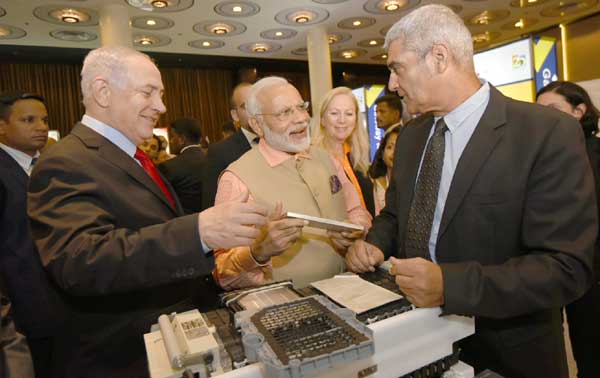
Israel has become a prominent defence partner for India in recent times. A string of defence deals between the two countries have benefitted Indian companies seeking advanced manufacturing technologies and Israeli companies looking at new defence markets. Israel has also been able to provide the Indian armed forces with weapons which it could not directly buy from its usual defence partners – Russia and US.

Pak heading for military rule

By Maj Gen Harsha Kakar

The recent statement, post the meeting between the Pak foreign minister, Khawaja Asif and the US secretary of state, Rex Tillerson, included a comment indicating concerns about the future of Pakistan’s government. This announcement was made after inputs began flowing of a growing rift between the polity and the army, which holds sway over the country. The statement aimed to support the civil establishment and was possibly signalling a warning to the army to stay away.

'The Taliban Can't Win,' Says Commander Of U.S. Forces In Afghanistan

TOM BOWMAN

Gen. John W. "Mick" Nicholson settles into his wood-paneled office inside the American-led military headquarters in Kabul. It's lined with plaques, pictures and ceremonial swords.

He has spent more time in Afghanistan, in various jobs, than any other senior American officer — a total of 5 1/2 years. The commander of NATO's Resolute Support mission and U.S. forces in Afghanistan since March 2016, Nicholson is a genial West Point graduate with salt-and-pepper hair — and a renewed confidence.

THE GROWING DANGER OF A U.S. NUCLEAR FIRST STRIKE ON NORTH KOREA

DAVID BARNO AND NORA BENSAHEL

The escalating tensions over North Korea have brought the United States closer to war on the Korean peninsula than at any other time in decades. Yet Washington is just as likely as Pyongyang, if not more likely, to initiate the first strike — and would almost certainly use nuclear weapons to do so. Such a strike may be the only way to decisively end the North Korean nuclear program, but its incalculable effects would extend far beyond the devastation and destruction in Korea. 

Kaspersky in focus as US-Russia cyber-tensions rise


The security software firm Kaspersky has become the focal point in an escalating conflict in cyberspace between the United States and Russia.

The Russian-based company has been accused of being a vehicle for hackers to steal security secrets from the US National Security Agency, and was banned by all American government agencies last month.

North Korea: Where China Can Beat the US

By Jacob L. Shapiro

Of all the parties involved in the Korean missile crisis, the most difficult to read is China. The Chinese Foreign Ministry’s almost daily platitudes about the need for a peaceful resolution do little to reveal what China’s real interests and objectives are – and what they are is multiple and conflicting. At one level, China is concerned with the balance of power on the Korean Peninsula. China doesn’t want Pyongyang to have nuclear weapons, and it doesn’t want the peninsula to unify. But at the same time, what happens on the Korean Peninsula also affects China’s relationship with the U.S., and despite the deep economic ties between the two countries, from Beijing’s perspective that is a relationship defined ultimately by fear and mistrust.

The Long Game In North Korea – Analysis

By Robert C. Thomas

North Korea is once again vying to hold the top spot among the most pressing and nerve-wracking global security crises of the moment. Although it is entirely reasonable to be concerned about how to respond to an aggressive and erratic state developing ever more powerful nuclear weapons and longer-range missile delivery technology, it is actually extremely dangerous to confine policymaking on North Korea to the immediate nuclear crisis. 

When the Commander in Chief Disrespects His Commanders

James Stavridis

Recently, at President Trump's first of these dinners, it was surprising to see him use those senior officers and their spouses as a backdrop for a cryptic comment to the press: "You guys know what this represents? Maybe it's the calm before the storm." When asked what the "storm" was, he responded equally oddly: "You'll find out." Speculation ran wild. Was it a military strike on North Korea? Iran? Venezuela? The White House refused to clarify, citing a desire to keep the enemy guessing. 

After-action analysis from last month’s massive drill

By: Barbara Opall-Rome

After-action analysis from last month’s massive drill at Israel’s northern border has validated, with very few exceptions, more than a decade worth of development, deployment and operational procedures associated with the military’s cyber-secure, C4I-operational network, the military’s chief signal officer said.

“Our concept of fighting in the cyber domain was validated in the latest drill,” Brig. Gen. Netanel Cohen, the Israel Defense Forces‘ chief signal officer, told Defense News. “We took all the digital transformation of the past decade, and … bottom line: It worked.”

How artificial intelligence is becoming a key weapon in the cyber security war

Michael Sentonas

In the last 12 months, 60% of Australian organisations experienced a ransomware attack. This is according to Telstra’s Cyber Security Report 2017, which also found that ransomware was the number one type of malware downloaded in the Asia Pacific region during 2017. 


The future in the war against cybercrime — machine learning and AI

Christian Stevenson

Antivirus programs just aren't cutting it any more, with developers finding it impossible to keep up with the rapidly changing threats. But there is a white knight on the horizon, says tech expert Dr Christian Stevenson, who explains how machine learning and artificial intelligence will drive cyber-security in the near future.

Army Pledges To Fix Networks; Skeptics Abound

By COLIN CLARK

“The urgency of now is upon us,” Lt. Gen. Bruce Crawford told reporters and aides to explain why the Army would act and get things fixed. That was the message from the generals and civilians leading the Army’s network efforts who appeared in an unwieldy panel yesterday. (The Army loves to put these panels on. They seem to be a reflection of the service’s approach to acquisition: throw good people at it from multiple parts of the bureaucracy and hope they can all make sense of it.) It was a message similar to the one they delivered to a very skeptical Congress late last month. And it was a message was greeted with skepticism from myself and other media who have heard the Army make similar claims for at least five years.

“A Way” To Develop a Toxic Leader: How We as Leaders Create Our Own Monsters


Toxic leaders don’t just appear on the scene, they develop over time- and we are the ones that create them. Yep! It’s partly our fault as leaders because we fail to properly counsel them as they move up the ladder.

There you have it: “A way” to create a toxic leader.

So, I think it’s important for all of us to learn how not to build our own Frankensteins.

Optimism has made wars likelier and bloodier


THIS is not really a book about the future of warfare, with all that might imply in terms of exotic technologies that will transform not only the character of war, but, some believe, even its very nature. Lawrence Freedman does indeed discuss the impact of cyber-attacks, artificial intelligence and machine learning on the conflicts of the future. But that is not his main purpose. The clue is in the title. The author, arguably Britain’s leading academic strategist, examines how ideas about how future wars could be fought have shaped the reality, with usually baleful results.

How Technological Advancements Will Shape the Future of the Battlefield

By ROBERT H. LATIFF

Dr. Robert H. Latiff retired from the U.S. Air Force as a major general, is an adjunct faculty member at the University of Notre Dame, and is the director of Intelligence Community Programs at George Mason University’s School of Engineering. His book, Future War, looks at how future technology will change virtually every aspect of war as we know it and how we can respond to the serious national security challenges ahead.