22 July 2019

Five Years After the Downing of MH17, What Do We Know About Russia’s Role?

Candace Rondeaux 

This week marks five years since Malaysia Airlines Flight 17 was shot down over eastern Ukraine. Since then Russia has seemingly spared no effort or expense in waging an epic disinformation campaign to beat back allegations that Kremlin-backed mercenaries and separatists in the Donbas region fired the Russian-made Buk missile that killed all 298 people on board the passenger jet. Yet as evidence of Russian involvement has continued to mount in recent days, it looks like Moscow may need to retool its strategy.

Mapping European Shipping Routes


While researching Scottish-U.K. relations, we recently stumbled on the blog of British geographer James Cheshire. Cheshire had discovered an old European Union-funded research project from 2001-03 that created a climatological database for the world’s oceans from 1750 to 1850. The study gathered information from decades-old, detailed log books of global maritime activities and allowed Cheshire to create a few rough maps of British, Dutch and Spanish trade routes.

Our graphics team decided to give illustrating the data a shot of their own. The result is this graphic, which shows British, Dutch, Spanish and French trade routes from 1750 to 1800. As one might expect, the British trade routes are those of an impressive global empire. This time period happened to be the heyday of Dutch power abroad, so the Dutch routes are also extensive. The Spanish trade routes are focused mainly on Spanish colonies in the New World. Meanwhile, the French trade routes seem spartan and rather undiversified compared to the others – but then, 1750-1800 was an exceedingly unstable time in France, so there were more pressing worries at home. For those who would like to examine the data themselves and are brave enough to negotiate late-1990s HTML coding, you can find it here.

Is industry cyber(in)security DoD’s Achilles’ heel?

By: Mark Pomerleau   

Military leaders like to point out that the nature of warfare is unlikely to change, but the character of war — how they are fought and with what — is rapidly evolving. Physically, the United States benefits from the geographic isolation, separated from adversaries on all sides by large oceans and friendly nations, but the advent of cyber capabilities has created new attack vectors. In turn, agencies are pursuing case studies and exercises to identify best practices in less transparent, highly vulnerable sectors, such as manufacturing.

The homeland is no longer a sanctuary

In the event of a conflict, it is within the realm of possibility that adversaries will try to target small to medium-sized manufacturing companies with crippling cyberattacks. In many cases, these companies provide the Department of Defense with critical services but often are so small that they don’t have the wherewithal to institute enough cyber defenses against intrusions.

Outsourcing in Intelligence and Defense Agencies: A Risk of an Increase in the Proliferation of Cyber Weapons?

Omree Wechsler

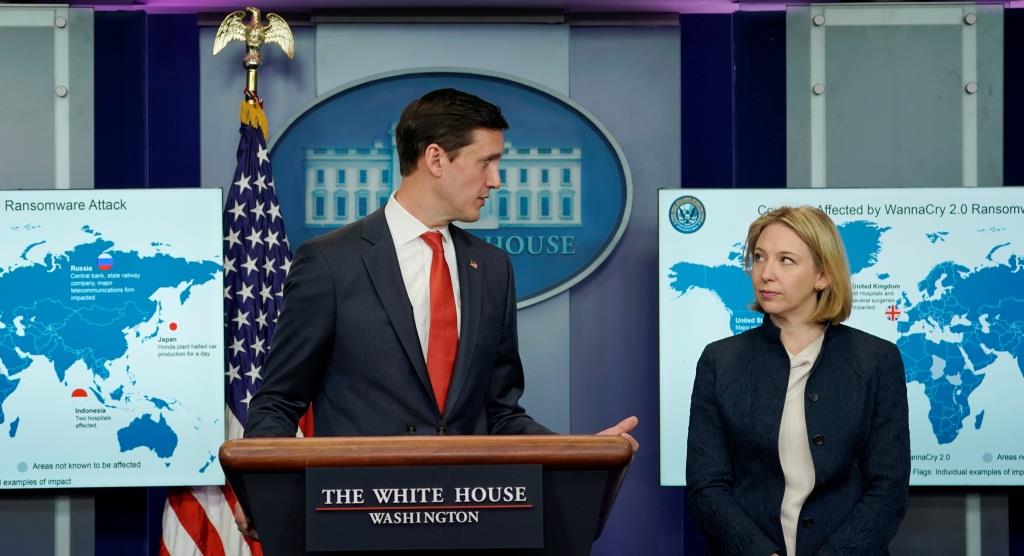
The many cases of the leakage of classified materials belonging to intelligence and defense agencies have led to claims that contract workers are the reason for these incidents, due to either their lack of loyalty or negligence. In addition, these leaks of classified information, including hacking programs and components, have raised the question of whether this internal threat is also the cause of the increased proliferation of sophisticated cyber weapons among players who do not have the ability to develop them. A prominent case study from the past few years is the leak of the National Security Agency (NSA)’s hacking component, EternalBlue, and its use in the global cyberattack WannaCry, which damaged computers in 150 countries and was attributed to North Korea. Understanding the internal threat and its connection to the proliferation of cyber weapons, along with enumerating the advantages and disadvantages of hiring contractors, is critical for minimizing the threat, coping with it, and in preventing harm to national security and further deterioration of stability in cyberspace.

Is blockchain overhyped? 5 challenges to getting projects off the ground


Over the past few years, there has been a great deal of excitement around blockchain – some warranted, and some not. As the hype dies down, the dust is settling, and the technology is moving into a “build” phase. That is, organizations – large and small – are looking into viable use cases for the technology and deploying them. (You can find our practical framework for deciding whether blockchain is a good fit for your use case here.)

To get a pulse of where blockchain deployments stand, the World Economic Forum and Accenture Research partnered to survey 550 individuals from 13 industries, interview dozens of public and private sector leaders, and analyse 79 blockchain projects. Here are the top obstacles and challenges to getting projects off the ground:

1. Hype remains

Microsoft is like a Monopoly that Just Won’t Die

Michael K. Spencer

Microsoft is the world’s most valuable public company. It is no Amazon or Huawei, but its pivot to the Cloud has been an epic success and Alibaba and Tencent should be taking notes.

Incredibly, half of Microsoft’s acquisitions in 2018 were in the area of video games. Microsoft has tried to copy the success of such solutions as Slack and Twitch, but somehow as a Grandfather of tech company is losing the battle of consumer artificial intelligence and now partners with Alexa, rather than competing against it.

Not part of the volatile FAANG stocks, Microsoft’s stock is rock solid at around $100.00. Azure is easily the second leader in the Cloud that’s still showing incredible global growth and will continue to do so in the 2020s.

Security and the 'Holographic Society'

By Eric B. Schnurer

The very distinction between the virtual and physical worlds is itself dissolving. Is it time we started thinking about security in the physical world as we do in cyber? Successful attacks cannot be entirely prevented but can be survived by building multiple pathways so the enemy cannot take down the entire system. Every point in the network has access to the information, so it can, as a practical matter, never be destroyed or altered, something like a hologram. In that way, blockchain essentially models the logic of “defense” as dispersion and redundancy. "Distributed" rather than concentrated systems are more survivable and secure in the real world, not just the virtual: To the extent that our concern is purely physical survival, even then, the more dispersed or redundant a population, an economy or a culture, the less a physical attack on it will make any sense.

Revealed: This Is Palantir’s Top-Secret User Manual for Cops

By Caroline Haskins

Palantir is one of the most significant and secretive companies in big data analysis. The company acts as an information management service for Immigrations and Customs Enforcement, corporations like JP Morgan and Airbus, and dozens of other local, state, and federal agencies. It’s been described by scholars as a “secondary surveillance network,” since it extensively catalogs and maps interpersonal relationships between individuals, even those who aren't suspected of a crime.

Palantir software is instrumental to the operations of ICE, which is planning one of the largest-ever targeted immigration enforcement raids this weekend on thousands of undocumented families. Activists argue raids of this scale would be impossible without software like Palantir. But few people outside the company and its customers know how its software works or what its specific capabilities and user interfaces are.

World Trade Organization 2.0: Reforming Multilateral Trade Rules for the Digital Age

DAN CIURIAK

The rules-based framework, as instantiated in rules established under the World Trade Organization (WTO), is not equipped to address the issues that are emerging under the technological conditions generated by the digital transformation. The emerging knowledge-based and data-driven economy features incentives for strategic trade and investment policy and a confluence of factors contributing to market failure at a global scale; digital social media and platform business models have raised concerns with calls for regulation affecting cross-border data flows; and newfound security issues raised by the vulnerabilities in the infrastructure of the digitized economy have precipitated a potential decoupling of global production networks along geopolitical fault lines.

To date, the response has been fragmented, incomplete and, in large part, conducted outside the WTO. A new WTO digital round is required to create a multilateral framework that is fit for purpose for the digital age.

Limited Wars Are Forever Wars

BY EOIN HIGGINS 

On Sunday, June 23, CBS Face the Nation reporter Margaret Brennan asked Democratic presidential primary candidate Bernie Sanders what he thought of President Donald Trump’s last-minute reversal of an order to bomb Iran. Brennan pointed out that the action would have been a “limited strike.” In his reply, Sanders sarcastically mocked the concept, saying that any limited strike would, of course, be “an act of warfare.” Sanders also denounced the president for issuing the order in the first place.

The next day, former Texas Rep. Beto O’Rourke, one of Sanders’s rivals for the 2020 nomination, proposed a tax on nonmilitary families to fund future U.S. wars while drawing down the current American conflagrations. According to O’Rourke, the tax was meant, in part, to end “forever wars.”

21 July 2019

20 years after Kargil: Newsroom to Govt, reporter to father, how Kargil tipoff travelled

Sushant Singh

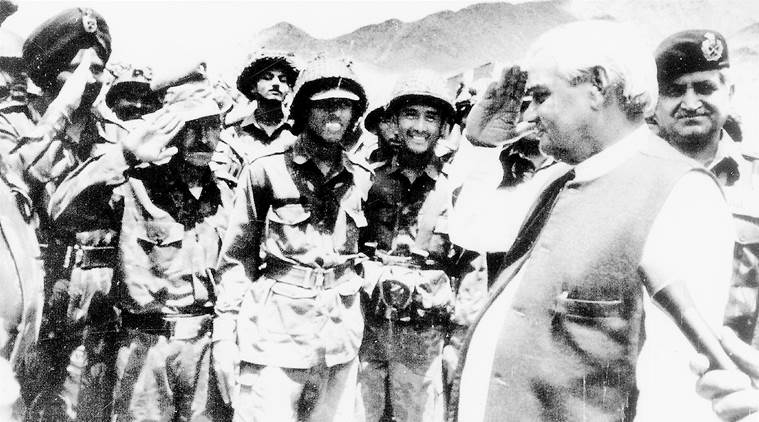
Prime Minister Atal Bihari Vajpayee with troops in Kargil in June 1999. (Express archive)

While much of what happened during the war on the icy heights of Kargil in 1999 has been extensively debated and analysed, little known are the details of how senior ministers of the Atal Bihari Vajpayee cabinet first learnt of the intrusions in the area. They got to know of it rather fortuitously, after a senior Army officer approached the son of then Foreign Minister Jaswant Singh.

Manvendra Singh, son of Jaswant Singh, and a Territorial Army officer, said, “I was then covering defence for The Indian Express, with well-established contacts and friends in the Defence ministry and the Services headquarters. At the beginning of the second week of May, I got a call from a senior officer in Army Headquarters that I should positively see him that evening.” This was in May 1999.

“I met him for dinner at his residence where he told me that something was happening in Drass-Kargil sector which seems to be serious because a Special Forces unit had been heli-lifted urgently that day and taken to the heights in that sector,” said Singh, who later became an MP and a MLA in Rajasthan.

Engaging with India’s Electrification Agenda


In 2019, India completed its program to provide electricity connections to every village and every home in the country. However, even though millions more are now connected, problems remain, including unreliable supply of power and a lack of workforce capacity for utilities to serve an expanded customer base. While India’s central government sets national policy, India’s powerful states have jurisdiction over the power sector and are responsible for implementation of central government programs and policies. For foreign stakeholders interested in supporting India’s electrification agenda, this presents an opportunity for them to engage with states to help meet their energy access priorities.

To identify key areas for international engagement, CSIS conducted a survey of government, civil society groups, and energy access practitioners in the Indian states of Assam, Chhattisgarh, Madhya Pradesh, Odisha, and Rajasthan on their energy access priorities. Opportunities for collaboration include metering and bill collection, operations and maintenance, quality and reliability of supply, and off-grid technologies, including solar-powered pumps and other appliances.

This report was made possible by generous support from the Good Energies Foundation.

Pakistan Arrests Suspected Mastermind of 2008 Mumbai Attacks

By Asim Tanveer

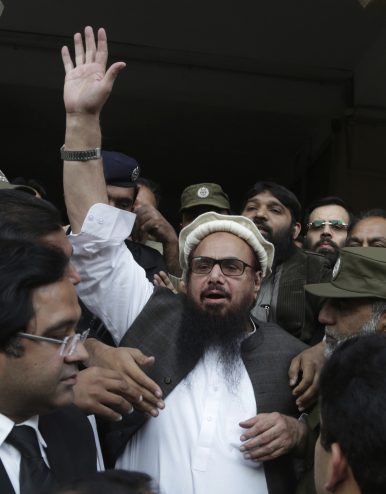
Pakistan on Wednesday arrested a radical cleric and U.S.-wanted terror suspect implicated in the 2008 Mumbai attacks, officials said, just days ahead of Prime Minister Imran Khan’s trip to Washington.

Hafiz Saeed was taken into custody in Punjab province while traveling from the eastern city of Lahore to the city of Gujranwala, according to counterterrorism official Mohammad Shafiq.

Saeed founded the Lashkar-e-Taiba group, which was blamed for the Mumbai attacks that killed 166 people. His charity organizations, Jamaat-ud-Dawa and Falah-e-Insaniat, are alleged fronts for Lashkar-e-Taiba.

The United States has offered a $10 million reward for Saeed’s arrest and Washington recently stepped up pressure on Islamabad to crack down on terror groups.

In response, Pakistan registered over a dozen cases against Saeed and several of his associates, accusing them of funding militant groups through charities and leading to Wednesday’s arrest.

Reconnecting Afghanistan: Lessons from Cross-border Engagement

Dr Gareth Price

For centuries, Afghanistan was a hub of connectivity – for goods, religions and culture – both between Asia and Europe, and within Asia itself. Its centrality diminished during the colonial era, and in recent times, four decades of conflict have cemented Afghanistan’s status as peripheral rather than integral. For Afghanistan to be economically sustainable, it will need to regain its status as a hub. Several large-scale infrastructure projects, in varying degrees of development, are now aiming to achieve that – in particular, by making Afghanistan a conduit between energy-surplus countries in Central Asia and energy-deficit states in South Asia.
Among Afghanistan’s neighbours there is a re-emerging recognition that their own interests are better served by engaging with Afghanistan than by isolating it. However, there remains a widespread notion of ‘zero-sum connectivity’, whereby cooperation – exporting power, for instance – in one direction is seen to come at the expense of cooperation in another. In addition, there is some justification for viewing cooperation – relying on imports from a particular country, for example – as creating a vulnerability for the recipient rather than leading to a mutually beneficial relationship.

This paper examines several examples of ongoing engagement between Afghanistan and its neighbours, with the intention of:

Asia’s Scary Movie

RICHARD N. HAASS

A snapshot of Asia would show a region at peace, with stable societies, growing economies, and robust alliances. But, if we view history as a moving picture, we may well come to look back on this moment as the time in which the most economically successful part of the world began to come apart.

NEW YORK – History at any moment can be understood as a snapshot, telling us where we are, or as a moving picture, telling us not just where we are but where we have been and where we may be headed. It is a distinction with an enormous difference.

Consider East Asia and the Pacific. A snapshot would show a region at peace, with stable societies, growing economies, and robust alliances. But a moving picture would be considerably less reassuring. We may well come to look back on this moment as the time in which the most economically successful part of the world began to come apart.

North Korea is one reason. War has been avoided, not because North Korea has done anything to reduce the threat posed by its nuclear weapons and ballistic missiles, but because US President Donald Trump’s administration has not matched its fiery words with actions. The nuclear and missile threat posed by North Korea has actually increased since Trump embraced summitry with Kim Jong-un just over a year ago.

How to Confront an Advancing Threat From China

By Nikki Haley 

The most important international development of the last two decades has been the rise of China as a great economic and military power. As China transformed, many Western scholars and policymakers predicted that economic reform and integration into the world economy would force the country to liberalize politically and become a “responsible stakeholder” in the international system. The idea, sometimes called “convergence theory,” was that as China grew wealthier, it would become more like the United States.

The theory was comforting, but it did not pan out. China grew economically without democratizing. Instead its government became more ideological and repressive, with military ambitions that are not just regional and defensive but global and designed to intimidate. And as the distinction between civilian and military technology gradually eroded across the globe, Chinese President Xi Jinping made it official policy for Chinese companies to put all technology at the disposal of China’s military. As the Princeton University scholar Aaron Friedberg has written, “What Xi Jinping and his colleagues have in mind is not a transitional phase of authoritarian rule to be followed by eventual liberalization, but an efficient, technologically empowered, and permanent one-party dictatorship.”

BELT AND ROAD INITIATIVE 2.0: ‘QUALITATIVELY’ DIFFERENT?

by N. Janardhan

Following five years of periodic controversies and criticism – some factual, others contrived – President Xi Jinping used the Belt and Road (BRI) Forum in April to set the agenda for the next five years of his hallmark project. At the forum’s second edition, meant to promote a “stronger partnership network,” the Chinese leader pledged to “clean up,” stressed “zero tolerance” to corruption, and emphasized readiness to adopt “internationally acceptable” standards in the bidding process of BRI projects in the future. This language indicates Beijing’s openness to constructive criticism and willingness to objectively tweak some inherent weaknesses in the strategy and implementation mechanisms for the BRI during the 2013-2018 period. It also sets the stage for the start of “BRI 2.0,” where the stress is likely to be on the qualitative, rather than just quantitative, attributes. The following are some analytical pointers on how BRI 2.0 is likely to be different from version 1.0, especially keeping in mind what Chinese Minister of Foreign Affairs Wang Yi referred to as a “high-quality” shift from “big freehand” to “fine brushwork” in planning BRI’s future projects.

China’s Digital Silk Road Could Decide the US-China Competition

By Clayton Cheney

Great power competition has returned as the defining feature of the geopolitical landscape on the global stage, with the United States and China vying for global and regional influence. China is asserting its influence on the international stage, most notably via its signature foreign policy project, the Belt and Road Initiative (BRI). The BRI marks a shift in Chinese foreign policy from Deng Xiaoping’s “hide your strength and bide your time” approach to Xi Jinping’s belief that it is now China’s time to “take center stage in the world.” China’s success in implementing one specific aspect of the BRI, the Digital Silk Road, will be of critical importance in determining China’s ability to shape the emerging international order of the 21st century. Through the Digital Silk Road, China is engaging in strategic technological competition with the United States and is exporting its model of digital authoritarianism around the globe.

Chinese Nuclear Weapons Strategy—Technical-Military Developments and Perceptions of Credibility

By Toshi Yoshihara & Jack Bianchi

Introduction

A diverse range of external stimuli, including technological trends and geopolitical shifts, is leading the strategic community of the People’s Republic of China (PRC) to reconsider existing nuclear policy, strategy, and operations. According to Chinese open sources, U.S. global conventional precision strike systems, U.S. missile defenses, and India’s nuclear weapons modernization, among other threats, could shake the PRC’s faith in longstanding nuclear doctrine and posture. The 2013 Science of Military Strategyconfirms that “the nuclear security circumstances facing China in overall terms are trending toward complexity.” [1] In response to such challenges, some Chinese analysts have proposed loosening the no-first-use policy and undertaking quantitative and qualitative improvements to China’s nuclear forces.

A departure from enduring nuclear policy and strategy may also reflect China’s growing power and sense of purpose as it seeks to reshape its surroundings and accelerate the erosion of the U.S. position in the Western Pacific. Indeed, Chinese analysts are exploring Cold War history in Europe, from which they may be drawing lessons about the vulnerabilities of U.S. extended deterrence in Asia. While it remains unclear how and to what extent Chinese nuclear strategy will advance Beijing’s expanding ambitions, the internal debates suggest that China may be increasingly inclined to adopt a more coercive nuclear strategy. [2]

U.S. Conventional Prompt Global Strike

Seoul and Tokyo Stare Each Other Down

By Evan Rees

Japan's move to impose unprecedented trade measures against South Korea to retaliate against its increasingly hard-line stance toward Tokyo's wartime conduct will leave Seoul with few options to respond effectively. Domestic political drivers in both South Korea and Japan will make it difficult for the two sides to reach a compromise on their outstanding wartime tensions. Both the United States and China will push the pair to de-escalate their impasse. 

Economic progress might alleviate historical trauma, but it's unlikely to solve it. Today, South Korea and Japan are vibrant democracies that enjoy robust economies and protection under the U.S. military umbrella, yet Japan's wartime actions continue to cast a long shadow over its relations with its neighbors in Northeast Asia. South Korea's 35 years under Japanese rule, status as a fellow U.S. ally and vulnerable geopolitical position between Japan and China ensure that Japan's imperial legacy is particularly contentious on the peninsula.

The Big Picture

Will It Be Another Summer of Discontent in Iraq?

Renad Mansour 

Over the past few summers, as scorching heat meets a growing dissatisfaction with their government’s inability to provide basic services and employment, Iraqis have taken to the streets to protest. These demonstrations have occurred primarily in southern Iraq and in Baghdad, where violence has been relatively contained for several years now. To many Iraqis, protest is the only voice they have left. They view the formal political and electoral process as just reinforcing the same elites who have repeatedly failed them since the U.S. invasion of 2003 that toppled Saddam Hussein. 

Getting Iran Out of Syria Is No Easy Task

by Jonathan Spyer

Israel has undertaken at least 200 air raids against Iranian targets in Syria since 2017. Mossad head Yossi Cohen said at a security conference in Herzliya recently that Israel's objective is to make Iran "reach the conclusion that it is just not worth it" to continue its project in Syria.

Israel's evident intelligence domination in Syria is impressive, as is the prowess of its pilots. But while air power is a mighty instrument, it's applicable only to certain tasks. The Iranian project in Syria is broad, deep and multifaceted. Some of its elements are acutely vulnerable to air power—research facilities, missile sites, convoys. But others are not.

Jonathan Spyer is director of the Middle East Center for Reporting and Analysis, and is a research fellow at the Middle East Forum and at the Jerusalem Institute for Security and Strategy.

Dangerous Liaisons: Russian Cooperation with Iran in Syria


The Issue

As tensions escalate between the United States and Iran in the Middle East, Russia is engaged in covert and overt cooperation with Iran in ways that undermine U.S. national security interests. This analysis of commercial satellite imagery at Tiyas Airbase in Syria indicates the scope and proximity of Russian and Iranian military ties. If Washington wants to contain Tehran and prevent further Iranian expansion, U.S. policymakers will need to increase pressure on Moscow to curb Tehran’s activities in countries like Syria.
Introduction

Following a June 2019 meeting with Iranian President Hassan Rouhani at the Shanghai Cooperation Organization summit in Kyrgyzstan, Russian President Vladimir Putin remarked that “relations between Russia and Iran are multifaceted, multilateral.” In characterizing the primary areas of cooperation, Putin noted: “this concerns the economy, this concerns the issues of stability in the region, our joint efforts to combat terrorism, including in Syria.”1 One example of Russian-Iranian cooperation is in Syria.

Are Russia’s Mercenaries a Threat to U.S. Interests?

NATHANIEL REYNOLDS

WHAT IS RUSSIA’S WAGNER GROUP?

The Wagner Group emerged from the Kremlin’s need for off-the-books fighters in its wars in Ukraine and Syria. In both conflicts, Wagner’s mercenaries helped the Russian military avoid official casualties and reduced the political risk for President Vladimir Putin’s regime. Since then, Wagner has evolved. It now helps the Kremlin build influence by providing training and protection services in at least two African countries. This covert, unacknowledged group of mercenaries is emblematic of the Kremlin’s foreign policy ambition, assertiveness, and penchant for denying responsibility.

Numbering between 3,600 and 5,000 fighters, the group trains at a secret base next to a Russian military intelligence (GRU) facility. Its commander is Dmitry Utkin, who retired from the GRU’s special operations troops. Some of its members have strong military backgrounds. Others are former convicts or have no professional military experience and little training. Most seem to be Russian citizens, but no ideology drives the group as a whole. Money is a major draw for those who join. Their combat pay in Syria was roughly six times the average wage in Russia.

IS THE WAGNER GROUP DIFFERENT FROM A PRIVATE MILITARY COMPANY?

The Russian military created Wagner with Western private military companies in mind. But the differences are stark. The group is not a true commercial entity—the state created it to serve the needs of Putin’s regime; there is no registered, legal entity named Wagner Group; it does not operate in the global market; and those who run it deny that it exists.

DOES PUTIN CONTROL ITS ACTIVITIES?

Three Ways to Break the Stalemate With North Korea

ARIEL (ELI) LEVITE, GEORGE PERKOVICH

Five U.S. presidents have tried to persuade three generations of North Korean leaders to abandon their nuclear weapons program. None have succeeded. The top brass in Pyongyang cannot imagine how it would survive and keep its leverage over others without a nuclear arsenal. Despite this deadlock, there still are ways to meaningfully constrain and eventually roll back North Korea’s nuclear pursuits, ways that Supreme Leader Kim Jong Un might reluctantly accept and that the United States and others should be willing to reward, including with some sanctions relief.

Levite was the principal deputy director general for policy at the Israeli Atomic Energy Commission from 2002 to 2007.

Give U.S. President Donald Trump credit. His fire-and-fury tweets and theatrical charm offensives have produced a halt in some of the most egregious forms of North Korea’s nuclear progress: long-range missile and nuclear tests. But, predictably, that halt has come only after North Korea has accomplished a breakthrough in its program, and Pyongyang steadfastly refuses to hand over its nuclear weapons outright or even lay out a timetable and sequence for doing so. The current halt on testing is also precarious, given Pyongyang’s track record and threats to escalate without diplomatic progress. Washington needs to clarify realistic interim objectives in the upcoming negotiations.

In Tripoli

FREDERIC WEHREY

In 1911, over a swathe of small farms south of Tripoli, an Italian aviator named Giulio Gavotti leaned out of his biplane and threw a small bomb onto Turkish soldiers below. It was the first recorded use of a powered aircraft as a weapon of war. Today, Libyan militiamen defending the capital face a deadlier threat from the sky: drones firing precision-guided bombs. The drones have reportedly been supplied by the United Arab Emirates, a serial meddler in post-revolution Libya, to militias led by a renegade general named Khalifa Haftar.

Haftar, an army officer under Gaddafi and later a CIA asset who lived in northern Virginia for twenty years, has been accruing international backing and expanding his territory at the head of the self-styled Libyan National Army (LNA). Arguing that the country is not ready for democracy, Haftar promises order through authoritarian rule. He is also a dedicated anti-Islamist. There are three options for Islamists in Libya, he told me when I met him in 2014: dead, in prison or out of the country. On 4 April this year he launched an assault on the internationally recognised Government of National Accord (GNA) in Tripoli, announcing that he was cleaning the city of corrupt militias and Islamists. Such pledges are a thin cover for a power grab; the United Nations envoy for Libya has called it a ‘coup’. In any case, Haftar’s LNA includes a number of tribal and Salafist militias, who are mired in corruption themselves.

Moving ASEAN Toward Sustainable Defense Cooperation

By Sarah Teo

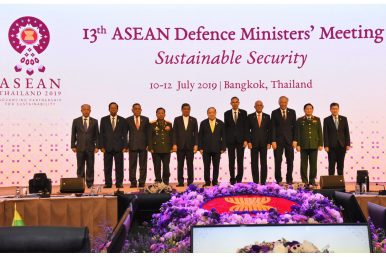
The 13th ASEAN Defense Ministers’ Meeting (ADMM), held on July 11, in Bangkok, Thailand, was a considerably quiet affair — there were no controversies, no public disagreements, and no last-minute decision to cancel a joint statement. Since the early 2010s, ASEAN-centred meetings have on occasion been venues where interstate tensions have manifested, although, to be sure, the ADMM itself has so far steered clear of these scenarios. Instead, it has been able to keep its focus on dialogue and practical cooperation toward managing regional security challenges.

At the most recent ADMM in Bangkok, defense ministers of the 10 ASEAN member states adopted six documents, specifically on assessing existing ADMM initiatives, supporting border management cooperation, establishing an ASEAN military medicine conference, implementing guidelines for maritime interaction, establishing a hotline between ADMM countries and the eight ADMM-Plus countries, as well as endorsing the terms of reference of the “Our Eyes” initiative, which facilitates information sharing for counterterrorism.

How to Fix America’s Absentee Diplomacy in Africa

Howard W. French

Earlier this month, The New York Timescreated a mini furor on the internet with a job listing for someone to lead its coverage of East Africa. The announcement described it as an opportunity “to dive into news and enterprise across a wide range of countries, from the deserts of Sudan and the pirate seas of the Horn of Africa, down through the forests of Congo and shores of Tanzania.” It went on to speak of the region’s “many vital story lines, including terrorism, the scramble for resources, the global contest with China,” among others. Whether as afterthought or sop, it added that the job of Nairobi bureau chief offered “the chance to delight our readers with unexpected stories of hope.” Nowhere did one get the sense that East Africa is, in fact, a highly diverse collection of countries that encompasses more than 400 million people and includes some of the world’s fastest-growing economies.

PLAY TO WIN: STICKING TO A PLAYBOOK IN THE COMPETITION WITH RUSSIA

George Fust 

Russia docks a warship in Havana knowing it will provoke a response from the United States. How dare they. The US Navy dispatched a destroyer to shadow the vessel; after all, the United States has the Monroe doctrine to enforce. A few weeks prior, Russia sent around a hundred troops to Venezuela. This also provoked a response, albeit rhetorical. Despite these US reactions, Russia continues to play strategic games.

Why did the United States respond to these actions in these ways? And what is the most appropriate response? After all, what real threat is a single ship or a company of soldiers? America, as it is said, is the leader of the free world. But what does it mean to lead in practice? For starters, the United States should actively work to avoid simply reacting to adversaries’ actions. Then it should execute its National Security Strategy.

Why the S-400 Missile is Highly Effective — If Used Correctly


Modern long-range surface-to-air missile systems provide some of the most effective air defense in existence. However, extended-range SAMs are also inherently vulnerable to standoff and saturation attacks if not properly supported. Ultimately, the effectiveness of long-range SAMs depends on the country where they are deployed and how that country uses them. 

Russian surface-to-air missiles (SAMs) continue to dominate the headlines. The country's long-range S-400 SAM systems recently made landfall in Turkey, much to the consternation of the West, while its older S-300 variants have been exported to a variety of countries, including Syria. Public discussions persist over whether Gulf states should buy long-range Russian air defense platforms — as opposed to American ones — or whether Iran could acquire S-400s to bolster its air defenses. Given the system's power, it's no wonder that such sales are dominating the news. But the reality remains that the value of long-range SAMs does not directly equal their theoretical capabilities, depending far more on who is using the system — and how.

The Big Picture