19 December 2017

President Trump's New National Security Strategy

By Anthony H. Cordesman

President Trump's new National Security Strategy (NSS) deserves careful attention, particularly by America's allies and strategic partners and by those who deal with everything the President says or issues in terms of knee jerk criticism. It is a document that President Trump reviewed and altered in some depth and that represents his views—rather than a bureaucratic compromise. At the same time, it both expands on the classic themes of U.S. strategy—rather than rejects them—and commits the U.S. to playing its traditional role in leading the free world.

"America First" Means International, Not Isolation

One of the most critical aspects of the document is its definition of "America first"—one which clearly rejects the isolationism of those who first used the term, and rejects the denial of America's overseas role that some around the President advocated before he appointed his present national security team. It directly addresses both America's need to remain committed overseas and deal with competition from Russia and China:

India, China likely to suggest new steps to boost border peace

Elizabeth Roche

The first dialogue between China’s Yang Jiechi and India’s national security adviser Ajit Doval (in photo) was held after the Doklam standoff ended in September. New Delhi: India and China may suggest some new confidence building measures aimed at stabilizing their un-demarcated border and maintaining peace during the 20th round of talks expected this week between their special representatives (SRs) mandated to finding a solution to the decades-old border dispute.Given that this will be the first dialogue between the two SRs—Chinese Communist Party’s Politburo member Yang Jiechi and India’s national security adviser Ajit Doval—after the 73-day military standoff in Bhutan’s Doklam plateau earlier this year, analysts say the two will discuss ways to prevent a repeat of the circumstances that triggered the crisis.

For India and China, Southeast Asia Is a Battleground

By Kamran Bokhari

Power is inflationary. As countries become stronger, their interests expand beyond their borders, where they must find new ways to protect those interests. India is no exception. Its expansion, though, brings it into contact with China, a much more formidable country that competes with India for land-based and maritime trade routes in the Pacific. China and India have protocols in place for dealing with neighbors such as Nepal and Bhutan, which they border by land. But they have less established rules of engagement for dealing with Southeast Asian nations, which, as coastal, peninsular and island nations, require different strategies.

While focus is on North Korea, China continues South China Sea military buildup: think tank

While attention in Asia has been distracted by the North Korean nuclear crisis in the past year, China has continued to install high-frequency radar and other facilities that can be used for military purposes on its man-made islands in the South China Sea, a U.S. think tank said on Thursday. Chinese activity has involved work on facilities covering 72 acres (29 hectares) of the Spratly and Paracel islands, territory contested with several other Asian nations, according to the Asia Maritime Transparency Initiative of Washington’s Center for Strategic and International Studies. The report cited satellite images.

The Great Leap Forward: China’s Pursuit of a Strategic Breakthrough

By Roncevert Ganan Almond

On February 25, 1956, in a closed session of the 20th Congress of the Communist Party of the Soviet Union, Soviet Premier Nikita Khrushchev gave his “Secret Speech” denouncing Stalin and his cult of personality. The political tremors from this questioning of Communist doctrine traveled across the border to Beijing where Chinese-leader Mao Zedong initially responded with an invitation for criticism (“Let a thousand flowers bloom”), only to double down on his relentless pursuit of internal enemies and continuous revolution. In search of a strategic breakthrough, Mao embarked on the Great Leap Forward, a sweeping, terrifying and, ultimately, catastrophic economic program designed to surpass the achievements of Western industrialization in an accelerated timeframe (in one “big bang”).

Joining the Quad: Fear Versus Greed

By Mark J. Valencia

The administration of U.S. President Donald J Trump has re-raised the decade-old geopolitical concept of the “Indo-Pacific region.” Within this framework, it is proposing and pushing for a so-called “Quad” — a potential security arrangement among the four large democracies of India, Australia, Japan, and the United States. The proposed Quad is widely perceived as a part of the U.S. China containment strategy. U.S. pressure, both public and private, is forcing each prospective member, as well as other players like Singapore, to face some very tough decisions regarding their future relations with China. To the chagrin of the United States, their decisions are neither easy nor clear cut.

Why China Plans to Invade Taiwan

Ian Easton

A Chinese diplomat in Washington recently threatened that China would invade Taiwan if the U.S. Navy sent a ship to visit the democratic island, something that Congress has called upon the Pentagon to do in 2018. Is this just empty rhetoric? Or does it reflect Beijing's actual intentions? It's actually a bit of both. According to leaked Chinese military documents (analyzed here), Taiwan stands to lose more from the rise of China as a twenty-first-century superpower than any other country in the world. Indeed, China's emergence as the world’s second largest political, economic and military power threatens the interests of many nations, but only Taiwan has its life at stake. Only Taiwan is held at risk of seeing its trade lines severed, its cities bombed and its shores invaded. Only Taiwan faces the possibility of having its president assassinated and its democracy destroyed. China's authoritarian government challenges many countries in many ways, but it only has war plans for the invasion and occupation of Taiwan.

Is China's Era of Cheap Labor Really Over?

By Dmitriy Plekhanov

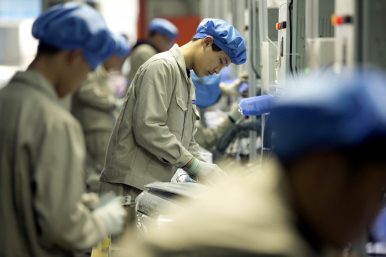
Cheap labor has long been considered the main factor behind the Chinese economic miracle, propelling the country to the status of the world’s factory, shifting global supply chains, and igniting debates in other countries about companies moving their plants to China, the consequences of job outsourcing for domestic industries and workers, and unfair competitive advantages associated with the poor labor conditions of Chinese factory workers.

Following the developing Iranian cyberthreat

By: Dorothy Denning

Iran is one of the leading cyberspace adversaries of the United States. It emerged as a cyberthreat a few years later than Russia and China and has so far demonstrated less skill. Nevertheless, it has conducted several highly damaging cyberattacks and become a major threat that will only get worseLike Russia and China, the history of Iran’s cyberspace operations begins with its hackers. But unlike these other countries, Iran openly encourages its hackers to launch cyberattacks against its enemies. The government not only recruits hackers into its cyberforces but supports their independent operations.

US national security adviser: Qatar and Turkey are new sponsors of radical ideology

Joyce Karam

US national security adviser HR McMaster condemned Qatar and Turkey for taking on a “new role” as the main sponsors and sources of funding for extremist Islamist ideology that targets western interests. “Radical Islamist ideology is a grave threat to all civilised people,” Gen McMaster said. The US national security adviser said this threat has been identified “myopically” in the past. “We didn’t pay enough attention to how it’s [radical Islamist ideology] being advanced through charities, madrassas and other social organisations."

U.S. Third Offset (Part 2)

By Brendan Thomas-Noone

As I outlined in part 1, America and, by extension, Australia are losing their military-technological edge in the Indo-Pacific. A new type of great-power competition is emerging throughout the region—one that involves a race to develop strategic technologies and integrate them into military forces.
But there are policies and innovative initiatives that Australia can pursue to help balance that trend. One path is to take further advantage of our close defence relationship with the U.S. while it pursues its ‘third offset’ strategy.

Putin's Plan for Syria

By Dmitri Trenin

After nearly seven years, the Syrian civil war is finally winding down, and the Middle East’s various powers are looking ahead to what comes next. On November 22, the leaders of Iran, Russia, and Turkey met in the Russian resort town of Sochi to discuss Syria’s future, and on November 28, the latest round of UN-sponsored talks between representatives of Syrian President Bashar al-Assad and the opposition began in Geneva. Another round of talks in Sochi is planned for early next year.

SPECULATORS AREN'T THE ONLY ONES CHEERING THE RUNAWAY BITCOIN BOOM -- NORTH KOREAN LEADER KIM JONG UN MAY ALSO BE CELEBRATING A WINDFALL.

by Sherisse Pham

"It is a fact that North Korea has been attacking virtualcurrency exchanges," said Lee Dong-geun, a director with South Korea's state-run Korea Internet and Security Agency. "We don't know how much North Korea has stolen so far, but we do know that the police have confirmed the regime's hacking attempts." North Korean hackers targeted four different exchanges that trade bitcoin and other digital currencies in South Korea in July and August, sending malicious emails to employees, according to police.

Russia Sharply Expanding Nuclear Arsenal, Upgrading Underground Facilities

BY: Bill Gertz

Russia is aggressively building up its nuclear forces and is expected to deploy a total force of 8,000 warheads by 2026 along with modernizing deep underground bunkers, according to Pentagon officials. The 8,000 warheads will include both large strategic warheads and thousands of new low-yield and very low-yield warheads to circumvent arms treaty limits and support Moscow’s new doctrine of using nuclear arms early in any conflict. In addition to expanding its warheads, Russia also is fortifying underground facilities for command and control during a nuclear conflict. One official said the alarming expansion indicates Russia is preparing to break out of current nuclear forces constraints under arms treaties, including the 2010 New START and 1987 Intermediate-range Nuclear Forces (INF) treaties. Russia violated the INF accord by testing an illegal ground-launched cruise missile.

White House pushes back on cyber strategy demand

By Adam Mazmanian 

President Donald Trump signed the 2018 defense authorization bill into law on Dec. 12, but he had a few choice words for a section designed to pressure the White House into delivering a cybersecurity strategy to Congress. In a signing statement, Trump said he strongly objected a provision that limits funding for the White House Communications Agency "contingent upon the submission of a report on a national policy for cyberspace, cybersecurity, and cyberwarfare." Trump called the measure "unprecedented and dangerous." The item, section 1633 in the National Defense Authorization Act, is near and dear to Sen. John McCain (R-Ariz.), the chairman of the Senate Armed Services Committee.

A Key Shift of Eurasian Alliances Boosts Russia

By Dilip Hiro

LONDON: Kaleidoscopic changes in the Middle East have produced a constellation of power posing fresh challenges to the United States. The emerging alliance among Russia, Iran and Turkey gained its newest member in Qatar, thanks to a rash move by Saudi Crown Prince Muhammad bin Salman. Most alarming for America: Turkey is NATO’s easternmost member with the second largest military in the defense partnership. Qatar provides the Pentagon’s Central Command with its forward base, the region’s largest.

MAKING SENSE OF UKRAINE'S UGLY FALL

By Violeta Moskalu

This fall has been an ugly one for Ukraine. Throughout September, October, November, and December, Ukrainian authorities have illegally detained, persecuted, and expelled several foreign journalists and other foreign residents, causing observers to question whether Ukrainian leaders are actively violating human rights and willfully persecuting their political opponents in an effort to maintain their grip on power. In fact, the Ukrainian authorities seem to be pursuing a policy of double standards, demanding that Russia liberate Ukrainian political hostages and journalists while simultaneously arresting dissenting activists, journalists, and political opponents.

THE BILLION DOLLAR QUESTION How Oligarchs Are Taking Over the World

JOSEPHINE HUETLIN

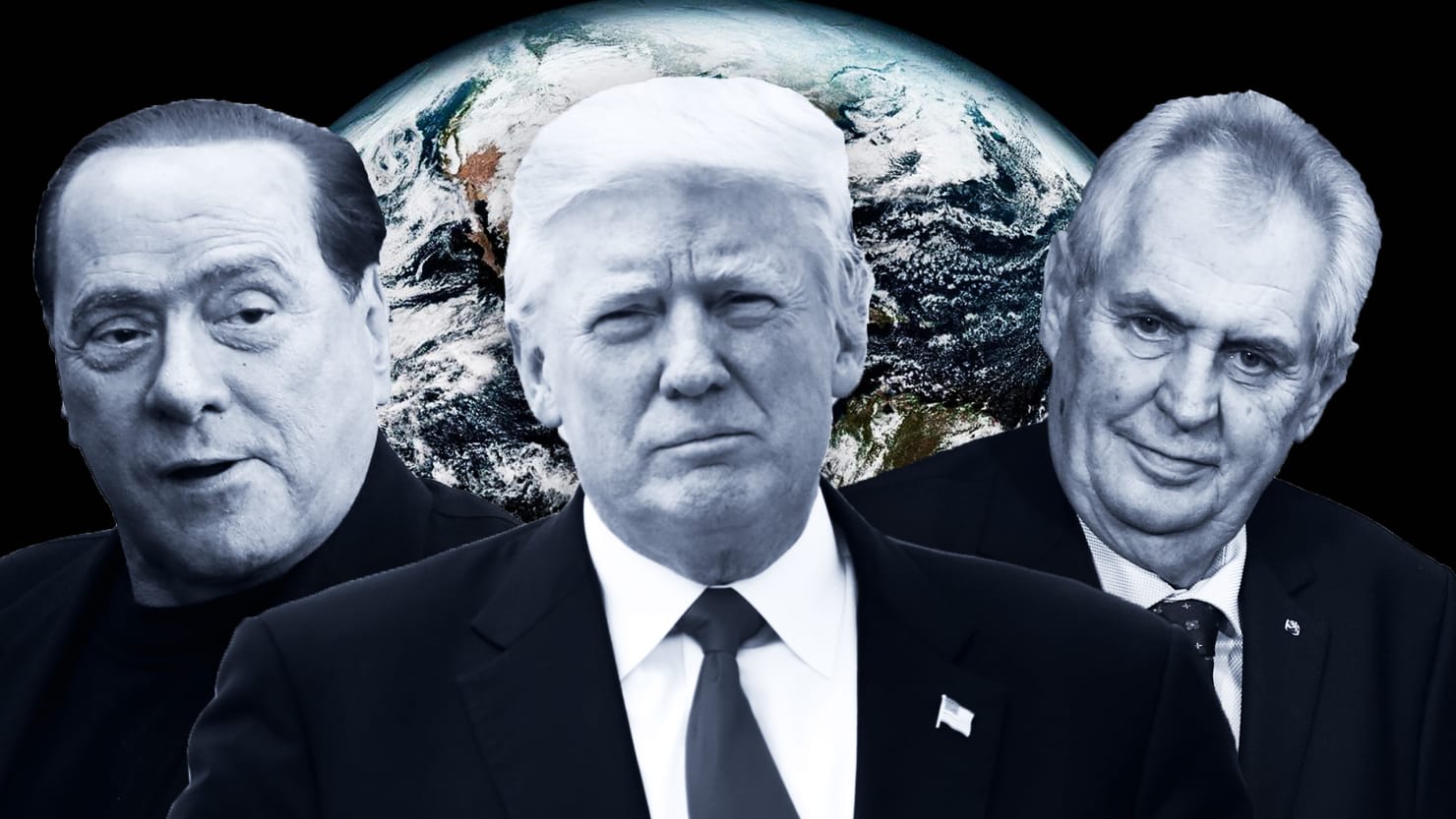
A few months before he first ran for office in the Czech Republic, the second richest man in the country made his way to the newsroom of the nation’s most influential daily and tried to convince its reporters that he was not going to use their paper, which he’d just purchased the day before, for political purposes. “Write freely about things you want,“ he told them. Of course, Andrej Babis didn’t keep his word. Four years later and Mladรก fronta Dnes has turned from a paper that once helped bring down a prime minister, when he refused to tell its reporters where he’d gotten the money to pay for a luxury apartment, into what’s been called “a wreck without any investigative activity.”

Read Online The Russian Way of Warfare

by Scott Boston, Dara Massicot

How might Russia's military fight in the event of a major conflict against a peer or near-peer adversary? 

Russia has recently carried out substantial reforms to its military forces, increasing capability in several key areas. Russia's military has improved to the extent that it is now a reliable instrument of national power that can be used in a limited context to achieve vital national interests. Russian strategists, concerned about the capability of an advanced military adversary to carry out a large-scale conventional aerospace campaign against the Russian heartland, focus on preserving Russian influence in buffer states along its borders and on reinforcing a series of defensive bulwarks. Russian operations will show a high degree of coordination across a wide range of military units, using deception and simultaneity to achieve objectives quickly and minimize periods of vulnerability to an adversary's most dangerous capabilities. Russian tactics will continue to heavily emphasize gaining and maintaining fire superiority over an adversary; leveraging improved ISR capabilities and a wide range of fires platforms; and using speed, surprise, and integrated combined arms in maneuver forces to disrupt and overwhelm enemies once encountered.

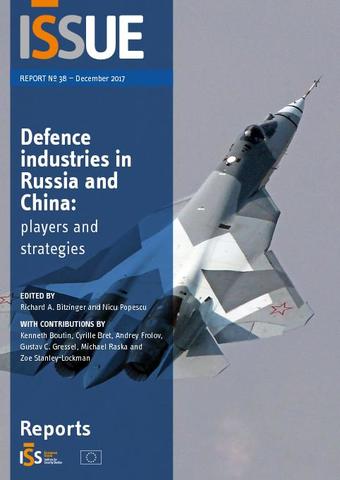
Defence industries in Russia and China: players and strategies

By: Richard A. Bitzinger Nicu Popescu

This Report turns the spotlight on two major players in the global defence industry: Russia and China. It examines how both countries, however different in their trajectory and ambition, have in recent years narrowed the industrial and technological gap with the European armaments sector and are now openly chal­lenging the West’s traditional superiority in this domain. The loss of this military-technological edge could severely undermine the West’s abil­ity to counter direct Russian or Chinese military threats, while also entailing greater competition for European defence industries, thus reshaping the global arms trade – with repercussions for security relationships around the world.


Drones in Counterterrorism: The Primacy of Politics Over Technology

By Asfandyar Mir

This essay is part of the #WarBots series, which asked a group of academics and national security professionals to provide their thoughts on the confluence of automation and unmanned technologies and their impact in the conduct of war. We hope this launches a debate that may one day shape policy. Policymakers, analysts, and scholars have long worried that drones make counterterrorism dangerously easy. With no American lives on the line, drone-centric counterterrorism is considered unconstrained by domestic political costs. As criticism of drone use on ethical grounds has not become a major electoral issue, some analysts worry that political leaders have limited reason to be cautious when considering counterterrorism options. Even President Barack Obama –– whose Presidency was marked by a prolific use of drones for counterterrorism –– recognized drone use as “what looks like a pretty antiseptic way of disposing of [our] enemies” while also expressing concerns that, without sufficient Congressional oversight, “you [could] end up with a president who can carry on perpetual wars all over the world.”

Pentagon Delays Deadline For Military Suppliers to Meet Cybersecurity Rules

BY MARCUS WEISGERBER

The Pentagon will delay a Jan. 1 deadline for all of its suppliers to meet a set of new regulations largely designed to better protect sensitive military data and weapon blueprints. By year’s end, companies must instead merely show that they have a plan in place to meet the regulations, Ellen Lord, the defense undersecretary for acquisition, technology and logistics told the Senate Armed Services Committee.

A ‘World Without Mind’: Big Tech’s Dangerous Influence

Franklin Foer 

French philosopher Rene Descartes famously said “I think, therefore I am.” But in the digital age, what we think and how we live are being influenced in a big way by just a handful of tech firms: We are informed by Google and entertained by Apple; we socialize on Facebook and shop on Amazon. It’s time to reclaim our identities and reassert our intellectual independence, according to Franklin Foer, a national correspondent for The Atlantic and former editor of The New Republic, in his book, World Without Mind: The Existential Threat of Big Tech. He recently joined the Knowledge@Wharton show, which airs on SiriusXM channel 111, to explain why these firms’ hold on society is a cautionary tale for the future.

An edited transcript of the conversation follows.

IRANIAN CYBER ARMY

BY DOROTHY DENNING

Iran is one of the leading cyberspace adversaries of the United States. It emerged as a cyber threat a few years later than Russia and China and has so far demonstrated less skill.  Nevertheless, it has conducted several highly damaging cyberattacks and become a major threat that will only get worse. Like Russia and China, the history of Iran’s cyberspace operations begins with its hackersBut unlike these other countries, Iran openly encourages its hackers to launch cyberattacks against its enemies.

Army’s first directly-commissioned cyber officers could be on duty by next May

By Jared Serbu 

Sometime during the next week, the Army expects to convene a selection board to pick its first-ever cadre of newly-minted service members to move directly from the civilian cyber workforce to its officer corps. The fast track to a military commission means a theoretical full stack engineer working in Silicon Valley as of this moment could be a uniformed military officer within Army Cyber Command by next Memorial Day. But the Army — acting under an explicit authorization from Congress, which has expressed a keen interest in boosting military accessions of cyber experts — is dipping its toe into the program very, very slowly. It will only accept five new officers per year via the new direct commissioning route, despite the fact that it has deep and longstanding experience in doing precisely the same thing for other specialized professions: doctors, lawyers and chaplains, on a routine basis.

Next-Gen Drones: Making War Easier for Dictators & Terrorists


The introduction of armed unmanned aerial vehicles (UAVs) permanently altered the modern battlefield. New technological advances in drone technology could do it again: from advanced materials that allow drones to fly, roll, run or swim in less forgiving environments, to thinking software than makes them more independent, to stealth technology that renders them even less visible. On the positive side, the intelligence that drones provide helps focus lethality on the intended target and limit the risk of civilian casualties and friendly fire incidents. But drone advances also will get cheaper to copy, so non-state actors will be able to employ them as well, giving insurgents or terrorists an outsized advantage.

The Pentagon wants big-data analytics in every rucksack

By: Amber Corrin 

In the (near) future, troops on the ground will check their kit to make sure everything is accounted for as they head into battle, and the most critical tool will be data access. That is, at least, what some future-focused tech officials at the Pentagon say, pointing to the growing importance of cloud capabilities and access to data at the tactical edge. To take on the increasing appetite for data, officials are pursuing pilot programs and working diligently on tools like much-needed algorithms that make intelligence products from the volumes of data pouring in from sources like unmanned aerial systems’ video feeds.

18 December 2017

ADVANCEMENT OF TECHNOLOGY, ECONOMY AND JOBS

ADVANCEMENT OF TECHNOLOGY, ECONOMY AND JOBS
                      -- Maj Gen PK Mallick, VSM (Retd)

A succession of technologies—the Internet, the cloud, big data, robotics, machine learning, and now artificial intelligence—together powerful enough that economists agree we are in the midst of a digital economic revolution. There is less agreement on how exactly the new technologies are changing the economy and whether the changes are deep. The economy has arrived at a point where it produces enough in principle for everyone, but where the means of access to these services and products, jobs, is steadily tightening. So this new period we are entering is not so much about production anymore—how much is produced; it is about distribution—how people get a share in what is produced.

in the 1970s and ’80s, arrived integrated circuits(IC). tiny processors and memory on microchips that miniaturized and greatly speeded calculation. Engineers could use computer aided design programs, managers could track inventories in real time, and geologists could discern strata and calculate the chance of oil. The economy for the first time had serious computational assistance. Modern fast personal computation had arrived.

In the 1990s and 2000s, came the connection of digital processes. Computers got linked together into local and global networks via telephonic or fiber-optic or satellite transmission. The Internet became a commercial entity, web services emerged, and the cloud provided shared computing resources. Everything suddenly was in conversation with everything else. It’s here that the virtual economy of interconnected machines, software and processes emerges, where physical actions now could be executed digitally. And it’s also here that the age-old importance of geographical locality fades. Modern globalization had arrived and it was very much the result of connecting computers.

2010s brought us sensors. We have radar and lidar sensors, gyroscopic sensors, magnetic sensors, blood-chemistry sensors, pressure, temperature, flow, and moisture sensors, by the dozens and hundreds all meshed together into wireless networks to inform us of the presence of objects or chemicals, or of a system’s current status or position, or changes in its external conditions. It lead to the development of methods, intelligent algorithms, for recognizing things and doing something with the result. And we got computer vision, the ability for machines to recognize objects. We got natural-language processing, the ability to talk to a computer as we would to another human being. We got digital language translation, face recognition, voice recognition, inductive inference, and digital assistants. Computers could suddenly do what we thought only humans could do—association.

External Intelligence. It means the ability to make appropriate associations, or in an action domain to sense a situation and act appropriately. When intelligent algorithms help a fighter jet avoid a midair collision, they are sensing the situation, computing possible responses, selecting one, and taking appropriate avoidance action. Intelligence is no longer housed internally in the brains of human workers but has moved outward into the virtual economy, into the conversation among intelligent algorithms. It has become external. The virtual economy is not just an Internet of Things, it is a source of intelligent action—intelligence external to human workers.

This shift from internal to external intelligence is important. When the printing revolution arrived in the 15th and 16th centuries it took information housed internally in manuscripts in monasteries and made it available publicly. These greatly accelerated the Renaissance, the Reformation, and the coming of science. Printingcreated our modern world.

Now we have a second shift from internal to external, that of intelligence, and because intelligence is not just information but something more powerful—the useof information. We don’t yet know its consequences, but there is no upper limit to intelligence and thus to the new structures it will bring in the future.

How this changes business

The new intelligence capabilities like face recognition or voice verification to automate current products, services, and value chains can be used by new companies. Businesses can reach into and use a “library” or toolbox of already-created virtual structures to build new organizational models. One such structure is the blockchain, a digital system for executing and recording financial transactions; another is Bitcoin, a shared digital international currency for trading. These are not software or automated functions or smart machinery. Think of them as externally available building blocks constructed from the basic elements of intelligent algorithms and data.

The result, whether in retail banking, transport, healthcare, or the military, is that industries aren’t just becoming automated with machines replacing humans. They are using the new intelligent building blocks to re-architect the way they do things. In doing so, they will cease to exist in their current form. Some large tech companies can directly create externally intelligent systems such as autonomous air-traffic control or advanced medical diagnostics. Others can build proprietary databases and extract intelligent behavior from them. But the advantages of being large or early in the market are limited. The components of external intelligence can’t easily be owned, they tend to slide into the public domain. And data can’t easily be owned either, it can be garnered from nonproprietary sources. We will see both large tech companies and shared, free, autonomous resources in the future. And if past technology revolutions are indicative, we will see entirely new industries spring up we hadn’t even thought of.

Where does it Lead

The autonomous economy is steadily digesting the physical economy and the jobs it provides. It’s now a commonplace that we no longer have travel agents or typists in anything like the numbers before; even high-end skilled jobs such as radiologists are being replaced by algorithms that can often do the job better. Mr Watson!

Economists don’t disagree about jobs vanishing, they argue over whether these will be replaced by new jobs. Economic history tells us they will. The automobile may have wiped out blacksmiths, but it created new jobs in car manufacturing and highway construction. Freed labor resourcesalways find a replacement outlet and the digital economy will not be different.

Is It?

When automotive transport arrived, a whole group of workers—horses—were displaced, never to be employed again. They lost their jobs and vanished from the economy. Offshoring in the last few decades has eaten up physical jobs in rich countries, jobs that were not replaced. The current transfer of jobs from the physical to the virtual economy is a different sort of offshoring, not to a foreign country but to a virtual one. If we follow recent history we can’t assume these jobs will be replaced either. Technological unemployment has many forms.

John Maynard Keynes’ in his 1930 lecture, “Economic possibilities for our grandchildren predicted that in the future, around 2030, the production problem would be solved and there would be enough for everyone, but machines (robots, he thought) would cause “technological unemployment.” There would be plenty to go around, but the means of getting a share in it, jobs, might be scarce. We have reached a point where technological unemployment is becoming a reality.

The problem in this new phase is not quite jobs, it is access to what’s produced. Jobs have been the main means of access for only 200 or 300 years. We have entered a different phase for the economy, a new era where production matters less and what matters more is access to that production: distribution, in other words—who gets what and how they get it. We have entered the distributive era.

A New Distributive Era

The criteria for assessing policies will change. In the distributive economy, where jobs or access to goods are the overwhelming criteria, economic growth looks desirable as long as it creates jobs. The criteria for measuring the economy will also change. GDP and productivity apply best to the physical economy and do not count virtual advances properly.

Free-market philosophy will be more difficult to support in the new atmosphere. It is based on the popular notion that unregulated market behavior leads to economic growth. The winners need to compensate the losers. That’s distribution, and overall everyone is better off. In the United States and Britain, those who lose have rarely been compensated. In earlier times they could find different jobs. In the distributive era free-market efficiency will no longer be justifiable if it creates whole classes of people who lose.

The new era will not be an economic one but a political one. Iin the United States and Europe, workers who have steadily lost access to the economy as digital processes replace them, have a sense of things falling apart, and a quiet anger about immigration, inequality and arrogant elites.. Production, the pursuit of more goods, is an economic and engineering problem; distribution, ensuring that people have access to what’s produced, is a political problem. So until we’ve resolved access we’re in for a lengthy period of experimentation, with revamped political ideas and populist parties promising better access to the economy.

This doesn’t mean that old-fashioned socialism will come back. New political parties that offer some version of a Scandinavian solution: capitalist-guided production and government-guided attention to who gets what may emerge. Whether we manage a reasonable path forward in this new distributive era depends on how access to the economy’s output will be provided. One advantage is that virtual services are essentially free. Email costs next to nothing. What we will need is access to the remaining physical goods and personal services that aren’t digitized.

For this we will still have jobs, especially those like kindergarten teaching or social work that require human empathy. But jobs will be fewer, and work weeks shorter, and many jobs will be shared. We will almost certainly have a basic income. And we will see a great increase in paid voluntary activities like looking after the elderly or mentoring young people.

We will also need to settle a number of social questions: How will we find meaning in a society where jobs, a huge source of meaning, are scarce? How will we deal with privacy in a society where authorities and corporations can mine into our lives and finances, recognize our faces wherever we go, or track our political beliefs? And do we really want external intelligence “helping” us at every turn: learning how we think, adjusting to our actions, chauffeuring our cars, correcting us, and maybe even “nurturing” us? 

Hope

All these challenges will require adjustments. But we can take consolation that we have been in such a place before. In 1850s Britain, the industrial revolution brought massive increases in production, but these were accompanied by unspeakable social conditions, rightly called Dickensian. Children were working 12-hour shifts, people were huddled into tenements, tuberculosis was rife, and labor laws were scarce. In due time safety laws were passed, children and workers were protected, proper housing was put up, sanitation became available, and a middle class emerged. We did adjust, though it took 30 to 50 years—or a century or more. The changes didn’t issue directly from the governments of the time, they came from people, from the ideas of social reformers, doctors and nurses, lawyers and suffragists, and indignant politicians. Our new era won’t be different in this. The needed adjustments will be large and will take decades. But we will make them, we always do.

Rate of Change

However, there are skeptics who question the rate of change. 

Toffler wrote in his 1970 book, Future Shock, that the pace of change had exceeded society’s ability to adapt. “It is the disease of change.” The symptoms are everywhere. Our phones have become mini-Richter scales, registering change with every e-mail, tweet, and push notification. Emerging technologies, from bitcoin to artificial intelligence, threaten to upend the marketplace and the workplace.

The world is changing, of course. Life is change. But in many respects—economically, technologically, and politically—our age is not exactly rocketing along. Change is generally exaggerated, often by people selling stuff. Many of America’s greatest ailments stem from a lack of change. Americans are moving homes at the lowest rate since World War II. Since the early 1970s, the average worker’s wages have barely risen . Productivity has barely budged over the past decade. Technological change has become more incremental. Since 1970, progress has been markedly slower and more narrowly confined to entertainment, communication, and information technology. The difference between your car and your grandfather’s car is evolutionary. The difference between the horse and early autos is revolutionary.

Ultimately, we need better frameworks for thinking about changes, especially their significance and speed. Not all changes are important. Not all important changes are fast. Avoiding vague statements about rapid global change in favor of greater specificity would help. So would acknowledging the difficulty of constructive change, 

Where is India

When we look inwards in our country it is scary. Our education system is in bad shape, even Bill Gates says that. Our educated youth are not employable in today’s world, forget about the era of fourth industrial revolution. The sheer number of people, job seekers are humongous. Dr Arvind Gupta, erstwhile Dy NSA in his Valedictory Address in CyFy 2016 organised by ORF brought out the problems of TECHNOLOGY AND JOBS succinctly. Excerpts :

An important question to ponder over is whether new technologies will create jobs or destroy them? That is a question many are asking. In most counties, particularly the developing countries, the youth is getting restive. Not everyone is educated, not everyone is equipped for high tech jobs. The job opportunities for the young are not growing as fast as they should. This is at the root of many of the security problems like terrorism, organised crime, and migrations. Large scale displacement of populations has put in jeopardy the future of millions of children. We have to ask how ICTs can help alleviate the problem.

No doubt ICTs help create jobs. But most of these jobs require high skills. The need to create capacities and skills is becoming pressing by the day. We need to do a dispassionate and objective analysis of the relationship between technology and jobs. Technologies which increase efficiency but in the process destroy jobs do not suit the developing countries where labour is surplus. These countries need technologies which help open up new sectors of growth. In a country like India, initiatives like Digital India, aimed at enhancing the delivery of services are most suitable and will create jobs. So careful selection of technologies for economic growth and governance is important.

Technology-jobs dilemma is being faced by many countries. Even the developed countries are grappling with this conundrum. According to a study at the MIT’s Sloan School of Management, advances in computer technology including robotics and automated translation services have been the cause for sluggish employment growth in the US since 2000. The increased productivity leading to more jobs, a trend established since the end of Second World War, was reversed in 2000. It has also been observed that median incomes are falling in the United States despite the record levels of growth in productivity and innovation.

The impact of the technological revolution was also the focus at the World Economic Forum Meeting in Davos in January 2016. The Forum found that as many as 7.1 million jobs in the world’s most advanced countries could be lost by 2020 through redundancy and automation. Though these losses would be partially offset by the creation of 2 million jobs in related sectors such a media, technology and professional services, the Chairman of the Forum highlighted the need to transform future workforces to avoid talent shortages, unemployment and growing inequality.

Today’s education is not geared for the next generation jobs. According to the World Economic Forum report, around 65% of children starting primary school today will end up working in jobs that don’t yet exist. Therefore, investment in suitable education and adult training programmes will be key to future employment.

I solicit your comments. Let the debate begin.


Reference

McKinsey Quarterly, October 2017

How to Survive Global Change, CSIS Analysis, December 14, 2017.

India Launches Second Ballistic Missile Sub

By Franz-Stefan Gady

The second Arihant-class nuclear-powered ballistic missile submarine (SSBN), the future INS Arighant(originally assumed to be named Aridhaman), was quietly launched at the Ship Building Center in Visakhapatnam in the Indian state of Andhra Pradesh on November 19, India’s Minister of Defense Nirmala Sitharaman revealed this week, according to local media reports. The launch of the Indian Navy’s second indigenously designed and built SSBN comes a little over a year after the commissioning of the lead boat of the class, the INS Arihant. The Arihant-class’ design is based on the Russian Project 971 Akula I-class nuclear-powered attack submarine (SSN). Both the Arighant and Arihant were built with extensive Russian design and technical support.

Why India needs to protect its technology companies

Vivek Wadhwa 
India has an advantage over China: its engineers are building Silicon Valley’s most advanced technologies and leading many of its companies. And with the protectionist sentiments of the Trump administration and constant anti-immigrant rants, foreign-born people are getting a clear message: Go home; we don’t want you. This is a gift to India and China, because the immigrant exodus is boosting their innovation capabilities.