19 March 2019

Here’s how other nations measure up in electronic warfare

By: Mark Pomerleau  

U.S. adversaries have become so adept at using electronic warfare that U.S. forces and their allies must now reduce their electromagnetic footprint or risk that enemies could use that information to geolocate, jam and then fire upon them.

“Near peer adversaries can contest the U.S. Army’s use of the electromagnetic spectrum and use it to cue kinetic weapons,” read a slide during a presentation by Col. Candice Frost, director of foreign intelligence within the Army’s intelligence directorate. Frost was speaking at the AFCEA Army Signal Conference March 12. Army leaders in the past have discussed the capabilities and threats posed by Russia’s electronic warfare prowess in public, but rarely have provided insights in the abilities of other nations.


Trillions of Dollars Down the Drain: 5 Wars America Never Should Have Fought

by Robert Farley

The United States won a convincing victory against Iraqi military forces in the first weeks of the war, but could not establish order in the country. Iraq quickly devolved into various stages of civil war, at immense human and economic cost. Extensive investigation in the wake of the invasion found no serious WMD program, and no meaningful contacts with the Al Qaeda terror network.

In the debate that preceded the 2003 Iraq War, we became enamored of the distinction between “wars of choice” and “wars of necessity.” Opponents of the Iraq War decried it as a “choice,” while supporters insisted on its “necessity.” Unfortunately, like many aspects of that debate, that framing was entirely wrong; America has faced vanishingly few wars of “necessity,” but some of our wars of “choice” have nevertheless been good choices. Some, sadly, have not.

(This first appeared several years ago.)

The US is ready to use more aggressive cyber operations to strike back at enemies

Lolita C. Baldor, 

Pentagon leaders overseeing cyber operations say the US is ready to strike back more aggressive.

The announcement comes as the US faces growing cyberattacks and threats of interference.

WASHINGTON (AP) — Cyberattacks from Russia, China, North Korea and Iran are increasingly sophisticated and, until recently, were done with little concern for the consequences, the top Pentagon cyber leaders told a congressional committee on Wednesday.

Army Gen. Paul Nakasone, head of US Cyber Command, laid out the escalating threats, following a Navy review released this week that described significant breaches of naval systems and concluded that the service is losing the cyber war.

Speaking during a subcommittee hearing, Nakasone said the US is now prepared to use cyber operations more aggressively to strike back, as the nation faces growing cyberattacks and threats of interference in the 2020 presidential elections.

Big Data’s Biggest Challenge: How to Avoid Getting Lost in the Weeds

Wharton's Raghuram Iyengar and Evite 

Companies have access to more data than ever before. But how can they optimize it without getting lost in the weeds – or losing sight of the customer? Evite CEO Victor Cho and Wharton marketing professor Raghuram Iyengar offered advice from their own experiences during a recent conversation with Knowledge@Wharton. Cho was on campus to host a Datathon with the Wharton Customer Analytics Initiative, which Iyengar co-directs. Penn students from multiple academic majors were given datasets from Evite and asked to come up with solutions based on the data for improving Evite’s platform and increasing revenue. Evite is among the participants in WCAI’s corporate partner program, which seeks to help companies find ways to better use their data through collaborations with academic researchers, student projects and other initiatives.

An edited transcript of the conversation follows.

Knowledge@Wharton: Victor, you helped engineer a turnaround at Evite after a period of declining user growth and increased competition How did you use analytics to identify what was going wrong at the company?

The Value of Failure: How We Can Make the Most of Losin


According to this opinion piece by Scott Cowen, president emeritus and distinguished university chair of Tulane University, a full active work life will, of course, produce some failures. What counts are the lessons taken from them. He is also the author of Winnebagos on Wednesdays: How Visionary Leadership Can Transform Higher Education.

It’s all eyes on the winners this time of year. With the Academy Awards and other major entertainment industry award shows, and America’s greatest sports spectacle just behind us, our obsession with being successful is in full bloom. The truth though is that winners get our undivided attention all the time. We all like to win and we revel in victories — the ones we brought about and the ones we embrace as our own, such as our favorite sports team’s triumphs. We want to be successful in what we do and eagerly consume advice on how to be better and achieve more. But wouldn’t it be equally, if not more, instructive to examine failure? As Oprah Winfrey once said, “Failure is another stepping stone to greatness.”

More success means less boundaries in cyberspace

By: Mark Pomerleau 

In order for the Department of Defense’s recently outlined cyber strategy to be successful, cyberwarriors must act outside U.S. networks, according to top DoD officials.

Over the past year, DoD and U.S. Cyber Command have frequently railed on the new approach to cyberspace termed persistent engagement and defending forward. The first part is best understood as constantly operating in cyberspace, while the latter can be defined as disrupting adversary actions as far from U.S. networks as possible.

The Pentagon has worked to clarify its role in protecting non-government entities from threats.

This defending forward posture “is critical to increasing military readiness. We cannot be fully prepared to take effective action in a potential conflict unless we have already developed the tools, accesses and experience through our actions day to day,” Kenneth Rapuano, assistant secretary of defense for Homeland Defense and Global Security and principal cyber adviser, said during a March 13 House Armed Services Subcommittee hearing.

What NATO is doing to keep abreast of new challenges


For an idea of what the alliance will be dealing with in the years to come, head to Norfolk, Virginia. It is home to Allied Command Transformation (act), one of nato’s two strategic commands, the other being its operational one with its headquarters at Mons, in Belgium. Since 2009 French generals have been at the helm of act, a reward for France’s return to nato’s integrated military structure; the most recent American in charge was James Mattis, seen by some in Europe as nato’s saviour as defence secretary for the first two years of Mr Trump’s presidency.

What makes act interesting is its focus on the future. Its job is to shape nato’s response to emerging demands as the world changes. That includes devising “minimum capability requirements” for new technology. It also involves getting out a crystal ball to divine big global trends and their military implications decades ahead. General AndrΓ© Lanata, the current supreme allied commander transformation (sact), says his command “is one of the motors of adaptation for nato”.

18 March 2019

THE IMPACT OF INSIGNIFICANCE: NAVAL DEVELOPMENTS FROM THE YOM KIPPUR

By Christian H. Heller

Introduction

The 1973 Yom Kippur War shocked Israel and the world. Israeli Defense Force (IDF) complacency led to days of panic as Egyptian and Syrian forces threatened the very existence of Israel and triggered the potential “demise of the ‘third temple.'”1 Emergency American aid supported the Jewish defenders and averted a possible superpower confrontation reminiscent of the Cuban Missile Crisis. Politically, the war reset a diplomatic stalemate between the Arabs and Israel and led to the negotiations at the Camp David summit. Militarily, the naval battles of the Yom Kippur War played almost no part in its outcome. They did, however, initiate a technological and tactical maritime revolution. The battles proved the effectiveness of missile and anti-missile systems to control the seas, and ushered in the missile age of naval warfare.

Breakout of War

The origins of the Yom Kippur War lie in the Arab humiliation during the previous war with Israel, nearly six years earlier. The overwhelming Israeli victory in the 1967 Six-Day War created a political stalemate in which both sides were unwilling to negotiate from their resultant positions.2 Israel occupied the Golan Heights from Syria and the Sinai Peninsula from Egypt, and the Arabs knew their territory could not be recaptured via direct conflict.3 The new territory gave Israel the defensible borders and strategic depth it previously lacked and it refused to give them up.4 In Egypt, Anwar Sadat faced domestic unrest from a serious lack of state revenue due to the loss of the Suez Canal.5 The Egyptian population demanded “redemption” for their humiliation in the 1967 war.6

India needs a major relook at its national security policy, tendency to hide facts harming its credibility

Praveen Swami 

In April 2018, the Israeli Air Force struck at the Tiyas (T-4) Air Base, near the Syrian city of Homs, targeting a single hanger housing surveillance drones and a yet-to-be-installed Iranian-supplied Tor air defence missile system. Photographs show the warheads gutted the inside of the hanger but left only tears on its metal skin. The structure, despite the multiple hits, remained almost intact.

For the Indian Air Force (IAF), under siege ever since independent satellite analysts claimed that there is no evidence that its February 26 air strike hit the Jaish-e-Mohammed training base in Balakot, those images are good news.

The IAF has, in off-record briefings, been pointing to tears on the roof of one of the northern buildings of the complex as evidence that it did indeed hit its targets. Its Spice 2000 bombs, the IAF says, carried 80-kg fragmentation warheads, similar to those used at Tiyas.

Part of the reason few have been listening, though, is that the T-4 images—along with other imagery available with the government—haven’t been circulated. Indeed, the government put out no technical data at all to back its case. That points to one of the important deficits in India’s national security responses: credibility.

How India can crack the China puzzle

Sandipan Deb

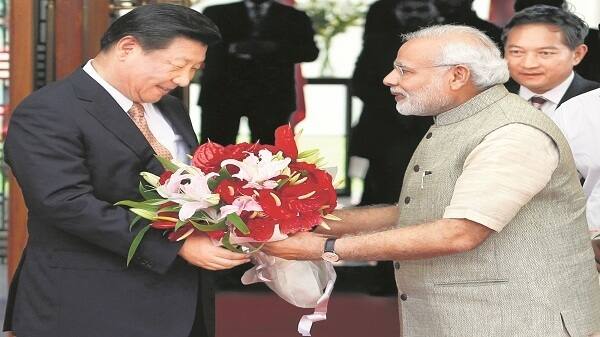
Gurugram: Not since Mao Zedong has China been in the grip of one man as it is today with Xi Jinping. Xi has made himself president for life, and is, for all practical purposes, an unchallenged dictator. His 14-point Xi Jinping Thought on Socialism with Chinese Characteristics for a New Era (simply know as Xi Jinping Thought) was unanimously affirmed as the guiding ideology of the Communist Party of China (CPC) at the party’s 19th congress in October 2017. The Xi Jinping Thought was then enshrined in the party’s constitution.

Since then, dozens of Chinese universities have scrambled to establish research institutes for Xi Jinping Thought. Most of the 14 points seem fairly innocuous and obvious. Like “Improving people’s livelihood and well-being is the primary goal of development", or “Strengthen national security". But there are two issues here. One, in China, words are just the tip of the iceberg of meaning. And two, Xi Jinping does not seem currently too happy.

LEARNING PAINFUL LESSONS FROM AFGHANISTAN

By Gunhild Hoogensen GjΓΈrv 

Conflicts, both in Afghanistan as well as at home, will continue to have both a complex civilian and military character

When the International Security Assistance Force (ISAF) finally closed shop in Afghanistan in 2014, many participating nations professed a weariness with complex, civil-military, out-of-area operations. These operations demanded close, often awkward, relationships of cooperation, co-existence, and confrontation between different civil and military actors, including local civilians. Amid the withdrawal, many militaries and their defense departments seemed to express a collective sigh of relief, talking about a ‘return’ to strictly military priorities and operations. The focus shifted to ‘near area’ operations and security concerns at home. However two related problems remain:

It is very difficult to claim Afghanistan can be characterized as a success story as a functioning state for and with its people. Given the enormous effort, the outcome is nothing short of a disaster. We need more self-reflection as to why that is.
The civilian role in conflict is still sorely neglected – a perilous oversight for both understanding what happened in past operations but also for future conflict scenarios. There is a lot to learn from the civil-military relationships in Afghanistan.

Conflicts, both in Afghanistan as well as at home, will continue to have both a complex civilian and military character. Understanding past, current and future civilian domains is more necessary than ever before.

US Govt Summons Afghan NSA Over Peace Talks Remarks


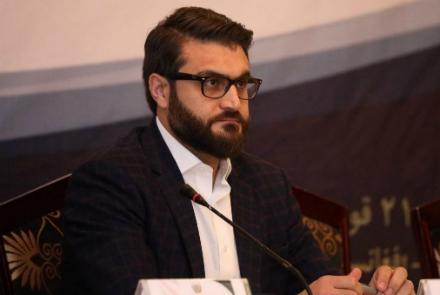
In an unusual move, the United States summoned Afghan National Security Advisor Hamdullah Mohib hours after he criticized US Special Envoy Zalmay Khalilzad for bypassing the elected government of Afghanistan in their direct peace talks with the Taliban.

“Under Secretary for Political Affairs David Hale summoned Afghan National Security Advisor Hamdullah Mohib today to reject the public comments attributed to National Security Advisor Mohib criticizing the US approach to reconciliation,” State Department deputy spokesman Robert Palladino said after the meeting the between the two officials.

Over the past two days, Mohib at various public forums — during an appearance at a Washington DC- based think-tank and in an interaction with reporters — described the US’s talks with the Taliban as surrender discussion.

He said that Khalilzad is keeping the “duly elected” Afghan government in dark and that in the latest round of talks in Doha, they were humiliated and made to wait in a hotel lobby.

Afghan Army Base Is Wiped Out by U.S. Airstrikes, Officials Sa

By Rod Nordland

KABUL, Afghanistan — For the second time in a few days, an Afghan Army base was destroyed on Wednesday — but this time by American airstrikes that followed a firefight between the Afghans and Americans, Afghan officials said.

A local Afghan official said six soldiers were killed and nine others badly wounded, out of 17 soldiers at the base. Qais Mangal, a spokesman for the Afghan Defense Ministry, confirmed that the airstrikes had taken place after another Afghan unit attacked a joint convoy of Afghan Special Forces and American troops. He put the death toll at five soldiers, with 10 wounded.

An American military spokeswoman said personnel at the Afghan Army post, which she described as a “checkpoint,” had opened fire on the convoy first.

“This is an example of the fog of war,” said Sgt. First Class Debra Richardson. “The U.S. conducted a precision self-defense airstrike on people who were firing at a partnered U.S.-Afghan force.”

It’s Time for U.S. Troops to Leave Afghanistan

Rand Paul, Tom Udall

This year, the United States marks 18 years of combat in Afghanistan. We remember and honor the more than 2,300 brave U.S. service members who made the ultimate sacrifice and the over 20,000 who have been wounded in action. We thank the courageous men and women in uniform who are still abroad, a world away from their homes and families, fighting this war.

Soon, we will reach a watershed moment in Afghanistan, as American soldiers begin deploying to fight in a war that began before they were born. As we meet this solemn milestone, we must reexamine our approach to the longest war in the history of the United States and reconsider whether keeping tens of thousands of troops on a sprawling mission in Afghanistan will make Americans any safer going forward. And we must listen to the American people, who—overwhelmingly—oppose endless war in the Middle East.

That’s why we recently introduced a bipartisan joint resolution, the American Forces Going Home After Noble (AFGHAN) Service Act, to return our combat forces home from Afghanistan in an orderly and responsible way, while also setting a framework for political reconciliation in Afghanistan without a permanent U.S. presence.

The West is pushing back against China. It's working

By STEIN RINGEN

After years of seeing power drain to the East, the West is striking back. At the fore is U.S. pressure on China to modify its practice of protectionist trade policy and industrial espionage. The Trump administration has given notice that China must change its ways or pay a heavy price. Trade negotiations are progressing toward new rules.

Security services in the U.S., Canada, Australia, Britain and other countries have issued warnings against wireless technology giant Huawei on grounds of national security. In China’s state-led capitalism, companies like Huawei have a duty to collaborate with government authorities, including sharing data. Huawei’s chief finance officer is under house arrest in Canada, awaiting extradition to the U.S. In January a Huawei employee was arrested in Warsaw and charged with espionage.

Also over the last year, respected research organizations including the Mercator Institute in Berlin, the Asia Society in New York and the Royal United Services Institute in London have issued reports detailing China’s “influence policy” aimed at political and educational institutions, media and civil society in democratic countries.

China Opts for Tax Cuts to Jolt Its Economy Awake


With its economy slowing, China will rely more on fiscal policies — including tax relief — to rebalance its economy to bolster private consumption and investment. However, tax relief, coupled with the overall slowdown, will result in tighter budgets for local and central governments, particularly in the central and western regions. Beijing will issue more local bonds, increase fiscal transfers and expand the local tax base with new property tax reforms in an effort to ease local governments' financial burden.

Spurred in part by its slowing economy, China is gathering steam in its efforts to rebalance its tax structure. During the country's annual legislative session this month, Chinese Premier Li Keqiang announced an expanded 2 trillion yuan ($298 billion) reduction — or 10 percent of China’s total government budget revenues last year — in taxes and fees for individual taxpayers and private business this year. Together with a smaller package last year, the measures could free 100 million individual taxpayers (mainly lower- and middle-class citizens) from income tax and lower the tax burden for private enterprises by as much as 20 percent. The tax package is designed to ease the growing financial stress on private businesses and kick-start flagging consumption amid the Chinese economy's struggles with high debt and the lack of impact from traditional government-led investments.

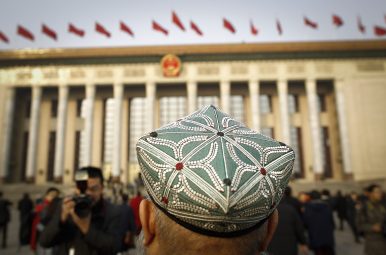
Even China’s ‘Model’ Uyghurs Aren’t Safe

By Kelly Ng

When she received news last November that her mother has been sent to a detention camp, Uyghur refugee Zulhumar Isaac was at a loss for words. Shortly after, her father disappeared too.

First came disbelief, then anger – that even a family like hers, which had taken pains to assimilate into the Han Chinese culture, was not spared by the authorities’ Xinjiang campaign.

“All our lives we have lived as ‘model Chinese citizens.’ We studied Mandarin, my mother was a civil servant for decades, and I’d fallen in love with and got married to a Han Chinese man,” lamented Isaac, who is now living in exile in Sweden. “And yet it has happened to us. Why?”

Some 1 million Muslims have been detained in China’s far western region of Xinjiang, in what the authorities call “preventive counterterrorism and de-extremism work.”

Italy’s Risky China Gamble

By Philippe Le Corre and Carlotta Alfonsi

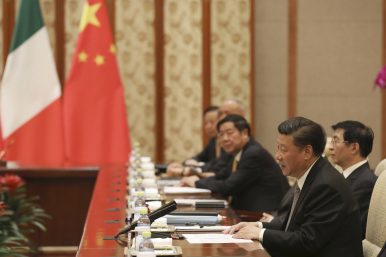
Chinese President Xi Jinping’s upcoming visit to Rome on March 22 will be an important test of China’s diplomatic and economic clout. Claims that Italy has decided to sign an agreement for official participation in China’s Belt and Road Initiative (BRI) led to a rebuke by the U.S. Trump administration, which in turn brought to surface divisions within Italy’s populist coalition government.

As the first G-7 country to sign a memorandum of understanding on the BRI, Italy’s participation would carry large symbolic weight for China. But this would hardly be enough to legitimize the BRI amid a global backlash against it and Beijing’s own struggles with piling debt and a slowing economy in the throes of a trade war with the United States. Instead, U.S. diplomats correctly warn that it would harm Italy’s own reputation.

The Chinese Dragon Is a Hydra

By Bryson Bort

The China problem is bigger than you think. It's bigger than Huawei, bigger than 5G, and bigger than simmering trade wars. It's bigger, even than China.

Recent developments have brought China’s aggressive policy of state-sponsored cyber espionage back into the spotlight: The Justice Department (DOJ) filed charges against Huawei, the Chinese telecom giant, and its CFO for industrial spying. This move came amidst reports that the U.S. government is seeking to curtail the company’s involvement with incipient 5G communications networks. Also, last week, U.S. intelligence chiefs described China as the nation’s top counter-intelligence threat.

These data-points fail to capture the scope and pervasiveness of a new kind of threat – the full-spectrum fusion of state and corporate resources – of which China is the most prominent but not sole example; Russia, Iran and North Korea are guilty as well. The new cold war is being fought through and in private industry, not strictly between governments. U.S. adversaries are preparing the modern battlespace while Western governments spit fire at one-off cases but miss the totality of the threat.

As FBI Director Christopher Wray told the Senate Intelligence Committee, the lines between the Chinese government and “ostensibly private companies” have been “blurred if not totally erased.” Its “Made in China 2025” industrial policy, for example, aims to use all of the country’s hard and soft power to dominate next-generation technologies such as 5G, Artificial Intelligence, aviation, autonomous vehicles, and robotics.

Shitposting, Inspirational Terrorism, and the Christchurch Mosque Massacre

By Robert Evans

On Friday, March 15th, one or more gunmen opened fire in two mosques in Christchurch, New Zealand. As I write this, three men and one woman have been taken into custody by local law enforcement. It is unclear to what extent they were all involved. The only thing we know is that one of the shooters went by the name Brenton Tarrant on Twitter. He posted pictures of the murder weapons there two days before the rampage. Said weapons are clearly visible in the video of the spree he livestreamed to Facebook. 

The Kurdish Awakening Unity, Betrayal, and the Future of the Middle East

By Henri J. Barkey

We’ve been fighting for a long time in Syria,” said U.S. President Donald Trump in the last days of 2018. “Now it’s time for our troops to come back home.” The president’s surprise call for a rapid withdrawal of the nearly 2,000 U.S. troops stationed in Syria drew widespread criticism from members of the U.S. foreign policy establishment. But it came as an even greater shock to the United States’ main partner in the fight against the Islamic State (or ISIS), the Syrian Kurds. For weeks prior to the announcement, Turkish President Recep Tayyip Erdogan had been threatening to invade areas of northern Syria controlled by Kurdish militants. The only thing stopping him was the presence of U.S. troops. Removing them would leave the Kurds deeply exposed. “If [the Americans] will leave,” warned one Syrian Kurd, “we will curse them as traitors.”

Details about the U.S. withdrawal from Syria remain sketchy. But whatever Washington ultimately decides to do, Trump’s announcement marked a cruel turn for Kurds across the Middle East. Back in mid-2017, the Kurds had been enjoying a renaissance. Syrian Kurds, allied with the world’s only superpower, had played the central role in largely defeating ISIS on the battlefield and had seized the group’s capital, Raqqa. The People’s Protection Units (YPG), a Syrian Kurdish militia, controlled large swaths of Syrian territory and looked set to become a significant actor in negotiations to end the country’s civil war. Turkish Kurds, although besieged at home, were basking in the glow of the accomplishments of their Syrian counterparts, with whom they are closely aligned. And in Iraq, the body that rules the country’s Kurdish region—the Kurdistan Regional Government, or KRG—was at the height of its powers, preparing for a September 2017 referendum on independence.

The New Zealand Massacre Was Made to Go Viral

By Charlie Warzel

On Friday, a gunman strapped on a helmet camera, loaded his car with weapons, drove to a mosque in Christchurch, New Zealand, and began shooting at anyone who came into his line of vision. The act of mass terror was broadcast live for the world to watch on social media.

Forty-nine people were killed and more than 40 others were wounded in the attack, which occurred at two different mosques in the city. A suspect, Brenton Harrison Tarrant, was charged with one count of murder, with more charges reportedly expected. Three other people were detained by the police, but one was released hours later.

A 17-minute video of a portion of the attack, which leapt across the internet faster than social media censors could remove it, is one of the most disturbing, high-definition records of a mass-casualty attack of the digital age — a grotesque first-person-shooter documentation of man’s capacity for inhumanity.

Emerging Markets Aren’t Out of the Woods Yet

By AgustΓ­n Carstens and Hyun Song Shin

Emerging markets had a bumpy 2018. Over the summer, Argentina and Turkey saw their currencies fall sharply as their economies ran into trouble. Argentina had to turn to the International Monetary Fund for a $57 billion loan. Commentators sharpened their pencils, ready to draw parallels with the wave of financial crises that swept over emerging markets in the late 1990s.

Yet most emerging-market economies came through the summer’s turbulence more or less unscathed. That is largely thanks to big improvements in economic and financial management since the last major wave of crises in the 1990s. Most countries that succumbed to crises then have moved from pegged exchange rates to largely floating exchange rates and have adopted sounder monetary policies. Most also now have more resilient banking systems, the result of a general shift away from risky short-term bank funding in favor of long-term funding from bond markets.

Perhaps the most remarkable change since the crises of the 1990s has come in the way emerging-market countries finance their debt. Governments now borrow much more in their own currencies than in foreign ones, making them less vulnerable to runs and currency crises. But risks remain. Developing countries still have work to do if they are to shield themselves from the vicissitudes of global financial conditions.

The Jihadist Peril Lurking in Algeria's Protests

By Scott Stewart

Prolonged unrest in Algeria could provide jihadists additional operational space, enabling them to regroup and rebound, as has occurred in Libya, Egypt and Tunisia. Even if President Abdel Aziz Bouteflika holds out against the current round of protests, his lack of a successor means instability is inevitable in Algeria. Al Qaeda was caught off guard by the Arab Spring, but al Qaeda in the Islamic Maghreb (AQIM) will do all it can to capitalize on the present unrest. 

Why the U.S. and Saudi Arabia Are Destined to Diverge

By Matthew Bey

The relationship between Saudi Arabia and the United States has long been a volatile one, but that volatility will become more frequent in the coming decades, outgrowing some of the personal relationships that provide its framework today. U.S.-Saudi cooperation has always been based on common interests rather than common needs. While those interests have changed over time, they are now entering a phase in which they will not be as closely aligned. The shale revolution and its effect on global energy markets is driving Saudi Arabia ever-closer to Russia and China economically and politically.

The Truth About Radiation in Fukushima

By Maxime Polleri

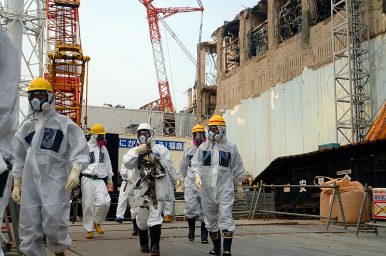
In the period following the 2011 Fukushima nuclear disaster, Japan saw the release of harmful radioactive pollutants or radionuclides, such as iodine‑131, cesium‑134, cesium‑137, strontium‑90, and plutonium‑238, among many others. Yet today, the scale of radioactive contamination throughout northeastern Japan is no longer what it used to be since 2011. Indeed, that’s what the members of the local and central government, as well as nuclear-related agencies, have repeatedly stated throughout the years. Many journalists have kept promoting this discourse, with The Guardian recently stating that “In the empty lands around Fukushima today, most of the radiation is long since gone.”

Eight years after the disaster, radioactive exposure no longer seems to pose a problem. So what has happened to radioactive contamination? Has it disappeared? Well, not exactly. While it is true that some radionuclides like iodine-131 are no longer present in the environment, due to their very short life span, the overall picture of contamination is much more complex.

Drone Damage: Why Trump's Terror Tactics Could be Costly

by Paul R. Pillar

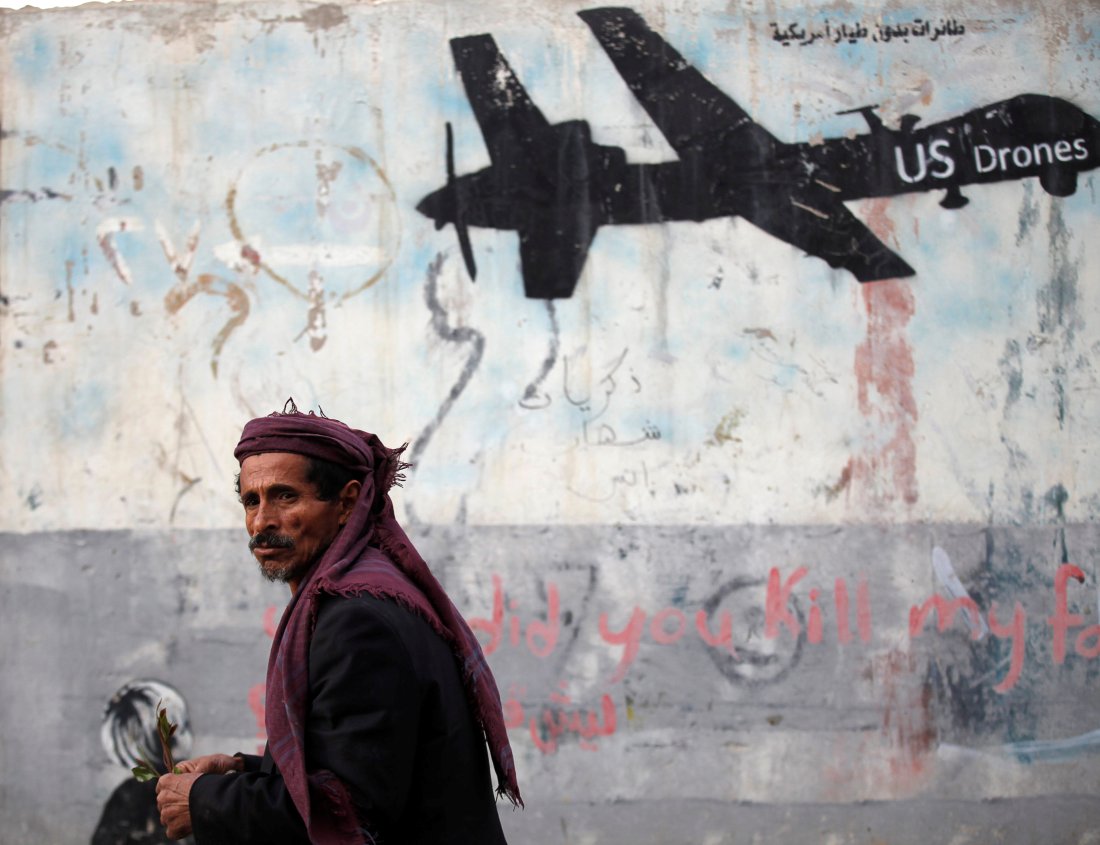
The Trump administration has discontinued an annual report, which President Barack Obama had instituted by executive order, that made public the number of counter-terrorist strikes by manned or unmanned U.S. aircraft outside declared war zones, along with an estimated number of civilian casualties from such strikes. The report had shed at least a small amount of light on the continued waging of a “war on terror” across vast swaths of Asia and Africa, including in countries that many Americans may never have heard of. In fact, most Americans are probably unaware that their own country is waging a war in these countries. The Trump administration argues that the report is unnecessary because a separate congressionally mandated report requires the Department of Defense to tally civilian casualties from all military activities. Left unsaid is that the change will leave unreported any strikes conducted by U.S. agencies other than the Department of Defense—a component of this global air war that the administration reportedly has been expanding, at least in Africa.

ASSAULT DRONES COULD BECOME FREQUENT PRESENCE IN MIDEAST SKIES- ANALYSTS

BY TERRANCE J. MINTNER/THE MEDIA LINE 

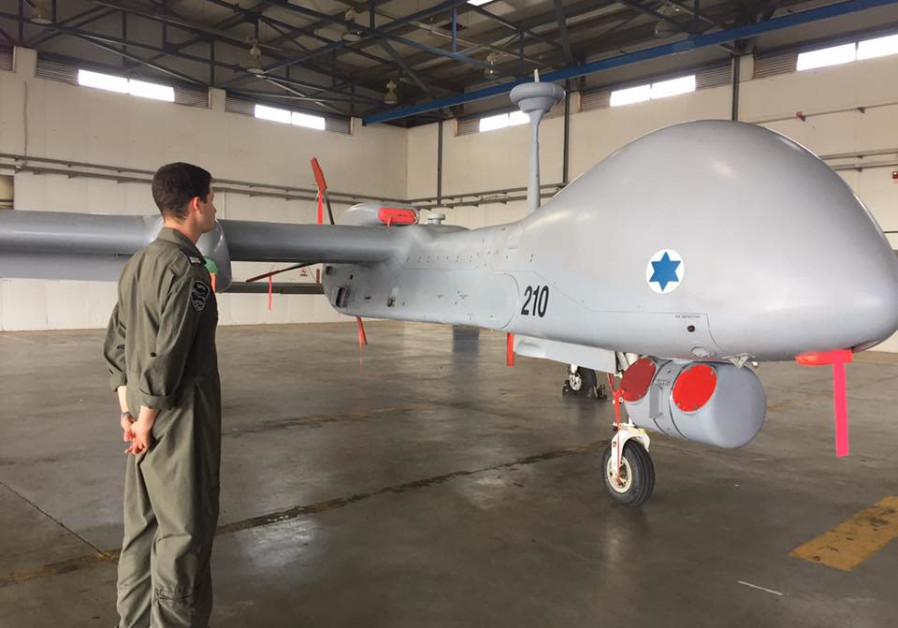
Matiga Airport in Tripoli, Libya, briefly closed down this past weekend due to security concerns over an unidentified drone that had entered the area, airport officials say. In recent days, residents have reported that drones are a frequent presence over the Libyan capital. 

While unmanned aerial vehicles (UAVs) are now an element of warfare in the Middle East – Libya has been in the midst of a civil war since 2014 – experts warn that they could become much more prevalent in the years to come. According to a recent report in the Economist, there is an unquenchable thirst for armed drones throughout the region.

One big reason is China, which has flooded the Middle Eastern market with UAVs. The US and other Western governments have sought to limit the proliferation of such technology, but Beijing has been eager to sell cheaper and less sophisticated models. It has already sold such drones to Egypt, Iraq, Jordan, Saudi Arabia and the UAE.

The Great Realignment of Britain

David Frum

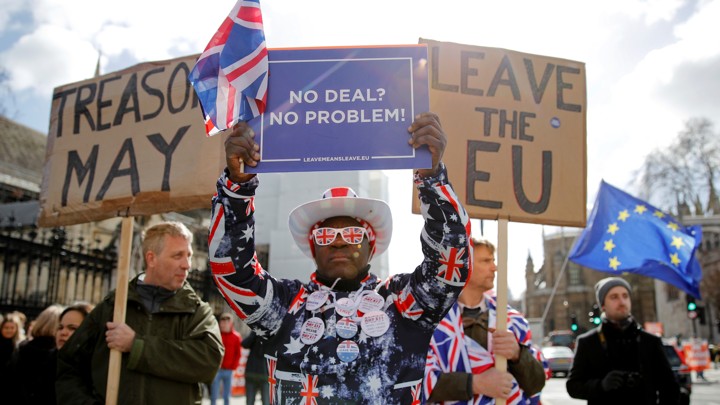
On Tuesday, the British Parliament again overwhelmingly rejected the U.K.-EU agreement for an orderly transition. That vote puts Britain on the path to crash out of the European Union on March 29.

Party leaders are scrambling to improvise some kind of cushion against the hard landing of a no-deal Brexit. Could Britain ask the EU for an extension of some weeks or months? Could Britain cancel its withdrawal from the EU altogether? Is there time for a second referendum, or new elections?

It’s chaos.

It’s chaos not only because so many British people intensely disagree with one another. It’s chaos because two key British people do not disagree nearly intensely enough. Prime Minister Theresa May wants the United Kingdom to leave the European Union. And so—probably even more so, and certainly over a much longer span of his political career—does the leader of the opposition, Jeremy Corbyn.

The Next Stage of the Korean Peace Process Why Seoul Remains Optimistic After Hanoi

By Chung-in Moon

When the U.S.–North Korean summit in Hanoi ended early, with no agreement whatsoever, many South Koreans were shocked. The disappointing conclusion shook the public’s faith in summit diplomacy and undermined Seoul’s efforts to foster parallel processes: for denuclearizing North Korea, building a peace regime on the Korean Peninsula, and fostering inter-Korean economic cooperation. In short, South Korean President Moon Jae-in’s strategy for bettering relations among Seoul, Washington, and Pyongyang after the summit was shattered.

The summit may have failed, but Seoul observed several encouraging signs. There was neither acrimony nor mutual recrimination at the summit, nor a sudden escalation of military tension in its wake. Considering Pyongyang’s past behavior, North Korean leader Kim Jong Un’s restraint was unusual. U.S. President Donald Trump’s response was also encouraging. He did not tweet anything inflammatory about Pyongyang in the summit’s wake. Nor did he suggest new sanctions or the renewal of U.S.–South Korean joint military exercises. On the contrary, he expressed his unwavering trust in Kim and his commitment to continuing the dialogue even though the summit didn’t end as he had hoped.