29 November 2019

Why Iran May Be Locked Into a Future of More Protests

Vahid Yรผcesoy 

At midnight on Nov. 15, Iran’s government announced a precipitous 300 percent hike in fuel prices. Immediate public outcries quickly escalated into nationwide protests that spread to more than 100 cities and gripped the country for 6 straight days, before the authorities effectively crushed them.

Since President Donald Trump withdrew the United States from the Iran nuclear deal in August 2018 and reimposed unilateral sanctions, the Iranian economy has been charting difficult waters. President Hassan Rouhani admitted as much recently when he exhorted lawmakers to reduce fuel subsidies in the face of plummeting oil revenues, saying that “Iran is experiencing one of its hardest years since the 1979 Islamic Revolution.” ...
One False Move By Israel or Iran Will Lead to War

by Seth J. Frantzman

Israel has been monitoring Iranian entrenchment in Syria, weapons transfers that move to Iraq and also to Hezbollah in Lebanon, as well as Iranian-backed groups in Gaza. On November 12 Jerusalem put in motion operation ‘Black Belt,’ the attack on a senior Palestinian Islamic Jihad commander named Bahaa Abu al-Ata. He was a “ticking bomb,” Israel said after the operation, which led to 450 rockets being fired in retaliation from Gaza. There is another ticking bomb in Syria, where Israel struck numerous targets on November 20, a day after Iran’s Islamic Revolutionary Guard Corps fired rockets at Israel. One false move by Israel or Iran now could lead to a major regional war. Jerusalem must gamble on its precision airstrikes to deter Tehran.

“The Iranian attack towards Israel is further clear proof of the purpose of the Iranian entrenchment in Syria, which threatens Israeli security, regional stability and the Syrian regime,” Israel’s IDF said on Wednesday, November 20. The airstrikes were a major attack on the IRGC’s Quds Force, and also on Syrian air defense systems. Headquarters units, weapons warehouses, and bases were struck. Like in Gaza though, the airstrikes are not unique. Israel has carried out more than one thousand airstrikes in Syria. At the same time, Iran or Iranian-backed groups have sought to attack Israel with rockets and drones five times in the last two years. This includes a drone attack in February 2018, rockets fired in May 2018, a rocket in January 2019, rockets fired in September and on November 19.

Fighting but Not Winning


An Asian foreign minister recently observed privately that the United States has been fighting but not winning in the Middle East for 20 years, while China has been winning but not fighting for 20 years. That captures much of the last two decades in a nutshell. It can’t go on. It’s worth thinking about how we got here and where we need to go.

Almost 20 years on, the U.S. approach to the Middle East remains rooted in the response to the 9/11 attacks. The war in Afghanistan started soon after and still rages. The U.S. military presence in Iraq started as a response to 9/11 and turned into an occupation with an accompanying counterinsurgency. That then morphed in a counter-terror operation, which led U.S. troops into a similar venture in Syria to fight the Islamic State group.

Fundamentally, though, counterterrorism rose to the top of U.S. priorities in the Middle East. In fact, counterterrorism rose to the top of U.S. security priorities worldwide, and it continues to be the one the U.S. public most widely supports.

Israel’s New Way of War

by Seth Frantzman

A rocket slams into Route 4 near Gan Yavne, Israel, on November 12, 2019.

Commuters on Route 4, driving toward the Israeli coastal city of Ashdod on November 12, were shocked by an explosion, a rocket impact next to a major intersection. Had it fallen on a car or one of the many trucks plying the route, there would have been deaths, and the road would have been closed. Instead, police and Israeli Home Front Command units came and cordoned off the sidewalk, and drivers went about their day.

Twenty-five miles south of where the rocket landed, other rocket teams from Palestinian Islamic Jihad (PIJ), an Iranian-backed terrorist group, were preparing to fire more than 400 rockets at Israel during a brief flare-up in fighting. Most of them would be intercepted by Israel’s high-tech air defense. More than 2,000 rockets have been fired into Israel since March 2018.

The ability of millions of Israelis to mostly go about their day while Israel’s air force carries out precision air strikes nearby is due to Israel’s latest achievements in fighting war. It also comes with questions about whether Israel is being effective and what this latest revolution in military affairs means in the long term.

What Can We Learn From ‘Made in Japan’?

By He Jun

The Japan-South Korea trade friction revealed that Korean companies, even though they have dominated the semiconductor market for many years, still need Japanese suppliers in the semiconductor industry. That means Japanese companies can easily exert pressure on the Korean giants. Has the world been underestimating Japan’s companies – not to mention the country’s economic strength and technological innovation? What can we learn from “Made in Japan”?

Above all, Japanese companies have abundant technical ability and technical reserves. There are many semiconductor giants in Japan. For example, Shin-Etsu Chemical Co., Ltd., which founded its business selling nitrogen fertilizer in 1926, specializes in the research and manufacturing of basic materials to meet market demand. It has even monopolized the crucial raw material market within the semiconductor industry today. Currently, Shin-Etsu Chemical is the world’s largest supplier of silicon wafers and the largest silicone products manufacturer. The company is able to produce a uniform crystal structure of single-crystal silicon with a purity of 99.999999999 percent, which places it at the world’s leading technology level.

‘Bleak’ U.N. Report on a Planet in Peril Looms Over New Climate Talk

By Somini Sengupta

With world leaders gathering in Madrid next week for their annual bargaining session over how to avert a climate catastrophe, the latest assessment issued by the United Nations said Tuesday that greenhouse gas emissions are still rising dangerously.

“The summary findings are bleak,” said the annual assessment, which is produced by the United Nations Environment Program and is formally known as the Emissions Gap Report. Countries have failed to halt the rise of greenhouse gas emissions despite repeated warnings from scientists, with China and the United States, the two biggest polluters, further increasing their emissions last year.

The result, the authors added, is that “deeper and faster cuts are now required.”

As if to underscore the gap between reality and diplomacy, the international climate negotiations, scheduled to begin next week, are not even designed to ramp up pledges by world leaders to cut their countries’ emissions. That deadline is still a year away.

The Fighting Continues in Northern Syria

by Jonathan Spyer

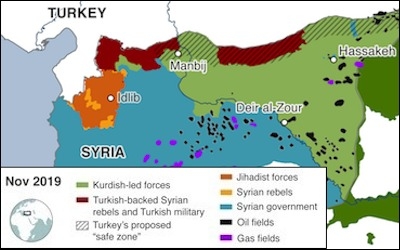
When President Trump announced the withdrawal of U.S. forces from northeast Syria in October, a Turkish invasion swiftly and predictably followed. The Syrian Kurds were faced with the choice of meeting the Turkish onslaught alone, or inviting regime and Russian forces into their area. They chose the latter course. This appeared initially likely to herald the rapid demise of the Kurdish autonomous authority in Rojava, which had been carved starting in mid-2012.

The current reality on the ground, however, belies this simple picture. The Assad regime is decrepit and lacking in manpower. The Kurdish-led SDF, meanwhile, remains vigorous and strong. For this reason the regime has yet to attempt to establish control on the ground in cities such as Derik, Hasakah and Qamishli, where checkpoints and daily security control remains in the hands of the Kurds and their allies.

A new era of cyber warfare: Russia’s Sandworm shows “we are all Ukraine” on the internet

By Cynthia Brumfield
Source Link

In-depth research on Russia's Sandworm hacking group shows broad capabilities and scope to disrupt anything from critical infrastructure to political campaigns in any part of the world.

Speakers at this year’s CyberwarCon conference dissected a new era of cyber warfare, as nation-state actors turn to a host of new advanced persistent threat (APT) strategies, tools and tactics to attack adversaries and spy on domestic dissidents and rivals. The highest profile example of this new era of nation-state digital warfare is a Russian military intelligence group called Sandworm, a mysterious hacking initiative about which little has been known until recently. The group has nevertheless launched some of the most destructive cyberattacks in history.[ Learn what you need to know about defending critical infrastructure . | Get the latest from CSO by signing up for our newsletters. ]

Wired journalist Andy Greenberg has just released a high-profile book about the group, which he said at the conference is an account of the first full-blown cyberwar led by these Russian attackers. He kicked off the event with a deep dive into Sandworm, providing an overview of the mostly human experiences of the group’s malicious efforts.

Where Is Trade?


I had planned to devote this week’s column to an incisive commentary on the trade issues that were extensively discussed in last week’s Democratic presidential primary debate. Oh, wait . . . there weren’t any. Once again, there were no questions on trade policy, and it came up only peripherally once or twice. This is not new; indeed, most of the debates have ignored the subject.

This continues to baffle me. Trade policy historically has not been a major issue in presidential campaigns—the parties tend to nominate candidates who move to the center for the general election and try to avoid divisive issues, and pollsters view trade as a “low-intensity” issue. Voters have opinions about it but do not rank it as one of their top priorities. Now, however, the United States has a president who has made it one of his signature issues. He ran on it in 2016, and he doubtless will run on it again in 2020. If nothing else, that means the Democratic nominee, whoever that turns out to be, will have to have both a response to the president’s claims and a policy of his or her own.

Responding to the president so far has not been hard; in fact, it’s one of the things all the candidates agree on. They all make the same two points: whatever it is that he’s doing is both wrong and a policy failure, and his biggest mistake is his failure to build coalitions to tackle problems like China that affect many countries.

The Oligarchs Who Lost Ukraine and Won Washington

By Michael Carpenter 

Acongressional impeachment inquiry seeks to determine whether U.S. President Donald Trump extorted a foreign leader, withholding a coveted White House meeting and U.S. military aid in order to promulgate a Russian-inspired conspiracy theory and smear his chief opponent in the 2020 election. The United States’ gravest constitutional crisis since Watergate is not just about preserving the integrity of U.S. democratic institutions from the president’s abuse of power, however. It is an episode in a broader geopolitical struggle between the defenders of democracy and the forces of oligarchic authoritarianism, from Kyiv’s Maidan to Hong Kong’s Mong Kok. In this wider global conflict, Trump and his surrogates have consistently aligned themselves with the forces of oligarchic authoritarianism—in Russia, Turkey, Hungary, and other countries, too. Nowhere is this clearer than in Ukraine.

That Ukraine is at the heart of the U.S. impeachment inquiry is no coincidence. The country is ground zero for the struggle between democratic rule of law and authoritarian oligarchy. Halfway around the world from Washington’s halls of power, Ukraine sits along a civilizational and geopolitical fault line. To Ukraine’s west are the liberal democracies of Europe, governed by rule of law and democratic principles. To its east are Russia and its client states in Eurasia, almost all of which are corrupt oligarchies.

Why Fintech Is Disrupting Traditional Banking


BankMobile co-founder Luvleen Sidhu discusses how her firm's “Bank-as-a-Service” model enables it to acquire customers at higher volumes and lower costs than traditional banks.

Fintechs are growing rapidly. Their range of offerings and number of customers are expanding as they target the pain points that clients experience with traditional banks. A case in point: BankMobile, a five-year-old mobile-first bank that operates as the digital banking division of Customers Bank of Phoenixville, Arizona. Its “Bank-as-a-Service” model enables it to acquire customers at higher volumes and lower costs than traditional banks. This helps pay higher interest on customer deposits than traditional banks do.

Luvleen Sidhu, co-founder, president and chief strategy officer of BankMobile spoke recently with Knowledge@Wharton about its business model. (Listen to the podcast at the top of this page.) The bank is active in the student loan market and in a “white label” partnership with T-Mobile, where it leverages the latter’s brand; it plans several more white-label partnerships. BankMobile is also helping shift the gender bias in banking and financial services by bringing parity in pay and status for its women executives.

An edited transcript of the conversation follows.

US Electronic Warfare: You’re Doing It Wrong

By SYDNEY J. FREEDBERG JR.

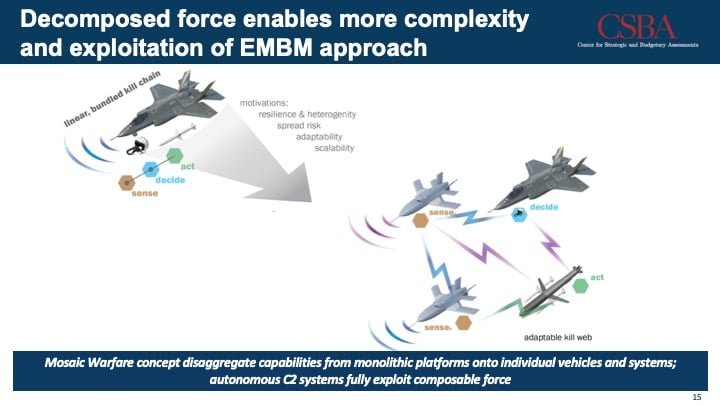
CSBA calls for networks of manned and unmanned systems, each performing a specialized role. (Credit: Center for Strategic & Budgetary Assessments)

Despite rising budgets and high-level attention to electronic warfare, the Pentagon’s “efforts have been unfocused and are likely to fail,” warns a congressionally mandated study out today. What the US needs, the Center for Strategic & Budgetary Assessments report says, is a radically new approach that can outfox Russia and China.

The Revolution in Military Affairs

By Jacek Bartosiak

The notion of a “revolution in military affairs” has created a sensation in recent years, as it could create a new phase in the way wars are conducted. RMA’s importance is likely to grow over the coming decades of great power competition and proxy wars across Eurasia and its neighbors. It is, therefore, worth spending some time on this concept.

The Dawn of RMA

In 1992, the U.S. Defense Department’s Office of Net Assessment published a report on the coming military-technical revolution – what it called the Revolution in Military Affairs. The concept wasn’t a new one. By the 1970s, Soviet military theoreticians were heralding the arrival of what they described as the 20th century’s third wave of the military-technical revolution. The first wave was the motorization of war – namely, the use of aviation and chemical weapons in World War I. As this phase matured in World War II, it came to incorporate the German concept of “blitzkrieg” (armored warfare operations with an air tactical support component), the British-American concept of strategic bombing, and the concept of replacing battleships with onboard aircraft taking off from aircraft carriers, as envisaged by both Japan and the United States.

28 November 2019

Chabahar Port functional & Indian company handling cargo: MEA in Lok Sabha

Dipanjan Roy Chaudhury
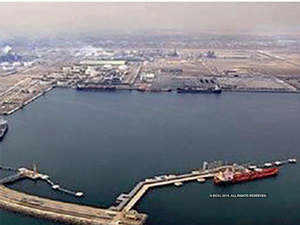
NEW DELHI: Afghanistan has sent five consignments to India from Iran’s Chabahar port since February 2019, the ministry of external affairs told Lok Sabha in what can be viewed as rebutting reports alleging the port’s Phase-1 developed and run by India is dysfunctional after US decided to re-impose sanctions on Iran.

India Ports Global Limited took over port operations in December 2018 and has been successfully handling cargo since then, according to a written reply provided by MEA to Lok Sabha responding to a query on status of India’s role in the strategically located port.

Chabahar port is a major regional initiative by India to ensure connectivity to Afghanistan, Central Asia, Russia and other parts of Eurasia in the backdrop of Pakistan’s denial of connectivity through its territory. The port has also received consignments from India and elsewhere for Afghanistan.

Afghanistan’s Air Force Receives Five More MD-530F Helicopters


By Franz-Stefan Gady

Arizona-based U.S. defense contractor MD Helicopters, Inc., announced the delivery of another batch of five MD-530F Cayuse Warrior light attack helicopters to the Afghan Air Force (AAF) on November 22. According to a press statement, the light attack helicopters were delivered to Kandahar via a Boeing 747 cargo aircraft on October 27 and reassembled for active service within ten days.

The five MD-530Fs are part of a follow-on batch of 30 helicopters ordered by the U.S. Army under a wider $1.4 billion Foreign Military Sales (FMS) contract issued in September 2017.

According to the U.S. Department of Defense (DoD), the 2017 contract entails the “procurement of an estimated quantity of 150 MD 530F aircraft and required production support services to include program management, delivery support, pilot training and maintenance” by September 2022.

Pakistan: Bajwa, CPEC, and ‘acceptable opinion’

By IMAD ZAFAR

The famous American scholar Noam Chomsky once said, “The smart way to keep people passive and obedient is to strictly limit the spectrum of acceptable opinion, but allow very lively debate within that spectrum.” It seems Pakistan’s current hybrid regime controlled by the invisible forces is doing the same thing. Opinions are made acceptable and unacceptable on the basis of the needs of the regime, and narratives have been built on misleading and distorted facts.

This has muzzled the already weakened press and freedom of expression and as a result, media and intellectuals instead of debating the real challenges faced by the country are only discussing the imaginary corruption of the opposition parties’ leaders. Such is the poor state of affairs that when on Tuesday the Supreme Court of Pakistan suspended the notification of the extension of General Qamar Bajwa’s tenure as Chief of Army Staff, the television channels were showing different news and the government acted as if nothing had happened.

The Supreme Court raised objections on the procedure of Prime Minister Imran Khan granting an extension to the army chief without the approval of all the cabinet members, and it also said the extension notification came from Prime Minister’s Office instead of the President’s Office.

What China has in common with Australia, Taiwan and the US: local and national priorities don’t always align

Yuan Jiang
Source Link

The Victorian state government recently took flak for its belt and road deal, which is at odds with Canberra’s position. But local leaders – in countries taking Chinese money, and in China itself – often prioritise provincial economic needs

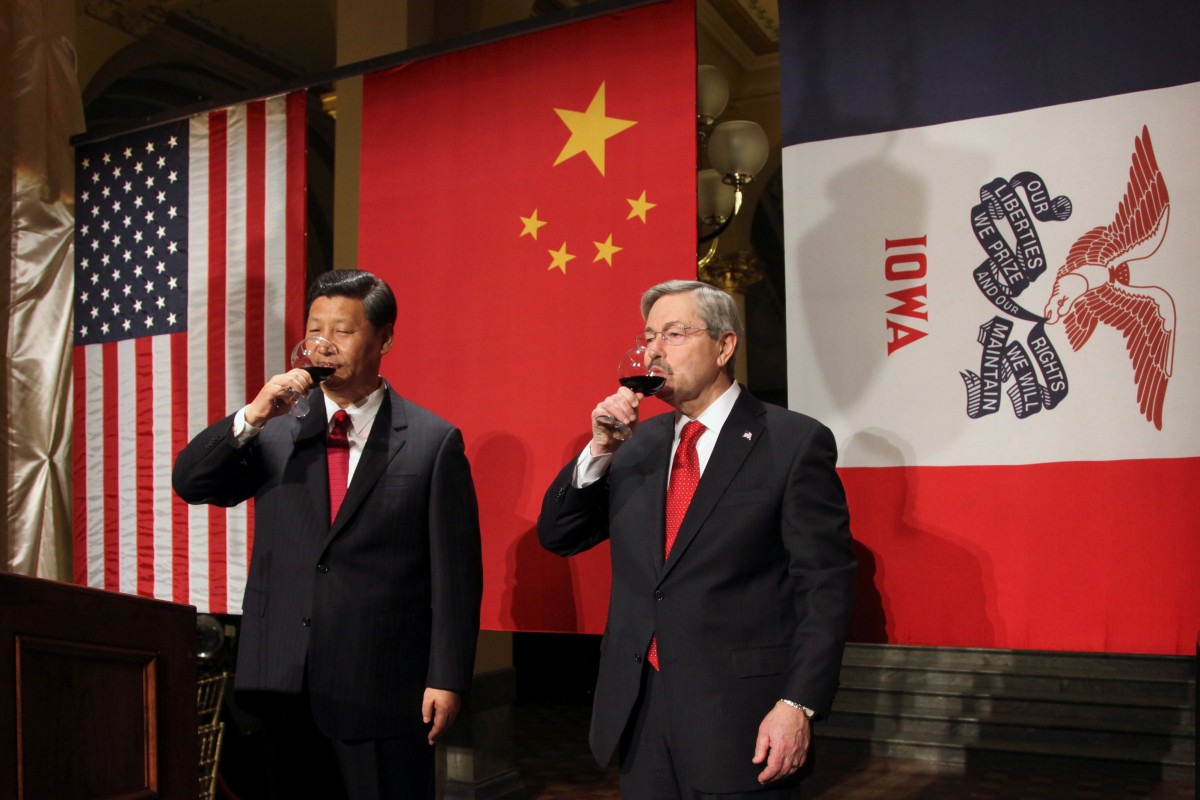
Xi Jinping, then China’s vice-president, is welcomed by then-governor of Iowa Terry Branstad in the governor's office in Des Moines, in February 2012. Branstad, who has cultivated a decades-long relationship with China and with Xi, has nonetheless defended tough new policies as the Trump administration’s ambassador to China. Photo: Reuters

Since the Victorian state government in Australia released news of the signing of a second memorandum of understanding on China’s Belt and Road Initiative, state premier Daniel Andrews has 
been criticised for not aligning with Canberra and neglecting the potential strategic and security risks the belt and road plan may bring.

China’s Submarines May Be Catching Up With U.S. Navy

H I Sutton
Source Link

The comment resonates with me. As a defense analyst I am constantly reminded of the rapid modernization of the People's Liberation Army Navy (PLAN). China has had a few nuclear-powered submarines since the 1970s but for many years they were widely regarded as inferior to Western types. The latest Type-093 ‘Shang’ Class fast attack submarines and Type-094 ‘Jin’ Class ballistic missile submarines are a different matter. They are more numerous and, very likely, substantially more potent. They are not necessarily as capable as their western equivalents, but the gap is closing over time.

There are a few variables at play, but submarine warfare is largely a game of stealth. Two straightforward questions are whether they are as good at staying hidden, and whether they are as good at detecting others.

Russia’s AI Quest is State-Driven — Even More than China’s. Can It Work?

BY SAMUEL BENDETT
Source Link

More than Western governments and even more than China’s, the Russian government is trying to position itself as a facilitator of innovation in artificial intelligence, the technology that Vladimir Putin said will lead whoever masters it to global advantage. Russia seeks “to go our own way,” said Prime Minister Dmitry Medvedev, borrowing Lenin’s 1917 words about various anti-capitalist ideologies to describe his government’s 21st-century attempt to shake the world. 

Those who doubt that this uniquely state-heavy approach can succeed would do well to remember that today’s internet and mobile telecommunications grew out of Pentagon-funded research, that the Soviet Union led the Space Race for a decade, and that U.S. astronauts currently ascend to orbit atop Russian rockets.

And even as it was putting the finishing touches on its national AI strategy, which calls for funding data management, education, and science initiatives across the country, Putin’s government was increasing its six-year budget for the campaign from $1.3 billion earlier this year to the roughly $6.1 billion announced when the strategy was rolled out in October.

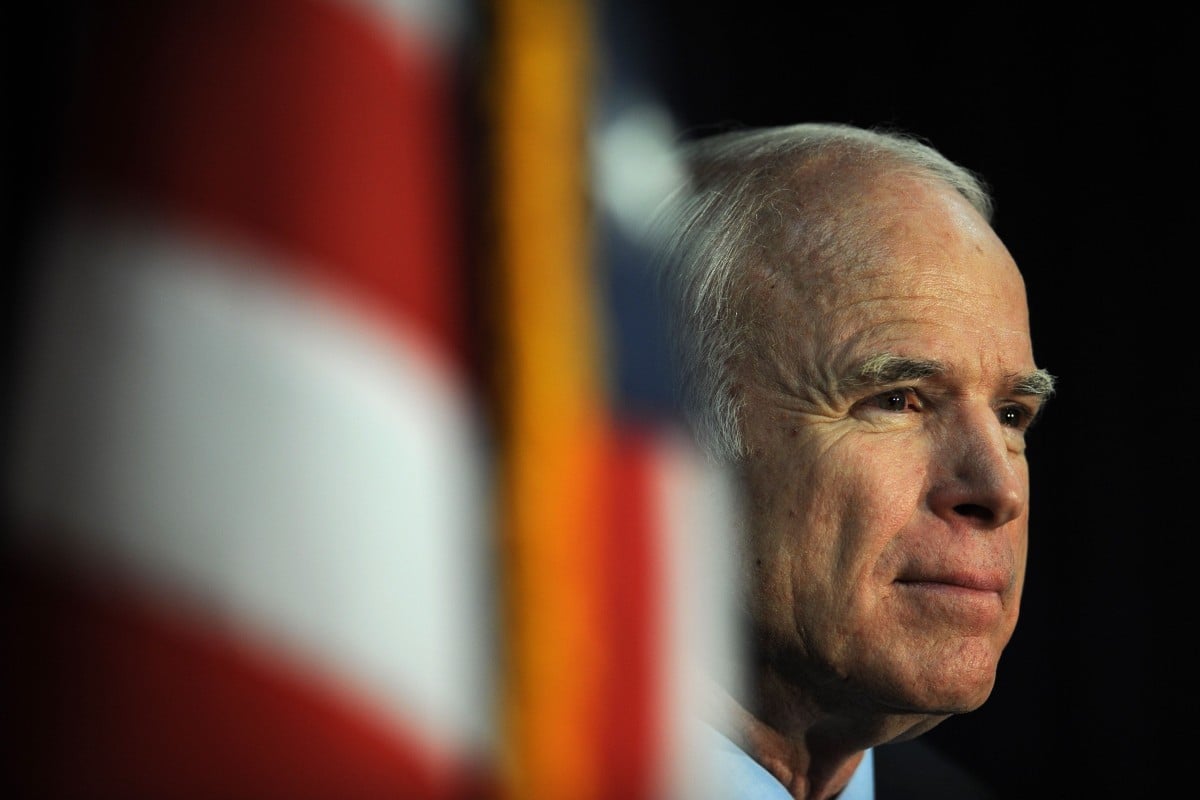
People of Hong Kong awarded 2019 John McCain Prize for Leadership in Public Service – an honour that comes at delicate time in US-China relations

Alvin Lum

The people of Hong Kong have won the 2019 John McCain Prize for Leadership in Public Service, providing a boost for the city’s struggle for greater democracy at a delicate time in US-China relations.

Two pro-democracy figures, former lawmaker Emily Lau Wai-hing and activist Figo Chan Ho-wun of Civil Human Rights Front, will accept the honour on Saturday on behalf of all Hongkongers.

The US Congress earlier this week passed the Hong Kong Human Rights and Democracy Act, which will introduce stringent monitoring and possible sanctions against individuals found to be diminishing the city’s freedoms.

President Donald Trump has yet to give a clear indication on whether he will sign the act into law.

From Model to Muddle: Chile’s Sad Slide Into Upheaval

BY JIMMY LANGMAN
Source Link

SANTIAGO, Chile—Chile’s most diehard protesters may be young people, but their grievances possess a long lineage, one decades in the making.

A previous manifestation of the present turmoil occurred nearly a decade ago. Thanks in large part to a new program offering government-backed student loans, in 2007, 70 percent of students in Chile’s expanding higher education system were the first generation of their families to reach college. It was a widely lauded achievement, one more sign that Chile was a cut above the rest in its Latin American neighborhood. But then a few years later, these same students began to realize that, even if they did graduate, they were headed for huge student loan debts and lousy, low-paid jobs, because most were unable to get into the top universities. In May 2011, their anger swelled into mass protest, exposing the downsides to privatized education and the stark inequalities in Chilean society.

Those student protests—until now—were the largest demonstrations the country had seen since the return of democracy 30 years ago. And Chile’s president then, as now, was Sebastiรกn Piรฑera.

Will Iran Become the Next Soviet Union (As In Bankrupted by Massive Military Spending)?

by Michael Peck
While Iran’s rulers have no aspirations to be a superpower, they do seem to covet being a regional hegemon as the Persian Empire was. So far, Iran has waged war on the cheap by using proxies rather than massive troop commitments as the U.S. did in Vietnam, Iraq and Afghanistan. But as Hezbollah has discovered when its Iranian subsidies were slashed, even war on the cheap can be expensive.

That means more ballistic missiles to hit its enemies, as well as mines and other naval weapons to close the Persian Gulf to oil tankers, according to a new report on Iranian military power by the Defense Intelligence Agency, the Pentagon’s pet spy service.

But the question is whether Tehran can afford to develop these capabilities.

DIA expects that Iran will continue to use unconventional means such as terrorism, or supporting proxies such as Hezbollah to do the dirty work against perceived enemies such as the United States, Israel and Saudi Arabia. But it is also determined to build up capabilities in more conventional arms.

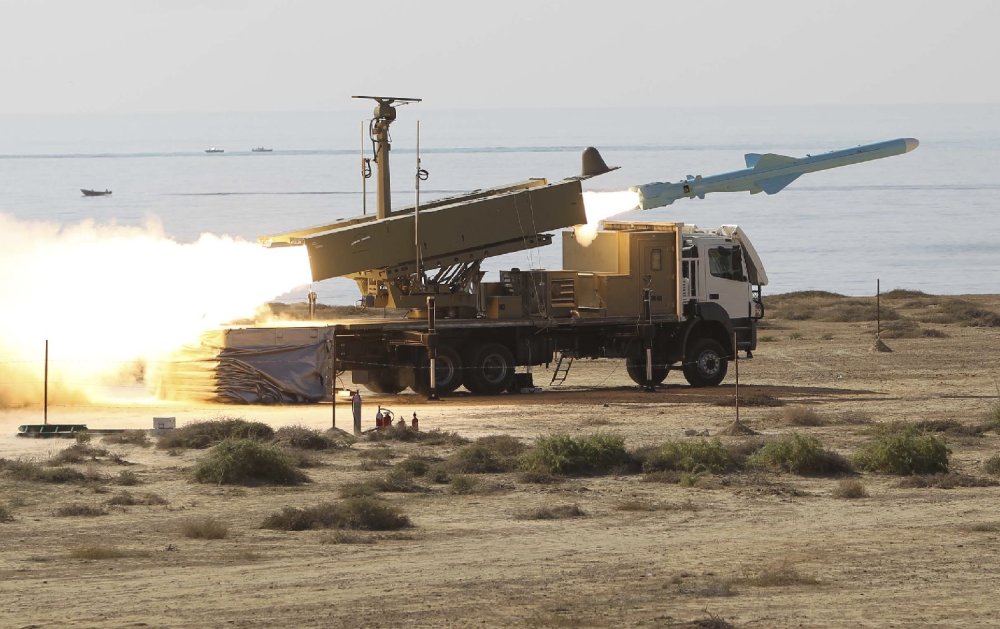
New DIA Report Underscores Iranian Cruise Missile Threat

By Behnam Ben Taleblu, Bradley Bowman

The U.S. Defense Intelligence Agency (DIA) last week released a landmark report analyzing the capabilities of Iran’s military. In light of Iran’s September attacks on the Abqaiq and Khurais oil facilities in eastern Saudi Arabia, the report’s emphasis on Tehran’s expanding cruise missile capabilities has already proven to be prescient.

The DIA’s new report, titled Iran Military Power: Ensuring Regime Survival and Securing Regional Dominance, highlights Tehran’s development of land-attack cruise missiles (LACMs). The report notes that Tehran “has invested heavily in its domestic infrastructure, equipment, and expertise” to develop increasingly capable cruise missiles.

Tehran’s investment of its limited resources in LACMs is not surprising, given the challenges LACMs create for opposing air defense forces. The DIA notes that LACMs “present a unique threat profile from ballistic missiles because they can fly at low altitude and attack a target from multiple directions.”

This low and unpredictable flight path utilizes ground features for concealment and makes it more difficult to detect and track the cruise missile – essential precursors to intercepting it. The September attacks on Abqaiq and Khurais demonstrated the value of such concealment; Iran reportedly used seven cruise missiles (along with 18 drones) to target the Saudi installations from an unexpected direction.

Israel and the Emerging Crisis of the Secular and the Religious

By George Friedman 

Elections normally don’t interest us at Geopolitical Futures. The passage of personalities who preside over the realities of a nation does not usually affect our work. But there are times when electoral politics reveals something of the underlying reality of a nation. That is the case in Israel now. It is at a juncture where the nation is so divided on issues so fundamental to the nature of Israel that the normal political process has frozen and a crisis that can affect the entire region is being revealed.

The crisis revolves around two questions: What does it mean to live in Israel, and what does it mean to be an Israeli? Such questions are common in nations, particularly invented ones, like the United States or Israel. The American regime was invented by the founders, and inevitably, it failed to answer crucial questions, particularly around the issue of whether the states were governed by the federal government or were self-governing. This was tied to the question of whether the principles of the Declaration of Independence, particularly the claim that all men are created equal, are fundamental to American life. Even this was a flawed settlement that haunts the United States to this day. The debate was settled at Gettysburg and other small towns during the Civil War, which left over 600,000 dead.

Why North Korea Denuclearization Is Such a Long Shot


North Korea denuclearization efforts have been at the forefront of the international agenda for more than two years, but there is little progress so far. Critics say the Trump administration has a flawed approach to the negotiations—and the U.S. trade war with China isn't helping. Meanwhile, North Koreans continue to suffer.

Ending North Korea’s nuclearization efforts has been at the forefront of the international agenda for more than two years now. But despite improved relations between North and South Korea and two unprecedented face-to-face meetings between U.S. President Donald Trump and North Korean leader Kim Jong-un, there has been no clear progress toward North Korea denuclearization.

Trump has framed the meetings and his personal relationship with Kim as a promising start to a potential breakthrough, but critics point to the lack of headway so far, which they blame on the Trump administration’s flawed approach to the negotiations. For his part, Kim refuses to even begin drawing down the program that is essentially his regime’s only bargaining chip unless the international community drops its sanctions. Hard-liners in Washington, on the other hand, would like to see meaningful steps toward denuclearization before they lift any restrictions.

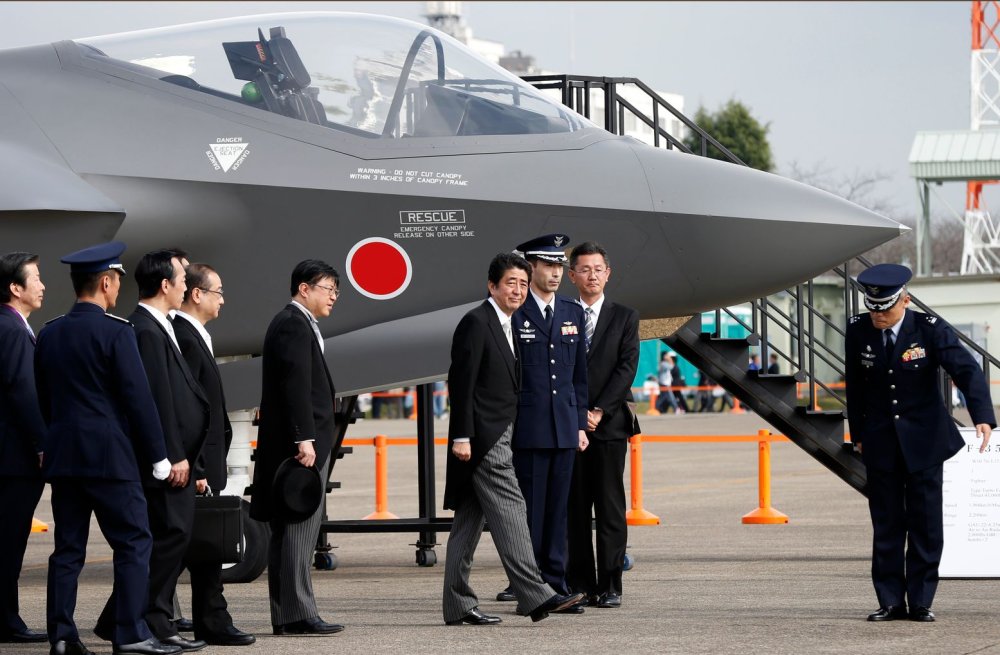
Japan Is Modernizing Its Military, but Can It Do More?


Japan is accelerating its military normalization process by building up its offensive capabilities, especially those of its Japanese Air Self-Defense Force (JASDF). As a part of that push, the United States on Oct. 29 granted Japan's request for a major upgrade to its F-15J fighter aircraft. Installing advanced radar and cruise missile capability on 98 JASDF jets will mark a crucial step in Japan's move away from its post-World War II pacifist stance. And while the upgrades will enhance Tokyo's options, maintaining Japanese national defense as the country's aerospace industry declines and the regional threat environment — including an expanding Chinese military — becomes more complex will become increasingly difficult.

From Defense to Offense

Since its founding in 1954, the JASDF has focused on developing potent air defense and anti-ship capabilities. This largely meshed with Japan's postwar self-image as a pacifist country with an air force geared exclusively toward defending the home islands. While the JASDF built a considerable ability to intercept inbound enemy jets and warships, it couldn't mount offensive operations beyond the immediate waters around Japan. Instead, Tokyo relied on its security alliance with the United States to serve as its offensive capability: If need be, the Japanese military could be the shield, and the U.S. military could be the sword.

Huawei controversy shows US need for robust supply chain security strategy

By: Justin Sherman  

In this March 8, 2019, photo, a logo of Huawei retail shop is seen through a handrail inside a commercial office building in Beijing. Chinese tech giant Huawei’s tensions with Washington, which accuses the telecom equipment maker of being a security risk, stretch across four continents from courtrooms to corporate boardrooms to Canadian canola farms. 

5G technology, through enabling greater digital connectivity at faster speeds, promises to revolutionize everything from smart city internet of things devices to self-driving car communication. And as with any new technology, there are notable cybersecurity threats to be addressed. This includes some of the risks underscored by U.S. government concern about Chinese telecommunications company Huawei, a privately owned but state-subsidized firm that is widely considered to be a global leader in providing 5G technology.

No ‘End Date’ for U.S. Troops in Syria

BY LARA SELIGMAN
MANAMA, Bahrain—Less than two months after U.S. President Donald Trump demanded all U.S. troops withdraw from northeastern Syria for the second time, the general in charge of all U.S. forces in the Middle East now says he has no orders to leave the region. 

“I don’t have an end date,” Gen. Kenneth McKenzie, the commander of U.S. Central Command, told a small group of reporters in Bahrain on Saturday. 

Roughly 500 U.S. forces will remain in northeastern Syria with their Kurdish-led partners, the Syrian Democratic Forces (SDF), to continue fighting the remnants of the Islamic State, McKenzie said during a visit to Bahrain for the Manama Dialogue security summit. Under Trump’s directive, the troops will primarily be stationed in the Deir Ezzor province to guard the region’s rich oil fields, but the Defense Department insists that the mission is part of the broader campaign to defeat the terrorist group.

Don’t Demand Protection Money from Japan. Do Ask Tokyo to Rethink Its Defenses

BY ENEA GJOZA

A well-fortified Japan could take the lead in its own security, with U.S. forces acting as a backstop rather than the primary combatants.

As part of the Trump administration’s efforts to persuade allies to pay more for U.S.-provided defense, American officials reportedly asked Japan to quadruple its annual payments to support the 54,000 U.S. troops stationed there—to $8 billion. Perhaps this was a negotiating tactic meant to shake complacent allies into boosting their own defense budgets, but security burden-sharing is not a monetary issue of balancing ledgers between nations. A much more valuable—and realistic—goal for the U.S. would be pushing Japan to spend the extra $6 billion to expand its military capabilities, making it a stronger and more reliable security partner.

More than any other U.S. ally, Japan is in a position to deter Chinese military aggression, something much of Washington fears. As the world’s third-largest economy, a hub for advanced technology and manufacturing, and a country that straddles choke points for the Chinese navy, Japan can develop better defensive capabilities to balance Beijing’s military power.

The Art of Command, The Science of AI

SYDNEY J. FREEDBERG JR.

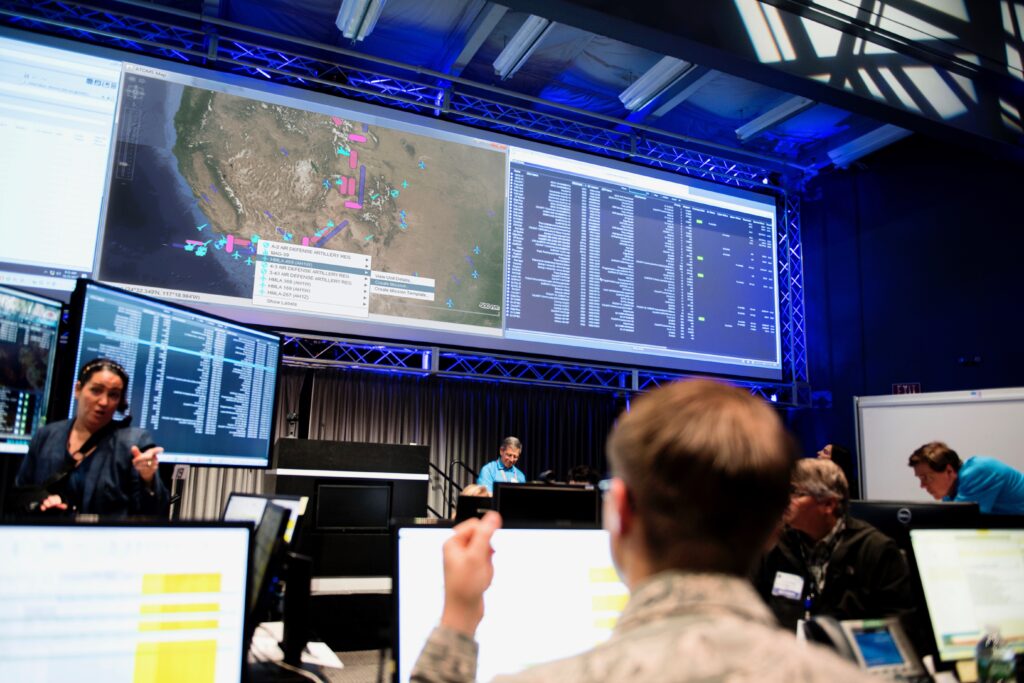
Lockheed Martin’s third Multi-Domain Command & Control (MDC2) wargame

DENVER: The Pentagon wants a combat network that can suck up sensor data from across the battlefield in seconds and automatically match targets with the best weapons to strike them, like Uber pairing passengers to drivers. But generals and civilian officials alike warn that AI-driven command and control must leave room for human judgment, creativity, and ethics. The question is how to strike that balance.

“You’re going to provide your subordinates the best data you can get them, and you’re going to need AI to get that quality of data,” said recently retired Gen. Robert Brown, “but then that’s balanced with, they’re there on the ground.” Military leaders must make their own judgment calls based on what they see and hear and intuit, not just click “okay” on whatever battle plan the computer suggests, as if they’re paging through the latest Terms & Conditions boilerplate on their smartphone.

Gen. Robert Brown, then-commander of US Army Pacific, speaks to allied officers in Thailand.