17 February 2015

Clash For Civilization

The Middle East That Might Have Been

Nick Danforth
FEBRUARY 13, 2015

In 1919, President Woodrow Wilson dispatched a theologian named Henry King and a plumbing-parts magnate named Charles Crane to sort out the Middle East. Amid the collapse of the Ottoman Empire following World War I, the region’s political future was uncertain, and the two men seemed to provide the necessary combination of business acumen and biblical knowledge. King and Crane’s quest was to find out how the region’s residents wanted to be governed. It would be a major test of Wilson’s belief in national self-determination: the idea that every people should get its own state with clearly defined borders.
Interactive map: How the King-Crane Commission envisioned the Middle East (Karl Sturm and Nick Danforth)

After spending three weeks interviewing religious and community leaders in Syria, Lebanon, Palestine, and southern Turkey, the two men and their team proposed that the Ottoman lands be divided as shown in the map above. Needless to say, the proposals were disregarded. In accordance with the Sykes-Picot Agreement Britain and France had drafted in secret in 1916, Britain and France ultimately took over the region as so-called mandate or caretaker powers. The French-administered region would later become Lebanon and Syria, and the British region would become Israel, Jordan, and Iraq.

Today, many argue that a century of untold violence and instability—culminating in ISIS’s brutal attempt t0 erase Middle Eastern borders—might have been avoided if only each of the region’s peoples had achieved independence after World War I. But as the King-Crane Commission discovered back in 1919, ethnic and religious groups almost never divide themselves into discrete units. Nor do the members of each group necessarily share a vision of how they wish to be governed.

The King-Crane report is still a striking document—less for what it reveals about the Middle East as it might have been than as an illustration of the fundamental dilemmas involved in drawing, or not drawing, borders. Indeed, the report insisted on forcing people to live together through complicated legal arrangements that prefigure more recent proposals.

Among other things, the authors concluded that dividing Iraq into ethnic enclaves was too absurd to merit discussion. Greeks and Turks only needed one country because the “two races supplement each other.” The Muslims and Christians of Syria needed to learn to “get on together in some fashion” because “the whole lesson of modern social consciousness points to the necessity of understanding ‘the other half,’ as it can be understood only by close and living relations.”

TERRORISM–AN EXISTENTIAL THREAT: BY DR. PETER VINCENT PRY

February 14, 2015 

Terrorism is NOT an existential threat, according to Susan Rice, President Obama’s national security advisor, and according to the new White House national security strategy unveiled on Friday, February 6, 2015. Nor does the United States face any other threats to its existence, according to the White House, except for “climate change.”

Rice explained, “Too often, what’s missing here in Washington is a sense of perspective. Yes, there is a lot going on. Still, while the dangers we face may be more numerous and varied, they are not of the existential nature we confronted during World War II or during the Cold War.”

Polling indicates as many as one-third of Americans believe Rice and the White House, when in reality the U.S. faces existential threats of greater severity than World War II or the Cold War from terrorists, Iran, Russia, China, and North Korea.

Regular readers of Family Security Matters do not need to be told why Russia, China, and North Korea–all nuclear missile states hostile to America and U.S. allies–pose a growing existential threat to the United States.

This article shall focus on the existential dangers from terrorists like Al Qaeda and ISIS and from the world’s leading sponsor of international terrorism–Iran. Islamic terrorists and Iran pose an even greater threat to the existence of the United States than did Imperial Japan and Nazi Germany during World War II, or than the USSR during the Cold War.

Nuclear Iran Worse Than Nazi Germany

During World War II, Germany and Japan in order to defeat the U.S. would have had to invade the American heartland with million man armies, which was never a realistic prospect. Nazi Germany conceivably might have vanquished the United States, if the Nazis developed atomic weapons and long-range missiles.

U.S. leaders were wise enough to deny Nazi Germany access to heavy water and other nuclear weapon materials by strategic bombing, and to smash their missile program at Peenemunde, ensuring that the Allies did not have to face an Adolph Hitler armed with nuclear missiles. Where Nazi Germany failed, Iran is succeeding in developing nuclear weapons and long-range missiles capable of striking any nation on Earth.

A new era for Caspian oil and gas

FEB 13, 2015
The recent decline in world oil prices is likely to constrain economic growth and investment in the Caspian region.

The steep decline in global oil prices has dealt a blow to earnings for many energy-exporting states, pushing their finances and investment projects over the red line. They have suffered slowdowns since crude prices began to slide in mid-2014, but most of them still expect to weather the crisis and will draw on their significant currency reserves to keep their economies and projects floating.

The Caspian states – specifically, Azerbaijan, Kazakhstan and Turkmenistan – are among these believers. This essay will focus on their responses to the price crash.
Nobody knows with certainty when and how this prolonged and unexpected market fluctuation will end.

Even if conditions were to stabilise soon, the consequences of the dramatic fall that has already occurred could be serious. And if the market remains bearish, these countries could have a very hard time, not only with respect to recouping their losses but also in facing much tougher competition for new investment.

Under pressure
Caspian oil and gas exporters are already feeling the pressure from low oil prices and slow global economic growth. Additionally, they are also being squeezed by the knock-on effects of Russia’s economic crisis.

Among the former Soviet republics, Kazakhstan and Azerbaijan are the biggest crude oil producers in the Caspian region. According to the International Energy Agency (IEA), Kazakhstan exported about 1.69 million barrels per day of oil in 2014, while Azerbaijan exported 840,000 bpd and Turkmenistan 280,000 bpd.

Southeast Asia’s Piracy Headache

By Miha Hribernik
February 15, 2015

The region saw a spike in piracy in 2014, and attacks became more deadly.
It looks like 2014 may have been the most dangerous year for Asian seafarers in almost a decade. According to the Singapore-based Regional Cooperation Agreement on Combating Piracy and Armed Robbery against Ships in Asia (ReCAAP), 183 actual or attempted attacks took place in Southeast Asian waters during 2014. This figure represents a marked increase from 150 in 2013 and 133 in 2012, and is the highest since 2006.

The latest figures released by the International Maritime Bureau’s (IMB) Piracy Reporting Center corroborate ReCAAP’s findings and show a similar increase in attacks in 2013 and 2014. Since a total of 245 attacks took place worldwide in 2014, Asia now accounts for up to 75 percent of all piracy and armed robbery (PAR) incidents in the world, up from 60 percent in 2013. The continent’s share in global PAR statistics is rapidly increasing as the number of attacks in other parts of the world – most notably the Gulf of Aden – continues to decline.

The surge in incidents in Southeast Asia underscores a worrying trend, one that has seen attacks steadily proliferate since 2013, following a brief decline between 2010 and 2012. Even though PAR is by no means a new phenomenon in the region – Southeast Asia has been known as a piracy hotspot for centuries – the sheer increase in the volume of attacks will perhaps nudge countries in the most affected areas to action. The shipping industry is likely to exert additional pressure on regional governments, as a sustained increase in attacks will put ships and crew at greater risk and is certain to drive up the cost of insurance premiums.

A Closer Look

Over one third of all shipping traverses the Strait of Malacca each year, with an estimated 15.2 million barrels of crude oil transported through this strategic chokepoint every day. Although spikes in attacks had disrupted shipping through the strait in the past (famously prompting the Lloyd’s Market Association to declare it a warzone in 2005), PAR in Asian waters traditionally slipped in and out of (Western) public consciousness and rarely captured global headlines. This is despite the fact that many Westerners – particularly Europeans – would be among the first to feel the effects of major disruption to shipping in the region. The European Union relies heavily on sea-borne trade with countries in the Asia-Pacific – six of its biggest 20 trading partners are located in the region.

A Man for all Seasons Revisiting the Powell Doctrine

Retired General Colin L. Powell, appearing as part of the National Geographic Channel documentary series, “American War Generals” 

Every time I read another armchair strategist comment on the irrelevance of Clausewitz in contemporary conflict, I’m left shaking my head. In many ways, reading “On War” is like reading the Bible: literal interpretations of the text often lead readers to misinterpretations of the deeper, often hidden meanings of the passages. Recognizing and understanding the context of the writing is essential to developing an understanding of the concepts within.

Context is everything.

 
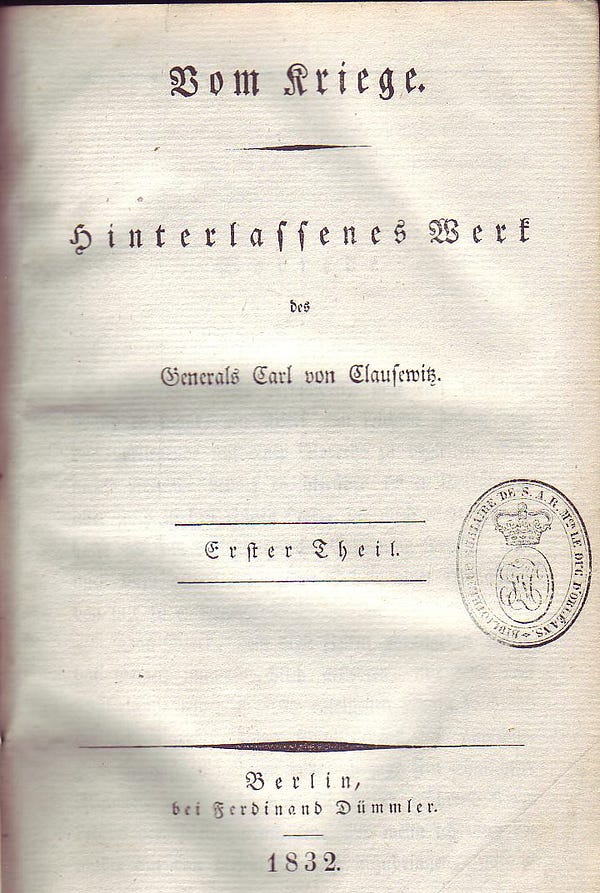
Title page of the original German edition Vom Kriege, published in 1832.

People like to say that Clausewitz is the least read, most quoted of the military theorists. His writing isn’t as pithily quotable as Sun Tzu or as provocatively diabolical as Machiavelli. It is steeped in metaphors, written in the years after the Napoleonic wars as Clausewitz struggled to grasp the elusive taxonomy required to describe complexities of early 19th century maneuver warfare, and war in general. For years, he was on the receiving end of some of the French emperor’s greatest campaigns, the so-called business end of the “tip of the spear,” where lessons often come hard and fast. Yet today, nearly 200 years after its publication in 1832, we’re still studying and debating the merits of On War.

It’s all about the context.

THE UKRAINE CRISIS: THE KREMLIN IS WINNING

February 14, 2015 

How the West uses a collection of “myths” about Russia to deceive itself about its own impotence.

Ukraine is a victim of both the Russian System’s struggle for survival and the West’s inability to protect the international legal space. For the West, ending this confrontation may prove to be even more agonizing than ending the Cold War, because:

the West is refusing to recognize that this is not a regional crisis, but a clash of opposing systems;

the West has lost the ability to contain a civilizational adversary; the Kremlin has created self-protection mechanisms within Western societies; the liberal democracies don’t see any need to fight for norms in their foreign policies; they believe the Russian ruling elite is less risk-averse than the aged and decrepit Soviet leadership, but they’re still not sure how risk-averse; the system of global governance, which was based on the outcome of World War II, no longer fits today’s world; Russia’s aggression against Ukraine has blossomed into a crisis of Ukrainian statehood; Francois Hollande’s and Angela Merkel’s urgent mission to broker a deal in east Ukraine points to Western fears (quite justified) that the war in Ukraine will dismantle European and global stability, as well as bringing about the collapse of the international governance system (already in an advanced state of paralysis). However these peace overtures end, we should focus on the set of beliefs that contributed to the emergence of this crisis, complicate its resolution, and distort the real picture of the challenges facing the world. Let’s examine some of the currently popular myths about the standoff between Russia and the West in Ukraine.

1. Is it Putin or the System?

Many believe that Putin and his recklessness are to blame for everything. The Russian President probably enjoys reading essays that purport to analyze his psyche and his demonic traits. It’s certainly true that Putin flipped over the global chessboard without fully appreciating or anticipating the consequences. But how much control does he really have over the Kremlin and Russian developments more broadly? Guillermo O’Donnell coined the term “impotent omnipotence” to describe personalized regimes. I think the term applies to the rule of Russia as well. Despite his vast powers, the Russian leader is increasingly dependent on his team’s loyalty and his approval ratings. Both of these factors are treacherous. Putin is already having trouble maintaining stability in Russia. The war in Ukraine has become a trap that he has no idea how to extract himself from. If Putin is forced to turn Russia into a fortress in order to consolidate the people around the Kremlin, what does this say about his power and his freedom of action?

No bail-out, no deal


DOING the same thing and expecting different results, Einstein is supposed to have said, is the definition of insanity. In the euro zone it is the ordinary line of business. For despite thetwists and turns of the Greek drama over the last few weeks the fundamental contours of the dispute have not changed. The new Greek government, priced out of private markets, needs financial help from its euro-zone partners but insists it will leave behind the bail-outs and "fiscal waterboarding" to which its predecessor succumbed. The euro zone, led but in this case not dominated by Germany, demands that the price of such help is an extension of the current Greek bail-out, which expires at the end of the month, and that beyond that there can be no help without some form of “conditionality” (i.e. telling the Greeks what to do).

Over the last week optimists have sought heroically to discern room for compromise. It has not been easy. During a speech to the Greek parliament on Sunday Alexis Tsipras, the new prime minister, struck a tougher line than ever on austerity and the bail-out; for good measure he raised the possibility of Germany paying war reparations to Greece. Three days later, at a disastrous meeting of the Eurogroup (the finance ministers of countries that use the euro), the 18 non-Hellenic countries lined up one after another to tell Yanis Varoufakis, Mr Tsipras’s finance minister, that Greece had to offer something in return for its demands. (One complained that the sums his country had lent the Greeks exceeded its annual overseas-aid budget.) Mr Varoufakis agreed to a statement that referred vaguely to the possibility of exploring an extension to the bail-out. Thinking their work done, Wolfgang Schรคuble, Germany’s finance minister, and others left the meeting, only for Mr Varoufakis to change his position after a phone call to Athens. The two sides, it appeared, could not even agree to disagree.

The Bad, Sad, Mad Mr. Putin

Is Vladimir Putin bad, sad or mad? Is he a sinister and effective tyrant, cleverly taking advantage of the West’s weakness? Is he balancing precariously at the head of a failing state, desperate not to end up dead or in prison? Or is he delusional, like the villain in a bad Hollywood film?

The short answer is that we don’t really know. We don’t know how Putin thinks. We don’t know what information he gets. We don’t know whose advice he takes, if any. We don’t know what he really fears, or what he really wants. As Europe’s security rockets up the international agenda, Kremlinology, as we used to call it, is back.

A prominent advocate of the ‘bad’ camp is Walter Russell Mead. In a widely read recent article in The American Interest, he argues that Western Putin-watchers make a huge mistake in assuming that the Russian leader is like them.

There are three subjects on which virtually everybody in the Western policy and intellectual establishments agree: think of them as the core values of the Davoisie: The first is that the rise of a liberal capitalist and more or less democratic and law-based international order is both inevitable and irreversible. The second is that the Davos elite—the financiers, politicians, intellectuals, hautejournalists and technocrats who mange the great enterprises, institutions and polities of the contemporary world—know what they are doing and are competent to manage the system they represent. The third is that no serious alternative perspective to the Davos perspective really exists; our establishment believes in its gut that even those who contend with the Davos world order know in their hearts that Davos has and always will have both might and right on its side.

Putin, by contrast, sees things differently, Mead argues:

OPEC leader: Oil could shoot back to $200


By Matt Di Lallo

Right now the oil market is totally focused on finding a bottom for oil prices. However, according to OPEC's Secretary-General Abdulla al-Badri we've already hit bottom.

Not only that, but he sees a real possibility that oil prices could explode higher to upwards of $200 per barrel in the future. He's far from the only one that sees a return of triple-digit oil prices.

Finding a bottom: According to recent comments by the Secretary-General when he was in London, the oil market doesn't need to look for oil prices to bottom as the market has already bottomed. Instead, he offered quite bullish comments by saying, "Now the prices are around $45-$55, and I think maybe they [have] reached the bottom and we [will] see some rebound very soon."

Normally that type of remark would be just another layer of noise, but this is coming from OPEC's Secretary-General so it comes with a lot of weight behind it.

That said, he's not saying that OPEC will come in and rescue the oil market by reversing its previous decision to hold steady on production. Instead, he sees the signs that the oil market is self-correcting as oil companies have made deep cuts to spending, which will eventually lead to lower production growth.

Further, the rig count in the U.S. is plunging, which is usually a key to a bottom in oil prices. However, in the midst of cutting back as the industry works through the current oversupply the Secretary-General is now warning that the industry is putting future oil supplies at risk by under investing today.

Underinvestment leads to a shortage: The Secretary-General said that, "if you don't invest in oil and gas, you will see more than $200" when it comes to future oil prices. While he didn't give a time frame, he did note the correlation between investment and future production.

This is because oil production naturally declines and oil companies need to invest in new production to not only replace this decline in production from legacy oil fields but to add new production to meet growing demand. However, oil companies are reluctant to invest in new production as their cash flows decline.

Over time this could become a problem as oil fields around the world naturally decline by an average of about 5% per year. As we see in this chart from a Chevron Corporation (CVX) investor presentation, in order to overcome this decline oil companies need to develop about 200 billion barrels of oil supplies over the next decade and a half just to meet demand.

STAMPING OUT VIOLENT EXTREMISM: WHAT CAN THE U.S. GOVERNMENT DO?

February 12, 2015

Since the horrific terrorist attacks in Paris, brutal massacres by Boko Haram, and the campaign of terror by the Islamic State in Iraq and the Levant (ISIL), leaders in the United States and far beyond have grown increasingly concerned about the rise of violent extremism. Recent U.S. policy debate has coalesced around how the U.S. government can counter and prevent violent extremism at home and abroad, as well as set the right conditions in place for stability in some of the most volatile and conflicat prone areas. In 2011, the White House released a strategy titled Empowering Local Partners to Prevent Violent Extremism in the United States. This strategy focused on using a community-based approach for preventing and countering violent extremism that focused on 
Enhancing U.S. government engagement and support to local communities that are targeted by violent extremists; 
Building government and law enforcement expertise; 
And countering violent extremism propaganda. 

In his remarks to the World Economic Forum, Secretary of State John Kerry emphasized that violent extremism is a global problem and characterized U.S. efforts to develop a long-term strategy to prevent and counter violent extremism (PVE and CVE) through whole-of-government and international coalition efforts, starting with the U.S.-led coalition to counter ISIL.

Efforts to counter and prevent violent extremism are not new. Since the terrorist attacks of September 11th, the United States has led efforts to defeat and disrupt terrorists and their supporters, develop counter-radicalization strategies, address the “root causes” of violent extremism, and provide strategic narratives to counter terrorist propaganda. While terrorist groups like Boko Haram, ISIL, and Al-Shabaab have elevated their attacks, recruitment efforts, and tactics, U.S. government efforts to develop PVE and CVE strategies have fallen behind and lack an actionable whole-of-government implementation plan and strategy.

Hackers Using Malware to Steal Millions From banks

David E. Sanger and Nicole Perlroth
February 15, 2015

Bank Hackers Steal Millions via Malware

PALO ALTO, Calif. — In late 2013, an A.T.M. in Kiev started dispensing cash at seemingly random times of day. No one had put in a card or touched a button. Cameras showed that the piles of money had been swept up by customers who appeared lucky to be there at the right moment.

But when a Russian cybersecurity firm, Kaspersky Lab, was called to Ukraine to investigate, it discovered that the errant machine was the least of the bank’s problems.

The bank’s internal computers, used by employees who process daily transfers and conduct bookkeeping, had been penetrated by malware that allowed cybercriminals to record their every move. The malicious software lurked for months, sending back video feeds and images that told a criminal group — including Russians, Chinese and Europeans — how the bank conducted its daily routines, according to the investigators.

Then the group impersonated bank officers, not only turning on various cash machines, but also transferring millions of dollars from banks in Russia, Japan, Switzerland, the United States and the Netherlands into dummy accounts set up in other countries.
HOW HACKERS INFILTRATED BANKS 

Since late 2013, an unknown group of hackers has reportedly stolen $300 million ­— possibly as much as triple that amount — from banks across the world, with the majority of the victims in Russia. The attacks continue, all using roughly the same modus operandi: 

BANK COMPUTERS

Hackers send email containing a malware program called Carbanak to hundreds of bank employees, hoping to infect a bank’s administrative computer.

HACKER

ADMIN PC

The 5 Eyes SIGINT Agencies And Their Desire to ‘Own’ The Internet

Jamie Bartlett
February 14, 2015

You can’t control the internet. GCHQ needs to grow up and accept it

The endless debate on security versus online privacy feels a little bit stuck of late. On one side, civil liberties groups demanding more privacy for the many and more transparency from the few.” On the other: securocrats and law-enforcement spokesmen insisting they need to monitor more of our internet behaviour to keep us safe. “It’s Orwellian, this internet spying!” shout the civil libertarians “But terrorists, and paedophiles!” shout the security people. And nothing is resolved.

More than ever, we will need a strong and capable intelligence agency to keep our society safe. But it has to rest on the support and trust of the public it serves. So something has to change, because the job of protecting society is about to get a lot harder.

Yes, it’s the Snowden effect. His revelations have stirred a citizen-led counter-surveillance movement which is going to change the net and how it’s monitored. Over the last couple of years, concerns about internet privacy have been increasing, and not only in relation to governments (people are just as worried about private companies snaffling up their data).

Big tech companies have responded to the Snowden leaks by adding extra layers of encryption to their systems, making it harder for the spooks to spy on them. Anonymous browsers like Tor, which allow you to browse the internet without giving away your location, are growing in popularity, with 2.5 million daily users at the last count. These are also used to access the ’hidden services’ - an encrypted network of sites using a non-standard internet protocol which makes it close to impossible for their users to be tracked.

Even more dramatic, hundreds of computers cientists and internet specialists, motivated by an honourable desire to protect online freedom and privacy, are beavering away at ingenious methods for keeping online secrets and fighting against centralised control. Soon there will be a new generation of easy-to-use encryption services. Within a decade or so you won’t need to be a computer specialist to figure out how they work; we’ll all be using them. As I argued here last month, the net will become more private and also more difficult to censor.

Can DOD networks handle the stress of big data?

By Sean Applegate 
Jan 29, 2015 

Defense Department networks are feeling a little stressed out.

In the last few years they’ve been asked to move more information across longer distances to meet mission requirements. The underlying trends that are driving this transformation – big data and consolidation – are both extremely strategic and necessary, but that doesn’t mean networks aren’t looking for some relief.

DOD is collecting, analyzing, and sharing more data than at any time in history. Sensors and soldiers are gathering enormous volumes of real-time intelligence from across the globe, and warfighters are increasingly reliant on bandwidth-intensive applications to access mission-critical information. The challenge is that this data explosion is happening against the backdrop of data center and application consolidation. Centralizing IT resources can bring significant cost and efficiency gains, but it also means that applications are traveling longer distances across networks to reach the soldiers that rely upon them every day. Essential cloud-based applications, like Defense Information Systems Agency's Enterprise Email or the Army’s emerging HR system, must be available to personnel spread all across the globe, and achieving efficient and effective access involves a few simple steps that DOD organizations can implement to rise to the challenge.

Gain end-to-end situational awareness

Like any strategic initiative, you have to understand your environment before you can improve it. When it comes to networks and applications, this requires full visibility into what apps are on the network, who is using them, and how they are performing. DOD leaders can utilize “application aware” network performance management tools to gain this critical insight - mapping their environment to pinpoint problem areas and enabling traditionally disparate teams to collaborate through a single pane of glass.

How You Can Track Every Spy Satellite In Orbit


Mika McKinnon
http://io9.com/how-you-can-track-every-spy-satellite-in-orbit-1685316357 

Nobody should be surprised that spy satellites are kept secret. But it's actually more complicated. The launches are aired, but with scheduled media blackouts. We get mission patches, but no details on the nature of the payload. But the weirdest thing is how easy it is to track these satellites.

The lack of secrecy around spy satellites isn't a choice, but more a basic consequence of the nature of reality. To start with, rocket launches are really bloody obvious. When thousands of pounds of thrust fires off and blazes across the sky, everyone notices. The National Reconnaissance Office bows to the inevitable and does us the courtesy of publicly releasing the times and locations of launches in advance instead of trying to pretend we won't notice.

They aren't entirely open with the launch information: we rarely know anything about the duration of a launch window, which limits our ability to piece together where in orbit the rocket is attempting to deliver its payload. 

Yet even the extremely limited information of where a satellite is launching from is enough to give us some pretty hefty hints about its purpose. For satellites destined to near-Earth orbits, the launch location tells us exactly what type of orbit it is aiming for. Anything launching east out of Florida is heading into an equatorial orbit, while anything boosted south out of California is going into a polar orbit. While equatorial orbits can slip a satellite into geosynchronous positioning for continuous monitoring, a polar orbit is sun-synchronous, passing over the same place at the same time of day, everyday.

When NROL-25 launched in April 2012, we knew the payload had to fit within this shroud Image credit: NRO

We also know from the size of the rocket the maximum mass of the payload, while visual examination of the payload shroud can give us a bit of a, "larger than a breadbox, yet smaller than a school bus" sense of size.

Live-broadcasting the launches is a relatively recent increase in transparency — but even then we run into a media blackout the moment the aerodynamic protective casings peel off after leaving the atmosphere, exposing the payload. Even though the payloads are secret and the technology is classified for decades, it doesn't take much logic to work out that any technology actively in use on a scientific research satellite could very easily be on a spy satellite.

Nelson Mandela as a Strategist


This post was provided by Dr. Lawrence Freedman, Emeritus Professor of War Studies King’s College London. His latest book is Strategy: A History.


This note comes in response to a request for observations on the efficacy or otherwise of non-violent strategies. The arguments for strategies that work without resort to violence are self-evident: taking up violence against a stronger opponent often leads to a bloody crackdown; even successful violence can be brutalising and comes with a high human cost; it is much easier to achieve reconciliation if no violence has been used. There is also a moral side to non-violence, reflecting the pacifist origins of some key proponents. The tendency more recently has been to take a more pragmatic approach, and demonstrate that non-violence can really “work”. This view got a boost with the early days of the Arab Spring, although sadly that boost looks less secure now.

We can accept that a non-violent strategy should be followed when facing a non-violent opponent. The challenge comes when facing a strong state apparatus ready to resort to violence to protect its position. In these circumstances following a path of non-violence can be both futile and dangerous. Rather than identify the circumstances in which such a strategy can nonetheless succeed I want to offer a different approach here, which is to accept that in violent situations a readiness to resort to violence in response is an unavoidable part of the equation. There are often competing factions within the same political movement, each pushing a different strategy. A decisive rejection of one strategy may result in splits and dissension.

So the use of violence, as with non-violence, has to be judged with regard to its political effects, which means building bridges with potential allies, isolating opponents and identifying paths forward to a negotiated resolution of a conflict. To accept a role for violence does not necessarily mean pushing a conflict to a bloody conclusion. In this regard Nelson Mandela’s approach to the role of violence in strategy is instructive. He explicitly abandoned non-violence yet managed to orchestrate a relatively peaceful transition to majority rule in South Africa.

The comparison with Martin Luther King is also instructive. In the late 1950s both King and Mandela were rising stars in political movements influenced by Gandhi, dedicated to non-violent struggle against racial oppression. Both eventually could claim some success and saw this marked by the awards of the Nobel Peace Prize. Yet there was an important difference. King never deviated from the path of non-violence though he (like Gandhi) died a violent death, assassinated in 1968. Mandela died peacefully as a revered international leader, yet by 1960 he had turned to armed struggle.

March on Washington, Aug 28, 1963

The 21st century may belong to the West or to nobody


The 21st century may belong to the West or to nobody Chances are high that countries such as India and China may never catch up with the West on a per capita basis E-mailPrint V. Anantha Nageswaran Mail Me Tweet inShare2 Tweet 2 inShare 3 Comments Subscribe to: Daily Newsletter Breaking News Latest News 09:37 AM IST Chinese economy more sustainable now, says Yi Gang 09:20 AM IST Rupee trades lower at 62.28 per dollar 09:16 AM IST Samsung Display to invest $3.6 billion in new Oled production line 09:15 AM IST SpaceX launch scrubbed again, this time for winds 09:12 AM IST Apple CEO Tim Cook says company doesn’t want to hoard extra cash Editor's picks Delhi elections: Key takeaways from AAP’s landslide victory Delhi elections: 

Key takeaways from AAP’s landslide victory Why the Congress should cheer AAP’s landslide Why the Congress should cheer AAP’s landslide Why Kejriwal and Modi wins are not contradictory Why Kejriwal and Modi wins are not contradictory No party can afford to ignore women voters any longer No party can afford to ignore women voters any longer AAP’s triumph in Delhi: Will the spark spread? AAP’s triumph in Delhi: Will the spark spread? The 21st century may belong to the West or to nobody Photo: Bloomberg I have read Peter Temin’s excellent paper Economic History and Economic Development. It was wonderfully insightful because it traced the British industrial revolution to the Black Death of the 14th to 16th centuries in Europe. Then I read the first two chapters of the new economics curriculum developed at the Institute for New Economic Thinking. Chapter 2, in particular, gave me further excellent reference material. 

The chapters have been updated on January and the number of chapters has gone up to 16 from eight. I then listened to the hour-long lecture by professor Robert C. Allen, in four parts. According to him, North America and western continental Europe caught up with the British industrial revolution by adopting the following: • Internal free market (elimination of internal tariffs)—national single market (for India goods and services tax helps—no wonder so many are resisting—foreign hand too in the resistance?) • Stable domestic banking system • High external tariff • Universal education • Infrastructure. They did not catch up practising free trade and open capital markets. What a surprise! Up to 1750, India and China contributed more than half the world’s manufacturing. 

These two nations contributed around 70%-80% of the global population up to the 19th century. Naturally, their manufacturing was labour-intensive. The West leapfrogged in the 19th century with capital and technology simply because real wages became too high in the UK and substituting labour with capital made a lot of sense. Necessity became the mother of invention. Full credit to them. One must note here that other countries which did not have such high real wages (and cheap energy) as the UK were slow to get on to the industrialization bandwagon. Then they used colonies to import raw material for their capital-intensive production. For example, India supplied raw cotton and imported Manchester cotton fabric and clothing. Britain maintained fragmented internal market in India to collect revenues. It brought down India’s external barriers to allow free import of British-made goods. 

New Office of Naval Intelligence Reports on Piracy and Threats to Shipping

February 6, 2015

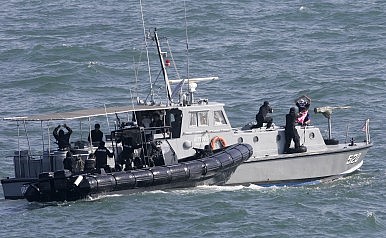
The US Navy’s Office of Naval Intelligence (ONI) has just released online its latest unclassified reports Piracy Analysis and Warning Weekly and World Wide Threat to Shipping.

Military Strategy Forum

CSIS hosts a series of senior military and civilian leaders from across the Department of Defense to present their unique insights and vision on the direction of U.S. national security and defense policy.

The Military Strategy Forum is an on-the-record, discussion series organized by CSIS and sponsored by Rolls-Royce North America. The Forum hosts senior Department of Defense and military service leaders who present their insights and vision on the direction of U.S. national security and defense policy. These events attract an audience of select Washington-area senior officials and officers, corporate executives, defense journalists, the media, and expert analysts.

Recordings of the past on the record Military Strategy Forums are available in the CSIS Military Strategy Forum collection iTunes U. Subscribe there to automatically download the lastest event.

MILITARY STRATEGY FORUMS


1/27/2015

12/5/2014

6/3/2014

Bottom Line Budget vs Commission

By Col. Mike Hayden, USAF (Ret)
February 12, 2015

In late January, after nearly two years of work, the Military Compensation and Retirement Modernization Commission (MCRMC) came out with its report on modernizing military pay and benefits.

Days later, the White House released its FY 2016 budget proposal that includes a different set of recommended changes to military pay and benefits.

The nearly simultaneous releases have caused some confusion throughout the uniformed services community, so let’s try to clear things up. What are the differences between these proposals?

The administration’s FY 2016 budget rehashes many proposals that don’t attempt to modernize or reform pay and benefits — they simply continue to erode them. Here’s a snapshot of the budget proposal: 

A third straight year of military pay caps. The president’s budget calls for a 1.3-percent raise, instead of the 2.3-percent raise mandated by law. The budget also includes a plan for four additional years of pay caps. That’s seven straight years of caps below private-sector growth. 
A 5-percent increase in out-of-pocket housing expenses. 

A continued erosion of the $1 billion commissary subsidy. The proposed cuts will lead to a 66-percent loss of purchasing power for the consumer. 

A consolidation of TRICARE's Prime, Standard, and Extra programs into one plan. Working-age retirees will pay for service in military treatment facilities, absorb the Prime enrollment fee, and pay standard copayments and deductibles. The proposal also adds a new, means-tested, TRICARE For Life enrollment fee. 

On the other hand, the MCRMC report contains 15 recommendations to totally overhaul pay and benefits. Some appear to be well thought out and have our support.

However, two recommendations in particular look very promising on the surface, but we believe they require serious analysis: 
Replacing the current 20-year cliff-vesting military retirement system with a blended defined benefit and 401(k)-style retirement package. The proposal would be optional for the current force and mandatory for new service entrants. Current retirees would be unaffected. 

Are Submarines About to Become Obsolete?

February 14, 2015 

America and others have "sunk" trillions of dollars into advanced submarines. They could simply become the next battleship.

What would happen if U.S. nuclear attack submarines—some of the most sophisticated and expensive American weapons of war—suddenly became obsolete? Imagine a scenario where these important systems became the hunted instead of the hunter, or just as technologically backward as the massive battleships of years past. Think that sounds completely insane? If advances in big data and new detection methods fuse with the anti-access/area denial (A2/AD) ambitions of nations like China and Russia, naval planners around the world might have to go back to the drawing board.

Submarines: The New Battleship?

The revelation is alluded to in a recent report by the Washington, D.C.–based Center for Strategic and Budgetary Assessments (CSBA) called “The Emerging Era in Undersea Warfare.”Smartly named by a certain TNI editoras the “think-tank’s think-tank,” CSBA has crafted in the last decade many of the most detailed and sophisticated reports regarding the most pressing national-security challenges around—sometimes years before anyone else. Ever heard of a little operational concept called AirSea Battle? They were at the forefront of it before it was in the news.

Continuing Doubts About the Combat Readiness of Iraqi Army

Kareem Fahim
February 14, 2015

Signs of a Push Against ISIS, Amid Doubts on Iraqi Troops 

BAGHDAD — Iraqi and American military officials have intensified talk in recent weeks of a major offensive against Islamic State militants, casting it as a quickly approaching operation that is likely to target the extremists’ stronghold in the northern city of Mosul.

But at the same time, Iraqi commanders, soldiers and police officers who could play a central role in any offensive are raising doubts about the readiness ofIraq’s ground forces. The army has struggled to recapture even smaller towns that pose less of a challenge than Mosul — Iraq’s second-largest city, which is still full of civilians and heavily defended by the militants, they say.

“Our assessment shows an offensive against Mosul is not imminent,” said Masrour Barzani, the head of the Kurdistan Region Security Council. He said it would take more time to train security forces, and a greater effort by Iraq’s central government was needed to win the support of local Sunni residents and tribes around Mosul.

The urgency about the offensive reflects intensifying pressures on the Iraqi government and American military planners to deliver a signal achievement more than eight months after the Islamic State stormed Mosul and other parts of western and northern Iraq.

For the government of Prime Minister Haider al-Abadi, the strains on the country become more unbearable by the week: Hundreds of thousands of people have been displaced from their homes, with some Iraqis, like those from Falluja, exiled for more than a year. Just as destabilizing are the daily reports of atrocities by the extremists, which circulate in the videos of mass shootings and beheadings from the occupied territories, the victims sometimes surfacing later in mass graves.

Sectarian and ethnic tensions have been increasing, as well. As Shiite and Kurdish militiamen have made gains against the Islamic State — in general, more so than Iraq’s security forces — some of the militia fighters have carried out retaliatory attacks on Sunni residents, accusing them of loyalty to the militants.

American officials say they are trying to balance the Iraqi government’s desire to move quickly toward Mosul against real concerns about repeating the mistakes that led to the collapse of the Iraqi military and the quick advance of the Islamic State, also known as ISIS or ISIL.

The Uncertain Transition from Stability to Peace

By Robert D. Lamb, Kathryn Mixon, and Sarah Minot 
FEB 13, 2015 

Most violent conflicts since the turn of this century were in countries that had experienced an earlier violent conflict. How can we tell when a country is likely to remain stuck in a cycle of violence? What factors suggest it might be “ripe” for stabilizing and peace building? The authors studied four cases in this report. Chad is stuck in a cycle of violence, while El Salvador, Laos, and Mozambique have had different results in their transitions from violence to stability to peace. Conflicts without internal cohesion of combatants or pressure from foreign patrons to stop fighting are probably not ripe for stabilizing. Where there are subnational or regional actors committed to violence, post-conflict peace building is not likely to succeed without enforcement capacity to contain violence or demonstrated commitments to increasing political inclusion and making material improvements in the lives of residents. 

Publisher CSIS/Rowman & Littlefield 

ISBN 978-1-4422-4055-1 (pb); 978-1-4422-4056-8 (eBook) 


16 February 2015

The scramble to bring internet to more Indians

SANJAY VIJAYAKUMARSRIRAM SRINIVASAN
February 15, 2015

Silicon Valley has many of the world’s most innovative and influential Internet companies. India has millions of people untouched by the Internet but nonetheless potentially accessible. Put the two together, and it is inevitable that Internet giants can’t help but think about India’s untapped population.

That’s precisely what was on show last week – Facebook launching its solution to spread Net access in the land of a billion-plus people and Google joining the race with an outline of its own plan.

The Mark Zuckerberg-led Facebook got together with Anil Ambani’s Reliance Communications to launch in India internet.org, a service that offers subscribers free access to a pre-selected bouquet of Websites. Google’s plan, as outlined during the Nasscom India Leadership Forum toward the fag end of the week, is to use helium balloons to connect people to the Net.

Last year, their rival Microsoft announced a ‘white spaces’ project — a plan to use unused TV spectrum to provide connectivity.

That’s quite a high-profile list of companies trying to get Indians connected to the Internet. And it should gladden those who bemoan India’s relatively poor Internet record. The country’s Internet penetration is less than 20 per cent, whereas the likes of China, Russia and Brazil have got close to half their populations connected to the Net. The comparative percentage for developed countries such as the US, the UK and Japan is over 80 per cent.Why India?

ISIS’s dark theatre

Praveen Swami
February 16, 2015 

First, masked men in combat fatigues use their knives to cut away their victim’s testicles, as he hangs by his feet from the ceiling. Then, one of the executioners peels the skin back from the man’s face and head. His head is sawn off, followed by each of his limbs. As the screams die out, pop music playing in the background breaks through. People stand around laughing as the slaughter proceeds, some taking photographs on their cellphone cameras. The seven-minute video unfolds with languid precision; its maker understood cinema verite.

The world has become familiar, these past three months, with this aesthetic, which has flowered in the Islamic State’s execution videos, culminating with the macabre immolation of the Jordanian pilot, Moaz al-Kasasbeh. But the slaughter recorded in the seven-minute video took place in Mexico, half a world away from the IS. It was just one of hundreds of narco-execution videos posted online since 2006 by Mexico’s rival drug cartels, who have plunged the country into a war that has claimed over 1,25,000 lives, and displaced over 2,50,000 people, emptying entire towns and cities.

Islam, imperialism or impenetrable tribal blood lusts: none of these causes explain the dark theatre of public torture, a spectacle that plays out in more conflicts across the world than we care to know, or perhaps even dare imagine. In war after war, pain has been much more than a torturer’s tool. It is, instead, the end in itself.

“I would’ve burnt him with my own hands,” a cheerful little child says in the IS’s documentary on the immolation of al-Kasasbeh, a murder which was played on large screens in the terror group’s de-facto capital, Raqqa. But in many parts of the word, al-Kasasbeh’s gruesome death would have been treated with the familiarity of the everyday. Necklacing — that is, execution carried out by setting alight a rubber tyre filled with petrol around a victim’s chest — was widely used by apartheid collaborators and opponents, often delivered as a sentence by popular courts. It has also been used by protestors and criminals alike in Brazil, Cote d’Ivoire and Haiti.