9 August 2015

Yazidi Child Soldiers Take Revenge on ISIS

A year ago, the U.S. went back to war in Iraq to defend the Yazidis. Now, coached by a Marxist terrorist organization, they’re training to defend themselves.

MOUNT SINJAR, Iraq — Singled out for genocide by the so-called Islamic Stateand abandoned by the Iraqi Kurds, young Yazidis on Mount Sinjar in Iraq are flocking to the militias and ideology of a quasi-Marxist group blacklisted as a terrorist organization in the West.
Formed into what they’re calling Sinjar Protection Units, or YBลž, the Yazidis—both male and female—have sworn to defend their homeland and to avenge ISIS’s campaign of rape, kidnapping and murder.

It’s been just a year now since the jihadists launched their assault on the Yazidis at the beginning of August 2014. ISIS had taken the second biggest city in Iraq, Mosul, weeks before. But Washington, slow to react, did not begin a bombing campaign to try to stop the group’s offensive until August 7 when President Barack Obama announced the United States would start a bombing campaign “to help save thousands of Iraqi civilians who are trapped on a mountain without food and water and facing almost certain death.”

So began America’s reentry into the complex and baffling war in Iraq and eventually Syria as well.

Why Iran Can't Get (And Doesn't Need) a Nuclear Bomb

August 7, 2015

If you were an Iranian official trying to make the case that Iran should go ahead and build a nuclear bomb, you would find that your job just got much, much harder. Far from paving a path to an Iranian bomb, as some critics argue, the Iran deal, if implemented, will greatly reduce the chance that ten to twenty years from now, the world will be facing an Iran with nuclear weapons.
Why? There are several reasons. First, the need to protect against foreign attack is always among the best arguments bomb advocates have. But having just signed a deal with the United States and all of the rest of the world’s largest military powers, Iran’s risk of suffering a major foreign attack just plunged to almost nothing. Even Israel could not realistically carry out a unilateral strike in the face of opposition from all of the world’s major powers. So Tehran’s bomb advocates have just had a key argument seriously undermined.

Second, the provisions of the agreement—cutting Iran’s enrichment capabilities, blocking its ability to produce plutonium, and opening the country to broader and more intrusive inspections—would make it much harder to convince the Supreme Leader that Iran could make the nuclear material needed for a bomb without being found out and stopped. (In Iran’s system, the Supreme Leader, Ayatollah Khamenei, would have the final say on whether to try to build a nuclear bomb.) A bomb program that is less likely to succeed is a bomb program that is less likely to be approved.

Iraq, Iran, and the President on Mindsets

August 5, 2015

President Obama's speech at American University was a thorough enough review of the issues that have come to surround the agreement to restrict Iran's nuclear program that any fair-minded listener who focuses on merits rather than politics would reach the conclusion, as Mr. Obama has, that completion of this agreement as being in U.S. interests was not a difficult decision or even close to being one. But although the president's main purpose in the speech was to review the reasons this is the case and to beat back ill-guided attempts to destroy the agreement in the U.S. Congress, he made some more general points about the attitudes and beliefs that underlie those attempts and also underlay the launching of a disastrous war in Iraq 12 years ago. Here is how the president put it:

“When I ran for President eight years ago as a candidate who had opposed the decision to go to war in Iraq, I said that America didn’t just have to end that war -- we had to end the mindset that got us there in the first place. It was a mindset characterized by a preference for military action over diplomacy; a mindset that put a premium on unilateral U.S. action over the painstaking work of building international consensus; a mindset that exaggerated threats beyond what the intelligence supported. Leaders did not level with the American people about the costs of war, insisting that we could easily impose our will on a part of the world with a profoundly different culture and history. And, of course, those calling for war labeled themselves strong and decisive, while dismissing those who disagreed as weak -- even appeasers of a malevolent adversary.”

Understanding Economic Change in North Korea


In 2009, the North Korean government implemented an ill-conceived currency reform in an attempt to wrestle back control of a burgeoning “free” market and, perhaps, to reign in price inflation. While it may have temporarily stamped out the economic power of small, black market traders, in the long run it may have only succeeded in tarnishing the government’s already questionable reputation.

Here we are some six years later. Whether trust in the government has continued to plummet is hard to gauge, but one thing seems certain: (black)market activities are proliferating – in everything form transportation to financing. A recent article at The Wall Street Journal states, “The semimarket economy that emerged [following the breakdown in the public distribution service] has expanded rapidly in recent years, providing a living for up to three-fourths of the country, according to observers, defectors and those with contacts.”

The expected consequence of marketization in North Korea, even if not explicitly stated, is usually clear: the rapid bottom-up economic changes taking place in North Korea will precipitate significant, if not revolutionary, political change. As high-profile defector Jang Jin-sung wrote for the New York Times in 2013, “The Market Shall Set North Korea Free.”

Trans-Pacific Partnership: Mexico's Last Chance?

August 7, 2015

The global economy is struggling to find growth stories. China is slowing, Europe rebounds in fits and starts, and commodity-exporting economies are increasingly feeling the pressure as prices relentlessly fall. However, after a decade or more of being stuck in the middle-income trap, Mexico is poised to break out—and the Trans-Pacific Partnership could be its long-sought-after catalyst.
Mexico reached “middle-income” status long ago, and GDP per capita growth proceeded to stall out. Mexico is the poster child for this concept of fast, above-average growth followed by stagnation. As Pritchett and Summers point out, a common misconception of the middle-income trap is that somehow, at a magic level of development, growth becomes harder to find. Instead, the slowing of growth is a regression to the mean—fast growth portends future slow growth.

Mexico is in need of a catalyst, and not only does the TPP open new markets for Mexican exports, but it potentially provides the administration of Peรฑa Nieto with the necessary cover to enact politically difficult changes to labor markets and state-owned enterprises.

Russia’s Foreign Minister Slams US Over Military Buildup in Asia

August 06, 2015

In an interview with Channel News Asia television, Russian Foreign Minister Sergey Lavrov attacked the U.S. military rebalance to Asia, including the increased deployment of U.S. naval and ground forces to the Pacific theater of operations, and additionally accused Washington of exaggerating the array of threats in the region, according to TASS.

“The United States is engaged in a very huge military buildup in Asia, including under the pretext of countering the North Korean threat but the scale of the buildup is way beyond the need and disproportionally (sic) huge,” Lavrov said.

The Russian foreign minister also pointed out that the United States is “building missile defense in cooperation with Japan and South Korea, which is not helpful at all.”

He also attacked Washington’s withdrawal from the Anti-Ballistic Missile (ABM) Treaty that limited the number of anti-ballistic missile defense systems against nuclear-armed ballistic missiles:

And the fact that the United States dropped from the ABM Treaty some time ago was a destabilizing factor of global importance. It triggers buildup and brings us back to the mutually assured destruction logic as it relates to the strategic stability.

US, Indonesia Kick Off Naval Exercise to Boost Maritime Cooperation

August 06, 2015

On August 3, the United States and Indonesia kicked off a series of bilateral naval exercises to boost their maritime partnership.

The 21st annual Cooperation Afloat Readiness and Training (CARAT) Indonesia will go on for a week on the ground in Surabaya and in the waters and airspace of the Java and Bali Seas. More than 1,000 U.S. military members will participate in CARAT Indonesia 2015, along with counterparts from the Indonesian Navy and Marines – known as Tentera Nasional Indonesia – Angkatan Laut (TNI-AL).

According to a U.S. Navy statement seen by The Diplomat, CARAT Indonesia 2015 will feature simultaneous amphibious landings, surface and anti-submarine warfare, visit, board, search and seizure demonstrations, mobile dive and salvage training, coastal riverine operations, maritime patrol and reconnaissance operations, a gunnery exercise, and an anti-air warfare missile live fire training exercise. Numerous civil action projects, aviation maintenance, sports exchanges, military law, and submarine warfare symposia will take place during the shore phase of the exercise.

Hiroshima, 70 Years Later: Did Truman Make the Right Call?

August 6, 2015

Retrospectives on the atomic bombings of Hiroshima and Nagasaki conjure upTheodore Roosevelt for me. That goes double when the anniversary is a multiple of ten—as it is today, the seventieth anniversary of Enola Gay’s strike on Hiroshima. Commentators work themselves into high moral dudgeon when that terminal zero recurs. But preening constitutes a poor substitute for dispassionate learning from contemporary or past decisionmakers. In 1910 former president Roosevelt told an audience at the Sorbonne:

“It is not the critic who counts; not the man who points out how the strong man stumbles, or where the doer of deeds could have done them better. The credit belongs to the man who is actually in the arena, whose face is marred by dust and sweat and blood....”

One imagines TR would have even tarter words for critics writing decades after the fact. It’s easy to pass judgment with the advantage of hindsight. Think about it. Scholars typically know far more about what was happening than did historical figures making the decisions. The fog of war has cleared. Passions have evanesced. Archives have been compiled, organized, and opened for leisurely research. And scholars know what took place afterward. They can trace cause-and-effect, using data not available to the protagonists to evaluate the results of their decisions.

No Other Choice: Why Truman Dropped the Atomic Bomb on Japan

August 6, 2015

Every summer, as the anniversaries of the U.S. nuclear strikes on Hiroshima and Nagasaki approach, Americans engage in the painful moral exercise of wondering whether President Harry Truman should have ordered the use of nuclear weapons (or as they were called at the time, the “special bombs”) against Japan in August 1945. And every year, as we get farther away in time from those horrible events, we wonder if we were wrong.

In 1945, Americans overwhelmingly supported the use of the bomb; seventy years later, that number is now a bare majority (some polls suggest less), with support for Truman’s decision concentrated among older people.

Truman, for his part, thought he was bringing the war to a swift close. Taken in its time, the decision was the right one. As historian David McCullough has been known to say, “people living ‘back then’ didn’t know they were living ‘back then’,” and to judge the decisions of people in 1945 by the standards of 2015 is not only ahistorical, it is pointless. Truman and his advisers made the only decision they could have made; indeed, considered in the context of World War II, it wasn’t really much of a decision at all.

Why President Obama Should Go to Hiroshima

August 6, 2015

The ghosts of World War II are persistent things; they linger even between the closest of friends. In April, a Pew Research poll found that almost 80 percent of Japanese believe the atomic bombs dropped on Hiroshima and Nagasaki were not justified. More surprising, 44 percent of Americans agreed or said they were not sure. As the 70th anniversary of the end of World War II approaches, and with a new bilateral security agreement in tow, it is time for America and Japan to move decisively past the darkest era of their relationship.

President Obama can play the lead role. Next August, he should become the first sitting U.S. president to attend Hiroshima’s Peace Memorial Ceremony, which commemorates the victims of the world’s first atomic bomb. By doing so would emotionally reinforce the U.S.-Japan alliance and, more importantly, remind the world why it must not stumble down the nuclear path again. Coupled with an effective Iran deal, that would be a fitting curtain call for a president who has staked his foreign policy legacy on bolstering the nuclear nonproliferation regime and rebalancing to Asia.

Israel's Internal Demographics Disaster

“Ten years go by in the blink of an eye,” said Israeli prime minister Benjamin Netanyahu recently, in his sustained offensive against the Iranian nuclear deal. The implication of the statement is that the agreement reached in Vienna allows Iran two options in its pursuit of a nuclear weapon: either cheating during the lifetime of the agreement, or, conversely, keeping the deal for the duration—a decade, perhaps more or less, depending on one’s interpretation—and only then breaking out to a weapons capability. The agreement doesn’t go far enough, Netanyahu wants the world to know, both in its constraints and length. As Netanyahu stated initially in his address to Congress last March, “a decade may seem like a long time in political life, but it's the blink of an eye in the life of a nation. It's a blink of an eye in the life of our children.” Without wading into the merits of the Iran nuclear deal itself, it is worth asking what kind of place Israel will be in ten to fifteen years, when the proverbial sun begins to set on the Iran nuclear agreement (a query given added immediacy after the deadly attacks late last week at a gay pride parade in Jerusalem and a Palestinian village in the West Bank).

Iran's 5 Most Lethal Weapons of Influence

August 6, 2015
http://nationalinterest.org/feature/irans-5-most-lethal-weapons-influence-13500?page=show

The recent agreement between Iran and the P5+1 has, presumably, tabled the question of Iranian nuclear weapons for the next ten years, and perhaps longer. 

However, Iran retains a set of lethal tools for pursuing its interests in the Middle East. Iran’s regional presence has always amounted to more than the nuclear weapon threat; before the Revolution, Iran played a central role in the politics of the region. After the Revolution it continued to play this role, only in far more disruptive fashion. 


Here are five lethal “tools,” arrayed across the spectrum of strategic violence and influence, that Tehran can use to protect its position and further its ends:

Irregular Warfare

The Age of Stealth: Nuclear Bombers 70 Years after Hiroshima

August 6, 2015

Seventy years ago today, Col. Paul Tibbets flew the Enola Gay on a mission that would change the course of world history and set the stage for the development of nuclear deterrence. The mission itself was straightforward, but the enormous scientific and industrial activity leading up to it was not. The atomic weapon, "Little Boy,” involved a massive industrial effort that is only slightly less difficult today. The development of the B-29 bomber that delivered the bomb was no simple matter either. It required an aircraft that flew higher and faster than any other aircraft could at the time.

The B-29 significantly outmatched opponents, and Japanese Zeros could only bore holes in the sky at a lower altitude as they watched American airpower pass overhead. Even high performance follow-on aircraft to the Zero had difficulty intercepting the capable B-29. The key to the B-29’s success was in understanding the enemy’s capabilities and crafting an aircraft capable of reducing or eliminating the Japanese ability to counter it. This understanding of an enemy’s capabilities and exploiting technology gaps continues over 70 years later with introduction of the next evolution of bomber stealth capability in the Long Range Strike Bomber, or LRS-B.

IF THE YUAN COMPETES WITH THE DOLLAR


The yuan’s rise will challenge America, but not before China changes

WHEN will the yuan rival the dollar? Many in China think it only a matter of time. Chen Yulu, a leading economist, says it will take 15 years. Wei Jianguo, deputy head of a major think-tank, puts it at 20. Officials are more circumspect: currency internationalisation will be a long process, its pace determined by the market, says Zhou Xiaochuan, the central-bank governor. Outside China, opinions are more divided. Some think the yuan is already on the verge of displacing the dollar in Asia; others predict it will never get there.

What difference would it make if China’s currency did vie with the dollar for global pre-eminence? Scholars have looked for clues in the transition from the pound to the dollar, but that took place around the middle of last century in a very different context. The dollar and the pound were both convertible into gold at fixed rates, making the leap of faith for those switching from one to the other much less of a risk. Today, reserve currencies are not backed by gold. Their value is more slippery—a function of supply and demand.

In civil space cooperation, some realists finally emerge.

By Joan Johnson-Freese
August 07, 2015

Included on the long list of “outcomes” at the conclusion of the seventh round of U.S.-China Strategic and Economic Dialogue meetings in June 2015 was a section on Science, Technology & Agriculture. Included in that section was a short paragraph on … space.

“101. Space: The United States and China decided to establish regular bilateral government-to-government consultations on civil space cooperation. The first U.S.-China Civil Space Cooperation Dialogue is to take place in China before the end of October Separate from the Civil Space Cooperation Dialogue, the two sides also decided to have exchanges on space security matters under the framework of the U.S.-China Security Dialogue before the next meeting of the Security Dialogue.”

North Korea's Leader Wins Indonesian Peace Award


Judged on performance, North Korean leader Kim Jong-un has probably lived up to expectations handed down by his father and his father’s father.

He has dealt with his dislikes with a ruthless abandonment. That included the execution of Uncle Jang Song Thaek, who he reportedly once liked and then went on to describe as “despicable human scum.”*

Then he ordered the execution by anti-aircraft fire of his defense minister Hyon Yong-chol, caught dozing-off during a rally. That also won many a international headline for Kim, whose loathing of the West seems at odds with his penchant for Disneyland and boxer Mike Tyson.

Nevertheless, prominent Indonesians have ranked the North Korean leader alongside Myanmar’s pro-democracy advocate Aung San Suu Kyi and India’s pro-independence leader Mahatma Gandhi by honoring him with an award for his statesmanship.

Kim’s grandfather Kim Il-sung also won the award posthumously, issued by the the Bali-based Sukarno Education Foundation for “peace, justice and humanity”.

Cyber Attacks: Why Retaliating Against China Is the Wrong Reaction

By Jeffrey Carr
August 06, 2015

The Office of Personnel Management breach – the worst in U.S. history – is a graphic testament to the White House’s ongoing inability to identify and secure its most critical data.

In this case, it lost control of incredibly sensitive and detailed information on federal employees in a breach for which China is the “leading suspect,” according to CIA chief James Clapper. That’s a bounty worth many millions of dollars to foreign intelligence services. But even if Beijing is to blame, the way to fix the administration’s cybersecurity problem – and to prevent future data heists that rival the OPM breach – isn’t to retaliate against a foreign government.

After all, we are living in a world in which this kind of digital espionage is the new normal. It’s the kind of thing that the National Security Agency wishes it could do against China. That is, if the spy agency isn’t already doing it.

Philippines Must Protect Internally Displaced Persons, Warns UN Expert

August 06, 2015

A few days after Philippine President Benigno Aquino III enumerated the achievements of his government during his final state of the nation address, a UN expert issued a report which highlighted the deplorable conditions of Internally Displaced Persons (IDPs) in various parts of the country.

United Nations Special Rapporteur on the human rights of internally displaced persons Chaloka Beyani was in the Philippines for 10 days last month to review the situation of IDPs in Tacloban, Zamboanga, Cotabato, Maguindanao, South Cotabato, and Davao.

Tacloban was the ‘ground zero’ of typhoon Haiyan which battered the central part of the Philippines in 2013. Haiyan killed more than 6,000 people and it was the strongest typhoon in recorded history.

Zamboanga, located in the southern part of the country, was attacked by armed separatist groups in 2013 which displaced about 120,000 people.

Hiroshima and Nagasaki: Remembering the Power of Peace

By Kumi Naidoo
August 06, 2015

More than most, Japan is a nation whose modern history is tragically linked to the quest to use and tame nuclear power. This nuclear history is not noteworthy for its successes, but for how it reflects humanity’s capacity for destruction – and peace.

It has been 70 years since the United States atomic bombings of the Japanese cities of Hiroshima and Nagasaki, killing more than 400,000 people, and affecting generations more through nuclear radiation. The horror of these bombings has been imprinted on our consciousness, holding at bay the further use of nuclear weapons in warfare.

These humanitarian catastrophes sparked a powerful peace movement in Japan that has been influential worldwide. It also gave rise to the country’s unique 1947 “Peace Constitution,” which renounces war and armed forces to resolve conflicts, except in self-defense. This legacy of peace has served Japan well, but it is now under threat. Prime Minister Shinzo Abe is pushing for deeply unpopular legislation to allow Japan to fight in foreign conflicts, effectively rewriting a part of the constitution that has become ingrained in the nation’s psyche.

After Hawaii, What Issues Remain for the Trans-Pacific Partnership Talks?

By Shom Sen
August 06, 2015

Expectations were high as trade ministers gathered in Hawaii at the end of July to hammer out final details for the Trans-Pacific Partnership (TPP). The toughest challenges in a negotiation usually arise at the very end, and this round of talks was no exception. As Japanese Prime Minister Shinzo Abe said earlier in July, “It is the last one inch that is the most challenging, of which I am fully aware.” Negotiators tried to walk a fine line between making the difficult concessions necessary to secure an overall pact, while outlining key walk-away positions in order to secure domestic support.

Australian Trade Minister Andrew Robb highlighted food (particularly items such as sugar and dairy), investor state dispute settlement (ISDS), and intellectual property (IP) as key issues for the country. Australia has been fighting for some time to get greater access to the U.S. sugar market. In its bilateral 2005 FTA with Australia, the U.S. maintained its existing restrictions on Australian sugar and has been pushing back on reopening these discussions. At the latest TPP talks in Hawaii, Robb said, “Well I’m not going to sign it without something for the sugar industry.”

The Rush to Nuke Hiroshima and Nagasaki


It took less than 90 days for the U.S. to turn a theoretical weapon into fearsome reality. President Truman was eager to end World War II and stop Stalin in his tracks.

Every nuclear arms negotiation is about a weapon that nobody in their right mind would ever use. So negotiations like those with Iran come with a Kafkaesque twist: The most forceful moral authority for stopping the creation of another nuclear power is vested in the only nation actually to have used nuclear weapons, the United States. To be sure, the U.S. was not the only party to the talks with Iran, but it was the primary power. Poignantly, the Iran deal was made during the run-up to the 70th anniversary of the bombing of Hiroshima, on August 6, 1945.

Seventy years is a long time for the policy that became known as nuclear non-proliferation to have remained effective, but it has. Surely, there have been scary moments, but the bomb has proved against all odds to be a durable deterrent—contemplation of its effects is enough to prevent its further use, something unique in the history of warfare.

But this was not foreseen by the people who chose to drop two bombs on Japan in 1945. The military and political leaders involved spent no time considering the moral implications. To them it was simply a matter of expediency, the chance to gain a decisive military advantage.

(W)ARCHIVES: URBAN WARFARE, BACK IN THE DAY

August 7, 2015 

Current headlines are replete with stories of urban warfare. Be it Aleppo, Ramadi, Tripoli or some Ukrainian city you only learned of last year, there appears to be no shortage of combatants that want to fight in/over/for some piece of urban terrain. Perhaps a brief step back in to the history of urban warfare will generate some useful perspective.

On the Western Front in 1944, the August Allied sprint across France had quickly slowed to a methodical advance in September, in part because the Allied logistical system could not keep up. Part of that advance included the assault on Aachen, just across the German border and the first German city to fall on either the Eastern or Western Fronts.

HOT TAKE ON THE GOP DEBATE: NATIONAL SECURITY

August 7, 2015 

Yes, I did watch the Republican debates so that you serious-minded defense types at War on the Rocks didn’t have slog through the two hours to know how the national security parts went. I admit there were moments when I had that 1950s horror movie reaction — as when Donald Trump doubled down on his shameful allegations of “evidence” those evil geniuses in the Mexican government were outsmarting us stupid Americans and sending criminals and rapists over the border. Or when not one but two Republican candidates for President seemed to believe Iran was supporting Islamic State. Or when two Republican candidates praised President Sisi of Egypt as the kind of ruler the middle east needs. 

And there was no shortage of candidates giving set piece speeches instead of answering questions, as one would expect of politicians. But mostly the questioning was tough, with moderators several times demanding evidence for claims made by candidates. It was also pointed: Walker pressed on social conservatism, Trump confronted with derogatory comments about women, Carson asked why his lack of knowledge shouldn’t disqualify him, Bush asked to answer on dynastic politics.

WEEKEND READING: AUGUST RECESS EDITION

August 7, 2015 

Happy weekend everybody! And happy recess to those of our readers who labor on Capitol Hill. August may not be the hottest month of the year in Washington, but it certainly is the quietest (which is a good thing, because we are gearing up for a nasty September). Here is what you should be reading this weekend:

I can’t tell that we are gonna be friends. All that talk about Russia and China becoming best buddies over their shared rivalry with the United States is just a bit too rosy according to AEI’s Michael Auslin, writing forThe Commentator. In both Siberia and the Pacific, Russia has reason to be worried about China’s ambitions. Not too bad for us, right? Well, no. Not according to Auslin: “It is hard to see how other nations in Asia can reap any advantage from these long-standing Sino–Russian tensions. Certainly, neither Tokyo nor Washington should seek to worsen ties between Russia and China.”

For Much of Asia, World War 2 Ended After August 1945

The American contribution notwithstanding, the War in the Pacific didn’t begin on December 7, 1941, and didn’t end in August 1945. Much as with Europe, the fighting continued across the expanse of the continent, and deep into the Pacific, for years after the formal Japanese surrender. The end of hostilities between Japan and the United States represents one of the most important milestone in the larger, lengthier struggle over the decolonization of East Asia, but only one. The wars-of-continuation would decide the fates of Vietnam, China, Korea, Indonesia, and much of the rest of the Asia-Pacific.

In Korea, Soviet forces advanced into the northern part of the peninsula in the autumn of 1945, allowing Kim Il-sung to take power in Pyongyang. In the south, American client Syngman Rhee succeeded the Japanese occupation authority. Fighting ensued almost immediately, and continued at varying levels of escalation until the North Korean invasion of June 1950. That invasion, triggering U.S. and eventually Chinese intervention, would lead to a formal status quo which left two sovereign states in control of the peninsula.

The Practicalities of US Military Sales to Vietnam

By Eric Tegler
August 05, 2015

During his early July visit to Washington DC, Nguyen Phu Trong, general secretary of Vietnam’s Communist Party, did at least two highly symbolic things.

He spent over an hour – more time than scheduled – meeting with President Barack Obama at the White House. The following day, in a speech he gave at the Center for Strategic and International Studies he said, “A fast changing world requires ourselves (sic) to be exposed to new ways of thinking and new ways of action.”

A few extra minutes with the president and musing about change might not seem like much when set against the shear novelty of the Vietnamese Communist Party secretary general actually visiting D.C., but these examples speak to the pragmatism which will make the once unthinkable sale of American weapons systems to Vietnam a reality. What’s driving it?

Get Ready, Israel: China to Sell Iran Advanced Fighter Jets?

August 5, 2015
http://nationalinterest.org/blog/the-buzz/get-ready-israel-china-sell-iran-advanced-fighter-jets-13498

China is reportedly prepared to sell Iran some of its J-10 multi-role fighter jets.
Over the last week, a number of sources have reported that China and Iran are finalizing an agreement for Beijing to sell Tehran the Chengdu J-10, which China exports under the name the F-10. The aircraft is called the Vigorous Dragon in the West.


Many of the reports trace back to DebkaFile, an Israeli military and intelligence site with questionable credibility. Last week, DebkaFile reported that China intends to sell Iran 150 J-10s. The story cited unnamed military and intelligence sources.

Fiery Cross Reef: Why China's New South China Sea Airstrip Matters

August 5, 2015

Although China is not the first state to build an airstrip in the South China Sea, it is the first state to employ island-building technologies to transform a contested maritime feature into a military base that extends the reach of offensive military capabilities. Other countries have worked to project power to contested South China Sea features; with the airstrip on Fiery Cross Reef, China has worked to project power from them.

For context, Beijing’s efforts to militarize Fiery Cross Reef are only a small part of China’s massive and controversial program to create a “Great Wall of Sand” across the South China Sea – in the words of the previous Commander of Pacific Fleet. Beijing has gone far beyond traditional land development: it has dredged and dumped enough sand in the South China Sea to create approximately 2,000 acres of artificial islands. While China claims that its island-building program is “beneficial to the whole of international society” because it will enable Beijing to project power across the South China Sea for search and rescue efforts, the Association of Southeast Asian Nations (ASEAN) disagrees. In a statement released in April, ASEAN leadership found that China’s island-creation program had “eroded trust and confidence and may undermine peace, security and stability.”

8 August 2015

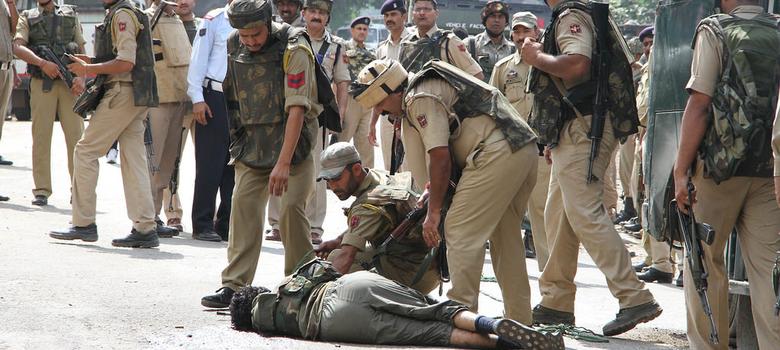
Udhampur attackers were backed by Pakistan, officials say


Preliminary report made to magistrate
The militants involved in Wednesday's attack on a Border Security Force convoy in Udhampur district were backed by Pakistani intelligence agency, the Inter-Services Intelligence, police officials from Jammu and Kashmir claimed on Thursday. The officials said that they had written about the possible role of the ISI in a preliminary report submitted to Udhampur district magistrate Shahid Iqbal Choudhary. One Pakistani militant, Mohammed Naved, was captured on Wednesday shortly after he and an accomplice killed two BSF personnel and wounded nearly a dozen others in an ambush.

India hires foreign lawyers for Italian Marines case

India has hired two foreign lawyers to prevent Italy from allowing the case involving two of its marines accused of killing two Indian fishermen to be heard in an international tribunal. Known for their expertise in international arbitration, Alain Pellet and R Bundy will represent India at the International Tribunal on Law of the Sea, which will hear the case on August 10 and 11 in Hamburg. They will be accompanied by Additional Solicitor General PL Narasimha and officials from the Union External Affairs and Home Ministries. India is challenging Italy's move to take the case to the international tribunal as the marines had killed the two fishermen in Indian waters, a senior Home Ministry official said.

The Daily Fix: Is it a coincidence that Udhampur followed Ufa?


Above the fold: Top stories of the day

1. There will be no early adjournment of the monsoon session of Parliament, the government has confirmed, even if Opposition parties continue to boycott the House. 
2. Meanwhile, in the Lok Sabha, External Affairs Minister Sushma Swaraj defended her decision to help former IPL chief Lalit Modi's wife, who was suffering from cancer. "What would Sonia have done?" she asked the House.
3. Assam, Manipur and Arunachal Pradesh chief ministers still claim to be in the dark about the Naga peace accord, which will presumably affect their states.

The Big Story: The old terror script

As the gunfire in Udhampur dies down, a familiar pattern emerges. Mohammad Naved, the terrorist caught after the attack, is from Faisalabad in Pakistan. He is believed to have been trained in the same Lashkar-e-Toiba camp that produced Ajmal Kasab, the face of the 26/11 Mumbai attacks. The Jammu and Kashmir police have said preliminary investigations reveal that Pakistan's Inter-Services Intelligence backed the attack. As with Mumbai 26/11, Pakistan's fingerprints seem to be all over the recent spate of terror.