13 September 2015

ISIL haunts 9/11 anniversary: Our view

September 10, 2015

14 years ago, Americans learned they can't ignore the terror of extremists.
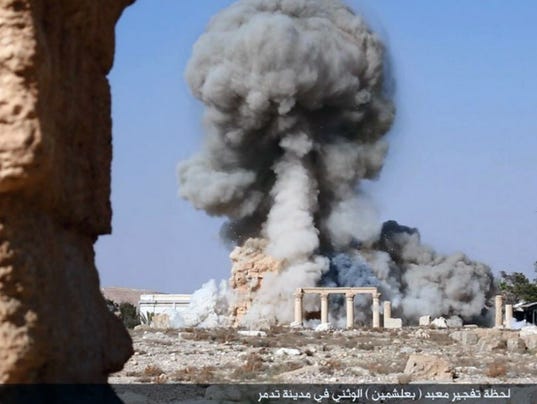
Fourteen years ago, the United States suffered a shockingly successful surprise attack by a little known Islamic extremist group based 7,000 miles away in Taliban-controlled Afghanistan. Since then, a U.S. invasion chased al-Qaeda out of its haven, and targeted strikes eventually eliminated most of its senior leaders, including Osama bin Laden in 2011. The danger from the group that killed nearly 3,000 Americans on Sept. 11, 2001, has waned.

Its influence lives on, however, through offshoot extremist groups that have eclipsed al-Qaeda — none more so than the Islamic State, the lightning spread of which through Syria and Iraq has been marked by medieval barbarity, adapted to the Internet age.

The group, also known as ISIL or ISIS, announced itself with carefully publicized video beheadings of captive Westerners and the burning alive of a Jordanian pilot inside a cage. Less visible in the West, but easy to find online, are gruesome videos of the slaughter of the group’s enemies.

Did the Supreme Leader Cut Rouhani Down to Size?

September 10, 2015

Coming off the success of the nuclear deal, Iranian President Hassan Rouhani has been flexing his political muscles in Tehran. Rouhani’s reform agenda aims to ‘fix’ deficiencies in the Islamic Republic’s political and economic system, and many hoped success in the nuclear negotiations would fuel his broader political agenda. Supreme Leader Ayatollah Khamenei, however, wants to ensure this reform program –and Rouhani’s political influence – do not get out of hand.

The President has decided to pick a fight on two issues: how the regime will approve the Joint Comprehensive Plan of Action (JCPOA) and how open upcoming elections for Parliament and the Assembly of Experts (the body who will choose the next supreme leader) will be handled. Neither contest is going well for him so far.

Israeli Defense Chief Says Russian Combat Troops Already in Syria

September 10, 2015

Russian Troops Already in Syria, Israel Says

Russia has been sending military forces into Syria in recent days, Israel’s defense chief announced Thursday, as Moscow hinted at broader action to bolster President Bashar Assad’s embattled army following a string of battlefield losses.

The increased Russian activity in Syria reflects Moscow’s deep concerns that its longtime ally is on the brink of collapse, as well as hopes by President Vladimir Putin that a common battle against Islamic State extremists can improve Russia’s ties with the West, strained over Ukraine.

But the strategy could be risky — and unless Russia sends large numbers of troops, halting the territorial gains made by Islamic militants could prove tough.

Israeli Defense Minister Moshe Yaalon told reporters Thursday that the Russian buildup appears to be limited for the time being. He said military advisers, technicians and security guards have arrived in recent days, with the main goal of setting up an air base near the coastal town of Latakia that could be used to stage strikes on Islamic State fighters.

Islamic State Threatens Chinese Hostage

September 11, 2015

The Islamic State, or IS, published pictures of two hostages on Wednesday, labeling them as “for sale.” According to Islamic State’s online magazine, Dabiq,one of the men is a 50-year-old Chinese man, identified as Fan Jinghui. The other man was identified as a Norwegian, Ole Johan Grimsgaard-Ofstad.

The pictures were accompanied by a telegram number for use by “whoever would like to pay the ransom for [the men’s] release and transfer.” The magazine warned that “this is a limited time offer,” implying that the men may be threatened with violence.

Earlier this year, two Japanese hostages were beheaded on camera after the Japanese government declined to pay a requested ransom within IS’ deadline. IS has also executed citizens from Australia, France, the United Kingdom, and the United States.

In a video showing one of the executions, IS blamed Japan’s government for the hostage’s death. Likewise,Dabiq magazine accused the Norwegian and Chinese governments of abandoning their citizens by not doing the “utmost to purchase [their] freedom.”

Putin Sends His Dirty War Forces to Syria

09.10.15

The Kremlin isn’t sending just any troops to prop up the Assad regime. It’s dispatching units that spearheaded Russia’s slow-rolling invasion of Ukraine.

Reuters confirmed Wednesday what The Daily Beast first reported last week—not only have Russian troops been deployed to Syria but they are indeed taking part in active combat operations, although against which of the manifold enemies of the Assad regime remains unclear.

U.S. government sources told the news agency that two tank-landing ships, aircraft, and naval infantry forces have arrived in Syria in the past 24 hours, with the largest buildup occurring in Latakia, the northwest coastal province—ancestral home of the Assad family—which Islamist rebels have been fiercely contesting of late. Russia, Reuters confirmed, is constructing a new airfield in Latakia, which would represent its second military installation in Syria after its decades-old naval supply base in Tartus, also its only warm-water port since the end of the Soviet Union.

Russia's Financial System: How Vulnerable?

September 10, 2015

Is the Russian economy going to collapse? Do sanctions matter? These are the two questions most often asked today about the Russian economy said Sergey Aleksashenko, the former first deputy chairman of Russia's Central Bank and a former deputy finance minister. At the Center for the National Interest on Thursday, Aleksashenko explained what the fall in oil prices, the decline of the ruble, the rise in inflation and the impact of U.S. and Western sanctions have wrought in Russia.

A year ago, oil was trading at near $100 a barrel; today it is less than half that. The IMF’s most recent data project the Russian economy will contract by 3.4 percent this year (it was growing by the same amount as recently as 2012). Russia is in recession, its longest since 1997. But collapse is not in the cards, said Aleksashenko, who has also served as the chairman and CEO of Merrill Lynch Russia. His lapidary verdict: the Russian economy is “more stable than many believe.”

America's F-15 Eagle vs. Russia's Su-35 Fighter: Who Wins?

September 10, 2015

The Boeing F-15C Eagle has been in service with the U.S. Air Force for nearly 40 years and will likely serve for decades to come. Over the years, the mighty F-15 has been upgraded to keep pace with evolving threats, but does the venerable Eagle still have what it takes to dominate the skies?

The answer is yes—absolutely. The Eagle may be old, but it’s still one of the best air superiority fighters flying. The only operational aircraft that is definitively superior to the F-15 in most respects is the Lockheed Martin F-22 Raptor—other machines have the edge in certain aspects, but the F-15C is still competitive overall despite what the business development departments at various rival contractors might say.

Perhaps the most advanced threat the F-15 is likely to encounter is the Russian-built Sukhoi Su-35 Flanker-E. While there are more advanced threats in development, those aircraft are likely to be too expensive to ever become commonplace. The Su-35 isn’t the most common potential threat out there, but there is a good chance it will proliferate.Indonesia has reportedly decided to purchase the Su-35, and we know that the Chinese have had discussions about a potential purchase.

America's LRS-B Stealth Bomber: Headed for a 'Crash Landing'?

September 11, 2015

The earliest discussion of the U.S. Air Force’s Long Range Strike Bomber, or LRS-B, revolved around one talking point: Price. By relying on existing, proven technologies, with incremental, architectural innovation (the assembly of existing technologies in new ways), the U.S. defense industry could supply the Air Force with a next generation long-range bomber aircraft. And the price seemed, if not modest, certainly not extravagant. The LRS-B program promised eighty to 100 bombers at $550 million per plane, more expensive than the F-22 or F-35, but on the lower side of what you might expect for a replacement strategic bomber.

A focus on affordability seems odd for the premier weapon system of one of the four military services of the world’s most powerful country. But the focus is not misplaced. The Pentagon as a whole has struggled with cost overruns on its major projects, and the Air Force has suffered the most. Its last three major combat aircraft projects (the B-2, F-22, and F-35) have all suffered drastic cost overruns. The predecessor to the LRS-B, the B-2 Spirit stealth bomber, went into a classic “death spiral” with only 21 aircraft eventually entering service. The expected number of F-22s dropped from 750 to 187. And while the problems with the F-35 cannot be entirely laid at the feet of the Air Force, overruns still threaten to reduce the total buy of F-35As. Cost and technology problems also extend to the KC-46, the Air Force’s replacement aerial refueling tanker.

Why the United States and Vietnam Urgently Need to Deepen Ties

September 11, 2015

U.S.-Vietnamese relations have strengthened in the past few years, in large part due to common concern over China’s increased aggression in the South China Sea. But some parts of the relationship have progressed slowly—confirming China’s belief that it can continue bullying Vietnam as part of its push for regional control without sparking serious backlash. Indeed, China recently parked another oil drilling rig in Vietnamese waters, and just last week, it extended the rig’s operations for several months. But this latest provocation, together with China’s announcement last week that it will shift more resources towards its naval and aerial capabilities, may motivate the United States and Vietnam to develop several key elements of their burgeoning partnership.

Background

U.S. Cyber Command’s Mission Force Is Halfway There


Steven Aftergood
September 10, 2015

Pentagon’s Cyber Mission Force Takes Shape

The Department of Defense plans to complete the establishment of a new Cyber Mission Force made up of 133 teams of more than 6000 “cyber operators” by 2018, and it’s already nearly halfway there.

From FY2014-2018, DoD intends to spend $1.878 billion dollars to pay for the Cyber Missions Force consisting of approximately 6100 individuals in the four military services, DoD said in response to a question for the record that waspublished in a congressional hearing volume last month.

“This effort began in October 2013 and today we have 3100 personnel assigned to 58 of the 133 teams,” or nearly 50% of the intended capacity, DoD wrote in response to a question from Rep. Rick Larsen (D-WA) of the House Armed Services Committee. The response was included in the published record of a February 26, 2015 Committee hearing (page 67).

The DoD Cyber Mission Force was described in an April 2015 DoD Cyber Strategyand in April 2015 testimony by Assistant Secretary of Defense Eric Rosenbach:

Satellite Imagery Confirms Russian Military Presence in Syria

September 10, 2015

The projection of Russian forces into Syria could be an attempt to bolster the government of President Bashar al Assad or a means to exert pressure during a time of sensitive negotiations. Either way, it will be increasingly difficult for the Russians to avoid mission creep as they magnify support for their favored faction in the Syrian conflict.

Analysis

Satellite imagery of the Bassel al Assad International Airport in Latakia, Syria, confirms reports of sustained Russian military transport flights to the Syrian airfield, where the Russians appear to be establishing a base of operations. The satellite imagery, captured Sept. 4, shows a recently constructed air traffic control station in the vicinity of newly laid asphalt surfaces, alongside shipping container-sized structures believed to be mobile housing units. Construction is underway throughout the airport; surfaces are being leveled and new structures are being erected. Earthworks are visible along the entire length of the easternmost runway, likely part of improvements to the airfield to allow the ingress of heavier transport aircraft.

The reinforcement of the airport shows that Moscow is preparing to deploy aerial assets to Syria, if it has not already done so. To sustain an overseas presence, Moscow must establish a sustained logistical connection and have forces in place to defend it. In this case, Russia is looking to establish an air bridge, with everything that entails. Stationing Russian aerial assets — such as fighter jets and attack helicopters — inside Syria is a clear escalation of Moscow’s involvement in the country. Russia’s previous involvement was limited to the transfer of equipment, spare parts and weaponry to the Syrian government and the provision of intelligence support.

Russia’s flagship nuclear battle cruiser PYOTR VELIKY Puts In for Repairs

Charles Digges
September 10, 2015

Russia’s flagship nuclear battle cruiser – the world’s largest – puts in for repairs

The Russian Northern Fleet’s flagship nuclear battle cruiser, the Pyotr Veliky has put into dry dock near Murmansk for planned repairs, naval officials told Russian news agencies.

The vessel is one of four Kirov Class battle cruisers built by Russia – referred to in Russian as “heavy missile cruisers”– and which comprise the four largest military ships in the world. The Pyotr Veliky is powered by two nuclear reactors.

The giant Kirov Class vessels began taking to the seas in the late 1980s and mid 1990s and are capable of engaging large surface ships and providing defenses for the fleet against air and submarine attacks, according to the Naval Technology portal.

As noted by The Moscow Times, the huge Kirovs represent something of an anachronism, as Western navies long ago began replacing their big sea guns with smaller, more agile destroyers to protect aircraft carrier flotillas.

U.S. Putting In Place New System for Secretly Monitoring Iran’s Nuclear Work

Damian Paletta
September 10, 2015

U.S. Designing Secret Way to Monitor Iran’s Nuclear Program

WASHINGTON—The U.S. intelligence chief said Wednesday that the government is designing a secret way to monitor Iran’s compliance with a pending agreementaimed at curbing its nuclear program, which will go beyond scrutiny from the International Atomic Energy Agency.

“We are fielding some independent capabilities, which I can’t go into…that will enable us to have good insight into the nuclear industrial enterprise of Iran, if I can call it that,” U.S. Director of National Intelligence James Clapper said at a Washington conference called the Intelligence and National Security Summit, without offering any details.

Mr. Clapper, who has spent more than 50 years working in a variety of government intelligence posts, stopped short of predicting whether the Iranian government would abide by the nuclear agreement, which the White House and five other world powers brokered with the Iranians. But he said the U.S. and others would likely know if Iranians didn’t comply with a range of limits on its nuclear program.

“I come away pretty confident, I won’t say 100%, should never say that… that we can verify from our own sources” and the IAEA “to observe and monitor what the Iranians are doing,” Mr. Clapper said.

Russian Hackers Using Commercial Satellites to Steal Data from Diplomatic and Military Targets in U.S.

Ellen Nakashima
September 10, 2015

Russian hacker group exploits satellites to steal data, hide tracks

A group of sophisticated Russian-speaking hackers is exploiting commercial satellites to siphon sensitive data from diplomatic and military agencies in the United States and in Europe as well as to mask their location, a security firm said in a new report.

The group, which some researchers refer to as Turla, after the name of the malicious software it uses, also has targeted government organizations, embassies and companies in Russia, China and dozens of other countries, as well as research groups and pharmaceutical firms, said Stefan Tanase, senior security researcher at Kaspersky Lab, a Moscow-based cybersecurity firm with analysts around the world.

Turla has used this technique for at least eight years, which reflects a degree of sophistication and creativity generally not seen among advanced hacker groups, Tanase said.

The Russian Regime in 2015: All Tactics, No Strategy

September 9, 2015 

While the Kremlin continues to score plenty of tactical victories in the political sphere, the regime has demonstrated no ability to think strategically. The lack of strategic thinking stems from the elites’ desire to preserve their own power and the whims of an authoritarian political system.

The first half of 2015 demystified several key characteristics of the Russian regime. While the Kremlin continues to score plenty of tactical victories in the political sphere, which help sustain President Vladimir Putin’s sky-high popularity, the regime has demonstrated no ability to think strategically—let alone to establish clear, achievable goals or to offer a model of what the future should look like. The lack of strategic thinking stems from the elites’ desire to preserve their own power and the whims of an authoritarian political system that imitates democratic niceties while using its sprawling propaganda apparatus to stoke aggressive nationalism. 

High oil prices and economic growth during the early 2000s fostered complacency among the ruling elites and helped create a deficit of strategic thinking. Structural reforms were avoided in sectors connected with the country’s human capital such as healthcare, education, and the pension system. Yet the regime and, by extension, the public see the current political and economic stagnation as a new normal. The perverse nature of this reaction to recent developments has even given rise to new terminology among economic policy experts, who dubbed the situation a “noncrisis crisis.” 

Effective Cyber Defense Against Foreign Spies Still Eludes the U.S. Government

September 10, 2015

Cyber Espionage to Splinter Internet Governance 

Despite its attempt to use foreign policy to discourage cyber espionage, effective deterrents to online spying will continue to elude the U.S. government.
Any sanctions against Chinese entities will not halt China’s global online espionage activities.
Efforts to curb cyber espionage will further fragment the Internet’s regulatory environment.

ANALYSIS

Ahead of Chinese President Xi Jinping’s visit to Washington at the end of September, the White House reportedly is ready to announce sanctions against Chinese entities allegedly involved in industrial espionage. The specific targets of the sanctions have not been revealed, but the sanctions will likely focus on the use of cyberattacks to siphon intellectual property and trade secrets. The planned sanctions follow U.S. President Barack Obama’s executive order authorizing the Treasury Department to seize the assets of and bar financial transactions with entities engaged in cyberattacks.

The timing of the announcement, so close to Xi’s visit to the United States, will likely anger Xi’s constituents, who will see it as an attack on China’s image during a presidential tour. Thus, the White House’s sanctions serve as a gesture to China but also to Obama’s domestic audience, which has grown more concerned about Chinese espionage in light of high-profile cyberattacks against U.S. businesses and government interests.

South Korea's Migrant Workers in the Public Eye

September 10, 2015

The plight of migrant workers in South Korea is steadily receiving more attention in popular media, suggesting that social and political changes are afoot.

Reading uncritical articles from the English-language Chosun Ilbo might lead some to believe that the influx of migrant workers and immigrants in Korea is creating a vibrant, multicultural Korea. A “Korea Sparkling,” or something of that sort. Starting in the late 1980s and early 1990s, the South Korean state began accommodating the demands of business, particularly small and medium-seized enterprises, by permitting an influx of migrant laborers. The effect, likely unintended, has been a slow but certain demographic transformation. South Korea has gone from an ethnically homogeneous society to an increasingly multiethnic one (with implications for nationhood abounding). According to data from the Ministry of Government Administration and Home Affairs, the foreigner population has risen to 3.4 percent. This shift has also created a new underclass in Korean society: migrant workers.

Mongolia’s Mega Coal Mine Deal Likely to Stall, Again

September 11, 2015

The Tavan Tolgoi coal mine in southern Mongolia is one of the world’s largest undeveloped coal deposits–estimated to contain reserves in excess of 6 billion tonnes of high-quality coking coal used for steelmaking. In a 2012 article remarking on Mongolia’s high economic aspirations The Economist quipped, “To pay for these dreams, Mongolia is being dug up and sold to China.” But in the case of Tavan Tolgoi, the digging has stalled, again.

In early September, Reuters reported that Mendsaikhan Enkhsaikhan, one of Mongolia’s lead negotiators on the $4 billion deal with a consortium to develop the mine, said that the likelihood of Mongolia’s parliament approving the deal had fallen dramatically.

“When we submitted the proposed agreement for the Tavan Tolgoi coal mine project, I said there was a 50-50 chance for approval,” said Enkhsaikhan, the minister in charge of Mongolia’s so-called “mega projects”.

“At this moment, it’s less than 10 percent that it will be approved by parliament and will be implemented,” he said.

When Should the 9/11 War End?

September 10, 2015

The last survivor had not yet been pulled from the World Trade Center’s 200,000 tons of twisted steel when senior White House officials met to lay the legal foundation of the future war on terror. In New York, 2,606 people were dead; aboard planes bound for Los Angeles and San Francisco, 246; at the Pentagon, where the jet fuel still burned, 125. As the nation reeled, government lawyers struggled to authorize combat operations against an enemy whose identity was still unknown. The resultant resolution, passed by both houses of Congress on September 14, 2001, stated:

“That the President is authorized to use all necessary and appropriate force against those nations, organizations, or persons he determines planned, authorized, committed, or aided the terrorist attacks that occurred on September 11, 2001, or harbored such organizations or persons, in order to prevent any future acts of international terrorism against the United States by such nations, organizations or persons.”

Can the US Marines Help Build Indonesia’s Amphibious Capabilities?

By Grant Newsham and Swee Lean Collin Koh
September 10, 2015

As a vast archipelagic nation-state prone to natural disasters, having a strong amphibious capability would appear to be a natural requirement for Indonesia. And as a part of the Indonesian Navy, the Marine Corps (Korps Marinir or KORMAR) has a key role to play in humanitarian assistance and disaster relief (HA/DR). Under the Minimum Essential Force (MEF) blueprint, Indonesia envisages by 2024 a greenwater navy capable of undertaking missions within its immediate regional waters as well as limited outreach beyond.

Under former President Susilo Bambang Yudhoyono, KORMAR, much like its sister branches, did experience some qualitative improvements. There was expected to continue under current President Joko Widodo, who in November 2014 outlined a vision of Indonesia as a Global Maritime Fulcrum. Of the five pillars of this vision, enhancing maritime defense lends further impetus for the ongoing MEF plan. Moreover, this pillar implicitly goes beyond continuing the primary focus of equipment upgrades. In particular, there is more to amphibious capacity-building than simply acquiring the hardware.

For the First Time Since the B-17, America Might Have a Bomber Designed for Asia

September 11, 2015

By the end of the year, we’ll know a lot more about the future of the Long Range Strike Bomber program, which promises to give the U.S. Air Force 100 new strategic stealth bombers. These new bombers will replace many of the USAF’s existing fleet of bombers, and give the Air Force the important capability of striking deep inside China or Russia.

The LRS-B is expected to make its central contribution in the Pacific, where it will serve as one of the focal points of the U.S. reconnaissance-strike complex. In a sense, the LRS-B is the first bomber in a very long time designed primarily to serve U.S. interests in the Pacific. But the 85-year history of modern strategic bombers in the Asia-Pacific has rarely worked out as aircraft designers intended. Here’s a look at how the demands of the region changed what the United States wanted to do with its bombers.

ASEAN's Dirtiest Challenge Makes an Unwanted Return

September 11, 2015

Every year, fires are lit to clear land in Indonesia. The government blames poor farmers while ignoring local as well as Malaysian and Singaporean companies whose environmental practices have seen schools close, people ordered inside and hospitals inundated with patients. The dreaded haze adds billions of dollars to the cost of doing business.

For years, that haze has annually choked some 200 million people across much of Indonesia, Malaysia, Singapore and parts of Thailand.

The malaise offers a desperately telling insight into the failures of ASEAN and its cherished ASEAN Economic Community (AEC) to resolve regional issues.

Less than four months before the AEC is launched, the inability of the Indonesians to clear the haze once and for all was again on embarrassing display amid warnings that the elderly, pregnant women, and children should minimize prolonged or strenuous outdoor physical exertion.

Revise the Plan to Build the U.S. Marine Air Base in Henoko, Okinawa

By Akikazu Hashimoto and Mike Mochizuki
September 11, 2015

Early last month, Japan’s central government made a surprise announcement that it would suspend for one month from August 10to September 9 the construction of the controversial U.S. Marine Corps air base in Henoko, Okinawa. Building this landfill facility on the edge of Camp Schwab on Oura Bay has been the precondition for closing down the Futenma Air Base, which is dangerously located in a densely populated area. Back in 1996, the U.S. government had promised to return Futenma as soon as a replacement facility was completed on Okinawa.

After the August 4 announcement, senior officials in the government of Prime Minister Shinzo Abe met several times with Okinawa Governor Takeshi Onaga and his representatives to discuss the base issue. Rather than exploring common ground, however, the central government and Onaga dug in their heels and reiterated their respective positions. The Abe government argued that completing the Henoko base is the only way to close Futenma without weakening deterrence. Onaga stayed true to his electoral mandate by insisting that the Henoko plan be abandoned and the Futenma functions be transferred outside of Okinawa.

12 September 2015

1965 War: Lessons Learnt

By Lt Gen Harbakhsh Singh
11 Sep , 2015

THE STRATEGIC CONCEPT

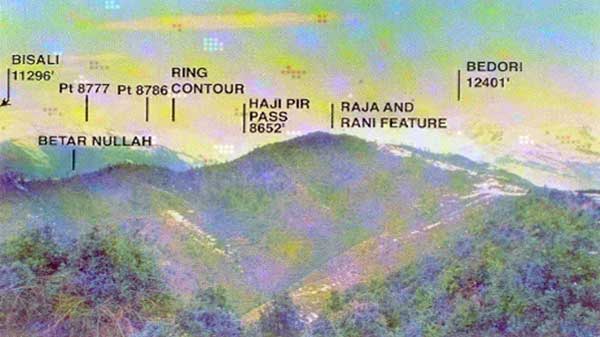
Although we did succeed in whittling down PAK’s fighting potential, especially armour, and occupied chunks of her territory, most of our offensive actions, however, fizzled out into a series of stalemates without achieving any decisive results. With the exception of the HAJIPIR offensive, none of the remaining thrusts were pushed to a successful conclusion. This to my mind was due to a faulty strategic concept of the campaign which resulted in a number of ineffective jabs instead of a few selected thrusts in force. In consequence, there were fierce slugging matches spread over a vast area in which we destroyed each other’s potential but reached no strategic decisions.

Our strategy for war should have been confined to the concentration of effort on a few, well-defined offensive actions on narrow frontages to achieve rapier like thrusts deep into enemy territory and aimed at objectives of military and political importance. The momentum of the offensives should then have been maintained by continual regrouping of forces to ensure the required superiority of effort along the chosen thrusts. In this lies the essence of higher direction of War.

Fifty Years Since Haji Pir: Where did we go wrong?

By Lt Gen Prakash Katoch
Issue: Vol. 30.3 Jul-Sep 2015 | Date : 11 Sep , 2015

50 years have gone by since the capture of Haji Pir Pass by India and its return to Pakistan under the Tashkent Agreement. Where did we go wrong? We have had Parliament resolutions that Kashmir is an integral part of India, and rightfully so because the entire State of Jammu and Kashmir was acceded to India by the then ruler, Maharaja Hari Singh through an Instrument of Accession signed on October 26, 1947, post massive Pakistani infiltration. The CFL had been drawn under the 1949 Karachi Agreement under aegis of the UN Commission. It was Pakistan (not India) that breached the Cease Fire Line (CFL) through massive infiltrations by her Gibraltar Force and ‘Op Grand Slam’.

Foreign Minister Zulfiqar Ali Bhutto convinced Ayub Khan that Pakistan was in a position to dislodge the Indians from Kashmir…

Private equity and India’s economic development

by Rohit Kapur, Vivek Pandit, and Toshan Tamhane
August 2015

Our new survey determines if India’s emerging private-equity sector has helped or hurt the country and its companies.

Private equity has injected more than $100 billion of capital into India in the past 13 years, providing scores of companies with a vital new funding source. Yet the sector continues to be considered a mixed success. Has private-equity capital helped bring new skills and capabilities to investee companies? Or has it simply pushed companies to sweat assets, take on excessive leverage, and strip nonessential components to benefit a few?

The much bigger and more useful question is whether India has benefited from the contribution of private equity. We examined data and surveyed dozens of stakeholders, including key regulators, and found that it has played a pivotal role in the development of small and medium-size enterprises and critical industries, spurred job growth, and facilitated the development of strategic capabilities. And while it has shortcomings, we are optimistic about the role it can continue to play in India’s economic development.
What we found

Al Qaeda Fighters Capture Air Base in Northwestern Syria

September 9, 2015

Insurgents Capture Army Air Base in Northwestern Syria

BEIRUT — Insurgents led by al-Qaida’s affiliate in Syria captured a northwestern army air base Wednesday after a two-year siege, leaving the entire province of Idlib free of government forces, state media and an activist group said.

A state television report said government forces at the Abu Zuhour air base “have evacuated their positions and moved to another point.” The Britain-based Syrian Observatory for Human Rights said insurgents, including members of the Nusra Front, al-Qaida’s affiliate in Syria, captured the base under the cover of a sandstorm and forced government forces out of their last post in Idlib province, which borders Turkey.

The local Coordination Committees posted a photo on its Facebook page it said showed Nusra Front fighters standing in front of warplanes inside the base. Rami Abdurrahman, who heads the Observatory, said militants were aided by a Mideast-wide sandstorm that reduced visibility.

The capture of Abu Zuhour is the latest in a series of setbacks for government forces in Idlib province. Earlier this year, militant groups captured the provincial capital, also named Idlib, as well as other towns and villages.

HOW TO LOSE A CIVIL WAR: LESSONS FOR AFGHANISTAN AND SYRIA

SEPTEMBER 10, 2015

In a number of civil wars, the final, decisive mistake of the incumbent government occurred when it decided for reasons of prestige or strategy to overextend its military to hold exposed positions, thus inviting the destruction of key military assets. This was the case of Chiang Kai-shek’s post-WWII attempt to hold Manchuria, which ended in the destruction of the elite American-trained and American-equipped Chinese Nationalist armies and other formations leading directly to the end of the Chinese Civil War. In 1975, the South Vietnamese attempt to hold too far forward doomed its Army’s 1st Infantry Division and the Marine Division, thereby initiating the South Vietnamese collapse along the coast. The mechanisms of defeat were not just the tactical loss of units through combat, but also the wider demoralization of commanders and soldiers upon realizing that they were caught up in a debacle.

Rethinking nuclear Pakistan

September 09, 2015 

The report, A Normal Nuclear Pakistan, published by Carnegie Endowment and the Stimson Center, begins by asking: Can Pakistan truly be considered a ‘normal’ nuclear state in the global nuclear order?

The short answer should be ‘yes’, if the international community led by the US is ready to understand that Pakistan’s security compulsions don’t permit open-ended support of WMD nonproliferation goals. But at the same time, Pakistan’s nuclear security managers have to recognise that our rapidly growing nuclear arsenal adds nothing to strengthen our deterrence capabilities.

Despite the fact that the report does not provide any concrete evidence to support claims of Pakistan setting to become the third largest nuclear arsenal within a decade, our nuclear establishment has moved away from the policy of ‘credible minimum deterrence’. After 1998, Pakistan maintained the policy of minimum credible deterrence but the adoption of a ‘full spectrum deterrence’ posture, after the 2008 Mumbai attacks, has sparked concerns throughout the international community.

The Second Fall of Musa Qala: How the Taleban are expanding territorial control

Author: Thomas Ruttig
3 September 2015

While Afghanistan’s northern provinces – mainly Kunduz, Faryab and Sar-e Pul – have been in the media’s focus on this year’s Taleban offensive, fighting in their southern Afghan strongholds has geared up too. Within one month the Taleban were able to capture two district centres in Helmand, Musa Qala (still contested) and Nawzad. This combines with an increase in the number of districts falling under their control all over the country compared to previous years. AAN’s senior analyst, Thomas Ruttig, looks at the new fighting around Musa Qala, zooms out to countrywide developments and sees the Taleban making headway – not dramatically, but more stealthily, as most district centres are relatively quickly recaptured by Afghan forces. But district control and keeping hold of the district centres is not the same – for both sides. The Taleban seem to be continuing a long-term strategy by increasing the strain on the Afghan armed forces.