19 March 2019

The Silk Road and the Gulf: A New Frontier for the RMB

Michael B. Greenwald 

Many view the Belt and Road Initiative as the most geoeconomically significant infrastructure project since the Marshall Plan. Promising alternative trade routes, abundant capital flows, and advanced infrastructure to the developing world, the program has scaled significantly since its inception in 2013.

Standing at the crossroads of Eurasia, the Gulf States and broader Middle East are an important link between the economies of East Asia and Western Europe.

Yet the region’s chronic and destabilizing conflicts pose a challenge for Beijing, which has distanced itself from entangling alliances outside its core periphery. In the Middle East, China will find it much harder to invest neutrally, especially within the context of the Saudi-Iran conflict and the Gulf Cooperation Council (GCC) dispute. In the case of the former, China is Tehran’s key economic benefactor, with sanctions now being re-imposed. With Iranian oil locked out of European and American markets, the country’s reliance on China and India has been exacerbated.
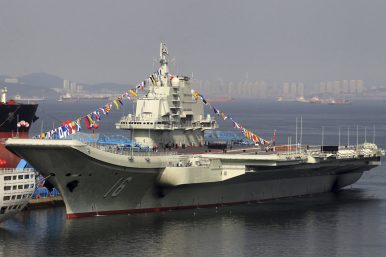
The Relationship Between the Size of China’s Economy and Its Military Posture

By Robert Farley
It’s been widely accepted for a very long time that a significant portion of China’s economic growth is effectively fictional. A recent Brookings Paper on Economic Activity by Wei Chen, Xilu Chen, Chang-Tai Hsieh, and Zheng (Michael) Song tried to determine, as closely as possible, how much Chinese economic figures have been inflated. The report suggests that Chinese growth was 1.7 percent lower from 2008-2016 than reported by authorities. Much of this is not intentional obfuscation on the part of the central government, but rather inflated figures provided by provincial authorities.

If accurate, the report offers a handle on the question of how big China’s economy is compared to that of the United States, which has long been at the core of questions about great power competition in East Asia, and the existence of a “Thucydides Trap.” A related but equally important implication of China’s smaller GDP is that Chinese defense spending looks larger. If the report is correct that China has overstated its GDP by as much as 16 percent, then China’s defense spending as percentage of GDP looks correspondingly larger. Indeed, since China is also widely believed to have significantly understated its defense budget, the overall commitment of the Chinese economy to defense might range above 2 percent, considerably higher than many analysts have suggested.

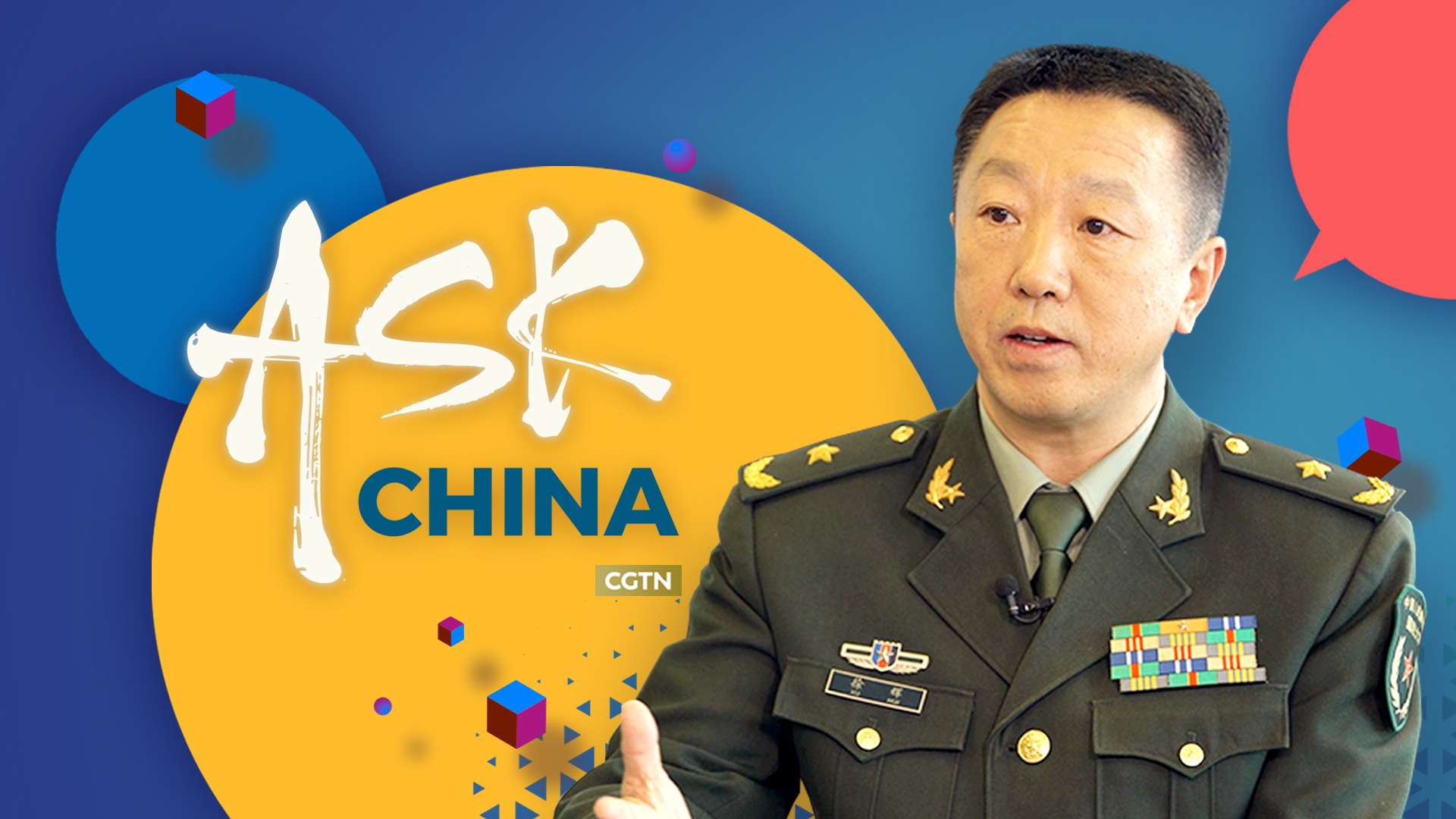
Ask China: What role can China play to ensure regional security?


China's national defense policy is a topic that never fails to capture international attention.

To make more people understand China's national defense policy, we have had the honor of inviting Xu Hui, Major General and Commandant of the International College of Defense Studies at the National University of People's Liberation Army (PLA), to answer those questions.

“The U.S. military budget is 3x than that of China, so how can the U.S. be ‘scared' of China?”

The defense budget is one of the core elements of measuring a country's defense policy. China's defense budget for 2019 will be about 177 billion U.S. dollars, meaning the growth rate has lowered from 8.1 percent in 2018 to 7.5 percent, which prompted their questions. According to newly released data, the U.S. 2019 National Defense Authorization Act authorized a top-line budget of 716 billion U.S. dollars, which is more than four times that of China. It left some netizens wondering, “How can the U.S. be ‘scared' of China?”

How China and Russia Could Defeat the U.S. in War

BY: Aaron Kliegman

American pundits and politicians often call the U.S. military the best fighting force in the world, and they are right. The United States spends far more money on defense than any other country, and its military capabilities outclass all rivals, with unmatched air and naval power. Most importantly, the United States has dozens of allies around the world that act as force multipliers, allowing Washington to project power in far-flung regions. Americans should not get cocky or complacent, however. Despite maintaining military supremacy—albeit by a smaller margin than in recent decades—the United States could still lose wars against China and Russia, both of which have developed concepts of defeating a more powerful America in armed conflict. This notion may sound crazy, but it is all too real. Indeed, Beijing and Moscow could actually triumph if the United States does not plan and adjust accordingly.

China Intensifies Efforts to Diminish Dalai Lama’s Influence

Jayadeva Ranade

There has been a visible acceleration over the past many months in the efforts of the Chinese authorities to diminish and undermine the XIVth Dalai Lama’s influence over Tibetans inside China. Additionally, this year is marked by a number of anniversaries in China's political calendar including the 70th year of the founding of the People’s Republic of China (PRC) in October, the founding anniversary of the People’s Liberation Army Navy (PLAN) in April as well as the sensitive 30thanniversary of the Tiananmen ‘incident’ in June and 60th anniversary of the XIVth Dalai Lama's flight from Tibet on March 10. The latter two would be cause for the most unease to China’s leadership. The current strain in Sino-US relations has added to Beijing’s worries.

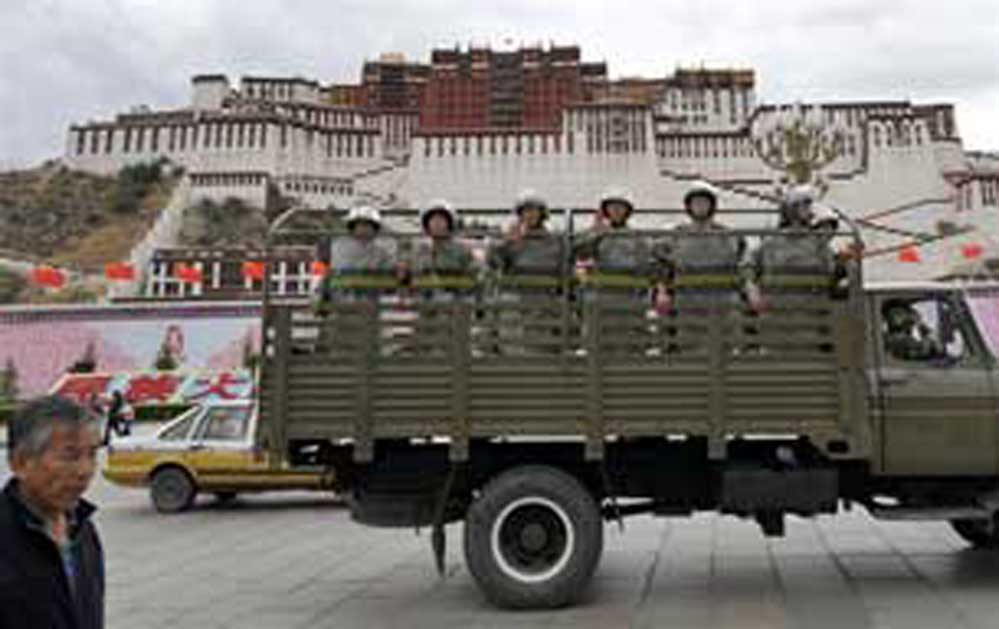
Despite the investment of billions of dollars in development of the Tibet Autonomous Region (TAR) and steady tightening of the already stringent security measures in Tibetan populated areas, the Tibetans continue to be restive with occasional incidents of protest and self-immolation.

What Next? Islamic State After The ‘Caliphate’ – Analysis

By Romain Quivooij*

The ongoing battle for Baghouz, a hamlet reported as the last stronghold of IS in Eastern Syria, marks the conclusion of the military campaign launched by the United States and its partners against the insurgent organisation. Ousted from the towns and villages it used to control, IS has lost a great deal of soldiers, commanders, and, more importantly, the momentum that was initially associated with its expansion.

This development raises questions about the impact of the ‘Caliphate moment’ on the strategies and tactics favoured by IS, not to mention its ideological approach and the ways it communicates online.
Turning Point & Lessons Learned

Failure to preserve territorial gains has highlighted the value of clandestine warfare IS has been prompt to revert to. The sharp fall of the ‘Caliphate’ leads to question how the religious ideology of Salafi-Jihadism will evolve to remain as attractive as it has been for prospective recruits. Additionally, changes in the production and dissemination of online contents will have a lasting effect on the architecture of virtual Jihad.

The Terror Attack is New Zealand’s Darkest Day

by Curt Mills 

It’s happened again. In a fresh terror attack at least forty-nine people were gunned down in Christchurch, New Zealand, on Friday—a white supremacist terrorist attack streamed on social media. Two mosques, during Friday prayers. One assailant, in custody, said the dastardly acts were a “revenge on invaders.” Three others are being held.

“My warmest sympathy and best wishes goes out to the people of New Zealand after the horrible massacre in the Mosques,” President Donald J. Trump wrote on Twitter Friday morning. “49 innocent people have so senselessly died, with so many more seriously injured. The U.S. stands by New Zealand for anything we can do. God bless all!”

Said Secretary of State Mike Pompeo: “I want to offer my personal condolences to the nation of New Zealand, in the wake of the grotesque, mosque attacks in Christchurch. … The United States condemns this hateful assault.”

Drone Damage: Why Trump's Terror Tactics Could be Costly

by Paul R. Pillar

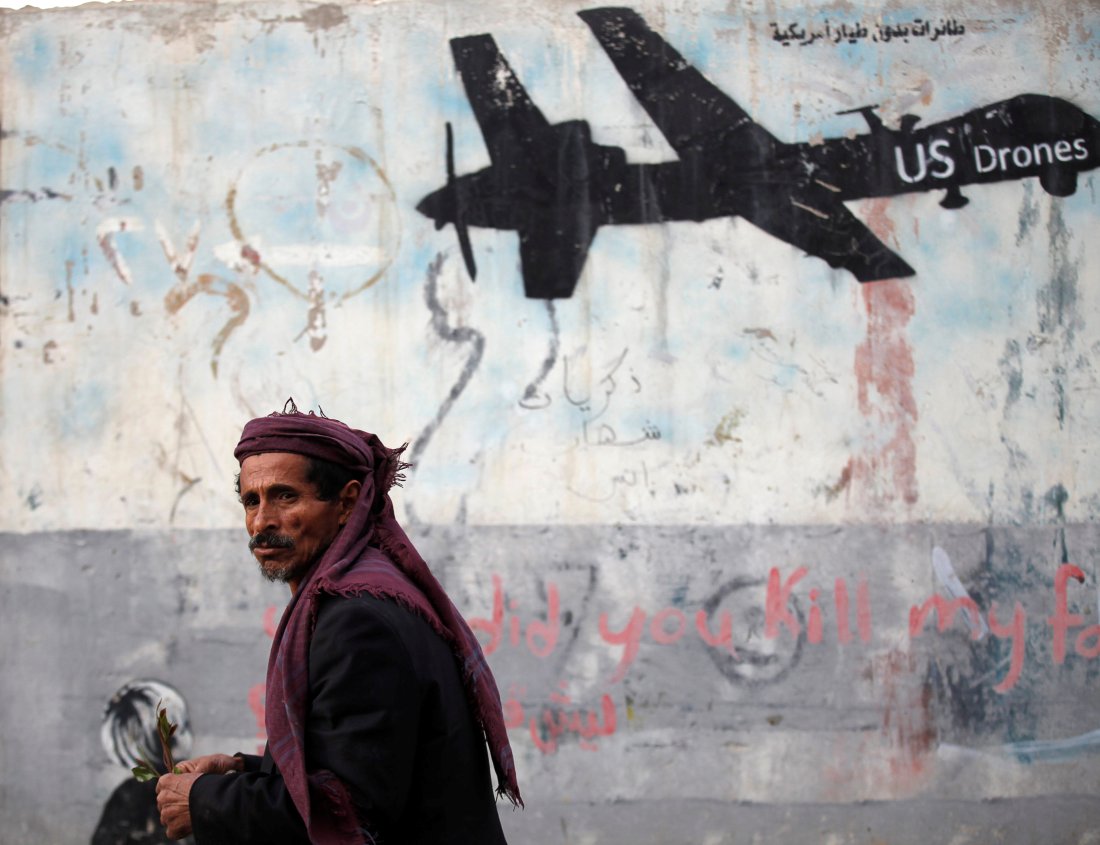
The Trump administration has discontinued an annual report, which President Barack Obama had instituted by executive order, that made public the number of counter-terrorist strikes by manned or unmanned U.S. aircraft outside declared war zones, along with an estimated number of civilian casualties from such strikes. The report had shed at least a small amount of light on the continued waging of a “war on terror” across vast swaths of Asia and Africa, including in countries that many Americans may never have heard of. In fact, most Americans are probably unaware that their own country is waging a war in these countries. The Trump administration argues that the report is unnecessary because a separate congressionally mandated report requires the Department of Defense to tally civilian casualties from all military activities. Left unsaid is that the change will leave unreported any strikes conducted by U.S. agencies other than the Department of Defense—a component of this global air war that the administration reportedly has been expanding, at least in Africa.

A Mass Murder of, and for, the Interne

By Kevin Roose

Before entering a mosque in Christchurch, New Zealand, the site of one of the deadliest mass murders in the country’s history, a gunman paused to endorse a YouTube star in a video that appeared to capture the shooting.

“Remember, lads, subscribe to PewDiePie,” he said.

To an untrained eye, this would have seemed like a bizarre detour.

But the people watching the video stream recognized it as something entirely different: a meme.

Like many of the things done before the attack on Friday — like the posting of a 74-page manifesto that named a specific internet figure — the PewDiePie endorsement served two purposes. For followers of the killer’s videostream, it was a kind of satirical Easter egg. “Subscribe to PewDiePie,” which began as a grass-roots online attempt to keep the popular YouTube entertainer from being dethroned as the site’s most-followed account, has morphed into a kind of all-purpose cultural bat signal for the young and internet-absorbed.

Britain Looks Into the Trade Abyss

BY KEITH JOHNSON

One day after British Prime Minister Theresa May’s Brexit plan suffered a second historic parliamentary defeat, Britain’s go-it-alone trade future is starting to become a little bit clearer—and it is far from a pretty picture.

Instead, the emerging future landscape is one of permanent isolation, ever-rising prices, and long-term economic eclipse, some experts said.

“We’re in a complete and utter shambles,” said Roderick Abbott of the European Centre for International Political Economy. “The bottom line is that there is nothing you can do that would be better than what you had as a member” of Europe’s customs union and single market. “So why did you want to leave?”

The British government has sought to put the best gloss on its prospects. On Wednesday, the same day Parliament narrowly voted against even the thought of a “no deal” exit from the European Union, the government released its trade policies in the event of a no-deal Brexit. The one-year government plan calls for most British imports to be tariff-free, except for a handful of strategic sectors including agriculture and cars, where tariffs will be increased.

Withdrawing From Syria Leaves a Vacuum That Iran Will Fill

By Colin P. Clarke and Ariane M. Tabatabai

One of President Trump’s final foreign policy decisions of 2018 was also among his most controversial: the withdrawal of the remaining 2,000 U.S. troops from Syria. The order was an astonishing reversal of U.S. policy, and it raised concerns among Washington national security professionals that the Kurds—who have served as U.S. allies in the fight against the Islamic State, or ISIS—will suffer losses while the Assad regime, Russia, and Turkey gain. This weekend, the president’s national security advisor, John Bolton, seemingly reversed course again, announcing that U.S. forces would remain in Syria until ISIS was defeated and the Turks provided guarantees that they wouldn’t strike the Kurds.

The actor who perhaps benefits above all others from the administration’s back and forth on Syria is Iran. An American withdrawal would provide the Iranians with the operational space to expand their growing network of Shiite foreign fighters, who can be mobilized and moved throughout the Middle East. The recent announcements send Tehran the message that Washington will no longer be an obstacle in the way of these designs. Indeed, according to Bolton, the administration’s preconditions for withdrawal have to do with the Kurds and ISIS: the national security advisor made no mention of the presence or expansion of Shiite militias trained and equipped by Iran.

Russia Racing to Complete National AI Strategy by June 15

BY SAMUEL BENDETT

Several of Russia’s state organizations are racing to meet a June 15 deadline to create a national strategy that aligns government, military, academic, and private resources to speed the country’s development of artificial intelligence. 

The deadline comes straight from the top: Russian President Vladimir Putin gave the order on Feb. 27, about five weeks after he approved that idea and others offered by the government’s Agency for Strategic Initiatives. 

Putin also handed his government several other tech-related deadlines: 

• July 1: Find ways to stimulate investment in broader areas of technology, including the Internet of Things, robotics, and processing of large data arrays by small and medium-sized businesses. 

Russia’s Next Land Grab Won’t Be in an Ex-Soviet State. It Will Be in Europe.

BY MIKHEIL SAAKASHVILI

Not many observers would consider the world’s coldest shipping lane a geopolitical hotspot. But that may be about to change. Last week, reports emerged that a new Kremlin policy will require all international naval ships to give Russia 45 days’ notice before entering the Northern Sea Route, which connects the Atlantic and Pacific Oceans via the Arctic waters north of Siberia. Every vessel on the route, where Russia has invested heavily in sophisticated military infrastructure, will also be required to have a Russian maritime pilot on board. Ships found in violation of these restrictions may be forcibly halted, detained, or—in unspecified “extreme” circumstances—“eliminated.”

The Kremlin’s latest threat has gone largely unnoticed, perhaps because it’s no surprise. Russian officials justify the new naval restrictions with a familiar explanation, claiming that “the more active naval operations in the Arctic of various foreign countries” require such a response.

US-Vietnam Relations: Confronting the War Legacy Challenge

By Prashanth Parameswaran

When the director of the U.S. Agency for International Development (USAID) met with Vietnam’s deputy defense minister last week, among the aspects that meeting touched on was collaboration on war legacy issues, including ongoing U.S. assistance with Agent Orange decontamination efforts. The interaction underscored the continued importance of addressing war legacy issues within the U.S.-Vietnam comprehensive strategic partnership in spite of the disproportionate focus often placed on new developments in bilateral ties

As I have observed previously in these pages, U.S.-Vietnam relations have come quite far from where they were during the Vietnam War. A gradual normalization of ties that took off during U.S. President Bill Clinton’s tenure has continued with successive administrations, including during the Obama years that saw the inking of a new comprehensive partnership and the historic lifting of a decades-old arms embargo. That trend has continued on under the Trump administration with some notable firsts, even amid some lingering concerns about wider aspects of the administration’s Asia policy and some challenges Vietnam has been facing in terms of its own domestic and foreign policy that also have effects on the bilateral relationship as well.

Can Nuclear Energy Save the Planet


Joshua Goldstein and Staffan Qvist have a plan to save the world – from climate change disaster. In their new book, A Bright Future: How Some Countries Have Solved Climate Change and the Rest Can Follow, the authors advocate for the use nuclear energy to supplant the consumption of fossil fuels and ease the carbon emissions that are choking the planet. They contend that a combination of nuclear and renewables is the best path to slowing climate change. Goldstein is a professor emeritus of international relations at American University, and Qvist is an energy engineer and consultant to clean energy projects around the world. They recently visited the Knowledge@Wharton radio show on SiriusXM to talk about their book. (Listen to the podcast at the top of this page.) The following are key takeaways from the interview.

What inspired this book?

Goldstein said he was drawn to the issue of climate change by his children, who convinced him that it deserved his attention. He has a deep desire to “leave a livable world” for his children, but he grew up against the backdrop of nuclear power in the 1960s and 1970s and wasn’t sure that was the solution.

Here’s how other nations measure up in electronic warfare

By: Mark Pomerleau  

U.S. adversaries have become so adept at using electronic warfare that U.S. forces and their allies must now reduce their electromagnetic footprint or risk that enemies could use that information to geolocate, jam and then fire upon them.

“Near peer adversaries can contest the U.S. Army’s use of the electromagnetic spectrum and use it to cue kinetic weapons,” read a slide during a presentation by Col. Candice Frost, director of foreign intelligence within the Army’s intelligence directorate. Frost was speaking at the AFCEA Army Signal Conference March 12. Army leaders in the past have discussed the capabilities and threats posed by Russia’s electronic warfare prowess in public, but rarely have provided insights in the abilities of other nations.

Trillions of Dollars Down the Drain: 5 Wars America Never Should Have Fought

by Robert Farley

The United States won a convincing victory against Iraqi military forces in the first weeks of the war, but could not establish order in the country. Iraq quickly devolved into various stages of civil war, at immense human and economic cost. Extensive investigation in the wake of the invasion found no serious WMD program, and no meaningful contacts with the Al Qaeda terror network.

In the debate that preceded the 2003 Iraq War, we became enamored of the distinction between “wars of choice” and “wars of necessity.” Opponents of the Iraq War decried it as a “choice,” while supporters insisted on its “necessity.” Unfortunately, like many aspects of that debate, that framing was entirely wrong; America has faced vanishingly few wars of “necessity,” but some of our wars of “choice” have nevertheless been good choices. Some, sadly, have not.

(This first appeared several years ago.)

The US is ready to use more aggressive cyber operations to strike back at enemies

Lolita C. Baldor, 

Pentagon leaders overseeing cyber operations say the US is ready to strike back more aggressive.

The announcement comes as the US faces growing cyberattacks and threats of interference.

WASHINGTON (AP) — Cyberattacks from Russia, China, North Korea and Iran are increasingly sophisticated and, until recently, were done with little concern for the consequences, the top Pentagon cyber leaders told a congressional committee on Wednesday.

Army Gen. Paul Nakasone, head of US Cyber Command, laid out the escalating threats, following a Navy review released this week that described significant breaches of naval systems and concluded that the service is losing the cyber war.

Speaking during a subcommittee hearing, Nakasone said the US is now prepared to use cyber operations more aggressively to strike back, as the nation faces growing cyberattacks and threats of interference in the 2020 presidential elections.

Big Data’s Biggest Challenge: How to Avoid Getting Lost in the Weeds

Wharton's Raghuram Iyengar and Evite 

Companies have access to more data than ever before. But how can they optimize it without getting lost in the weeds – or losing sight of the customer? Evite CEO Victor Cho and Wharton marketing professor Raghuram Iyengar offered advice from their own experiences during a recent conversation with Knowledge@Wharton. Cho was on campus to host a Datathon with the Wharton Customer Analytics Initiative, which Iyengar co-directs. Penn students from multiple academic majors were given datasets from Evite and asked to come up with solutions based on the data for improving Evite’s platform and increasing revenue. Evite is among the participants in WCAI’s corporate partner program, which seeks to help companies find ways to better use their data through collaborations with academic researchers, student projects and other initiatives.

An edited transcript of the conversation follows.

Knowledge@Wharton: Victor, you helped engineer a turnaround at Evite after a period of declining user growth and increased competition How did you use analytics to identify what was going wrong at the company?

The Value of Failure: How We Can Make the Most of Losin


According to this opinion piece by Scott Cowen, president emeritus and distinguished university chair of Tulane University, a full active work life will, of course, produce some failures. What counts are the lessons taken from them. He is also the author of Winnebagos on Wednesdays: How Visionary Leadership Can Transform Higher Education.

It’s all eyes on the winners this time of year. With the Academy Awards and other major entertainment industry award shows, and America’s greatest sports spectacle just behind us, our obsession with being successful is in full bloom. The truth though is that winners get our undivided attention all the time. We all like to win and we revel in victories — the ones we brought about and the ones we embrace as our own, such as our favorite sports team’s triumphs. We want to be successful in what we do and eagerly consume advice on how to be better and achieve more. But wouldn’t it be equally, if not more, instructive to examine failure? As Oprah Winfrey once said, “Failure is another stepping stone to greatness.”