22 May 2023

Behind China’s Friendly Advice for Pakistan

Eram Ashraf

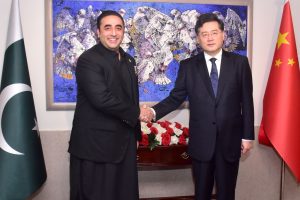
Pakistan’s Foreign Minister Bilawal Bhutto Zardari received China’s Foreign Minister Qin Gang at the Ministry of Foreign Affairs, Islamabad, Pakistan, May 6, 2023.Credit: Ministry of Foreign Affairs, Islamabad

China’s newly appointed foreign minister, Qin Gang, made his first visit to Pakistan on May 6 and 7. In a joint press meeting in Pakistan with Foreign Minister Bilawal Bhutto Zardari, Qin stated that stability was a prerequisite for development. As Pakistan’s good neighbor, friend, and partner, he said, China advised political forces withing Pakistan to build consensus, maintain stability, and focus on improving the economy and people’s livelihoods.

His very public censure was unusual given China’s historic emphasis on “abstention from intervention or interference in the internal affairs of another country.” This is a principled stance, which Chinese officials hold up as differentiating their diplomacy from the United States and other Western countries. Such sensitive topics were usually discussed privately with Pakistan.

China’s relationship with Pakistan is based on realpolitik, and so as long as China’s interests are accommodated, Beijing will engage with whoever is in charge. Qin’s advice, therefore, should primarily be seen emanating from China’s concerns with Pakistan’s economy and its effect on the China-Pakistan Economic Corridor (CPEC). His words were published by China’s Ministry of Foreign Affairs as part of CPEC discussions. The fact that these comments were missing in the joint statement published with Pakistan perhaps reflected the Pakistani government’s sensitivity.

Qin’s words were interpreted by supporters of the ousted Prime Minister Imran Khan and his political party, Pakistan Tehreek-e-Insaf (PTI), as backing their call for national elections. For others, they served as a reminder of 1971, when Chinese Prime Minister Zhou Enlai had advised Pakistan’s rulers to quietly settle political issues with Sheikh Mujibur Rahman and his political party, the Awami League.

However, the arrest of Khan by the Rangers – a paramilitary force – just three days after Qin’s comments led to speculations regarding China’s role. In particular, the timing of Khan’s arrest was raised by some on social media. Two days after Qin’s visit, the Pakistan Army’s media wing, the Inter-Services Public Relations (ISPR), had issued a warning to Imran Khan to stop maligning its serving officers without evidence. He was arrested the following day, while attending a corruption case against him at Islamabad High court.

Sri Lankan President Wickremesinghe Woos Tamils Ahead Of 2024 Election – Analysis

P. K. Balachandran

National Peace Council calls for wider consultations to come to a consensus on the a solution to the Tamil question

Sri Lankan President Ranil Wickremesinghe, who intends to fight the next Presidential election at the end of 2024, is not only busy putting the fallen Sri Lankan economy back on its rails, but is also assiduously cultivating the minority Tamils, who were sidelined by his predecessor, Gotabaya Rajapaksa.

Wickremesinghe has held discussions with the Ilankai Tamil Arasu Katchi (ITAK), the premier Tamil party of the Tamil-dominated North and East, to find a lasting solution to the vexed Tamil question.

There has been no progress till date with the Tamil parties putting some preconditions that are difficult to concede (such the unification of the Northern and Eastern provinces to give the Tamils a ‘Homeland’). But the talks are being kept up by both the President and the ITAK.

Wickremesinghe is keen on delivering something to the Tamils ahead of the 2024 Presidential election when he will need their votes. And the aging Tamil Supremo R.Sampanthan is sworn to settle the matter in his lifetime.

The National Peace Council has welcomed the President’s direct engagement with the Tamil political parties, which it said, has been positively received both nationally and internationally.

“There are media reports that he will expand his engagement to include the Muslim and Malaiyaha Tamil political parties. We call on the President to inform the people about his intentions in this regard, and the government to engage on the issue with the opposition political parties, so that the agreements reached are inclusive and have a maximum of support from all the ethnic and religious communities in the country,” the Peace Council said in a statement on Thursday.

In Xi’an, China’s Xi Calls for a ‘Shared Future’ With Central Asia

Catherine Putz

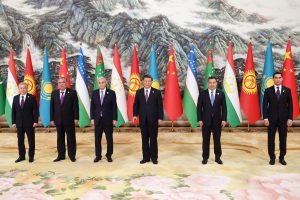
Chinese leader Xi Jinping and the leaders of Central Asia — Kazakh President Kassym-Jomart Tokayev, Kyrgyz President Sadyr Japarov, Tajik President Emomali Rahmon, Turkmen President Serdar Berdymuhamedov, and Uzbek President Shavkat Mirziyoyev — gathered for the first time in person (although it is the third China-Central Asia summit since the format was kicked off in 2020) in Xi’an, a city in Shaanxi Province known historically as Chang’an.

Chang’an marked the eastern end of the ancient Silk Road.

To hear Xi tell it, the Silk Road has contemporary corollaries: the China-Kyrgyzstan-Uzbekistan Highway, the China-Tajikistan Highway, the China-Kazakhstan oil pipeline, and the China-Central Asia natural gas pipeline are today’s “Silk Roads” and freight trains and non-stop flights are “contemporary camel teams.”

Before the summit, Beijing promised a “new blueprint” for relations between China and Central Asia, but at best that was an exaggeration. The summit produced the clearest iteration yet of Chinese ambitions and commitments to engagement in Central Asia, but very little is new.

Last year, when Xi and the Central Asian presidents marked 30 years of relations they announced the building of a “China-Central Asian community with a shared future,” a regional twist on the Chinese diplomatic catchphrase of creating a “community with a shared future for mankind.” Xi outlined four core principles in that effort during his keynote speech at the summit.

The first point — phrased as “protecting and helping each other” — stressed the importance of deepening “strategic mutual trust” and giving support “on issues related to core interests such as sovereignty, independence, national dignity, and long-term development…” Next, Xi highlighted the need to adhere to “common development” under the auspices of the Belt and Road Initiative. A third principle related to upholding “universal security” via joint implementation of the Global Security Initiative and common Central Asia-centric themes of opposing “external forces” trying to instigate “color revolutions” and together opposing the “three evil forces.” Finally, Xi highlighted “everlasting friendship” and building a solid foundation for the future of close ties across generations.

Bhutanese Refugee Scam Puts Nepal’s Political Leaders Under Scrutiny

Prakash Neupane

Nepal is in an uproar right now as a result of the participation of high-ranking government figures in a fraudulent scheme involving Nepali nationals posing as Bhutanese refugees in order to orchestrate their “resettlement” to the United States. The exposure of the “fake Bhutanese refugee scam” has sent shockwaves throughout Nepal, exposing a sophisticated network of corruption and deception involving key players in the country’s political scene.

Investigations into this scandal have gained traction, with some former high government officials and politicians being arrested. Among them is Nepal’s former home minister, Balkrishna Khand, who was caught for his participation in a scheme that defrauded young Nepalis of money by promising to send them to the United States by faking their status as refugees from Bhutan. This arrest has highlighted the scope of the fraudulent enterprise and raised concerns about the involvement of other notable individuals.

The scheme took advantage of a real social issue. Back in the 1990s, Bhutan forcibly expelled the Lhotshampa, an ethnic group with origins in Nepal, deeming them to be “illegal immigrants” and “migrant workers.” With nowhere else to go, thousands of displaced Bhutanese came to live in refugee camps in Nepal.

In 2006, the United States (along with Australia, Canada, Denmark, the Netherlands, New Zealand, Norway, and the United Kingdom) agreed to resettle the Bhutanese refugees. By 2015, over 100,000 of them had been resettled in third countries, with the vast majority – over 84,000 – heading to the United States. The resettlement effort brought the Bhutanese population at refugee camps in Nepal down from 108,000 in 2007 to under 18,000 in 2015.

Yet, as the recent scandal shows, the resettlement effort had a dark side. A corrupt political-bureaucratic network targeted vulnerable young Nepali individuals, offering them a better life in the United States as Bhutanese refugees.

More than 160 victims have come forward, alleging that they were cheated out of millions of Nepali rupees in return for forged paperwork positioning them as Bhutanese asylum seekers qualified for resettlement in foreign countries. These individuals believed that they were a part of a genuine program that would provide them with a better future, only to become entangled in a web of lies and deception.

G7 leaders gather on China’s doorstep to seek unified response to Beijing’s threat

Nectar Gan

As leaders of seven of the world’s most powerful democracies gather in Japan on Friday, it will be the authoritarian powers of China and Russia that dominate the agenda.

The annual Group of Seven (G7) summit, convening this year in Hiroshima, will seek to project a unified response to an increasingly assertive China – and the perceived threat it poses to the stability and economic security of a world already shaken by Russia’s ongoing war on Ukraine.

While much of the attention will be focused on Ukraine – including how to further tighten the screws on Russia and defuse rising nuclear tensions – the three-day summit also provides an opportunity for G7 leaders to recalibrate and coordinate their approach toward China, which has refused to condemn the invasion and instead bolstered ties with Moscow.

“Basically this is going to be a meeting for them to talk about how to deal with China and Russia,” said Yasuhiro Matsuda, an international relations professor at the University of Tokyo.

But agreeing on a common approach to the world’s second largest economy will not be an easy task.

China, a global manufacturing hub and a huge consumer market, is an important trade partner to the G7 countries, which is comprised of the United States, Japan, Germany, the United Kingdom, France, Canada and Italy.

“It is difficult to have one single position on China across seven countries considering their different concerns and relationships with Beijing,” said Sun Yun, director of the China Program at the Washington-based Stimson Center think tank.

“But to the extent that a position with the largest common denominator can be developed, the G7 offers a great opportunity.”
Security in Asia

Projecting unity on China comes at a crucial moment for the US and its allies, as Beijing ramps up diplomatic efforts to repair ties with Europe and drive a wedge in the transatlantic alliance.

The Decade That Cannot Be Deleted

PAMELA PAUL

It would seem impossible to forget or minimize the Cultural Revolution in China, which lasted from 1966 to 1976, resulted in an estimated 1.6 million to two million deaths and scarred a generation and its descendants. The movement, which under Mao Zedong’s leadership sought to purge Chinese society of all remaining non-Communist elements, upended nearly every hallowed institution and custom. Teachers and schools long held in esteem were denounced. Books were burned and banned, museums ransacked, private art collections destroyed. Intellectuals were tortured.

But in China, a country where information is often suppressed and history is constantly rewritten — witness recent government censorship of Covid research and the obscuring of Hong Kong’s British colonial past in new school textbooks — the memory of the Cultural Revolution risks being forgotten, sanitized and abused, to the detriment of the nation’s future.

The Chinese government has never been particularly eager to preserve the memory of that sordid decade. When I spent six weeks traveling in China in 1994 — a slightly more open time in the country — I encountered few public acknowledgments of the Cultural Revolution. Museum placards and catalogs often simply skipped a decade in their timelines or provided brief references in the passive voice along the lines of “historical events that took place.”

But in her new book, “Red Memory: The Afterlives of China’s Cultural Revolution,” the journalist Tania Branigan notes that under Xi Jinping, China’s top leader, efforts to suppress this history have intensified — with troubling implications for the political health of the country at a time when it looms larger than ever on the world stage. “When you’ve had a collective trauma, you really need a collective response,” she told me recently. “I can see why the Communist Party wants to avoid the rancor and bitterness, but when you don’t have that kind of acknowledgment, you can move on — but you can’t really recover.”

Though Xi himself was a victim of the Cultural Revolution — reportedly betrayed by his own mother, exiled into rural poverty — he “is more conscious of the uses and disadvantages of history than any leader before him, bar perhaps Mao himself,” Branigan writes in the book. In 2021, Xi warned the Communist Party against “historical nihilism” — any unflattering portrayal of the party’s past — an existential threat as great, in his estimation, as Western democracy.

How Europe’s Colonial Legacy Is Fueling Tensions In South China Sea – Analysis

Saman Rizwan

There is not a day that goes by without breaking news on escalating tensions in the South China Sea, as regional powers like Vietnam, the Philippines and Malaysia increasingly contest China’s efforts to exert dominance of the strategic waterway through which moves a fifth of global trade. Yet beneath these rising tensions, the spectre of European colonialism lurks undetected.

The unexpected link between present day tensions and past misdemeanors comes through a seemingly obscure international legal dispute which last February resulted in an award of nearly $15 billion against the government of Malaysia, on behalf of nine heirs to a colonial-era Sultanate in the Sulu region of the Philippines.

The award is not only the second largest of its kind in the history of international legal arbitrations, it may also be linked to current geopolitical tensions in the region in surprising ways. According to former NATO analyst Maurizio Geri, the lawyers for the Sulu heirs are closely tied to US tech giants competing with China to dominate subsea cabling routes through which pass the world’s internet data.

Geri claims that apart from traditional trade routes, control of the global internet is the real prize at stake in the South China Sea. Indeed, in early May, US and EU officials wrote urgently to Malaysia citing risks to national security and foreign investment due to a Malaysian government review which could gift China’s Huawei a major role in building Malaysia’s 5G network.

He argues that with the Sulu heirs’ case being financed by unidentified Western investors through the third-party litigation funding firm Therium Capital, it might well exacerbate Malaysian perceptions of Western hostility to Malaysia’s national interests.

But the case itself is based on flawed misreadings of the history of Spanish and British colonialism in the region. The Sulu heirs rest their case on an 1878 colonial-era land deal in which the sultan leased his territory in the Sabah region of present-day Malaysia to two British colonists for the sum of around $1,000 a year. Malaysia paid the fee until an armed invasion of Sabah by followers of the Sulu heirs in 2013, which resulted in 71 people killed.

The Political Hazards of Economic Decoupling From China

Max Abbott

With tensions between the United States and China showing no sign of abating, more and more businesses are reconsidering their investments in China, contemplating what has been referred to as a “decoupling” from the world’s largest exporter. For numerous reasons, companies from the U.S., European Union, and elsewhere are looking to new markets to serve as manufacturing hubs and commodity suppliers. While the COVID-19 pandemic highlighted the risk of relying on one country for crucial imports, Western corporations doing business in China were complaining long before then of abusive practices such as IP theft and forced technology transfers. China’s increasing assertiveness on the world stage, coupled with allegations of human rights abuses in Xinjiang and Hong Kong, have escalated the trade war with the United States as shown by recent federal legislation such as the Uyghur Forced Labor Prevention Act and the Biden administration’s semiconductor export controls, which compel Western companies to reevaluate their business ties with China.

As decoupling advances, Southeast Asian nations have been among the primary beneficiaries. In 2021, foreign direct investment in the Association of Southeast Asian Nations (ASEAN) soared by 42 percent, reaching an all-time high of $174 billion, according to the ASEAN Secretariat. Meanwhile, China’s State Administration of Foreign Exchange and Ministry of Commerce, which reported strong foreign direct investment through most of the pandemic, have seen inflows drop significantly since the second quarter of 2022. Apple, Samsung, Nike, and Adidas are just a few of the major brands to shift production from China to Southeast Asian countries in recent years.

ASEAN nations offer many advantages, such as young populations, high economic growth rates, and lower labor costs. Yet foreign investors face obstacles: Political instability has long been rife in Southeast Asia’s prime investment destinations, working conditions lag behind those of the West, long-established domestic firms rule the marketplace, and corruption is endemic.

China’s Special Envoy Concludes Talks in Ukraine

Shannon Tiezzi

Li Hui, China’s special representative on Eurasian affairs, has concluded talks in Ukraine, a Chinese Foreign Ministry spokesperson said on Wednesday, without offering details on next steps in China’s bid to explore a negotiated resolution to the Russia-Ukraine War. Previously, China had announced that Li would visit Ukraine, Poland, France, Germany, and Russia “for communication on a political settlement of the Ukraine crisis.”

That China would send a special envoy to speak to the governments of Ukraine and Russia was the major takeaway from President Xi Jinping’s late April phone call with Ukrainian President Volodymyr Zelenskyy – the first contact between the two leaders since Russia’s full-scale invasion of Ukraine began in February 2022. It was the first indication that China was adding some action to the rhetoric of its February 2023 position paper on Ukraine, which offered a 12-point proposal for reaching a “political settlement of the Ukraine crisis” (in China’s official rhetoric, it is always a crisis, never a “war” or even a “conflict”).

As I wrote of China’s shuttle diplomacy plan back in April:

Whether anything comes of that is an open question. China’s history of mediation ranges from pro forma gestures mostly designed to look good (seen, for example, in China’s approach to the Israel-Palestine crisis) to serious mediation with concrete results (most notably the Iran-Saudi breakthrough achieved in March). Which model China’s Ukraine mediation follows remains to be seen.

Now that Li’s meetings in Ukraine are complete, we have a bit more to go on. China’s Foreign Ministry confirmed that Li met with Zelenskyy as well as “Head of the Office of the President Andrii Yermak, Minister for Foreign Affairs Dmytro Kuleba, and officials from relevant departments including the Ministry for Communities, Territories and Infrastructure Development, the Ministry of Energy and the Ministry of Defense.” In those meetings, Foreign Ministry spokesperson Wang Wenbin said, “The two sides exchanged views on the political settlement of the Ukraine crisis and China-Ukraine relations.”

China-S Korea: deepening suspicions, limited diplomacy

SCOTT SNYDER AND SEE-WON BYUN

The main diplomatic interactions between China and South Korea recently devolved into a dueling exchange of private demarches and public assertions that the other side had committed a “diplomatic gaffe.”

As President Yoon Suk Yeol took steps to strengthen South Korean ties with NATO, stabilize relations with Japan and upgrade efforts with the US to deter North Korea from continued nuclear development, Chinese criticisms of South Korea became increasingly ominous.

They culminated in a stern Chinese diplomatic response to a Reuters interview on April 19 in which Yoon characterized a possible cross-strait conflict between mainland China and Taiwan as a global security issue.

China’s warnings and misgivings regarding the Yoon administration finally ventured into criticism of Yoon himself.

The issue that lit the fuse came less than a week in advance of the US-South Korea summit. Yoon responded to a question about Taiwan by saying that “the Taiwan issue is not simply an issue between China and Taiwan but, like the issue of North Korea, it is a global issue.”


Although Yoon may have thought he was simply describing the obvious international stake in cross-straits stability, his comment deviated from a longstanding South Korean policy that had accepted China’s characterization of the Taiwan issue as an internal matter based on its one-China principle. It provoked a strong response from Beijing.

The Chinese foreign ministry spokesperson responded to a question from Yonhap News Agency by reiterating that “the Taiwan question is purely an internal affair at the core of China’s core interests …. We hope the ROK side will follow the spirit of the China-ROK Joint Communique on the Establishment of Diplomatic Relations, stay committed to the one-China principle and prudently handle matters related to the Taiwan question.”

Myanmar and South China Sea crises test ASEAN’s mettle

Walden Bello

The annual summit of the Association of Southeast Asian Nations (ASEAN) that took place last week in Luan Bajo, Indonesia, came up with the usual self-congratulations and wish list for future action but failed to produce forward movement on the two issues that pose fundamental challenges to the regional organization’s raison d’etre: the Myanmar junta’s bloody reign and rising geopolitical tensions in the South China Sea.

Myanmar Settlement Eludes ASEAN

Ever since the February 2021 coup, ASEAN has grappled with how to deal with a regime with no domestic support, no legitimacy, and that relies only on brutal repression to stay in power. With Singapore, Malaysia, and Indonesia taking the lead, ASEAN forged a Five-Point Consensus that the junta pledged, grudgingly, to respect: an immediate end to violence; dialogue among all parties; the appointment of a special envoy; humanitarian assistance by ASEAN; and the special envoy’s visit to Myanmar to meet with all parties in the domestic conflict.

The junta, however, walked back its commitment a few days after it was trumpeted by ASEAN, and has since escalated its violent attacks on the population, refused to allow the special envoy to visit imprisoned chief of state Aung Sang Suu Kyi, and made it difficult for ASEAN humanitarian assistance to reach people. Indeed, a few days before the summit, an attack on an ASEAN humanitarian mission occurred in an area controlled by the military government.

To be sure, ASEAN’s push for a role in promoting a peaceful solution in Myanmar is a positive departure from its traditional policy of non-intervention in the internal affairs of member countries. At the same time, however, it shows the limits of consensual decisions with no enforcement powers. In this regard, ASEAN is far behind the African Union, which has organized multinational peacekeeping teams to intervene in civil conflicts.

With ASEAN flailing at the sidelines, the violence in Myanmar has escalated. The junta has been responsible for at least 2,940 deaths and 17,572 arrests since the coup. The military operates with absolute impunity, employing what the United Nations Human Rights Office report describes as a “four cuts strategy,” including “indiscriminate airstrikes and artillery shelling, razing villages to displace civilian populations, and denial of humanitarian access — to cut off non-State organized armed groups and other anti-military armed elements from access to food, finances, intelligence and recruits.”

Ukrainian soldier in tank

Dr. Punsara Amarasinghe

The 19th-century Prussian military strategist Carl von Clausewitz’s idea that echoed till the outbreak of the First World War on the supremacy of great battles as the key factor in generating major decisions was vehemently rejected by British military thinker Captain B. H. Liddell Hart in his classic text “The Strategy of Indirect Approach.” After having taken dozens of examples from the decisive wars in the global history from Scipio Africanus to the battle of Somme, Liddle Hart argues path to victory lies in the way by striking where least is expected. Despite the criticism of Liddle Hard for twisting the historical examples, his famous military strategic innovation called the “indirect approach” seems to have succeeded in Ukrainian resistance against Russia’s invasion.

The Russian troops have been flabbergasted by the military resistance of Ukrainians since the outbreak of the war. The Russian war machinery in Ukraine contained launching heavy attacks targeting military and political targets, in contrast, Ukrainians opted for more sophisticated methods such as striking from their own hand-held missiles to target the Russian supply line, which finally brought detrimental results to the Russian war front. The Russian attempt in taking over Kyiv was thwarted by various factors ranging from geography to technology, but mainly Kyiv’s escape from a debacle at the hands of Russians was attributed to Ukraine’s use of the “Indirect Approach”. It was evident that Russians were anticipating a crushing victory over Ukraine by launching a conventional war campaign just as World War I generals did.

From the Russian perspective, the initiative of launching an invasion of Ukraine was timely and necessary strategies to prevent Ukraine from becoming a NATO member, which has been the biggest burden for Moscow. In his commentary to the Modern War Institute at West Point, Dutch military infantry officer Marnix Provoost describes Russian war strategy in Ukraine as a mechanism, which is flexible, opportunistic and subjective, focusing primarily on the perception of the Russian people that the achieved victory justifies the cost of the war.

Unmanned Weapons Will Save Innocent Lives in War, Former SOCOM Chief Says

PATRICK TUCKER

Unflappable and expendable, unmanned weapons could reduce collateral damage in war, if only U.S. leaders realized it, says a former commander of U.S. Special Operations Command.

But the United States is “unfortunately…dawdling along” in deploying artificial intelligence and unmanned systems in high-stakes scenarios, Tony Thomas said Thursday at the National Press Club.

Thomas recalled the 1988 downing of Iran Air Flight 655 by the U.S. guided missile cruiser Vincennes, which mistook a radar blip for a hostile jet fighter. Its captain “made the fateful decision to shoot down an airliner,” he said. “But put an unmanned capability out there in the Strait of Hormuz, doing what your gray hulls are required to do in terms of monitoring transit and freedom of navigation, that sort of thing. An unmanned capability doesn't have that duress. [It] doesn't have the fear and then the bias. It can offer itself up, get blown out of water. We'll replace it with another one out there.

“Think of that opportunity and flash forward it to any other number of places right now where we have humans in harm's way under a lot of fatigue, a lot of pressure,” he said. A person in such a situation is “potentially bound to make a fatal decision.”

The U.S. Navy is experimenting with unmanned systems in the Central Command region but not in the South China Sea, where many believe a conflict with China could emerge in the next few years.

Thomas’ argument echoed pitches by robot makers who say American police forces would kill fewer people if robots took the place of human officers in some dangerous situations.

Thomas led Special Operations Command when it began to experiment with Maven, an artificial-intelligence tool that helped human analysts with targeting decisions. When Google engineers discovered their company was helping with Maven, some quit in protest and company leaders eventually left the program. (Thomas currently serves as an advisor to AI company Primer.)

Averting a Debt Limit Crisis

German Lopez

For months, the U.S. has been barreling toward a debt limit crisis. Democrats refused to negotiate, and Republicans insisted on a deal stocked with right-wing policy priorities. It was unclear how, or whether, they would avert catastrophe.

This week, the atmosphere in Washington shifted. The chances of getting a deal done now seem higher. Why? Because both sides budged: Democrats are negotiating, and more Republicans have suggested that they are willing to compromise. Speaker Kevin McCarthy, the Republican leader, said yesterday for the first time that he saw a “path that we could come to an agreement.”

“That was a marked change in attitude from earlier in the week, when McCarthy was very pessimistic,” my colleague Carl Hulse, The Times’s chief Washington correspondent, told me.

The stakes are still high. If Congress does not increase the debt ceiling — the limit on money that the U.S. can borrow — the government may run out of money as early as June 1. It would no longer be able to pay its bills, potentially defaulting on its debts. That could send the financial markets, and the economy, into chaos (as this newsletter has detailed).

Today’s newsletter will explain what changed this week and why there is greater optimism about a deal.

Democrats’ moves

Over the past few months, President Biden and congressional Democrats declined to negotiate over the debt limit. They characterized Republicans as holding the country hostage, threatening to wreck the economy to get their way on policy. Democrats hoped their stance would push Republicans to increase the debt limit without attaching conditions.

But then the Treasury Department announced this month that the U.S. could hit its debt limit in just weeks. And House Republicans passed a debt limit bill with right-wing policy priorities, including sweeping but unspecified spending cuts, rollbacks of Biden policies and work requirements for Medicaid, food stamps and welfare benefits.

Russia’s Estimated Storage of Cruise Missiles, May 2023


Pavel Luzin

The massive Russian missile attacks against Ukraine in recent days together with evidence of the increasing efficiency of Ukraine’s air and missile defense make it necessary to re-examine the state of Russia’s arsenal of cruise, ballistic and air-launched missiles with a range of more than 300 kilometers (Ukrainska Pravda, May 17; The Moscow Times; Kyiv Independent, May 18). The following estimates do not pretend to be complete or unquestionable, but they intend to initiate expert discussion regarding the correct assessment and understanding of Russia’s actual military capabilities. The proposed estimates are based on official Ukrainian data of those Russian missiles fired during the war, as published in the previous several months, as well as on expert estimates of Russia’s missile storage made in previous years and fragmented data from Russian sources regarding domestic production rates. It should be taken into account that the estimates presented below may be adjusted as new data appears.

For its part, Ukraine regularly publishes available statistics of each Russian missile attack, including the number and types of missiles (if available) and the number of fired and intercepted missiles. However, these statistics usually do not include missiles that detonated immediately or soon after firing. Overall, it is likely that the number of such missiles is insignificant. On January 3, the Ukrainian Armed Forces published an assessment of Russia’s missile storage and production rates (Twitter.com/oleksiireznikov, January 6). Based on this data, the picture of the Russian arsenal of cruise, tactical ballistic and air-launched missiles with a range over 300 kilometers after the latest attack on May 18 is estimated as follows:

Of course, Ukraine may have revised its assessment of production rates since January 2023, but that re-assessment has not yet been published in open sources.

However, this author’s estimates of Russia’s missile storage on the eve of the full-scale invasion against Ukraine and of domestic production rates differ from the official Ukrainian data (Data for this assessment was compiled from the following sources: Kommersant, October 24, 2006; NPO Saturn, 2016; Voennaya mysl’, No. 4, 2019; ODK-Saturn, April 4, 2018; Kommersant, September 5, 2018; Dfnc.ru, January 27, 2019; Zvezda, January 31, 2020; Zakupki.gov.ru, 2022; ODK-Saturn, 2022.). Therefore, the actual picture of Russia’s missile arsenal could be as follows:

Pentagon Cyber Official Provides Progress Update On Zero Trust Strategy Roadmap

Joseph Clark

The Pentagon’s senior information security official said Thursday that the Defense Department is on track to implement its zero trust cybersecurity framework by fiscal year 2027 as planned.

David McKeown, who serves as the DOD’s deputy chief information officer as well as the department’s senior information security officer, said his office has been hard at work to ensure a smooth rollout of the initiative after publishing the Zero Trust Strategy and Roadmap in November.

He credited partnerships with the private sector as a key enabler of the DOD’s progress toward implementing the key capabilities identified in the roadmap so far.

“We’ve been partnering very heavily with commercial cloud providers, asking them to analyze their offerings, partner with other service provers to try to achieve those 91 capabilities to get us to the target of zero trust,” McKeown said. “Really great relationships are forming there.

“I think we are on a good path for 2027,” he said.

Once implemented, the zero trust framework will move the DOD beyond traditional network security methods with capabilities designed to reduce exposure to cyberattacks, enable risk management and data sharing and quickly contain and remediate adversary activities.

McKeown said that with each step implementing the zero trust framework, the DOD becomes more secure.

The strategy unveiled in the fall outlined four high-level goals for achieving the DOD’s vision for a zero trust architecture including cultural adoption, security and defense of DOD information systems, technology acceleration and zero trust enablement.

McKeown said achieving the goals outlined in the roadmap would be an “ambitious undertaking” when the strategy was unveiled.

Half Of World’s Largest Lakes Losing Water

Eurasia Review

More than 50 percent of the largest lakes in the world are losing water, according to a groundbreaking new assessment published today in Science . The key culprits are not surprising: warming climate and unsustainable human consumption.

But lead author Fangfang Yao, a CIRES visiting fellow, now a climate fellow at University of Virginia, said the news is not entirely bleak. With this new method of tracking lake water storage trends and the reasons behind them, scientists can give water managers and communities insight into how to better protect critical sources of water and important regional ecosystems.

“This is the first comprehensive assessment of trends and drivers of global lake water storage variability based on an array of satellites and models,” Yao said.

He was motivated to do the research by the environmental crises in some of Earth’s largest water bodies, such as the drying of the Aral Sea between Kazakhstan and Uzbekistan.

So he and colleagues from the University of Colorado Boulder, Kansas State University, France, and Saudi Arabia created a technique to measure changes in water levels in nearly 2,000 of the world’s biggest lakes and reservoirs, which represent 95 percent of the total lake water storage on Earth.

The team combined three decades of observations from an array of satellites with models to quantify and attribute trends in lake storage globally.

Globally, freshwater lakes and reservoirs store 87 percent of the planet’s water, making them a valuable resource for both human and Earth ecosystems. Unlike rivers, lakes are not well monitored, yet they provide water for a large part of humanity – even more than rivers.

But despite their value, long-term trends and changes to water levels have been largely unknown – until now.

Russia Keeps Up Wave Of Missile Strikes Raising Threat Throughout Ukraine


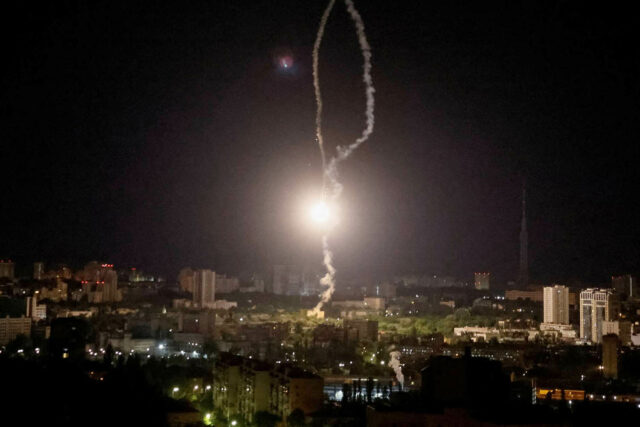
(RFE/RL) — The Ukrainian military said Russia launched dozens of missiles and air strikes during the day on May 18 after a barrage of missile and drone strikes on Kyiv and other Ukrainian cities overnight.

The General Staff of the Armed Forces reported in its evening briefing that Russian troops carried out 36 missile and 23 air strikes during the day, as well as about 30 attacks from rocket systems on positions of Ukrainian troops and populated areas.

The General Staff warned that the probability missile and air strikes throughout Ukraine remains high, but the main fighting is still taking place in the eastern region of Donetsk.

“The adversary will continue to focus its main efforts on the Lyman, Bakhmut, Avdiyivka, and Maryinka areas. During the day, 17 combat clashes took place on those sections of the front, the hottest battles are being fought for Bakhmut and Maryinka,” the General Staff reported.

Russia attacked Bakhmut all day after strengthening its grouping there by bringing most of its reserves, Deputy Defense Minister Hanna Malyar said.

“All the attacks were repelled by our defenders,” she said on Telegram.

Ukraine’s forces advanced 500 meters in the north and in some areas in the south by 1 kilometer, she added.

“The defense of Bakhmut and its outskirts is meeting its military objectives,” she said. “As of now, we control the southwestern part of Bakhmut.”

Yevgeny Prigozhin says his forces inside Bakhmut had advanced up to 400 meters. “We’re pushing Bakhmut all the way to the end,” he said on Telegram.

Prigozhin said his forces’ flanks remained under pressure and speculated that holding Bakhmut is part of Ukraine’s counteroffensive plan.

Africa Is Russia’s New Resource Outlet

Axel de Vernou

On April 13, Russia’s Institute of Technological Development for the Fuel-Energy Complex organized a panel to discuss energy cooperation between Moscow and African countries. One of the experts, Gabriel Anicet Kotchofa, who served as Benin’s ambassador to Russia, explained that “in Africa, we are waiting for Russia—for what Russia can do. I will tell you something that is never said today: we are tired of Europe.”

As a graduate of the Gubkin Russian State University of Oil and Gas and a Russian citizen, Kotchofa is not a neutral commentator. Nonetheless, recent energy trends support his proclamation. African countries are exponentially multiplying their imports of Russian oil in response to European sanctions and price caps, providing the Kremlin with additional flexibility in the financing of its war against Ukraine.

Morocco imported 600,000 barrels of Russian diesel in the entirety of 2021. In February 2022 alone, approximately double that number arrived in the North African country’s Mediterranean ports. Last month, Morocco, Tunisia, and Algeria accounted for 30 percent of Russia’s diesel exports, which just returned to pre-pandemic levels.

Moscow is fulfilling a need in Africa. The International Energy Agency noted that the coronavirus pandemic provoked debt crises in twenty African countries, which will exacerbate the subsidy burdens that these nations already face as a result of frequent oscillations in energy prices. Paired with the fact that factories have still not recovered from pandemic restrictions, African countries are looking for outside aid from new sources. “Significant parts of [African refineries] are idle or underloaded due to equipment deterioration, maintenance problems, [and] interruptions in the supply of raw materials,” said Lyudmila Kalinichenko, a researcher at the Russian Academy of Sciences, during the aforementioned panel. At the same time, Africa’s population is growing vertiginously.

Making the Most of the European Sky Shield Initiative

Sean Monaghan and John Christianson

European nations have provided a wide range of air and missile defense systems to help Ukraine defend against indiscriminate missile and drone strikes by Russia. Russia’s aggression and tactics have also renewed focus on their own air and missile defenses. This report finds that European air and missile defense faces big challenges, with serious gaps in ground-based air defense, command and control, and defense against emerging advanced threats.

The German-led European Sky Shield Initiative, launched in October 2022, has the potential to address these problems and fill the gaps. However, Sky Shield is already under severe political pressure and faces an uphill battle given the many challenges of European defense cooperation. Yet given critical shortfalls in air and missile defense, European nations have little choice but to make Sky Shield a success.

This report is made possible by general funding to CSIS. No direct sponsorship contributed to this report.

Why Erdoğan Wins

DARON ACEMOGLU

CAMBRIDGE – It is hard not to be disappointed about the outcome of the first round of Turkey’s presidential and parliamentary elections on May 14. In a campaign defined by the aftermath of February’s huge earthquake, mounting economic problems, and deepening corruption, hopes were high that President Recep Tayyip Erdoğan’s increasingly authoritarian 20-year rule would end. Some polls suggested that the six-party opposition led by the center-left Kemal KΔ±lΔ±Γ§daroğlu, from the Republican People’s Party (CHP), would be able to win a majority or, at the very least, enter the second round with an advantage over Erdoğan.

In the event, Turkey is going to the second round of voting on May 28 with Erdoğan, who received 49.5% of the vote, in a commanding lead. Kılıçdaroğlu received less than 45% of the vote, and the remainder was captured by a far-right, anti-immigrant candidate, Sinan Oğan, who will announce which of the two remaining candidates he supports tomorrow (May 19). But it seems likely that a significant share of his supporters will back Erdoğan in the second round.

What went wrong was more fundamental than faulty polling. It is impossible to make sense of the results without recognizing how nationalistic the Turkish electorate has become.

That change reflects the long-running conflict with Kurdish separatists in the southeast of the country, massive inflows of refugees from the Middle East, and decades of propaganda led by major media outlets and Erdoğan’s Justice and Development Party (AKP). In the parliamentary elections, AKP, its coalition partner, the Nationalist Movement Party (MHP), the Good Party (Δ°yiP, the second largest in the opposition coalition), and at least three other parties ran on nationalist agendas. MHP, for example, received more than 10% of the vote, despite an ineffective campaign led by an ailing, out-of-touch leader.

Erdoğan’s combative nationalism thus resonated with the electorate more than KΔ±lΔ±Γ§daroğlu’s moderation and anti-corruption campaign did, especially given that KΔ±lΔ±Γ§daroğlu is from the Alevi minority (a Shia offshoot in an overwhelmingly Sunni country) and had the implicit backing of the Kurdish party and voters.

Michael Klare, The G-3 and the Post-Ukraine World


In truth, we may be on a planet we hardly recognize. Recently, in case you missed it (and how could you have, given the coverage?), Prince Charles became King Charles III, ruler of… well, once upon a time, at the height of the British empire, or even perhaps in 1952 when his mother became queen, significant parts of the world. Admittedly, when she was crowned, India, a British colony at her birth, was already an independent nation. Still, Great Britain then remained an imperial force to be reckoned with. No longer. In 2023, as TomDispatch regular Michael Klare notes today, India is about to pass England and slip into fifth place among the world’s economic powerhouses.

In other words, in so many ways, we are indeed on a new planet. Not that long ago, there were two great powers on planet Earth, the United States and the Soviet Union, locked in an unending “Cold War.” Today, the second of those has become a Russia deeply enmeshed in a conflict it launched but has no possibility of winning. You can almost see its power seeping away. Meanwhile, that other, the country that in 1991 became planet Earth’s self-anointed “sole superpower,” also seems to be slipping significantly.

As Juan Cole pointed out recently at this site, its moment as the crucial outside force in the Middle East has now evidently been ceded to China, a country ready to act as a mediator bringing Iran and Saudi Arabia into a positive relationship. Despite the fact that the U.S. still spends more on its military than the next 11 countries combined, what was once the American Century is now, as Klare makes clear today, potentially the century of the G-3 — China, India, and the U.S. — and whether that means new cold wars, hot wars, or an era of unparalleled cooperation on a planet increasingly at the edge of who knows what remains to be seen. Tom

Not so long ago, political analysts were speaking of the “G-2” — that is, of a potential working alliance between the United States and China aimed at managing global problems for their mutual benefit. Such a collaborative twosome was seen as potentially even more powerful than the G-7 group of leading Western economies. As former Undersecretary of the Treasury C. Fred Bergsten, who originally imagined such a partnership, wrote in 2008, “The basic idea would be to develop a G-2 between the United States and China to steer the global governance process.”

How Good Are Ukraine’s Air Defense Systems?

Harrison Schramm

We were captivated by reports out of Ukraine the morning of the 16th of May 2023 that Ukrainian air defenses intercepted a total of eighteen incoming Russian missiles, to include six top-of-the line “hypersonics”[i]. This event appears to be yet another unexpected – and highly embarrassing - shortcoming for the Russian military. While details from the attack itself in the open press are developing as we write, the key detail that captivated our attention is that the Ukrainians achieved ‘raid annihilation.’ In more colloquial terms, their defense of Kyiv was a clean sweep.

While we don’t have a lot of details, we do have enough knowledge to ask the natural question: How good did the Ukrainian air defenses need to be to achieve this result? For the sake of completeness, there are (at least) three ways that a defender can defeat an incoming missile:The defender can shoot it down (achieve a ‘kill’)

The incoming missile can spontaneously fail (i.e., be a ‘dud’)

“Something else” could happen. This something else could involve sabotage, cyber, aliens, etc.

Let’s focus on the first case, where the defender shoots down the incoming missile. We could think of each incoming missile as a coin flip, where the coin might be biased – i.e., not 50/50. We are left with a tradeoff between the effectiveness of the Ukrainian defenses and plain old luck. It turns out with a little knowledge of statistics; we can discover quite a bit.

For example, if the effectiveness of the air defenses against each incoming missile was truly a coin flip, how lucky would the Ukrainians have to be? Amazingly lucky. The odds of shooting down all eighteen missiles if the per-missile effectiveness was 50% is approximately 1:262,000. If you were sitting down to play five-card draw, these odds between being dealt a Royal Flush (1:650,000) and a Strait Flush (1:72,000).

Japan: New Lord of the Subsea?

Geoffrey F. Gresh and Hotaka Nakamura

The Japan Maritime Self-Defense Force’s cable-laying ship, JS Muroto,Credit: Ministry of Defense, Japan

Earlier this year, Taiwan experienced two significant submarine cable cuts that resulted in internet outages and other connectivity concerns. The Taiwan-Matsu No. 2 and No. 3 cables were likely severed by a Chinese fishing trawler and a Chinese cargo vessel accidentally, but it is still uncertain. The Japanese-manufactured cables are noteworthy because they connect Taiwan to its Matsu Islands, close to mainland China.

This year’s outage was part of a larger pattern where Taiwan has experienced 27 submarine internet cables cuts in the past five years. But it also came at a moment where China has begun to bureaucratically delay or take control over the laying of legitimate cables across the South China Sea with onerous local permitting processes, including most recently with the SJC2 line that will connect Japan to Taiwan, Hong Kong, and Singapore.

As tensions rise across East Asia and law of the sea issues become more salient, this latest series of submarine cable cleavages and bureaucratic maneuvers by China should come as a wake-up call for Japan and other nations across the region. Certainly, the vast majority of fiber-optic cable breaks are tied to earthquakes, dredging, fishing trawlers, or ship anchors, since most of the cables are only about the width of a garden-hose. (Sharks have also been documented gnawing through undersea cables.)

This latest round of submarine cable events, however, falls into a larger global pattern of growing security challenges tied to these subsea information highways from Europe to Asia.

The estimated 550 undersea fiber-optic cables that line the world’s ocean floors are responsible for transmitting more than 95 percent of voice and data traffic. This also amounts to around $10 trillion in financial transactions each day. Anything that disrupts the information and financial flows across these oceanic networks can have significant spillover effects.

Japan in particular is a crucial node along this larger web of subsea fiber-optic cables that run across the Pacific Ocean, connecting to such vital areas as Taiwan and other countries across Southeast Asia. Japan currently hosts 20 international landing stations, including 10 that link to other locations across Asia and eight that connect directly to the west coast of the United States.

“Fancy Bear Goes Phishing” charts the evolution of hacking


In 1928 many countries signed the Kellogg-Briand pact, which outlawed war. Though often derided as hopelessly idealistic, it had important consequences. Until then, war had been a lawful way for states to settle their differences; by contrast, economic sanctions were illegal. After the second world war, the document served as the legal basis for the Nuremberg trials. A draft of the United Nations charter included its terms almost verbatim.

How Transition In Warfare Tactics Is Reshaping International Security – OpEd

Saba Kiran

Warfare has always been a fluid idea that has undergone considerable changes as time and technological development have progressed. The introduction of new technology like drones, cyberwarfare, and artificial intelligence (AI) has led to some significant changes in how wars are fought and handled in recent years. These developments have fundamentally changed how war is fought, which has led to many questions about what this means for global security.

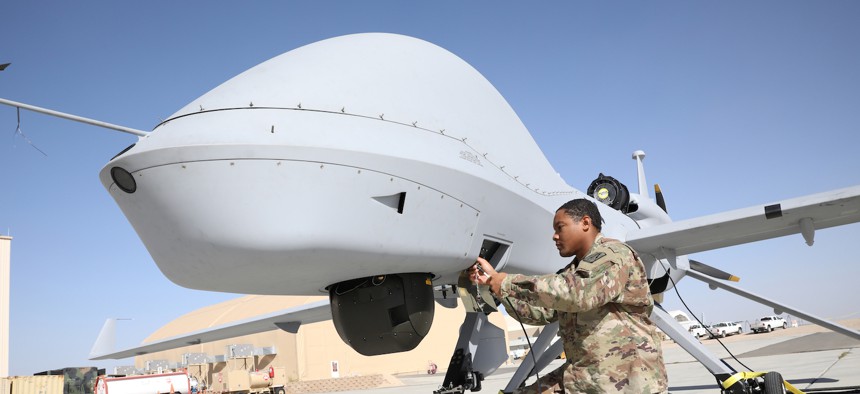
Drones, also known as unmanned aerial vehicles (UAVs), have completely changed the combat environment. These remotely operated weapons may be used for a number of operations, such as airstrikes, targeted killings, and monitoring. Drones provide a number of benefits, including the ability to deploy fast, a low operating cost, and most significantly a reduction in the possibility of losing people in battle. But the expanding usage of drones has also prompted a number of moral and legal questions.

The use of drones may often result in the death of civilians. Drone strikes have repeatedly led to the death or injury of uninvolved bystanders, despite the purported accuracy that these devices are designed to provide. Widespread criticism has resulted from this, and the morality of utilising such technology has also come into question. Furthermore, the deployment of drones enables countries to conduct clandestine war, making it challenging for the general populace to hold their governments responsible for their deeds. The international community must establish thorough legal structures to control the use of drones in conflict.

Another paradigm change in warfare technology is cyberwarfare. It describes the use of computer systems to interfere with an enemy’s infrastructure, steal confidential information, or undermine crucial services. Cyberwarfare has become a powerful tool in today’s linked world, as national infrastructure is more and more dependent on digital networks.

Power grids, healthcare systems, and banking networks may all be severely damaged by cyberattacks, which can lead to general chaos and disruption. Due to its anonymous character, cyberwarfare is not only difficult to protect against but also impossible to identify the offenders. Due to the possibility of using it to target a foe’s civilian population, this lack of responsibility has the potential to intensify wars. The international community has to make investments in enhancing cybersecurity safeguards, encouraging collaboration and openness, and establishing guidelines for conduct in cyberspace.