16 February 2015

Australia's 'Game of Thrones' Political Circus

Matt Purple
February 15, 2015

Earlier this week, Australian Prime Minister Tony Abbott beat back a vote to decapitate the center-right Liberal Party of his leadership. The question now is how many more antagonists can he fend off.

There’s Australia’s Labor Party, once moribund after two chaotic prime ministerships, is now surging in popularity. Its only question is whether they should strike Abbott now or let him limp into the next election. There’s Malcolm Turnbull, the environmentalist communications minister who was considered the most likely replacement for Abbott, and is now said to be biding his time, backed by a bloc of moderate Liberals distrustful of their PM’s conservatism. There’s Julie Bishop, the enigmatic Liberal foreign minister, who is officially standing shoulder-to-shoulder with Abbott, but whose support of his leadership is tepid to say the least.

If all this calls to mind a certain HBO show minus the full-frontal nudity, Abbott has a denial ready. He recently promised that his government would never degenerate into a “Game of Thrones circus, which the Labor Party gave us.” But it’s hard to watch the power struggles without thinking that, as Australian memes and T-shirtscheekily responded, “winter is coming” for Abbott. A recent News Corp pollfound mammoth margins of voters preferring both Bishop and Turnbull to Abbott, and the prime minister’s approval rating bottoming out at 24 percent. Abbott has often been called an Australian George W. Bush; now the comparison is complete.

Obama, Tim Cook, Others Debate Sharing Cyber Security Data

Thomas Claburn
2/14/2015

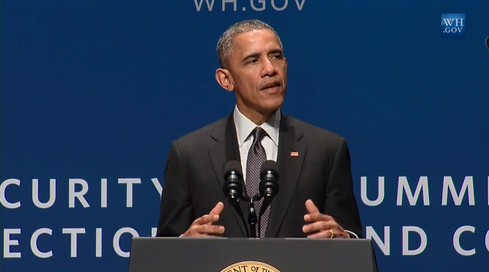
The Obama White House wants more effective sharing of cyber security data between the public and private sectors. Despite some snubs, Apple's Tim Cook spoke at a special summit on the issue.

Representatives from the public and private sector gathered at Stanford University on Friday, Feb. 13, to call for greater sharing of cyber security information amid lingering mistrust arising from involuntary information sharing programs run by intelligence agencies, both domestic and foreign.

The absence of four top tech leaders invited to the White House Summit on Cyber Security and Consumer Protection -- Facebook CEO Mark Zuckerberg, Google CEO Larry Page, Google executive chairman Eric Schmidt, and Yahoo CEO Marissa Mayer -- may convey something of that mistrust, or may merely reflect scheduling conflicts or expediency.

A Facebook spokesperson confirmed via phone that Zuckerberg is not attending, declining to cite a reason, but noting that Chief Security Officer Joe Sullivan is playing a prominent role at the event.

In an email, a Yahoo spokesperson said, "Our chief information security officer, Alex Stamos, will be representing Yahoo today. Given the focus of the conversation, it made the most sense to have Alex lead on our behalf."

Google did not respond to a request to clarify why Page declined to attend.

Yet, characterizing nonattendance as a snub sounds plausible because of past statements these executives have made framing governments themselves as security threats. Zuckerberg last year published an open lettercriticizing the US government for the damage it has done through indiscriminate information-gathering.

Zuckerberg wrote that he was "confused and frustrated by the repeated reports of the behavior of the US government," a reference to Edward Snowden's revelations about the scope and audacity of data gathering by the US and its allies.

"When our engineers work tirelessly to improve security, we imagine we're protecting you against criminals, not our own government," he wrote. "The US government should be the champion for the Internet, not a threat. They need to be much more transparent about what they're doing, or otherwise people will believe the worst."

Military Medical Implications of Future Megacity Operations


Given global urbanization trends, the Army must be prepared to confront challenges arising in megacities to remain a relevant instrument of national power. Megacities are urban areas with populations exceeding 10 million. They are an emerging feature of the global landscape and figure prominently into future strategic planning of the United States (1) (2) (3) and in partner nations (4). There are over 20 megacities right now, and by 2025 global urbanization trends (5) will push that number to 40 (6). Some are highly integrated, amply resourced and well prepared to deal with challenges. Others are less integrated and struggling to provide infrastructure and services for rapidly growing populations. In some megacities a fragile balance exists between dynamics of friction (unchecked growth, resource scarcity, growing economic separation, hostile actors that use the urban environment as a safe haven, and environmental risks) and dynamics of capacity (resilience, and anti-fragility; the ability to get stronger after a setback) (7) (8). Military operations in these environments have the potential to tip that balance and therefore require deep analysis, appreciation and understanding of the nuances of each place. The challenge will be ensuring that strategic objectives are achieved while disruption is minimized or eliminated. To be sure, this challenge is incredibly broad and will ultimately touch every part of the Department of Defense from highest level policy makers to the tactical formations asked to operate in megacities.

Here, we explore how to take on this challenge within the United States Army Medical Department (AMEDD), an organization well positioned to lead Army efforts in megacities by way of medical diplomacy combined with the Regionally Aligned Forces concept.

Megacities present numerous medical aspects of particular interest, some negative, others positive. In less integrated megacities the sheer density of people, lack of sanitation, and limited health infrastructure may increase the risk of disease outbreaks. Globalization increases the likelihood that a megacity will act as a global hub to spread disease across the world. On a more positive note, the Regionally Aligned Forces concept combined with medical diplomacy represents a significant opportunity for the AMEDD to lead the way in a positive, non-threatening manner (9). These efforts could lead better regional understanding and represent a proactive step to establishing healthy positive relationships if and when security assistance is needed.

Nuclear Specter Returns: 'Threat of War Is Higher than in the Cold War'


B-61 atomic bombs: The Ukraine crisis has increased the risk of a nuclear confrontation between Russia and the West.

The Ukraine crisis has dramatically worsened relations between NATO and Russia. With cooperation on nuclear security now suspended and the lack of a "red telephone," experts at the Munich Security Conference warn any escalation in tensions could grow deadly.

The scientists had no idea that their experiment could spell the end of civilization. On Jan. 25, 1995, Norwegian and American researchers fired a rocket into the skies of northwestern Norway to study the Northern Lights. But the four-stage rocket flew directly through the same corridor that American Minuteman III missiles, equipped with nuclear warheads, would use to travel from the United States to Moscow.

The rocket's speed and flight pattern very closely matched what the Russians expected from a Trident missile that would be fired from a US submarine and detonated at high altitude, with the aim of blinding the Russian early-warning system to prepare for a large-scale nuclear attack by the United States. The Russian military was placed on high alert, and then President Boris Yeltsin activated the keys to launch nuclear weapons. He had less than 10 minutes to decide whether to issue the order to fire.

Yeltsin left the Russian missiles in their silos, probably in part because relations between Russian and the United States were relatively trusting in 1995. But if a similar incident occurred today, as US arms expert Theodore Postol warned recently, it could quite possibly lead to nuclear catastrophe.

Italian Army Lays Out Future Vision

By Tom Kington
February 14, 2015

ROME — The Italian Army has launched a strategy and technology blueprint that stresses the role of civilian emergency operations and gives details of planned helicopter and vehicle procurements.

Launched in Rome on Feb 9, the document could win back the attention of policymakers who have recently focused more on Navy and Air Force modernization and spending.

Drawn up with the help of industry and strategy specialists, the document follows the passing of a law granting over €5 billion (US $5.7 billion) in funding in funding for new Navy ships and continued funding for the Air Force's flagship Joint Strike Fighter program.

While the Army has performed the largest share of work in recent deployments, including Afghanistan, Army procurement "has remained behind," said Germano Dottori, one of two academics involved in the writing of the document.

The Army may receive more attention now that Army Chief Gen. Claudio Graziano is due to become Italy's military chief of staff. On the funding front, the procurement of 381 armored vehicles has also been approved by Italy's parliamentary defense commission. The Freccia armored vehicles, built by an all-Italian consortium of Iveco and Finmeccanica unit Oto Melara, will equip an Army brigade, which will add to an existing brigade that has already been equipped with Freccias thanks to a previous order of 249 vehicles.

The new document states that the Army currently has 11 brigades, 3,800 combat vehicles, 7,300 support vehicles, 226 helicopters and 103,000 military personnel, joined by 9,800 civilian personnel.

U.S. Releases Satellite Imagery of Russian Troops and Weapons In the Ukraine

Andrew E. Kramer
February 14, 2015

ARTEMIVSK, Ukraine — The United States released satellite images on Saturday meant to bolster its case that Russia has joined separatists in an all-out assault on the Ukrainian Army during the window before a midnight cease-fire is to take effect.

When the pact was announced Thursday, some last-minute jockeying for position was expected before the cease-fire went into effect. Instead, a bloody free-for-all, alarming in its scope and intensity, ensued on the snowy steppe south of here, near the contested town of Debaltseve.

The three satellite images, posted on Twitter by the U.S. ambassador to Ukraine, Geoffrey Pyatt, showed landscapes in tones of gray, tracks in snowy fields and streaking plumes of smoke. The posts reiterated an assertion Friday by the State Department spokeswoman, Jen Psaki, who said, “We are confident these are Russian military, not separatist systems.”

One image purported to show four gun lines of towed artillery and one of self-propelled artillery northeast of Debaltseve. Another showed what Mr. Pyatt said were air defense systems, and the third showed the black, streaky exhaust plumes of what was labeled a “Russian multiple rocket launcher deployment” near Shakhtar, Ukraine.

The intensity and scope of the violence raised concerns that the agreement signed this week, which was rife with ill-defined and ambiguous provisions, might prove as ineffective as did the first cease-fire pact, which was signed in September.

The Group of 7 industrialized democracies and the European Union issued a joint statement of “concern about the situation in Ukraine” and the fighting for Debaltseve. The Group of 7, it said, was ready to impose additional sanctions on Russia.

Russian-backed militias, the statement said, are now “operating beyond the line of contact agreed upon in the Minsk agreements of September 2014, causing numerous civilian casualties.”

Military and ISIS Clash Over Iraqi Town Near a Base Housing U.S. Troops

By KAREEM FAHIM
FEB. 14, 2015

BAGHDAD — Iraqi soldiers and militants of the Islamic State group clashed again over the weekend in a western Iraqi town that has changed hands several times in skirmishes near a military base where American troops are training Iraqi soldiers.

Hundreds of Islamic State fighters captured most of the town, Baghdadi, on Thursday, but by Friday evening Iraqi soldiers had retaken several government buildings.

Then early Saturday, in what has become a familiar routine, the soldiers suddenly withdrew, all but handing the town back to the militants, according to local security officials.

“I have no explanation,” Col. Shaaban al-Obeidi, a commander in a police combat unit in Baghdadi, said on Saturday afternoon, adding that the militants were surrounding a residential complex where hundreds of civilians were staying. “They have put all those families in danger,” Colonel Obeidi said.

Eight months after Islamic State militants stormed areas of northern and western Iraq, lapses by the army have left the militants in control of important towns, despite airstrikes by the United States and other forms of military support for the Iraqi troops.

Concerns about the army’s performance have also threatened to delay a long-awaited offensive on Mosul, Iraq’s second-largest city.

The militants have been especially resilient in the western province of Anbar, including around the Ayn al-Asad base, near Baghdadi, where about 300 American troops are training Iraqi soldiers.

On Friday morning, eight militants tried to infiltrate the base, raising concerns that the American soldiers could be drawn into ground combat.

The American troops were “several kilometers” away, the United States military said in a statement, and Iraqi soldiers killed the militants before they could attack.

The sudden withdrawal of Iraqi forces on Saturday highlighted the challenges facing the government of Prime Minister Haider al-Abadi as it tries to unify and professionalize the forces fighting the Islamic State, also known as ISIS or ISIL.

This Nuke Proved Size Doesn’t Matter

by PAUL HUARD

The Davy Crockett was a tiny, unnerving, atomic tank-killer

Early in the Cold War, NATO worried that thousands of Russian tanks might pour through the Fulda Gap—the lowland corridor between Frankfurt and the East German border—and overwhelm alliance forces.

The Warsaw Pact’s advantage in armor was huge. Some intelligence analysts predicted that a single NATO battalion—a 300 0r 400 troops and 40 or 50 fighting vehicles—could face as many as 120 advancing Soviet tanks within 30 minutes. And there would be even more follow-on forces behind the initial armored wave.

So many Soviet tanks could roll into West Germany that some NATO planners grimly joked—or half-joked—that their war strategy was to “fall back to the Pyrenees and go nuclear.”

From 1961 to 1967, one way U.S. forces could “go nuclear” in Europe was tiny … and unnerving for its own users. The Davy Crockett was a recoilless rifle that fired a 76-pound atomic projectile—the smallest, lightest nuke ever deployed by the United States.

It was a classic example of why in some cases size doesn’t matter. In an age before modern anti-tank missiles, the Davy Crockett was a battlefield equalizer designed to fry enemy tank crews with gamma rays and help stop a Soviet invasion cold.

In theory. In practice, it never would have worked.

Beginning with the administration of Pres. Dwight Eisenhower in the 1950s, the U.S. deployed many nuclear weapons to Western Europe, ranging from gravity bombs to intermediate-range ballistic missiles based in the U.K and West Germany.

But there was also a growing feeling among planners and some politicians on both sides of the Atlantic that if annihilating cities and military installations was the only nuclear option, then the Soviets gained a battlefield advantage.

Are Submarines About to Become Obsolete?

Harry J. Kazianis
February 14, 2015 

What would happen if U.S. nuclear attack submarines—some of the most sophisticated and expensive American weapons of war—suddenly became obsolete? Imagine a scenario where these important systems became the hunted instead of the hunter, or just as technologically backward as the massive battleships of years past. Think that sounds completely insane? If advances in big data and new detection methods fuse with the anti-access/area denial (A2/AD) ambitions of nations like China and Russia, naval planners around the world might have to go back to the drawing board.

Submarines: The New Battleship?

The revelation is alluded to in a recent report by the Washington, D.C.–based Center for Strategic and Budgetary Assessments (CSBA) called “The Emerging Era in Undersea Warfare.”Smartly named by a certain TNI editoras the “think-tank’s think-tank,” CSBA has crafted in the last decade many of the most detailed and sophisticated reports regarding the most pressing national-security challenges around—sometimes years before anyone else. Ever heard of a little operational concept called AirSea Battle? They were at the forefront of it before it was in the news.

In a piece for TNI, the report’s author, Bryan Clark, lays out the problem in more layman's terms:

Since the Cold War submarines, particularly quiet American ones, have been considered largely immune to adversary A2/AD capabilities. But the ability of submarines to hide through quieting alone will decrease as each successive decibel of noise reduction becomes more expensive and as new detection methods mature that rely on phenomena other than sounds emanating from a submarine. These techniques include lower frequency active sonar and non-acoustic methods that detect submarine wakes or (at short ranges) bounce laser or light-emitting diode (LED) light off a submarine hull. The physics behind most of these alternative techniques has been known for decades, but was not exploited because computer processors were too slow to run the detailed models needed to see small changes in the environment caused by a quiet submarine. Today, “big data” processing enables advanced navies to run sophisticated oceanographic models in real time to exploit these detection techniques. As they become more prevalent, they could make some coastal areas too hazardous for manned submarines.

15 February 2015

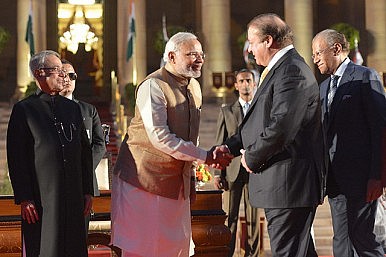
India-Pakistan: The Curious Case of the MFN Status

By Huma Sattar
February 14, 2015

For many years, Pakistan has been struggling with the idea of granting MFN status to India. In 2011, at least, it seemed that dialogue between the two countries was delivering some progress. MFN status appeared to be a matter of when, not if, and indeed this was candidly communicated to the business community and the media.

The collegial agreement on the Composite Dialogue sought to discuss several issues affecting Pakistan-India relations, including peace and security, Kashmir, water and territorial issues, terrorism, and economic cooperation. Trade appeared to be the low-hanging fruit for stakeholders on both sides of the border, who hoped that better economic relations would pave the way for political stability and normalized relations between the two countries.

Several meetings into the dialogue Pakistan agreed to grant MFN status to India, renaming it non-discriminatory market access (NDMA), in the first quarter of 2014, provided India gave market access to Pakistan for some 300 items. The meeting also came with promises to ease visa processes across the border and open banks on each side to accelerate transaction processes. The final decision was postponed until after the Indian elections so that the MFN status could be offered to the new Indian government in office.

However, speaking at a recent conference organized by the Indian Council for Research on International Economic Relations, Pakistan’s High Commissioner to India, Abdul Basit, said that extending MFN status to India would severely harm Pakistan’s local economy. Basit argued that growing bilateral trade has hardened India’s stance on the issue of Kashmir.

OBAMA VISIT: GIVING INDIA A GEOPOLITICAL STRATEGIC SPACE – ANALYSIS

By Simi Mehta
FEBRUARY 13, 2015

There appears to be a cognizable vibrant shift towards an equitable partnership-based relationship between India and the US after Narendra Modi’s maiden visit to the US as the prime minister of India. This raised new hopes and expectations that the Indo-US defence collaboration under the auspices of the strategic cooperation would reach to greater heights beginning with the last two years of Obama administration under the stewardship of Prime Minister Modi. Their first joint statement in September 2014 placed defence cooperation as the staple aspect of the bilateral relationship.

The 2014 Quadrennial Defense Review cited India as one of the anchors for ensuring regional security and helping the US manage tensions and prevent conflict in the Asia Pacific on issues ranging from humanitarian assistance to maritime security to counterterrorism. It underscored the importance of India’s rise for the United States as an increasingly capable actor in the region, and the deepening bilateral strategic partnership was made evident through the Defense Trade and Technology Initiative (DTTI).

On the occasion when India showcased the pride and might of its armed forces, defence security cooperation emerged as the keyword of the second visit of the POTUS. President Barack Obama and Prime Minister Modi took the bilateral defence ties to a “new level”, by renewing the 10-year Defence Framework Agreement that was signed in the year 2005 by the then defence minister Pranab Mukherjee and his American counterpart Donald Rumsfeld. While Obama sat bewildered witnessing the India’s advertisement of its military might at the Republic Day parade, he agreed in principle to pursue joint development and production projects under DTTI, which could become the hallmark of the Modi government’s ‘Make in India’ initiative.

Dassault can also sign contracts

By Claude Arpi
14 Feb , 2015

Last week, a rather surprising development occurred.

…‘clarified’ that France will not assume full liability for the HAL-built aircrafts…

A senior official of the Armament Procurement Agency (Direction gรฉnรฉrale de l’armement or DGA) of the French Ministry of Defence asserted that a 2012 agreement to provide Rafales to India never committed Dassault Aviation to guarantee aircraft manufactured in India.

For the first time, Paris openly sided with Dassault, a French family concern, in its talks with Delhi, the latter arguing that liabilities during the process of manufacturing 108 aircrafts in India, should be the French supplier’s responsibility. For months now, this has been the main bone of contention between the 2 parties.

Laurent Collet-Billon, the DGA’s boss affirmed: “Dassault will not be responsible for the whole contract. It is a co-management setup.”

He also ‘clarified’ that France will not assume full liability for the HAL-built aircrafts: “It cannot be a problem, because it was not in the request for proposals (RFP),” he added. It is not what the Indian Ministry of Defence says.

Speaking to reporters on February 9, Collet-Billion also admitted: “A lot of progress has been made since 2012.” The French official however latter agreed that the negotiations should “give way to a contract for the 126 fighters plus 63 options”.

…the Indian Air Force (IAF) required at least 45 fighter squadrons to counter a ‘two-front collusive threat’, while the government has sanctioned 42 squadrons only…

Not Your Dad’s Taliban: Afghan Taliban Insurgency Is Becoming More Complex

By Sudarsan Raghavan
February 13, 2015

FAIZABAD, Afghanistan — The Taliban in this northern province allows girls to attend school. It doesn’t execute soldiers or police. Its fighters are not Pashtun, the main ethnic group that bred and fueled the insurgency. Some members are even former mujahideen, or freedom fighters, who once despised the Taliban and fought against its uprising.

“The Taliban here are against the ideology of the Taliban in the south,” explained Maizuddin Ahmedi, 20, a former Taliban member who reflects the local faction’s atypical nature: He has a Facebook page, tweets regularly and wears a beanie emblazoned with “NY.”

“They don’t behead soldiers,” he said.

As the United States reshapes its military footprint in Afghanistan, the Taliban is transforming into a patchwork of forces with often conflicting ideals and motivations, looking less like the ultra-religious movement it started out as in the mid-1990s. The fragmentation may suggest the movement is weakening, but it is forcing Afghanistan’s government to confront an insurgency that is becoming increasingly diverse, scattered — and more lethal.

What is unfolding here in Badakhshan province offers a glimpse into these complexities — and the future of a conflict in which the U.S. combat mission is formally over. When the Taliban ruled Afghanistan, from 1996 to 2001, this was the only province it was never able to control. Now, the insurgency is making inroads here and in other parts of the north, outside its strongholds in the south and east.

The Taliban in Badakhshan has gained strength precisely because it is different from the core insurgency. Its fighters are using their ethnic and tribal ties to gain recruits and popular support, while their knowledge of the landscape helps them outmaneuver Afghan security forces and control lucrative sources of funding.

All the Reasons Islamic State Won’t Have It Easy in Afghanistan

by KEVIN KNODELL

For one, there’s Taliban to deal with

On Feb. 9, an American drone strike killed Abdul Rauf Khadim, a former Afghan Taliban leader turned deputy chief of Islamic State’s apparent Afghanistan-Pakistan franchise.

For awhile now, some militants in Afghanistan and Pakistan have been waving the flag of Islamic State—the same terrorist army presently ravaging Iraq and Syria.

“In Afghanistan, we see an initial emergence of ISIS,” Sen. John McCain, chairman of the Senate Armed Services Committee, said Feb. 11 during a hearing on Afghanistan. “The threats are real, and the stakes are high. We cannot let Afghanistan become a sanctuary for Al Qaeda or ISIS.”

But how worried should we be? The answer is—not very.

“Thus far we believe that the nascent Daesh presence in Afghanistan represents more of a re-branding of a few marginalized Taliban,” Gen. John Campbell, commander of U.S. forces in Afghanistan, told senators on Feb. 12.

Campbell added that he takes the potential threat seriously, referring to the group using an Arabic acronym. But even so, the range of challenges the general has on his plate in Afghanistan range far beyond the somewhat recent addition of Islamic State.

The group’s potential aspirations are just one small factor of the general’s unenviable task—helping the Afghan government stabilize their country. He must also consider how events in Pakistan and border security play into this challenge.

Boots on the Ground: The Realities in Afghanistan, Iraq, and Syria

By Anthony H. Cordesman
FEB 13, 2015

The Obama administration and its strongest opponents in Congress may not have all that much in common, but one thing they do share is the constant misuse of the word “strategy.” Strategy does not consist of stating a broad policy goal and empty rhetoric. It consist of stating an actual plan with clearly defined goals, specific means to achieve, milestones for action, estimates of the necessary resources and their availability, estimates of cost-benefits and risks, and metrics to measure success. A sound bite that fits in Twitter or a fortunate cookie is not a strategy.

Getting this wrong is particularly dangerous when one starts talking about the use of military force and mindlessly throwing around terms like “boots on the ground” with no actual definition of what is involved or what the term is intended to mean. Every American has to accept the fact that the coming presidential election means two years of vacuous partisan political posturing, but any form of war is serious and the stakes in Afghanistan, Iraq, and Syria are all too real.

The Need for an Integrated Civil-Military Strategy, Based on Command and Embassy Expertise on the Scene

To begin with, these are areas where the chairman of the Joint Chiefs and the key commanders on the scene, along with the ambassadors and State Department who have responsibility for the political and economic dimensions of a given operation, need to be asked for detailed advice.

Afghanistan, Iraq, and Syria do not have that much in common, but one thing is clear in all three cases. U.S. military action must be tied to a civil-military strategy that offers the best possible hope of producing a stable and friendly nation as its ultimate outcome. No amount of tactical victories in the field, and no amount of U.S. military force that merely defeats the immediate enemy threat, will create that stability. Military success is critical, but it is only a means to an end.

Top Afghanistan Commander Pushes for Flexibility in Troop Drawdown

BY GORDON LUBOLD
FEBRUARY 12, 2015

The top commander in Afghanistan said he hopes to have more flexibility in the number of American troops available for the mission in Afghanistan in the latest sign the U.S. military drawdown there may not happen as fast as expected.

Gen. John Campbell, the commander of the International Security Assistance Force in Kabul, told lawmakers Thursday that he has provided a set of options to the White House that would allow him to adjust his “force posture” through the year, strongly indicating that he would like to have the latitude to have more troops in Afghanistan as he may need them. His request comes amid significant political support from both parties to give him what he wants.

“I’m particularly concerned about the summer of 2015, the Afghans — this is the very first fighting season completely on their own,” Campbell told the Senate Armed Services Committee Thursday. “They’ve had the lead for two years. They’ve done quite well, but this is the first one at the current force levels that we’re at.”

The current plan outlined by President Barack Obama last year is to draw down to fewer than 5,000 troops in Afghanistan by the end of this year, and leave all but a handful of troops in Afghanistan after 2017.


With the recent history of Iraq looming, U.S. military commanders who typically want the flexibility to determine force strength for any mission have flinched over the prescribed “glide path” of removing troops from Afghanistan after more than 13 years of war.

China Should Back India for a Permanent UN Security Council Seat

By Akhilesh Pillalamarri
February 13, 2015

On Thursday, multiple Indian media outlets were abuzz with the ‘story’ that the Chinese government had stated that it had no objections to India and Brazil joining the United Nations Security Council as permanent members. While this story was, in fact, not true, and an exaggeration, the recent Chinese position is that India should play a greater role at the United Nations. This position was articulated at a recent meetingbetween the Chinese, Russian, and Indian foreign ministers in China.

Despite the lack of explicit Chinese support for an Indian bid to join the UNSC as a permanent member, India should make the most of China’s favorable position to press China to support its bid. India and China often vote together at international forums despite their bilateral differences and border disputes. Moreover, an India on the UNSC would provide a neutral and independent counterweight to other powers, and would help usher in a more multipolar world, as many Chinese analysts wish for. Despite being a liberal democracy, India has supported Russia and China on issues of non-interference in the affairs of other states and would help balance the UNSC away from the Western bloc.

China would be more favorable towards an Indian bid or a larger Indian and Brazilian role at the U.N. than the bids of Japan and Germany. Japan and Germany, along with Brazil and India form the G4 nations grouping, an informal agreement among the four nations to support each other’s bids to join the Security Council. However, their bids are all opposed by regional rivals, such as Pakistan for India’s bid, and Argentina for Brazil’s bid.

China, Pakistan Renew 'Iron Brotherhood'

By Shannon Tiezzi
February 14, 2015

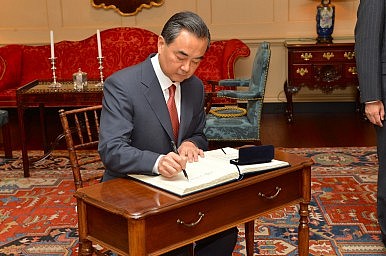
Chinese Foreign Minister Wang Yi wrapped up a two-day visit to Pakistan on Friday. Wang met with a number of top Pakistani leaders, including President Mamnoon Hussain, Prime Minister Nawaz Sharif, Sharif’s national security and foreign affairs advisor, Sartaj Aziz, and Army Chief General Raheel Sharif.

Throughout the meetings, both sides affirmed China and Pakistan’s friendship and agreement on various issues. “China-Pakistan friendship is always rock firm regardless of changes in the international and regional situation,” Wang proclaimed. Prime Minister Sharif, for his part, said that friendship with China was the cornerstone of Pakistan’s foreign policy. Sharif also hailed the “the all-weather strategic partnership between the two countries.”

As Ankit noted yesterday for The Pulse, the biggest announcement to come out of Wang’s visit was the confirmation that Chinese President Xi Jinping will visit Pakistan in the coming months. There are no details yet on the timing of the visit, but Pakistani officials had previously said they expected Xi to be the chief guest at Pakistan’s military parade, which will take place on March 23, Pakistan’s national day. The visit will be Xi’s first trip to China’s “iron brother” since assuming office — last year, Xi had to cancel a planned visit to Pakistan due to large-scale protests in Islamabad. Interestingly, this week’s trip was also Wang’s first official visit to Pakistan, though he had previously visited both India (June 2014) and Afghanistan (February 2014).

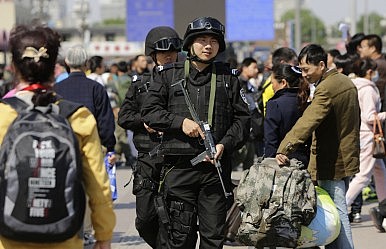
How China Defines Terrorism

By Zunyou Zhou
February 13, 2015

Following the 9/11 attacks, the media frequently reported that China was planning to adopt a comprehensive anti-terrorism law. It was not until last November, however, that the National People’s Congress (NPC), China’s top legislature, finally published the much-anticipated draft law on counter-terrorism, consisting of 106 articles, for public discussion.

Despite overwhelming domestic acclaim, the draft law is sparking sharp international criticism. Human Rights Watch (HRW) recently accused China of attempting to use the law to legitimize ongoing human rights violations and to facilitate future abuses. Among the concerns raised by the HRW, the definition of terrorism ranks number one. In the words of the HRW, the definition of terrorism is “dangerously vague and open-ended.”

Evolution of the Definition

Actually, this law is not the first Chinese legal instrument to define terrorism. In December 2003, the Ministry of Public Security published China’s first terror list, enumerating four terrorist organizations and 11 terrorists. The national police authority also announced concrete criteria for designating “a terrorist organization” and “a terrorist.” These criteria remained in the form of an administrative regulation rather than a parliamentary law. Later, in October 2011, the NPC’s Standing Committee passed a “Decision on Issues Related to Strengthening Anti-Terrorism Work.” Although it falls short of a full-blown anti-terrorism law, the short Decision, consisting of eight articles, sets up another significant legal foundation for Chinese anti-terrorism efforts. In particular, the legislation provides definitions for “terrorism,” “a terrorist organization,” and “a terrorist.”

(W)ARCHIVES: IS THE PAST PROLOGUE FOR THE ISLAMIC STATE?

Kevin Woods and Jessica Huckabey
February 13, 2015 

Islamic State’s (IS) capture of large swaths of territory in Iraq and Syria has reignited interest in what many had hoped was a closed chapter of U.S. military history in Iraq: the fight against Al Qaeda in Iraq (AQI). While AQI was defeated, it was not destroyed. In fact, as a timeline offered by the Brookings Institutionsuggests, the Islamic State’s emergence appears to be just another step in AQI’s regional evolution.

A challenge for the American objective of degrading and ultimately defeating IS is developing a clear understanding of how AQI failed. In addition, because IS’s leader, Abu Bakr al-Baghdadi, isn’t likely to publish a tell-all memoir any time soon, being able to see what the organization’s predecessors were learning in Iraq during AQI’s supposed demise would also help us understand IS’s growth. Finally, it would also be useful to examine what the Islamic State learned from AQI’s “defeat,” and how it is applying those lessons.

Notwithstanding its remarkable innovations in funding and information operations, the Islamic State has a lot in common with its AQI predecessors. It faces the same, if not more challenging, tasks of population control, internal and external power struggles, and security—especially from the rapid influx of unvetted foreign fighters. Unsuccessful execution of these tasks doomed past Salafist jihadist groups. Those familiar with Abu Musab al-Suri’s writings assessing failed jihads, especially in Syria, will recognize the jihadist movements’ miserable track record in moving past the recruit-fight-martyr stages of state-building.

ISIS Attacks Airbase Housing U.S. Troops

Nancy A. Youssef
02.13.15
Source Link

No Americans were injured, but with ISIS holed up in a town less than 10 miles away, this may not be the last such assault.

Two dozen jihadists—including at least four suicide bombers—charged at the perimeter of an Iraqi base that is home to U.S. troops on Friday, marking the first such attack by suspected members of the self-proclaimed Islamic State. 

The assault on the Ayn al Asad Airbase near the city of Ramadi in Iraq’s Anbar province comes just days after the Islamic State took control of the nearby town of al Baghdadi on the Euphrates River, less than 10 miles away. That ISIS took a town so close to the base had immediately raised fears that the terror group would try to strike at American troops.

During the U.S. war in Iraq, the base was the site of frequent attacks by what was then known as Al Qaeda in Iraq, the group that subsequently renamed itself Islamic State and declared a supposed “caliphate” last year. It is now widely known by the acronyms ISIS or ISIL.

As one Pentagon official explained to The Daily Beast, “We are all too familiar with this kind of attack.”

In the weeks leading up to Friday’s assault, suspected ISIS fighters had launched small-arms attacks, on average, twice a week. None of those had injured a U.S. service member but ISIS may well have been probing the base defenses.
“We are all too familiar with this kind of attack.”

Ukraine or the Rebels: Who Won in Minsk?

Nicolai N. Petro
February 13, 2015

Comparing the “Package of Measures to Ensure the Implementation of the Minsk Accords” to the Protocol Document submitted by the representatives of the Donetsk and Lugansk Peoples Republics, it is readily apparent that the document signed on February 12 is largely based on the rebels’ proposals.

The only omission worth noting is the absence of any mention of ending the military campaign in the East, which is referred to by Kiev as the Anti-Terrorist Operation (ATO). This is understandable, since it is highly unlikely that such a measure could pass in the Ukrainian parliament, where several influential political actors, including Prime Minister Arseny Yatsenyuk, Interior MinisterArsen Avakov, and the former speaker, now head of the National Security and Defense Party, Oleksandr Turchinov, are on record as committed to military victory in Donbass.

The most significant rebel achievement was getting Kiev to recognize a second de facto demarcation of force line, and a withdrawal of forces to the maximum line of separation of forces, which will now be between 70 and 140 kilometers. This concession by Kiev allowed the negotiations to proceed without getting bogged down in disputes over territory which, in any case, are supposed to be resolved by the Law on “Temporary status of local self-administration in certain regions of Donetsk and Luhansk oblast,” commonly referred to as the Law on Special Status.

Yet, it should be noted that the proposals presented by the rebels in their Protocol Document made a number of significant concessions to Kiev at the very outset. Among these:

– No mention of federalism or autonomy. The rebels even used Poroshenko's own term—"deep decentralization"—to define regional self -government.

– No mention of language, cultural, or religious rights;

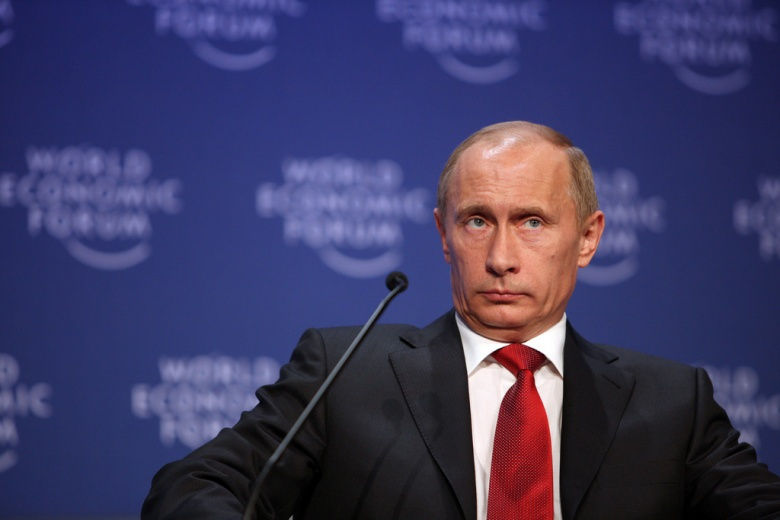
What brought Vladimir Putin to the table over Ukraine, and how to keep him there

By Robin Niblett
February 12, 2015

The signing of the ‘Minsk II’ ceasefire agreement in the Belarus capital on Feb. 12 raises the question of whether the United States and Western governments should shelve the idea they have hotly debated over the past few weeks over providing defensive weapons such as radar systems, unarmed surveillance drones and armored transports to Ukrainian forces.

In recent months, Russian President Vladimir Putin appeared to have concluded that the original Sept. 5, 2014 Minsk agreement would constitute a strategic defeat, as it froze the conflict with only a third of the combined ‘oblasts’ of Donetsk and Lugansk under the separatists’ control. This was unlikely to give him the leverage to achieve his long-term goal of a subservient Ukraine within a broader Russia-dominated neighborhood. A new injection of Russian military supplies, trainers and ‘volunteers’ to the separatists at the start of the year led to a major military escalation and loss of life among civilians and fighters alike on both sides.

Since mid-January, the separatists made some significant gains, specifically retaking the ruins of Donetsk airport, pushing West towards Buhas and drawing a tight noose around the strategically important town of Debaltseve. But despite these gains (some 190 square miles by some estimates), the separatists are still far from controlling the two provinces. So what brought them and Putin to the bargaining table?

Ukrainian resistance and the growing impact of Western economic sanctions, whose removal became an ever more distant prospect as the conflict escalated, may have played a role. Another factor, however, will have been the transatlantic debate over providing arms to the increasingly beleaguered Ukrainian forces.

Putin’s war on the West

Feb 14th 2015 

As Ukraine suffers, it is time to recognise the gravity of the Russian threat—and to counter it

HE IS ridiculed for his mendacity and ostracised by his peers. He presides over a free-falling currency and a rapidly shrinking economy. International sanctions stop his kleptocratic friends from holidaying in their ill-gotten Mediterranean villas. Judged against the objectives Vladimir Putin purported to set on inheriting Russia’s presidency 15 years ago—prosperity, the rule of law, westward integration—regarding him as a success might seem bleakly comical.

But those are no longer his goals, if they ever really were. Look at the world from his perspective, and Mr Putin is winning. For all his enemies’ machinations, he remains the Kremlin’s undisputed master. He has a throttlehold on Ukraine, a grip this week’s brittle agreement in Minsk has not eased. Domesticating Ukraine through his routine tactics of threats and bribery was his first preference, but the invasion has had side benefits. It has demonstrated the costs of insubordination to Russians; and, since he thinks Ukraine’s government is merely a puppet of the West (the supposed will of its people being, to his ultracynical mind, merely a cover for Western intrigues), the conflict has usefully shown who is boss in Russia’s backyard. Best of all, it has sown discord among Mr Putin’s adversaries: among Europeans, and between them and America.
In this section

Does Russia Need a Chinese Bailout?

Benn Steil, Dinah Walker
February 13, 2015

Russia’s foreign exchange reserves have fallen by nearly one-third since October 2013; they’ve fallen 20 percent just since September 2014. Whereas the country still has over $300 billion in reserves, about $150 billion of this may be illiquid; it also has close to $700 billion in external debt.

Whom would Russia turn to for dollars in a crisis?

The IMF is the most obvious place. The IMF approved lending to Russia of about $35 billion (SDR 24.8 billion) in the 1990s. With the sort of “exceptional” access that the Fund has granted to Greece, Portugal, Ireland, and Ukraine, Russia could potentially borrow up to $200 billion today, as shown in the figure above. But when it comes to Russia, the United States and Europe are not in a generous mood at the moment. Moscow would almost surely want to look elsewhere.

What about its new BRICS friends? Putin had said in 2014 that the new BRICS Contingent Reserve Arrangement (CRA) “creates the foundation for an effective protection of our national economies from a crisis in financial markets.”

Russia could potentially borrow up to $18 billion through the CRA. But here’s the rub: it can only do so by being on an IMF program. Without one, Russia could only borrow a mere $5.4 billion – chicken-feed in a crisis. In fact, borrowing such a pitiful sum might only precipitate a crisis by hinting that one was coming.

What about China? Here, things get interesting. Under a central-bank swap line agreed in October, Russia could borrow up to RMB 150 billion – the equivalent of $24 billion at current exchange rates. China’s Commerce Minister Gao Hucheng has reportedly said the swap line could be expanded.

Better Off Alone: Sweden Makes Single Work

John Allen Gay
February 14, 2015

It’s hard to be single on Valentine’s Day, no matter how much Buzzfeed tries tocheer you up. But with pizza and bitter, lonely tears, you’ll pull through. There are even people who prefer being alone on the big day. The same is true for countries: across history, many have deliberately stayed out of alliances. A few have even tried to cut themselves off from the outside world entirely. It doesn’t always go well—to paraphrase an apocryphal Leon Trotsky quote, you may not be interested in the world, but the world is interested in you. Neutral Belgium and Luxembourg got steamrolled at the beginning of both World Wars. The United States and the Soviet Union were painfully drawn into the Second World War after trying to stay out. But a few countries have made single work—with Sweden among the most successful.

Believe it or not, Sweden was once a major European power—an empire, no less, ringing the Baltic with its possessions in the seventeenth century. Yet a string of setbacks saw Sweden beaten back and, at the dawn of the nineteenth century,deprived of some of its core territories. A new approach was needed—but first, some cleanup. The Swedes joined the Sixth Coalition against Napoleon, kicked his Danish friends out of the Scandinavian Peninsula, and forcibly took the Norwegians under their wing. Sweden hasn’t done much since.

It’s gone well for the Swedes—it kept them out of the conflicts of the middle of the nineteenth century and both of the World Wars, with their most major deviation (a somewhat sympathetic approach to Germany in WWI) being abandoned when it started to hit the pocketbooks of ordinary people. Remaining neutral in the Second World War was a major achievement, given that all of Sweden’s neighbors participated in the conflict at one point or another. Keeping out wasn’t easy or cheap: the Swedes increased their defense budget more than tenfold and had to navigate both Allied and Axis demands. Yet the benefit was great: while the lands around them were torn, while cities were reduced to ash, while the Holocaust murdered millions, Sweden was safe. At the margins, they were able to extend their safety to others, taking in refugees and extending diplomatic protection to thousands of Jews inside the Third Reich.