7 May 2014

Sharif And The Pakistan Taliban: Peace Talks Loss Is Washington’s Gain – Analysis

May 5th, 2014
By Zachary J. Rose

It appears as though the latest attempt at reconciliation between the government of Pakistan and the Tehrik-i-Taliban Pakistan (Pakistan Taliban, or TTP) may be falling apart without any new breakthroughs. However, given the strategic dimensions involved, one has to wonder if any stakeholders were holding out any real hope of a peaceful resolution in the first place.

For several months, the government of Pakistan has apparently been attempting to end its conflict with the TTP, a militant insurgent network with ties to Al Qaeda and the Afghan Taliban. The TTP, which formed in 2007 and operates primarily in the northwestern regions on the afpak border, is fighting to impose strict Sharia law across Pakistan, and as such it rejects the country’s current constitution, which it believes fails to adequately enshrine Islamic law. Peace talks and reconciliation with the TTP were major campaign promises of Pakistani Prime Minister Nawaz Sharif prior to his election victory last summer.

Despite government efforts, peace talks have failed to gain any momentum, with both sides continuing to engage in military actions against the other. Brutal executions and military strikes have often left the talks stalled or officially suspended.

On March 1 the TTP agreed to a month-long ceasefire, during which time the peace talks could – it was hoped – make some real progress. Prime Minister Sharif is under a great deal of political pressure to end the fighting, which has resulted in thousands of deaths over the years. Despite their primary goal of overthrowing the Pakistani government and spreading Sharia law through jihad, the TTP has come forward with a few short-term, more realistic demands such as the release of several hundred prisoners, who the group claims to be non-combatants.

Earlier talks produced a ceasefire extension until April 10, but more recently, the TTP has announced that the combat freeze will not be renewed past this date. Both sides have asserted that the talks will continue despite resumed hostilities, though it is unlikely that any serious discussion will take place. Far more likely is that the peace process will regress to its familiar form: paused or cancelled every few weeks in the wake of some new attack.

It is still unclear what might have ever resulted from these talks. After all, the TTP’s ultimate objectives are completely unacceptable to Pakistan. Even if the TTP were to give up its goal of imposing Sharia law across the country, they would at the very least demand a full withdrawal of Pakistani forces from TTP-controlled tribal territory. Prime Minister Sharif could not accept these conditions – nor could the United States, which has shown no willingness to decrease its military footprint in the region.
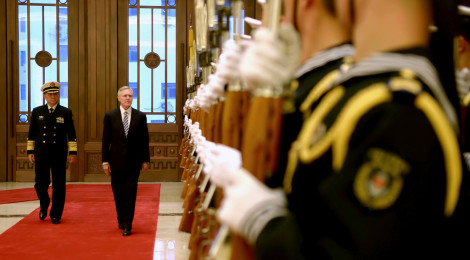
CIA Is Dismantling Its Bases and Deactivating Its Paramilitary Units in Afghanistan

May 5, 2014
CIA Falls Back in Afghanistan
Kimberly Dozier
The Daily Beast

KABUL, Afghanistan—The CIA is dismantling its frontline Afghan counterterrorist forces in south and east Afghanistan, leaving a security vacuum that U.S. commanders fear the Taliban and al Qaeda will fill—and leaving the Pakistan border open to a possible deluge of fighters and weapons.

“The CIA has started to end the contracts of some of those militias who were working for them,” said Aimal Faizi, spokesman for outgoing Afghan President Hamid Karzai, a longtime critic of the CIA’s Afghan operatives. “Some of them were in very important locations, so we deployed our troops there.”

U.S. and Afghan military commanders tell The Daily Beast that Afghan forces are stretched too thin to replace many of those departing CIA paramilitaries. Thousands more CIA-trained operatives are about to get the boot ahead of what already promises to be a bloody summer fighting season. That could mean spectacular attacks against U.S. and Afghan targets just as the White House is weighing its long-term commitment to Afghanistan. And it could give the now-small al Qaeda movement inside the country more freedom to grow and eventually hatch new plots more than a decade after the invasion meant to wipe out the perpetrators of the Sept. 11th attacks.

Senior U.S. officials said the slow dismantling of the CIA’s forces has also alarmed U.S. lawmakers, who had assumed those forces would remain in the fight against al Qaeda and the Taliban after U.S. troops withdrew.

But CIA officials told lawmakers this past week that with U.S. troops slowly closing bases across the country, the intelligence agency’s footprint also has to shrink. The CIA doesn’t want to face another high-risk situation like Benghazi, Libya, where militants attacked both the U.S. diplomatic outpost and the CIA base. The U.S. ambassador, one of his staff and two CIA employees were killed in that strike.

The Obama administration had wanted to leave up to 10,000 U.S. troops in the country after the December 2014 withdrawal deadline. But the current Afghan president has refused to sign a long-term security agreement, and the Afghan presidential election seems headed for a runoff, meaning it could be months before a new Afghan president takes charge.

So U.S. forces here are rapidly closing outposts, preparing to withdraw to six “enduring” bases that could remain if a security deal goes through before early fall. While the CIA is not affected by the security agreement, it relies on the U.S. military for protection and logistical support—especially at its far-flung bases in south and east Afghanistan. Just months ago, the talk in administration circles was that these paramilitaries would be significantly expanded in the near future. Now, it appears, the opposite is taking place.

CHINA: ENGAGEMENT VS. ESTRANGEMENT

May 4, 2014

“We welcome Chinese participation, and we welcome quite frankly the growth of China as a military power in the Pacific. There is nothing wrong with that.”

Admiral Harry Harris, Commander of the U.S. Pacific Fleet, made that statement recently when discussing the acceptance by China’s People’s Liberation Army-Navy (PLA-N) of an invitation to take part in RIMPAC, the world’s largest international maritime exercise. RIMPAC will take place in June off the coast of Hawaii, and for the first time in its 23 previous iterations, will include PLA-N forces. As a matter of fact, this will also mark the first time any Chinese forces have ever taken part in a large, U.S. military-led naval exercise, anywhere.

For some, the fact that the number two U.S. admiral in the Pacific theater — his immediate boss is ADM Sam Locklear, commander of all U.S. forces in the Pacific Command area of operations — would make a statement that “we welcome” the growth of China as a military power lacks credulity, or is grossly Pollyannaish, or worse. I disagree. There is more to gain by engaging with the Chinese where we have shared or common interests, than there is by continuing to treat and view their rise in almost exclusively negative terms, or by thinking the United States can contain that rise in some way through isolation.

First, hearkening back to the omnipresent importance of the narrative, our words absolutely matter, but what matters most is that the deeds match thewords. The lack of that alignment is precisely what does us in (impacts our reputation, our credibility, our cachet, etc.) with unintended strategic communication missteps in examples like “the pivot”, the Syria red line, and a host of other examples that Wikileaks and Snowden have made public. Furthermore, when we look to the west, as President Obama’s recent trip shows, our audience is not only — nor at times even primarily — China. Foreign audiences are still studying and weighing our words with painstaking effort; and words without synchronized action eventually mean about as much as campaign promises. Ultimately, we must be able to account for not only the intention of the words, images, and deeds, but perhaps even more importantly, how they will be perceived, interpreted, and then translated by our multiple audiences. Thus, we need to find the fundamental and harmonic frequencies — those that resonate best and most deeply — and then zero in on transmitting them in an unrelenting fashion. As George Bernard Shaw once said, “The single biggest problem with communication is the illusion that it has taken place.”

Second Thomas Shoal: The new battleground

Darshana M Baruah
05 May 2014

Last month China prevented two Philippine boats from reaching the Second Thomas Shoal, claiming that Manila was trying to build structures on the reef in an attempt to fortify its claim. In 1999, the Philippine navy ship BRP Sierra Madre - a former U.S. tank landing vessel - ran aground the shoal and has been since stationed there ever since with a handful of Filipino marines to enforce the Philippines' claim to the reef. The shoal lies within Manila's 200 nautical miles Exclusive Economic Zone (EEZ) but is also claimed by Beijing. The presence of the Sierra Madre and the soldiers aboard is part of Manila's larger strategy in the South China Sea to protect its contested maritime territories.

While the Scarborough Shoal incident drew international attention in 2012, the Second Thomas Shoal is the new flashpoint in the South China Sea (SCS). The region is becoming a maritime hotspot with Beijing engaging in territorial disputes with four ASEAN nations. Beijing claims most of the sea as its territory with Vietnam, the Philippines, Malaysia, Brunei and Taiwan also having overlapping claims in the area. China is the largest party and has been engaged in growing provocations, which are being vehemently opposed by the Philippines and Vietnam - who are seeking the presence of external actors to counter Beijing.

China is becoming increasingly assertive in its claims and its recent move to block Philippine boats carrying supplies to their troops stationed in the Second Thomas Shoal is indicative of this trend. Supporting Manila in its protests, Washington said that the blockade is a "provocative move that raises tensions," calling for all parties to maintain status quo. With growing international attention to the region and the U.S. rebalance, the Philippines has been increasingly vocal about its ongoing dispute with China. Meanwhile, China's aggressive and assertive behavior in both the East and South China Sea is hampering Beijing's relationship with its neighbors.

While Beijing's assertiveness in the region is not a new phenomenon, its attempt- if any- to occupy the Second Thomas Shoal will have serious consequences for Asia. As noted, Washington has been increasingly vocal in opposing Chinese actions in the region and is likely to extend its support and influence against Chinese attempts to seize the Second Thomas Shoal. This will also create panic and tension amongst the other claimants to the South China Sea, creating mistrust between governments and a greater potential for confrontations in the waters of the South China Sea.

Obama’s New Ukraine – OpEd

 A Journal of Analysis and News
May 3rd, 2014

“While Russia has been making efforts to de-escalate and resolve the crisis, the Kiev regime has chosen to launch airstrikes on peaceful residential areas, literally destroying the last hope for preserving the Geneva accords.” Dmitry Peskov, Putin’s spokesman

“The crisis in Ukraine is not the result of ‘Russian aggression,’ but of a criminal strategy by the US and its European allies to install a hostile regime on Russia’s borders in Ukraine and, ultimately, dismember Russia itself.” Johannes Stern, NATO boosts military build-up against Russia as protests spread in east Ukraine, World Socialist Web Site

Fighting broke out on Friday in the eastern Ukrainian city of Slavyansk when Kiev’s coup government deployed military helicopters to fire on the city while troops and armored vehicles stormed checkpoints. At the time this article went to press, two helicopters had been shot down killing at least two pilots while one was captured. In an impassioned statement on Russian TV, Kremlin spokesman, Dmitry Peskov, appealed to allies in the EU to do whatever they could to persuade Ukrainian authorities to call off the operation and stop the violence.

“We are calling on the European capitals, the United States of America to give an assessment of the current events and are of course calling on those carrying out airstrikes on residential areas to…immediately end the punitive operation and any violence against its own people…”

So far, there has been no response from Washington although it’s clear that the Obama administration had a hand in organizing the crackdown. Not only were the State Department and CIA directly involved in the putsch that removed democratically-elected president Viktor Yanukovych from office, but Washington has also been implicated in punitive operations directed against ethnic Russian protestors in east Ukraine. Both CIA Director John Brennan and Vice President Joe Biden visited Kiev just hours before two previous crackdowns were ordered by imposter-Prime Minister Arseniy Yatsenyuk. As Foreign Minister Sergei Lavrov blandly noted, It’s clear that Washington is “calling the shots”.

On Thursday, it looked like violence might be avoided when coup-President Oleksandr Turchynov said that he had lost control of the situation. In an exasperated message to the media, Turchnov said, “It is hard to accept but it’s the truth, but the majority of law enforcers in the east are incapable of performing their duties.”

Putin’s ‘Greater Novorossiya’: The Dismemberment Of Ukraine – Analysis

May 5th, 2014
By Adrian A. Basora and Aleksandr Fisher

On April 17, Vladimir Putin introduced a dangerously expansive new concept into the Ukraine crisis. During his four-hour question and answer session on Russian TV that day he pointedly mentioned “Novorossiya” – a large swath of territory conquered by Imperial Russia during the 18th century from a declining Ottoman Empire. This historic Novorossiya covered roughly a third of what is now Ukraine (including Crimea).

Subsequent comments and actions by Putin and his surrogates have made it clear that the Kremlin’s goal is once again to establish its dominance over the lands once called Novorossiya. Furthermore, it is clear that Putin hopes to push his control well beyond this region’s historic boundaries to include other contiguous provinces with large Russian-speaking populations.

Most commentators and media are still focusing on Putin’s annexation of Crimea and on the threatened Russian takeover of the eastern Ukraine provinces (oblasts) of Donetsk and Luhansk. But the far more ominous reality, both in Moscow’ rhetoric and on the ground, is that Putin has already begun laying the groundwork for removing not only these, but several additional provincesfrom Kiev’s control and bringing them under Russian domination, either by annexation or by creating a nominally independent Federation of Novorossiya.

Unless the U.S. and its European allies take far more decisive countermeasures than they have to date, Putin’s plan[1] will continue to unfold slowly but steadily and, within a matter of months, Ukraine will either be dismembered or brought back into the Russian sphere of influence.

Putin’s convenient and expansive (though historically inaccurate) ‘rediscovery’ of Novorossiya now appears to include the following provinces in addition to Crimea: Donetsk, Luhansk, Kharkiv, Dnepropetrovsk, Zaporizhia, Kherson, Mikolaiv and Odessa. If he can turn this vision into a reality, Moscow would dominate the entire northern littoral of the Black Sea and control a wide band of contiguous territory stretching all the way from Russia’s current western boundaries to the borders of Romania and Moldova (conveniently including the latter’s already self-declared breakaway province of Transdnistria).

If all of these provinces are either annexed by Russia or form a nominally independent federation of ‘Greater Novorossiya’, the population of Ukraine would drop from 46 million to 25 million. This would not only subtract nearly 45% of Ukraine’s 2013 population but also roughly two thirds of its GDP, given that the country’s eastern and southern provinces are far more industrialized than those of the center and west.[2]

Why East Asia Alienates Intellectuals


East Asia is arguably the most important part of the world. It is the geographic organizing principle of the global economy. It has an array of strong, consequential nations and treaty allies of the United States. But outside of this or that article or essay about this or that Chinese dissident or the hideous depredations of the North Korean regime, intellectuals and humanists of all stripes tend to write less about East Asia than about other regions. The reasons are several. But in general, we can say that East Asia has comparatively little to offer them.

In fact, East Asia is a rebuke in major respects to the humanist project. It is prosperous and successful, with the latest postmodern infrastructure and technology; yet at a macro political level it is consumed less by universalist ideals than by old-fashioned ethnic nationalism. China, Japan,South Korea, Vietnam, the Philippines and so on are deeply conscious of their own ethnic identities, which carry within them clashing claims of sovereignty in the South and East China Seas, as well as elsewhere. East Asia shows how exclusivist mindsets need not be confined to poor, post-communist populations or poverty-stricken peoples with tribal or sectarian differences. East Asia is a flagrant example that sustained capitalist development need not necessarily lead to universal values.

East Asia has a prominent multilateral institution, the Association of Southeast Asian Nations. But while ASEAN is strengthening, it still does not enjoy the clout or influence of multilateral organizations like NATO or the European Union, with all of their respective problems. The real political dynamic in East Asia is not globalization or multilateral institutions, but rather a massive military buildup and modernization. These are not old-fashioned land armies that are being built and procured, but navies, air forces, missile systems and cyber warfare units complete with submarines, surface warships, fighter jets and so forth. Just as sustained capitalism does not automatically lead to universalist values, neither does it automatically lead to a reduction in armed tension and the possibility of violent conflict.

East Asia teaches that prosperity and postmodern communications technology do not negate a deterministic force like geography, but only make geography more precious and claustrophobic. The signature political battle in East Asia is not about democracy or human rights or even economics, but about territory: which ethnic nation controls what parts of the South and East China Seas. These seas adjacent to the Asian mainland may be rich in oil and natural gas, even as their only geographical features are bare rocks, many of which are not above water during high tide. But when one investigates the ferocity of statements about these claims, one sees that these bare rocks have become abstract symbols of nationhood in a hothouse global media environment. Territory and which group controls it is still of primary importance in this world. In a global media age, the contest for national status is ever present.

Such zero-sum arguments hold no interest for humanists, who seek a higher form of politics in which moral questions are intensely engaged. Yet, it is these arguments that largely define the security environment in East Asia.

Moreover, such disputes do not involve the fate of people. Virtually no one lives on these rocks. And even if a small air and sea war were to break out over them, there would be relatively few civilian casualties. And without civilians, there can be no victims for humanists and others to be concerned about. From time to time, post-Maoist East Asia does have massive humanitarian crises, usually the result of natural -- weather and seismic -- disasters. But because the culprit here is Mother Nature, moral choice does not operate and thus there is little for intellectuals to discuss or debate.

LETTER FROM IRAQ WHAT WE LEFT BEHIND

An increasingly authoritarian leader, a return of sectarian violence, and a nation worried for its future.
by Dexter FilkinsAPRIL 28, 2014

Prime Minister Nuri al-Maliki is seeking a third term. Many Iraqis fear another civil war, and think that Maliki is to blame. Photograph by Moises Saman.

On Christmas Day last year, Prime Minister Nuri al-Maliki appeared on Iraqi television to wish his country’s Christian minority—which has been fleeing by the thousand since the American invasion, in 2003—a happy holiday. Maliki, who is sixty-three, wore a dark-blue suit and a purple tie, and stood almost perfectly still at a lectern flanked by Iraqi flags. His long face conveyed, as it almost always does, a look of utter joylessness. Having spent much of his life hunted by assassins, Maliki gives the impression of a man who learned long ago to ruthlessly suppress his feelings. “He never smiles, he never says thank you, and I’ve never seen him say, ‘I’m sorry,’ ” a longtime associate of Maliki’s told me. For Maliki, the holiday greetings were a pretext. What he really wanted to talk about was protests unfolding in Anbar Province, west of Baghdad. “Thank God, the truth has been revealed,” he said.

When the last American soldiers left Iraq, at the end of 2011, the bloody civil war between the country’s Sunni and Shiite sects had been stifled but not resolved. Now the sectarian violence had returned, with terrifying intensity. For more than a year, thousands of Iraqis, nearly all of them members of the Sunni Arab minority, had been gathering to rail against Maliki’s Shiite-dominated government. Although the protests were mostly peaceful, security forces responded harshly, detaining thousands of Sunni men without charges and, in one encampment, touching off a spasm of violence that left hundreds of civilians dead. Across the Sunni heartland, north and west of Baghdad, the town squares filled with angry crowds, and the rhetoric grew more extreme. In Ramadi, protesters raised black jihadi flags, representing the extremist Al Qaeda offshoot that had dominated the city during the American occupation. “We are a group called Al Qaeda!” a man shouted from a stage in the protesters’ camp. “We will cut off heads and bring justice!” The crowd cheered.

Speaking into the television cameras on Christmas, Maliki ordered the protesters to disband. Largely ignoring his own men’s excesses, he claimed that the protests were dominated by extremists. “This site has become a base for Al Qaeda,” he said, filled with “killers and criminals.” Maliki ended his speech with what for him was a flourish of emotion, lifting a hand from the lectern. “There will be no negotiations while the square is still standing.”

In the protests at Ramadi, a Sunni member of parliament named Ahmed al-Alwani had inflamed the crowds, accusing Maliki of being in league with the Iranian regime, the region’s great Shiite power. “My message is for the snake Iran!” Alwani shouted into a microphone, jabbing his finger into the air. Referring to Maliki and those around him as “Safavids” and “Zoroastrians,” terms that denote Iranian invaders, he said, “Let them listen up and know that those gathered here will return Iraq to its people!”

Iran turns the bend?

Ravi Joshi
28 April 2014

Amidst Indian media's obsession of the elections, a small but significant news- report of the Reuters, that Iran's oil exports to India have grown by two fold in the last one year, has gone unnoticed by the media. According to Reuters, Iran exported 387,000 barrels per day (bpd) of crude oil to India in this period. In March 2013, India imported 187,000 bpd of crude oil from Iran, which grew by 117% in the same period this year. India's oil imports in March indicate a 45% increase against that of February, which was 260,000 bpd. Reuters added that India's average oil imports from Iran in the first 3 months of 2014 amounted to 358,000 bpd, up by 43% year-on-year basis. 

Similarly, China's crude oil imports from Iran in the first 3 months of 2014 saw an increase of 36% year-on-year basis. China's oil imports from Iran in the first quarter of this year were at 557,605 bpd. 

The figures mark a continuing rise in oil exports from Iran, in the light of November 2013 Geneva accord between Iran and P5+1. 

Now, do these figures indicate that Iran has turned the bend and worst phase of sanctions is over? Well, there is more good news for Iran. 

The oil giants, including Spain's Rapsol, Russia's Lukoil, France's Total and Italy's ENI, have shown interest in returning to Iran following the Geneva accord. 

What exactly has changed for Iran, since the Nov 2013 Geneva accord? Well, for starters, on 1st April this year, the US State Department announced that it had authorised release of $450 million, its first installment of the assets frozen by the US Treasury. Iran has also received $2.5 billion from Japan for its oil exports and one payment from South Korea. So, if Japan and South Korea have paid Iran in hard currency, India too appears to have resolved its payments problem with Iran, the one issue that weighed heavily on the relationship, despite many alternative routes that were jointly explored. 

The West, as per the Geneva accord, promised Iran that it would release $4.2 billion in revenues long frozen, in 8 installments over the January to July period. Considering that the first installment has been released only in April, it seems unlikely that Iran will get all its remaining installments before the end of July. 

Nevertheless, it's a good start. But before this came a detailed report from the IAEA assuring the world that Iran has been by and large true to its commitment made in November 2013 at Geneva. 

Borderlands: The New Strategic Landscape

MAY 6, 2014
Stratfor

I will be leaving this week to visit a string of countries that are now on the front line between Russia and the European Peninsula: Poland, Slovakia, Hungary, Romania, Serbia and Azerbaijan. A tour like that allows you to look at the details of history. But it is impossible to understand those details out of context. The more I think about recent events, the more I realize that what has happened in Ukraine can only be understood by considering European geopolitics since 1914 -- a hundred years ago and the beginning of World War I.

In The Guns of August, Barbara Tuchman wrote a superb and accurate story about how World War I began. For her it was a confluence of perception, misperception, personality and decisions. It was about the leaders, and implicit in her story was the idea that World War I was the result of miscalculation and misunderstanding. I suppose that if you focus on the details, then the war might seem unfortunate and avoidable. I take a different view: It was inevitable from the moment Germany united in 1871. When it happened and exactly how it happened was perhaps up to decision-makers. That it would happen was a geopolitical necessity. And understanding that geopolitical necessity gives us a framework for understanding what is happening in Ukraine, and what is likely to happen next.

The German Problem

The unification of Germany created a nation-state that was extraordinarily dynamic. By the turn of the 20th century, Germany had matched the British economy. However, the British economy pivoted on an empire that was enclosed and built around British interests. Germany had no such empire. It had achieved parity through internal growth and exports on a competitive basis. This was just one of the problems Germany had. The international economic system was based on a system of imperial holdings coupled with European industrialism. Germany lacked those holdings and had no politico-military control over its markets. While its economy was equal to Britain's, its risks were much higher.

Economic risk was compounded by strategic risk. Germany was on the North European Plain, relatively flat, with only a few north-south rivers as barriers. The Germans had the Russians to the east and the French to the west. Moscow and Paris had become allies. If they were to simultaneously attack Germany at a time of their choosing, Germany would be hard-pressed to resist. The Germans did not know Russo-French intentions, but they did know their capabilities. If there was to be war, the Germans had to strike first in one direction, achieve victory there and then mass their forces on the other side.

It’s Not Just About Obama

OP-ED COLUMNIST
MAY 3, 2014


THERE has been a festival of commentary of late bemoaning the pusillanimous foreign policy of President Obama. If only we had a president who rode horses shirtless, wrestled a tiger or took a bite out of a neighboring country, we’d all feel much safer. Your Honor, I rise in — partial — defense of Mr. Obama.

Let me start by asking a question I’ve asked about other countries: Is American foreign policy today the way it is because Obama is the way he is (cerebral, cautious, dispassionate) or is Obama the way Obama is on foreign policy because America is the way America is today (burned by two failed wars and weakened by a great recession) and because the world is the way the world is (increasingly full of failed states and enfeebled U.S. allies)?

The answer is some of both, but I’d put a lot more emphasis on the latter. Foreign policy, our ability and willingness to act in the world, is about three things: interests, values and leverage. Do we have an interest in getting involved in Syria or Crimea, are our values engaged, and — if either is true — do we have the leverage to sustainably tilt things our way at a price we can afford? Leverage is a function of two things: the amount of economic and military resources we can bring to bear and the unity of purpose of our partners on the ground and our allies elsewhere.

I’d argue that a lot of what makes America less active in the world today is a product first of all of our own diminished leverage because of actions taken by previous administrations. The decisions by the Bush I and Clinton teams to expand NATO laid the seeds of resentment that helped to create Putin and Putinism. The Bush II team not only presided over two unsuccessful wars, but totally broke with American tradition and cut taxes instead of raising them to pay for those wars, weakening our balance sheet. The planning for both wars was abysmal, their execution worse and too many of our “allies” proved to be corrupt or used our presence to prosecute old feuds.

Anyone who thinks that the American people didn’t notice all this, please raise your hand. As someone who wanted us to partner with Iraqis to try to build a democracy there — in the heart of the Arab world after 9/11 — I sure noticed, and I learned several things: Where we have real partners, who share our basic values and are ready to fight for them themselves — like the Kurds, who have built an island of decency that is the great unsung success story of the Iraq war — limited U.S. help can go a long way. Indeed, has anyone noticed that the two biggest reform successes in the Muslim Middle East today — Tunisia and Kurdistan — are places where our recent involvement was nil. They wanted it, and they built it.

The President Strikes a Nerve

Published on The National Interest (http://nationalinterest.org)
May 5, 2014 

President Obama has gotten much attention from a single extended response he gave to a question about his foreign policy from Ed Henry of Fox News in a press conference [4] last week in Manila. The apparently strongly felt need, on the part of some of the president's hardline critics, to strike back at his remarks and to try to discredit them indicates that he spoke some embarrassing truths. Garden-variety disagreement with the substance of the president's policies and what he has said to support them would never have stimulated this kind of response. 

The president made several perceptive observations about the less productive aspects of current discourse in Washington about Ukraine, Syria, and other difficult issues, but if there was a single “ouch” line that made the critics most uncomfortable it may have been Mr. Obama's comment that “for some reason many who were proponents of what I consider to be a disastrous decision to go into Iraq haven't really learned the lesson of the last decade, and they keep on just playing the same note over and over again.” It must be painful for Mr. Obama's opponents to be reminded how right he was about this issue while so many others—Democrats as well as Republicans—were wrong. 

Some of the rest of us who have commented repeatedly on the lessons of that war could be accused (although the president, who is not a serial gloater on the subject, cannot) of playing our own note over and over again. It ought to be played—because the Iraq War was the biggest and costliest U.S. endeavor ever in the Middle East, because we continue to suffer from the domestic as well as the regional consequences of that misadventure, because what was bad about that war has parallels in what could easily happen with some current issues if they are not properly handled, and because it is astounding that the biggest promoters of the Iraq War somehow still seem to have an audience even though they have been proven to be guilty of gross malpractice as policy analysts. 

If there is any ground for criticizing what the president said at the press conference in Manila, it is that he seemed implicitly to accept some of the simplistic frames of reference that characterize not only what his critics are saying but more general discussion in the United States of foreign policy. There is the tendency in that discussion, for example, to register anything good or bad happening in the world as a success or failure of the incumbent U.S. president. Thus Mr. Obama pointed to how security relations between the United States and the Philippines are far better today than they were a decade ago, without mentioning that some of the reasons for that really don't have much to do with his own foreign policy [5]. There also is the tendency, amid the slapping on of sanctions against adversaries hither and yon, to treat someone else's pain or isolation as if it were an end in itself. Thus Mr. Obama stated that “Russia has never been more isolated,” without quickly pointing out that any isolation of Russia is only a means to try to induce certain changes in Russian behavior. But the president was, after all, only giving an impromptu response to criticism, and he did not make any specific claims about the meaning and significance of Filipino cooperation or Russian isolation. 

Is America's "Rebalance" to Asia Dead?

Published on The National Interest (http://nationalinterest.org)
April 24, 2014 Dustin Walker

Tom Donilon’s April 20 [3]op-ed [3], “Obama Is on the Right Course with His Reorientation Toward Asia,” Washington Post, is another example of how defenders of the Obama administration have sought to pivot away from important questions about the rebalance to the Asia-Pacific. Rather than cite concrete evidence of America’s increased commitment to the Asia-Pacific, Donilon offers incomplete arguments and retreats to well-rehearsed explanations of the strategic origins of the rebalance. 

To his credit, Donilon recognizes from the outset that there have been questions about the “sustainability” of the rebalance. “The costly cancellation of President Obama’s trip to the region during the U.S. government shutdown last fall fueled that skepticism, which has only grown as urgent foreign policy challenges have required U.S. leadership in the Middle East and Europe,” he writes. 

Showing up matters in the Asia-Pacific, and President Obama’s trip to the region this week is indeed long overdue. On this score, Donilon gets it right. But he understates how unfolding events around the world are impacting Asia’s view of the rebalance. 

Our regional allies are worried because our leadership has been “required” in the Middle East and Europe. Even after the Afghanistan and Iraq wars, the U.S. presence in the Middle East is not likely to shrink. And in the aftermath of Ukraine, there are calls for a [4]pivot to Europe [4] as more U.S. troops are sent to NATO’s eastern frontiers. 

But our allies are also worried because of the perceived failure to demonstrate such leadership. In particular, the handling of the crisis in Syria [5] left security experts and government officials in the Asia-Pacific wondering how much America’s security commitments mean when challenged. Among America’s Asian allies, there was no appetite for American intervention in Syria, particularly military intervention. If America were to become too involved, many feared the rebalance would be over before it began. 

Nonetheless, the credibility of the United States was hurt because it appeared that America was going soft on its commitments. President Obama’s red line on chemical weapons in Syria never had the same force as the mutual defense treaty with Japan, for example. But the importance and weight of the president’s public statements on matters of war should never be trivialized. The president set forth the conditions under which the United States would become militarily involved in Syria, and when those conditions presented themselves, he got cold feet. So, too, did many in Congress. Even for countries like Japan and South Korea who didn’t want the United States to become embroiled in Syria in the first place, that is a worrisome precedent. 

South Africa election: Does the ANC deserve to stay in power?

Election campaigns are exhausting things. But Mmusi Maimane seemed to be wrestling with more than the usual sore throat, as he considered the opposition's non-existent chances of unseating South Africa's governing African National Congress (ANC) after 20 years in power.

"It's been a very, very difficult campaign," said the 33-year-old national spokesman for the Democratic Alliance (DA), with a mixture of frustration and impatience, as he described the "onslaught we face from the ANC".

Citing a few incidents of alleged violence, the blocking of advertisements on the public broadcaster, and the co-option of state institutions by the ANC, Mr Maimane suggested "the incumbents are starting to use the same practices as we've seen in other African states, more specifically in Zimbabwe. These trends are beginning… as the ANC start to demonstrate the tendencies of [President Robert Mugabe's] Zanu-PF."

Sour grapes, or spot on?

The ANC has governed since white-minority rule ended 20 years ago
Democratic Alliance leader Helen Zille and spokesman Musi Maimane have been trying to appeal to black voters
It is set to win a fifth term despite corruption allegations against President Jacob Zuma

Inside The Secret Digital Arms Race: Facing the Threat of a Global Cyberwar

TechRepublic

Apr 24, 2014 -- The team was badly spooked, that much was clear. The bank was already reeling from two attacks on its systems, strikes that had brought it to a standstill and forced the cancellation of a high profile IPO. 

The board had called in the team of security experts to brief them on the developing crisis. After listening to some of the mass of technical detail, the bank's CEO cut to the chase. "What should I tell the Prime Minister when I get to Cobra?" he demanded, a reference to the emergency committee the government had set up as it scrambled to respond to what was looking increasingly like a coordinated cyberattack. The security analysts hesitated, shifting in their seats, fearing this was the beginning, not the end, of the offensive. "We think this could just be a smokescreen," one said, finally. And it was. 

Before the end of next day, the attack had spread from banks to transport and utilities, culminating in an attack on a nuclear power station. The mounting horror of the analysts, the outrage and lack of understanding from the execs was all disturbingly authentic, but fortunately, none of it was real. 

The scene formed part of a wargame, albeit one designed by the UK's GCHQ surveillance agency among others to attract new recruits into the field of cybersecurity. As I watched the scenario progress (hosted in a World War II bunker under London for added drama) it was hard not to get just as caught up in the unfolding events as the competition finalists played the security analysts tasked with fighting the attack, and real industry executives took the role of the bank's management, if only because these sorts of scenarios are now increasingly plausible. And it's not just mad criminal geniuses planning these sorts of digital doomsday attacks either. After years on the defensive, governments are building their own offensive capabilities to deliver attacks just like this against their enemies. It's all part of a secret, hidden arms race, where countries spend billions of dollars to create new armies and stockpiles of digital weapons. This new type of warfare is incredibly complex and its consequences are little understood. Could this secret digital arms race make real-world confrontations more likely, not less? Have we replaced the cold war with the coders' war?

Even the experts are surprised by how fast the online threats have developed. As Mikko Hypponen, chief research officer at security company F-Secure, said a conference recently, "If someone would have told me ten years ago that by 2014 it would be commonplace for democratic western governments to develop and deploy malware against other democratic western governments, that would have sounded like science fiction. It would have sounded like a movie plot, but that's where we are today."

Taking Out The Space Trash; A Model For Space Cooperation

By JOAN JOHNSON-FREESE on May 02, 2014


Joan Johnson-Freese, a professor of national security at the Naval War College and a member of our Board of Contributors, is one of the world’s experts on international space cooperation. Decoding this stuff can get very complicated since many of those involved in international space issues toss around terms like COPUOS, IADC, apogee, LEO, GEO and conjunction and expect everyone to know what they’re talking about. Most people know about space debris because of the infamous Chinese anti-satellite test (most of them forget about the US shoot-down of its own satellite, US 193, which did NOT create debris). But few people really comprehend how dangerous it can be and how it can complicate the lives of the global scientific, commercial and national security communities. To learn more, read on. The Editor.

From the Cold War space race to the Apollo-Soyuz handshake in space, to holding China at arms length from International Space Station involvement, domestic politics have determined the tone and extent of our international space cooperation.

That is both disheartening and frightening. Disheartening because space is an inherently international domain which hosts assets providing and transmitting information key to personal, corporate and national well being in a globalized world, and it doesn’t work well without cooperation for the sustainable use of all. Frightening because of the willingness of some politicians to sacrifice space cooperation as a whipping boy for other issues, from personal religious views to disapproval regarding types of government or geostrategic land grabs, or to ignore the need for cooperation altogether.

The US is not the only country that politicizes space, with some countries still unwilling to engage in the kind of transparency needed as a prerequisite for space cooperation. But one organization has managed to rise above those politics and work productively toward space sustainability; the Inter-Agency Space Debris Coordination Committee (IADC), set to hold its next meeting May 12 to 15 in Beijing. The question is whether its laudable work on maintaining space as a sustainable environment can clear inevitable future political hurdles.

Space agencies have worked together since 1993 as an inter-governmental forum for the coordination of activities related to issues created by man-made and natural space debris, debris with the potential to wreck havoc on or destroy vital space assets. The primary purposes of the IADC are: the exchange of information on space debris research activities between member space agencies: facilitating opportunities for cooperation in space debris research; reviewing the progress of ongoing cooperative activities; and identifying debris mitigation options.

With 12 IADC members – the US, China, Russia, Canada, the UK, Italy, France, Germany, India, Japan, Ukraine, and the European Space Agency (ESA) — it might seem as though political bickering would be standard operating procedure, but that has not been the case.

U.S. Contractors Scale Up Search for Heartbleed-Like Flaws

By Jordan Robertson and Michael Riley - May 2, 2014

On Florida’s Atlantic coast, cyber arms makers working for U.S. spy agencies are bombarding billions of lines of computer code with random data that can expose software flaws the U.S. might exploit.

In Pittsburgh, researchers with a Pentagon contract are teaching computers to scan software for bugs and turn them automatically into weapons. In a converted textile mill in New Hampshire, programmers are testing the combat potential of coding errors on a digital bombing range.

Across the U.S., a new league of defense contractors is mining the foundation of the Internet for glitches that can be turned to the country’s strategic advantage. They’re part of a cybermilitary industrial complex that’s grown up in more than a dozen states and employs thousands of civilians, according to 15 people who work for contractors and the government. The projects are so sensitive their funding is classified, and so extensive a bid to curb their scope will be resisted not only by intelligence agencies but also the world’s largest military supply chain.

“We’re in an arms race,” said Chase Cunningham, the National Security Agency’s former chief cryptologic technician. The competition to find exploitable bugs before an enemy does is as intense as “the space race and the Cold War combined.”

Zero-day Exploits

The U.S. has poured billions of dollars into an electronic arsenal built with so-called zero-day exploits, manipulations of missteps or oversights in code that can make anything that runs on a computer chip vulnerable to hackers. They go far beyond flaws in web encryption like SSL and OpenSSL, which the NSA has exploited for years without warning the public about it, according to people with knowledge of the matter.

The agency’s stockpile of exploits runs into the thousands, aimed at every conceivable device, and many are not disclosed even to units within the agency responsible for defending U.S. government networks, people familiar with the program said.

Under a directive made public April 11, after Bloomberg News reported the NSA’s utilization of the infamous Heartbleed bug -- a use the agency denied -- the White House said exploits should in most cases be disclosed so computer users can protect themselves.

Huge Stockpile

Michael Daniel, the White House cybersecurity coordinator, said in a blog post this week that “building up a huge stockpile of undisclosed vulnerabilities while leaving the Internet vulnerable and the American people unprotected would not be in our national security interest.”

He said the U.S. would continue to develop and use those vulnerabilities to protect the country, however, and that the administration has established “a disciplined, rigorous and high-level decision-making process” when it comes to deciding whether to keep the flaws secret or disclose them so they can be fixed.

Leadership: Fire In The East


May 4, 2014

For the second year in a row global defense spending declined. In 2013 the global total for defense spending was $1.75 trillion, down 1.9 percent from 2012. Spending was down .4 percent in 2012. What’s leading this decline are sharp cuts in the West (especially the U.S. and Europe). Actually if you exclude the United States, defense spending went up 1.8 percent in 2013. That’s because there’s an arms race going on in the Persian Gulf and East Asia. This is all about oil-rich Arab states buying the latest and most expensive military tech in an effort to deal with increasing aggressiveness by Iran. In East Asia China is the leading spender and the neighbors, under threat by growing Chinese claims on their territory, are also increasing their spending. 

Another factor is that a decade of heavy defense spending, to replace a lot of the elderly Cold War era equipment is coming to an end. Also ending, for the United States, are the expensive war on terror operations in Iraq and Afghanistan. The U.S. military, especially the army and marines, used the demand for new weapons and equipment in Iraq and Afghanistan as an opportunity to replace a lot of aging Cold War gear. The air force and navy did not do as well and now, with American defense spending shrinking, there will be fewer American warplanes and warships because the money and popular support for replacing a lot of the Cold War era warships and aircraft is not there. 

Most Western nations deliberately shrank their armed forces after the Cold War ended. This included China and Russia, although both of these nations are still buying a lot of modern gear. Russia does it now because it was too broke in the 1990s to buy much and the Chinese because they didn’t have a modern force at the end of the Cold War and are determined to take the lead in this area. 

This recent decline in military spending is in contrast to years of growth. Since September 11, 2001, global defense spending increased nearly 50 percent, to over $1.7 trillion. That's about 2.5 percent of global GDP. After the Cold War ended in 1991, defense spending declined for a few years to under a trillion dollars a year. But by the end of the 1990s it was on the rise again. The region with the greatest growth has been the Middle East, where spending has increased over 60 percent in the last decade. The region with the lowest growth (six percent) was Western Europe. Five years of world-wide recession and the decline in spending by most Western nations has helped stall global defense spending at $1.7 trillion a year. Western defense firms are feeling this the most, as their sales have been flat for the last three years. 

The Best World War II Documentary Was FakedBut that doesn't make it any worse


An exceptional movie book has just been published. It is called Five Came Back: AStory of Hollywood and the Second World War, by Mark Harris. It is a history of American documentary films made during World War II as told through five feature-film directors who felt compelled to serve a just war, endangering their lives, their family stability, their bank balances, and their artistic souls. The five are John Ford, George Stevens, John Huston, William Wyler, and Frank Capra. I recommend the book for its narrative sweep, its revelation of character, and for the many ironies that attend the idea of “documentary.”

It is a book about idealism and muddling through—and about how awkwardly the ideals and the muddles co-existed. Harris does a fine job recounting the competition between American and British interests, and he does not stint on the vanity of some film-makers, the stupidities in military command, or the often craven efforts to believe that all our guys were brave. Time and again, the book returns to the question of how one can film combat, especially when there is a conflict of interests between journalism and propaganda, or truth and morale-building.

One of the films that Harris examines is the thirty-two-minute The Battle of San Pietro, which was released in May 1945 (though it had been shown to troops earlier). There are no names credited on the film itself. It is a product of the War Department, and that is how it was funded. But the guiding force on the picture, and the narrator’s voice, was John Huston. In Time, James Agee called it “as good a war film as any that has been made,” and writing in this magazine, Manny Farber recognized the daring innovation of war being “confused, terrifying, surprising and tragic.” The film was added to the National Film Registry in 1991, and that unreliable arbiter Wikipedia says of it: “Unlike many other military documentaries, Huston’s cameramen filmed alongside the infantrymen as they fought their way up the hills to reach San Pietro. These cameramen were in just as much danger as the soldiers on the ground, often within a few feet of mortars and shells exploding and bullets ricocheting nearby.” 

Illustration by Clay Rodery

Mark Harris says such claims are a pack of lies about a film that is largely composed of “reenactments.” I think he is correct, and I suspect any soldier or cameraman would know it from just a few shots. Can this reporting be reconciled with Wikipedia’s error? Suppose I offer another response: thatThe Battle of San Pietro has a case for being the most powerful film made by the American documentary effort during World War II. It might be stronger still if the War Department had not cut out many of the scenes of the dead.

One truth of war, maybe the most important one, is that nobody wants to be there. That includes cameramen as well as infantrymen, and it underlines how hard it is to film gunfire and its results. In Dealey Plaza in Dallas on November 22, 1963, Abraham Zapruder filmed aspects of the killing of John Kennedy only because he was there to get souvenir footage of the president driving past. Even if he had been in the plaza, with the camera at his side, it is unlikely that he could have covered the unexpected event without being aimed and focused already. This argument has nothing to do with courage. It comes from the speed of bullets.

Since the publication of Richard Whelan’s biography of the photographer Robert Capa, in 1985, I have questioned the reliability of Capa’s famous picture, from 1936, of a Republican militiaman on the Cordoba front in the instant of his being shot. I was not the first to raise such doubts, and the skepticism has continued to grow. It seemed fanciful that Capa happened to be ready for the split-second demands of such an event. He had seen men shot down and killed, and was moved by the sight. So he staged such a death and made an emblematic image, the Falling Soldier, which served as propaganda in the Spanish Civil War and remains a symbol of resistant courage under fire. Of course, it could as easily have been a picture of a soldier on the Franco side. It’s not that the shot is artfully composed, though it does have a fully visible, movie-like angle—it could not be improved. But Capa made it feel instantaneous as well as epic. Try as you might, you will not catch such an event on a camera unless you are setting it up and cueing it. And this doesn’t matter, unless you believe that photography has to be the Word of God.