22 January 2015

TERRORIST PLOT 63: ATTEMPT TO BOMB CAPITOL SHOWS US CANNOT IGNORE THREAT OF TERRORISM – OPED

By David Inserra


On January 14, the FBI arrested Christopher Cornell for plotting to bomb the U.S. Capitol and then fire upon those who fled from the buildings. According to the complaint filed against him, Cornell, who was using the alias Raheel Mahrus Ubaydah, supported the Islamic State and sought to wage jihad against the U.S. This is the 63rd successful or foiled Islamist terrorist plot against the United States since 9/11 and continues the trend of homegrown terrorism.

In light of this plot and the recent Islamist terrorist attack in Paris, it is clear that the U.S. cannot simply wish away the threat of terrorism at home and abroad. Despite rhetoric about the defeat of al-Qaeda, the insignificance of ISIS, and the end of the war on terror, the reality is that the threat of terrorism remains. The U.S. cannot merely be content with its existing counterterrorism efforts, but must look to improve and build on these efforts to keep the U.S. safe.

The Plot
The criminal complaint filed by the FBI against Cornell states that he created Twitter accounts in the summer of 2014 and began posting statements and videos supportive of ISIS as well as voicing support for violent jihad and acts of terrorism around the world.[1] The FBI used a confidential informant to reach out to Cornell and investigate his intentions.

9/11 Forever (and Ever)

January 21, 2015 


"The specter of '9/11' continues to be used as justification for a seemingly endless list of security measures, funding for a never-ending stream of weapon systems and for every military action overseas."

The horrific events surrounding 9/11 traumatized a considerable number of Americans, leaving most feeling vulnerable and insecure. In the first few days and weeks after the attack, there were many rumors of “second wave” attacks. Americans were understandably jittery. Our government had to make a number of decisions with imperfect information to protect us and to find the guilty as quickly as possible. It is the constitutional responsibility for the government to “provide for the common defense” of the nation from all enemies, foreign and domestic. But what if, in the just pursuit of that objective, we unwittingly harmed our security? What if we harmed it a lot? Would we, as a nation, be able to recognize the error, admit mistakes had been made, and then take necessary corrective action?

Impressively, within just a few months of the 2001 attacks, the Taliban had been virtually wiped out and al-Qaeda decimated; bin Laden was hiding impotently in a cave somewhere in Pakistan. The government also took defensive action domestically such as strengthening TSA security measures to make flying safer, establishing the Department of Homeland Security, and facilitating greater FBI and CIA cooperation. As a result of these and other actions, there have been no large scale terrorist attacks in the U.S .since.

The 5 Most Precarious U.S. Allies of All Time

January 21, 2015 


An old truism recommends keeping your friends close and your enemies closer. But how to tell the two apart?

Alliances in international politics are at best a necessary evil, somewhat analogous to government in liberal political philosophy. For a regional hegemon with global interests, like the United States, allies are particularly indispensable, given Washington’s need to project power globally.

That fact is cold comfort for the diplomats and military officers tasked with maintaining them, as even the best allies are a never-ending source of migraines and anguish. Many would contend that America has no greater friend than Israel. And yet, Israel is a counterintelligence nightmare with a habit of announcing settlement expansions at particularly inopportune times for U.S. officials.

America's Great North Korea Folly

January 21, 2015


North Korea has been in a conciliatory mood recently, suggesting a summit with South Korean president Park Geun-hye. Pyongyang also indicated that it would suspend nuclear tests if the United States cancelled joint military exercises with the South. The North’s deputy UN ambassador said “many things will be possible this year on the Korean Peninsula” if Washington responded positively.

Of course, the United States refused and went ahead with the naval maneuvers. In fact, the Obama administration recently expanded sanctions on North Korea in response to the Kim regime’s apparent hacking of Sony pictures. Alas, past experience suggests the Democratic People’s Republic of Korea (DPRK) likely will respond with new provocations. The National Interest’s Zachary Keck predicted a new nuclear test, which would be the first in two years. Military adventurism is another possibility.

Unfortunately, the DPRK routinely employs brinkmanship and confrontation. Frustration with the Kim regime led retired Gen. John Macdonald to propose turning the movie The Interview into reality: “We’ve got to do something...”

805 million people go hungry. Who will uphold their right to food?


As the first round of intergovernmental negotiations on the sustainable development goals gets under way in New York, I am reminded of the immense struggle over time to ensure that every human being has quality food in sufficient quantity to meet their needs – a right laid out by Article 25 of the Universal Declaration of Human Rights back in 1948.

Despite the growing global acceptance of an individual’s right to adequate food and nutrition, and the obligation of the state to ensure that all its citizens are free from hunger, 805 million people around the world today are still chronically malnourished.


What is the evidence that the sustainable development goals will make the world a better place? Former World Bank economist Charles Kennyconsiders the theory of change

There has been progress. In 1996, countries set out a clear target to eradicate hunger at the World Food Summit and in 2004, the 162 member states of the United Nations Food and Agricultural Organisation adopted voluntary guidelines“to support the progressive realisation of the right to adequate food”.

Muslims and Islamists

JANUARY 20, 2015


The terrorism in Paris is yet another bad chapter in an ongoing Western debate over a seeming paradox. Almost all recent global terrorism is attributable to Islamic-inspired violence — much of it directed against Muslims. And yet the vast majority of the world’s 1.5 billion Muslims do not directly aid and abet the spate of Islamic extremism.

How then to focus on the Islamic terrorists without polluting the surrounding sea in which these sharks swim?

Do history’s radical movements assume initial or even ongoing popular majorities to ensure their viability? Obviously, the vast majority of Germans, Japanese, Italians, and Russians did not support the extremists who came to power with Hitler, Tojo, Mussolini, and Lenin.

Indeed, besides carrying out the Holocaust against the Jews, Hitler killed thousands of his own Germans, an array of homosexuals, Communists, domestic critics, and the physically handicapped. Stalin caused more deaths among his own fellow Soviet citizens in the Twenties and Thirties than the Wehrmacht later did.

Forget About Cheap Oil: Cheap Solar Is the Real Game Changer

January 20, 2015 

Measuring progress is tricky: the cost of electricity from new solar systems can vary from $90 to $300 per megawatt hour (MWh). But it is clearly plummeting. In Japan the cost of power produced by residential photovoltaic systems fell by 21% in 2013. As a study for the United Nations Environment Programme notes, a record 39GW of solar photovoltaic capacity was constructed in 2013 at a lesser cost than the 2012 total of 31GW. In the European Union (EU), renewables, despite a 44% fall in investment, made up the largest portion (72%) of new electric generating capacity for the sixth year running.

The clearest sign of health in the renewables market is smoke-clogged China, which in 2013 invested over $56 billion, more than all of Europe, as part of a hurried shift towards clean energy. China’s investment included 16GW of wind power and 13GW of solar. The renewable-power capacity China installed in that year was bigger than its new fossil-fuel and nuclear capacity put together.

And note this:

The IEA (International Energy Agency) expects the cost of solar panels to halve in the next 20 years. By 2050, it predicts, solar will provide 16% of the world’s electric power, well up from the 11% it forecast in 2010.

As Yemen’s Government Falls, So May a U.S. Strategy for Fighting Terror


Jan. 20, 2015


As the nation awaited President Obama’s State of the Union address Tuesday—and any new decision on how he plans to wage war on Islamic fundamentalism—one of his key approaches seems on the verge of collapse in Yemen. 

Shiite Houthi rebels attacked the home of Yemen’s president as they rushed into the presidential palace in Sana’a, the Yemeni capital. Government officials said a coup against President Abed Rabbo Mansour Hadi was underway. “The President has no control,” a Yemeni government spokesman told CNN. 

Hadi is a key U.S. ally in the war against Al Qaeda in the Arabian Peninsula, but his grip on power has been pounded by Houthi forces over the past four months. Fighting between Hadi’s Sunni government and the Shiite Houthis has created a vacuum that experts fear AQAP will exploit to expand its power base in the increasingly lawless nation. 

Saïd Kouachi and Chérif Kouachi, French brothers of Muslim descent, said they carried out their attack on Charlie Hebdo, the French satirical magazine, on behalf of AQAP. “Tell the media that this is Al Qaeda in Yemen!” the Kouachi brothers shouted outside the magazine after their massacre. 

Why String Theory Still Offers Hope We Can Unify Physics

JANUARY 2015


In October 1984 I arrived at Oxford University, trailing a large steamer trunk containing a couple of changes of clothing and about five dozen textbooks. I had a freshly minted bachelor’s degree in physics from Harvard, and I was raring to launch into graduate study. But within a couple of weeks, the more advanced students had sucked the wind from my sails. Change fields now while you still can, many said. There’s nothing happening in fundamental physics.

Then, just a couple of months later, the prestigious (if tamely titled) journal Physics Letters B published an article that ignited the first superstring revolution, a sweeping movement that inspired thousands of physicists worldwide to drop their research in progress and chase Einstein’s long-sought dream of a unified theory. The field was young, the terrain fertile and the atmosphere electric. The only thing I needed to drop was a neophyte’s inhibition to run with the world’s leading physicists. I did. What followed proved to be the most exciting intellectual odyssey of my life.

That was 30 years ago this month, making the moment ripe for taking stock: Is string theory revealing reality’s deep laws? Or, as some detractors have claimed, is it a mathematical mirage that has sidetracked a generation of physicists?

The World’s Deadliest Peacekeeping Mission

PETER DÖRRIE

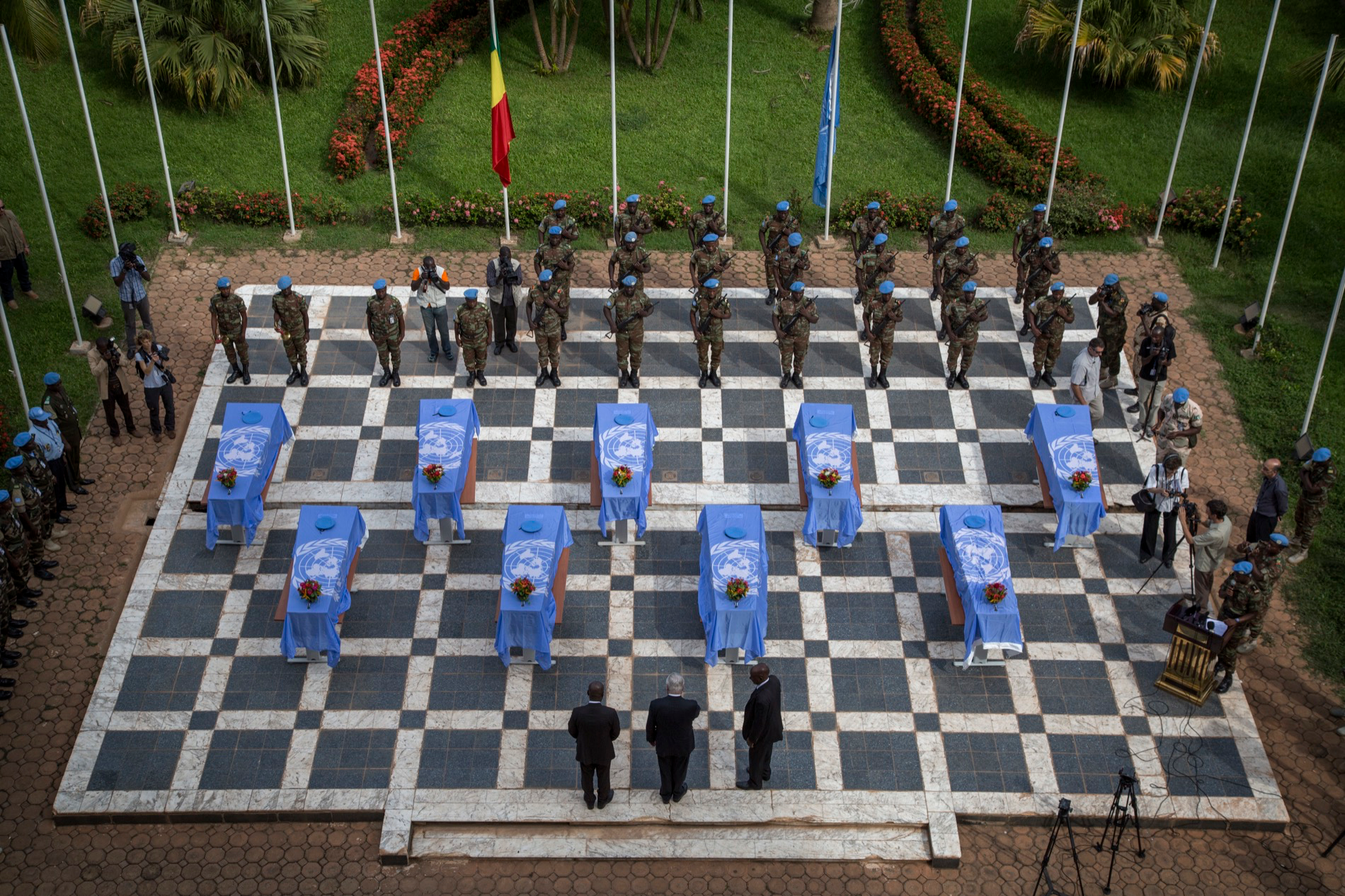
On the morning of Jan. 17, two suicide attackers detonated car bombs outside the United Nations base in Kidal, Mali. One bomber blew himself up at the base’s entrance—but failed to kill any peacekeepers.

About a kilometer away, another attacker detonated himself at a U.N. checkpoint, killing a Malian peacekeeper and wounding five others. Eight rockets also landed inside the base, destroying some of its structures.

It was a coordinated assault that had all the hallmarks of Al Qaeda in the Islamic Maghreb.
The January attacks boost to 44 the number of peacekeepers killed in Mali since the mission began nearly two years ago.

Defense Should Follow Private Sector’s Energy Efficiency Lead

Bob Wassman


The private sector offers valuable lessons that can save the Defense Department energy — and thus, money — as it operates its more than 300,000 buildings.

With 1.4 million men and women on active duty, plus 718,000 civilian personnel, the Defense Department is the nation’s largest employer. To house its operations, it occupies more than 2.2 billion square feet of space valued at more than $590 billion. It spends more than $4 billion a year on “facility energy” to power these buildings; so the potential savings are substantial.

Recognizing the need for efficiency, private-sector organizations with large building portfolios have quickly and cost-effectively employed new technology in their infrastructure. The Defense Department needs to do the same.

Two factors drive innovation: motivation and the ability to implement.

In the private sector, the motivation for efficiency is driven by one thing — profit. Every dollar that companies can squeeze out of energy use is another dollar of profit. It’s just that simple.

Germany Still Loves Its Tanks

by THOMAS NEWDICK

Since first sending small numbers of unwieldy A7Vs into combat on the Western Front in March 1918, German armor designers have produced some of the finest tanks in history.


There were the early Panzers that spearheaded Blitzkrieg warfare in the early years of World War II, and the Panther medium tank that heavily influenced post-war fighting vehicle design. And don’t forget the colossal Tiger I.

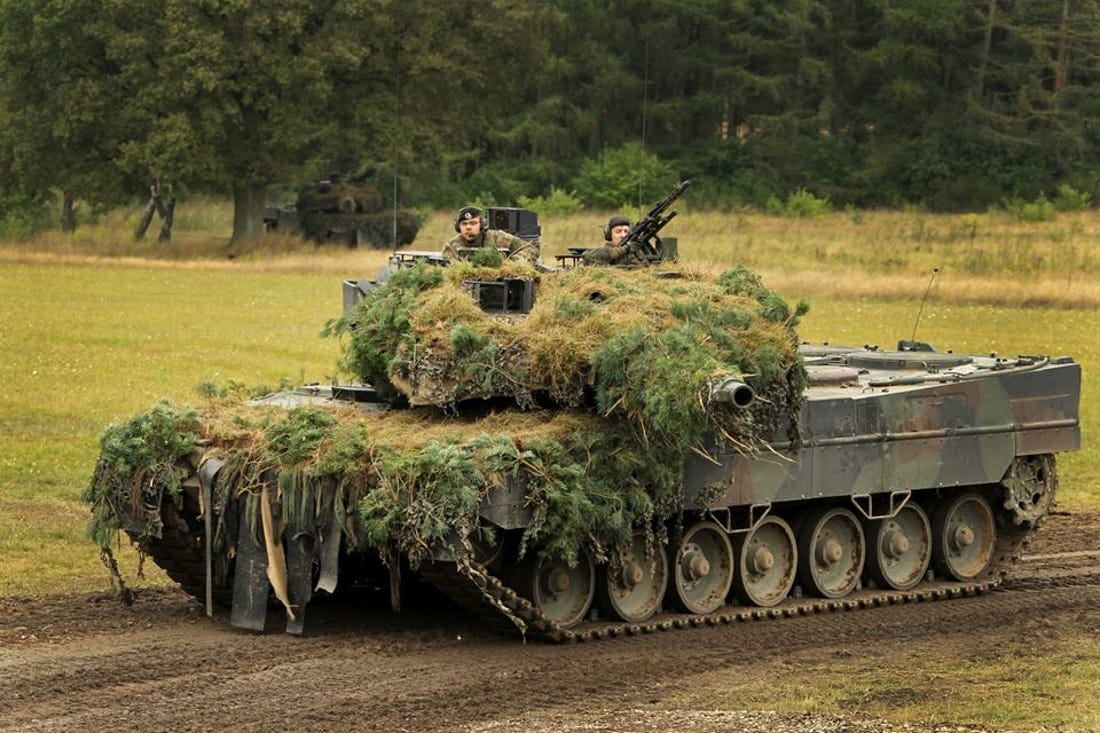
During the Cold War, Germany continued its line of world-beating war machines with the Leopard 1, packing the classic British 105-millimeter L7 gun. The Federal Republic built 5,000 first-generation Leopards starting in 1965, and today hundreds of the next-gen Leopard 2s remain in front-line service.

Now to keep the tanks relevant, the German Bundeswehr is developing add-on kits and other modifications.

The upgraded Leopard 2A7 is all about adapting to the demands of unconventional warfare.

Russia and Iran Sign Military Cooperation Agreement

January 21, 2015

On January 20, Russian Defense Minister Sergei Shoigu and his Iranian counterpart, Defense Minister Hossein Dehghan, signed an intergovernmental agreement on “long term and multifaceted” military cooperation in Tehran, Iran. It is the first time in 15 years that a Russian defense minister has visited Iran and underlines the growing military and diplomatic ties between both countries united by their joint opposition to U.S. foreign policy in the Middle Eastern region and beyond.

According to Sputnik News, defense minister Hossein Dehghan is quoted as saying that during bilateral discussions, “the importance of the need to develop Russia and Iran’s cooperation in the joint struggle against meddling in the affairs of the region by external forces that are not part of it was framed.” Dehghan noted that they singled out the U.S. policy that “meddles in the domestic affairs of other countries” as a major reason for the deteriorating security situation in the Middle East and the rest of the world today.

According to the Associated Press, Dehghan furthermore emphasized that, “Iran and Russia are able to confront the expansionist intervention and greed of the United States through cooperation, synergy and activating strategic potential capacities. … As two neighbors, Iran and Russia have common viewpoints toward political, regional and global issues.”

In the Pentagon, senior U.S. military leaders often like to say that historically they are terrible at predicting the next war, while critics argue that generals constantly are planning for the last war.


Both may be true. Ironically, those same leaders have spent the last two years complaining that they are being forced to live in an era of too much uncertainty. 

Why do Pentagon leaders think they can make uncertainty go away? The year 2014 could not have proven more unpredictable. Maybe it’s time to start planning for the unexpected. 

The new era of global conflicts for which political leaders demand constant U.S. military intervention offers the Pentagon a new opportunity to stop fighting against the age of uncertainty and start embracing it. 

These days, the “uncertainty” complaint refers to the budget, and to the automatic sequestration cuts lingering over budget writers’ heads. The mood around Washington this year is that the sequestration stunt’s time has passed. With the midterm elections behind them, a new secretary of defense on the way, and new political battles to be fought for something bigger (the White House) few seem eager to keep the sequestration fight alive. That will make a lot of folks happy: the arms industry, Defense Department purchasers, combatant commanders, and a few of those “J” divisions of the Joint Chiefs of Staff that plan for the future, at least. 

But even with an agreed upon budget, there will come no added certainty to what the world will bring to the Pentagon’s doorstep this year. And that’s an uncertainty leaders in the Pentagon, Congress, White House, intelligence and law enforcement communities could do much more to anticipate and manage. 

Cyber warfare: Capitol staffers aren’t ready


Congressional staffers are the gateway to all lawmaking on the Hill, but they also may be unwittingly opening the door to hackers.

The Hill’s networks are under constant attack. In 2013 alone, the Senate Sergeant at Arms’ office said it investigated 500 potential examples of malicious software, some from sophisticated attackers and others from low-level scammers. And that’s just the serious cases — in a different measurement, the House IT security office said in 2012 it blocked 16.5 million “intrusion attempts” on its networks.

But the thousands of men and women who keep Congress running every day are committing the basic cybersecurity mistakes that attackers can exploit to do harm — like in the CENTCOM social media hack or crippling breach of Sony Pictures Entertainment.

POLITICO interviews with nearly a dozen current and former staffers, as well as congressional IT security staff, reveal a typical array of poor cyber habits.

Most of the staffers interviewed had emailed security passwords to a colleague or to themselves for convenience. Plenty of offices stored a list of passwords for communal accounts like social media in a shared drive or Google doc. Most said they individually didn’t think about cybersecurity on a regular basis, despite each one working in an office that dealt with cyber or technology issues. Most kept their personal email open throughout the day. Some were able to download software from the Internet onto their computers. Few could remember any kind of IT security training, and if they did, it wasn’t taken seriously.

Anti-virus pioneer John McAfee claims to have been in contact with the group of hackers behind the devastating cyber-attack against Sony Pictures and guarantees they are not from North Korea.

Speaking to IBTimes UK about his current roster of security startups under his Future Tense brand - including secure messaging app Chadder - McAfee spoke about working with the FBI previously but said that, in this case, the agency was "wrong".

"I can guarantee they are wrong. It has to do with a group of hackers - I will not name them - who are civil libertarians and who hate the confinement the restrictions the music industry and the movie industry has placed on art and so they are behind it."

In December Sony Pictures was the victim of a devastating cyber-attack by a group calling themselves Guardians of Peace. They crippled the studio's internal systems and stole vast troves of sensitive data, including unreleased films and private email conversations.

The group eventually threatened violence if the studio released the film The Interview, which pokes fun at North Korea, and Sony Pictures capitulated and failed to release it in cinemas. The FBI, who have been investigating the attack, have blamed North Korea for the attack though concrete evidence has yet to be shown publicly.

'I don't want to name them - that would make me a nark'

The 69-year-old McAfee indicated that he has been in touch with the hackers, adding that, like most hacking groups, its members are located around the world.

Non-state Actors versus Conventional Armies

20 Jan , 2015


Planet Earth seems to be spinning faster on its axis, or is it that events with serious ramifications on global geo-political dynamics are emanating around the world with uncontrolled ferocity? Are potentially destabilising situations being wilfully ignored because political will is wanting? Are a rag-tag band of hastily trained non-state actors challenging the fundamentals of nationhood, governance and security? Are the vastly expensive equipment heavy monolithic military forces turning to relics only to be propped up by antiquated political and military mindsets? Have the nation-states lost the space between ruthless dictators and more radicalised ruthless fundamentalists?

They pose a serious security threat for the nations around the inner and outer periphery of this geographic swathe where the writ of the non-state actors runs brutally large.

The Arab Springs uprisings, the revolutions of all hues, the Boko Haram brutalities, Hamas instigating war and manipulating world opinion against Israel, ISIS rampaging unopposed, the Afghan Taliban and Tehreek-e-Taliban Pakistan’s virtually unbridled autonomy, and the renewed threat issued by the Al-Qaeda targeting South Asia – all ominous signs of a looming humanitarian crisis of massive proportions in the making. They also pose a serious security threat for the nations around the inner and outer periphery of this geographic swathe where the writ of the non-state actors runs brutally large.

SNOWDEN DOCS REVEAL 8-YEAR-OLD NSA PROGRAM TRAINING CYBER ARMY FOR WARFARE

January 19, 2015 

Documents obtained say that after gaining “permanent” access to enemy systems, Phase Three of the US cyber warfare strategy is to reportedly dominate through “real time controlled escalation.”

National Security Agency director Mike Rogers speaks at Stanford University, Monday, Nov. 3, 2014, in Stanford, Calif.

MOSCOW, January 18 (Sputnik) — The US National Security Agency’s (NSA) eight-year project titled Politerain has been developing a cyber army of the future, NSA whitsleblower Edward Snowden revealed to Der Spiegel in its latest exclusive. “[Politerain recruits people to] remotely degrade or destroy opponent computers, routers, servers and network enabled devices by attacking the hardware,” excerpts of confidential documents seen by the publication said.

According to internal NSA communications, the spying agency’s mass surveillance program uncovered in 2013 is only the tip of the iceberg — or “Phase 0″ — in the United States’ three-pronged digital war strategy.

Snowden: US Lacks Proof That Mass Surveillance Is Effective

Documents obtained say that after gaining “permanent” access to enemy systems, Phase Three of the U.S. cyber warfare strategy is to reportedly dominate through “real time controlled escalation.” One undated NSA presentation was blunt in its proclamation that “the next major conflict will start in cyberspace.” Thus, attacks on any of the enemy’s vital systems — from transport, to energy and mobile communication — is considered fair game by the NSA.

21 January 2015

Ten years and waiting

January 21, 2015 

It will soon be 10 years since the India-US joint statement of July 18, 2005, which marked a breakthrough, ending many wasted decades in the bilateral relationship. It had set the stage for a comprehensive and qualitative upgrade of the content of this relationship. A mutual understanding on the nuclear issue lay at its core, and it spawned a series of bilateral and multilateral steps to bring India into the global nuclear mainstream. It is worth looking back to assess the transformation in the image and reality of the Indian nuclear enterprise.

The ambitious bilateral trajectory that commenced in 2005 attracted attention at the highest levels — internationally as well as nationally, not only in government but also Parliament, civil society, academia, business and industry. Naturally, issues in the nuclear field came under close scrutiny as never before. The democratic polity in both countries examined in detail the process set in motion, as also the major milestones on the way to its culmination — the adoption of India-specific safeguards on separated civil nuclear facilities, exemption to India by the Nuclear Suppliers group (NSG), and the Nuclear Cooperation Agreement between the US and India in 2008. As high politics surrounding nuclear technology yielded place to global nuclear commerce with India, powerful lobbies and interests too became active.

India’s advanced but modest nuclear industry was exposed to media glare and publicity. There was much commentary, not without a measure of dilettantism, on the minutiae of the ongoing dynamic. This has had a mixed impact.

Busting the development myth

Rajesh Gill
Jan 21 2015 

The recent Human Development Report, 2014 maintains that India needs to address multidimensional poverty. India also occupies one of the lowest places in terms of population in vulnerable employment.HUMAN Development Report (HDR) 2014, which was released recently has raised pertinent issues. According to the report, despite human and social development exhibited by almost all the countries of the world, large proportions of populations remain vulnerable to natural disasters and ecological hazards. It demonstrates that despite development, rise in per capita incomes, increase in school enrolment, decline in maternal and infant mortality and reduction in poverty levels in most of the countries of the world during the last decade, huge proportions of populations still remain most vulnerable. 

The capacity to take risks and confront natural disasters remains extremely skewed, depending upon the physical and economic capacities of people. It goes to the extent of negating any connection between poverty reduction and vulnerability. It introduces human vulnerability “to describe the prospects of eroding people's capabilities and choices.” Further, it ascribes the systemic genesis of such human vulnerability to various structural factors and argues that this human vulnerability can be reduced by fostering “human resilience”, i.e. ensuring that “people's choices are robust, now and in the future, and enabling people to cope and adjust to adverse events.” Human resilience removes the barriers that hold people back in their freedom to act and empowers those socially excluded in making themselves visible and heard.

India’s new Lanka agenda

By editor

The smallest of diplomatic gestures are sought to be analysed from the prism of China-India rivalry on the island nation of Sri Lanka. The fact that India’s high commissioner in Colombo could meet the new President, Maithripala Sirisena, within hours of his victory and the Chinese envoy could not for more than six days, has been much commented upon. Then there was a report that the Colombo station chief of India’s external intelligence agency, Research and Analysis Wing, played a crucial part in forging anti-Rajapaksa coalition, leading to his expulsion just ahead of the voting, which led to much speculation and vehement denials from both India and Sri Lanka.

That Sri Lanka’s new foreign minister but old hand in diplomacy, Mangala Samaraweera, made New Delhi his first diplomatic destination is being seen as a significant departure from the recent past. That Mr Sirisena will be in New Delhi in February and Prime Minister Narendra Modi will make a state visit to Sri Lanka in March — which will be a first by an Indian Prime Minister in 28 years, after Rajiv Gandhi’s unhappy sojourn in 1987 — is reason enough to say there’s been a shift in Colombo’s diplomatic policy.

But both Mr Sirisena and Mr Modi will have to go beyond the optics to recalibrate Indo-Sri Lanka relations in the wake of a decade long period of pro-China policies pursued by former President Mahinda Rajapaksa.

Consider this: Between 2005 and 2012, China provided $4.761 billion as assistance to Sri Lanka. Of this only two per cent was outright grant while the remaining 98 per cent is in the form of soft loans. By contrast, a third of India’s $1.6 billion assistance programme to the island comprises outright grants. There are genuine fears that Sri Lanka will be unable to repay such large loans, in time giving the Chinese the opportunity to turn part of the loan into equity, thus becoming part owners of vital projects and installations.

For prudent crisis planning on terror

Bruce Riedel
January 21, 2015 


Barack Obama and Narendra Modi should reaffirm their commitment to better cooperation on counter-terrorism and intelligence

U.S. President Barack Obama’s visit to India, an unprecedented second trip in one Presidency, comes as the terrorist threat environment in the subcontinent is in transition and turmoil. Multiple massacres in Pakistan and the transition in Afghanistan are challenging the counter terrorist infrastructures built over the last couple of decades. It is a fluid situation that Mr. Obama and Prime Minister Narendra Modi need to compare notes on and develop strategies.

Sponsor and victim

Pakistan has long been both a sponsor of terrorism and a victim of terrorism but the balance seems to be shifting toward victimhood. Pakistan still sponsors the most dangerous terror group in South Asia, Lashkar-e-Taiba, which last May tried to disrupt Mr. Modi’s inauguration by attacking the Indian consulate in Herat, Afghanistan, just hours before his swearing-in ceremony. The Pakistani intelligence service, the Inter Services Intelligence (ISI) Directorate, continues to provide support to LeT and its leader Hafiz Mohammad Saeed lives freely in Lahore, Pakistan, with the ISI’s protection. The ISI also remains the primary patron of the Afghan Taliban in its war with the North Atlantic Treaty Organization (NATO).

Giant leap for big cat

Meena Menon
January 21, 2015 


India now has 70 per cent of the tiger population in the world with the latest assessment estimating 2,226 big cats, up 30 per cent from 1,706 in 2010, according to preliminary estimates in “Status of Tigers in India, 2014.”

Western Ghats Landscape complex holds world’s single largest population

India now has 70 per cent of the tiger population in the world with the latest assessment estimating 2,226 big cats, up 30 per cent from 1,706 in 2010, show preliminary estimates in “Status of Tigers in India, 2014.”

The largest increase is recorded in the Western Ghats Landscape complex — Kerala, Karnataka, Goa and Tamil Nadu — with 776 tigers (up from 402 in 2006). The Mudumalai-Bandipur-Nagarahole-Wayanad complex holds the world’s single largest tiger population currently estimated at over 570 tigers (in 11,000 sq.km of habitat), the report says. Goa now has a persistent tiger presence with three to five animals.

The great Game Folio: Obama and Pakistan

January 21, 2015


western neighbour is struggling to cope with a deepening crisis at home and mounting challenges on its western frontiers.

Many in Delhi and Washington will instinctively resist the construction of such a dialogue. After all, it has never been done before. The fact, however, is that both countries have a big stake in Pakistan’s stability. But neither America nor India is in a position to unilaterally shape the future of Pakistan. Working together might give them a slim chance of influencing outcomes in Pakistan, one of the world’s pivotal nations.

Delhi’s Region
India’s wariness of America’s regional policies was not limited to Pakistan. As political trust diminished between India and the US during the Cold War, Delhi became increasingly suspicious of the American role in its neighbourhood and sought to limit it in the subcontinent.
It was Bush who once more broke the mould of the US policy. He ordered a substantive dialogue with India on regional issues and was quite happy to let India take the lead in the subcontinent beyond Afghanistan and Pakistan. Delhi too began to shed its reluctance to work with America in the neighbourhood. Recall that it was Delhi that drew the US as an observer into Saarc when Pakistan was pushing for a larger Chinese role in the regional forum in 2005.

Ideology and the rise of terror

January 21, 2015 
Vasundhara Sirnate

Militant ‘Islamic’ movements are organisations born out of particular configurations of geopolitics and superpower interventions. Beginning as resistance movements and later moving on by aiming to create new states, their strategies have been ideological and violent with scant regard for human rights

The first two weeks of 2015 have not helped moderate Muslims anywhere in the world. Between the Islamic State in Iraq and the Levant (Syria) [ISIS/ISIL and now IS], the Tehreek-e-Taliban Pakistan, Boko Haram and the renegade gunmen claiming allegiance to the al-Qaeda in Yemen that shot the cartoonists of Charlie Hebdo, the world seems to have exploded in a frenzy of Islamic ideology-fuelled killing. Reactions to Islamic radicals conducting acts of terror have been varied. Between the Moroccan-born Mayor of Rotterdam, Ahmed Aboutaleb, rudely telling Muslims to get out of his country, the thousands of people in Germany marching in an anti-Islam demonstration, anchor Jeanine Pirro on Fox News saying “we need to kill them” and Rupert Murdoch tweeting about holding Muslims collectively responsible for terrorism, common Muslims everywhere are being forced to apologise and take responsibility for the dangerous actions of less than one per cent of the world’s total Muslim population.

Insurgents as global terrorists

People that believe such things seem to have missed some key pieces of information pertaining to the rise of some of these movements. In this piece, I will attempt to historicise the rise of some militant “Islamic” movements so that in our public debate we may have balance and some context. This is important because the rationalisations that are coming our way use Islam as the driving force behind all recent acts of terror. I believe that we need to shift this debate onto more logical terrain, i.e., we need to understand the conditions which beget certain types of insurgent and terrorist organisations. I assert here that Islamic ideology alone is not the driving force behind these organisations. Islamic ideology is merely the fabric in which an articulation of inequality, marginalisation, and alienation is embedded or stitched. Islamic ideology is deployed to get new recruits to particular terrorist groups. Think of such ideology as an advertising strategy or a marketing campaign to get people to adhere to the political causes being championed by these groups at the barrel of a gun.

Middle-class economics works: Obama

January 21, 2015 

U.S. President Barack Obama said a growing economy, shrinking deficits and booming energy production have raised the U.S. out of the recession. Taking credit for the recovery during his State of the Union address on Tuesday, Mr. Obama said “The verdict is clear. Middle-class economics works.”

Mr. Obama said the U.S.’ economy’s upward trajectory should not only help a few do well but should generate rising incomes for everyone who makes an effort.

The recession technically ended in June 2009, but the ensuing recovery sputtered. Only now is public opinion beginning to acknowledge improvements.

Mr. Obama’s speech comes amid numerous signs that the economic recovery is taking hold, including a 5.6 percent unemployment rate, cheap gas and greater consumer confidence.

Calls on Congress to back bipartisan infrastructure plan

President Barack Obama on Tuesday called for the U.S. Congress to pass a bipartisan infrastructure plan to provide modern ports, stronger bridges, faster trains and the fastest Internet connections.

Republicans have made TransCanada Corp's Keystone XL pipeline, which would run from Canada's Alberta oil sands to the U.S. Gulf of Mexico, their first priority of the year.

WHY SHOULD THE AMERICANS CARE? – OPED

By Muhammad Umar

President Obama’s expected visit to India is causing hysteria in Indian media. Pundits left and right are already busy making too much out of nothing.

Over the past month, media organizations have speculated that during Obama’s visit, a plan will be announced to finally implement the nuclear cooperation deal.

Although at the moment there is a nuclear cooperation deal between the two countries, it has not been executed due to India’s strict liability law, which makes suppliers liable in case of an accident.

The nuclear suppliers are held to unlimited liability both in time and costs, which discourages American suppliers from taking part in the nuclear cooperation deal.

During his visit to the United States late last year, Prime Minister Modi made a commitment to President Obama to amend the liability act, with the aim of reducing the burden on nuclear suppliers. Modi failed to change the act.

The government has now proposed to sell insurance to those companies willing to supply nuclear materials, in an effort to work around the liability law. This proposal has been a direct result of Modi’s botched attempt at amending the law.

Modi hopes that by offering insurance, he will be able to attract American suppliers. But the question remains, why should the American companies be forced to buy insurance, and will the insurance ensure zero liability or will the American companies have to share financial responsibilities?

AUSTRALIA AND INDIA: A NEW ERA IN DEFENCE COOPERATION? – ANALYSIS

By Stephen Westcott

Following a particularly productive year in Indo-Australian relations that saw great strides most notably in defence cooperation, it is timely to reflect upon the events and ask two key questions: what is the status of the bilateral defence relationship entering 2015?; and what, if any, developments are likely to be seen in the coming year?
India-Australia Defence Relations: Looking Back

Since their nadir in 2008-2009, Australian-Indian relations and defence ties have markedly improved. Indeed, defence and security engagement between the two countries have steadily increased to culminate in the signing of the New Framework for Security Cooperation (NFSC) on 18 November 2014 during Prime Minister Narendra Modi’s bilateral visit to Australia. The NFSC combined and expanded several previous agreements and commits both countries to hold annual high-level summits, cooperate closely on counter-terrorism and international crime, hold regular bilateral maritime exercises and focus on the early operationalisation the Civil Nuclear Energy Cooperation Agreement (CNECA) to assist India’s quest for energy security. Most of the statements in the lead up to and after the signing of the NFSC have shown that both sides intend to make maritime security the key pillar in the defence cooperation.

There have been plenty of false starts in the Australian-Indian defence cooperation efforts in the past. In 1998, Australia immediately suspended its defence cooperation with India after the nuclear weapons test. When the fledgling Quadrilateral Initiative in 2007 that saw Australia, India, Japan, Singapore and the US participate in a maritime exercise drew a strong hostile Chinese reaction, the newly elected centre-left Labor government publically withdrew in 2008 in a move that annoyed many Indian officials who saw it as Australia bowing to Chinese pressure.

NE Insurgency: The Religious Dimension

19 Jan , 2015


Before the advent of Christianity, the hill tribes of Assam practiced animism. An important consequence of the spread of British administration in the hills of Assam was undoubtedly the arrival of missionaries, which led to many hill tribes converting to Christianity. People in the Brahmaputra and the Imphal Valleys had already embraced Hinduism before the advent of British colonialists in North-east India.

The spread of Christianity in the hill districts of Assam followed the British administration. The East India Company was more interested in expanding trade in India than spreading Christianity or civilising the tribes. In the early days of colonisation the European community in India was bitterly opposed to missionaries, chiefly because they might have a disturbing effect on Indians.1 The Charter Act of 1813 laid down as a duty of the administration to introduce useful knowledge, help religious and moral improvement, reduce the powers of the East India Company and increase the control of the British Parliament over Indian administration.

The administration and the missionary worked hand in glove, one facilitating the work of the other. Interestingly, the spread of Christianity in the hill areas of North-east has been faster after Independence than before it.

THE AFPAK SITUATION: STRATEGIC JOCKEYING AND CONTINUED UNCERTAINTY – ANALYSIS

By Monish Gulati
JANUARY 19, 2015

A bit of encouraging news came in from Afghanistan after Afghan President Ashraf Ghani nominated ministers for his unity cabinet more than three months after he was sworn in.

Ghani’s chief of staff announced the 25 cabinet nominees during an event at the presidential palace in Kabul on Jan 12 attended by Ghani and government chief executive Abdullah Abdullah. The list will now go before the parliament for approval. During the last three months besides juggling various factional, ethnic and tribal interests Ghani has been attempting to establish a working government to tackle the country’s myriad problems. This article looks at some of the significant developments of the past few months which have influenced the Afghanistan-Pakistan relations.
The Cabinet

Salahuddin Rabbani, the former head of the country’s high peace council, has been nominated as foreign minister, Sher Mohammad Karimi, the military chief of staff, earmarked for defence minister while former general Noor-ur-Haq Ulomi has been nominated as interior minister. The cabinet contains three women, for the portfolios of women’s affairs, culture and higher education. The composition of the cabinet appears to reflect the two rival camps and contains “prominent ethnic and regional power-brokers”. The cabinet has new faces some of whom are hardly known to the public.

Afghanistan watchers and international observers have hailed the nominations as an important step, viewing the cabinet as a significant step forward rather than who has been nominated to the cabinet and why.