Jamsheed K. Choksy and Carol E. B. Choksy
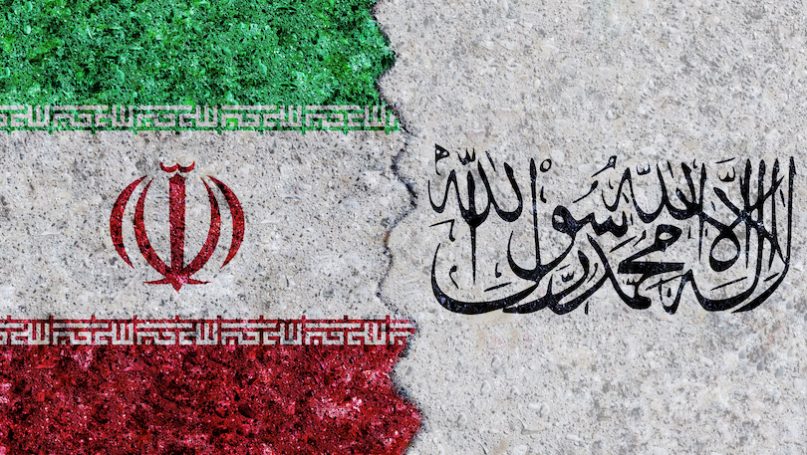
Taking a swipe at the Taliban’s newly-announced interim government of terrorists and criminals, Iran’s semi-official Mehr News Agency critiqued: “The Taliban … have repeatedly alleged they would form an inclusive government.” Given the Taliban’s current approach to governance, experts in Tehran at the Strategic Council on Foreign Relations, that advises Iran’s Supreme Leader Ayatollah Ali Khamenei, warn “relations between Iran and the Taliban or the government formed by the Taliban will not be amicable.” During July and August, as Iran’s executive branch transitioned from the presidency of Hassan Rouhani to that of Ebrahim Raisi, the government in Tehran began adapting to new realities on its eastern front. After two decades, the US can no longer use Afghanistan to strike Iran but the restoration of Taliban rule there does not bode well either. In the estimation of many in Tehran’s government and most of the Iranian public, takfīrīs or militant Sunni extremists are controlling Afghanistan again. It is not just the Taliban that Iran finds troubling but also the new Afghan regime’s longstanding partner Al-Qaida plus units of Da‘ish or the Islamic State—two more terrorist groups with which Iran has clashed—that have begun entrenching in Iran’s eastern neighbor. So, Iran is working to safeguard its internal security and regional influence.
Past Problems, Present Realities
On 8 August 1998, Taliban forces who are followers of Deobandi and Wahhabi Sunni Islam, captured the Afghan city of Mazar-i Sharif and massacred fellow Muslim Shiites including ten Iranian diplomats and an Iranian journalist. Iran deployed troops along its eastern border, demanded United Nations Security Council (UNSC) action against Afghanistan’s Taliban government, declared an annual commemoration day, and even produced a movie about its citizens’ “martyrdom” at the hands of Takfiris. As the Taliban retook Afghanistan in August 2021, the Iranian foreign ministry called again for a full accounting of that “cowardly” attack.
When the Taliban’s return to power became inevitable, Tehran shuttered its consulates at Afghan cities like Herat and Mazar-i Sharif and drew down its staff at the embassy in Kabul to avoid deaths as occurred in 1998. Moreover, Iran’s foreign ministry insisted the Taliban must “seriously respect the security of diplomats and diplomatic centers in accordance with international conventions”—despite the Islamic Republic having held American diplomats hostage in Tehran for 444 days four decades ago.
Former leaders of the Islamic Republic have drawn upon past tensions to warn their nation and neighboring countries that the Taliban are “going to be serious threat to all of them.” Mahmoud Ahmadinejad, the outspoken sixth president of Iran from 2005 to 2013, has led the charge, telling all who will listen: “India, Iran, Pakistan, Russia, China and regional countries will face the consequences of the re-emergence of Taliban.” Masih Mohajeri, a veteran cleric and news editor close to the Supreme Leader, cautions that “masks (of deception) will be dropped … as they (the Taliban) will violate all pledges (of inclusion and tolerance).” Even the incumbent Raisi government has permitted Afghan refugees and Iranian supporters to hold public protests against the Taliban’s return to power.
Trade, Narcotics, and Refugees
Commerce with Afghanistan came to a halt as border crossings were closed for ten days while the security situation was assessed by Iran. The Iranian regime’s decision was made despite a heavy toll—an estimated $5 million in much-needed hard currency flows to Iran from Afghanistan each day. Only gradually has Tehran permitted resumption of intercountry trucking and fuel shipments despite Afghan buyers being the fifth largest consumers of Iranian exports—and after the Taliban cut tariffs by up to 70 percent.
While Iran benefits from goods sent eastward, opium and heroin smuggled from Afghanistan is devastating its society. The Taliban, despite claims to have banned production and sale of narcotics, benefits substantially from that illicit trade as documented by the UNSC. Now in control of their entire country, the Taliban could use drugs as a weapon to undermine Iranian society, Tehran’s leaders fear. Iran’s Permanent Representative to United Nations, Majid Takht Ravanchi, emphasized his country is “gravely concerned about … organized criminals active in trafficking in drugs (from Afghanistan).”
People seeking asylum and shelter in Iran from the Taliban are another problem. An estimated 3.4 million Afghans sought refuge inside Iran over the past four decades. The economic cost of Afghan refugees is several billion US dollars per year which the Iranian regime under international sanctions struggles to bear. As the Taliban reimposes their rigid interpretation of Sunni Islam, the government in Tehran faces further waves of incoming Afghan refugees. Not surprisingly, its UN Representative Ravanchi declared: “After the recent crisis, many more refugees have entered Iranian territory. We expect the international community to shoulder its responsibility and do a lot more in providing assistance to these refugees.”
Intra-Faith Tensions and Terrorism
Shiites comprise approximately 10 to 15 percent of Afghanistan’s population. Many Afghan refugees entering Iran follow either the Ithna-Ashari, i.e., twelve imam, form of Shiism prevalent in Iran or the Ismaili, i.e., seven imam, variant. They fear sectarian cleansing will recommence under Taliban rule as took place prior to the US arrival in 2001. Iran sees itself as the protector of Shiites worldwide. Consequently, Iran’s Speaker of Parliament Mohammad Ghalibaf demanded the Taliban establish a government which ensures “religious and human rights of the people of Afghanistan from all ethnicities, races and religions,” adding a not so veiled threat that “ultimately the determination of the Islamic Republic of Iran will be the determination of the Afghan people.”
As Shiites and other Afghans resisted the Taliban’s final push for control, IRGC Quds Force Commander Esmail Qaani emphasized: “The Shiites of Afghanistan have high importance for the Islamic Republic of Iran.” Subsequently, Iran’s foreign ministry’s spokesman “strongly condemned” the Taliban attack on Panjshir valley, characterizing deaths of resistors there as “martyrdom.” The city council of Tehran promptly renamed an alley in the northern part of the capital city “to show sympathy with the people (there) who are fighting against the Taliban forces.”
For the past two decades, the Islamic Republic’s leaders have witnessed Sunni militants gaining footholds within Iran’s border regions, especially Khorasan and Sistan-Baluchistan provinces. Taliban, Al-Qaida, and Islamic State affiliates among other Sunni militants have stepped up the frequency and brutality of attacks on Shiite military and civilian targets in southeastern Iran from safe havens in Afghanistan and Pakistan. The ayatollahs, pinning “insecurity in the world” on “the radical teachings of Wahhabism,” have deployed more forces to the eastern border. They also have promoted Sunnis to high ranks within the Iranian armed forces and been restructuring administration of madrasas or seminaries to stave off radicalization as occurred in Afghanistan and Pakistan.
Despite its internal actions to thwart Sunni militancy, Foreign Minister Hossein Amir-Abdollahian acknowledged that “Iran is seriously concerned over the spread of terrorism” from Taliban-led Afghanistan. Iran’s UN Representative Ravanchi went even further when addressing the UNSC: “Afghanistan’s territory must not be used, under any circumstances, to threaten or attack any country or to shelter or train terrorists, or to plan or to finance terrorist acts.”
Securing the Border
In the weeks leading up to the Taliban’s victory, Iran’s military deployed additional forces close to Afghanistan while commanders reassured the Iranian public on a regular basis that “the police, the army, and the Islamic Revolutionary Guard Corps (IRGC) are monitoring the border and have the necessary control; so there is no need to be concerned in this regard.” Generals increased review of security in the nation’s east to prevent “any unauthorized entry.”
Responding to the Taliban’s gaining access to US weapons systems, the Commander and the Deputy Commander of the Iranian Airforce even went on record that “no aircraft can enter the country’s airspace under any circumstances without our control and permission” and “the units of this force, by exercising intelligence, vigilance, and a watchful eye, will not allow any aggression by outsiders.” A Rear Admiral, speaking at a port city in Iranian Baluchistan, warned its eastern neighbor’s new regime that Tehran “will never allow any countries to disrupt (Iran’s) security and peace.” Yet, hardliners in the Islamic Republic have begun questioning whether their more moderate counterparts are willing to fight the Taliban.
Iran has at times in the past, and despite the dangers of so doing, provided logistical support and safe haven to some Taliban leaders. The IRGC, in particular, armed anti-American fighters in Afghanistan. But now with the Taliban controlling Afghanistan’s side of the 570-mile border, Tehran’s position has shifted to dealing with the threat. Rumors of renewed skirmishes between Iranian and Taliban forces have abounded, though often denied by both governments. However, on 3 September, President Raisi acknowledged “conspiracies of enemies” from the east aimed at the Iranian province of Sistan and Baluchistan. Essentially, hitherto sporadic incursions across the border to target Iranian military and municipal facilities have begun to escalate as the Taliban swept across Afghanistan.
Shaping Afghanistan’s Politics
The Iranian public “holds a gloomy view of the militant group (i.e., the Taliban)” so cheered as Hazara Shiites in the Panjshir Valley rallied with anti-Taliban Sunnis there. Over the past two decades, the IRGC has recruited Shiite Afghan men for militias, such as the Fatemiyoun and Zeinabiyoun brigades, deployed with considerable success against American forces in Iraq and Syria. Those paramilitary units now may be turned eastward, not just to prevent Sunni militant incursions but to fight alongside Afghan Shiite groups resisting the Taliban state. Preparing the public for such a possibility, Iranian leaders and press dispense daily warning of Sunni terrorists “equipped with new and advanced weapons” attacking Shiites in neighboring nations.
Hoping both to influence Afghan politics and to avert confrontations, Tehran began brokering intra-Afghan talks between incoming Taliban and outgoing Kabul officials, mediated first by outgoing foreign minister Javad Zarif and subsequently by the new foreign minister Amir-Abdollahian. Subsequently Tehran voiced its support for the formation of an inclusive government in Afghanistan.
When the US and its allies finally left Kabul on 30 August, Iran’s foreign ministry stressed that Tehran “won’t rush to recognize the Taliban.” For now, Iran is holding firm to its demand that the Taliban must “create an inclusive government … not a minority government against the majority or a government with only one group, but a government that reflects the (country’s) demographic and ethnic composition.”
Blaming the US, Co-opting Afghanistan, May Not Succeed
Part of Tehran’s outreach to the nascent Taliban government has been to blame the chaos in Afghanistan on two decades of American presence. “America’s military defeat and its withdrawal must become an opportunity to restore life, security and durable peace in Afghanistan,” Iran’s state TV quoted President Raisi, adding “Iran backs efforts to restore stability in Afghanistan … as a neighboring and brother nation.” Ali Akbar Velayati, an advisor to Supreme Leader Khamenei, went even further, explicitly stating Tehran’s foreign policy expectation: “Afghanistan is a part of the Axis of Resistance … with Iran in the center, a collection of countries has been seeking resistance, independence and freedom.”
Tehran’s revolutionary leaders periodically even publicly cheer the Taliban victory—mainly because the US withdrawal permits Iran freer rein across the region. Yet the potential of Afghanistan becoming the global hub center of terrorist training robs Iran of true satisfaction. “The end of US presence in Afghanistan has ushered in a new era of occupation by the Taliban terrorists,” Iranian policymakers and analysts fear. Tehran’s leaders will likely have to reallocate resources from regional adventurism to domestic stability to counter the Taliban and the other Sunni who are viewed as spreading “criminal and terrorist activities … (and are) tyrannical and ignorant.” The danger from re-Talibanized Afghanistan may also compel greater reliance on Russia and China, a situation which would undermine the independence so dear to many Iranians.
Ultimately, Iran has no illusions that “the Taliban had a short-lived experience in governing Afghanistan in the 1990s. And after its downfall, it turned into a militant group mounting guerilla attacks on US and Afghan forces. But militancy is different from governance. Whether they would succeed in ruling Afghanistan with all its ethnoreligious complexities remains an open question.” So, on September 6, the Iranian parliament held a session at which Quds Force Commander Qaani pledged that strife in Afghanistan would not be allowed to spread across the border. Past events have demonstrated to Iranians that the Taliban regime is “no friend of Iran.”
No comments:
Post a Comment