2 September 2015

Petraeus: Use Al Qaeda Fighters to Beat ISIS

08.31.15

To take down the so-called Islamic State in Syria, the influential former head of the CIA wants to co-opt jihadists from America’s arch foe. 

Members of al Qaeda’s branch in Syria have a surprising advocate in the corridors of American power: retired Army general and former CIA Director David Petraeus. 

The former commander of U.S. forces in Iraq and Afghanistan has been quietly urging U.S. officials to consider using so-called moderate members of al Qaeda’s Nusra Front to fight ISIS in Syria, four sources familiar with the conversations, including one person who spoke to Petraeus directly, told The Daily Beast. 

The heart of the idea stems from Petraeus’s experience in Iraq in 2007, when as part of a broader strategy to defeat an Islamist insurgency the U.S. persuaded Sunni militias to stop fighting with al Qaeda and to work with the American military. 

Tajikistan Arrests 14 For Allegedly Hoisting an ISIS Flag

September 01, 2015

Monday, Tajikistan’s Ministry of the Interior reported that it had arrested a group of men in Nurek, a city in the Khatlon region about 43 miles southeast of Dushanbe, for hoisting an ISIS flag in the town center. In the Shahrtuz district, which is the same region but further south and west, near the Afghan border, a group of teenagers were reportedly arrested for the same crime.

According to Interfax, citing a Ministry of the Interior statement, 14 men were detained in Nurek “by officers of the Interior Ministry department in the Khatlon Region in the course of their investigative work on suspicion of propaganda of Islamic State of Iraq and Syria [ISIS] ideas. The men had “became acquainted online with a certain Tajik ISIS fighter, Yunus, and hoisted a black flag in the center of the town to prove their loyalty to the terrorist group.” Other reports said 10 men had been arrested in Nurek.

Russian Map and Commercial Satellite Imagery of UK Nuclear Weapons Production Facility at AWE Burgfield

August 31, 2015

The website cryptome.org has placed online some excellent commercial satellite imagery of the British 225-acre nuclear weapons production and maintenance facility at AWE Burghfield, which is located east of London. The imagery can beviewed here.

One Presidential Debate You Won’t Hear: Why It is Time to Adopt a Sensible Grand Strategy

AUGUST 31, 2015

The contemporary theory and practice of grand strategy by the United States can be summarized in the sound byte uttered in 2001 by President George W. Bush shortly after the terrorist attacks on the World Trade Center and the Pentagon, “You are either with us or you are with the terrorists.”

Bush did not invent this conception of grand strategy. His sound byte was simply a variation of Secretary of State Madeleine Albright’s triumphalist theory that America had become the world’s “essential power” with the collapse of the Soviet Union and the end of the Cold War.

With the benefit of hindsight, it is now clear that Bush’s assertion of unilateral prerogative blew back on itself to create all sorts of problems at home and abroad. It is also clear that, notwithstanding the blowback, his coercive grand strategic outlook became more entrenched and ossified during the Presidential tenure of Barack Obama. This is evident in Obama’s unilateral escalation of drone attacks; his fatally flawed Afghan Surge decision ([1] & [2]); the foreign and domestic spying by the NSA, which included tapping the cell phones of close allies like German Prime Minister Angela Merkel; his administration’s aggressive meddling in Ukraine, together with the demonization of Vladimir Putin that is now well on the way to starting an unnecessary new cold war with Russia; and Mr. Obama’s so-called strategic pivot to the East China Sea to contain China.

Why Waiting for Russia to Collapse Is a Terrible Ukraine Policy

September 1, 2015

Two months ago, a number of senior U.S. national-security officials insisted that the Russian Federation has reemerged as the premier existential threat to American interests. Today, as energy prices continue to tumble and China's economy falters, a new narrative has emerged: the pending collapse of Russia itself, or at least the prospects that the government of Vladimir Putin is entering into its last days. The continuous oscillation in views—Russia as a powerful threat, Russia as an imploding basket case—does not permit a cool, rational assessment of Russia's actual strengths and weaknesses.

Let's first start with the economic indicators. Russia's economy is contracting, its currency is losing value vis-ร -vis the dollar and the euro, and its industrial output is showing signs of decline. Because of the conflict in Ukraine, Western sanctions remain in place against Russia. The second round of collapsing energy prices further decreases the revenues available to the Kremlin—although the devaluation of the currency has helped to partially compensate for this since energy exports are priced in and generally paid for in dollars and euros. And Putin's lifeline against Western sanctions—more than $100 billion in deals, credits and loans with China—has been compromised by China's own economic woes. Inflation is eating away at the savings and purchasing power of Russian citizens. Between devaluation, Western sanctions and Russian countersanctions, imports have become either more expensive or have disappeared altogether, while domestic substitutes have not generated sufficient replacements.

The Ultimate Weapon: Nuclear Armed Battleships?

August 31, 2015

In the early 1980s, four Iowa-class fast battleships originally built during World War II—Iowa, Missouri, New Jersey and Wisconsin—were taken out of mothballs and returned to active duty.
Nearly 900 feet long and displacing close to 60,000 tons, the battlewagons could fire a nine-gun broadside sending 18 tons of steel and explosives hurtling towards their targets.

The battleships were modernized to include cruise missiles, ship-killing missiles and Phalanx point-defense guns. Returned to the fleet, the ships saw action off the coasts of Lebanon and Iraq. At the end of the Cold War the battleships were retired again. All were slated to become museums.

Few knew, however, that returning the battleships to service in the ’80s had been only part of the plan. The second, more ambitious phase was a radical redesign of the massive warships that would have combined the attributes of battleships and aircraft carriers.

Could China's Economic Woes Infect Asia?

September 1, 2015

China’s stock-market horror show wiped trillions of dollars off market valuations, sending global investors running for the exits. With the Chinese Communist Party (CCP) seemingly preoccupied with a Second World War victory parade, analysts have urged Beijing to fire economic bullets instead to prevent a region-wide recession.

In a “Black Monday” for global stocks, the Shanghai bourse plunged 8.5 percent on August 24, wiping out its entire gains for 2015 despite previous heavy-handed interventions by the Chinese authorities. Five straight days of falls saw $1.4 trillion slashed from Chinese stock valuations, triggering the biggest correction in international markets since the 2011 European sovereign debt crisis.

The plunge followed a previous 150-percent gain in Chinese stocks in just twelve months, driven by an army of individual investors and egged on by state media.

One Presidential Debate You Won’t Hear: Why It is Time to Adopt a Sensible Grand Strategy

AUGUST 31, 2015

The contemporary theory and practice of grand strategy by the United States can be summarized in the sound byte uttered in 2001 by President George W. Bush shortly after the terrorist attacks on the World Trade Center and the Pentagon, “You are either with us or you are with the terrorists.”

Bush did not invent this conception of grand strategy. His sound byte was simply a variation of Secretary of State Madeleine Albright’s triumphalist theory that America had become the world’s “essential power” with the collapse of the Soviet Union and the end of the Cold War.

With the benefit of hindsight, it is now clear that Bush’s assertion of unilateral prerogative blew back on itself to create all sorts of problems at home and abroad. It is also clear that, notwithstanding the blowback, his coercive grand strategic outlook became more entrenched and ossified during the Presidential tenure of Barack Obama. This is evident in Obama’s unilateral escalation of drone attacks; his fatally flawed Afghan Surge decision ([1] & [2]); the foreign and domestic spying by the NSA, which included tapping the cell phones of close allies like German Prime Minister Angela Merkel; his administration’s aggressive meddling in Ukraine, together with the demonization of Vladimir Putin that is now well on the way to starting an unnecessary new cold war with Russia; and Mr. Obama’s so-called strategic pivot to the East China Sea to contain China.

India and Seychelles Strengthen Ties Around Maritime Security, Economic Cooperation

August 31, 2015

India’s relationship with the Seychelles, a small Indian Ocean island state northeast of Madagascar with a population of around 90,000, is expanding. President James Michel of Seychelles was in India for a three day state visit last week that highlighted the growing links between New Delhi and Victoria. Michel last visited New Delhi on state visits in 2010 and 2005.

Michel’s visit to New Delhi comes five months after Indian Prime Minister Narendra Modi visited Seychelles on a broader tour of the Indian Ocean region–Modi also visited Sri Lanka and Mauritius. Amid growing perceptions in India that China is laying down a strategic framework around the Indian Ocean, New Delhi is making a new push to seal in its partnerships around the region.

One of the notable outcomes of Michel’s visit to New Delhi was the conclusion of an information exchange pact, aimed at curbing tax evasion and promoting cooperation between Indian and Seychellois authorities. The India-Seychelles pact resembles similar agreements between New Delhi and other states known for their attractiveness as off-shore tax havens.

Why It Matters That the US May Sanction Chinese Entities Over Cyber Espionage

September 01, 2015

The Washington Post reported on Sunday that the Obama administration was working to impose sanctions against Chinese individuals and entities involved in cyber attacks and espionage against the United States. The report comes just a couple weeks ahead of Chinese President Xi Jinping’s inaugural state visit to the United States. The sanctions represent the first use of a new executive order signed in April (I wrote about the implications of the executive order for The Diplomat at the time). That order was announced some months after the hack against Sony Pictures, which the administration claimed had been carried by agents affiliated and backed by North Korea. Sanctions against China would represent the first use of that executive order.

The Post notes that it is unclear when these sanctions would go into effect–it is entirely possible that they could come into effect before Xi’s arrival in the United States. If this were to occur, there is a risk that U.S.-China relations could be set back considerable. Economic sanctions against Chinese entities would cast a pall over an otherwise historic state visit. The implementation of these sanctions reveals quite a bit about the state of U.S.-China relations right now, and specifically about how the United States conceptualizes its national interests.

NATO’s Circle of Ice and Fire

BY JAMES STAVRIDIS
AUGUST 31, 2015

The Western alliance may still sit on the Iron Throne, but the key to keeping power is bringing new friends into its orbit.

I can’t tell you for sure whether Jon Snow is actually dead or not, but I can say that the world in which NATO finds itself today increasingly looks like a plot line from the next season of Game of Thrones. As the venerable alliance looks around its periphery, it sees the hot flames of war to the south and east and an increasingly contentious frozen world in the Arctic north.

On the eastern edge of the alliance, Russia continues to destabilize Ukraine; over the past weeks, reports of more intense fighting continue to flare up — dozens killed in shelling and sniping, adding to the 6,900 deaths thus far in that crisis. The Minsk II cease-fire agreement is dead in the water, President Petro Poroshenko says the fighting will last for decades, and Russia continues to simply deny its involvement on the ground. Most observers expect heavier fighting to resume in the coming weeks.

What Future For Emerging Markets?

BY JEFFREY E. GARTEN
AUGUST 31, 2015

Yes, they have been walloped, but don’t discount how crucial they are when it comes to trade, climate change, peace and everything in between.

Long before the current market debacle, I was confronted with a fundamental question about emerging markets. As I was finishing off my course at the Yale School of Managment on “The Future of Global Finance” this past May, a student came up to me. “You have gone to great lengths to emphasize the role of emerging markets in a changing monetary system, “ he said, “ but everything I have been reading says that the era of the Brazils, the Indias, the Turkeys, the Indonesias as up-and-comers is history. Even China seems to have lost its luster. Have you been looking backwards and not forward?”

Report: Colombian Spies Secretly Collecting Vast Amount of Bulk Email Data Without Warrants

August 31, 2015

Report: Colombia Collecting Bulk Data Without Warrants

BOGOTA, Colombia — Intelligence agencies in Colombia have been building robust tools to automatically collect vast amounts of data without judicial warrants and in defiance of pledge to better protect privacy following a series of domestic spying scandals, according to a new report by Privacy International.

The report published Monday by the London-based advocacy group provides a comprehensive look at the reach and questionable oversight of surveillance technologies as used by police and state security agencies in Colombia.

One tool developed is capable of monitoring 3G phone cell and trunk lines carrying voice and data communications for the whole country, according to the report.

The system, called Integrated Record System, was built by police intelligence starting in 2005 and had the capacity of collecting 100 million cell data and 20 million text message records per day without service providers’ knowledge, according to the report’s authors.

The report doesn’t say how the technology was used but such mass, automated collection of data isn’t explicitly authorized under Colombian law, according to the group, which based its findings on purchase orders and documents, many never seen before, and confidential testimony by people working in Colombia’s vast surveillance industry.

Obama Administration Considering Sanctioning Chinese Companies and Businessmen Who Profit From Cyber Spying on U.S. Targets

Ellen Nakashima
August 31, 2015

U.S. developing sanctions against China over cyberthefts

The Obama administration is developing a package of unprecedented economic sanctions against Chinese companies and individuals who have benefited from their government’s cybertheft of valuable U.S. trade secrets.

The U.S. government has not yet decided whether to issue these sanctions, but a final call is expected soon — perhaps even within the next two weeks, according to several administration officials, who spoke on the condition of anonymity to discuss internal deliberations.

Issuing sanctions would represent a significant expansion in the administration’s public response to the rising wave of ­cyber-economic espionage initiated by Chinese hackers, who officials say have stolen everything from nuclear power plant designs to search engine source code to confidential negotiating positions of energy companies.

Any action would also come at a particularly sensitive moment between the world’s two biggest economies. President Xi Jinping of China is due to arrive next month in Washington for his first state visit — complete with a 21-gun salute on the South Lawn of the White House and an elaborate State Dinner. There is already tension over a host of other issues, including maritime skirmishes in the South China Sea and China’s efforts to devalue its currency in the face of its recent stock market plunge. At the same time, the two countries have deep trade ties and the administration has sometimes been wary of seeming too tough on China.

US Is (Almost) Ready to Impose Economic Sanctions on China Over Cyberespionage

September 01, 2015

The Obama White House is considering imposing sanctions on Chinese companies and individuals who have benefited from Chinese state-sponsored cyber espionage activities and the theft of U.S. trade secrets or who have engaged in destructive cyberattacks, theWashington Post reports.

Sanctions–including the freezing of financial assets and barring commercial transactions with–could be imposed within the next two weeks but no final decision has been taken so far, according to administration officials interviewed by the Washington Post.

In April 2015, U.S. President Barrack Obama signed an executive order establishing the first-ever sanctions program specifically meant to deter state-sponsored malicious activities in cyberspace on a strategic scale declaring “significant malicious cyber-enabled activities” a “national emergency.”

Kyrgyzstan Declares Energy Independence

September 01, 2015

Kyrgyzstan is celebrating its independence today. On Friday, President Almazbek Atambayev declared the country energy independent with the opening of a new power transmission line. The Chinese-financed project may help Kyrgyzstan cut the cost of transmitting electricity within the country, or at the very least give Kyrgyz greater control over the transmission, but true energy independence will remain elusive.

At the inauguration of the new transmission line, Atambayev said, “We are witnessing a historic event. Kyrgyzstan has secured energy independence,” he said. “We had to ask our neighbors for transit. Now, nobody will turn off our power.”

The Datka-Kemin transmission line enables Kyrgyzstan to transmit electricity from the Datka substation in southwestern Kyrgyzstan to a new substation in Kemin, in the northeast, without routing through Uzbekistan as older infrastructure did.

Can SecDef Carter Win Over Silicon Valley?

August 28, 2015

PENTAGON: The US military really, really wants Silicon Valley to help it find technologies to keep ahead of the Russians and Chinese and Defense Secretary Ash Carter’s visit there today is proof. But Silicon Valley has rejected the Pentagon’s blandishments or just plain ignored them for three decades.

Today, Defense Secretary Ash Carter is holding his first meeting with Silicon Valley leaders at the Defense Innovation Unit Experimental (DIUX), trying to put some meat on the bones of the effort he announced at an April speech at Stanford University. The DIUX is at Moffet Field, next to a facility owned by Google. Carter’s meeting comes just three weeks after his deputy, Bob Work, made the first visit to highlight the new office.

Why GSLV-D6’s success is significant for India and ISRO

08/31/2015 

I am a business journalist who likes to write on everything under the sun

Only one national English news channel apart from Doordarshan sent its crew to cover the launch of GSLV-D6 at Sriharikota on August 27. The others, preoccupied with the Sheena Bora murder story and the plot surrounding the sordid case, even relegated the news of the successful launch to the ticker.

But the less-celebrated textbook launch of GSLV-D6 was by far one of the most significant moments in the history of India’s Geosynchronous Satellite Launch Vehicle (GSLV) programme. When the launch vehicle injected the satellite (GSAT-6) weighing 2.2 tonne into its precise orbit at the end of its brief 17.04-minute flight, the message to rest of the world was clear – India has built and validated a perfectly working cryogenic engine. And the highly complicated engine has delivered a perfect performance on flight not once but twice (GSLV-D6 was the second successful launch using the indigenously developed cryogenic engine after the January 2014 launch). This, despite sanctions and restrictions (on transfer of dual use technologies) thrown at the Indian Space Research Organisation (ISRO) by developed nations who were clearly not comfortable with the idea of another player entering their select grouping that had the capability to launch heavy communication satellites.

This Is Why Global Income Inequality Is a Real National-Security Threat

September 1, 2015

Last February, Director of National Intelligence James Clapper presented the U.S. intelligence community’s annual Worldwide Threat Assessment to a congressional committee. He cited many of the usual suspects, including cyberattacks, terrorism, the proliferation of weapons of mass destruction and transnational organized crime. He also discussed the security impact of sluggish economic growth, reduced global output and poverty.

However, a global issue that is growing in importance did not make the short list: global income inequality. Global income inequality is not a traditional security issue, but it is an emerging threat that the national-security establishment should take seriously.

Income Inequality as a Political Issue

Is Germany's Military Dying?

September 1, 2015

The modern German armed forces, or Bundeswehr, were created just ten years after the end of World War II. Cold war tensions and the presence of Soviet troops in East Germany, Czechoslovakia and Poland made a West German defense force necessary.

The Bundeswehr eventually grew to one of the largest, well-equipped armed forces in the world, boasting twelve combat divisions, hundreds of combat aircraft in the Luftwaffe (German Air Force), and a formidable force of surface ships, submarines, and maritime aircraft in the Bundesmarine (Navy).

The end of the Cold War and withdraw of the Red Army from Eastern Europe was a boon for European security. The National Volksarmee of East Germany and the Bundeswehr merged into a new national army. Inventories of ships, aircraft and armored vehicles were cut by up to seventy five percent, and the German defense budget was cut further. Germany now spends just 1.2% of GDP on defense, far below the NATO recommended 2%.

Japan: Farewell to ‘One Country Pacifism’

By Eisuke Suzuki
August 31, 2015

The current and ongoing parliamentary debates about the proposed National Security legislation have exposed the closed and self-indulgent mindset that has perpetuated Japan’s notion of what is commonly referred to as “one country pacifism” in international relations. It is unreal to listen to and read about the never-ending futile discourse on whether Article 9 of the Japanese Constitution permits the use of the right of collective self-defense. The real culprit for this futility is Article 9 of the Constitution itself, which provides: 

1. Aspiring sincerely to an international peace based on justice and order, the Japanese people forever renounce war as a sovereign right of the nation and the threat or use of force as a means of settling international disputes.

2. In order to accomplish the aim of the preceding paragraph, land, sea and air forces, as well as other war potential, will never be maintained. The right of belligerency of the state will not be recognized.

Philippines Asks for US Military Assistance in South China Sea

August 31, 2015

Last week, Philippine Defense Secretary Voltaire Gazmin requested military assistance from the head of U.S. Pacific Command, Admiral Harry Harris Jr., to strengthen the Philippines’ position in the South China Sea, AFP reports.

According to Colonel Restituto Padilla, a military spokersperson of the Armed Forces of the Philippines (AFP), “[i]t was a specific request on the part of the secretary of national defense to Harris to get their assistance in… resupplying and rotating troops.”

He emphasized that Admiral Harris made no commitment during the meeting to fulfill the request concerning the “West Philippine Sea” (Manila’s name for the closest section of South China Sea). “They just took our requests and the details still have to be discussed,” Padilla said. Reuters, however, did report that U.S. Vice Admiral Alexander Lopez told local media that Harris pledged his support to help the United States’ oldest ally in the Asia-Pacific region.

1 September 2015

Time to move from posturing to dialogue


Prime Minister Narendra Modi and his Pakistani Counterpart Nawaz Sharif at the Ufa meet.

The Pakistani leadership and its establishment need to realise that with the arrival of Prime Minister Modi on the scene, they need to revise their foreign policy template towards India.

Every sane individual — both in India and Pakistan — is convinced that it spite of the acrimony and decades of mistrust, it is in the strategic interest of both these nations to live in peace and friendship. With a common geography, heritage, culture and language, good relations and harmony should come naturally to the two neighbours but it seems that the baggage of Partition continues to dominate our thinking and actions.

Over the decades, there have been numerous efforts to hold a ‘meaningful dialogue and discuss all outstanding issues’ but with almost zero results. Even during the most recent meeting between the two Prime Ministers at Ufa in Russia, emphasis was again on discussing all outstanding issues but the so called dialogue collapsed even before it began.

What is the reason for the failure of the so-called dialogue process, even though in almost all such attempts in the past, each dialogue process was based on a common understanding about the broad objectives to be achieved?

Charting a new Asian history

September 1, 2015

Rich dividends in terms of peace and development can be reaped if India and China work together to synergise the proposed regional cooperation projects that interconnect Bangladesh, Pakistan and other neighbouring countries.

All history is geographically located and influenced. Similarly, all geography is shaped, defined and redefined by history. This is evident not only from world history but also from the history of Asia — the glory of old Asia, its decline in colonial times, and its more recent rise again.

The dialectic between history and geography manifests itself through the interplay of three factors — geopolitical, geo-economic and geo-cultural/civilisational. In the case of Asia, for nearly three centuries, the geopolitical and geo-economic realities were negatively impacted by Europe and the West in general. However, that is largely a thing of the past. Asia has begun to write its own destiny now. The 20th century was marked by Asia’s liberation from colonial rule and imperialist subjugation. The history of the 21st century will chiefly be the story of Asia’s rise, a process that is already underway in some parts of the continent. The other underdeveloped parts of Asia, especially in South Asia and South-East Asia, are craving to become a part of this story.

Is India really an emerging power?

August 30, 2015

The writer is a former caretaker finance minister and served as vice-president at the World Bank
Narendra Modi, the Hindu nationalist, inspired the Indian electorate to hand him an unprecedented victory in the elections of May 2014. His Bharatiya Janata Party (BJP) won a majority in the Lok Sabha, the lower house of the Indian parliament. He was able to form a government without any support from outside the BJP. The voters bought his rhetoric in the campaign.

Modi had done well in the state of Gujarat in India’s west, which he had led for a dozen years as its chief minister. The state had a well-deserved reputation for entrepreneurship. With the private sector in the lead, Modi’s state had performed better than the rest of India, and done so by a wide margin. He promised to bring the Gujarat model to New Delhi and the electorate believed him. Late last May, he was installed as prime minister in a ceremony performed not inside an office, as was the custom, but outside in the open with thousands of admirers watching. Among those who attended the well-choreographed ceremony, were the heads of state and governments from the Saarc nations. Prime Minister Nawaz Sharif also attended. Modi had begun well.

1965 War: Ceasefire and Tashkent Agreement

By Gen KV Krishna Rao
31 Aug , 2015

The Secretary General of the United Nations, U. Thant, had been endeavouring ever since the Pakistani infiltration started into Jammu and ‘Kashmir on August 5, to bring the fighting to an end and to have the Ceasefire Line respected by both sides. In his Report to the Security Council on September 3, he stated that on the advice of General Nimmo, the Chief Military Observer, he summoned the representatives of both sides separately.

He asked the Pakistani representative to convey to his Government, his “very serious concern about the situation that was developing in Kashmir, involving the crossing of the CFL from the Pakistan side by numbers of armed men and their attacks on military positions on the Indian side of the line, and also his strong appeal that the CFL be observed”. He asked the Indian representative to convey to his Government, “my urgent appeal for restraint as regards any retaliatory action from their side”. Subsequently, the Secretary General reported that he was unable to get necessary assurance from Pakistan, but received an assurance from the Indian representative’ that India would act with restraint and respect the CFL, if Pakistan did so.

Call for a Native Indian Military Doctrine

By Lt Gen Gautam Banerjee
31 Aug , 2015

It is historically recognised that the conduct of war has much to do with intellect, creativity and initiative. From this angle, it is imperative to devote attention towards the conceptual inquisition of the strategic complexions of warfare that may confront the Indian defence forces in the coming years. There are fundamental disputes in the neighbourhood, and even if it takes two to fight, just one is enough to start it. India, therefore, has no choice but to be ready to secure herself with the available and affordable resources. A new-look Doctrine may just help her do that.

“Organisations created to fight the last war better are not going to win the next.” —General James M Gavin

If the nation’s political leadership is unable to set its military goals, professionals cannot leave the matter in a limbo…

Native Military Theology

Indo-Pak War 1965: Are Commemorations Due?

By Lt Gen JS Bajwa
28 Aug , 2015

“We live in a wondrous time, in which the strong is weak because of his scruples and the weak grows strong because of his audacity.” —German Chancellor, Otto von Bismarck.

Fifty years ago, Pakistan muddied the waters by initiating a spate of belligerent actions in the area of Rann of Kutch that led to a war between India and Pakistan on the former’s Western borders. India claims it was the victor. Equally vociferous is Pakistan’s claim to victory. Neutral military historians grade it as a ‘stalemate’. How is victory measured – by the political objectives achieved, or territory captured or by equipment and wherewithal destroyed and captured or by tactical and operational level military victory? One needs to dispassionately analyse these to come to a conclusion.

A limited war to wrest Kashmir was likely to bear fruit before India had completed full augmentation of its forces in the wake of the 1962 debacle…

Ignorance of military matters in modern India

By Col Gopal Karunakaran
29 Aug , 2015

I Love the Indian Army – but I must leave Now!
I stumbled into the Indian Army in the late seventies. The School which admitted us mid-session, when we returned from Singapore, where my father had a brief teaching stint at the Singapore University, was The Army Public School, Dhaula Kuan. With teenage sons of Army officers as friends, it was natural to apply to join the National Defence Academy. A friend filled my form and even paid the application fee. I wasn’t serious at all of pursuing a career in the military – much like Hrithik Roshan in Lakshya. I saw a movie with my friends, after each of the four NDA entrance papers, and argued with my father when he questioned me on my lack of commitment to the exam.

Are we as a nation doing enough to ensure that we have the best men and systems in place to guard our sovereignty and security interests?

Modernisation of the Indian Infantry

By Lt Gen Prakash Katoch
30 Aug , 2015

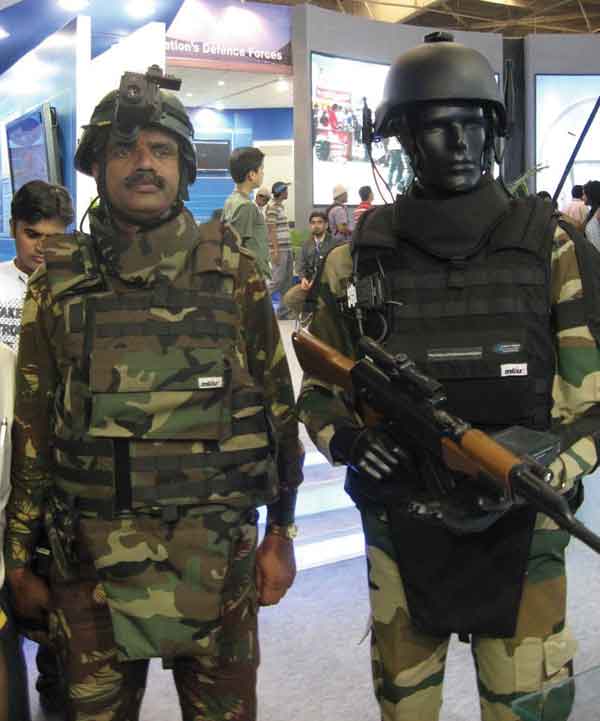
It is important to note that in 21st century conflict situations not only will operations be increasingly inter-agency involving greater applications of ‘all elements of national power’, but our adversaries will also endeavour to employ hi-tech irregular forces against us. If we can achieve soldier modernisation within the Security Sector and network this cutting edge at the national level, we can be sure to win future conflict situations. Modernisation of the infantry has not been given its due in past decades. This must be treated as an ‘emergent’ requirement in consideration of the emerging threats within and surrounding the country especially considering the rate at which terrorists are achieving sophistication.

Advancements in science and technology are converting fiction to reality. This, coupled with advent of space wars, cyber, laser, plasma, electro-magnetic and precision guided munitions tend to make armies forget the infantryman – big ticket weapon systems overshadowing the cutting edge foot soldier. Having invaded Iraq and Afghanistan, US forces discovered this and underwent course correction post an army level study focused on this very issue.

Advancements in science and technology are converting fiction to reality…