29 April 2017

Reform Eludes Iraq's Oil Sector


After just over 10 years of debate, amendment and repeated rejection in Parliament, Iraq's landmark oil bill is no closer to passing. The Cabinet first introduced the draft law in February 2007 to revamp and jump-start the country's crucial oil and gas sector after the fall of longtime leader Saddam Hussein. And though the intervening decade has done little to address the underlying factors that paralyzed Baghdad's attempt at reforming the energy industry, that hasn't stopped the country's leaders from trying. Since taking office in August, for instance, Oil Minister Jabbar al-Luaibi has steered Iraq's energy policy in a more pragmatic direction. The legislature will soon debate the latest iteration of a bill to reinstate a national oil company to oversee the country's smaller, regional firms, and al-Luaibi recently announced that Baghdad is exploring new contract models for foreign investors. Leaders such as Shiite National Alliance head Ammar al-Hakim, meanwhile, have proposed various plans to reconcile Iraq's different stakeholders to end the country's political gridlock. Even so, the differences between and within Iraq's Sunni Arab, Shiite Arab and Kurdish communities will continue to undermine progress in the oil and gas sector, particularly with elections looming on the horizon.
 
Mapping Iraq's Discord

If a picture is worth a thousand words, a map is just as valuable in assessing the challenges facing the Iraqi government. The country's oil production, which even at today's depressed oil prices generates roughly 30 percent of its gross domestic product, is concentrated in just a handful of areas. In southern Iraq, the predominantly Shiite province of Basra alone accounts for roughly two-thirds of the country's oil production; were it a country, Basra would be among the world's top 10 oil producers. The Kurdistan Regional Government (KRG) in northern Iraq, along with the nearby disputed territories under Kurdish control, produces another 13 percent of the country's oil. And the Sunni-majority regions in central and western Iraq produce little oil to speak of.

Russia Campaigns for the French Presidency


The European Union's busy election season is an important campaign opportunity, not only for the politicians running, but also for the Kremlin. Several leaders and governments around the world have accused Moscow of coordinating disinformation campaigns to influence other countries' political affairs over the past year. The Kremlin quadrupled its spending on media activities abroad in its latest federal budget, and since half its projected expenditures are labeled confidential, Moscow may well be devoting hundreds of millions more to the cause. Vyacheslav Volodin, the speaker of Russia's legislature and a top political strategist, has been stumping across the European Union this campaign season, meeting with representatives of nationalist parties such as Alternative for Germany. And now Moscow has turned its focus toward France as the country gears up for two months of presidential and legislative elections.

Rumors of Russia's meddling in the run-up to the vote, mostly through disinformation campaigns on social media, have been swirling for months. The allegations are not terribly surprising; given its interest in deepening the divides in the European Union as a whole, Russia is likely trying to amplify the political discord in one of the bloc's core member states. But as much as Moscow hopes to sway the outcome of the upcoming votes, or at least disrupt the subsequent political transition, it knows from recent experience that its electoral interventions can only do so much.

America's Innovation Edge Is at Risk

Peter Engelke

It seems a growing number of people refuse to accept living in a post-fact world. Saturday’s March for Science was billed by its organizers as necessary “to defend the vital role science plays" in our health, safety, economies, and governments.”

It is no coincidence that the march was held during the opening weeks of Donald Trump’s presidency, and on Earth Day to boot. Many of the nation’s scientists fear a serious threat to both science itself and federal policies rooted in science. Look no further than the hatchet the Trump administration hopes to take to the federal government’s research and development budgets, or to its goal of eviscerating or weakening evidence-based regulations across a number of areas, most prominently in environmental policy.

How has it come to this? The fact that scientists feel a need to organize mass marches is a sign of something gone very wrong. As in so many areas of contemporary American life, science has become a political football. For whatever reason, a sizable portion of our body politic no longer equates science with progress and prosperity. That sentiment has been years in the making.

LONE-ACTOR VS. REMOTE-CONTROLLED JIHADI TERRORISM: RETHINKING THE THREAT TO THE WEST

SAM MULLINS

At approximately 2:40 in the afternoon of March 22nd, British-born Khalid Masood — a violent criminal who had previously been investigated by MI5 for links to extremists — deliberately drove into pedestrians making their way across Westminster Bridge. He killed a mother on her way to collect her children from school, a pensioner, and two tourists. After crashing the rented vehicle into the gates of Parliament, Masood ran into New Palace Yard and stabbed an unarmed policeman to death before being shot and killed by plainclothes officers. In contrast to other recent attacks in Western nations, which have frequently (sometimes incorrectly) been labeled acts of “lone-actor” terrorism, Masood’s assault was followed by a volley of articles with titles such as “Remote-Control Terror,” “Don’t Bet on London Attacker Being a Lone Wolf,” and “The Myth of the ‘Lone Wolf’ Terrorist.” Analysts were keen to point out that “lone-actors” are very rarely truly alone and that instead they tend to emerge from within broader, extremist milieus. Moreover, what sometimes seems like lone-actor terrorism at first glance turns out to be connected to, if not directed by, foreign terrorist organizations. Yet the official word on Masood is that, regardless of his associations, he acted “wholly alone.” To accurately understand the nature of terrorism today, patient, measured analysis and consistent use of terminology are necessary. It is therefore important to re-examine the concept of lone-actor terrorism and to try and appreciate where it fits within the overall spectrum of jihadist terrorist activity in the West.

CAUSALITY COLLISIONS: WHY SPECIAL OPERATIONS FORCES REMAIN THE BEST WEAPON TO DEFEAT ISIS IN SYRIA

Scott Harr

Taking meaningful action against a challenging problem requires first and foremost an understanding of the cause-and-effect relationships that characterize the challenge. While that statement might be so obvious as to border on platitude, inaccurately assessing those relationships has proven to derail more than a few US efforts to come to grips with strategic security challenges. Perhaps nowhere is this clearer today than in the struggles that US policymakers have had in crafting a coherent strategy to defeat ISIS. Like the comically overweight character in the Austin Powers film who declared, “I eat because I’m unhappy, I’m unhappy because I eat,” defense planners have wrestled with the question of whether ISIS’s strength causes a requirement for more US troops, or the prospect of more troops will cause ISIS to grow in strength.

Examining this causality puzzle requires an understanding of ISIS’s grand strategy. As a report by the Institute for the Study of War concludes, ISIS has adopted a three-tiered geographic worldview to advance, protect, and prosecute its global strategic objectives. The first tier involves protecting the borders of its declared caliphate and physical domains in Iraq and Syria. ISIS views this territory as its heartland and prioritizes protecting and preserving its territorial gains for the sake of the group’s credibility and to maintain access to the natural resources that fund its operations and governance. Outside this heartland lies the second tier—the Middle East and North Africa, what the group conceives of as its “Near Abroad.” Here, ISIS aims to destabilize apostate (“Western-friendly”) governments in order to create conditions favorable for recruitment and an eventual replacement with ISIS-aligned governments. Finally, the third tier consists of the rest of the world—the “Far Abroad.” In this space, ISIS aims to export its terrorist activities to foment fear and induce an over-reaching international response. Ultimately, ISIS has a very real “doomsday” end-state in which the Western world is drawn into a military conflict in Syria that ends with Islam’s triumph over Western armies on the fields of Dabiq, a region in Syria where the proposed “Armageddon” battle will take place.

TACKLING THE MS-13 PROBLEM: A NEW DESIGNATION FOR A HYBRID THREAT?

FRANK J. CILLUFFO AND SHARON L. CARDASH

Does the United States have the right tools to tackle criminal groups that use terrorist tactics? Or should the Department of Homeland Security be empowered to lead a new effort against the select few but most viciously violent gangs established in this country?

For special access to experts and other members of the national security community, check out the new War on the Rocks membership.

Just days ago, Attorney General Jeff Sessions fixed his sights sharply on the MS-13 gang and, in particular, the brutal violence and crimes the group has perpetrated — including against children — in the United States. He even suggested the group “’could qualify’” as a terrorist organization. That characterization matters, in part because an official designation as such would expand the toolkit the U.S. government would have at its disposal to combat the group and crack down on its unlawful activities. Designating an entity is further intended to contain and quarantine it globally by spurring others to shun and undermine it. Indeed, this issue of designating gangs reflects debates that have been ongoing in the Justice Department and partner agencies for quite some time.

UNDERSTANDING THE ROLE OF HYBRID WARFARE AND U.S. STRATEGY FOR FUTURE CONFLICTS

By Rebecca Farrar 
The boundaries of war have widened significantly with the technological investments each new era brings. Some believe war has lost the boundaries it once possessed, prompting an adoption of what some see to be a new way of war. The idea of “hybrid warfare” has become the 21st century political obsession, and allegedly poses a problem for the United States’ military strategy against growing powers like Russia, China, and even non-state actors like Daesh. While it may be true that the U.S. has reached a difficult point in foreign relations, the notion of “hybrid warfare” poses a fatal threat to U.S. security only so long as it continues to be hyperbolized. By deconstructing the idea of hybrid war, the U.S. can better articulate an effective form of strategy, like budget reform and multilateral cooperation, to address inherent threats without the fervor created by the exaggerated significance given to this dystopic concept.

This Failed Secret Mission Changed Special Ops Forever


On Nov. 4, 1979, approximately 3,000 Iranian militants took control of the U.S. embassy in Tehran, holding 63 Americans hostage. An additional three U.S. members were seized at the Iranian Foreign Ministry for a total of 66.

This was in response to President Jimmy Carter allowing Mohammad Reza Shah Pahlavi, the recently deposed Iranian ruler, into the U.S. for cancer treatment. New leadership in Iran wanted the shah back as well as the end of Western influence in their country.

After a few weeks, 13 hostages, all women or African Americans, were released but the remaining 53 would wait out five months of failed negotiations.

President Carter, originally wanting to end the hostage crisis diplomatically and without force, turned to alternative solutions as he felt the political pressure to resolve the problem. On April 16, 1980, he approved Operation Eagle Claw, a military rescue operation involving all four branches of the U.S. armed forces.

Countries That Use Criminal Hackers Are Vulnerable to Compromise and Counterattack

WASHINGTON (AP) — Foreign governments that rely on the services of private criminal hackers leave their operations vulnerable to being exposed and disrupted, creating something of a “silver lining” for U.S. law enforcement investigations of cyberattacks, a top Justice Department official said Monday.

Criminal hackers hired by nations are more likely to travel and expose themselves to the risk of being arrested and prosecuted, and may be less savvy about evading detection than a sworn intelligence officer, Adam Hickey, a deputy assistant attorney general in the Justice Department’s national security division, said during a cybersecurity panel discussion at Georgetown University.

“That matters because apprehending them … can give us the human intelligence into state-sponsored hacking that can be very, very valuable and supplement the technical insight,” Hickey said.

The blended model of foreign government official and hired criminal hacker was illustrated in a punishing 2014 hack of Yahoo’s network that affected hundreds of thousands of user accounts. The Justice Department last month charged two officers of the Russian Federal Security Service, or FSB, and two criminal hackers in connection with the massive breach.

How to Fight ISIS Online Why the Islamic State Is Winning on Social Media

Audrey Alexander

From Twitter to Telegram, Islamic State (ISIS) [1] sympathizers continue to set up camp on social media platforms [2] around the world. While some of the outlets are far-reaching and transparent, others are insular and protected. The range of platforms, the diffusion of sympathizers, and the sheer volume of content make it difficult for governments and private companies to contain the online ISIS threat [3]. To begin doing so, it is necessary to understand the external factors that have shaped ISIS’s communications strategy.

On a strategic level, ISIS is winning the war on social media [4] with effective branding, information distribution, and agenda-setting. For example, in the wake of violent attacks, it has become commonplace for counterterrorism analysts to search for press releases claiming affiliation by Amaq News Agency. In an analysis of the ISIS manual [5], Media Operative, You Are a Mujahid, Too, the terrorism researcher Charlie Winter argues that the organization’s marketing approach allow ISIS to “forcibly inject itself into the global collective consciousness.” But the group is fundamentally dependent on platforms it cannot control, which leaves it vulnerable to changing regulations and security measures. For example, in August 2015, U.S. authorities arrested Jaelyn Young and Muhammad Dakhlalla [6], after the couple disclosed their plans to travel to ISIS-controlled territory to undercover agents on multiple social media platforms, including Twitter. In Syria, a targeted strike reportedly killed Junaid Hussein [7] after the British recruiter and hacker left an Internet cafe in Raqqa, ISIS’ de facto capital. 

The Problem of Siloed Cyber Warriors

LEVI MAXEY

The isolation of cyber as an entirely independent domain of warfare is both inaccurate and dangerous.

Today, the Pentagon faces an essential task, to integrate cyber capabilities with warfighting in the physical world.

Cyber capabilities cannot be detached from other domains of warfare, such as electromagnetic, air, land, sea, and space. The future holds two potential battlefields that overlap: one fought between high-tech adversary militaries, and another, between highly specialized military units and insurgent forces in population-dense urban environments. In both situations, cyber capabilities must be integrated into all other domains of warfare.

For instance, on the night of May 2, 2011, two stealthy Black Hawk helicopters carrying U.S. Navy SEALs transited contested airspace en route to a compound in Abbottabad, Pakistan. There, they found and killed al-Qaeda founder and leader Osama bin Laden. As the Black Hawks descended on the compound, a Pakistani computer consultant tweeted, “Helicopter hovering above Abbottabad at 1 AM (is a rare event),” followed by a real-time stream of updates on what was suppose to be a clandestine operation.

The Army is adding the 'Dronebuster' to its set of anti-drone tools

By: Todd South

The newest tool in the Army’s counter-drone arsenal is the "Dronebuster," a 5-pound radar gun-like device that soldiers can use to jam weaponized commercial drones while at remote forward operating bases or on foot patrol.

The Army’s Rapid Equipping Force bought 50 of the devices this month, and they should be delivered in the coming weeks, according to Clay Wild, vice president of marketing for Radio Hill Technologies, a Portland, Oregon-based technology startup.

The device starts at $30,000, depending on accessories, uses five custom antennae and a “technique generator” that uses less than 10 percent of the battery power to create the jamming signal. The power-saving method allows for a smaller device than some competitors, Wild said.

The "Dronebuster" is one of several tools the Army is using to counter unmanned aerial systems. This latest tool weighs just 5 pounds and is designed for soldiers at remote locations or on dismounted patrols.Photo Credit: Courtesy photo via Radio Hill Technologies, Inc.

28 April 2017

*** Afghanistan: The Future of the National Unity Government

Source Link


Two and a half years after it was created to prevent the bitterly contested 2014 presidential election from plunging Afghanistan into turmoil, the future of the National Unity Government (NUG) is shaky, as is broader political stability. The NUG is beset with internal disagreements and discord and facing a resurgent insurgency. Several options are being discussed in Afghan and international circles for how best to tackle the political and constitutional tensions that, if left unresolved, would increase the risk of internal conflict and insecurity in an already fragile state. The only promising way forward is for the two protagonists, President Ashraf Ghani and his Chief Executive Officer (CEO), Abdullah Abdullah, to acknowledge that the stability of their government and country requires them to work together.

*** Afghans Want More ‘Mothers of All Bombs’

BY RUCHI KUMAR

KABUL, Afghanistan — The sky-tearing blast last week was unlike anything the villagers around the Acchin valleys in the eastern Afghan province of Nangarhar had ever heard. It set off panicked phone calls and fearful speculations until word spread that the explosion was not a new insurgency strike but an air attack by the United States. The onslaught employed one of the few bombs to have its own set of names — the GBU-43/B, otherwise known as the Massive Ordnance Air Blast, or the “Mother of All Bombs” (MOAB).

It was the first time the 21,000-pound bomb, which covers a 1,000-yard radius, has been used in combat. The strike, directed at a network of tunnels used by insurgents, drew global attention to the long-running conflict in Afghanistan. “It was the right weapon, for the right target,” General John W. Nicholson, commander of the US forces in Afghanistan, told a room of journalists in Kabul on Friday afternoon. But it wasn’t just Americans who were enthusiastic about the strike. Despite the worries sparked worldwide by the news, local Afghan leaders were cheering the MOAB.

*** Bhutan’s Relations With China and India


By: Sudha Ramachandran

The 14th Dalai Lama’s April 4-13 visit to Tawang in the northeastern Indian state of Arunachal Pradesh, over which China lays claim, drew thousands of followers. Among these were some 3,000 Bhutanese, who trekked across mountains to see the Tibetan spiritual leader (India Today, April 9). Bhutan shares a disputed border with Tibet and has close ties with Tibetan Buddhism, complicating its relationship with China.

The Sino-Bhutanese border dispute involves 764 square kilometers (sq km) of territory. Beijing claims 495 sq km of territory in the Jakurlung and Pasamlung Valleys in north-central Bhutan and another 269 sq km in western Bhutan, comprising the Doklam Plateau (Bhutan News Service, January 1, 2013). Doklam Plateau abuts Chumbi Valley, which like the Tawang salient that adjoins Bhutan’s eastern border has enormous strategic significance for China, Bhutan as well as India. India’s defense of its northeast would be undermined should Bhutan cede control over it to China.

** The Politics of Reincarnation: India, China, and the Dalai Lama

By Tshering Chonzom Bhutia

The Dalai Lama’s visit to Tawang district in Arunachal Pradesh from April 7 to 11 garnered plenty of media attention. One of the most prominently discussed questions centered around the Dalai Lama’s reincarnation.

The Chinese side was unequivocal in not only objecting to the visit but also commenting on the reincarnation issue. The Chinese position, as encapsulated in remarks by scholars from important Chinese think tanks, is that the Dalai Lama’s reincarnation has to be approved by the Chinese government and selection has to be based on a combination of not just “historical rules” but also current “Chinese laws.” The reference to Chinese laws is with respect to the 2007 State Administration for Religious Affairs (SARA) regulation delineating procedures for the selection of reincarnated monks, including eligibility conditions, application procedures and the government and religious institutions to be approached for approval. The regulation basically excludes “any foreign organization or individual” from the reincarnation selection process, obviously in an attempt to legitimize China’s authority and exclude the Tibetan Diaspora (and others) in the selection of the next Dalai Lama.

The Chinese have consistently maintained that any reincarnation must be determined on the basis of the late 18th century procedure instituted by the Manchu Qing rulers of China. Under this “golden urn system” of selecting reincarnations, the names of prospective candidates would be placed in an urn, from which lots would be drawn to pick the real incarnation. Therefore, any other method being suggested by the Dalai Lama is seen as contrary to established rules and illegitimate, for it denies the Chinese government’s authority in the process.

Bastar: Proposing A Radical Solution


Jaithirth Rao

Perhaps it is time for the government of India to practise some magnanimity and farsightedness and reach out to the descendants of Pravir Chandra.

Getting them on board, perhaps giving Bastar a Union Territory status with a popular Rajpramukh might just make the difference.

It is fashionable among leftists to deride monarchs and monarchies. They have no objection to new hereditary leaders – the Nehru-Gandhis, the Trudeaus, the Assads – but kings and queens are objects of derision.

Conservatives know the value of legitimate institutions like monarchies. Our Founding Fathers and that outstanding duo – Sardar Vallabhbhai Patel and V P Menon knew it well. Rajas and Nizams were retained. The Maharaja of Jaipur was reincarnated as a Rajpramukh and in order to cater to the sensitive situation, the Maharaja of Udaipur was called a Maharajpramukh.

Jawaharlal Nehru invited the said monarch to come to the citadel of Delhi in 1947. The gracious Maharaja did what his ancestors had sworn never to do until Delhi was really free – at least in his family’s assessment. Even the obdurate Nizam was made a Rajpramukh. By a clever sleight of hand, the story was spread that the Nizam was wise and reasonable and had been the victim of Qasim Rizvi and the Razakars rather than what many felt was the other way around. This made Hyderabad’s integration that much easier and eliminated the possibility of an international dispute bubbling up.

IT’S MUCH BIGGER THAN AFGHANISTAN: U.S. STRATEGY FOR A TRANSFORMED REGION

BARNETT RUBIN

The use of a large conventional bomb against an Afghan tunnel complex occupied by Islamic State militants recently captured the media’s imagination. Talking heads rushed to discern the meaning of the decision. Was it President Donald Trump sending a message to North Korea? Was the president even involved in the decision? It turns out that he wasn’t.

The U.S. Commander in Afghanistan, Gen. John Nicholson, says he ordered the use of the MOAB (Massive Ordnance Air Burst Bomb, known colloquially as the “mother of all bombs”) for purely tactical reasons: “This is the right munition to reduce these obstacles.” The jubilation expressed by U.S. media in purely tactical destruction, however, sent a strategic message to some Afghans: that the United States considers their country a collection of targets to destroy rather than a country with a history and, hopefully, a future. A senior pro-government political analyst in Kabul whom I have known for decades points out that even if the Islamic State flees the area, the government’s weakness means the Taliban, who pose a greater threat to the government, will fill the vacuum.

Why China's New Aircraft Carrier Should Worry India

Mihir Sharma

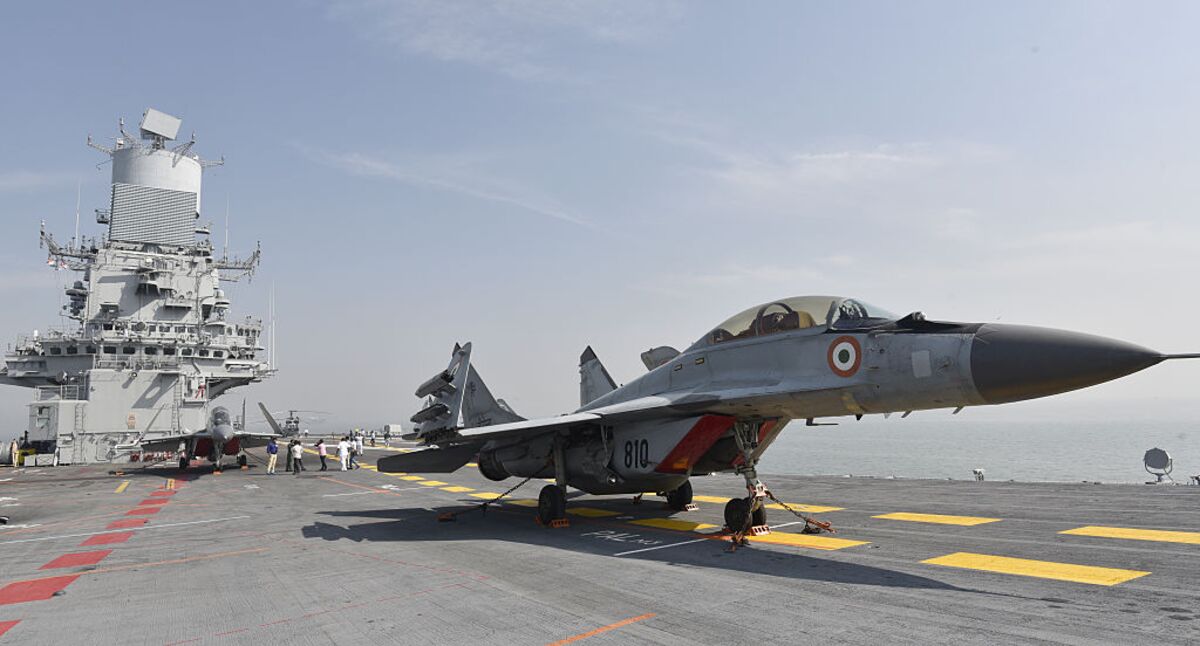
The launch of China’s second aircraft carrier this week is an important and depressing moment for India. The “Type 001A” -- likely to be named the “Shandong” -- will give China an edge for the first time in the carrier race with its Asian rival, a literal two-to-one advantage. After decommissioning the INS Viraat earlier this year, the Indian Navy is down to a single carrier, INS Vikramaditya. Worse, the Shandong has been built at China’s own giant shipyard at Dalian; Vikramaditya is merely a repurposed 1980s-era Russian carrier formerly known as the Admiral Gorshkov.

Even more telling than the raw numbers is what China’s progress says about India’s ability to provide security in its own backyard. Chinese naval strategists have open designs on the Indian Ocean: According to one, “China needs two carrier strike groups in the West Pacific Ocean and two in the Indian Ocean.” The government of Prime Minister Narendra Modi has talked a great deal about revitalizing the Indian military; it’s opened the defense sector up to greater foreign investment and is building a much-closer relationship with the U.S. military, largely with China in mind. But spending has lagged. Worse, successive governments simply don’t seem to have thought through where best to direct those scarce resources.

XINJIANG: OUR OTHER NORTHERN NEIGHBOR.


East Turkestan, also known as the Xinjiang Uyghur Autonomous Region of China, lies in the very heart of Asia. Situated along the fabled ancient Silk Road, it has been a prominent centre of commerce for more than 2000 years. The land of East Turkestan gave birth to many great civilizations and at various points of history it has been a cradle of scholarship, culture and power.

The current territorial size of East Turkestan is 1.82 million square kilometres. The neighbouring Chinese province annexed part of the territory as a result of the Chinese communist invasion of 1949.

East Turkestan borders with China and Mongolia to the east, Russia to the north, Kazakhstan, Kyrgyzstan, Tajikistan, Afghanistan, Pakistan and India to the west, and Tibet to the south.

East Turkestan has a rich history and a diverse geography. It has grand deserts, magnificent mountains, and beautiful rivers, grasslands and forests.

People

East Turkestan is the homeland of the Turkic speaking Uyghurs and other Central Asian peoples such as Kazakhs, Kyrgyz, Uzbeks, Tatars and Tajiks.

China reshuffles 84 corps-level military units

Xinhua 

Chinese President Xi Jinping, who is also general secretary of the Communist Party of China Central Committee and chairman of the Central Military Commission, speaks at a meeting with chief military officers of newly adjusted or established corps-level military units in Beijing, capital of China, April 18, 2017. (Xinhua/Li Gang)

BEIJING, April 18 (Xinhua) -- China announced Tuesday a military reshuffle with 84 corps-level units newly adjusted or established, a move hailed by President Xi Jinping as another major step in strengthening the country's armed forces.

Xi, who is also general secretary of the Communist Party of China (CPC) Central Committee and chairman of the Central Military Commission (CMC), made the remarks while meeting chief military officers Tuesday in Beijing.

Decided by the CPC Central Committee and the CMC, the reshuffle is important in building strong armed forces through reform, said Xi.

It will also have a profound influence on meeting the targets of enhancing the military in a new situation and building world-class armed forces, Xi noted.

China’s Vision of the Future Networked Battlefield

By James Johnson

Compared to the extensive coverage on China’s traditional war-fighting capabilities (e.g. its ‘carrier killer’ anti-ship missiles) far less ink has been spilled on Chinese thinking on the critical systems and nodes (or C4ISR in military lexicon), which enable and enhance these advanced weapons. These systems expand the range, accuracy, and lethality of Beijing’s military power projection.

This war-fighting toolkit includes: long-range precision strike missiles for use in early and preemptive strikes; stealth jet fighters to bypass enemy air defenses, and destroy its command and control centers; anti-satellite missiles to take out critical space-based intelligence, surveillance and reconnaissance (ISR) systems; and other emerging technologies such as rail-guns, ‘stealth-defeating’ quantum radars, and autonomous systems. 

A more integrated Chinese warfighting force could fundamentally alter the regional military balance, which is already rapidly moving in Beijing’s favor. According to the authors of a Chinese military magazine, China must prepare to fight to safeguard and secure its “central leadership” in the South China Sea. 


To be sure, a fully networked fighting force would prove highly effective during a future amphibious assault in the Senkakus, an island blockade against Taiwan, or a blockade on critical trading sea-lanes in the South China Seas — which China’s neighbors would unlikely be unable to resist. 

The Folly of Investing in China’s ‘One Belt, One Road’


By Patrick McCabe

On May 13, Beijing will host a summit meeting of countries participating in its massive infrastructure initiative known as “One Belt, One Road”—a belt of overland corridors and a complementary road of sea routes linking China to Eurasia and Africa. Neighboring countries may benefit from Beijing’s investment, but investors have reason to be wary.

The summit follows President Xi Jinping’s January star turn at the Davos World Economic Forum where he touted OBOR as an investment opportunity: “Over three years ago, I put forward the ‘Belt and Road’ initiative. Since then, over 100 countries and international organizations have given warm responses and support to the initiative . . . and our circle of friends along the ‘Belt and Road’ is growing bigger.”

USIP’s Work on the ISIS Threat


As a U.S.-led international coalition helps local forces recapture most of the territory once seized by the Islamic State of Iraq and Syria (ISIS), the two countries face underlying conflicts and sectarian tensions that continue to fuel cycles of violence and extremism. At the same time, as many as 31,000 foreign fighters—from 86 countries on five continents—have traveled to Iraq and Syria to join ISIS and other extremist organizations, and some are heading home. Meanwhile, ISIS has gained a foothold in Afghanistan, Libya, Yemen, and elsewhere. Cementing military gains and curbing extremist violence requires long-term stabilization based on political settlements, social reconciliation, and improved governance. 
USIP's Work 

The U.S. Institute of Peace has operated on the ground in Iraq since 2003 and in Afghanistan since 2002, as well as in Libya, Nigeria, Syria, Tunisia, and Yemen. As a small, agile institution, USIP works with local leaders and the U.S. government, including the military, to stabilize areas devastated by ISIS, end cycles of revenge, and address the root causes of radicalization, including corrupt and abusive governance. USIP has had impact in: 

Sustaining the Peace. USIP and its local partners provide advice and training to strengthen the ability of community and national leaders to resolve their own conflicts without violence. 
In Iraq, teams of mediators have facilitated, with cooperation from officials in Baghdad, starting in 2007 during an earlier insurgency in Mahmoudiyah, and more recently in Bartella, Tikrit, Yathrib, and Hawija. A 2015 agreement in Tikrit allowed more than 300,000 people to return to their homes, and the mediation methods developed are being applied elsewhere, including near Mosul. 

The U.S. Military’s Master Plan to Fight Russia and China in a War Is Already Here

Dan Goure

When faced with adversaries who seemed able to match or counter U.S. military-technological superiority, the Department of Defense began an intensive effort to invest in a new generation of capabilities designed to restore U.S. military preeminence or overmatch. This effort was labeled the Third Offset Strategy in recognition of two prior technology investment strategies that had, or so it was asserted, successfully countered advances in Soviet military capabilities.

The first two offset strategies were designed with a particular adversary in mind, the Soviet Union and its allies, with a specific problem to overcome: a rapid conventional offensive against the North Atlantic Treaty Organization (NATO) in Europe backed up by the threat of nuclear escalation. The first offset strategy was the widespread nuclearization of the U.S. military as a way of cost-effectively countering the massive Soviet/Warsaw Pact advantage in conventional forces. Once the Soviet Union achieved strategic nuclear parity with the U.S., the first offset strategy was rendered moot.

U.S. Defense planners then invested in stealth, precision navigation and targeting, and airborne intelligence, surveillance and reconnaissance to defeat Russian conventional forces. The best-known element of this second offset strategy was the AirLand Battle concept which sought to employ U.S. ground forces to fix advancing Soviet formations while airpower conducted deep strikes, including by early stealth aircraft, intended to disrupt the Soviet offensive.

Americans Are Not Ready to Go to War for Ukraine

Christopher A. Preble

Secretary of State Rex Tillerson committed what amounts to an unconscionable sin in the eyes of many foreign policy watchers when he wondered aloud two weeks ago during a meeting in Lucca, Italy, "Why should U.S. taxpayers be interested in Ukraine?"

The Washington Post’s Anne Applebaum responded with an emphatic, “Yes, Rex Tillerson, U.S. Taxpayers Should Care,” but conceded, with an eye to Tillerson’s corporate roots:

There is no calculation, no balance sheet that can prove any of this. There is nothing that would appeal to a CEO or his shareholders. Whatever we have “invested” in Ukraine...will not show an immediate profit. To see the value of a secure, pro-Western Ukraine, you have to see the value of an alliance going back 70 years.

Richard Haass, president of the Council on Foreign Relations, stressed that abandoning Ukraine to Vladimir Putin’s tender mercies could spur more states to pursue nuclear weapons. Ukraine was encouraged, under the Budapest Memorandum of December 1994, to relinquish its nuclear weapons after the collapse of the Soviet Union, in exchange for security assurances from both Russia and the United States.

“America’s Dangerous Love for Special Ops” - The Real Story

by Hy Rothstein

Mark Moyar’s op-ed, “America’s Dangerous Love for Special Ops,” is at best, ill-informed and at worst, contemptuous of special operations forces. To be sure, special operations have not been able to deliver what Moyar calls, “strategic success.” This, to a significant degree, has been the result of misuse of special operations forces or more specifically, “conventionalizing” their missions. But Moyar’s assertion that “strategic victory has required the integration of special operations with both convention forces and civilian national security agencies” is laughable. What strategic victories is he referring to, Afghanistan, Iraq, Vietnam?

While Moyar claims that special operations rarely produce strategic success, he acknowledges that special operations have produced “frequent and impressive tactical results.” In one of Clausewitz’s lectures on “Small Wars” held at the Prussian War College in 1810 and 1811, he said that ”…the entirety of Small Wars belongs to tactics,” but what becomes clear is that the reasons for small wars is based on the necessities of strategy, or perhaps for the US, conventional military strategic ineffectiveness. Clausewitz is clear that Small War can serve tactical, strategic and policy ends. We see the confluence of tactics and strategy in both small wars and special operations.

U.S. Air Force invests millions this month on cyberweapons projects

Patrick Howell O'Neill

Three of the United States’ largest military contractors each won multimillion-dollar projects in the last month to boost American offensive power in the cyber domain.

Raytheon, Northrop Grunman and Booz Allen Hamilton have all seen their stock prices rise 10 to 20 percent since the November 2016 U.S. election. Investors sprinted to military contractors based on Trump’s promises for higher spending on — among other warfighting capabilities — the cyber domain. Many of the world’s biggest weapons manufacturers are expanding aggressively into offensive and defensive cybersecurity in search of the same level of profitability found in building conventional weapons systems.

Raytheon will build the Air Force’s newest Cyber Command and Control Mission System (C3MS) operating location — at San Antonio’s Lackland Air Force Base — after winning an $8.5 million contract this week. Lackland is home to the 24th Air Force, the organization tasked with operating and defending the Air Force’s networks. It’s currently commanded by Maj. Gen. Christopher Weggeman.

The C3MS system is designed, by the military’s description, to extend the U.S. Air Force’s “global reach, power and vigilance” into the cyber domain by providing permanent operational support to combatant commanders around the world. In addition to securing Air Force networks and information processing systems, C3MS includes offensive cyberspace operations, expansive real-world and cyber domain surveillance capabilities and close coordination with other key cyber domain commands including the United States Cyber Command.

Time for America to Follow China’s Lead

By Kishore Mahbubani

Kishore Mahbubani is a former Singaporean diplomat who served twice as ambassador to the United Nations. Currently, he is the dean of the Lee Kuan Yew School of Public Policy at the National University of Singapore. He is the author of “The Great Convergence: Asia, the West, and the Logic of One World.” This piece is part of a special RCW series on the U.S.-China geopolitical relationship. The views expressed here are the author’s own.

In a 2005 speech before the National Committee on U.S.-China Relations, former World Bank President Robert Zoellick famously called upon the Chinese government to become a responsible stakeholder in the global system, and to work with other international powers to maintain stability and security around the world. One can assume that when Zoellick delivered his speech on that fall day in New York, there was no doubt in his mind -- nor in the minds of most American leaders and policymakers -- that the United States was in fact the responsible stakeholder in the international system, and that China was not. 

However, last year’s election of Donald Trump has spurred a remarkable reversal in global perceptions of the United States and China. President Trump has loudly proclaimed that he will pursue unilateralist “America First” policies, and he has also threatened to withdraw the United States from the World Trade Organization. In a 2016 interview with NBC’s “Meet the Press,” Trump said, "[W]e’re going to renegotiate or we’re going to pull out. These trade deals are a disaster. The World Trade Organization is a disaster." By contrast, after the two brilliant speeches delivered by Chinese President Xi Jinping in Davos and in Geneva in January 2017, China has projected itself as a defender of the prevailing multilateral order. Zoellick would not be able to deliver his 2005 speech in 2017. The roles have reversed.

Clinton's Subtle Warning

This need not and should not have happened. As a power that is, by the president’s own admission, in relative decline, it is increasingly in the national interest of the United States to strengthen multilateral rules and processes. Articulating this truth in a visionary 2003 speech at Yale University, Former President Bill Clinton said:

The Armed Forces Officer

By General Joseph F. Dunford, Jr., USMC

In 1950, the great Soldier-Statesman George C. Marshall, then serving as the Secretary of Defense, signed a cover page for a new book titled The Armed Forces Officer. That original version of this book was written by none other than S.L.A. Marshall, who later explained that Secretary Marshall had “inspired the undertaking due to his personal conviction that American military officers, of whatever service, should share common ground ethically and morally.” Written at the dawn of the nuclear age and the emergence of the Cold War, it addressed an officer corps tasked with developing a strategy of nuclear deterrence, facing unprecedented deployments, and adapting to the creation of the Department of Defense and other new organizations necessary to manage the threats of a new global order.

Now, in the second decade of the 21st century, our nation is again confronted with a volatile and complex security environment, and addressing the challenges of our time will place new demands on military leaders at all levels. We in the Profession of Arms will continue to adapt our training and education programs, as we have always done, to provide our officers with the intellectual and practical tools necessary to succeed in this unpredictable and unstable world.