3 October 2022

Putin Gambles on Winter and Orbán 

András Tóth-Czifra

Even if the president is outsourcing responsibility for unpopular policies to his governors, as happened during the coronavirus pandemic, Russia’s system of governance was not built for coercion on this scale when the stakes are this high. Yet the political machinery, dazed and high on seven months of war propaganda, presses ahead.

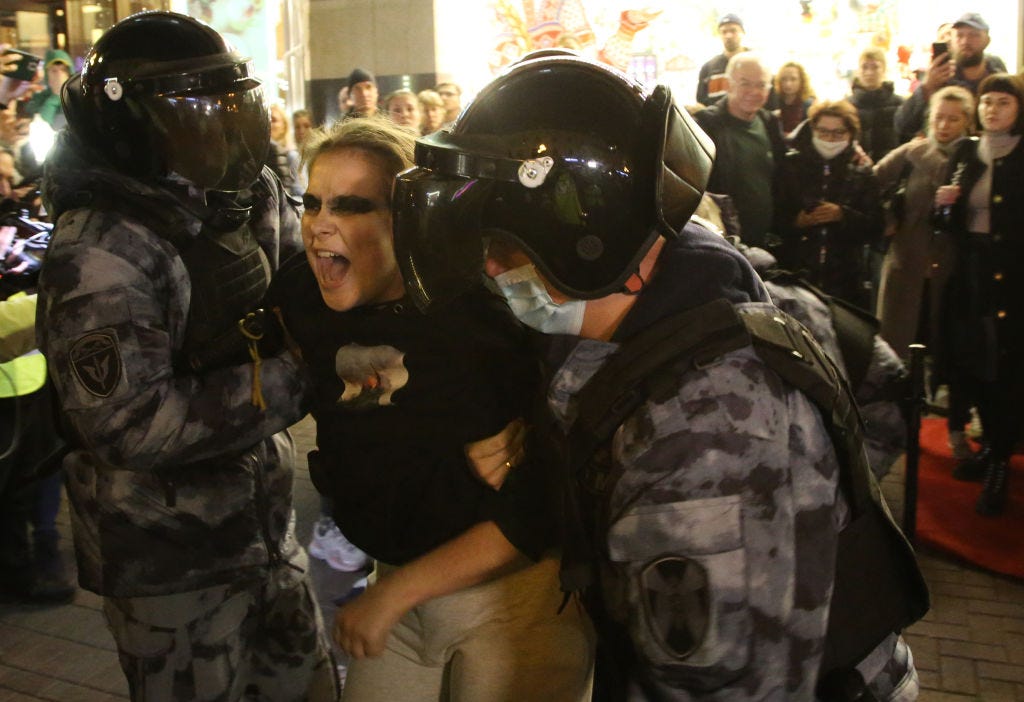
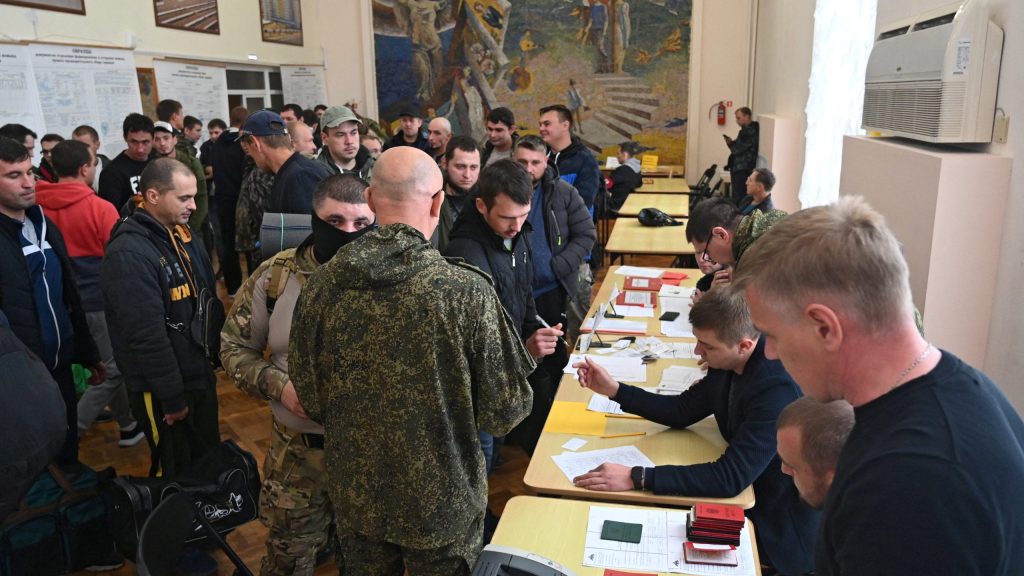
There have been chaotic, bitter, and increasingly violent protests against what many see as indiscriminate or at least arbitrary conscription. In the North Caucasian republic of Dagestan, locals are challenging law enforcement with increasing boldness, while radical Telegram channels called on them, and the residents of other regions, to burn military and administrative buildings.

In neighboring Chechnya, the region’s head, Ramzan Kadyrov, U-turned days after demands for mobilization. After a protest started in Grozny, the capital, he advised members of the security forces and law enforcement to mobilize themselves instead. Tumultuous scenes were reported in several other regions, including Yakutia and Omsk.

U.S. reliance on China for rare-earth minerals is a national security threat

Gregory D. Wischer 

The war in Ukraine has shocked oil and gas markets, revealing how modern economies depend heavily on some resources. But another critical resource has gone relatively unnoticed: cobalt. This unique element has national security importance. It is a critical input in advanced technologies such as batteries in electric vehicles, superalloys in jet engines, and permanent magnets in advanced electronics.

Yet the United States relies immensely on cobalt refined in foreign countries, including China. Why? Because the United States has no major cobalt refineries. Compounding this problem, the U.S. government’s National Defense Stockpile lacks sufficient cobalt reserves. From approximately 13,000 tons during the Cold War, the National Defense Stockpile now holds only an estimated 333 tons.

Congress should act quickly to not only address this shortfall but also renew America’s cobalt refining capacity. One way to do so is to pass legislation recently introduced by Florida Republican Rep. Byron Donalds: the “Cobalt Optimizes Batteries and Leading Technologies Act,” or “COBALT Act,” which authorizes $800 million from already appropriated funds in the Defense Production Act Fund for the acquisition of domestically refined cobalt for the National Defense Stockpile.

Will Vladimir Putin’s mobilisation backfire?

Lawrence Freedman

Prince Henry: But tell me, Jack, whose fellows are these that come after?

Falstaff: Mine, Hal, mine.

Prince Henry: I did never see such pitiful rascals.

Falstaff: Tut, tut; good enough to toss; food for powder, food for powder; they’ll fill a pit as well as better: tush, man, mortal men, mortal men.

William Shakespeare: “Henry IV, Part 1”, Act IV, Scene II

In the above quotation, John Falstaff is explaining to Prince Henry the role that the unprepossessing men he has gathered will play in the coming battle against a rebellion led by Henry Percy and his son Harry Hotspur. Falstaff, while entertaining company, is a drunkard and a rogue. Although commanded by Henry, his commitment to the cause is less than wholehearted. Instead he sees the war as a money-making opportunity. Having been given funds to raise men, his first move was to press into service those with sufficient means to pay for their release. Then after pocketing the proceeds he acquired a collection of beggars and prisoners. There was “but a shirt and a half in all my/company; and the half shirt is two napkins tacked/together and thrown over the shoulders like/an herald’s coat without sleeves”. As Henry could see, Falstaff’s men were in no fit state for battle. No matter, explains the latter, they could serve as “food for [gun] powder” able to “fill a pit as well as better” men. There is no need to point to the contemporary parallels.

What America’s Plan to Bring Home Technology Manufacturing Gets Wrong

Alexander Benard

On her trip to South Korea this summer, U.S. Treasury Secretary Janet Yellen touted “friend-shoring,” the practice of moving critical parts of the supply chain from the United States’ rivals and adversaries to countries that are partners and allies. Russia’s continued attempts to blackmail Europe by cutting off natural gas supplies are a powerful reminder of how dangerous it is to rely on unfriendly nations for the supply of critical goods and services. Though the United States no longer depends on other countries for energy, there are other sectors—particularly technology—in which China still plays an unduly dominant role in the U.S. supply chain.

Initiatives are underway to reshore some of this manufacturing back to the United States by revitalizing the country’s industrial base. The latest example is the Chips and Science Act, which the U.S. Congress recently passed to boost domestic semiconductor research, development, and manufacturing. There has also been significant focus on “near-shoring,” which involves moving supply chain to neighboring countries like Mexico or parts of Central and South America. These markets have competitive labor costs, reduce lead times due to their proximity, and give the United States greater security over supply.

What is inflation?


Inflation refers to a broad rise in the prices of goods and services across the economy over time, eroding purchasing power for both consumers and businesses. In other words, your dollar (or whatever currency you use for purchases) will not go as far today as it did yesterday. To understand the effects of inflation, take a commonly consumed item and compare its price from one period with another. For example, in 1970, the average cup of coffee cost 25 cents; by 2019, it had climbed to $1.59. So for $5, you would have been able to buy about three cups of coffee in 2019, versus 20 cups in 1970. That’s inflation, and it isn’t limited to price spikes for any single item or service; it refers to increases in prices across a sector, such as retail or automotive—and, ultimately, a country’s economy.

In a healthy economy, annual inflation is typically in the range of two percentage points, which is what economists consider a signal of pricing stability. And there can be positive effects of inflation when it’s within range: for instance, it can stimulate spending, and thus spur demand and productivity, when the economy is slowing down and needs a boost. Conversely, when inflation begins to surpass wage growth, it can be a warning sign of a struggling economy.

Cannon Fodder What difference will mobilisation make to the war?

Lawrence Freedman

Here Sir John Falstaff is explaining to Prince Henry the role the unprepossessing men he has gathered will play in the coming battle against a rebellion led by Henry Percy and his son Harry Hotspur. Falstaff, while entertaining company, is a drunkard and a rogue. Although given a command by Henry his commitment to the cause is less than whole-hearted. Instead he sees it as a money-making opportunity. Having been given funds to raise men, his first move was to press into service those with sufficient means to pay for their release. Then after pocketing the proceeds he acquired a collections of beggars and prisoners. There was ‘but a shirt and a half in all my company; and the half shirt is two napkins tacked together and thrown over the shoulders like an herald's coat without sleeves’. As Henry could see they were in no fit state for battle. No matter, explains Falstaff, they could serve as ‘food for [gun] powder’ able to ‘fill a pit as well as better’ men. There is no need to point to the contemporary parallels.

Nor do we need to do so when Falstaff’s cynicism is thrown into even sharper relief as battle is joined. He had intended to remain a spectator, but is found by a rebel leader who takes him on. Falstaff falls, pretends to be dead, and survives. Later, when he can get up, he congratulates himself on his pretence. A dead man is a fake man, but faking dying to live is ‘no counterfeit, but the true and perfect image of life indeed.’ He adds: ‘The better part of valour is discretion, in the which better part I have saved my life.’ Many among Russia’s new recruits will be wondering whether they can also find a way to make the same point.

Russia Expanding Its Influence in Latin America

Judith Bergman

Of particular concern is that Russia has not only been strengthening its relations with old Latin American partners -- such as Cuba and Nicaragua, hailing back to the Cold War, and with Venezuela -- but that it is now forging new and stronger relationships with countries that were traditionally oriented towards the US, such as Brazil and Argentina.

"Recent demonstrations of Russia's hostile intent toward the U.S. and our partners in the Western Hemisphere include Deputy Foreign Minister Sergey Ryabkov's January 2022 suggestion that Russia might deploy military forces to Venezuela or Cuba... and Nicaragua's June 2022 re-authorization for limited numbers of Russian troops and equipment to enter the country for training missions and other forms of support." — Dr. Evan Ellis, research professor of Latin American studies at the U.S. Army War College Strategic Studies Institute and senior associate at the Americas Program at the Center for Strategic and International Studies, testimony before the House Foreign Affairs Subcommittee on Western Hemisphere, July 20, 2022.

Russia's actions in Latin America have been significantly deteriorating the security situation there, as well as enabling China to gain influence.

In June, Putin and Brazilian President Jair Bolsonaro confirmed their intention to strengthen their strategic partnership.

"In 2020, Russia Today (RT)'s Spanish-language media outlets more than doubled their social media followers from 7 million to over 18 million. These disinformation campaigns are just one part of Russia's broader efforts to influence national elections throughout the region this year. Russia's relationship with its key regional partners— Venezuela, Cuba, and Nicaragua—allow Moscow to expand its air and sea access to project military power throughout the region." — General Laura Richardson, Commander of U.S. Southern Command, testimony before the House Armed Services Committee, March 8, 2022.

"Agreements with Venezuela, Nicaragua, and Brazil allow Russian warships to make port calls on short notice. Russia doubled its naval deployments in this region, increasing from five (2008-2014), to 11 (2015- 2020). Russia seeks inroads in the hemisphere by providing security training through $2.3 billion in weapons and military equipment sales in the last 10 years, to include direct sales to Venezuela." — Gen. Laura Richardson, testimony before the House Armed Services Committee, March 8, 2022.

While 21 Latin American and Caribbean countries have signed onto China's Belt and Road Initiative (BRI), Biden's Build Back Better World, launched in June 2021 to counter China, has not even taken off yet. Unlike the BRI, financed by the People's Republic of China, Build Back Better has to rely on private investors' willingness to take risks.

So far, Biden has nothing to show... while Russia and China continue to consolidate their gains.

"Recent demonstrations of Russia's hostile intent toward the U.S. and our partners in the Western Hemisphere include Deputy Foreign Minister Sergey Ryabkov's January 2022 suggestion that Russia might deploy military forces to Venezuela or Cuba..." — Dr. Evan Ellis, research professor of Latin American studies at the U.S. Army War College Strategic Studies Institute. Pictured: Venezuelan and Russian military personnel at a ceremony for the arrival of two Russian Air Force Tu-160 strategic bombers in Venezuela, on December 10, 2018. (Image source: RT video screenshot)

Russia has been seeking to expand its influence in Latin America, especially since Russian President Vladimir Putin's decision to invade Ukraine and Russia's subsequent international isolation.

Russia's way of enlarging its influence in Latin America is comparable to its tactics in Africa, where it has primarily sought influence through arms deals, the use of its mercenaries, election interference, and disinformation.

As early as March 2015, General John Kelly, U.S. Marine Corps Commander, testified before the Senate Armed Services Committee, saying:

"Periodically since 2008, Russia has pursued an increased presence in Latin America through propaganda, military arms and equipment sales, counterdrug agreements, and trade. Under President [Vladimir] Putin, however, we have seen a clear return to Cold War-tactics. As part of its global strategy, Russia is using power projection in an attempt to erode U.S. leadership and challenge U.S. influence in the Western Hemisphere."

While Russia's engagement in Latin America is not comparable in volume to that of China, Russia has, in recent years, nevertheless been significantly deepening its influence in Latin America. Of particular concern is that Russia has not only been strengthening its relations with old Latin American partners -- such as Cuba and Nicaragua, hailing back to the Cold War, and with Venezuela -- but that it is now forging new and stronger relationships with countries that were traditionally oriented towards the US, such as Brazil and Argentina.

Putin, just before he invaded Ukraine, met with the presidents of both Brazil and Argentina, while signing a security cooperation agreement with Venezuela.

Ryan C. Berg, director of the Americas Program at the Center for Strategic and International Studies (CSIS) wrote in March:

"All of this is reminiscent of when Russia's then-president Dmitri Medvedev made an improvised visit to the region during the 2008 crisis in Georgia—all intended to demonstrate that Russia was not isolated internationally. Russian aggression in Europe is usually followed by military escalation in Latin America, as when it sent Tu-160 (nuclear-capable) military bombers to Venezuela for exercises in 2008, 2013, and 2018."

Dr. Evan Ellis, research professor of Latin American studies at the U.S. Army War College Strategic Studies Institute and senior associate at the Americas Program at CSIS, testified before the House Foreign Affairs Subcommittee on Western Hemisphere in July:

"Recent demonstrations of Russia's hostile intent toward the U.S. and our partners in the Western Hemisphere include Deputy Foreign Minister Sergey Ryabkov's January 2022 suggestion that Russia might deploy military forces to Venezuela or Cuba, Deputy Prime Minister Yuri Borisov's February 2022 signing of a pact to increase military cooperation with Venezuela, and Nicaragua's June 2022 re-authorization for limited numbers of Russian troops and equipment to enter the country for training missions and other forms of support....

"Finally, while the hosting of Russian military activities has been exclusive to anti-U.S. authoritarian regimes, the willingness of some others to support and engage with Russia has been troubling. The primary examples include the symbolic and rhetorical support that the governments of Alberto Fernandez in Argentina and Jair Bolsonaro in Brazil gave to Vladimir Putin, each while visiting him as his military stood poised to invade the Ukraine. Alberto Fernandez went so far as to offer his Argentine government as the 'gateway' for Russia's entry into Latin America. Mexico's Andres Manuel Lopez Obrador (AMLO) has called NATO's military aid to help Ukraine fight Russian aggression 'immoral.'"

In February, Argentina's President Alberto Fernandez made it clear that his country would be happy to exchange its orientation towards the US for Russian cooperation. He told Putin:

"We could be a venue for the development of your cooperation with Latin American nations... Since the 1990s, Argentina has been strongly oriented towards the United States. Argentina and its economy are largely dependent on the US and our relations with it. In fact, our debt to the IMF also emerged because of this relationship... I am consistently working to rid Argentina of this dependence on the IMF and the US. I want Argentina to open up new opportunities. Cooperation with Russia is vital for us. I would like to assure you, and I hope that you will accept my assurances that we do want to develop cooperation with Russia."

In June, Putin and Brazilian President Jair Bolsonaro confirmed their intention to strengthen their strategic partnership.

In March, General Laura J. Richardson, Commander of U.S. Southern Command, testified before the Senate Armed Services Committee that Russia's actions in Latin America have been significantly deteriorating the security situation there, as well as enabling China to gain influence:

"Russia intensifies instability through its ties with Venezuela, entrenchment in Cuba and Nicaragua, and extensive disinformation operations. Transnational criminal organizations (TCOs), which operate nearly uncontested, and blaze a trail of corruption and violence that create conditions that allow the PRC [People's Republic of China] and Russia to exploit, threaten citizen security, and undermine public confidence in government institutions."

Richardson went on to say that Russia is a significantly destabilizing factor in Latin America:

"Russia continues to destabilize the region and undermine democracy by flooding the region with disinformation, to include hundreds of articles distorting U.S. security actions. In 2020, Russia Today (RT)'s Spanish-language media outlets more than doubled their social media followers from 7 million to over 18 million. These disinformation campaigns are just one part of Russia's broader efforts to influence national elections throughout the region this year. Russia's relationship with its key regional partners— Venezuela, Cuba, and Nicaragua—allow Moscow to expand its air and sea access to project military power throughout the region. Agreements with Venezuela, Nicaragua, and Brazil allow Russian warships to make port calls on short notice. Russia doubled its naval deployments in this region, increasing from five (2008-2014), to 11 (2015- 2020). Russia seeks inroads in the hemisphere by providing security training through $2.3 billion in weapons and military equipment sales in the last 10 years, to include direct sales to Venezuela."

Russia's growing influence in Latin America must be seen in conjunction with China's immense influence in the region, where it is already the largest trade partner, except for Mexico, as well as the largest investor. While 21 Latin American and Caribbean countries have signed onto China's Belt and Road Initiative (BRI), Biden's Build Back Better World, which was launched in June 2021 as a means of countering China, has not even taken off yet. Unlike the BRI, which is financed by the People's Republic of China, Build Back Better mainly has to rely on private investors' willingness to take risks.

According to research scientist Ammar A. Malik, who heads AidData's Chinese Development Finance Program:

"This is not the first time that expectation has been built, but it's going to be quite challenging to get private companies to finance (projects) because at the end of the day, they're accountable to their shareholders and they want projects that are bankable,"

The combination of Chinese and Russian influence operations in Latin America amount to a considerable threat against US interests in the region.

The safety of the United States is "directly linked to resilience, stability, and security of our Latin American and Caribbean partners," according to General Richardson.

Despite this, "the United States has deprioritized and underinvested in the Western Hemisphere for decades," according to Ryan Berg from the Center for Strategic and International Studies.

"China and Russia support illiberal regimes throughout the hemisphere, such as Venezuela, that compound regional security challenges and hold back political transitions toward democracy."

Biden, while campaigning for the presidency in March 2020, in response to the question of whether China's growing influence in Latin America is a threat to U.S. national security, pledged to restore American leadership to the region.

"It is the current absence of American leadership in the Western Hemisphere that is the primary threat to U.S. national security. Russia and China can't match our extraordinary ties and common history with the people of Latin America and the Caribbean."

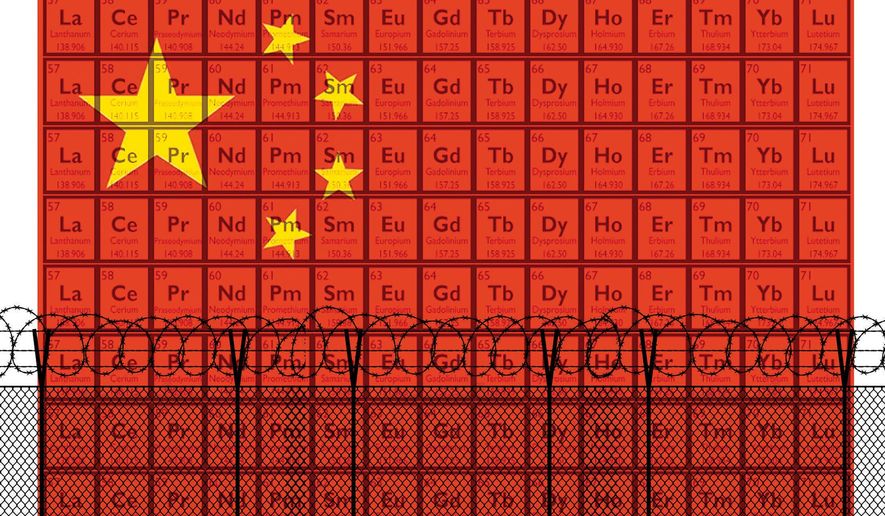
So far, Biden has nothing to show for those words, while Russia and China continue to consolidate their gains.

4 critical steps toward securing Web3

Ronghui Gu, CertiK

The data on hacks, scams and exploits is in, and 2022 is already the most expensive year for Web3 on record. Where 2021 saw losses of $1.3 billion, losses were already at $2 billion at the close of June 2022. Extrapolating from these numbers, 2022 is projected to see a 223% increase in the amount lost to hacks, scams and exploits when compared with 2021. Shocking figures, to say the least.

This will no doubt be disheartening for a Web3 community still struggling to find its feet in the context of a bear market. Moments like this require sober and level-headed analysis of how these losses occurred and what the next steps are for anyone working toward mass adoption.

The rise in losses is disheartening, but experience makes clear what needs to happen for Web3 to achieve mass adoption. To do so, it is vital that the community remain clear-eyed about the challenges and opportunities of where things stand right now — the vulnerabilities of the current ecosystem, what they mean for the current state of the community, and the steps that must be taken to reach a secure and stable Web3 future. Here are four of the most critical steps:

1. Understand Web2’s role in Web3 breaches

There has been a significant rise in the number of phishing attacks, with an increase of over 170% when compared with the previous quarter. This increase is frustrating for multiple reasons, not least because phishing attacks ought to be easily avoided, with even naive investors knowing that promises of too-good-to-be-true giveaways from random strangers are likely to be fraudulent.

MetaBeat 2022

MetaBeat will bring together thought leaders to give guidance on how metaverse technology will transform the way all industries communicate and do business on October 4 in San Francisco, CA.Register Here

However, as phishing attacks have become more sophisticated, even experienced investors have been falling prey to them, with the attackers increasingly operating under the guise of authenticity after they gain access to projects’ official social media accounts. This has led to phishing attacks that are both more lucrative and have a higher success rate, as otherwise savvy investors are duped into following seemingly authentic links.

One example of this is the Bored Ape Yacht Club (BAYC) hack which occurred in June after a hacker compromised the Discord account of the project’s community manager. With access to the BAYC Discord, the hacker posted a link to a duplicate of the BAYC site which lured users into connecting their wallets with the promise of free NFTs. In total, over 200 ETH worth of NFTs were lost in the attack.

The rise in these attacks shows one of the key sticking points for Web3 security: Web3 projects are becoming dependent on Web2 infrastructure to be successful. As a result, hackers are able to leverage the vulnerabilities of Web2 to compromise otherwise secure Web3 projects.

This is especially frustrating for those of us working to secure the Web3 ecosystem as, taken on its own, the principles of a decentralized architecture that uphold Web3 should render single-point-of-failure and centralization risks obsolete. Seeing hackers exploit these vulnerabilities as they occur in social media platforms to launch arguably the oldest trick in the book of internet attacks is like witnessing a bank being robbed because someone left the back door open.

So, what can the Web3 community do about it? First, any Web3 project that relies on Web2 infrastructures such as a website marketplace, or Discord and Telegram, needs to foster practices of decentralization around these points of centralization. In practice, this involves requiring multiple signatures each time an account with privileged controls is accessed and revoking that authorization after each use. In addition, traditional Web2 security best practices and solutions like anti-phishing security need to be implemented. This makes it far more difficult for a hacker to exercise a Web2 style attack, gain access and inflict damage.

At the other end is education. Users need to exercise utmost caution when engaging with any platform asking you to connect your wallet or offering giveaways. Even if it appears to come from a reliable source, you can never be too careful given this new breed of phishing attack. Always verify a link’s authenticity by comparing messages and websites to their official counterparts, and if in doubt, reach out to the project team via an official email. Good-faith projects will be as keen to avoid a potential scam as you are!

2. Learn from flashloan attacks

Alongside phishing attacks, Q2 2022 saw a continuation of the rise in what is proving to be one of the most devastating exploits in a hacker’s arsenal: the infamous flashloan attack.

After seeing more losses to flashloan attacks than any other quarter on record (a staggering 2,000% increase from last quarter), Q2 highlights the urgency for Web3 projects and security companies to address the vulnerabilities that make them possible.

Flashloan attacks rarely run along predictable or standardized patterns, and recent events are no exception. Rather, the data shows how hackers are continually finding new ways of leveraging flashloans to target some flaw in a project’s code or architecture. This means that flashloan attacks are often tailored to vulnerabilities specific to each project, and as a result, they are one of the most difficult-to-detect attack vectors.

Putting the urgency of this problem in perspective, 2022 is now forecast to see $656M in losses to flashloan attacks. That’s a 78% increase in loss over the previous year, a worrying figure in a category that targets some of the more innovative features of Web3. Changing this trajectory will rely on the collective effort of the entire Web3 community to double down on security best practices and for those practices themselves to advance beyond their current limitations.

This difficulty in addressing flashloan attacks, however, brings into focus a problem that faces the Web3 ecosystem as a whole: How can Web3 projects shift to a position of anticipating and preparing for new forms of attack rather than merely responding to them after the fact?
3. Implement end-to-end security for a secure Web3

Web3 projects must introduce end-to-end security as part of their security posture. This means having regular and thorough smart contract audits, as attacks often target new features that fall outside the scope of a project’s previous audit. Beyond this, blockchain analytics tools such as wallet and transaction tracking and on-chain analytics help Web3 projects stay on top of their on-chain activity. By providing liquidity monitoring and flashloan detection, these kinds of tools give the projects vital time to anticipate and respond to an attack.

While the tools already available are vital for maintaining a safe and secure Web3 ecosystem, there is a pressing need for both the variety and the performance of these tools to increase. Ultimately the methods of detecting vulnerabilities need to be far more acute and granular than those of the hackers, and the methods of imagining new and unseen attack vectors even more creative.

4. Identify room for improvement and innovate accordingly

As with any new technology and any innovation, particularly one that has grown at such a rapid pace, vulnerabilities in code are an inevitable part of Web3’s growth. Because of this, it is of vital importance that Web3 security grows and is implemented in lockstep with Web3 technology’s growth.

Part of this means developing new and better detection and prevention mechanisms. But it also involves fostering cultures of transparency around projects through more human-based tools such as KYC checks. Not only does this fight back against hacks and rug pulls by introducing ways to hold project teams accountable, it helps to drive investment by bolstering user confidence in projects.

Ultimately, we cannot know where the Web3 industry will be at the end of 2022, nor what condition it will be in. However, we can ensure that the state of our collective Web3 security improves by pushing for end-to-end security in Web3 projects.

This is largely down to Web3 projects adopting these approaches themselves and, of course, Web3 security providers continuing to develop and hone their methods. However, the wider Web3 community of investors and users can also aid this by becoming more security-aware and using this awareness to invest in projects that are doing the utmost to protect themselves and their user base. Such collective effort is key to pushing back against the mounting losses to hacks and securing a healthy Web3 ecosystem.

Ronghui Gu is CEO of CertiK

DataDecisionMakers

Welcome to the VentureBeat community!

DataDecisionMakers is where experts, including the technical people doing data work, can share data-related insights and innovation.

If you want to read about cutting-edge ideas and up-to-date information, best practices, and the future of data and data tech, join us at DataDecisionMakers.

You might even consider contributing an article of your own!

Sophisticated Covert Cyberattack Campaign Targets Military Contractors

Jai Vijayan

A cyberattack campaign, potentially bent on cyber espionage, is highlighting the increasingly sophisticated nature of cyberthreats targeting defense contractors in the US and elsewhere.

The covert campaign, which researchers at Securonix detected and are tracking as STEEP#MAVERICK, has hit multiple weapons contractors in Europe in recent months, including potentially a supplier to the US F-35 Lightning II fighter aircraft program.

What makes the campaign noteworthy according to the security vendor is the overall attention the attacker has paid to operations security (OpSec) and to ensuring their malware is hard to detect, difficult to remove, and challenging to analyze.

Here’s what a Marshall Plan for the DRC could look like

Jean-Paul Mvogo

In June, the remains of Patrice Lumumba—the Democratic Republic of the Congo’s (DRC) first prime minister—were repatriated from Belgium to his native land, sixty-one years after his assassination. If Lumumba were returning alive to the country today, he would be shocked: His prophecy for a prosperous DRC, which he penned in his final letter to his wife, has not been fulfilled, despite the abundance of natural, economic, human, and cultural resources in the country.

Instead, over decades, an abysmal series of obstacles have repeatedly hindered the country’s development. A poorly managed decolonization process by Belgium, multiple rebellions, and the failure to promote good governance—combined with living in a state of war since 1996, particularly in the east—have resulted in profound setbacks in health, education, the economy, society, and governance.

Xi Jinping’s Mixed Economic Record

David Dollar

The economic scorecard for Xi Jinping’s ten years in office is mixed. He opened the economy further to foreign trade and investment. He set a target date for China’s carbon emissions to peak and another date to reach net-zero. While GDP growth slowed down by more than four percentage points under Xi, it still averaged over 6%. On the negative side, the target to reach net-zero is not ambitious enough to prevent the worst effects of climate change. Also, Xi has doubled down on industrial policy, increasing subsidies to try to achieve technological dominance in key areas. This is a risky gambit that no doubt will have some successes, but at the cost of wasting a lot of resources. Looking ahead to the future, this state interference in the economy, combined with negative blowback from its trading partners and from China’s own entrepreneurs, is likely to result in China performing below potential.

Xi Jinping is finishing his tenth year as general secretary of the Chinese Communist Party and seems positioned to embark on at least one more five-year term. This is a good time to take stock of his economic record. Xi has garnered the most attention for his actions in non-economic realms (treatment of Uyghurs, Tibetans, and Hong Kong citizens; zero tolerance of COVID-19; and alignment with Russia and support for its invasion of Ukraine). But his economic record is important as well because it affects the everyday life of 1.4 billion people, with large spillovers to the rest of the world economy.

Resentment Is Rising Against China’s ‘Zero-COVID’ Policies

Connie Mei Pickart

A health worker wearing a protective suit holds check lists as they walk out from a barricaded community which was locked down for health monitoring following the COVID-19 case detected in the area, Monday, March 28, 2022, in Beijing.Credit: AP Photo/Andy Wong

On September 7, three days before the national Mid-Autumn holiday weekend, my husband and I received separate phone calls from the pandemic prevention office in the Shanghai district where we live. We were informed that we had become sub-contacts to a recently confirmed COVID-19 case and were required to be taken to a centralized quarantine facility.

Having lived through the excruciating two-month lockdown of the city, we have adapted to the new post-lockdown reality: lining up for PCR tests every two or three days, scanning venue codes posted outside every public location to facilitate contact tracing, showing a green health code on our smartphones to gain access to restaurants and other services. But to be informed of an imminent quarantine was a first, and as U.S. citizens living in China, the uncertainties of what awaited us exacerbated our anxieties.

FT Theft: Here’s How the Dark Side of Web3 Gets Away With It

SLASHAUTH

How do NFT thieves get away with heists in the millions (or even billions) of dollars, in plain sight? Crypto transactions happen on the public ledger, so finding the culprit should be simple. Despite this, NFT thieves are nearly impossible to catch.

Part of the problem comes with the territory since successful NFT scammers and thieves live on the cutting edge of the space. But there are deeper reasons for this than simply being familiar with the space — and examining the deeper story could help all of us better shield ourselves from future onslaughts.

NFT theft, high art, and ‘celebrity victims’

The most expensive NFT thefts targeted high-profile NFTs like Bored Ape Yacht Club, Mutant Ape Yacht Club, and Moonbirds. The high prices and popularity of these NFTs have left many with crushing losses.Art gallery owner Todd Kramer lost roughly $2.2 million in NFTs.

Yes, Putin might use nuclear weapons. We need to plan for scenarios where he does

Christopher S Chivvis

News of the Ukrainian army’s recent advances swept across western capitals like fresh air. A war that was for months mired in crushing artillery fire had suddenly opened up. Russian forces, outmaneuvered by the Ukrainian army, fled, again proving weaker than anyone expected. Hopes lifted that Ukraine could win the war and force their tormentor back to the prewar battlelines – and perhaps further.

Russia shared the same assessment. Vladimir Putin knows his military is badly damaged and getting weaker. The Russian president responded with military mobilization and preparations to annex the Ukrainian regions Russia now controls, just as he did in Crimea in 2014. He also threatened to use nuclear weapons to “protect Russia” – implying he may use them to defend the regions he is annexing.

Meanwhile, Ukraine, emboldened by the success of its Kharkiv operation, wants advanced tanks and other new weapons systems from the west. In the face of Putin’s wanton disregard for human life and reckless nuclear threats, they may well get them.

No one should conclude that Putin would use a nuclear weapon just because he threatened to do so – the credibility of his words alone is nil. His nuclear saber-rattling is condemnable, and Joe Biden rightly attacked it on Sunday and again at the United Nations on Wednesday. The president is also right to maintain ambiguity about how the United States might respond if Russia detonated a nuclear weapon.

But just because Putin has threatened nuclear attack doesn’t mean it won’t happen. Sadly, it isn’t that hard to see a path to nuclear use from here. There are many variants, but the basic story goes something like this:

Western support to Ukraine increases this autumn, with new weapons systems and larger quantities of the weapons already deployed. Western intelligence gives the Ukrainians an even sharper edge against a Russian force that is large but poorly trained, under-equipped and demoralized. The Russian military takes heavy losses. It’s routed from one of the Ukrainian regions it has annexed.

In this scenario, Putin’s grand project is now collapsing once and for all. Protests in Russia intensify. He fears losing his grip on power and being dragged, Gaddafi-like, through the streets. So he strikes Ukrainian forces with a tactical nuclear weapon in a gamble to underscore the risks, stop the war, and avert disaster for himself. His aim is not to gain a military advantage, but to raise the stakes so high that western capitals are forced to rethink their strategy.

After that, de-escalation would be hard. The United States and Nato nuclear powers would come under pressure for a nuclear strike of their own – probably on Russia itself, due to a lack of other options. With its conventional forces in disarray, Russia’s likely response to this strike would be to broaden the nuclear conflict to Nato.

The US might try to avoid such an escalating nuclear scenario by deploying a large conventional US force to Ukraine, but this would be almost as escalatory from Russia’s perspective as a Nato nuclear attack. Even if such a strategy did work to de-escalate, the nuclear taboo is broken, and with it, the possibility that other despots use nuclear weapons in the future is much higher.

The whole world should want to avert this scenario. The United States and its allies need to deploy all the leverage they can – carrots as well as sticks – to get China, India, and other G20 countries to condemn Russia’s nuclear threat. The tepid reception Putin got from India and China earlier this week seems like a sign these rising powers understand the stakes for their own futures. China is conflicted about Ukraine because it views Russia’s operation there through the lens of its own aims for Taiwan. But Beijing should still appreciate the disastrous consequences a nuclear conflict – even if contained to Europe – would have for its economic future.

Peer pressure alone, however, is not likely to be enough. Biden should also find a way to reinforce that the US is not aiming to oust Putin – although it may be difficult to make this case convincing given the extensive sanctions regime, Biden’s own statements about Putin, and the past US record of overthrowing despots.

A ceasefire would help to calm the situation and avoid further escalation, but convincing the Ukrainians to accept one is going to be extremely hard now that they have the momentum on the battlefield. Russia’s disastrous plan to annex the regions makes negotiations all the less appealing because it effectively takes these regions off the table.

Western capitals should at least point out to Ukrainian leaders that their prospects of retaking all their territory may not be as bright as they hope. There is a very long way to go – their operation in Kharkiv was dramatic, but only bought them back a fraction of their territory. Whether it can be replicated for the remainder is uncertain. At a minimum, now is not the time to offer the Ukrainians advanced new weapons systems.

Putin has presented the world with impossible choices. Russia must emerge from this crisis chastened for its recklessness. But in the next few weeks, leaders need to find offramps to prevent the worst. This will take maximum flexibility and creativity from all sides.

Christopher S Chivvis is a senior fellow and director of the Carnegie Endowment’s American statecraft program

You've read 21 articles in the last year

Article counton

Thank you for joining us from India.

Where will it all end? The conflict in Ukraine appears further than ever from resolution. Nuclear threats, mass graves, the sense that both sides are “all in”.

It’s our job at the Guardian to decipher a rapidly changing landscape, and report the facts in sober fashion, without getting carried away. Our correspondents are on the ground in Ukraine and Russia and throughout the globe delivering round-the-clock reporting and analysis during this fluid situation.

We know there is no substitute for being there – and we’ll stay on the ground, as we did during the 1917 Russian Revolution, the Ukrainian famine of the 1930s, the collapse of the Soviet Union in 1991 and the first Russo-Ukrainian conflict in 2014. We have an illustrious, 200-year history of reporting throughout Europe in times of upheaval, peace and everything in between. We won’t let up now.

Tens of millions have placed their trust in the Guardian’s fearless journalism since we started publishing 200 years ago, turning to us in moments of crisis, uncertainty, solidarity and hope. We’d like to invite you to join more than 1.5 million supporters from 180 countries who now power us financially – keeping us open to all, and fiercely independent.

Unlike many others, the Guardian has no shareholders and no billionaire owner. Just the determination and passion to deliver high-impact global reporting, always free from commercial or political influence. Reporting like this is vital to establish the facts: who is lying and who is telling the truth.

And we provide all this for free, for everyone to read. We do this because we believe in information equality. Greater numbers of people can keep track of the events shaping our world, understand their impact on people and communities, and become inspired to take meaningful action. Millions can benefit from open access to quality, truthful news, regardless of their ability to pay for it.

Every contribution, however big or small, powers our journalism and sustains our future

Russian Nord Stream 1, 2 Pipeline Explosions—What We Do Know, What We Don't

TOM NORTON 
Source Link

World leaders and intelligence agencies are still unpicking reports of leaks along the two Nord Stream pipelines, which supply natural gas from Russia to Europe. Some believe the actions could be an act of sabotage, potentially by Russia or by the U.S.

Drops in pressure were first detected Monday by the operators of the Nord Stream 1 and Nord Stream 2 pipelines, funded and constructed by the Russian government, which have been at the center of the geopolitical storm fueled by Russia's war in Ukraine.

While neither pipeline was in operation at the time of the incidents, they contained gas under pressure within them, and they come at a time of heightened tensions after Russia held illegitimate "referendums" on its annexation of regions in eastern Ukraine.

So what will the impacts be on the global energy supply and on the conflict in Ukraine, and to what extent do we know the facts about how the pipelines were damaged? Newsweek Fact Check looked at the evidence.

Daily Memo: Gas Leaks in Nord Stream Pipelines


Gas leaks. Danish authorities reported on Monday night a gas leak off the coast of the island of Bornholm coming from the defunct Nord Stream 2 pipeline in the Baltic Sea. Two more leaks were later reported on both lines of Nord Stream 1, which is operational. Nord Stream AG, the operator of the pipelines, called the simultaneous destruction of three strings of the system “unprecedented” and said it was impossible to know how long it would take to repair it. Russia’s Gazprom reduced deliveries via Nord Stream 1 over the summer and shut them completely in early September, ostensibly for maintenance. Nord Stream 2 was supposed to be operational this year, but Germany suspended the approval process after Russia’s invasion of Ukraine.

Strange encounter. A U.S. Coast Guard vessel last week encountered three Chinese naval ships and four Russian naval ships in the Bering Sea off the coast of Alaska’s Kiska Island, U.S. officials revealed on Monday. The vessels, including a Chinese guided missile cruiser and a Russian destroyer, dispersed after a U.S. patrol boat spotted them sailing in single formation. The Bering Sea is a strategic waterway with access to the Arctic Ocean, an increasingly important area of interest featured heavily in Russia’s new naval doctrine.

13 open source projects transforming AI and machine learning

Peter Wayner

Open source is fertile ground for transformative software, especially in cutting-edge domains like artificial intelligence (AI) and machine learning. The open source ethos and collaboration tools make it easier for teams to share code and data and build on the success of others.

This article looks at 13 open source projects that are remaking the world of AI and machine learning. Some are elaborate software packages that support new algorithms. Others are more subtly transformative. All of them are worth a look.

A list of open source tools for AI and machine learning would not be complete without a nod to TensorFlow and PyTorch. Separately and together, these OG frameworks support some of the most experimental and important research in machine learning and artificial intelligence. At least a few of the projects discussed in this article use them as building blocks.

Russia’s military isn’t ready for an escalation. Ukraine and its partners can exploit that.

Irina Plaks

Russian President Vladimir Putin’s decision to mobilize hundreds of thousands of Russian reserves this month will almost certainly exacerbate internal divisions within Russia by highlighting his regime’s poor military-personnel policies. This should prompt Ukraine and its Western allies to prepare for an onslaught of poorly trained, disjointed troops.

Unlike the United States, Russia has never been able to fully transition away from a draft and toward an all-volunteer military. Its active force consists of about 70 percent contracted personnel and 30 percent conscripts—men between the ages of eighteen and twenty-seven who are required to serve one year in the military (of which four to eight months is spent in training). The draft remains unpopular, with many richer, urban Russians deferring for legitimate or falsified reasons, or paying bribes to their local officials to avoid service.

Contractors are meant to be the more professional and effective part of the Russian force, which is why the Kremlin has leaned heavily into recruitment drives and promised ever-increasing salaries to attract potential volunteers. Their targets, however, leave something to be desired: Officials have tried to recruit middle-aged men (Putin recently increased the age limit for contractors to sixty-five), recently wounded soldiers, convicted criminals, and homeless populations. Lowering standards has not worked well for militaries in the past, and the quality of Russian forces will inevitably decline once these new recruits are integrated into the force.

The Anticipated Strong Representation of Foreign-Educated Returnees in Xi’s Third Term

Cheng Li

It is an irony of history that China and the United States have been moving toward a confrontational course in recent years while the Chinese political leadership has been comprised of many influential American-educated policy makers. During his first two terms, Xi Jinping has worked closely with leaders who have substantial overseas experience, especially in the United States and other Western countries.

The strong representation of these returnees at various levels of leadership of the Chinese Communist Party (CCP) apparently has not changed as a result of the ongoing rapid deterioration of U.S.-China relations. An analysis of the leadership lineup on the eve of the 20th Party Congress shows that this trend will likely continue in Xi’s third term.

China’s largest study abroad movement and the omnipresence of returnees

The phenomenon of CCP leadership including American-educated returnees is undoubtedly the result of over four decades of educational exchanges between the People’s Republic of China (PRC) and the United States, which were initiated by Deng Xiaoping and President Jimmy Carter in 1979. The breadth and depth of educational exchanges between these two countries with vastly different political systems and ideologies throughout the past four decades has been truly remarkable.

Time is the Hidden Flank in Assessing Russia’s Mobilisation

Dr Jack Watling

Having failed to seize Kyiv and then Donbas, his armies exhausted and losing ground, President Vladimir Putin finally declared mobilisation. This decision has several short-, medium- and long-term implications. To understand them, however, it is necessary to appreciate how long it will take for mobilised personnel to be useful, and thus how long Ukraine has to prepare.

This option was first considered in the Russian government in March. Had Putin made the decision to mobilise in early May, it is likely that new Russian units would now be ready to be pushed into Ukraine, just as Ukraine’s forces are stretched out, consolidating their recent gains. This would have been the most dangerous course of action. But Putin – long known for putting off difficult decisions – instead decided to reinforce his depleted units through recruitment campaigns. This has kept up troop levels, but topping up demoralised units did not improve their combat power.

With many Russian units in Ukraine between 50% and 70% strength, the most immediate effect of mobilisation will be to create a large number of poorly trained replacements to shore up the numbers. On the Kyiv axis in March, Russian forces had a 12:1 force ratio advantage against Ukraine. In Severodonetsk, Russia achieved a 7:1 advantage. Their units were still only able to make progress with massive artillery support. Today, their guns are suppressed because of the threat to their ammunition from GMLRS, and so this immediate topping-up of units will not produce significant offensive capabilities. It will, however, likely help to stabilise defensive lines, increasing the level of resources Kyiv must commit to achieve breakthroughs. Nevertheless, throwing unwilling and under-trained replacements into already-demoralised units at the onset of winter is unlikely to change the direction of fighting on the ground.

Can the Iranian System Survive?

MICHAEL YOUNG

Ali Fathollah-Nejad is a German-Iranian political scientist focusing on Iran, the Middle East, and the post-unipolar world order. He is a McCloy Fellow on Global Trends of the American Council on Germany, exploring how trans-Atlantic foreign policy toward authoritarian states can reconcile interests and values. He is also an associate fellow with the American University of Beirut’s Issam Fares Institute for Public Policy and International Affairs, where he publishes a brief titled Iran in Focus. He is the author of the much-acclaimed book, Iran in an Emerging New World Order: From Ahmadinejad to Rouhani (2021), and holds a Ph.D. from the Department of Development Studies at the School of Oriental and African Studies, University of London. He also won the 2016–2017 postdoctoral fellowship of the Harvard Kennedy School’s Iran Project. Diwan interviewed Fathollah-Nejad at the end of September to discuss the protests in Iran that followed the killing of Mahsa Amini.

Michael Young: The ongoing protests in Iran are only the latest in a series of protests that have taken place during the past months and years. What does this tell us about the system in place in the country, and even its survival?

2 October 2022

Taiwan, And The World, Needs To Worry About the Western Disinterest In Protecting It

David Hutt

To repeat a cliche, U.S. President Joe Biden has turned America’s decades-old policy of “strategic ambiguity” over whether it would defend Taiwan in the event of a Chinese invasion into one of “strategic unambiguity.” He has said on several occasions that the U.S. would, in fact, militarily come to Taiwan’s defense. He was asked the same question earlier this month. He replied: “Yes, if in fact there was an unprecedented attack.”

The German Marshall Fund’s latest Transatlantic Trends survey, released on Thursday, makes for depressing reading if you’re sitting in the Oval Office, and especially if you’re sitting in Taipei. Amongst the 14 Western countries surveyed, the clear preferred option in the event of a Chinese invasion of Taiwan was diplomacy and sanctions. An average of 35 percent of respondents support their countries only taking diplomatic measures; 32 percent want joint economic sanctions.

And here’s the kicker: Just 4 percent would support their government sending arms or troops to Taiwan. And 12 percent want their country to take no action. In fact, some 15 percent of U.S. respondents favored no action if China invaded Taiwan, as did 14 percent of French, a tenth of Germans and 8 percent of Britons. On average across the major European states, only 1-2 percent of respondents want to send troops to Taiwan in the event of an invasion. Some 3 percent of Britons and 7 percent of Americans favor this. Only a slightly higher percentage want their governments to send arms to Taiwan: 3 percent of Germans and French; 5 percent of Britons, and 8 percent of Americans.

A Conversation with Thomas West in the Context of Afghanistan One Year Later


Daniel F. Runde: So I’m Dan Runde. I’m a senior vice president here at CSIS. Thank you for joining us today, a little over one month after the one-year anniversary of the forcible Taliban takeover of Afghanistan in August of 2021. I was not in favor of us leaving Afghanistan, but it’s easy for me to sit in an ivory tower and opine about these things that other folks have to take the difficult decisions.

We are very fortunate to have Mr. Thomas West, the State Department’s special representative and deputy assistant secretary for Afghanistan. Mr. West is a very able public servant, and he has an excellent team. And it’s very important that we have great people in government, like Mr. West. And so I’m really pleased that he agreed to go back into public service.

Mr. West has had a very interesting career in the foreign policy world. He’s followed the Afghanistan file for a very long time, and he’s been an important policymaker on Afghan issues. He served as a special advisor to the vice president for South Asia. And he was director for Afghanistan and Pakistan at the National Security Council from 2012 to 2015. From 2011 to 2012, Mr. West was the State Department’s senior diplomat in Kunar Province, Afghanistan. Before rejoining the government in January of 2021, Mr. West was a vice president at the Cohen Group, a global strategic advisory firm. And he was also a nonresident scholar of the Carnegie Endowment for International Peace.

Army Credits "Persistent Modernization" Strategy For High-Speed Attack Breakthroughs

KRIS OSBORN

(Washington, D.C.) Lasers, hypersonics, robots and precision weaponry are all fast becoming key elements of the Army’s operational arsenal, and each of these paradigm-changing weapons systems first emerged from the Science and Technology element of the service.

The Army is making a decided push to better integrate the science and technology community with rapid acquisition and the operational sphere as a way to fast track promising new technologies to war.
Disruptive Technologies & War

While there has always been a certain synergy between research, scientific inquiry, innovation and active military operations in terms of “urgent” needs statements or requests for a given technology, now the Army is making new efforts to respond to the rapid pace of change by linking breakthrough or disruptive technologies more closely with current soldier needs in war.